

Columbiformes / Columbidae / Columba
Pale-capped Pigeon
Columba punicea · 紫林鸽
Introduction
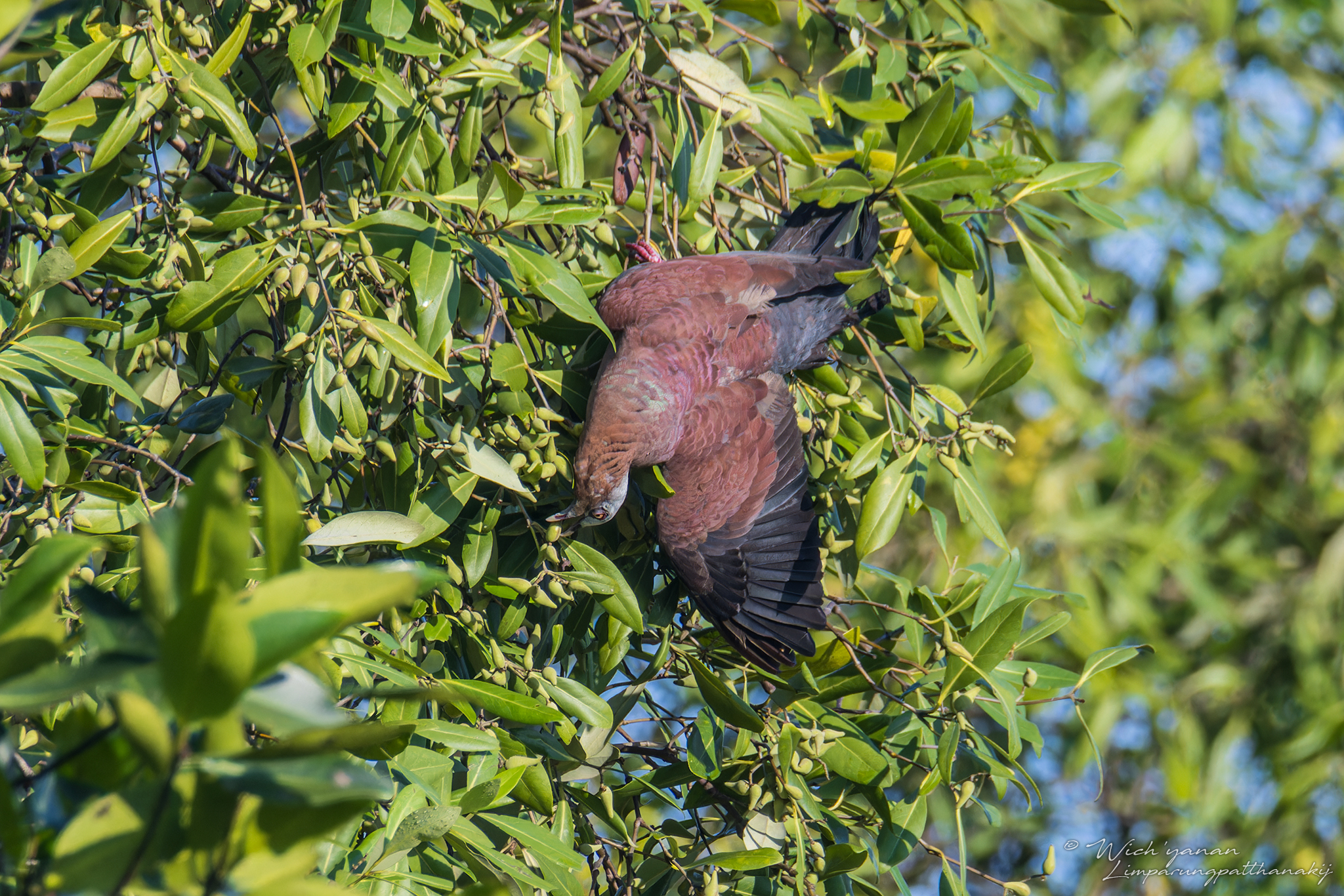
A large pigeon species found patchily in the Indian subcontinent and Southeast Asia. It exhibits slow flight and spends significant time stationary in the foliage of large fruiting trees, particularly in riverine forests on plains. The species is mainly frugivorous.
Description
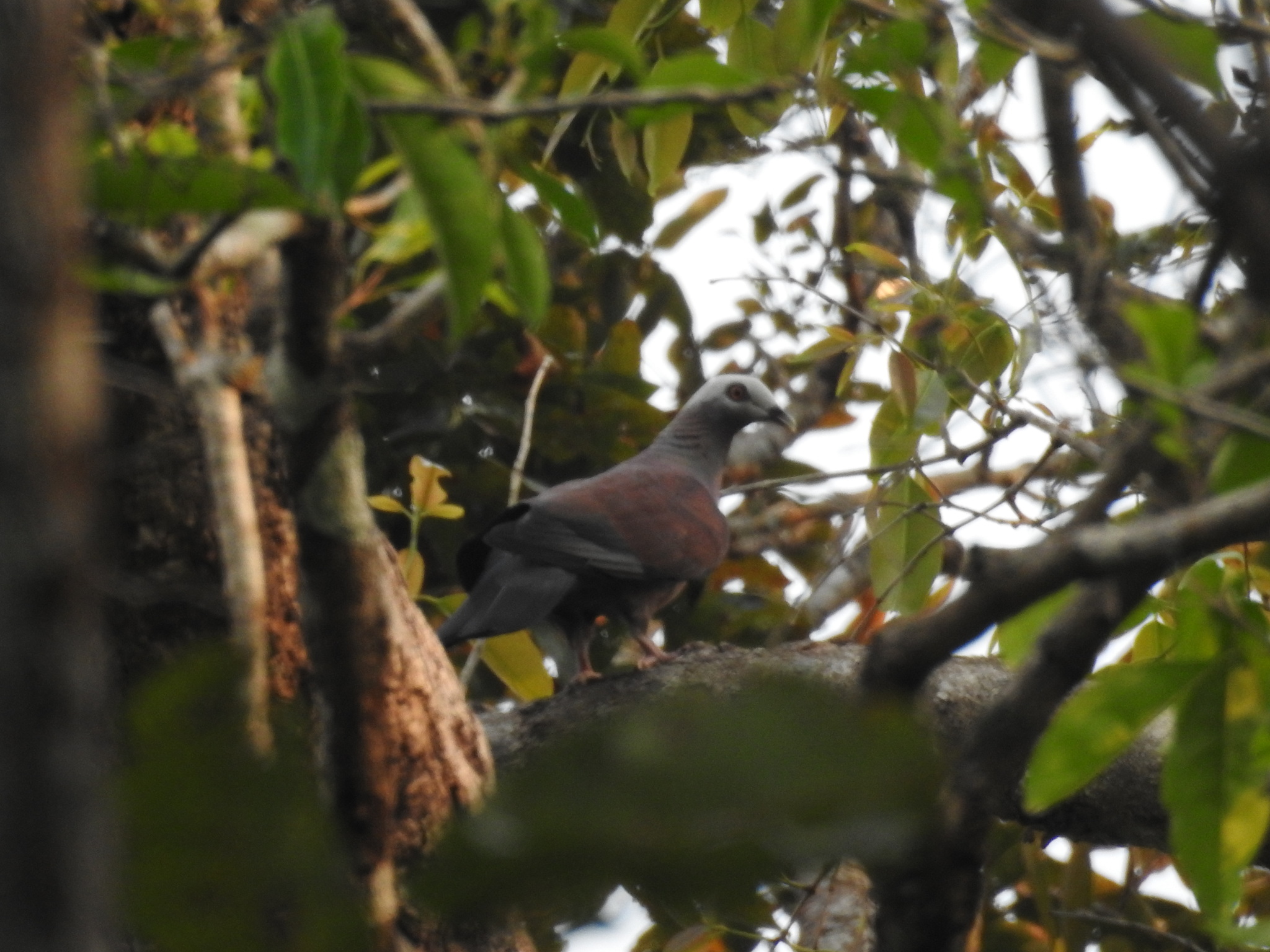
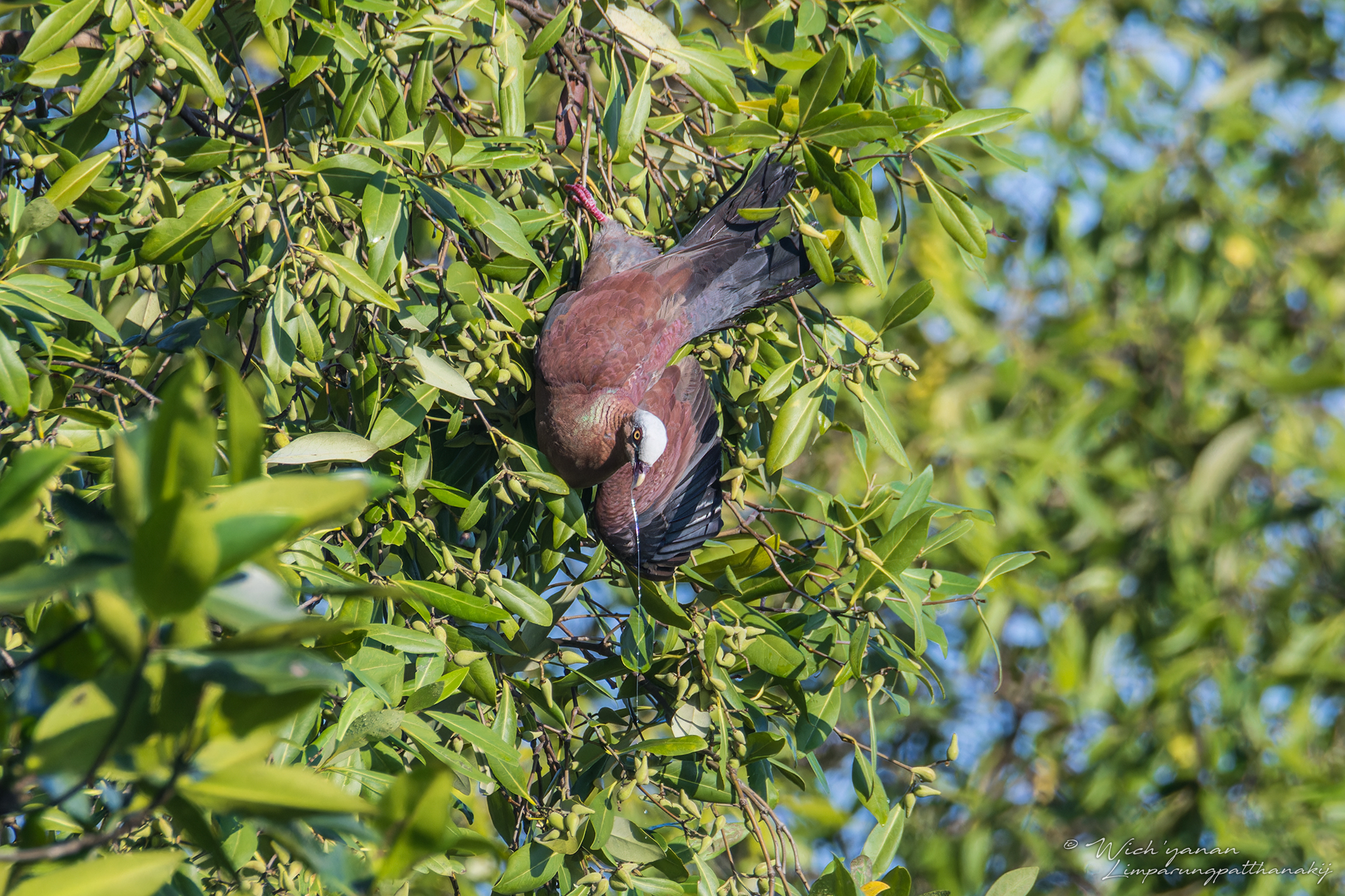
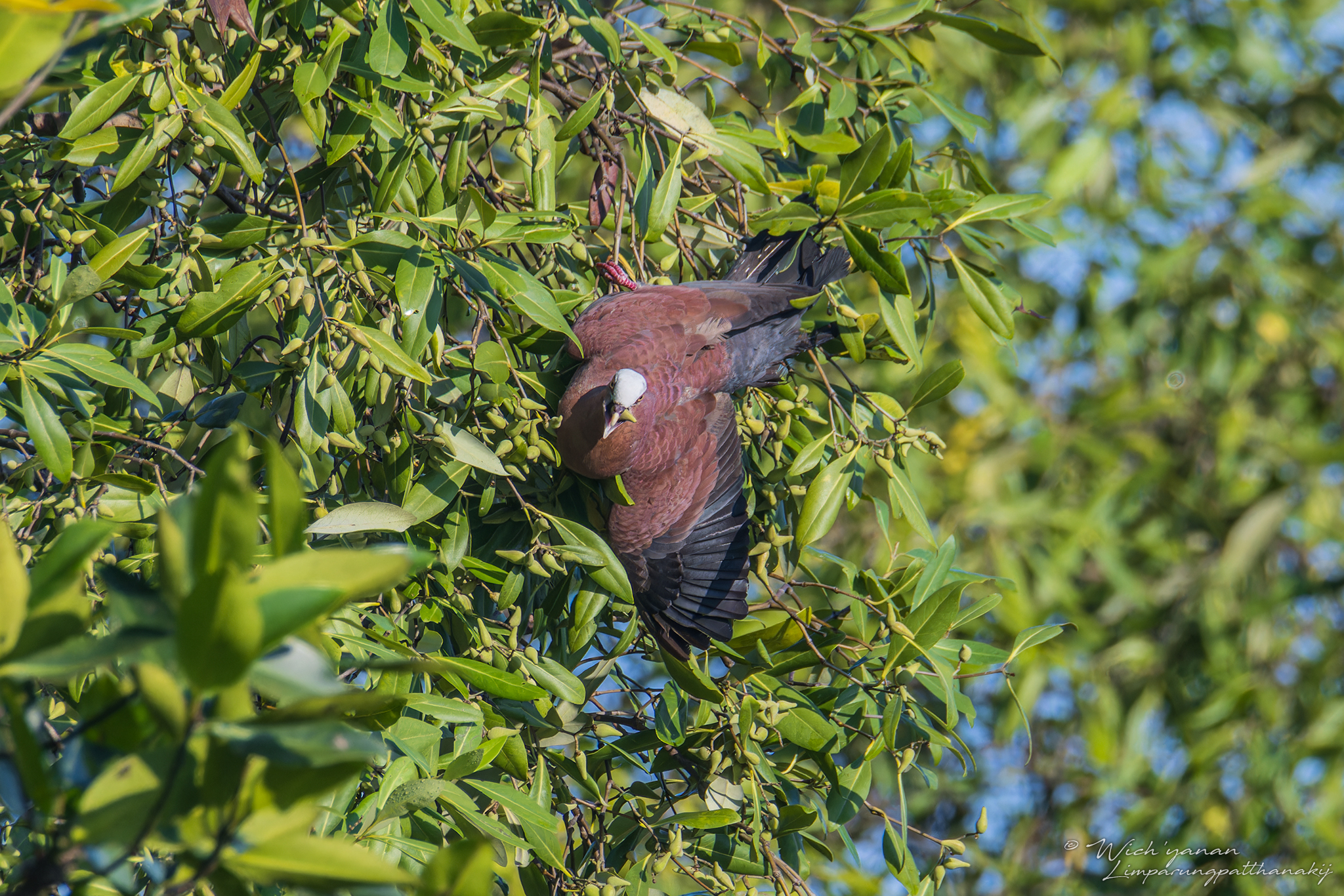
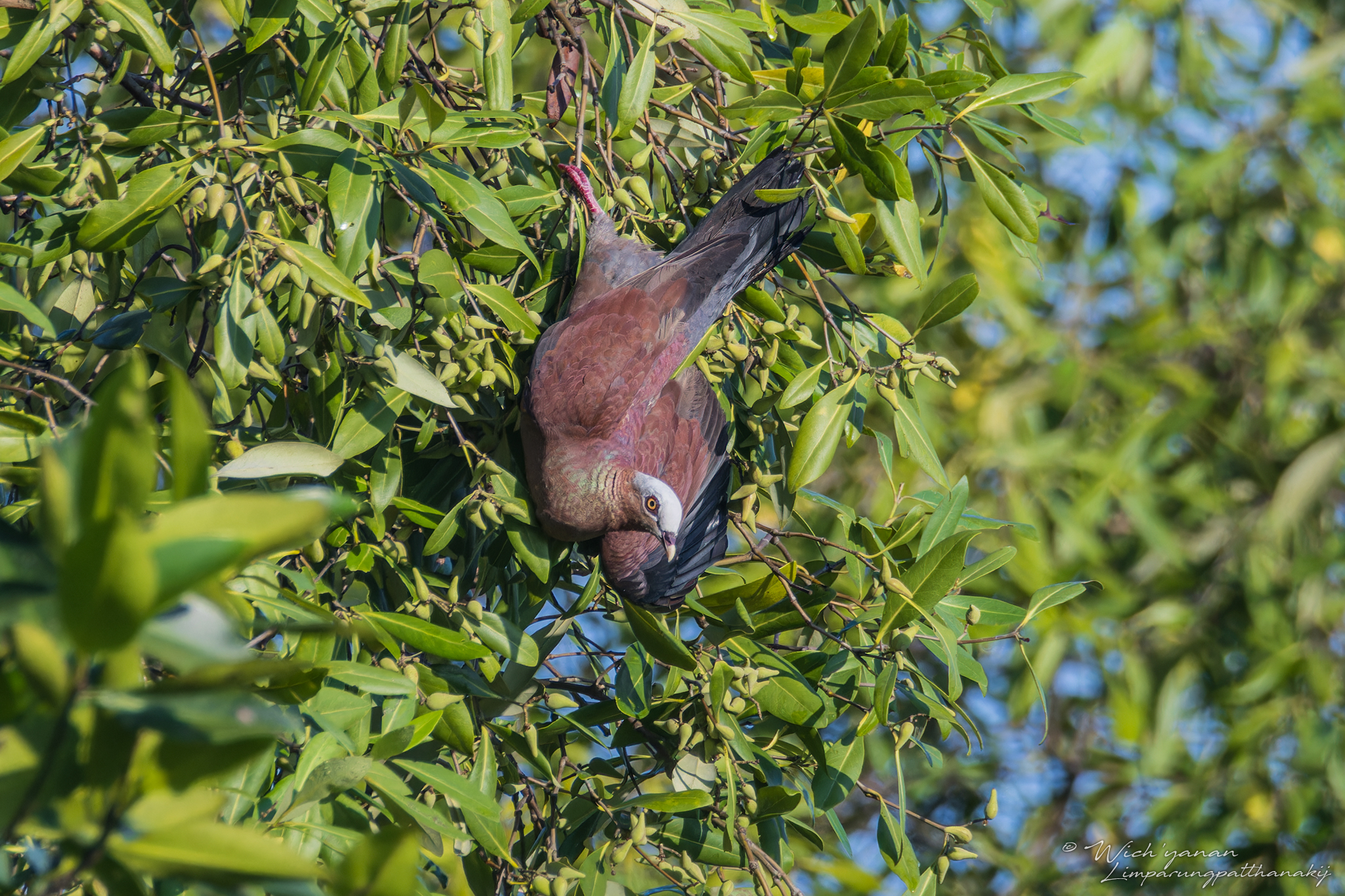
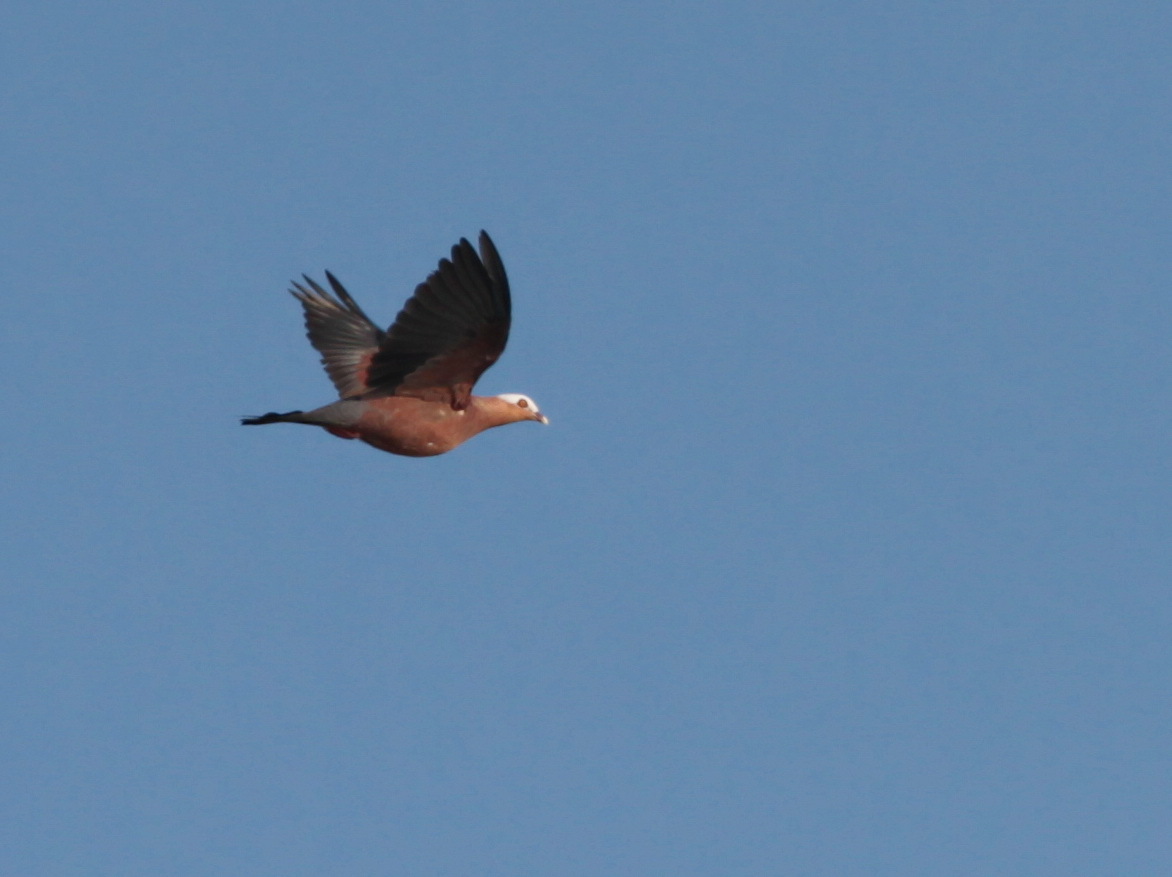
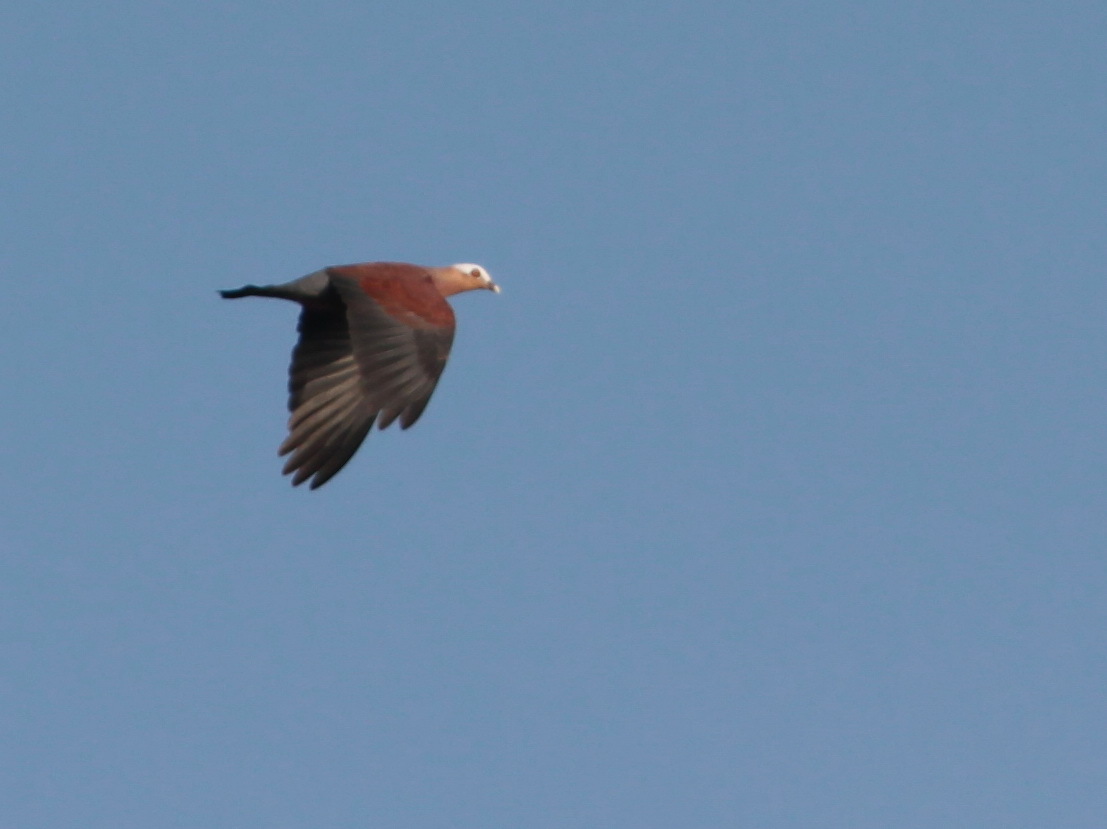
Large pigeon, 36–40.5 cm long. Plumage is all-dark chestnut brown with a contrasting pale crown. Males have a whitish-grey crown, purplish-maroon upperparts with faint green gloss on the neck, strongly iridescent mantle and back, dark slate-coloured rump and uppertail-coverts, vinous-brown ear-coverts, throat and underparts, slaty-grey undertail-coverts, and blackish tail and flight feathers. Females have a more brownish-grey crown and less gloss. Juveniles have crown colour matching the mantle, duller wing-coverts and scapulars with rufous fringes, reduced gloss, and greyer underparts. Legs are crimson, iris is creamy-yellow in adults, and skin around eyes and ceres are magenta.
Identification
Distinguished by large size, dark chestnut brown body, and contrasting pale crown. Males show whitish-grey cap and purple-maroon upperparts; females have brownish-grey caps. Flight is slow. Call is low, similar to Ducula aenea but shorter and less prolonged.
Distribution & Habitat
Patchily distributed across northern and northeastern India, Bangladesh, Myanmar, Thailand, Laos, Cambodia, and Vietnam. Rare in Peninsular India (records from Maharashtra, Orissa, Bihar, Andhra Pradesh). Considered a seasonal visitor in Sri Lanka and winter visitor in parts of Thailand. Inhabits plains forests from lowlands up to 1,600 m, including primary or secondary evergreen forest, open deciduous dipterocarp forest, bamboo, and agricultural fields near forests. Mangroves and coastal habitats used likely in non-breeding season.
Behavior & Ecology
Frugivorous, also eating seeds and grain. Forages in small groups of 4 to 5 in tree canopies, particularly on Eugenia and Cinnamon trees, often near rivers. Feeding occurs mainly in mornings and evenings, with resting during midday heat. Sometimes descends to ground for seeds and fallen fruit. Breeding season is May to August. Builds flimsy platform nests low in trees, laying one or rarely two eggs. Host to helminth parasite Cotugnia joyeuxi.
Source: Wikipedia · CC BY-SA 3.0
Taxonomy
- Order
- Columbiformes
- Family
- Columbidae
- Genus
- Columba
Distribution
southern Tibet to eastern India, Myanmar, Thailand, and Hainan (off southern China)
Data Sources
Species description from Wikipedia, licensed under CC BY-SA 3.0.
Bird images and sounds sourced from GBIF, contributed by citizen scientists worldwide under Creative Commons licenses.
Taxonomy data from AviList 2025.