Pale-capped Pigeon
Columba punicea
紫林鸽
Introduction
This pigeon inhabits the canopy of forested landscapes across the Indian subcontinent and Southeast Asia. It occurs in riverine forests on the plains and the fringes of evergreen woodlands. The species exhibits a slow, direct flight and remains motionless in foliage for extended periods. It feeds primarily on seeds and fallen fruit in the upper canopy of large fruiting trees, occasionally descending to the ground to forage. The species forms small foraging flocks of four to five birds, moving through the treetops during morning and evening hours. Its distribution is patchy across much of its range, with scattered records in many areas.
Description
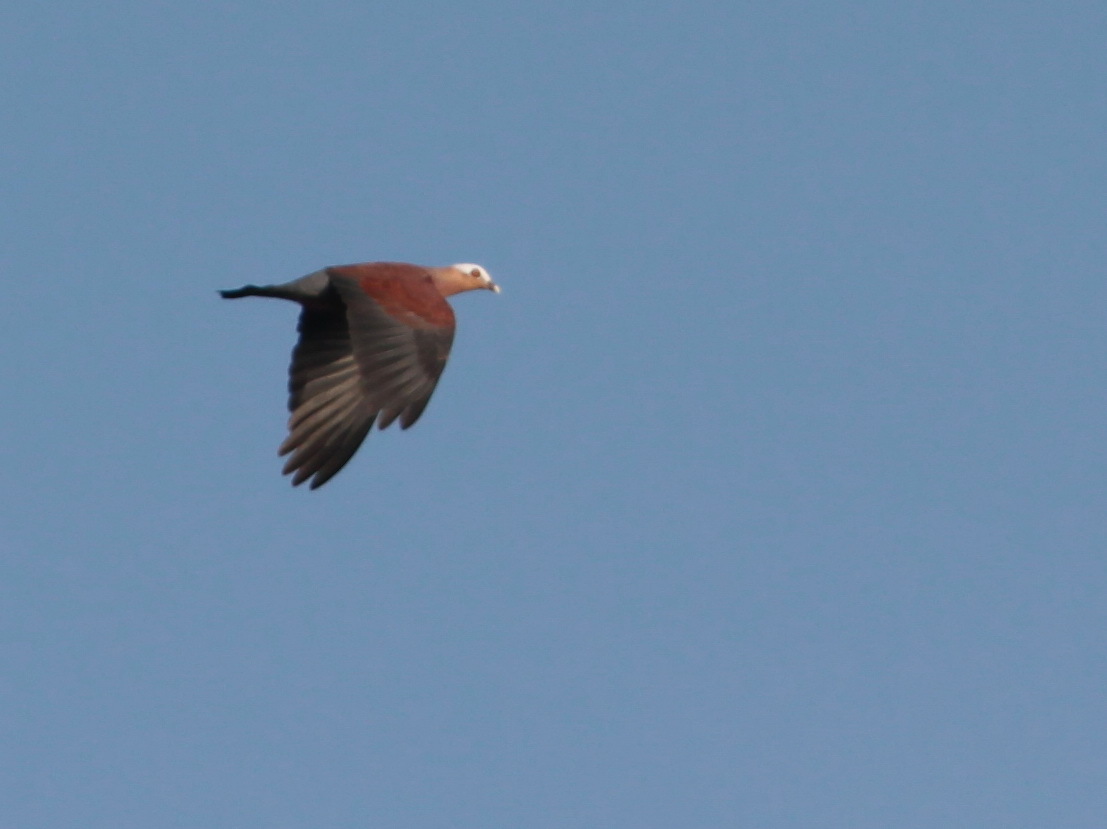
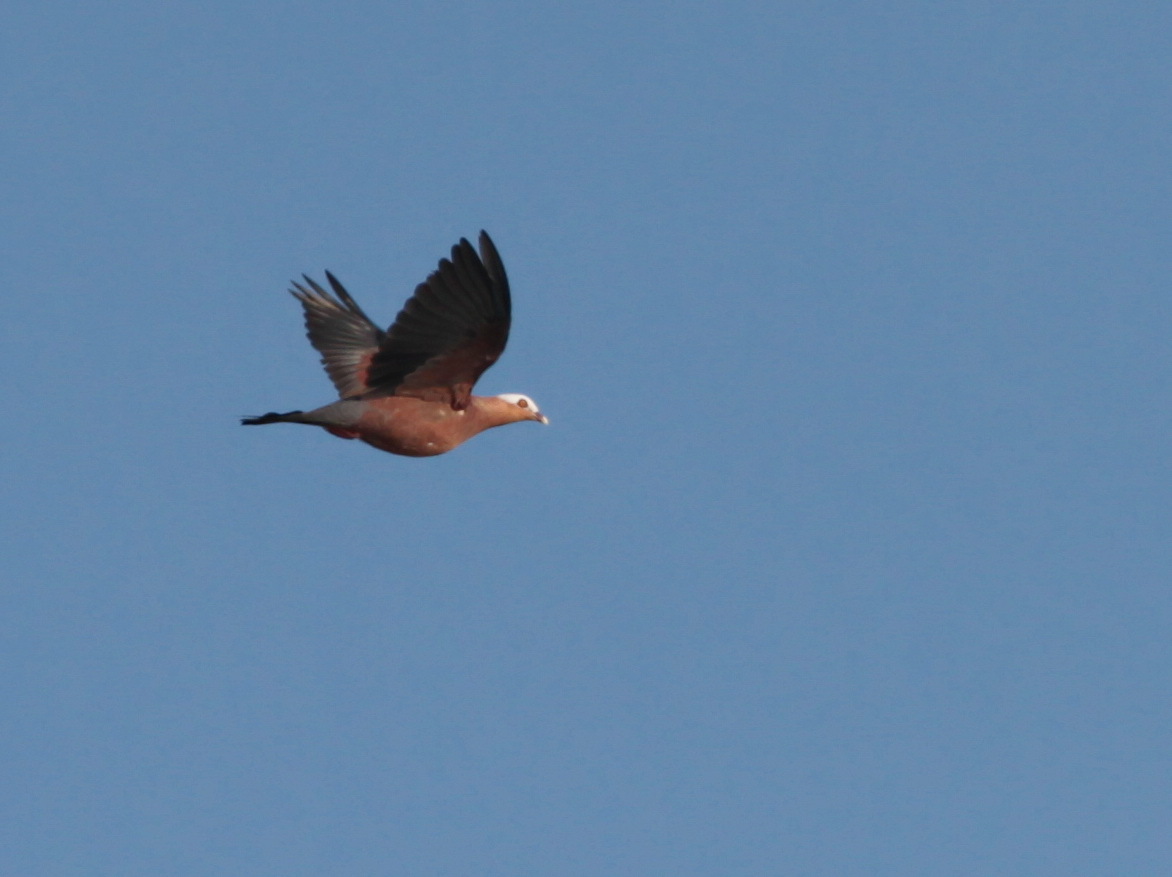
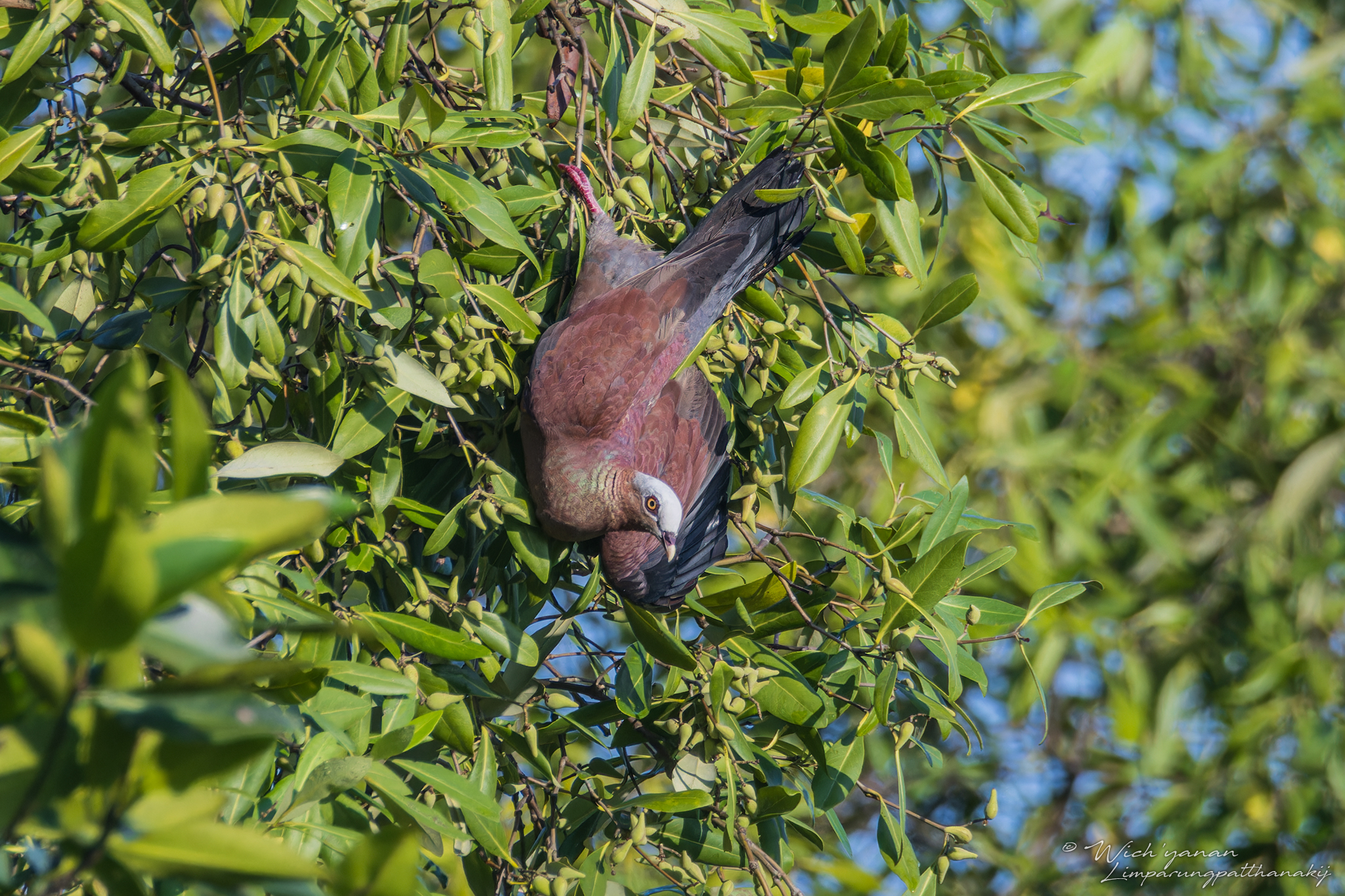
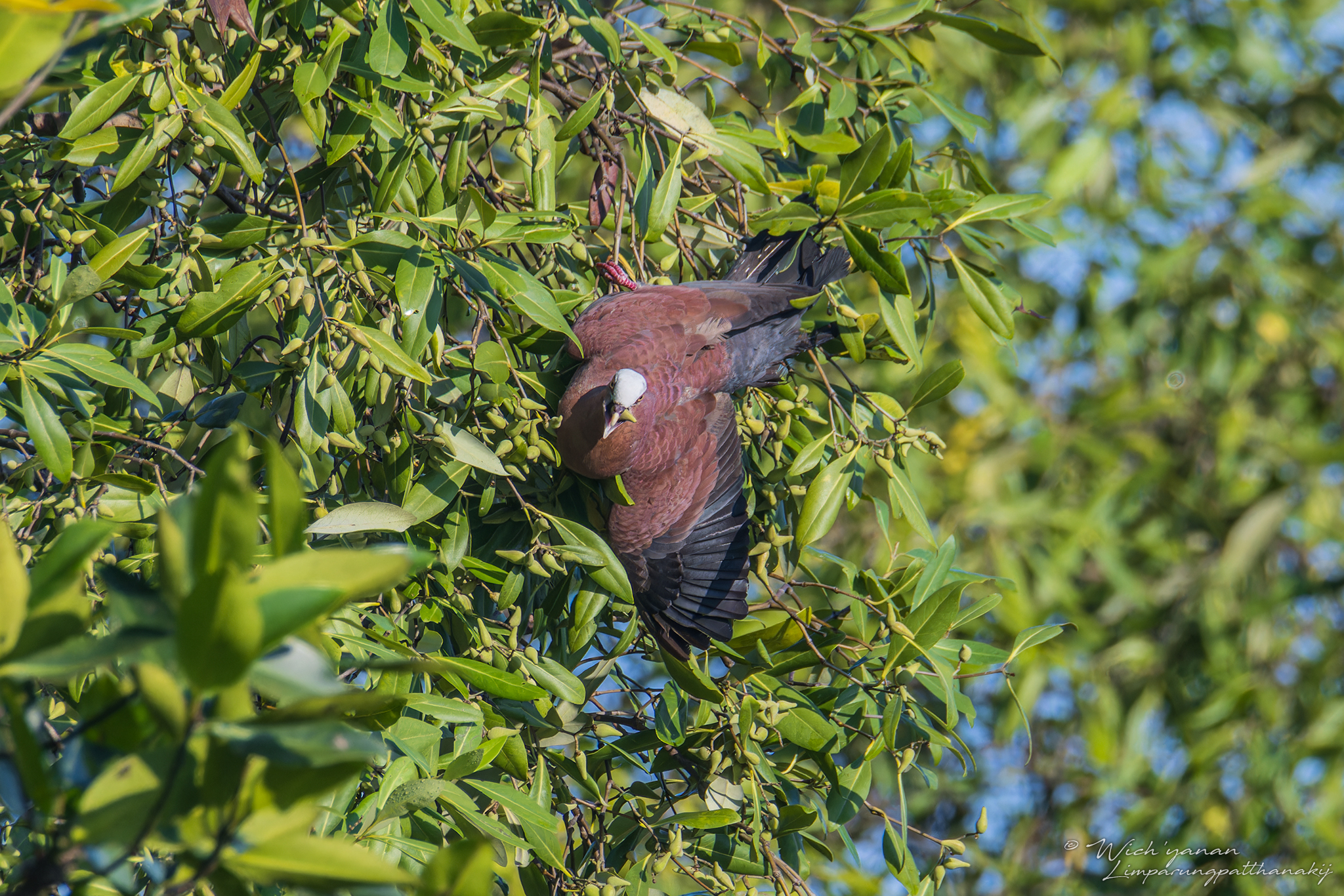
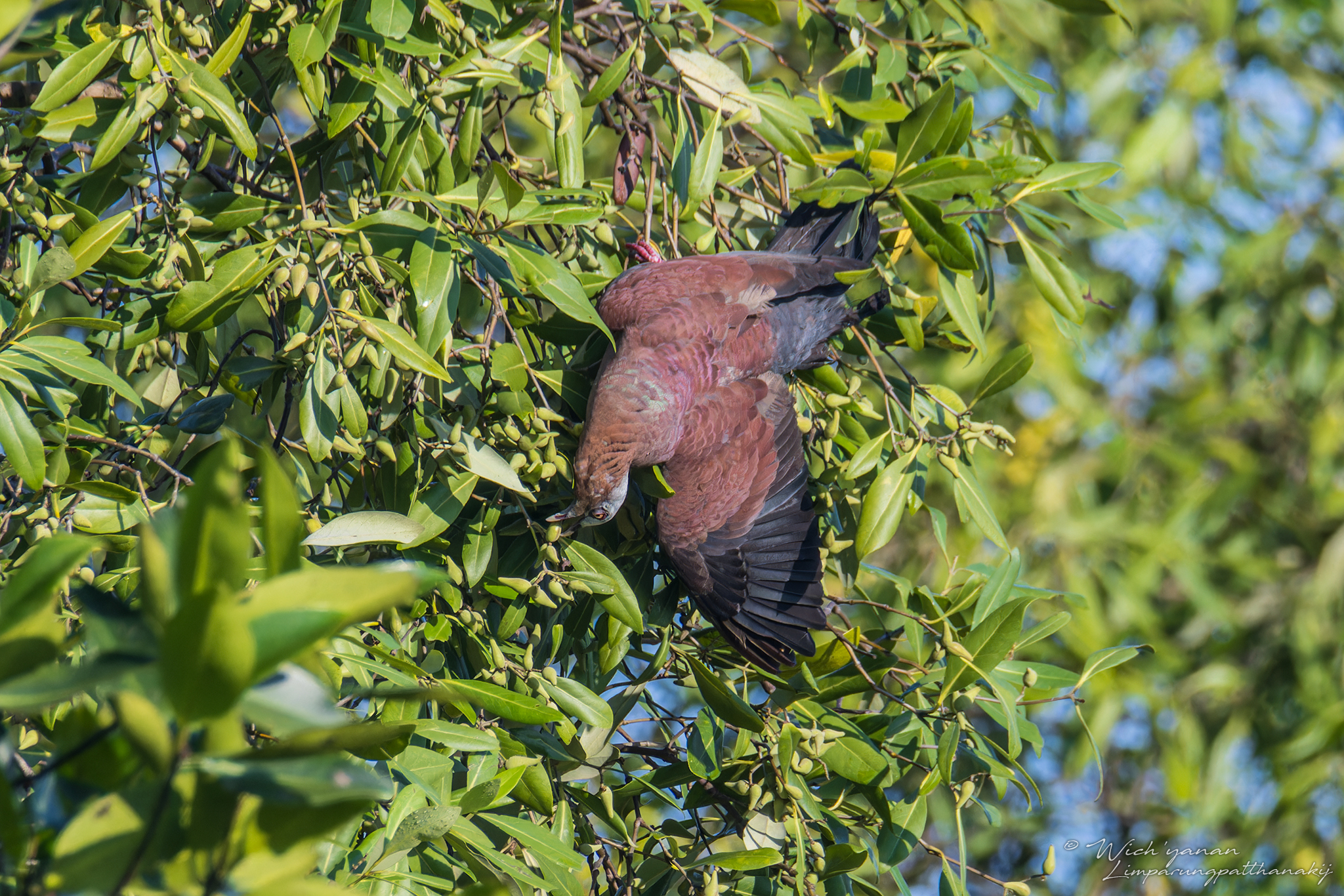
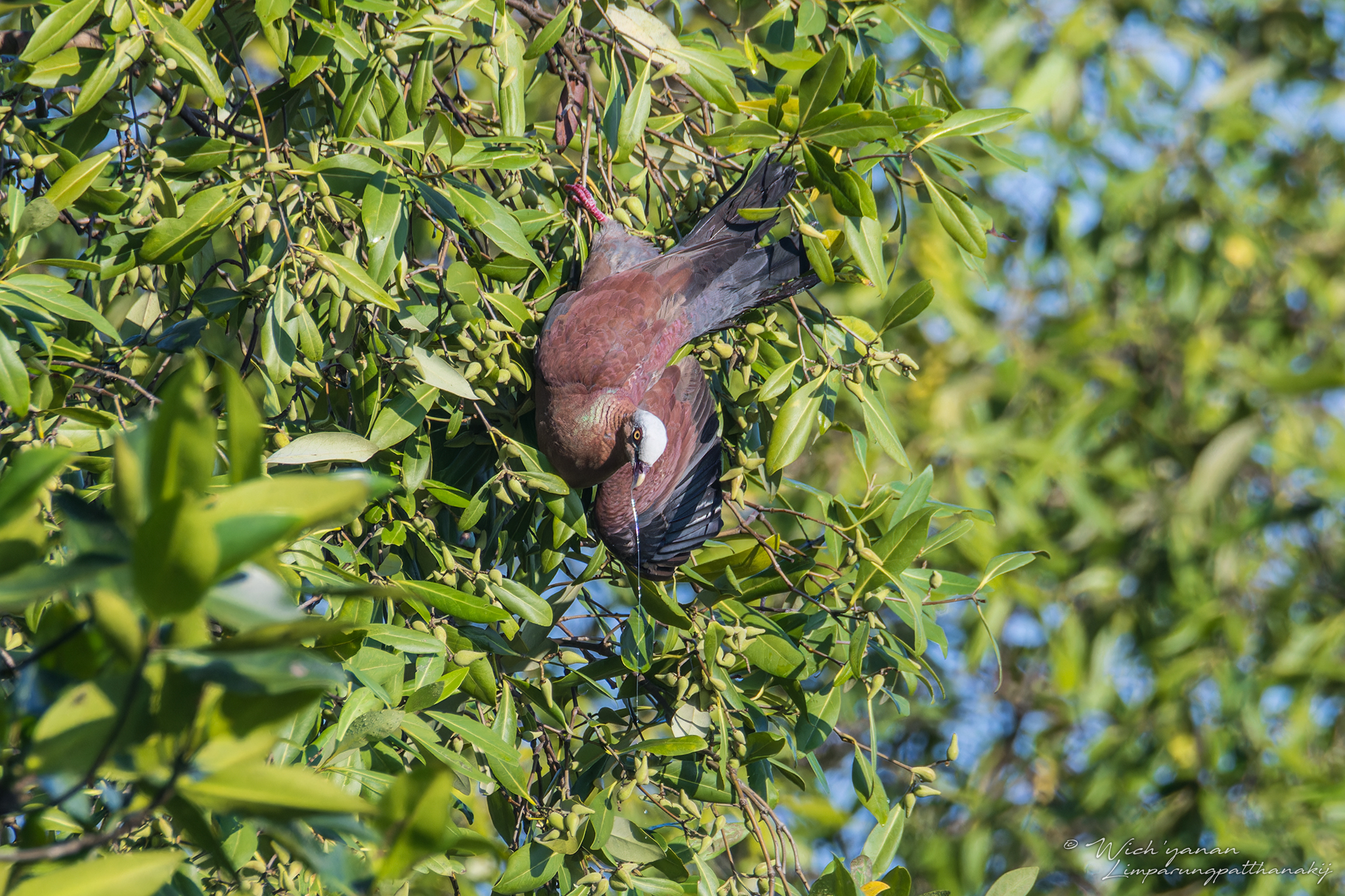
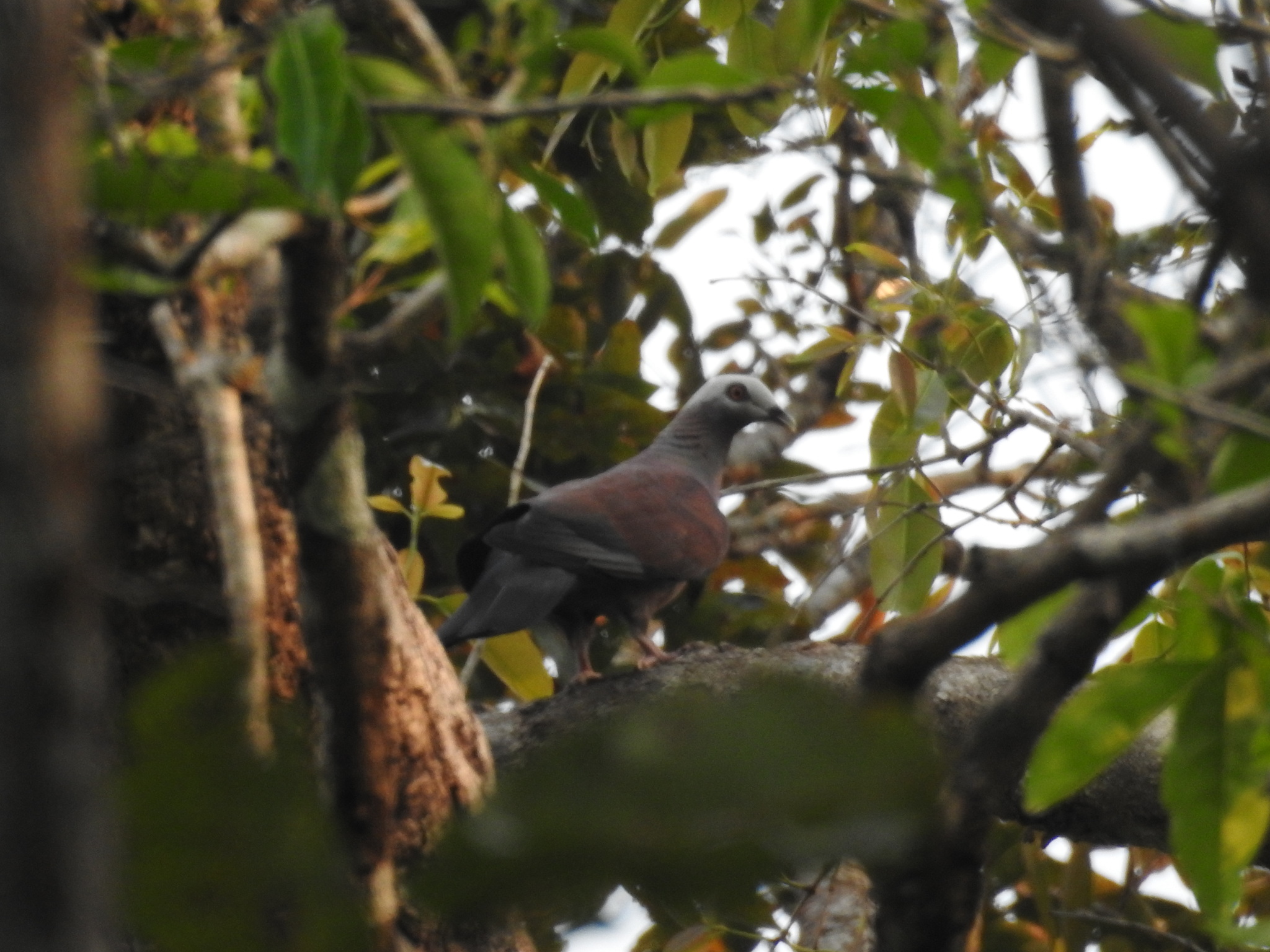
A substantially built pigeon measuring 36-40.5 cm in length, this species presents an all-dark chestnut-brown appearance with a striking pale crown that contrasts distinctly with the rest of the plumage. Adult males display a whitish-grey crown, purplish-maroon upperparts with a subtle green sheen on the neck, and more pronounced iridescence on the mantle and back. The underparts are vinous-brown, while the undertail-coverts show a slaty-grey tone. The tail and flight feathers are blackish. Females are similar but possess a browner crown and less glossy plumage overall. Juveniles are duller, with the crown matching the mantle initially, rufous-fringed wing-coverts and scapulars, reduced gloss on the upperparts, and greyer underparts. The legs are a vivid crimson, the iris creamy-yellow, and the bare skin around the eyes and cere is a distinctive magenta.
Identification
The pale-capped pigeon is most readily identified by its large size and contrasting pale crown against otherwise dark chestnut-brown plumage. The overall dark appearance and lack of neck patterns distinguish it from many other pigeons in its range. Some taxonomists have noted similarities to the silvery pigeon (Columba argentina), as both species share the characteristic absence of patterning on the back of the neck. The crimson legs and magenta facial skin provide additional distinguishing features in close views. Its slow, deliberate flight and tendency to remain motionless in foliage can help separate it from more active dove species.
Distribution & Habitat
This species exhibits a highly fragmented distribution across northern and northeastern India, Bangladesh, Myanmar, Thailand, Laos, Cambodia, and Vietnam. The type specimen originated from Chaibasa in Singhbhum, India, though records from Peninsular India remain sparse. Additional sight records exist from Maharashtra, Orissa, Bihar, and the Araku valley in Andhra Pradesh. It has been considered a seasonal visitor to Sri Lanka, while in parts of Thailand it appears as a winter visitor, with individuals roosting in mangrove areas far from the mainland. The species primarily inhabits lowland forest environments up to 1,600 meters elevation, including primary and secondary evergreen forest, open deciduous dipterocarp forest, bamboo stands, and agricultural areas adjacent to forest. Coastal habitats, mangroves, and small forested islands appear to be utilized mainly during the non-breeding season.
Behavior & Ecology
These pigeons forage in small groups, typically active during the cooler portions of the day—morning and evening—while resting during the heat of midday. They are primarily frugivorous, feeding on berries and fruits in the canopy, though seeds and grains constitute important dietary components in certain regions. Observers have recorded them feeding on Eugenia trees near rivers and noting a particular attraction to Cinnamon trees in Sri Lanka. Their call is described as low and similar to that of the green imperial pigeon but notably shorter and less prolonged. The breeding season spans May through August, during which the flimsy platform nest is constructed low in trees, typically containing one egg, though two have been recorded on rare occasions.
Conservation
The pale-capped pigeon appears to have never been common throughout most of its range and currently occurs rarely and erratically across its distribution. While specific population estimates are lacking, its patchy occurrence and apparent declines in areas where it was previously recorded suggest cause for concern. The species faces ongoing habitat loss from deforestation throughout its range, though the full extent of threats remains poorly documented due to its elusiveness and the limited number of field records.
Culture
No specific cultural significance, folklore, or mythological associations were documented in available sources.
Source: Wikipedia · CC BY-SA 3.0
Taxonomy
- Order
- Columbiformes
- Family
- Columbidae
- Genus
- Columba
- eBird Code
- pacpig1
Distribution
southern Tibet to eastern India, Myanmar, Thailand, and Hainan (off southern China)
Data Sources
Species description from Wikipedia, licensed under CC BY-SA 3.0.
Bird images and sounds sourced from GBIF, contributed by citizen scientists worldwide under Creative Commons licenses.
Taxonomy data from AviList 2025.