





Rock Dove
Columba livia
原鸽
Introduction
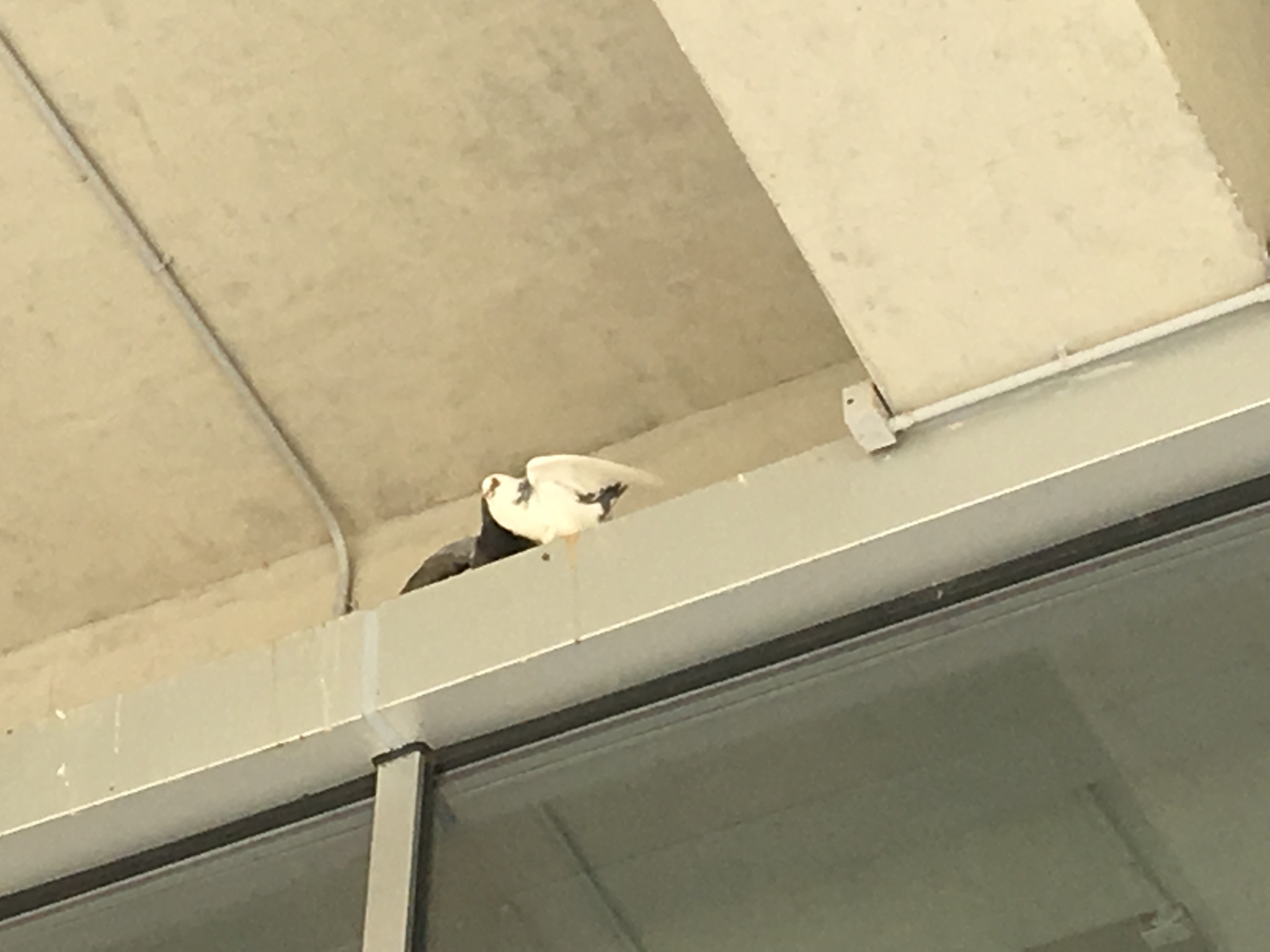
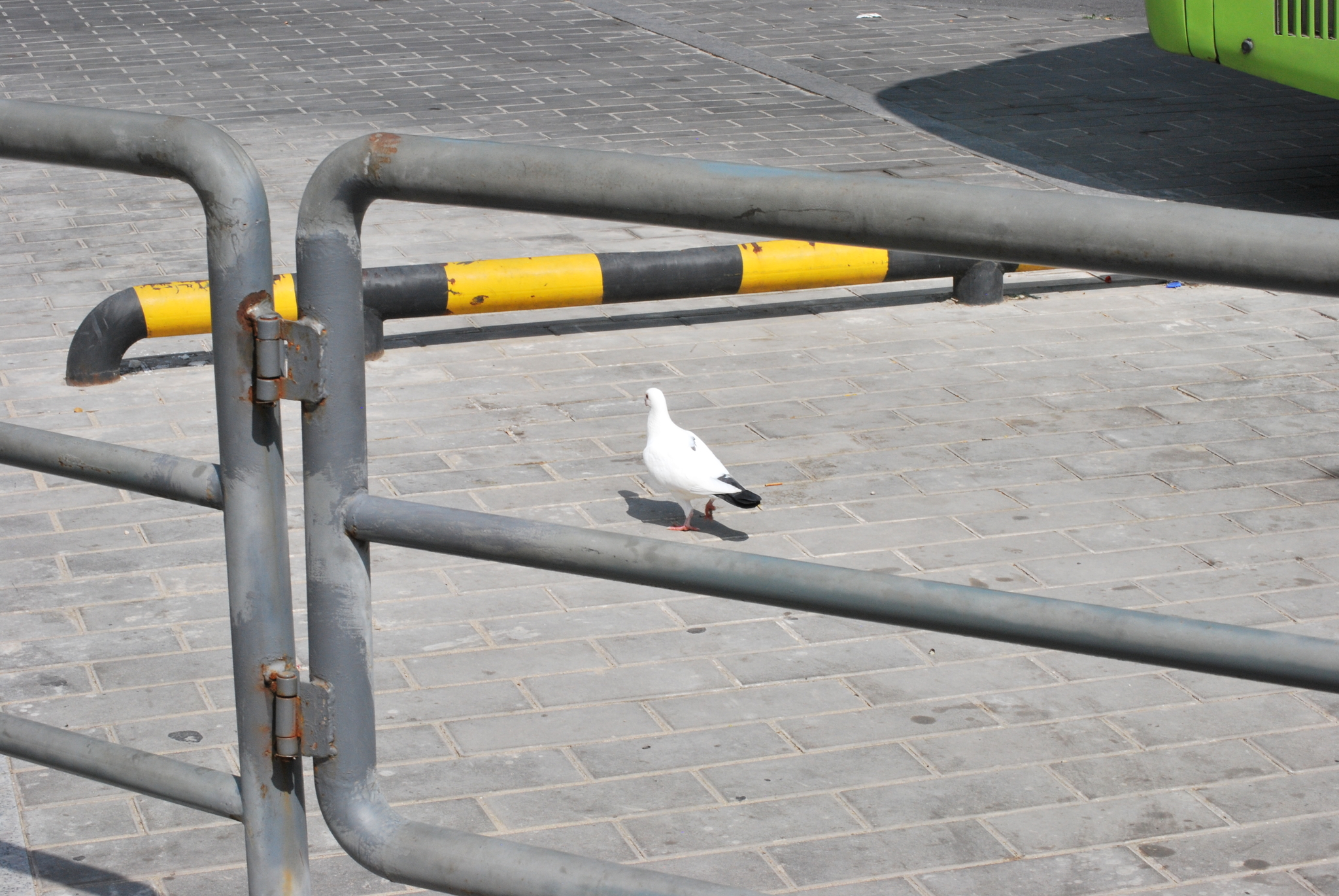
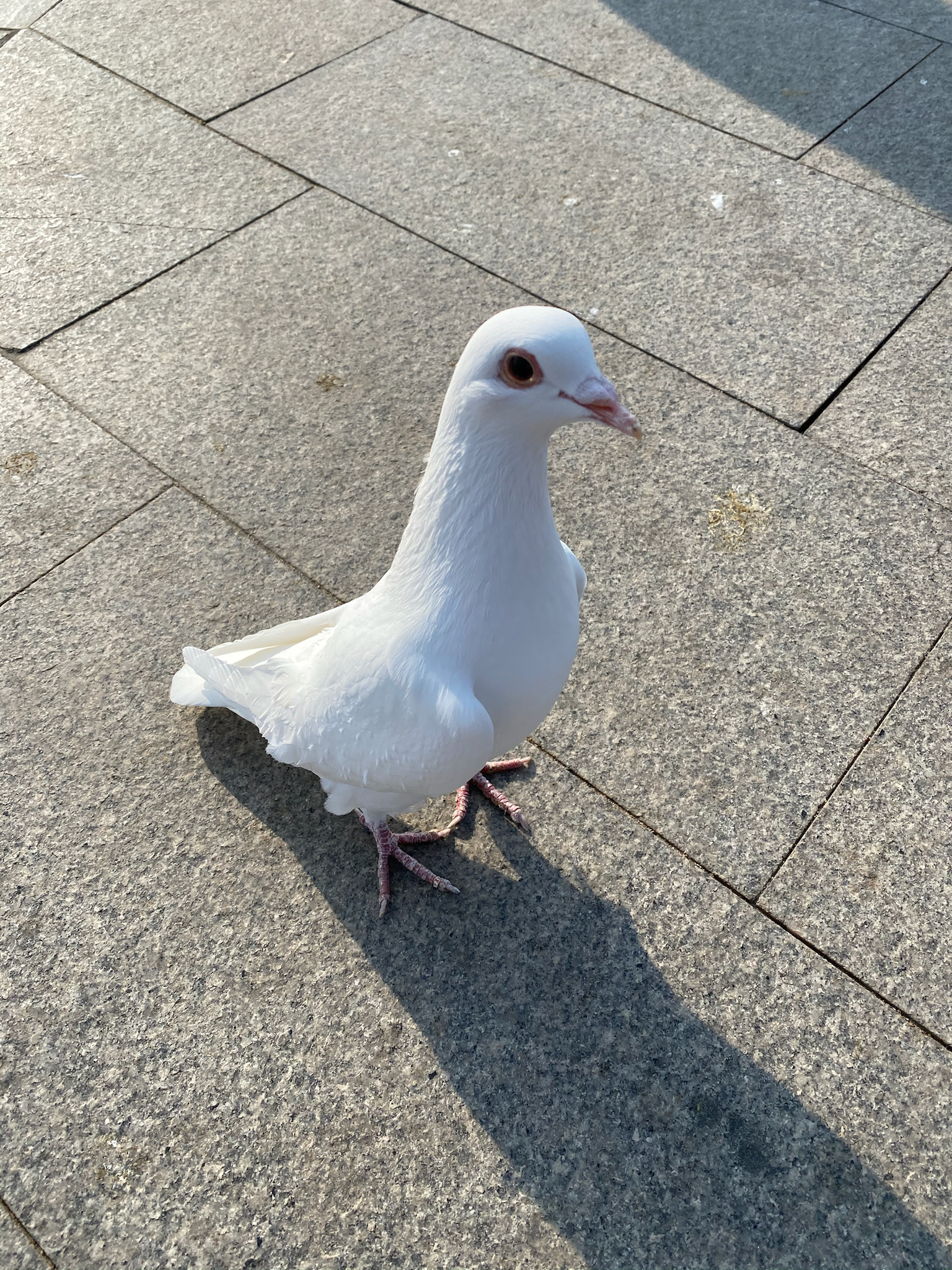
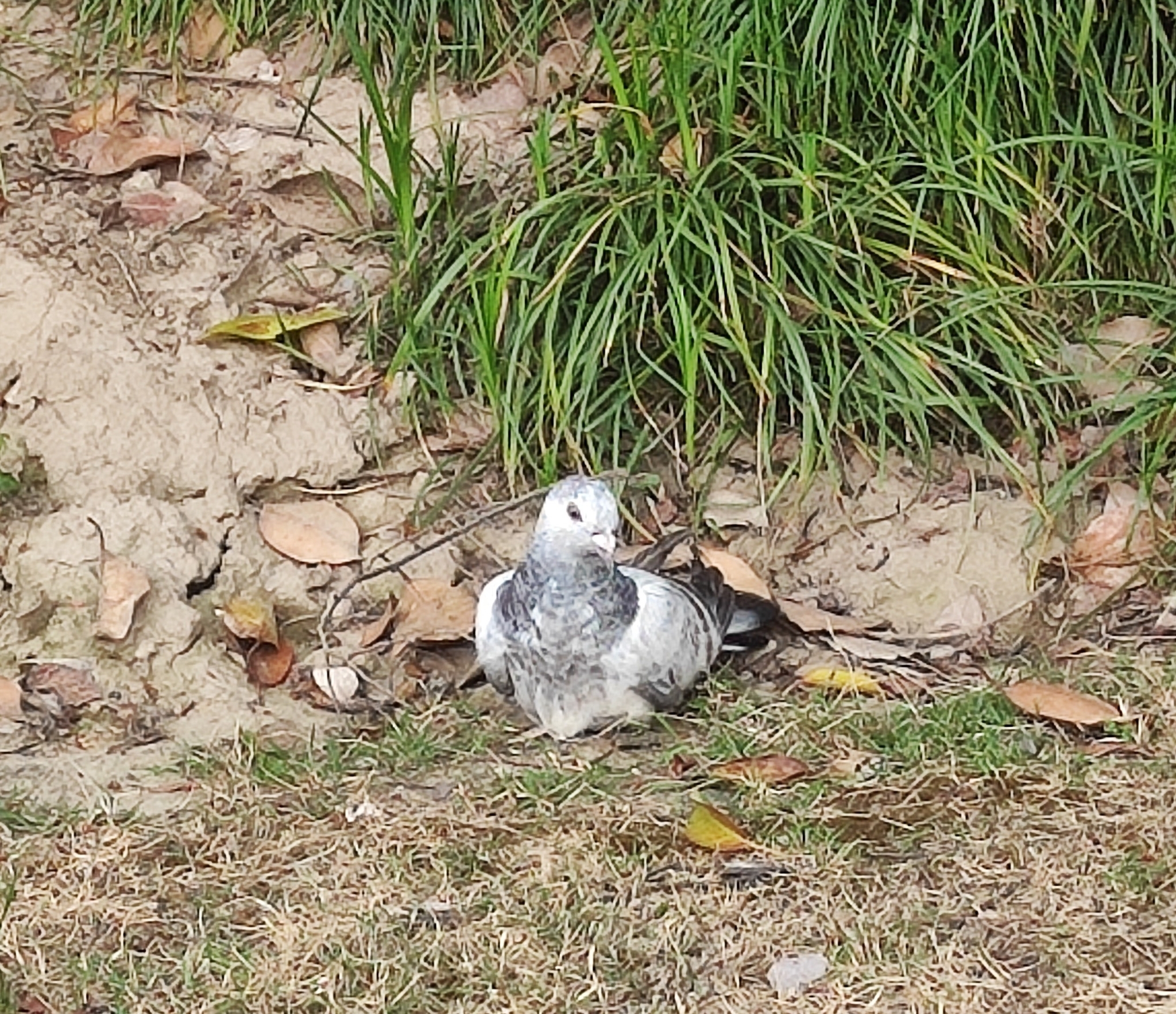
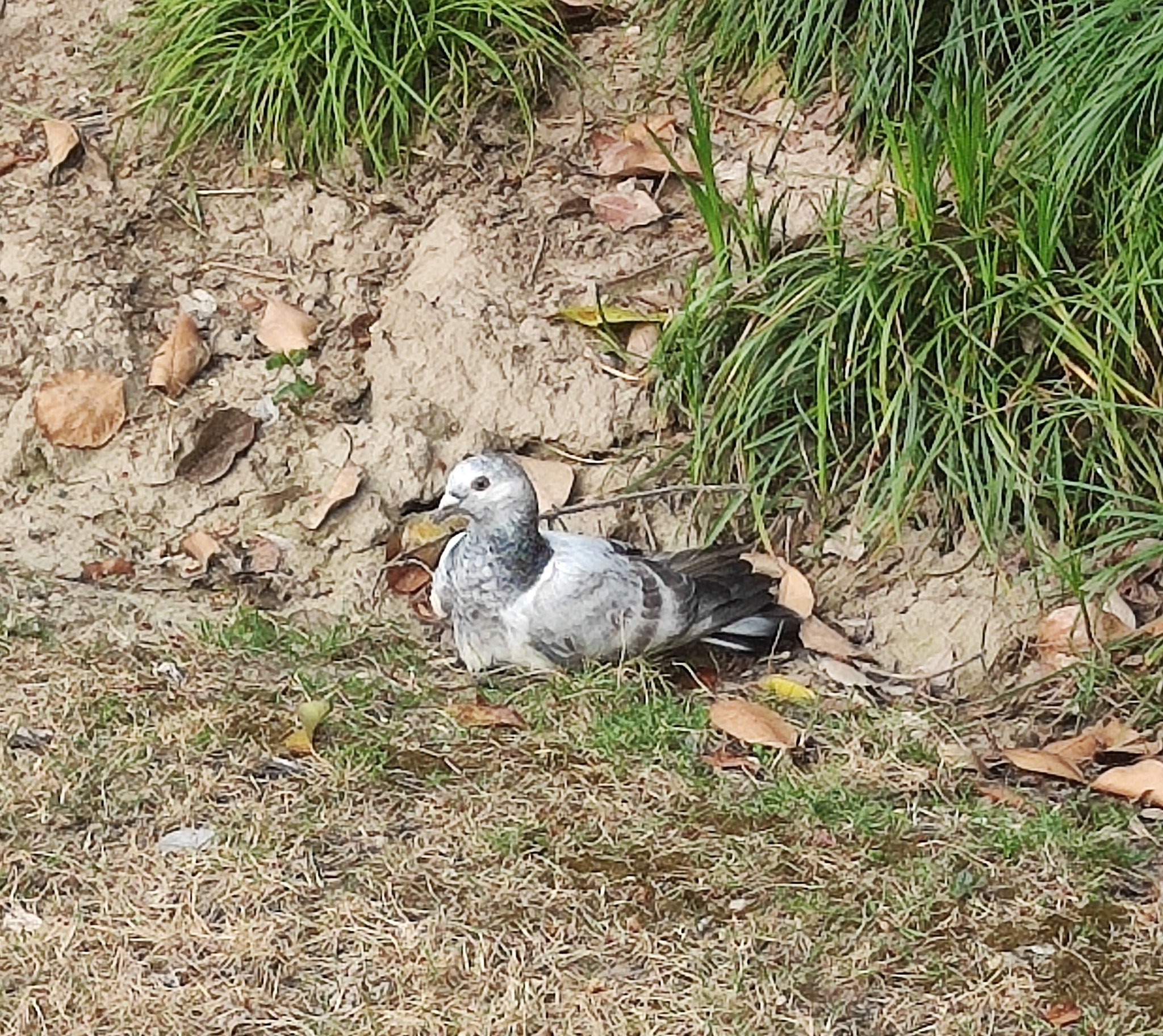
The rock dove (Columba livia) is a columbid species native to Europe, North Africa, and western Asia. It has been domesticated for at least 5,000 years and serves as the ancestral wild form of domestic pigeons and feral populations worldwide. Darwin conducted detailed studies of domestic pigeon breeds derived from this species. The species inhabits cliff habitats and has successfully adapted to human structures including buildings, bridges, and urban areas. Its global population is estimated at 120 million individuals. Feral and domestic populations display diverse color variations, including red, brown, checkered, uniform, and pied plumage patterns.
Description
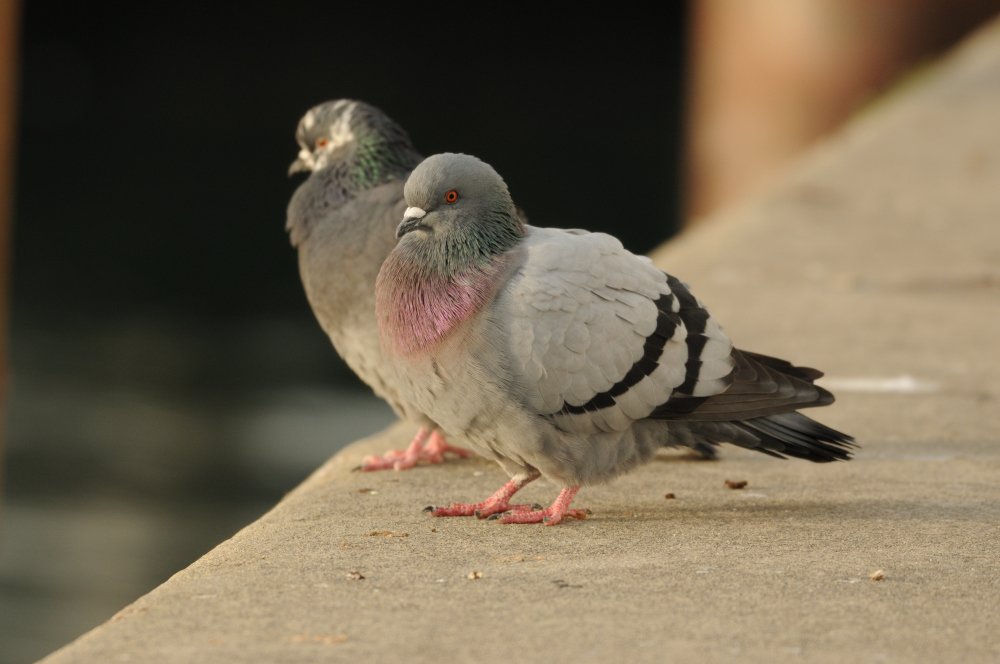
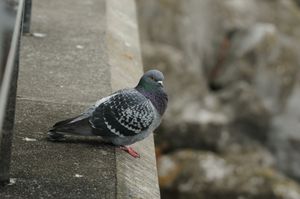
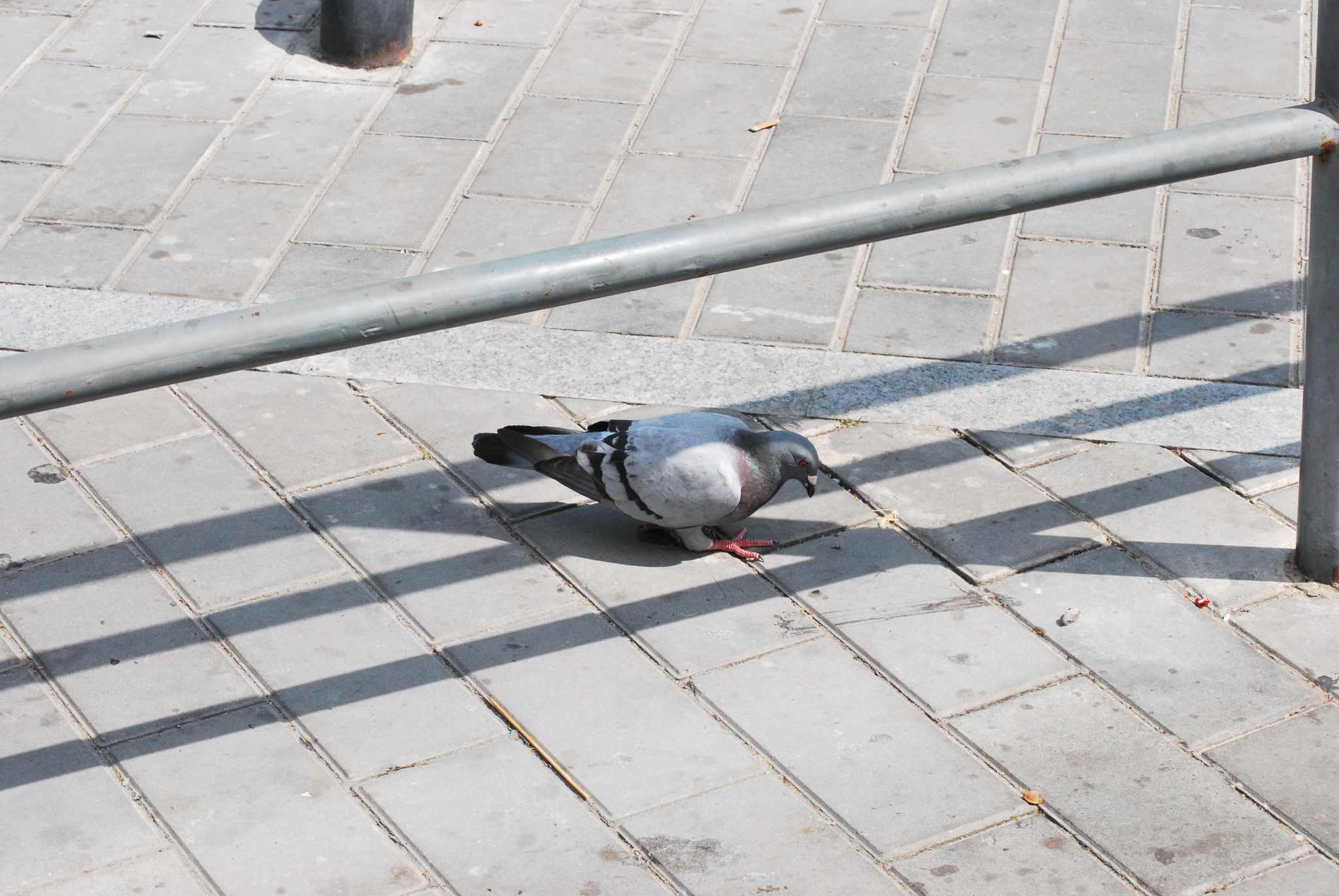
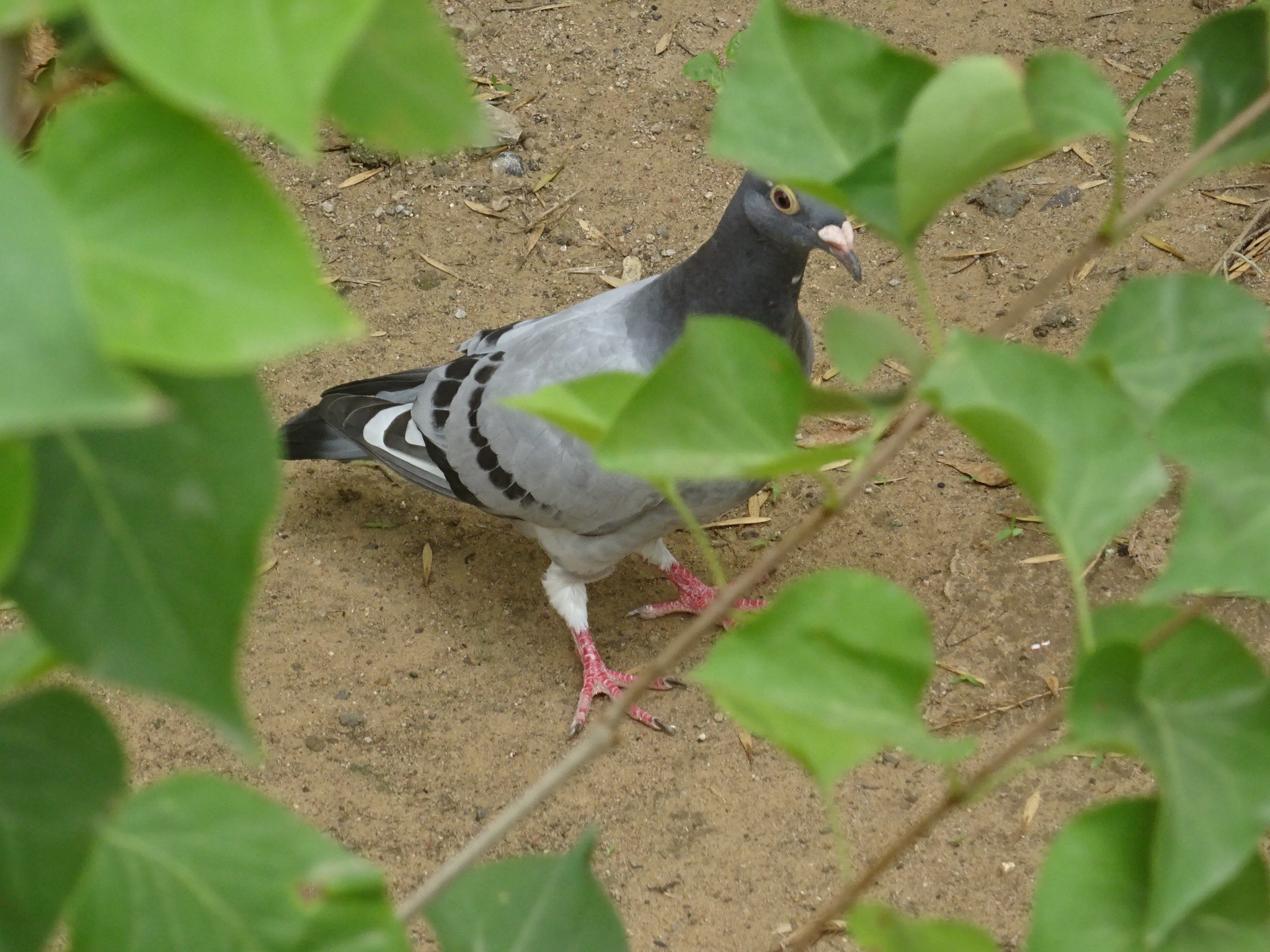
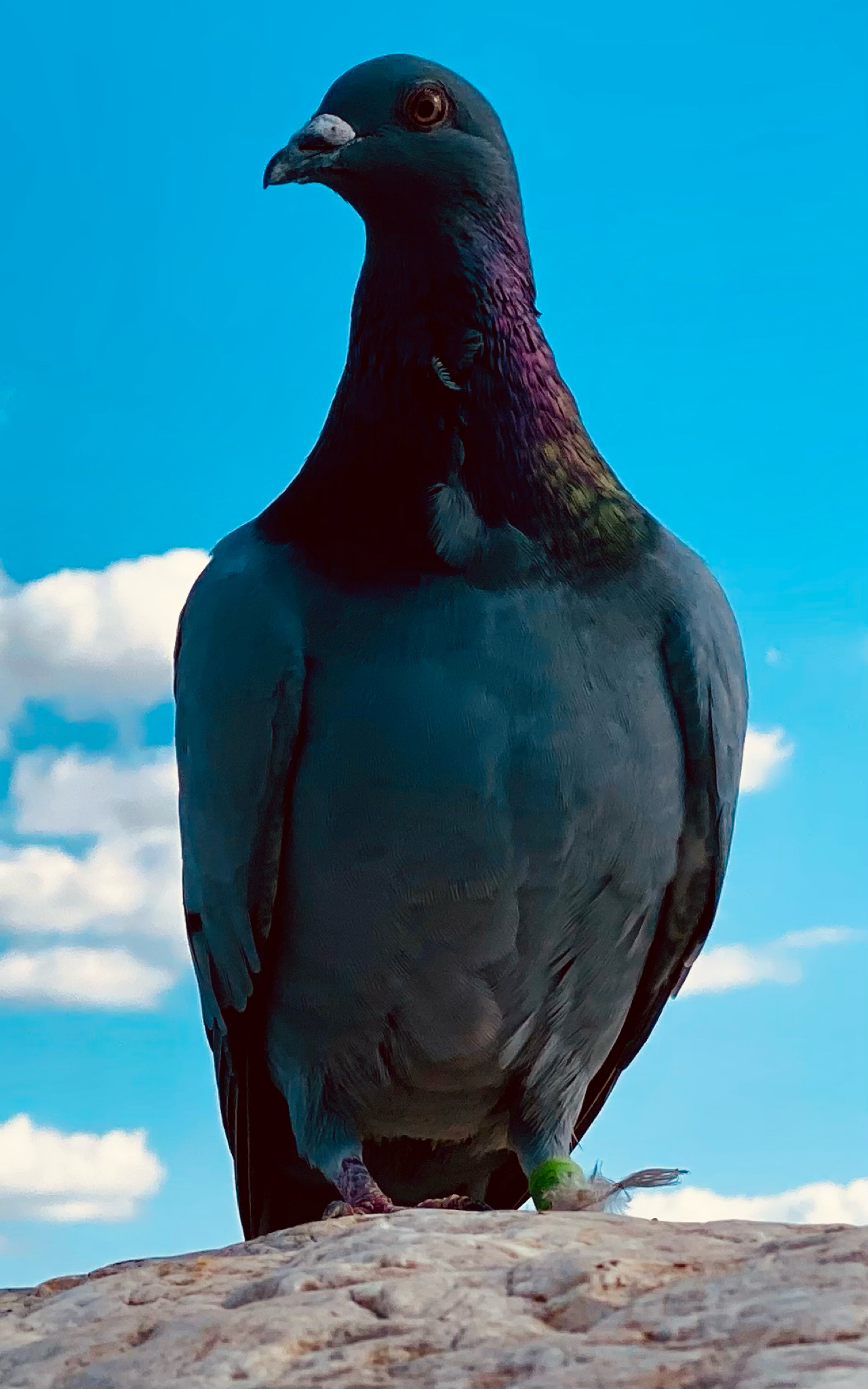
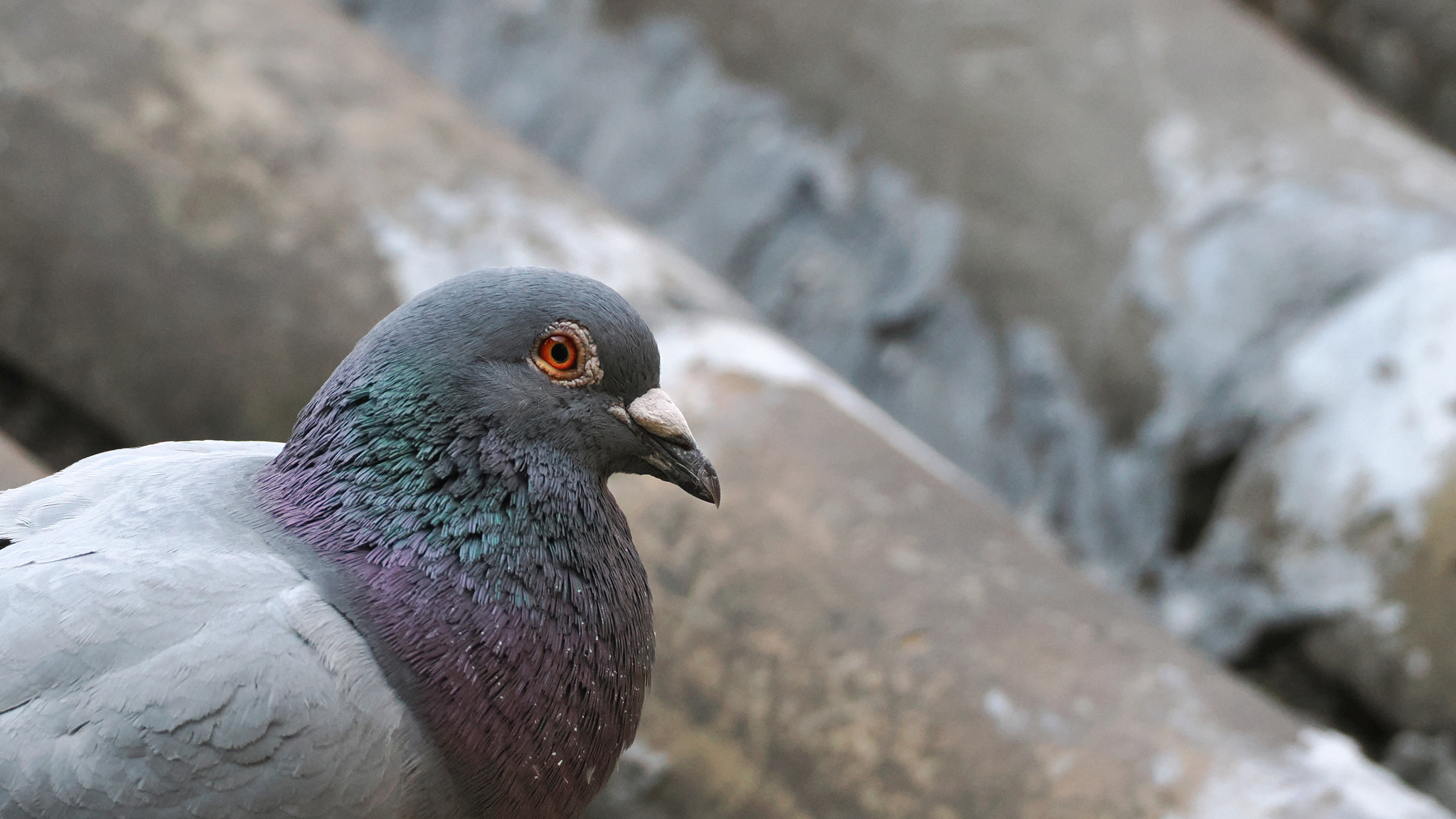
A medium-sized pigeon, this species measures 30 to 35 centimeters in length with a wingspan of 62 to 68 centimeters. Wild individuals weigh between 238 to 380 grams, though domestic breeds may exceed this range. The head, neck, and chest display dark bluish-grey plumage, with the neck feathers showing distinctive iridescence in shades of green to reddish-purple. The pure white lower back serves as a key identifying feature, while each wing bears two black bars against pale grey plumage. The tail features a black terminal band with white margins on the outer feathers. The eyes are red-brown, and the feet range from red to pink. Sexual dimorphism is minimal, though females typically show less intense and more restricted iridescence on the neck. The bill is grey-black with a small off-white cere. In flight, the bird holds its wings in a pronounced V shape and glides frequently.
Identification
The white lower back combined with two black wing bars provides the most reliable field identification marks. When viewed overhead, the white underwing becomes conspicuous. The characteristic coo call— softer and more wavering than that of the wood pigeon—helps distinguish this species. Unlike the wood pigeon, it lacks the white neck patch and wing stripes. Feral and domestic descendants may show highly variable plumage but often retain the distinctive wing bars. The species frequently circles overhead in areas with human structures, and the noisy clapping take-off flight sound alerts observers to their presence.
Distribution & Habitat
The natural range encompasses western and southern Europe, North Africa, and extends into South Asia. Human introduction since 1603 has expanded the species to nearly worldwide distribution. The global extent of occurrence covers approximately 10 million square kilometers. Wild populations historically inhabited cliff faces, coastal cliffs, mountain gorges, and rocky canyons, though they avoid dense vegetation. The species demonstrates strong fidelity to rocky terrain, requiring crevices for nesting. Most populations are resident year-round, though some may undertake short-distance movements. The bird readily adopts human structures—skyscrapers, bridges, farm buildings, and abandoned structures—as artificial cliff substitutes, explaining its success in urban environments.
Behavior & Ecology
The species exhibits complex social organization, forming flocks of 50 to 500 birds that divide into 'producers' who locate food and 'scroungers' who exploit these discoveries. Breeding occurs most frequently in spring and summer, though the ability to produce crop milk enables year-round reproduction with up to six broods annually. Both parents share 17 to 19 day incubation duties and subsequent chick-rearing. The nest consists of a flimsy platform of sticks and straw placed on cliff ledges or building crevices. The diet is primarily granivorous, consisting of seeds, fruits, and grains, supplemented occasionally by invertebrates. Vocalizations include a soft, wavering coo and a grunt-like alarm call. Courtship displays involve bowing, strutting, tail-fanning, and inflated throat displays. The species drinks by dipping its bill continuously without tilting its head back.
Conservation
The IUCN Red List classifies this species as Least Concern due to its extremely large range and abundant global population. European populations alone number an estimated 17 to 28 million individuals, with worldwide numbers reaching 120 million when including domestic and feral birds. The nominate wild subspecies persists most notably in Scotland's Outer Hebrides, though the wild type faces conservation concerns in many regions where interbreeding with domestic and feral populations occurs. The species faces persecution as a public nuisance, potential disease concerns, and predation from raptors including peregrine falcons. Urban-adapted populations with darker plumage may possess enhanced ability to store trace metals, potentially mitigating pollution effects in city environments.
Culture
This species holds a unique position in scientific history as the central example in Charles Darwin's论证 of evolution through artificial selection. Darwin demonstrated that all hundreds of domestic pigeon breeds, despite vast morphological differences, descended from the wild rock dove—effectively showing that human selection paralleled natural selection. The species served practical purposes throughout human history as messenger carriers in both peacetime and wartime, food source, and fancy breeds for exhibition. Feral pigeons feature prominently in urban environments worldwide, sometimes called city doves or street pigeons. Their long association with human civilization—spanning at least 5,000 years of domestication—makes them one of the longest-associated bird species with humans, adapting remarkably to coexist in virtually every human-inhabited continent.
Source: Wikipedia · CC BY-SA 3.0
Taxonomy
- Order
- Columbiformes
- Family
- Columbidae
- Genus
- Columba
- eBird Code
- rocpig
Subspecies (9)
-
Columba livia dakhlae
western Egypt (Dakhla and Kharga oases)
-
Columba livia gaddi
Iran to Azerbaijan, Transcaspia, Afghanistan, and Uzbekistan
-
Columba livia gymnocycla
Mauritania, Mali, and Ghana; coastal Senegambia and Guinea
-
Columba livia intermedia
peninsular India and Sri Lanka
-
Columba livia livia
British Isles, western Mediterranean, and northern Africa eastwards to southern Urals, western Kazakhstan, northern Caucasus, and Iraq
-
Columba livia neglecta
mountains of central Asia
-
Columba livia palaestinae
Palestine, Israel, Jordan, and the Sinai and Arabian peninsulas
-
Columba livia schimperi
eastern Egypt, southern Sudan, and Eritrea
-
Columba livia targia
central Sahara to central Sudan
Data Sources
Species description from Wikipedia, licensed under CC BY-SA 3.0.
Bird images and sounds sourced from GBIF, contributed by citizen scientists worldwide under Creative Commons licenses.
Taxonomy data from AviList 2025.