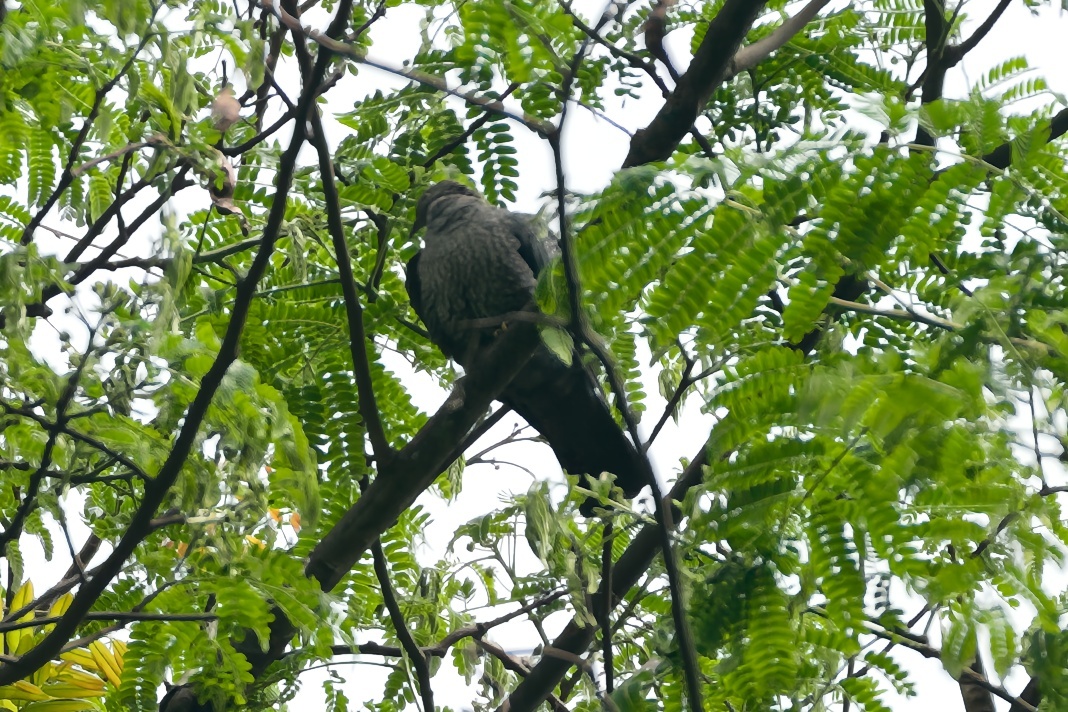
Columbiformes / Columbidae / Columba
Speckled Wood Pigeon
Columba hodgsonii · 斑林鸽
Introduction
A monotypic species in the family Columbidae and genus Columba. It inhabits evergreen and semi-evergreen hill forests at elevations of 1,800–4,000 meters across the Himalayas and parts of Southeast Asia. The bird is primarily frugivorous, foraging in small flocks on acorns and berries, and undertakes altitudinal movements in winter. It is classified as Least Concern on the IUCN Red List.
Description
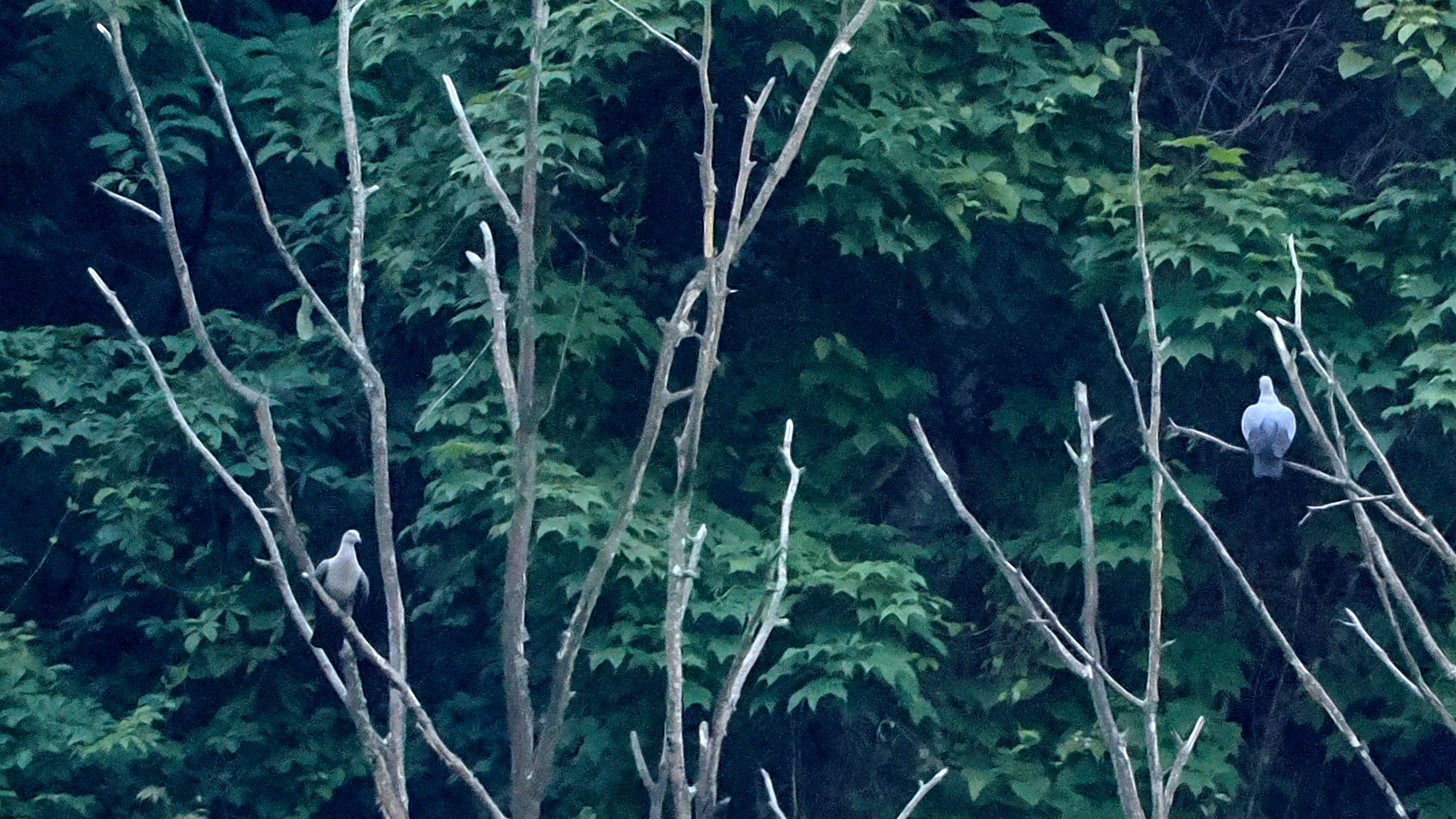
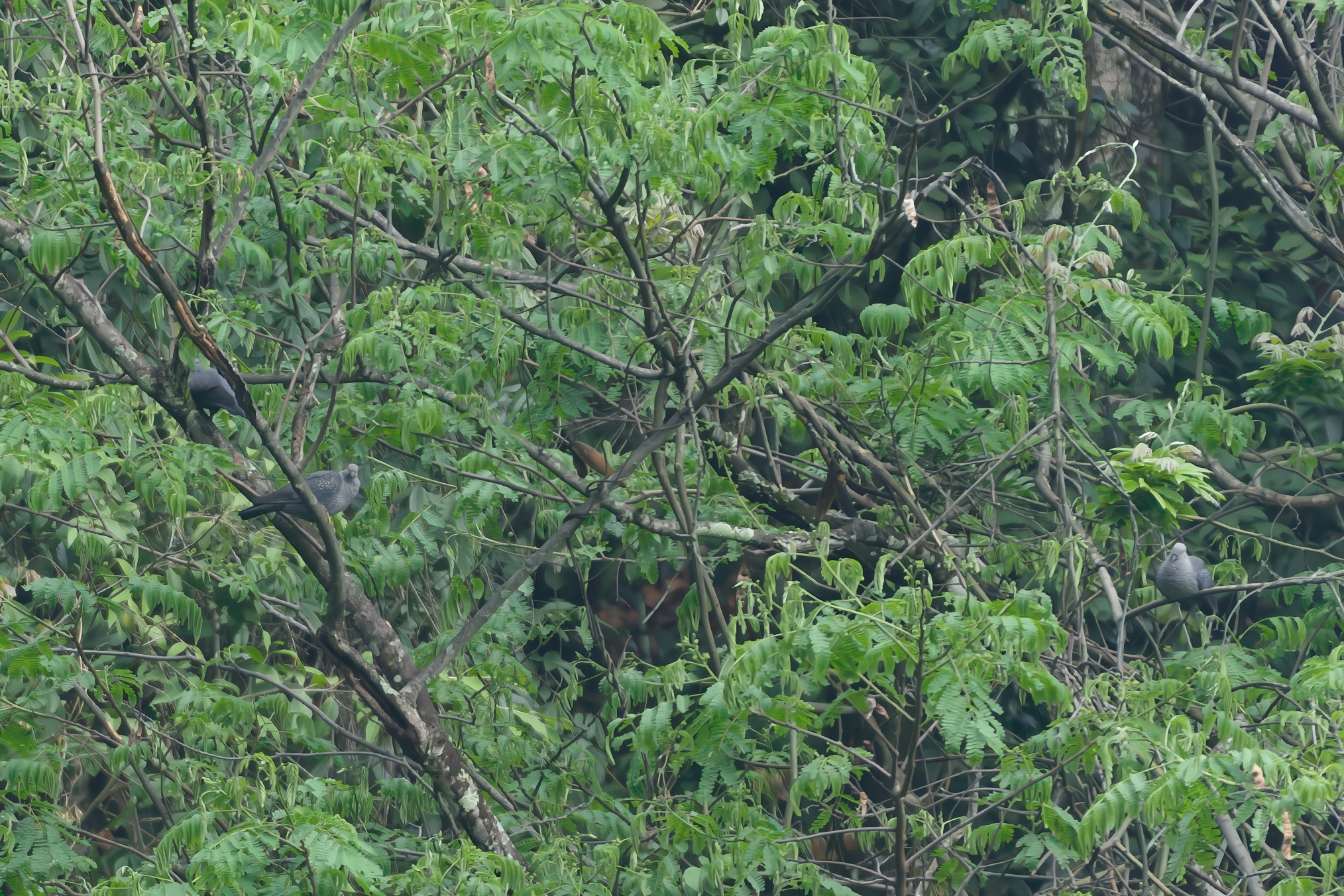
Measures 38–40 cm (15–15.5 in) in length. Adult males have a pale gray head, pinkish-silver breast speckled with black spots, and a maroon belly with pinkish-white streaks. The mantle and upper wing-coverts are dark reddish-purple or burgundy with silver flecks, transitioning to bluish-gray on outer coverts. Females exhibit less vibrant coloration with a grayish-brown head, slaty dark brown mantle lacking maroon tones, and dark brownish-gray underparts. Juveniles resemble females but are browner and paler with indistinct speckles. Both sexes have blackish-brown tails and primaries. Legs are brownish yellow-greenish with bright yellow claws. The beak transitions from blueish-purple at the base to black at the tip. Iris is white-gray in males and gray-brown in females.
Identification
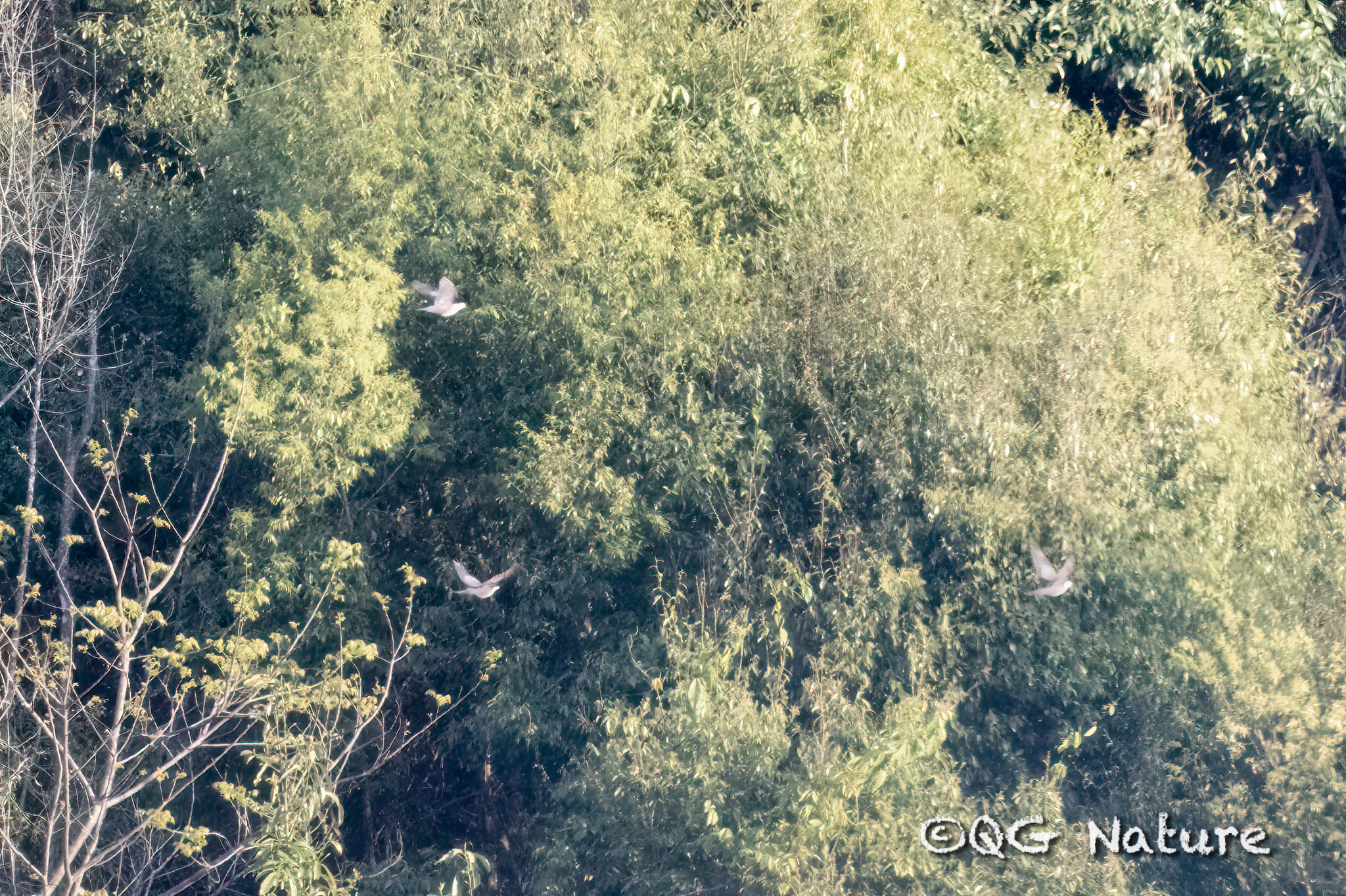
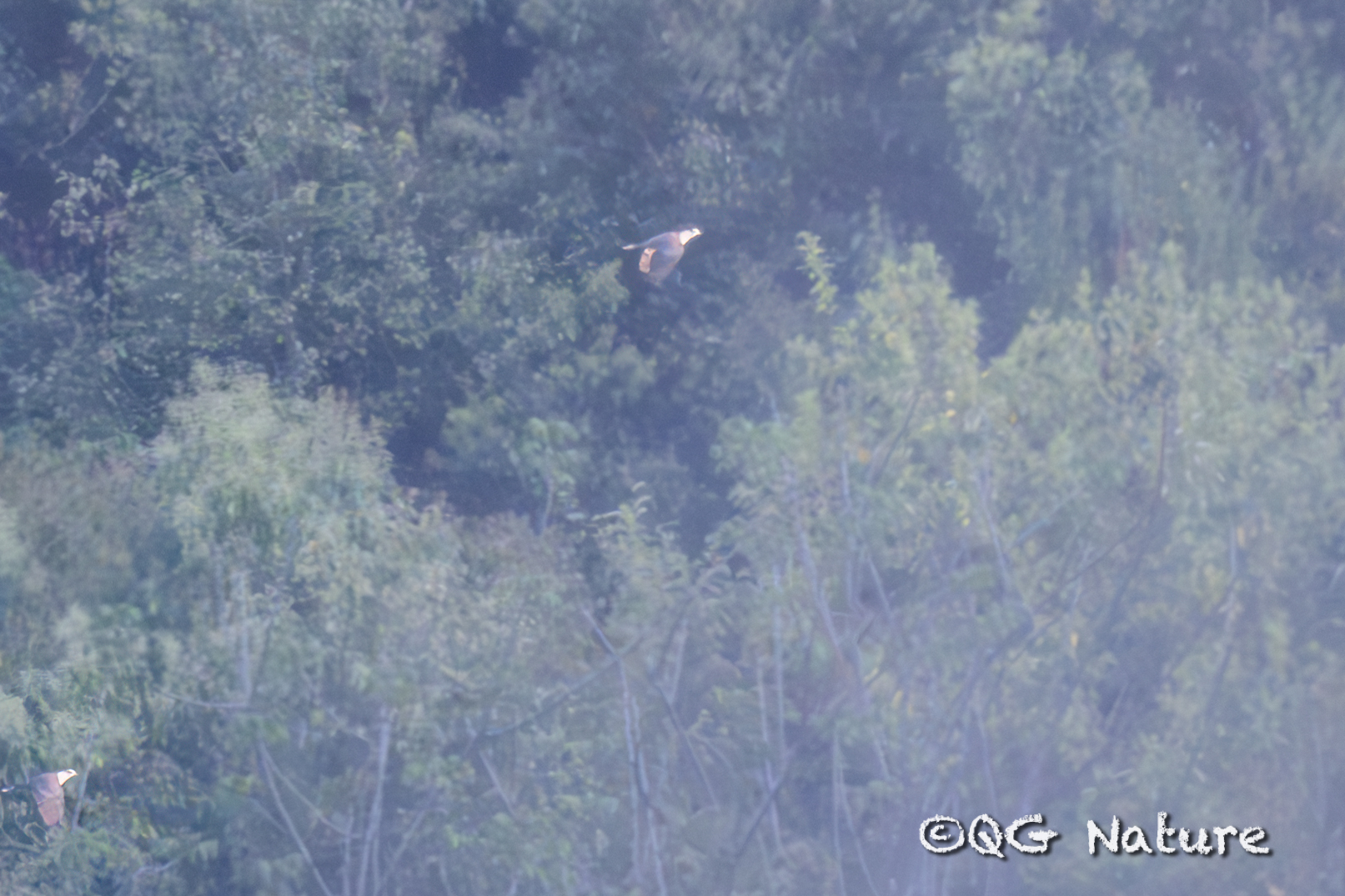
Males are distinguished by a pinkish-silver, black-speckled breast and maroon belly, contrasting with the female's duller gray-brown plumage. Key field marks include silver-flecked hindneck feathers and white spots on inner wing-coverts in males. Flight involves blackish-brown wings and tail. Vocalizations are rare but consist of a deep, throaty 'whock-whroo..whrooo' call, often used as an alarm signal.
Distribution & Habitat
Distributed across the Himalayas from Kashmir to western and central China (including southern Gansu, western Sichuan, and western Yunnan), as well as India, Myanmar, northern and western Thailand, northern and western Laos, Pakistan, Nepal, Bhutan, and Afghanistan. Inhabits tall evergreen and semi-evergreen hill forests dominated by oak and Rhododendron at 1,800–4,000 meters (5,900–13,100 ft). May descend to 1,350 meters (4,430 ft) in winter depending on food availability.
Behavior & Ecology
Primarily frugivorous and granivorous, feeding on acorns, berries, drupes, fruits (such as Prinsepia utilis and Ficus), herbs, and cereals. Often forages on the ground for leftover grains in pairs, small groups, or flocks of 6-10 individuals. Breeding occurs from May to August, particularly between 1,800 and 3,300 meters. Nests are platforms of interlaced twigs placed 3–8 meters above ground in oak trees or nullahs. Clutch size is usually one bright white egg. No elaborate courtship displays are performed. Mostly resident but undertakes local and altitudinal movements; some populations in northern Thailand may be migrants.
Conservation
Classified as Least Concern on the IUCN Red List (assessment conducted in 2016). Although not globally threatened, it is generally regarded as rare and uncommon due to its range covering remote and inaccessible areas.
Source: Wikipedia · CC BY-SA 3.0
Taxonomy
- Order
- Columbiformes
- Family
- Columbidae
- Genus
- Columba
Distribution
montane forest of Kashmir to India, west-central China, and Myanmar
Data Sources
Species description from Wikipedia, licensed under CC BY-SA 3.0.
Bird images and sounds sourced from GBIF, contributed by citizen scientists worldwide under Creative Commons licenses.
Taxonomy data from AviList 2025.