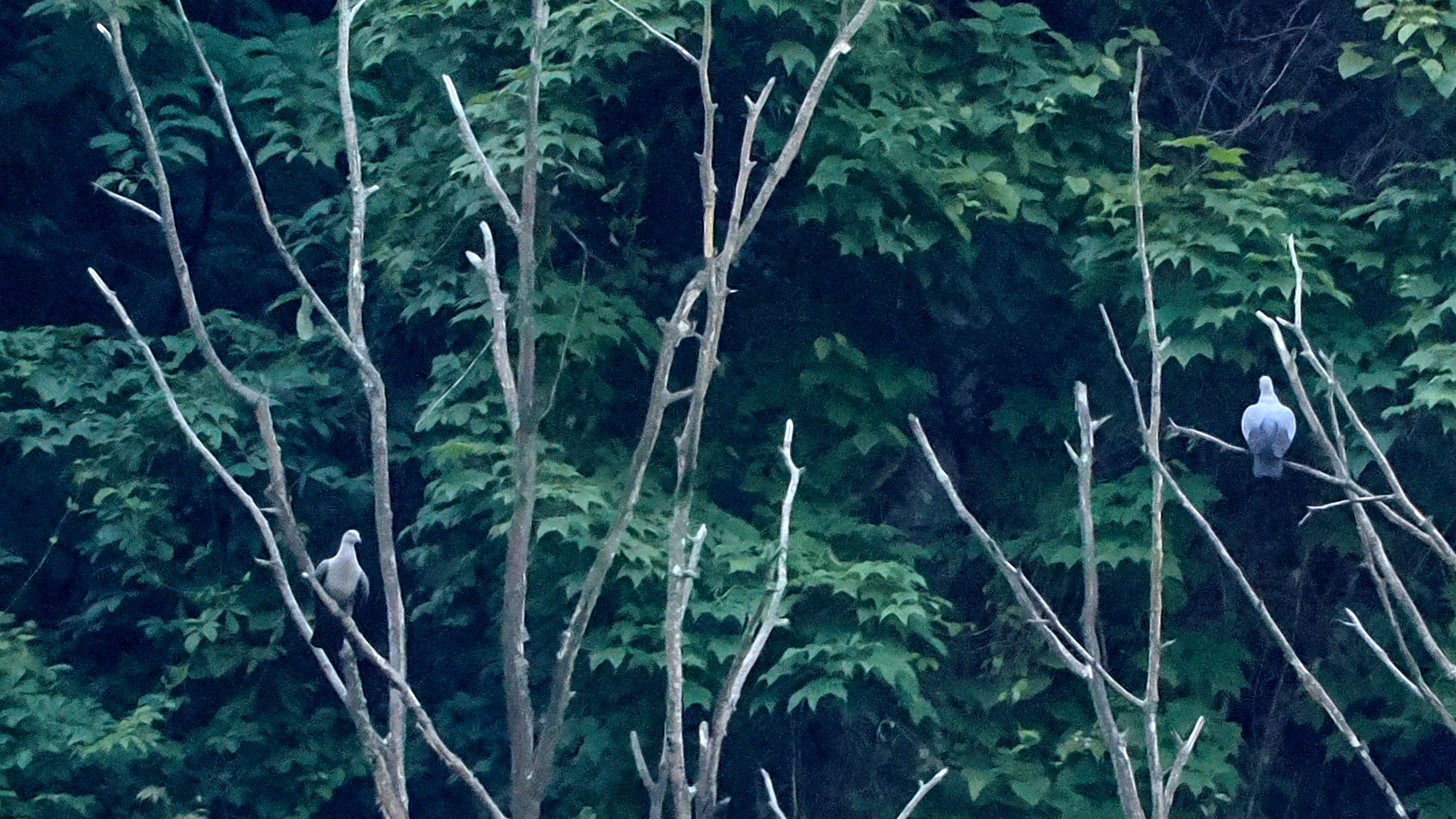
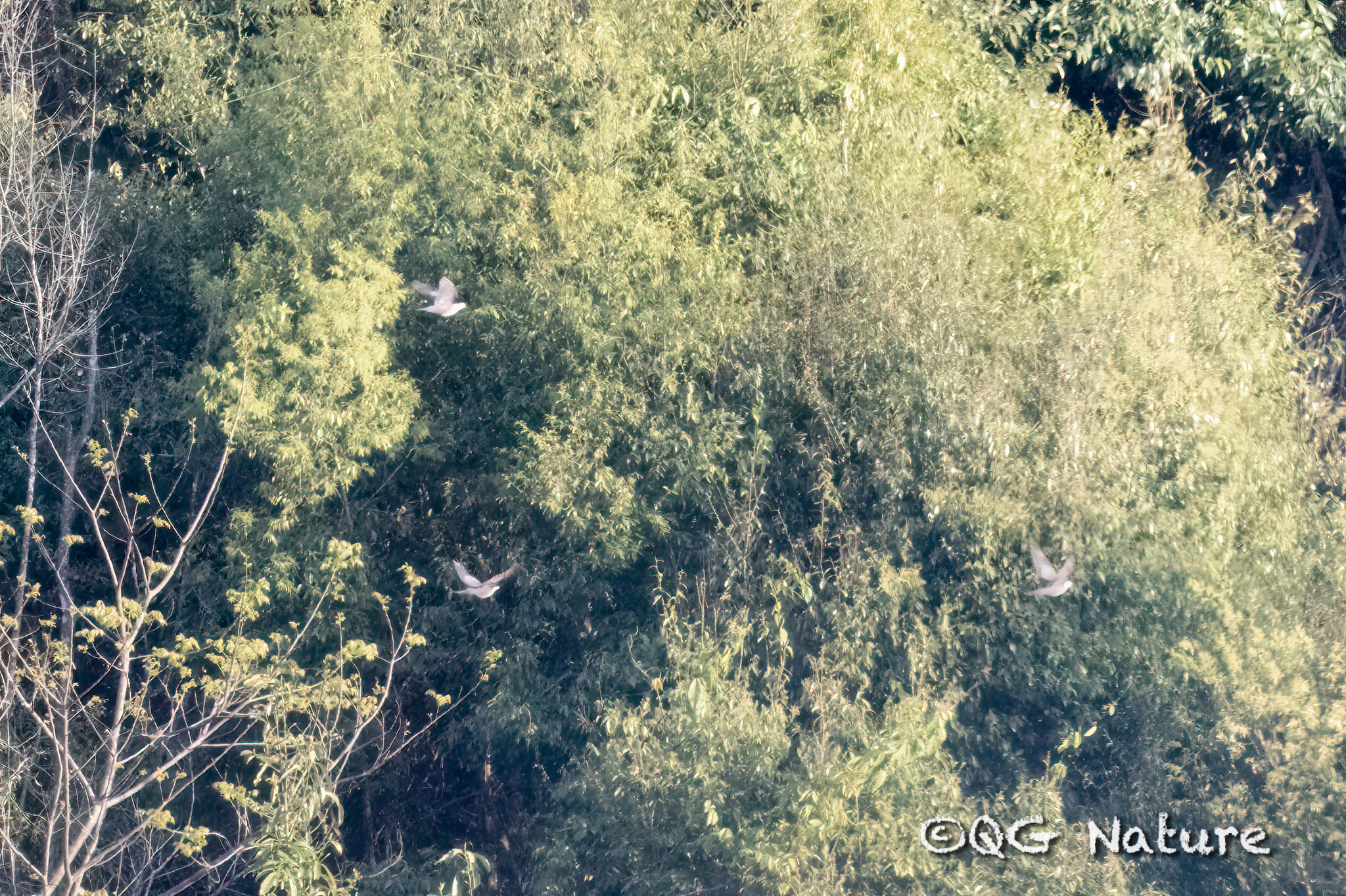
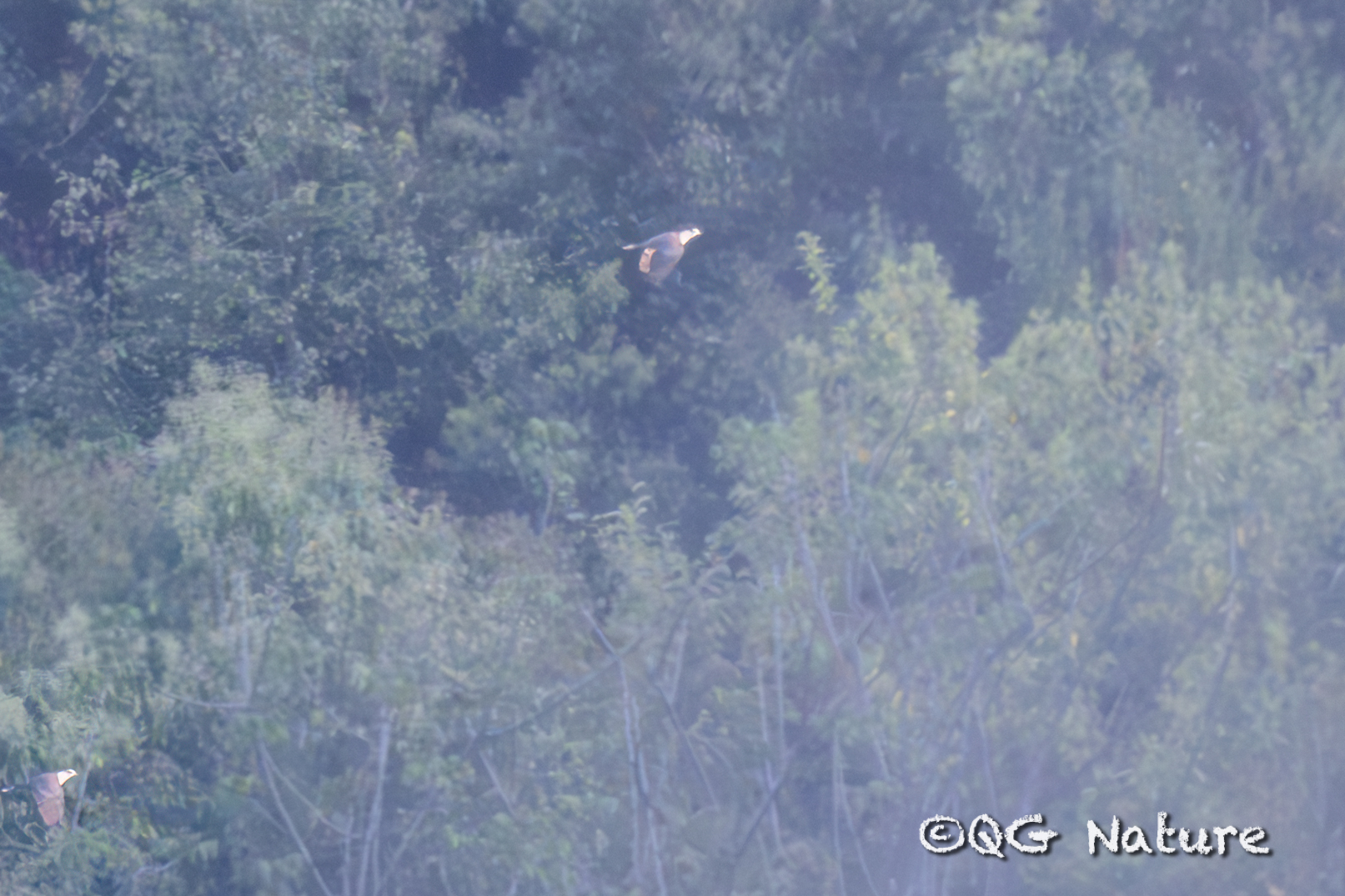
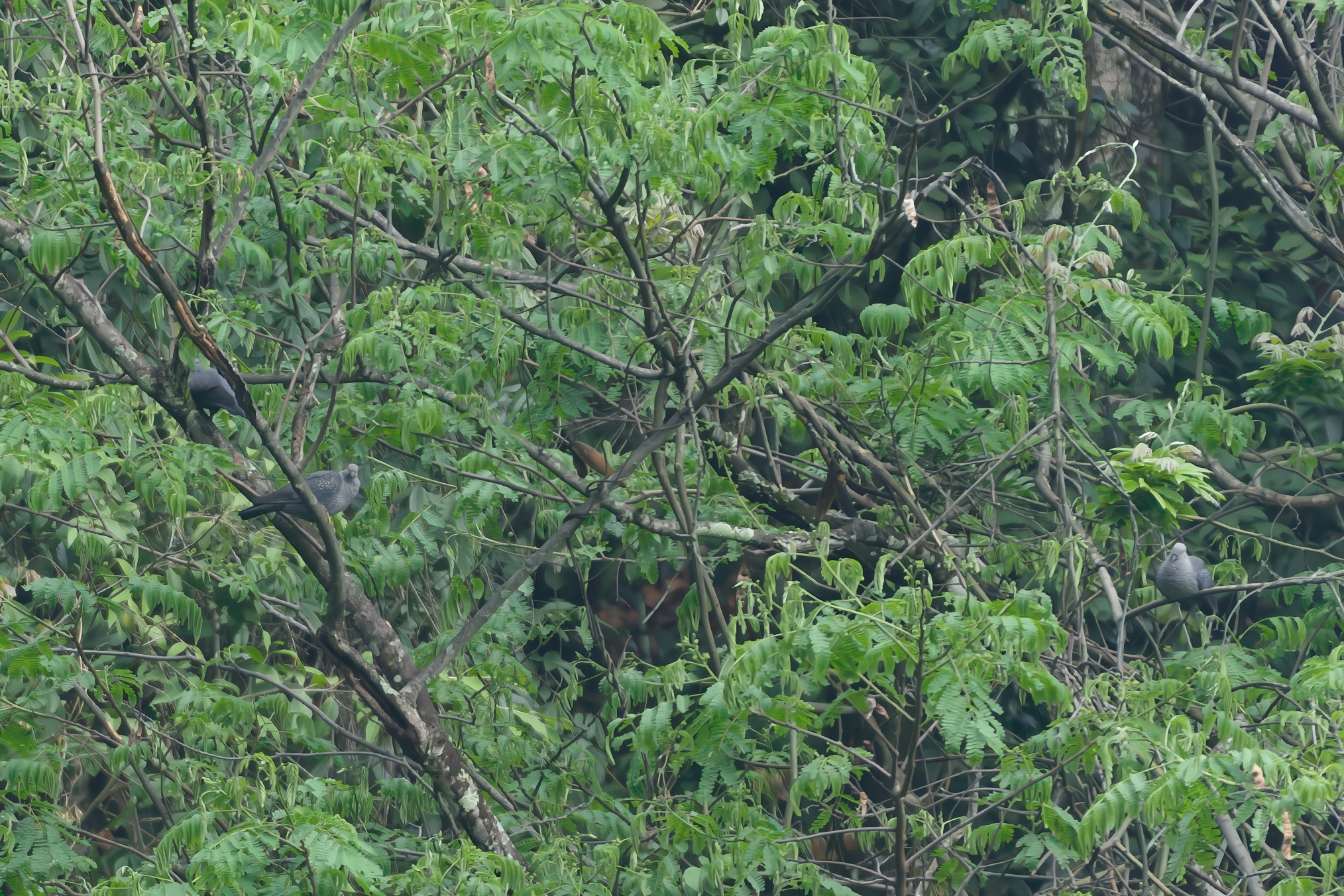
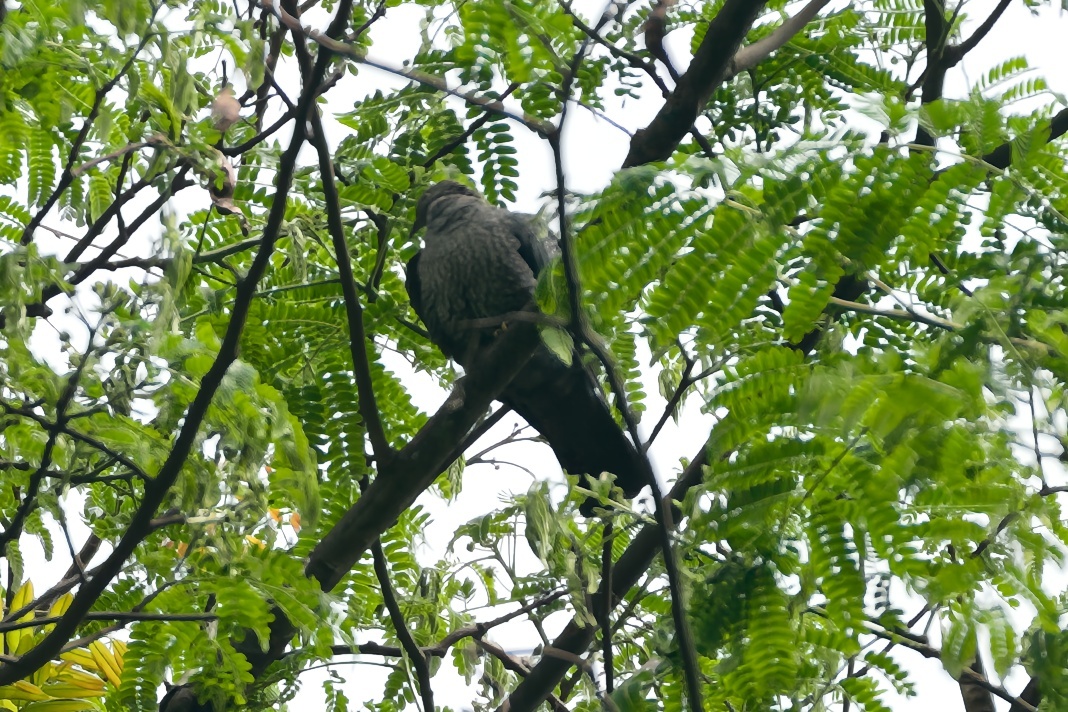
Speckled Wood Pigeon
Columba hodgsonii
斑林鸽
Introduction
Medium-sized pigeon of Himalayan forests in Central and South Asia. Inhabits evergreen and semi-evergreen forests between 1,800 and 4,000 meters elevation, with preference for oak and Rhododendron-dominated habitats. Typically occurs in small flocks of six to ten individuals. Forages on the ground and in the canopy. Considered rare and uncommon across its range.
Description
This medium-sized pigeon measures 38-40 cm in length. Males display a pale gray head with a distinctive pinkish-silver breast heavily speckled with black spots, each breast feather showing a silver base, dark central streak, and silvery-pink tip. The hindneck features black or purplish-black bases with silver tips, creating the characteristic speckled appearance. The belly and abdomen are maroon to dark reddish-purple with pinkish-white streaks. Females have a grayish-brown head and less vibrant overall coloration, lacking the male's maroon tones. Both sexes share blackish-brown tails and primaries. The legs are brownish yellow-greenish with bright yellow claws, and the beak transitions from bluish-purple at the base to black at the tips. The iris is white-gray in males and gray-brown in females.
Identification
The speckled breast with silvery-pink bases to the feathers is a key identification feature separating this species from other regional pigeons. The maroon belly and abdomen found in males is distinctive and contrasts with the darker upperparts. The pale gray head of males helps distinguish them from females with grayish-brown heads. The high-altitude forest habitat at 1,800-4,000 meters further aids identification, as few other pigeon species occupy this elevational range in the Himalayas. The species lacks the iridescent neck patches seen in many Columba pigeons.
Distribution & Habitat
This species ranges across the Himalayas from Kashmir through western and central China, including southern Gansu, western Sichuan, and western Yunnan. Its range extends through India, Myanmar, northern and western Thailand, northern and western Laos, Pakistan, Nepal, Bhutan, and Afghanistan. It inhabits tall evergreen and semi-evergreen hill forests, particularly those dominated by oak and Rhododendron, from 1,800 to 4,000 meters elevation. During winter, it may descend to around 1,350 meters in search of food. While primarily resident, it undertakes local and altitudinal movements in response to food availability, with some northern populations possibly migrating south for the winter.
Behavior & Ecology
The diet consists primarily of acorns, berries, drupes, and fruits, particularly those of Prinsepia utilis, with additional consumption of herbs and cereals. These pigeons often forage on the ground, sometimes visiting agricultural fields after harvest to consume leftover grains. They typically feed in pairs, small groups, or flocks of six to ten individuals. Breeding occurs from May to June, extending into August at higher elevations. Nests are simple platforms of interlaced twigs situated 3-8 meters above ground in oak trees or nullahs. The clutch consists of a single bright white egg. The species is generally quiet but produces a deep, throaty call described as 'whock-whroo..whrooo' when alarmed, serving as a warning signal.
Conservation
Classified as Least Concern on the IUCN Red List based on the 2016 assessment, this species does not currently face significant global threats. However, it is considered rare and uncommon throughout its range, largely because much of its territory lies in remote and inaccessible mountainous areas. The sparse population density and limited data availability make precise population trends difficult to determine. Most information about the species remains anecdotal rather than resulting from systematic monitoring. Forest loss and degradation within its specialized habitat could pose future concerns, though the species' remote range currently provides some protection.
Culture
The species bears the name of Brian Houghton Hodgson, a naturalist and ethnologist who worked extensively in the Himalayan region during the 19th century. He is believed to have prepared the original description of the species prior to 1832, though it was formally published by Nicholas Aylward Vigors. The specific epithet 'hodgsonii' honors this contribution to ornithology. Beyond this taxonomic recognition, no significant cultural or folklore traditions associated with this species are documented in available sources.
Source: Wikipedia · CC BY-SA 3.0
Taxonomy
- Order
- Columbiformes
- Family
- Columbidae
- Genus
- Columba
- eBird Code
- spwpig1
Distribution
montane forest of Kashmir to India, west-central China, and Myanmar
Data Sources
Species description from Wikipedia, licensed under CC BY-SA 3.0.
Bird images and sounds sourced from GBIF, contributed by citizen scientists worldwide under Creative Commons licenses.
Taxonomy data from AviList 2025.