Daurian Jackdaw
Coloeus dauuricus
达乌里寒鸦
Introduction
The Daurian jackdaw (Corvus dauuricus) is a medium-sized corvid native to eastern Asia. Its range extends across Mongolia, southern Siberia, and adjacent regions. It inhabits open woodland, mountain valleys, and similar habitats. The species is social, forming noisy flocks and often associating with rooks. It is closely related to the western jackdaw (Corvus monedula).
Description
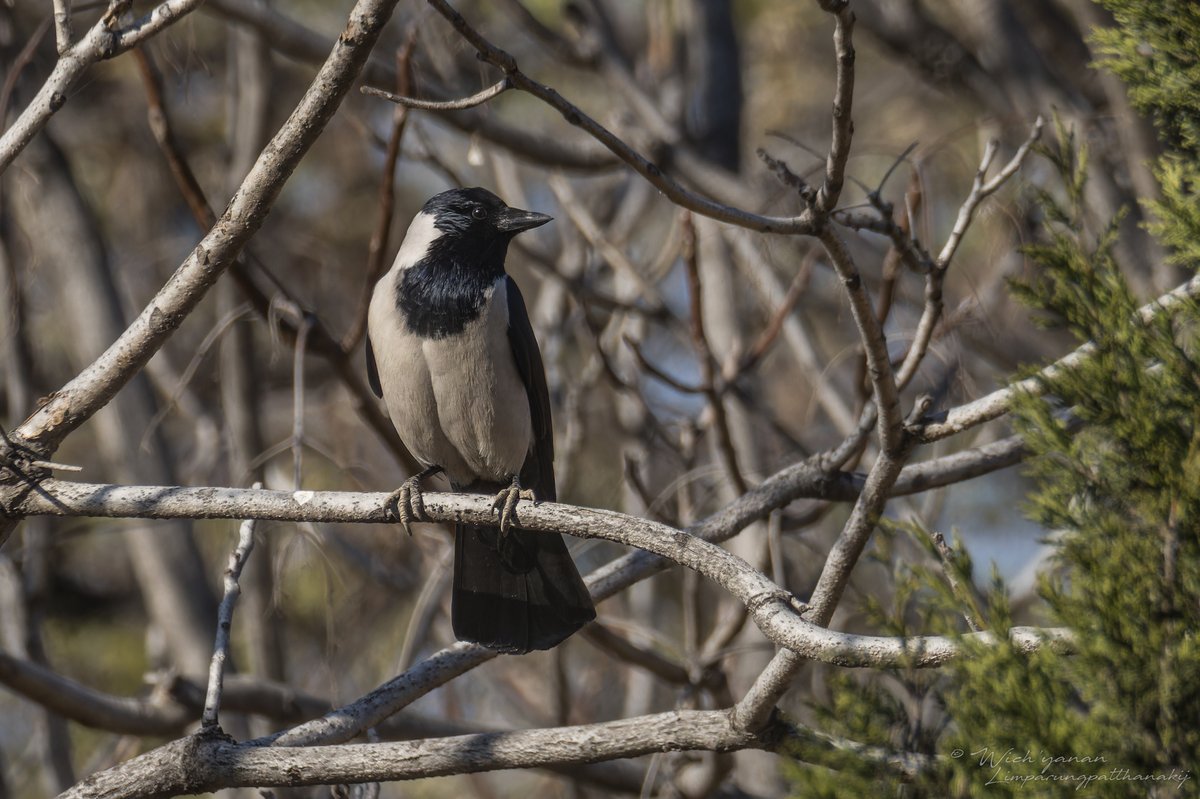
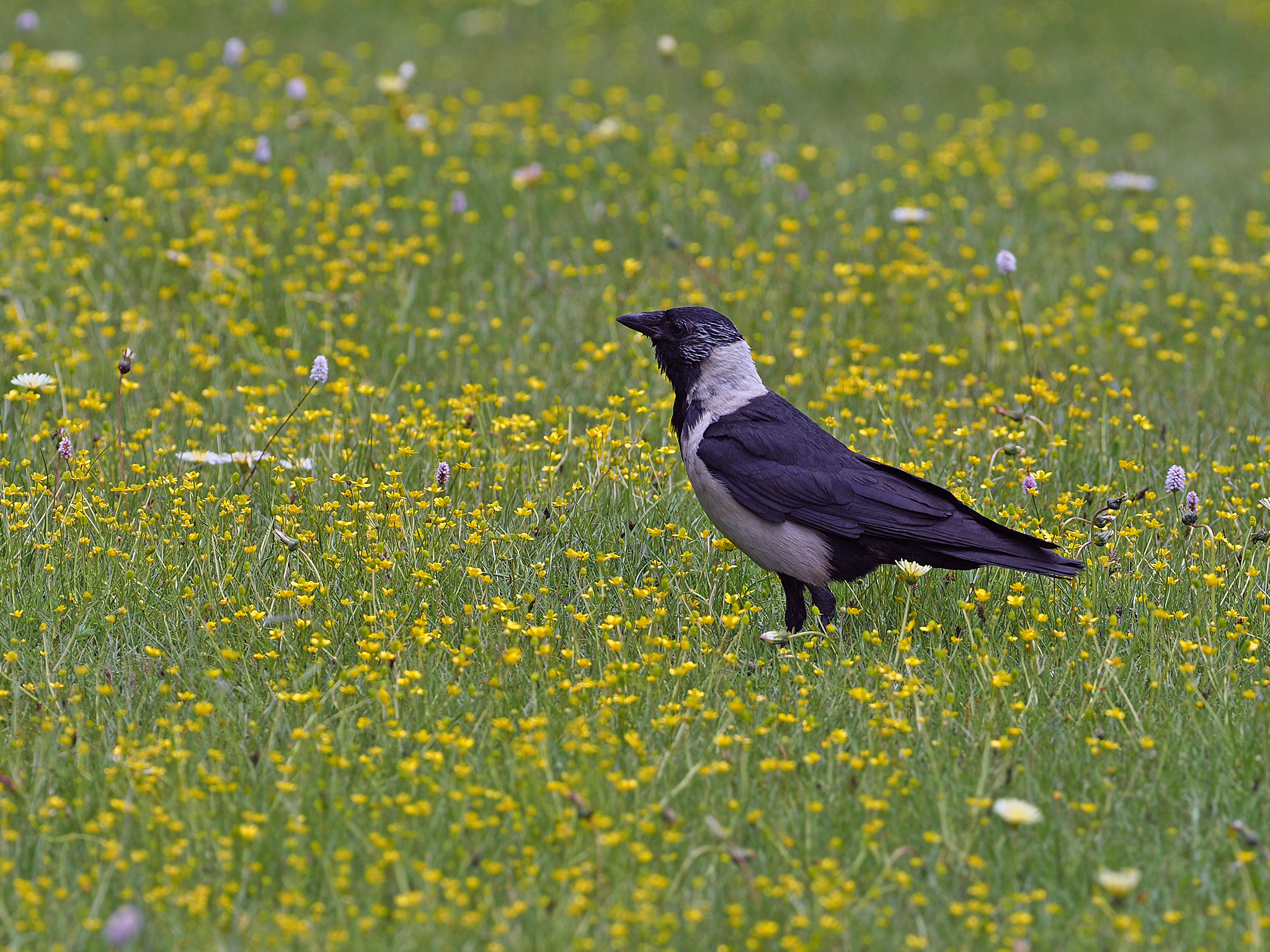
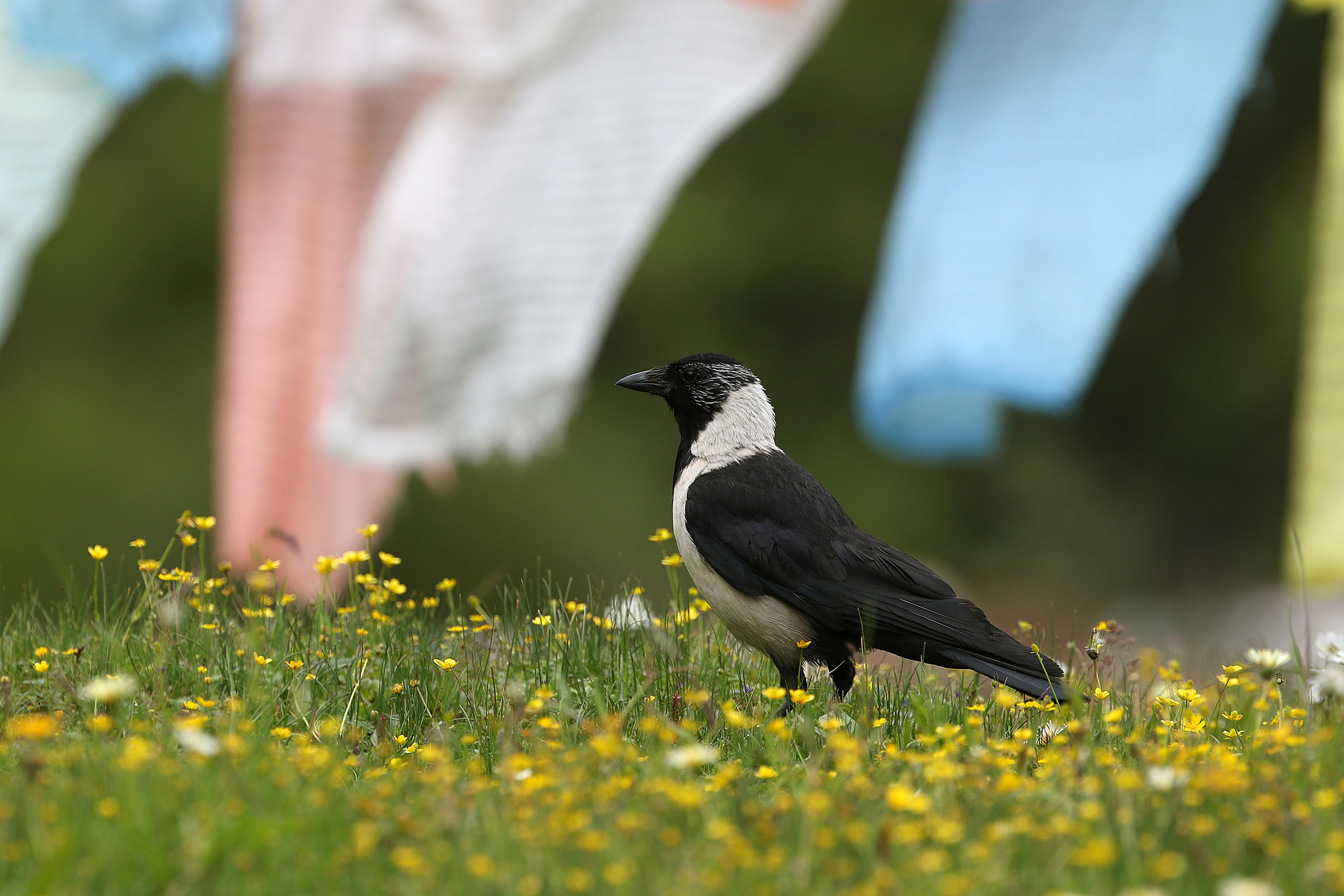
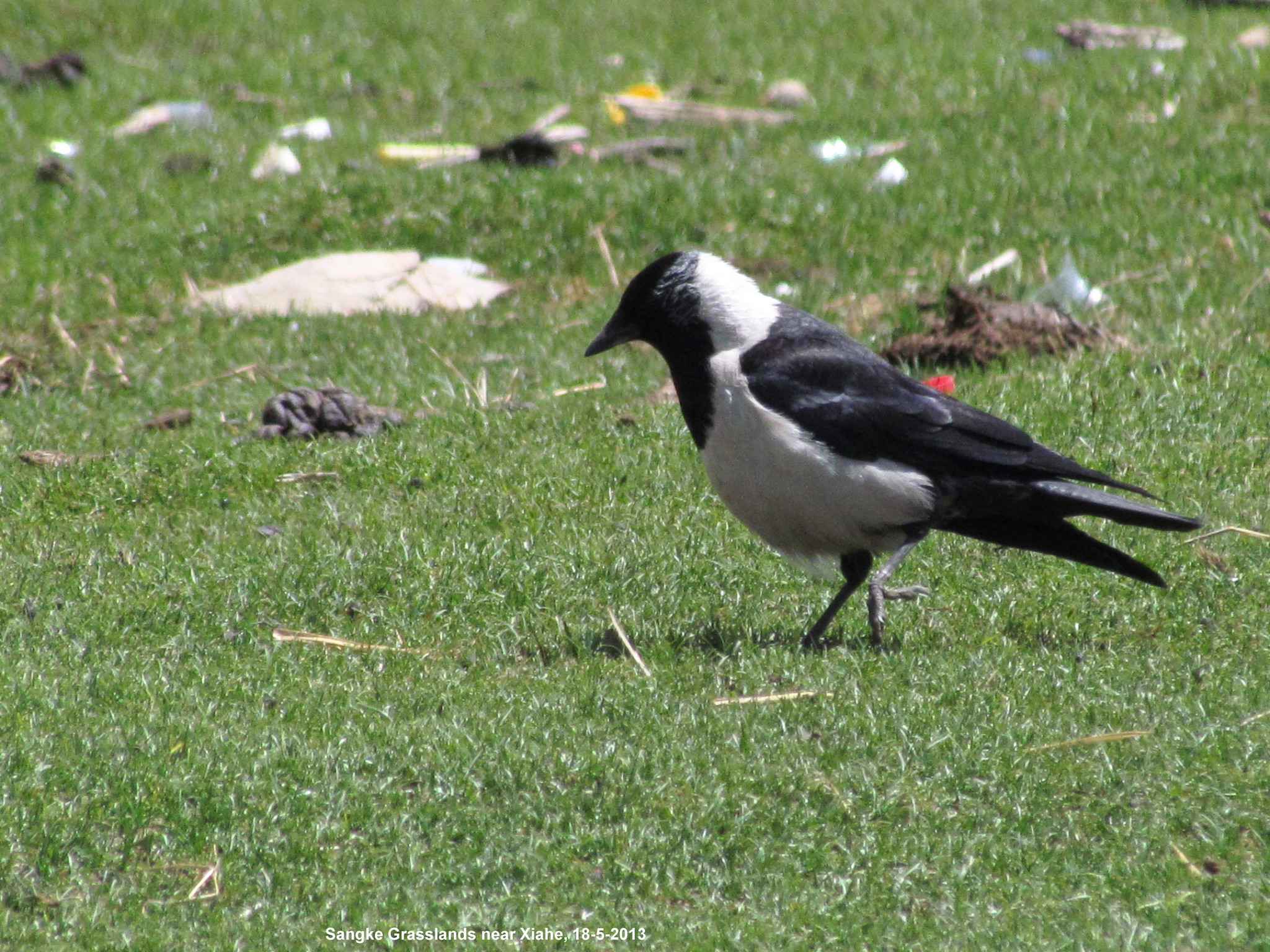
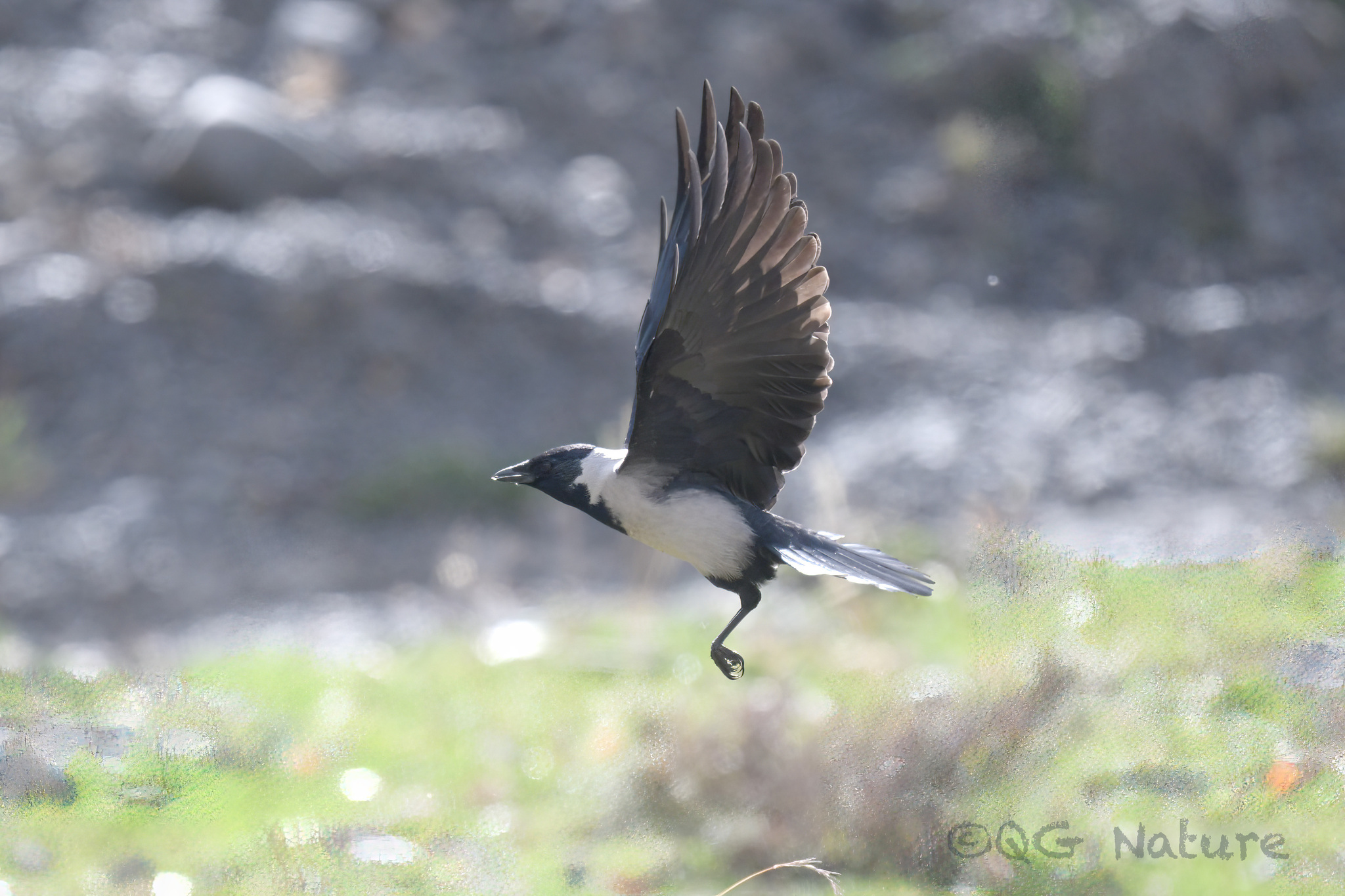
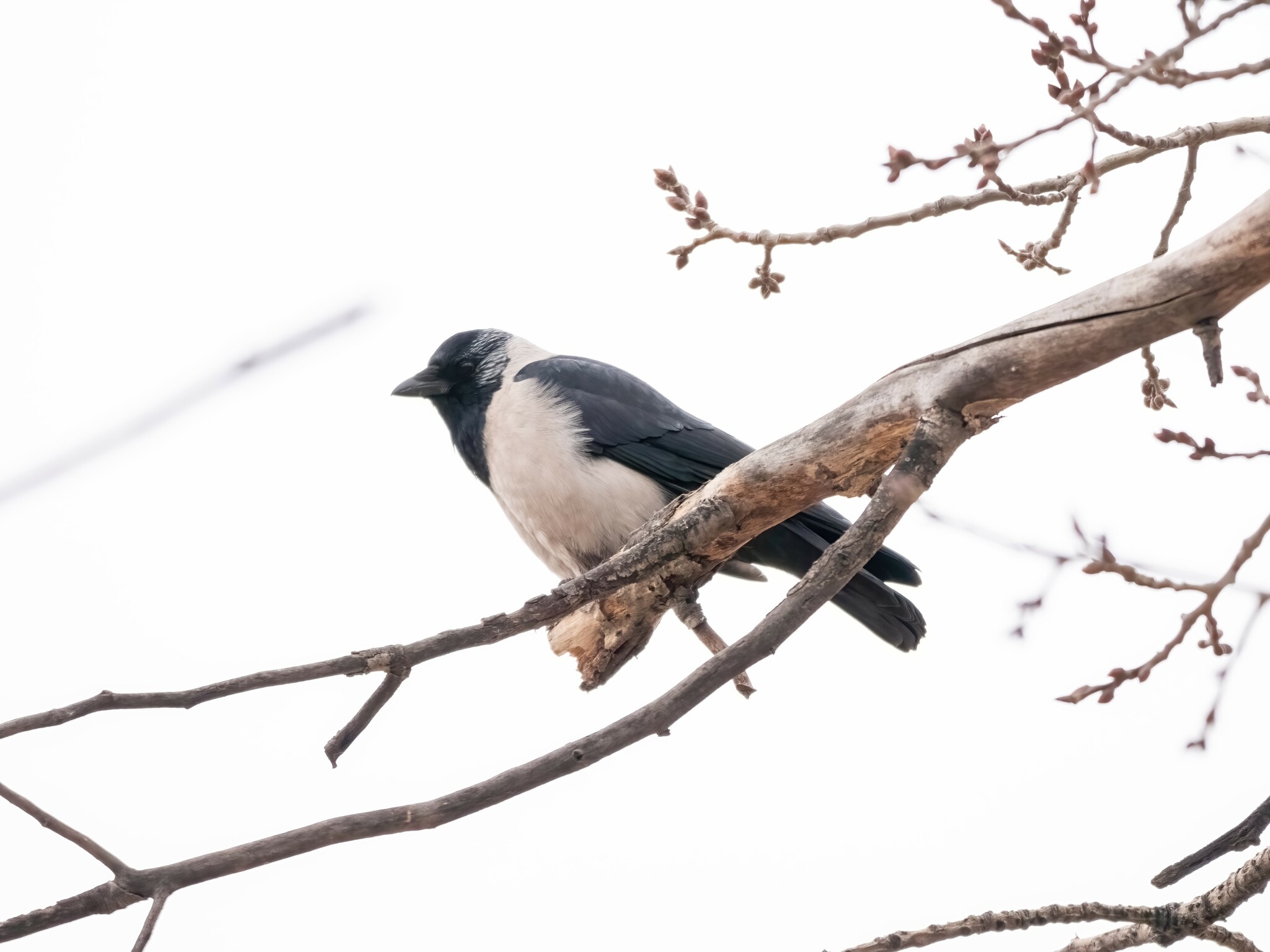
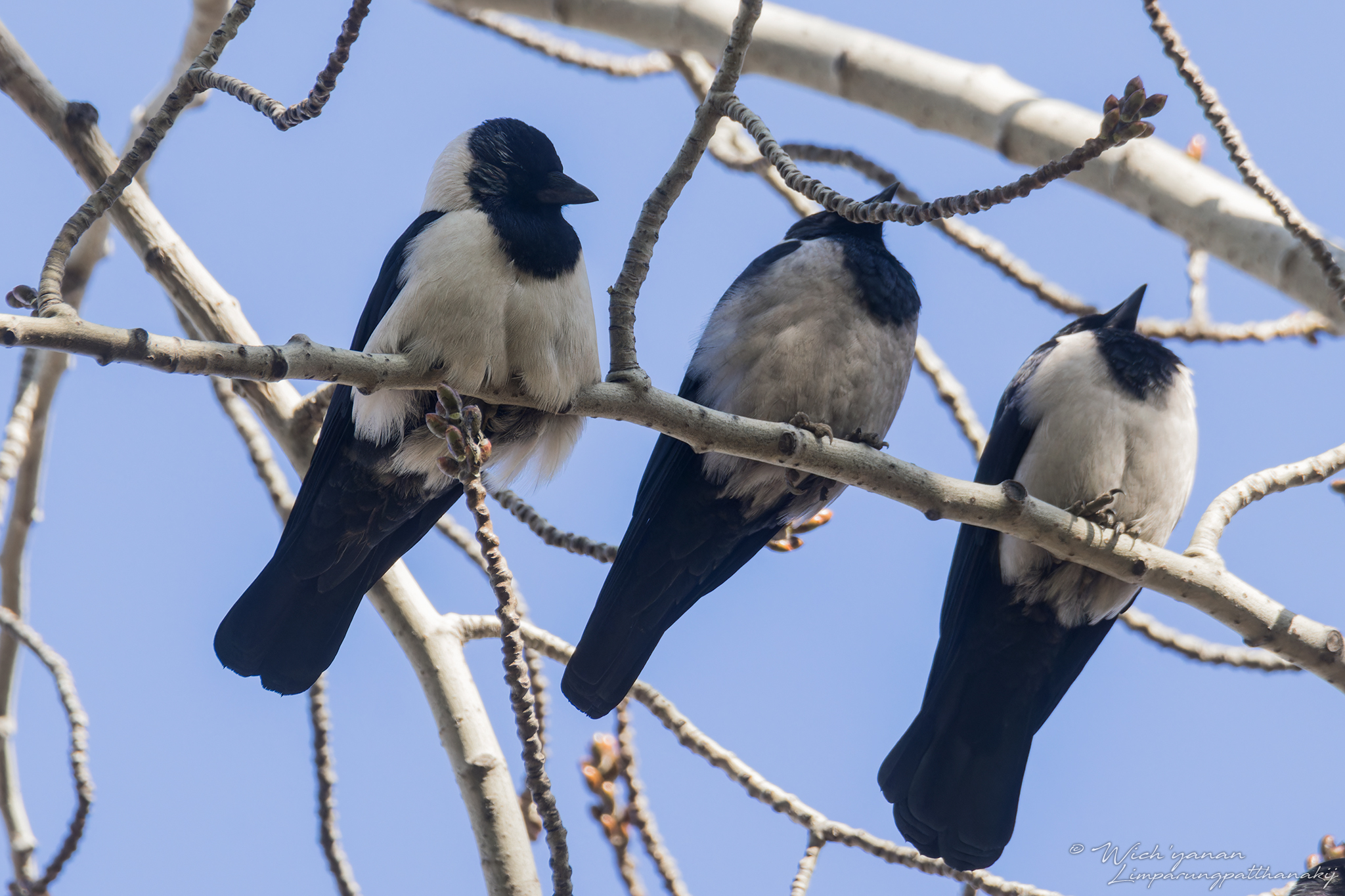
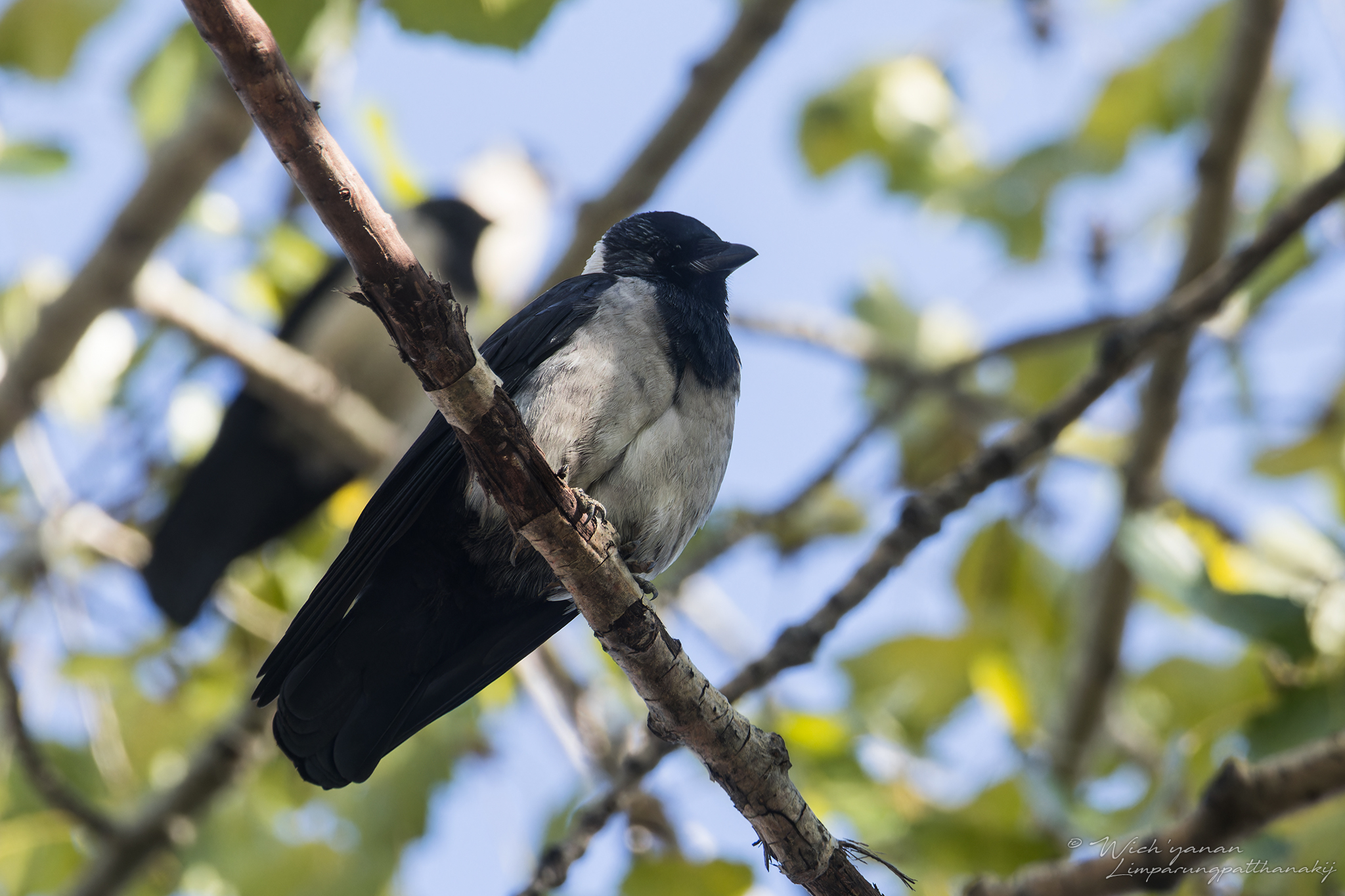
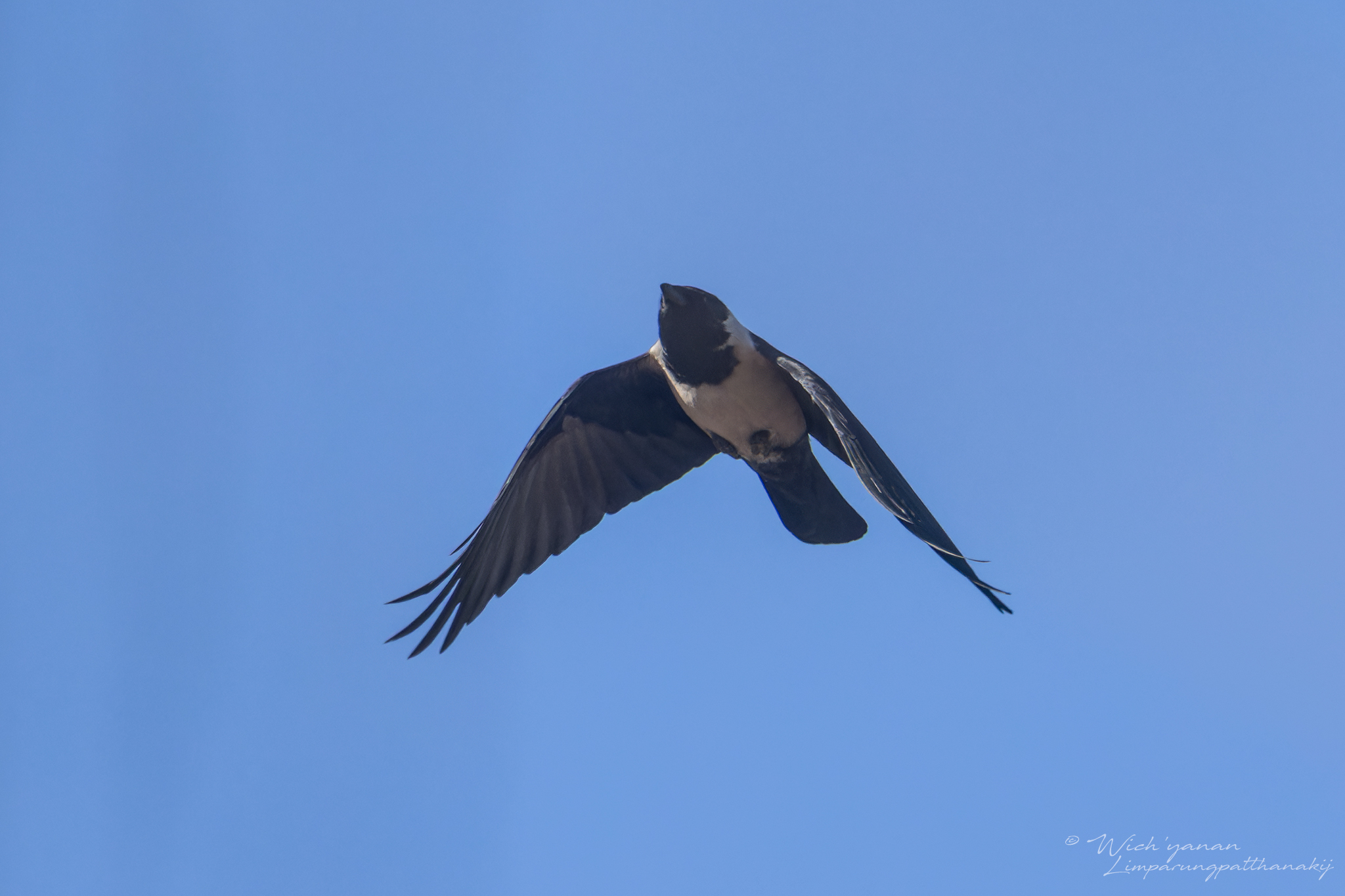
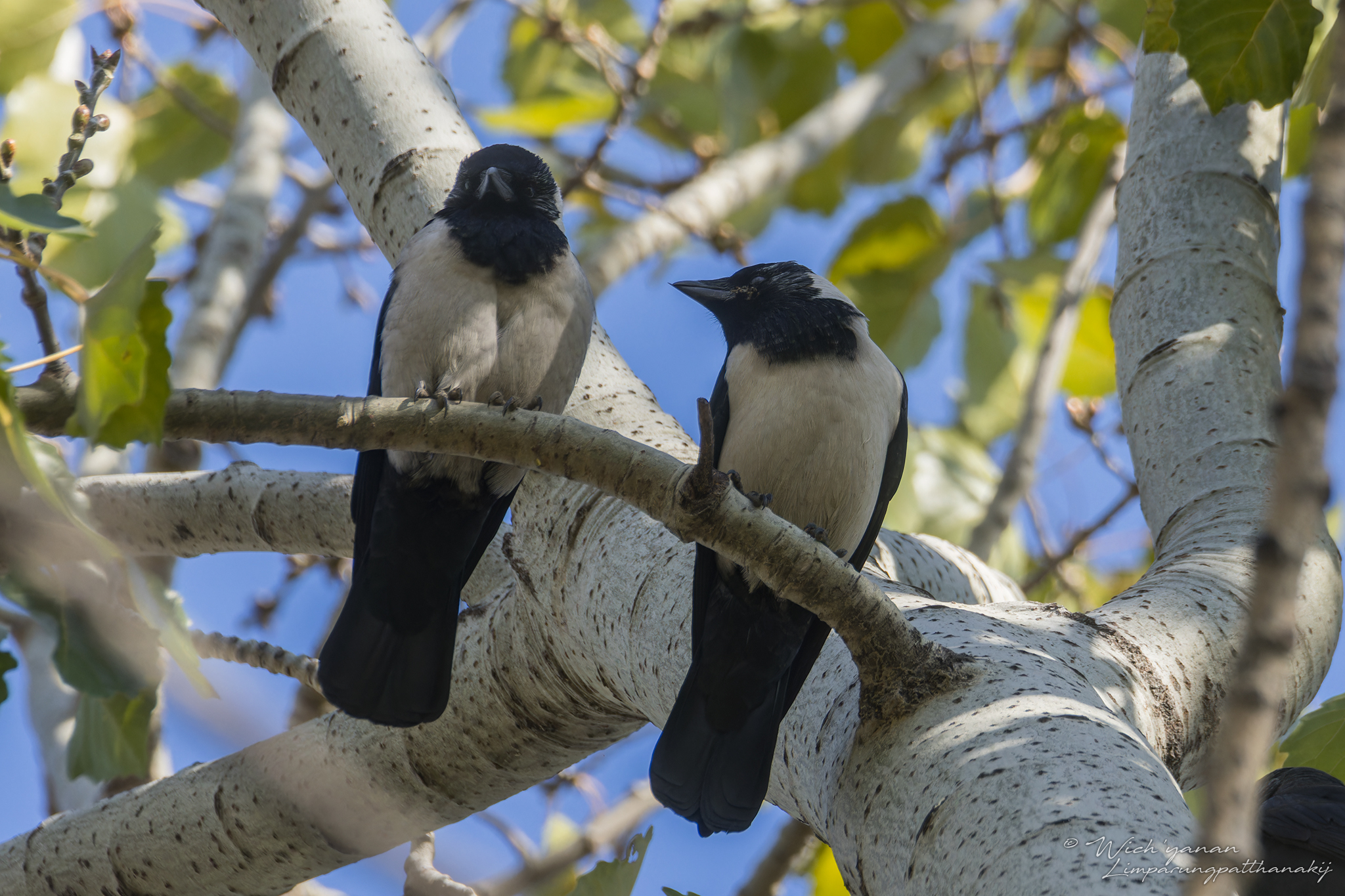
This compact corvid measures approximately 32 cm (13 inches) in length, matching the size of or being slightly smaller than the western jackdaw. It shares the same proportional build and agile movements characteristic of its relatives. The plumage pattern provides the most notable distinguishing feature: many adults display extensive creamy white coloration on the underparts that extends upward around the neck to form a broad, striking collar. The head, throat, wings, and tail exhibit glossy black feathering, while the ear coverts show a grizzled grey appearance. Darker-plumaged adults and juveniles closely resemble western jackdaws, though close observation reveals a key difference—Daurian jackdaws possess black irises rather than the distinctive grey-white irises of their western cousins.
Identification
Field identification hinges on careful attention to plumage patterns and eye coloration. The creamy white underparts and collar, when present, serve as reliable markers separating this species from the western jackdaw. When plumage is darker, the black irises provide the definitive identification clue, as the western jackdaw shows striking pale grey-white irises. The only other pied corvid within the same range is the Chinese collared crow, but this species presents no identification challenge due to its substantially larger size—comparable to or slightly bigger than the carrion crow—making confusion highly unlikely.
Distribution & Habitat
This species occupies an extensive range across eastern Asia, breeding from the southern regions of eastern Siberia southward through Mongolia and across much of China. Northern populations undertake seasonal migrations, moving further south during winter months to escape harsh conditions. Winter distribution includes scarce appearances in Korea, rare annual visits to Japan, and occasional vagrant records from Taiwan. A handful of vagrant records from Western Europe provide exciting twitch opportunities for listers. The species shows a preference for open woodland environments, river valleys, and open hills and mountains throughout its range.
Behavior & Ecology
Highly sociable by nature, this species typically occurs in flocks and frequently associates with rooks, creating mixed corvid gatherings that offer excellent observation opportunities. Its dietary habits closely mirror those of the western jackdaw, encompassing a varied menu of cultivated grains, insects, berries, eggs, carrion, and even feces—demonstrating the opportunistic feeding behavior typical of corvids. Breeding begins with nest construction in suitable cavities, with tree hollows, rock openings, and ruined buildings representing preferred nest sites when natural tree cavities are unavailable. The eggs closely resemble those of the western jackdaw in appearance.
Conservation
No specific conservation assessment or population data is provided in the source material.
Culture
No cultural significance, folklore, or traditional references are provided in the source material.
Source: Wikipedia · CC BY-SA 3.0
Taxonomy
- Order
- Passeriformes
- Family
- Corvidae
- Genus
- Coloeus
- eBird Code
- daujac1
Distribution
southern Siberia to Mongolia, northern China, and southeastern Tibet; winters to southern China
Vocalizations
Data Sources
Species description from Wikipedia, licensed under CC BY-SA 3.0.
Bird images and sounds sourced from GBIF, contributed by citizen scientists worldwide under Creative Commons licenses.
Taxonomy data from AviList 2025.