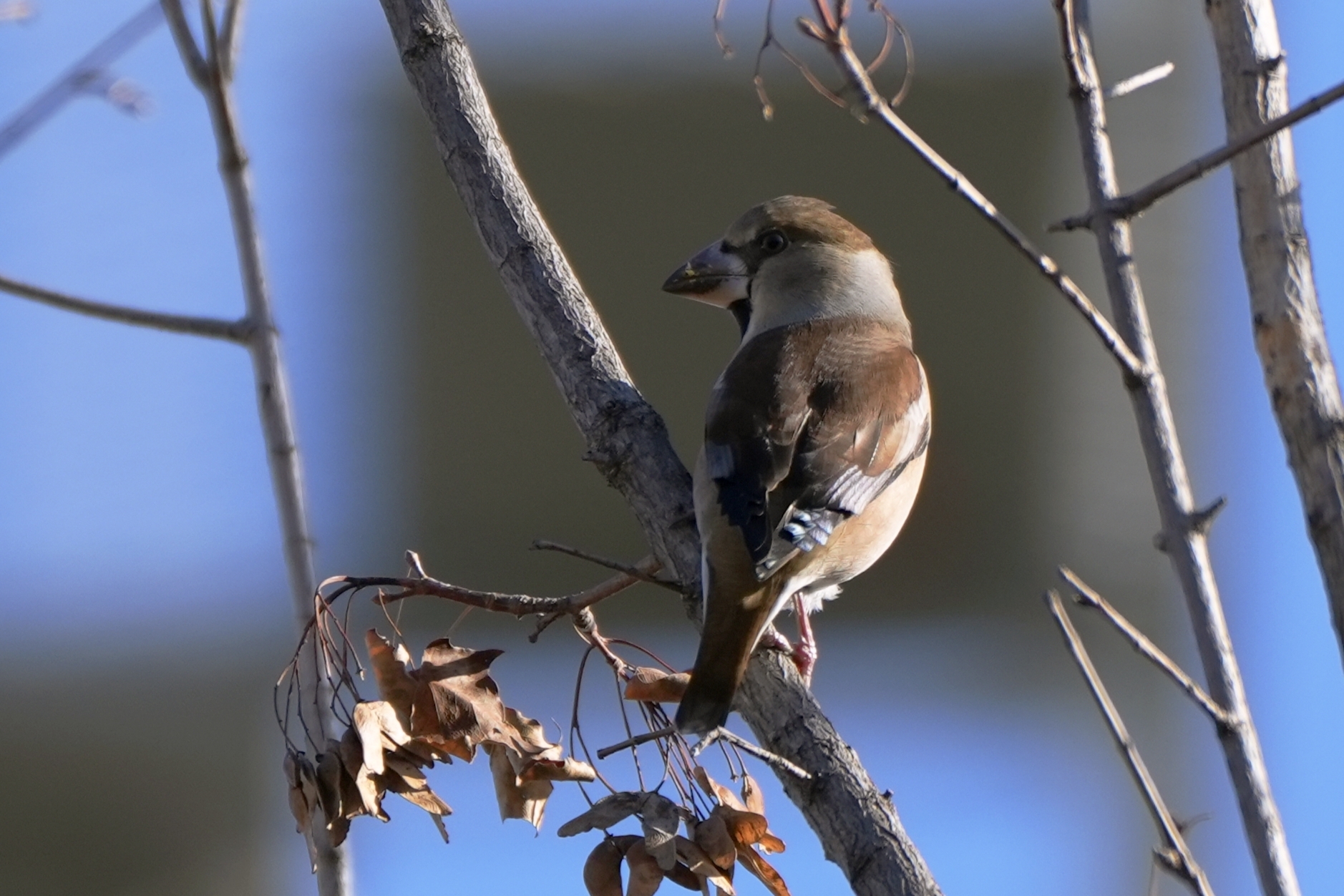
Passeriformes / Fringillidae / Coccothraustes
Hawfinch
Coccothraustes coccothraustes · 锡嘴雀
Introduction
A passerine bird in the finch family Fringillidae and the only extant species in the genus Coccothraustes. It breeds across Europe, temperate Asia, and North Africa, favoring deciduous or mixed woodlands with large trees. The species is mainly resident in Europe, while many Asian populations migrate south in winter. It is characterized by a powerful bill used to crack hard seeds and fruit kernels, particularly cherries. Classified as Least Concern by the IUCN.
Description
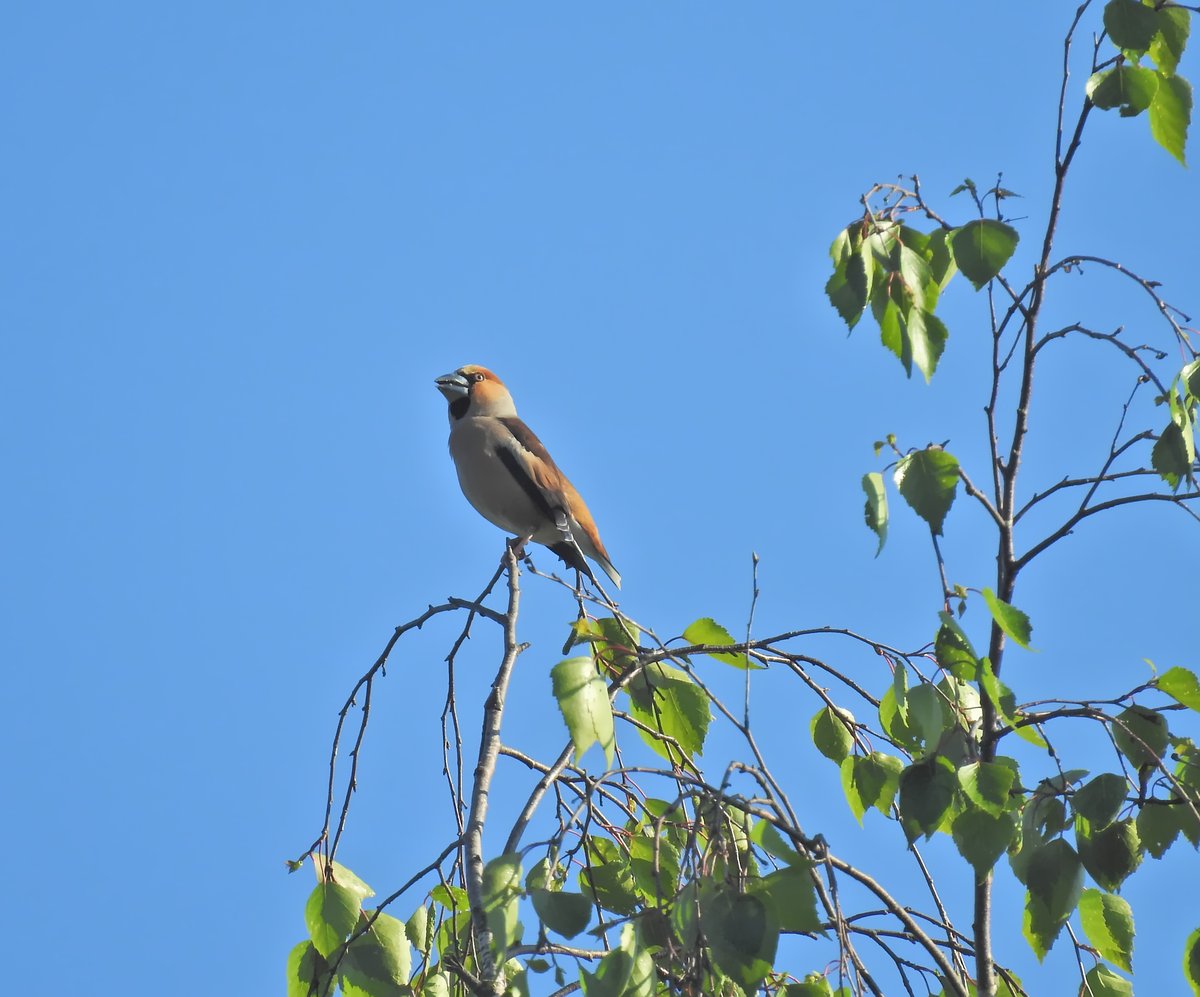
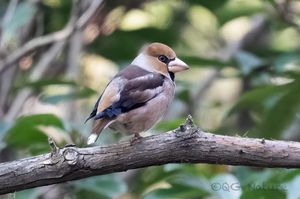
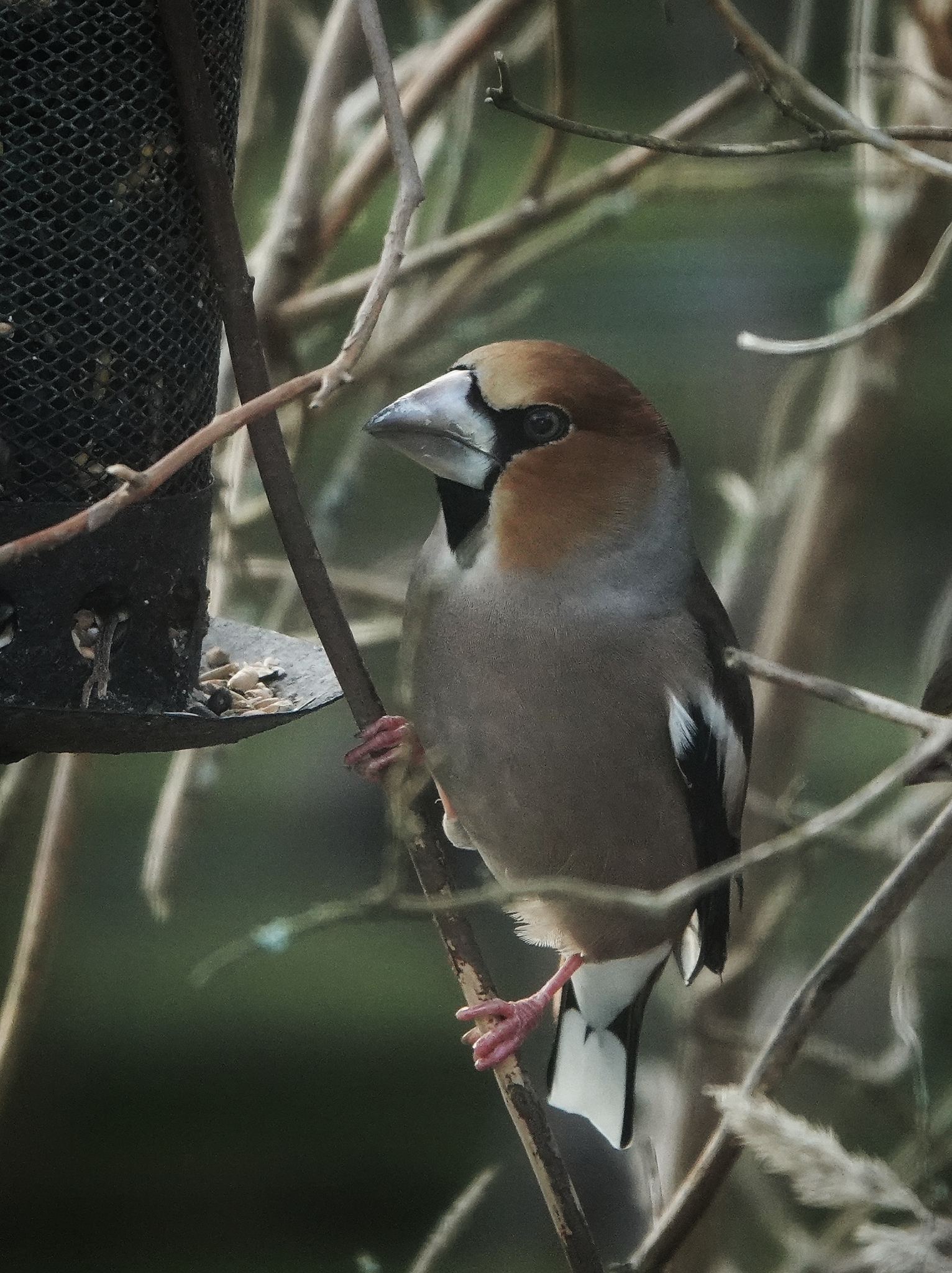
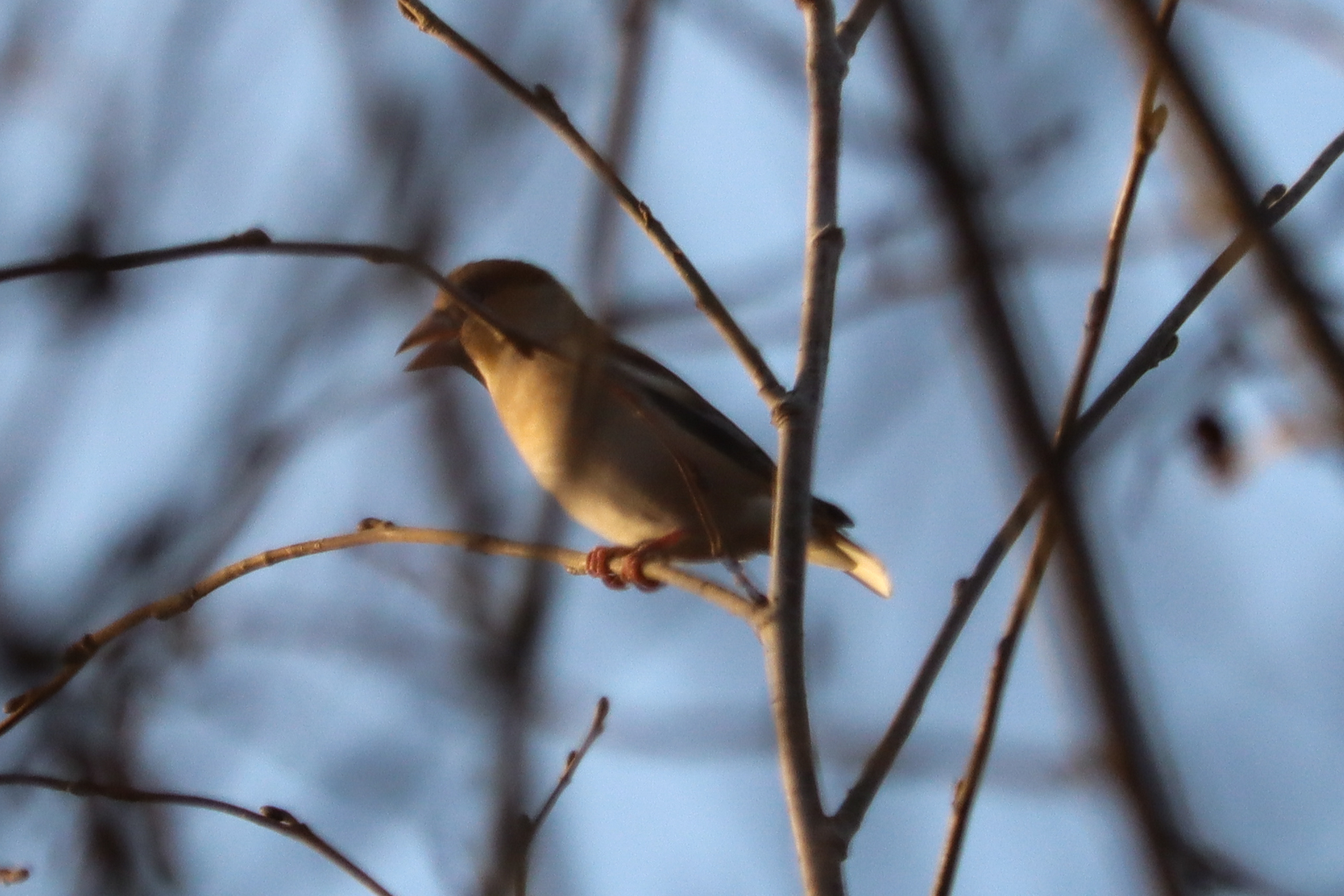
Measures 16.5–18 cm in length with a wingspan of 29–33 cm and weighs 46–70 g. It is a bulky, bull-headed bird with a thick neck, short tail, and massive conical bill that is black in summer and paler in winter. The head is orange-brown with a black eyestripe, bib, and throat. Upper parts are dark brown, while underparts are orange. Wings feature white, brown, and blue stripes, with striking white wing bars and tail tips visible in flight. Legs are short and pinkish. Females are slightly paler than males; sexes are otherwise similar.
Identification
Identified by its large size, bulky shape, and massive bill. Key field marks include the orange-brown head, black bib and eyestripe, and prominent white wing bars and tail tip in flight. Flight is quick and straight over short distances, with undulations during longer flights. Vocalizations include a hard 'chick' call and a quiet, mumbled song.
Distribution & Habitat
Breeds across Europe (excluding Iceland and some Mediterranean islands), North Africa (Morocco, Tunisia, Algeria), and temperate Asia (including Japan, Siberia, and China). Northern populations migrate south in winter; European birds are largely resident. Rare vagrant to Alaska. In Britain, breeding occurs primarily in southeastern England, with winter gatherings in sites like Bedgebury Pinetum and the New Forest. Habitat includes deciduous forests, parklands, and gardens, up to altitudes limited by tree size.
Behavior & Ecology
Shy and often observed high in tree branches. Feeds on hard seeds, fruit kernels (cherries, plums, olives), pine seeds, berries, and occasional insects. The bill exerts a force equivalent to 30–48 kg. Monogamous, breeding at one year old. The male selects the nest site and begins construction with twigs; the female completes the cup lined with roots and lichens. Clutch size is typically 4–5 eggs, incubated by the female for 11–13 days. Both parents feed nestlings; fledging occurs after 12–14 days. Parents remove fecal sacs until fledging. Maximum recorded age is 12 years and 7 months.
Conservation
Classified as Least Concern by the IUCN due to a large global population estimated at 14.7–50.4 million individuals. The European population is estimated at 7.2–12.6 million. However, the UK population declined by 76% between 1968 and 2011, with only 500–1,000 breeding pairs estimated in 2013. Reasons for the UK decline are unclear.
Source: Wikipedia · CC BY-SA 3.0
Taxonomy
- Order
- Passeriformes
- Family
- Fringillidae
- Genus
- Coccothraustes
Subspecies (6)
-
Coccothraustes coccothraustes buvryi
mountains of Morocco, Algeria, and Tunisia
Data Sources
Species description from Wikipedia, licensed under CC BY-SA 3.0.
Bird images and sounds sourced from GBIF, contributed by citizen scientists worldwide under Creative Commons licenses.
Taxonomy data from AviList 2025.