Anseriformes / Anatidae / Clangula
Long-tailed Duck
Clangula hyemalis · 长尾鸭
Introduction
A medium-sized sea duck and the only member of the genus Clangula. It breeds in tundra and taiga regions of the Arctic and winters along northern coastlines of the Atlantic and Pacific Oceans. The species is monotypic with no recognized subspecies.
Description
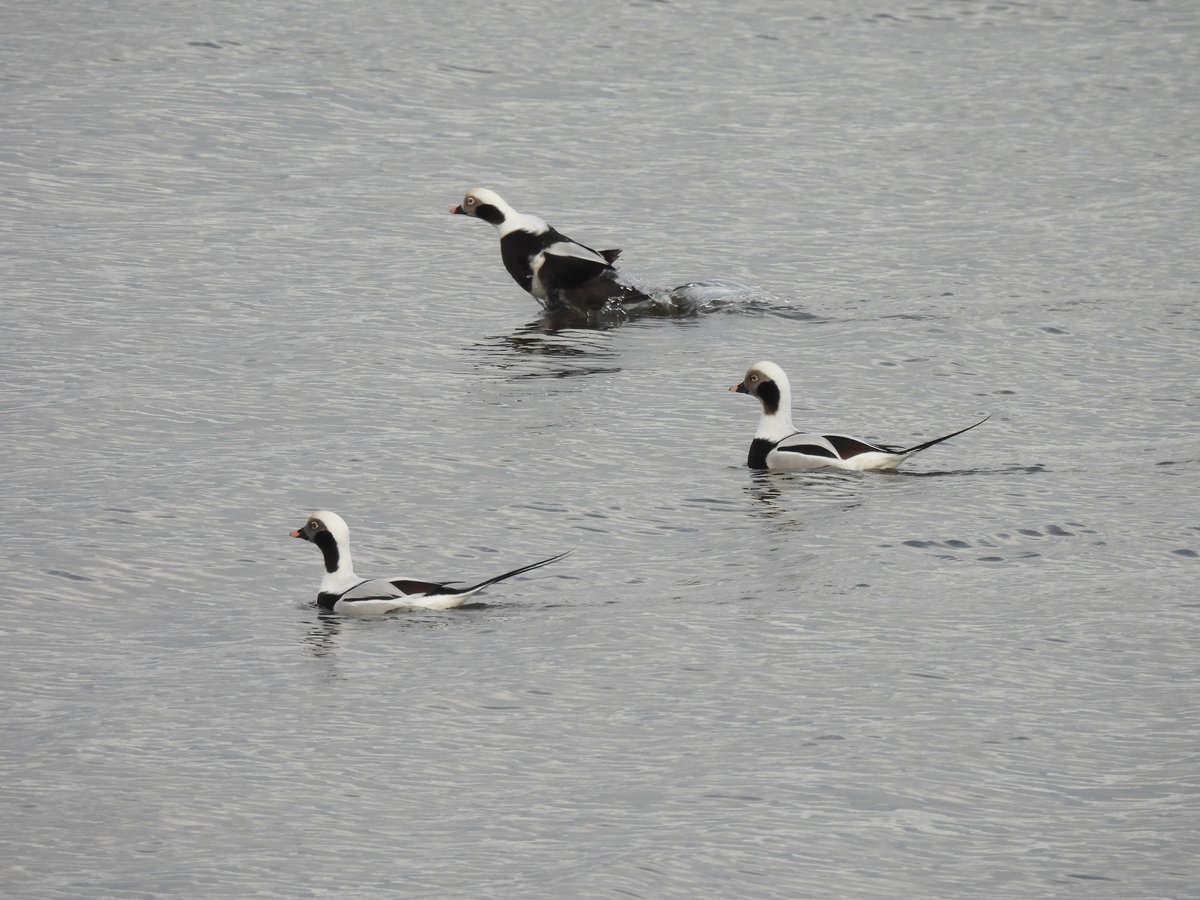
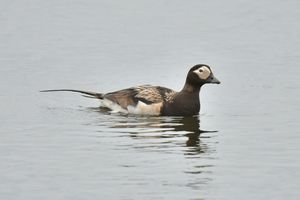
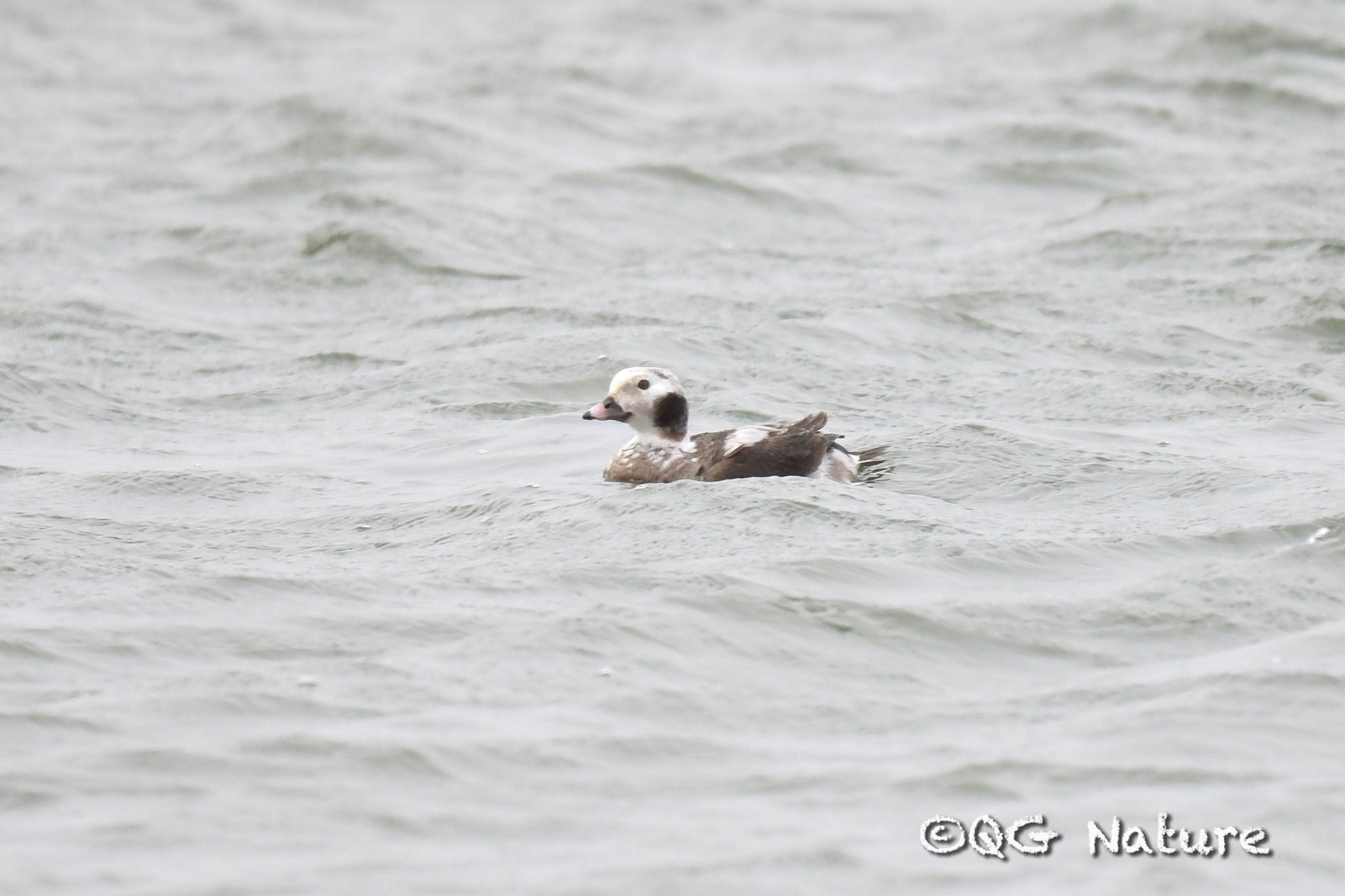
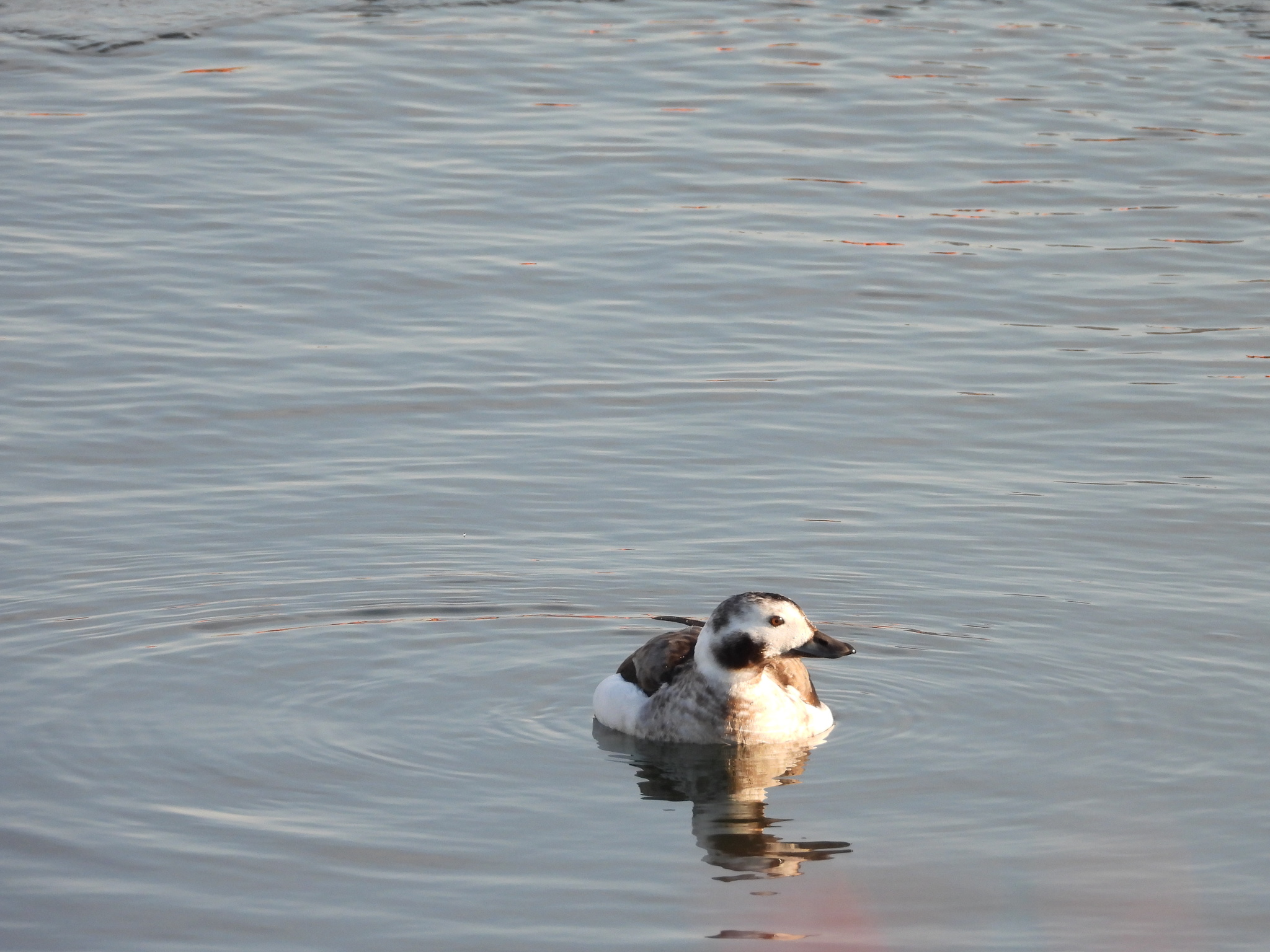
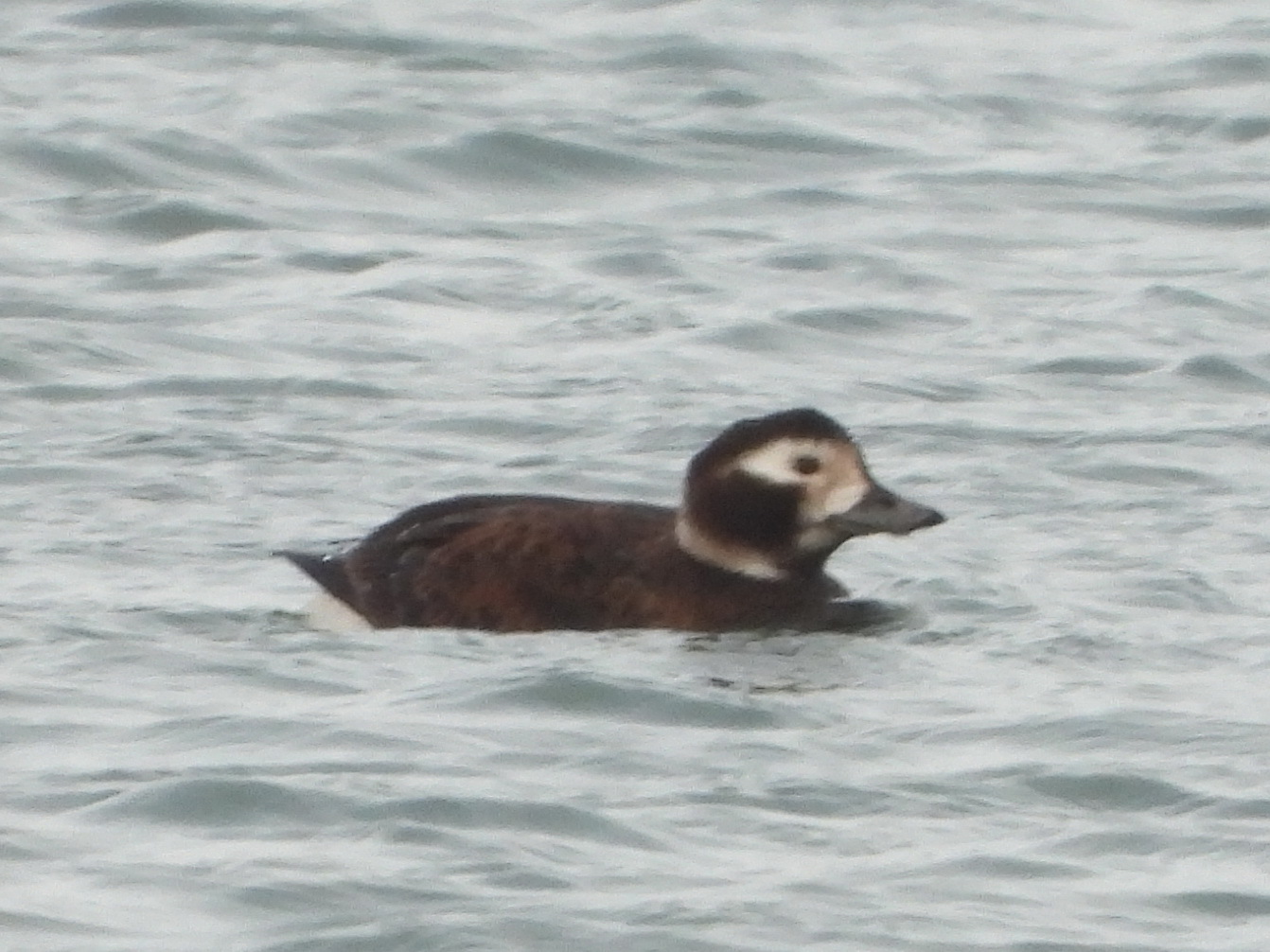
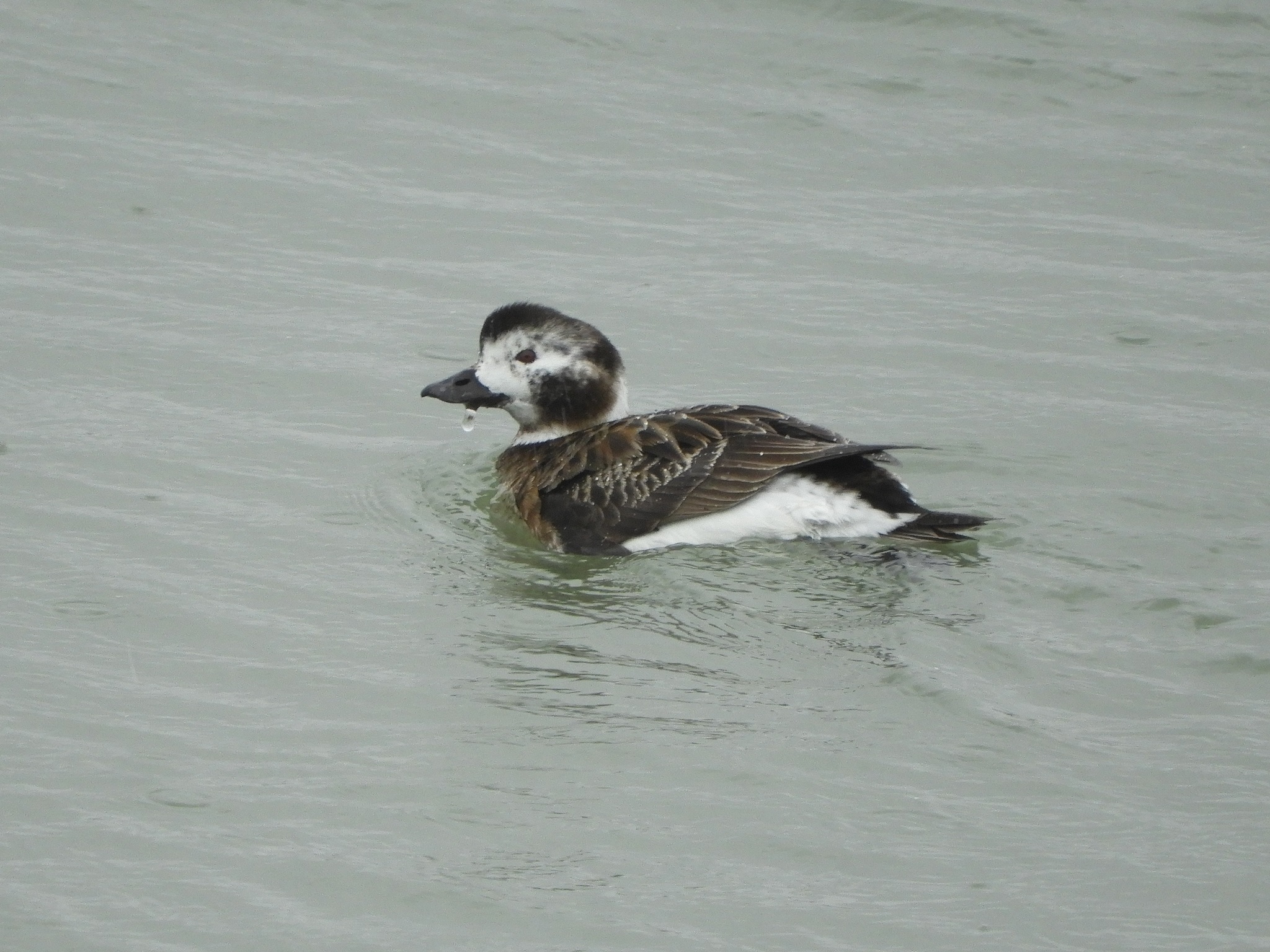
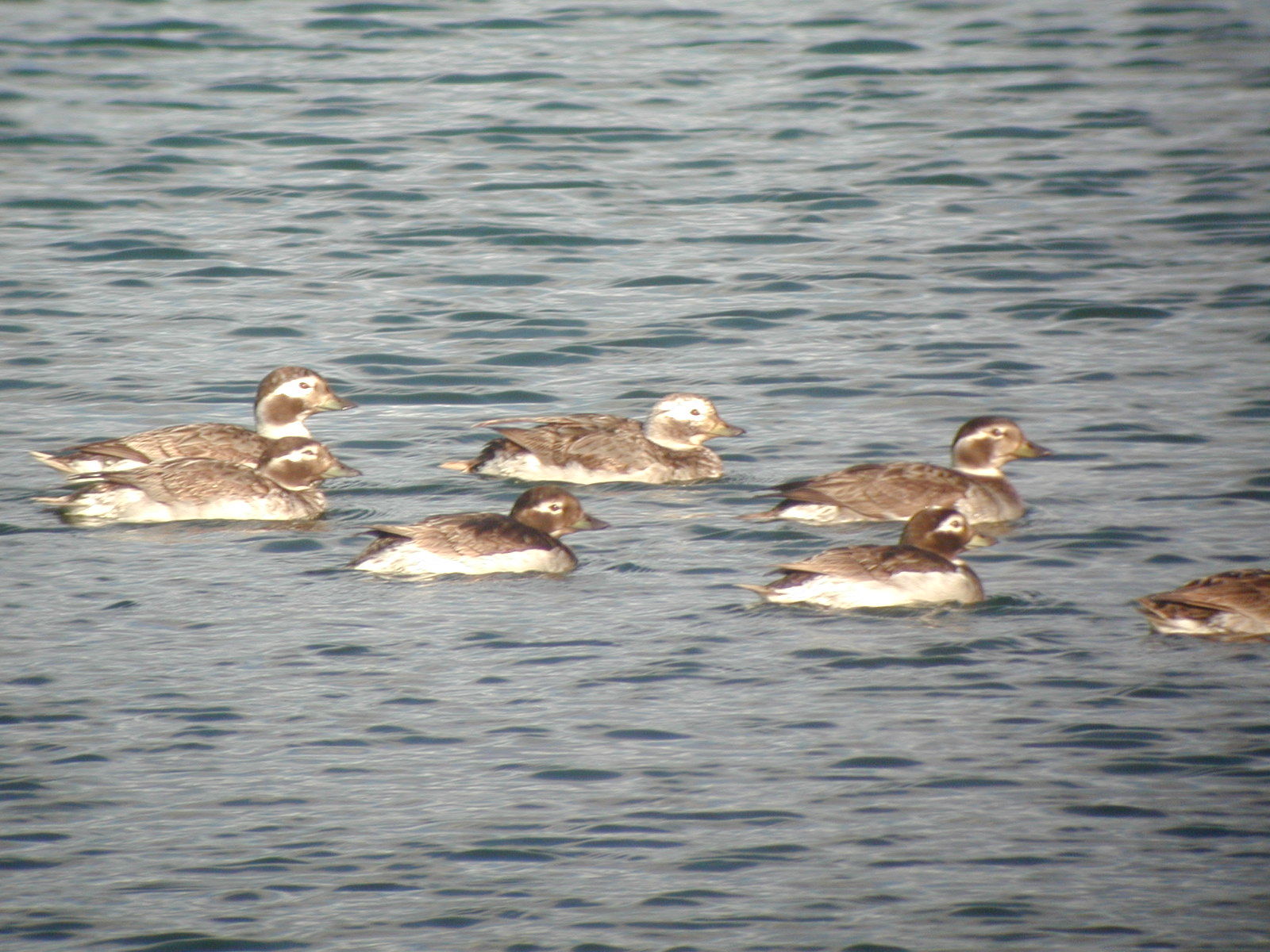
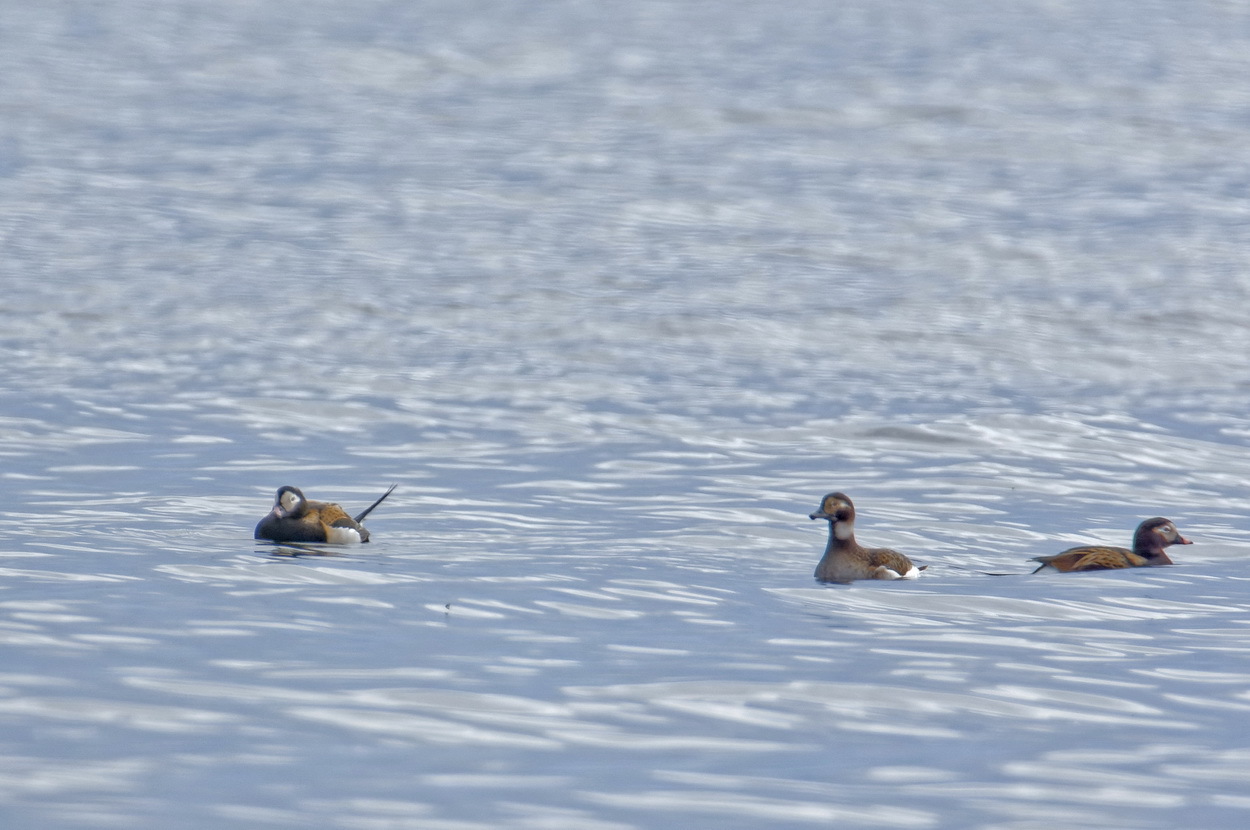
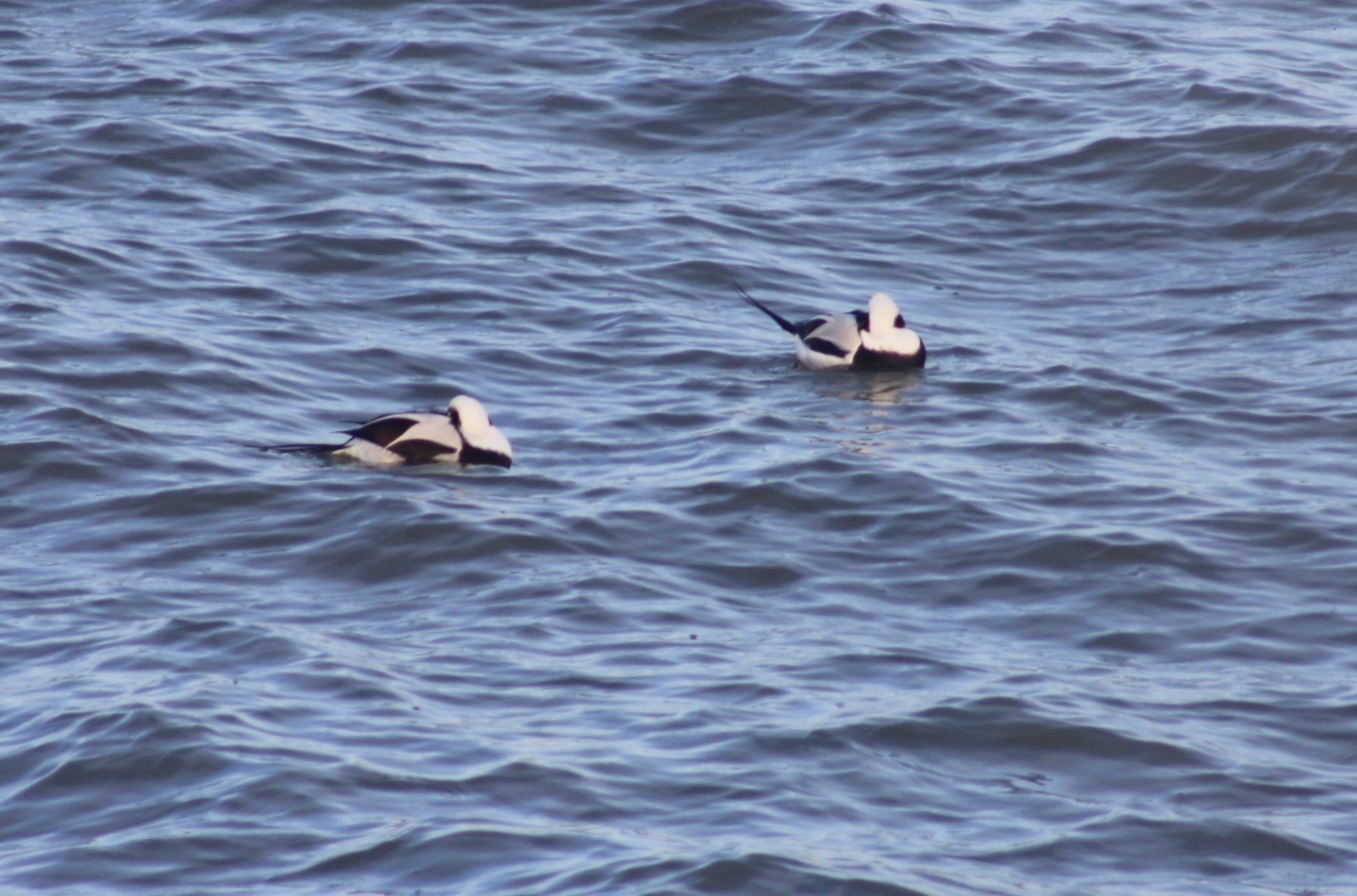
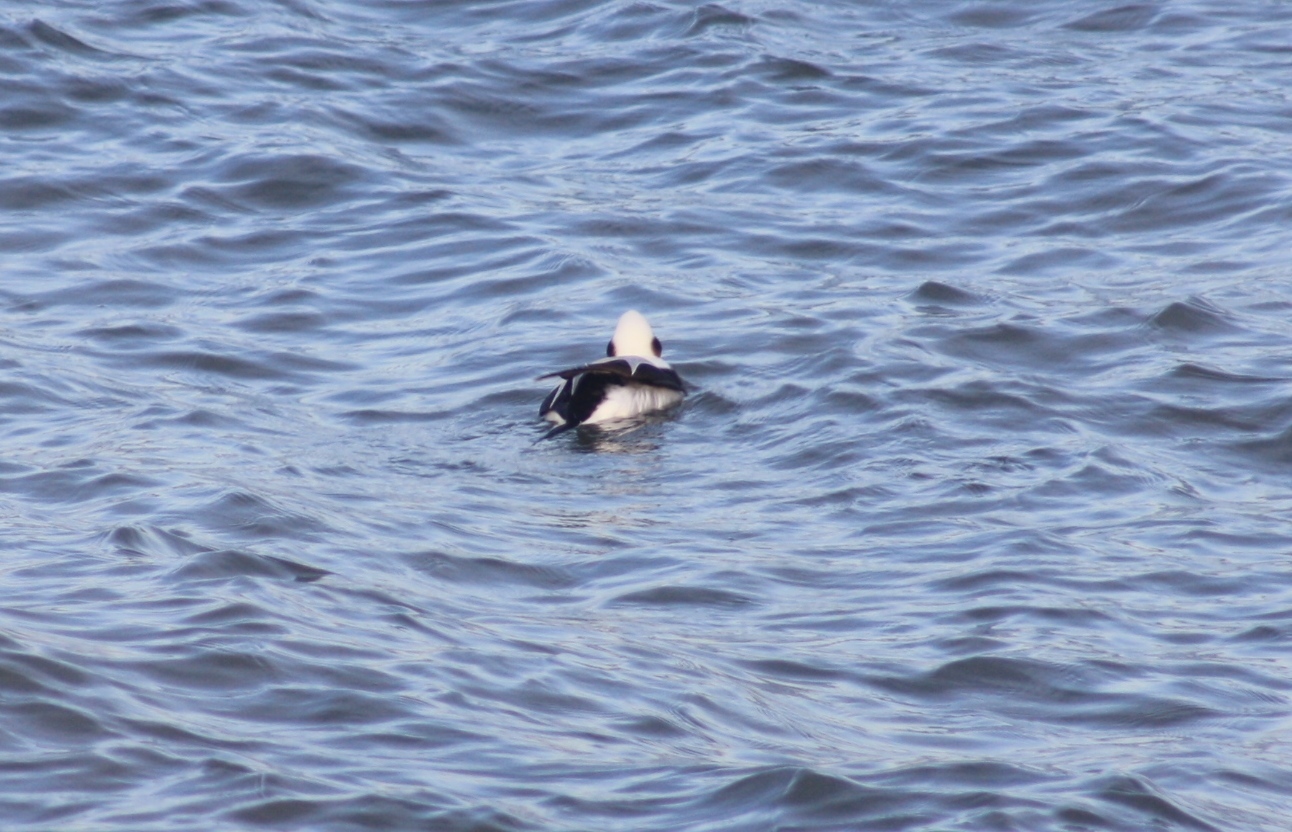
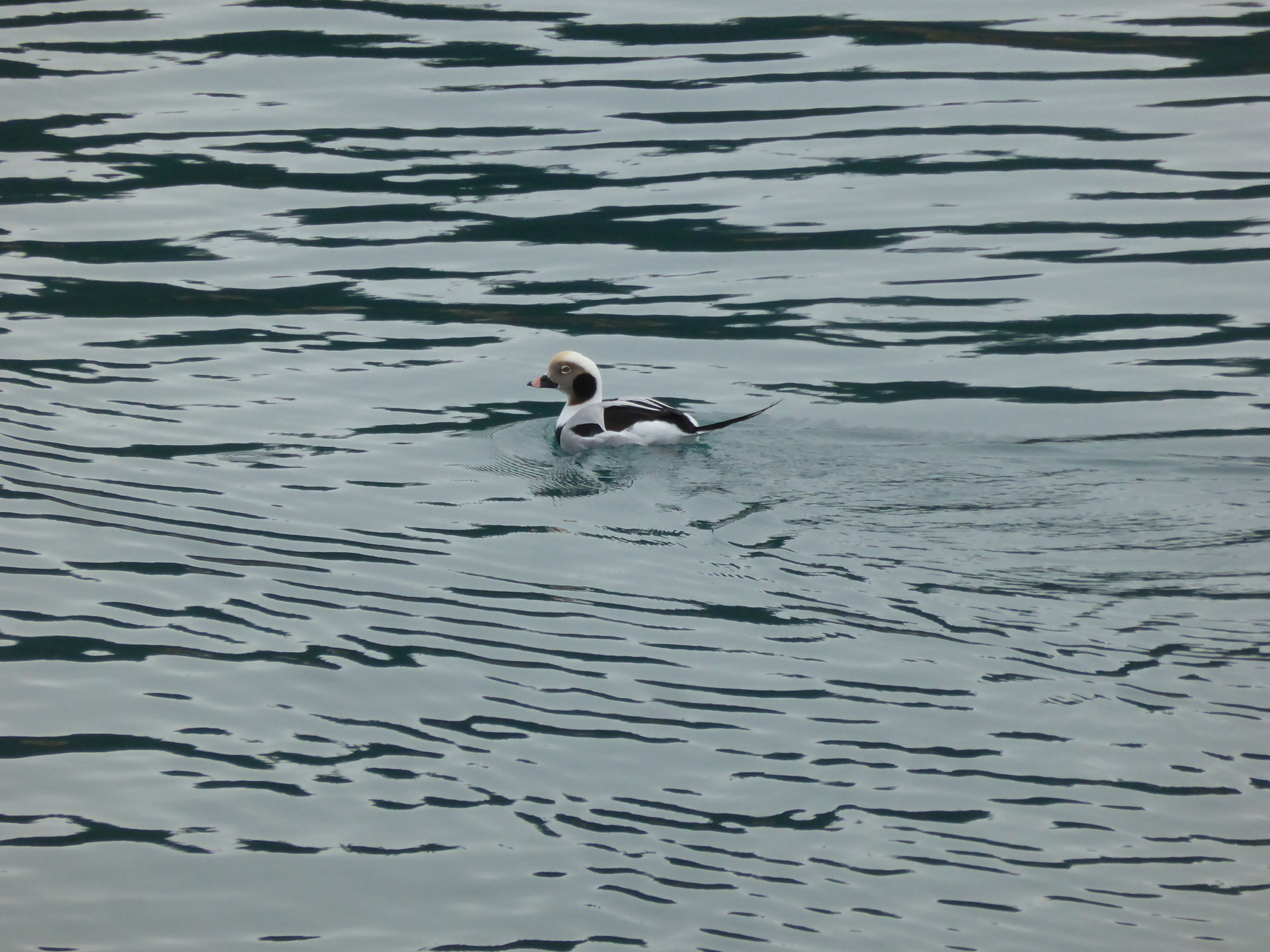
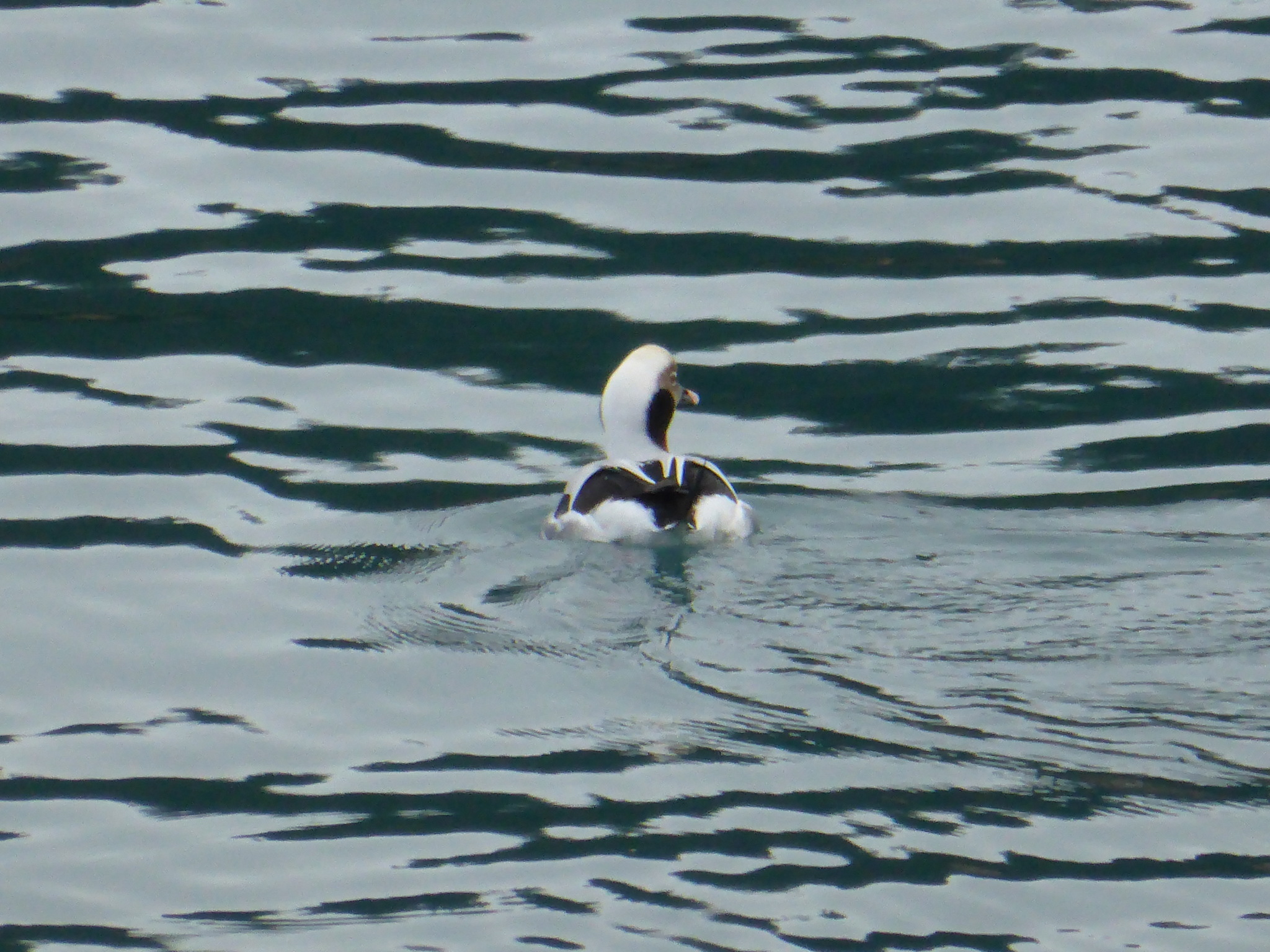
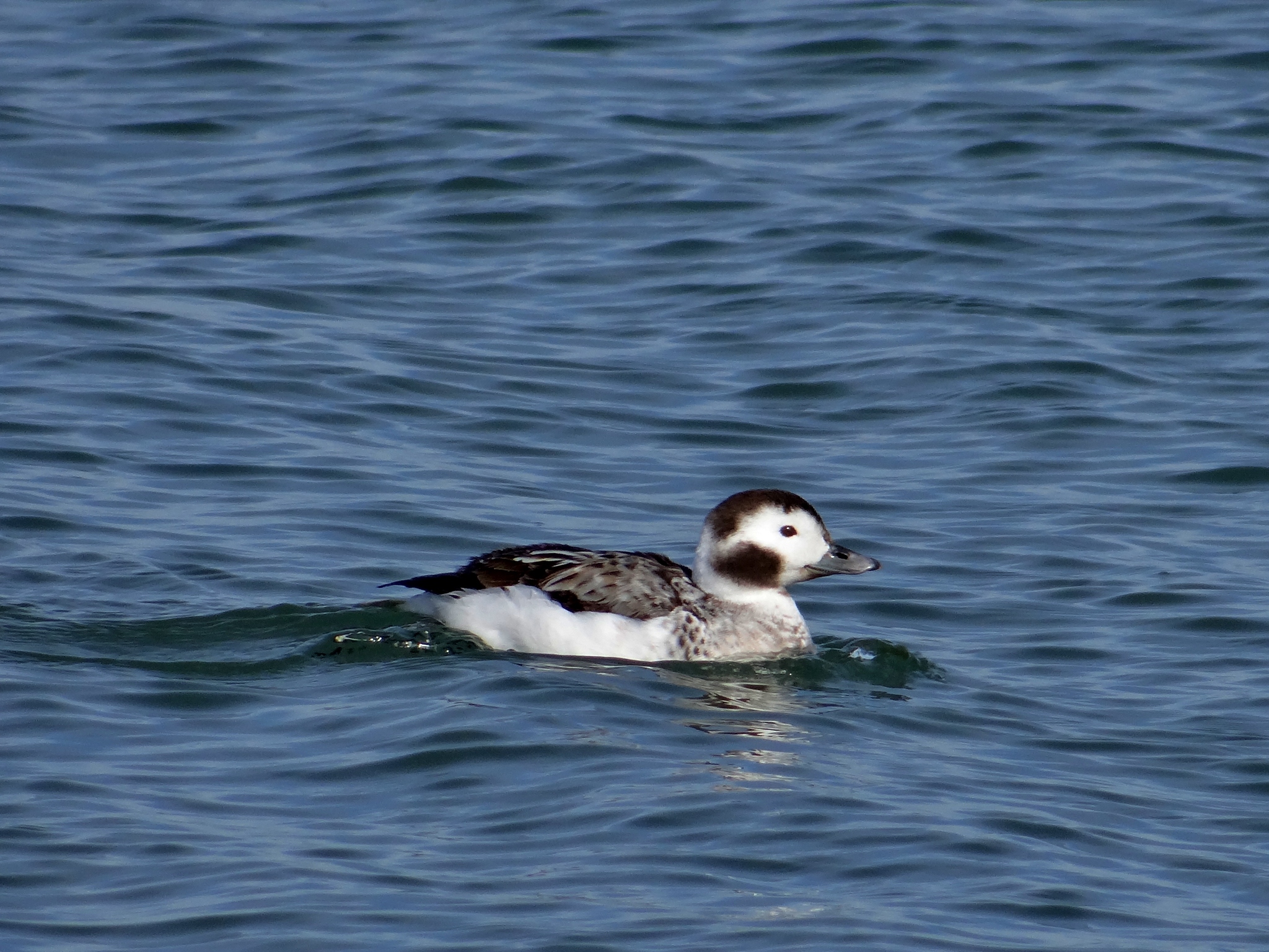
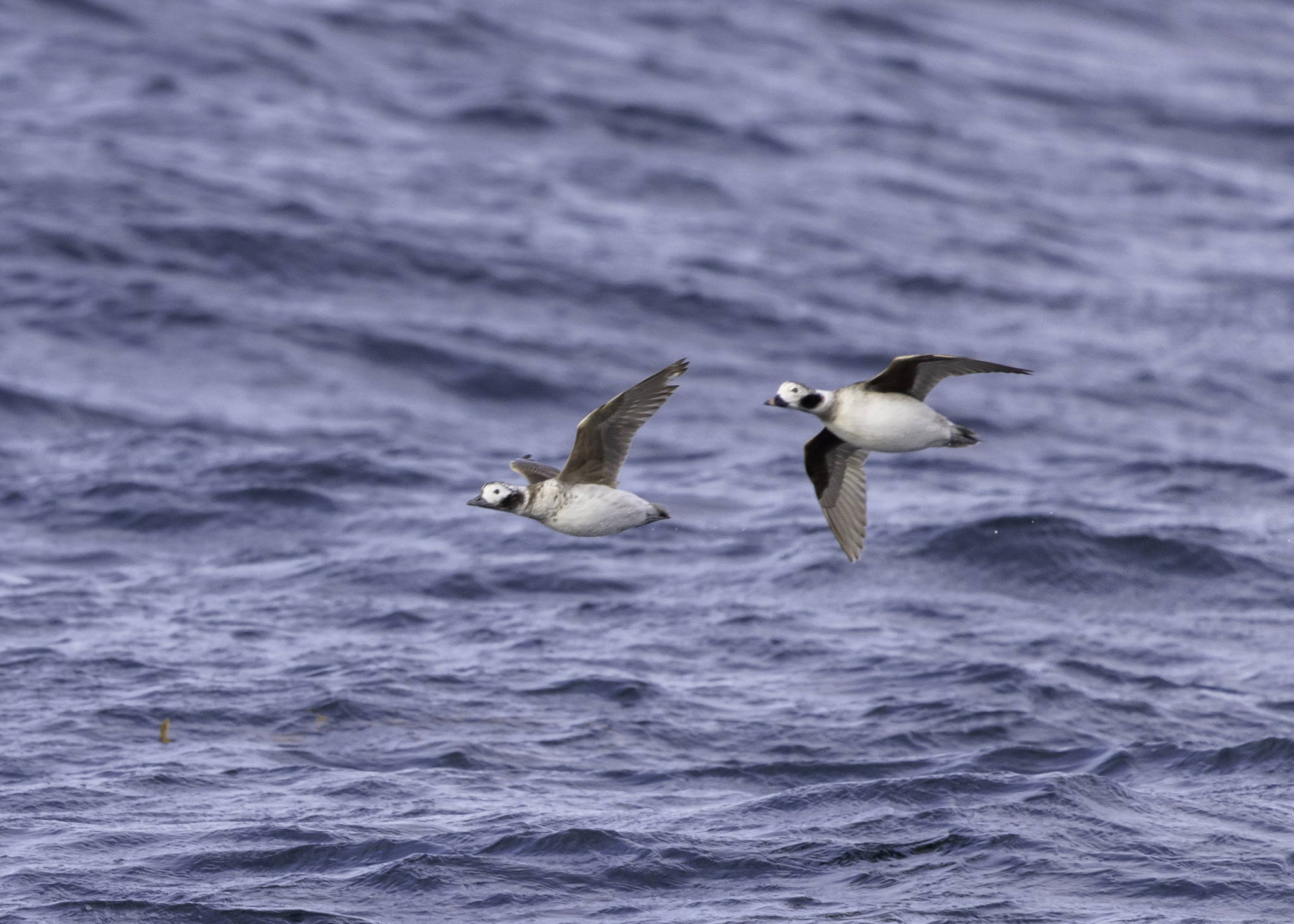
Adults have white underparts, with plumage undergoing a complex moulting process. Males possess a long pointed tail (10 to 15 cm) and a dark grey bill crossed by a pink band. In winter, males display a dark cheek patch on a mainly white head and neck, a dark breast, and a mostly white body. In summer, males are dark on the head, neck, and back with a white cheek patch. Females have a brown back and a relatively short pointed tail. Winter females have a white head and neck with a dark crown, while summer females have a dark head. Juveniles resemble adult females in autumn plumage but feature a lighter, less distinct cheek patch.
Identification
Males are identified by a long pointed tail and a dark grey bill with a pink band. Vocalizations include a musical yodelling call described as 'ow, ow, owal-ow'.
Distribution & Habitat
Breeds on tundra across northern Eurasia (including Siberia, Kamchatka, Karelia, Faroe Islands, Finland, southern Greenland, Iceland, Norway) and northern North America (Alaska, northern Canada). Winters on and near large bodies of seawater including the Northern Pacific Ocean, North Atlantic Ocean, Hudson Bay, and the Great Lakes. Small numbers occur on the Missouri River. The Baltic Sea is the most important wintering area, hosting about 4.5 million individuals. Stragglers reach the Black Sea. As of 2022, breeding occurs in parts of Western Europe, such as the Marker Wadden in the Netherlands.
Behavior & Ecology
Breeding habitat includes tundra pools, marshes, sea coasts, and large mountain lakes. Nests are built on the ground near water using vegetation and lined with down. The species is migratory and gregarious, forming large flocks in winter and during migration. Feeds by diving for mollusks, crustaceans, and small fish. While usually feeding close to the surface, it can dive to depths of 60 m (200 ft), with records up to 150 m (480 ft). It uses wings to aid diving, allowing greater depth than other ducks.
Conservation
Categorized as Vulnerable by the IUCN due to significant declines in wintering numbers, particularly in the Baltic Sea. Threats include susceptibility to being trapped in gillnets and hunting across a large part of its range. It is a species to which the Agreement on the Conservation of African-Eurasian Migratory Waterbirds (AEWA) applies.
Source: Wikipedia · CC BY-SA 3.0
Taxonomy
- Order
- Anseriformes
- Family
- Anatidae
- Genus
- Clangula
Distribution
breeds coastal Greenland (except northern), Iceland, northern Fennoscandia, northern Russia to Chukotka Peninsula, Alaska and northern Canada; winters mostly in coastal bays of northwestern Europe, Japan and Korean Peninsula, and Aleutian Islands to southwestern Canada
Data Sources
Species description from Wikipedia, licensed under CC BY-SA 3.0.
Bird images and sounds sourced from GBIF, contributed by citizen scientists worldwide under Creative Commons licenses.
Taxonomy data from AviList 2025.