Accipitriformes / Accipitridae / Clanga
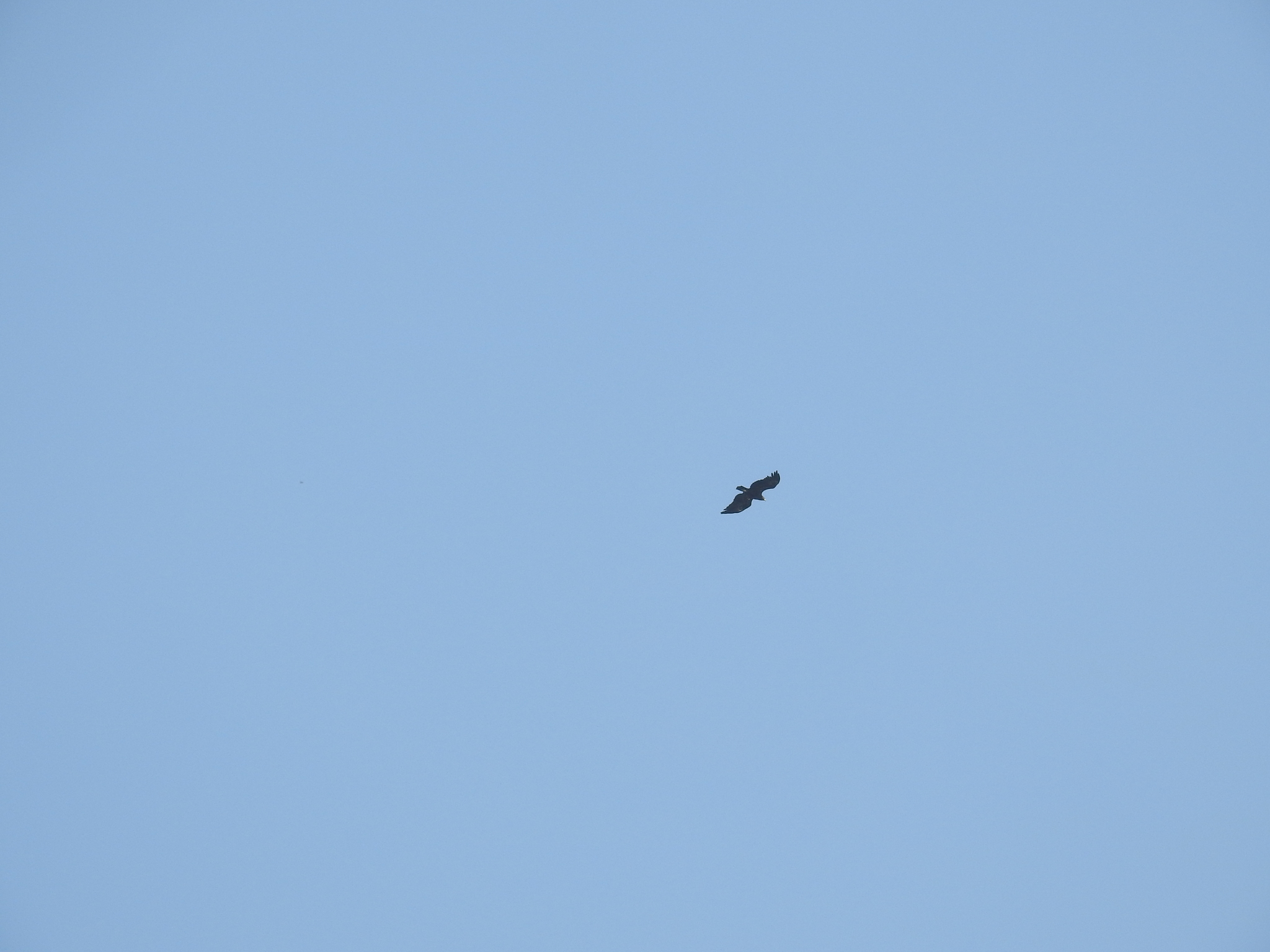
Greater Spotted Eagle
Clanga clanga · 乌雕
Introduction
A large migratory bird of prey in the family Accipitridae, subfamily Aquilinae. Formerly classified in genus Aquila, it is now placed in genus Clanga. Breeds across Eastern Europe, central Russia, Central Asia, and parts of China; winters in South Asia, Southeast Asia, the Middle East, the Mediterranean Basin, and East Africa. Prefers wetter habitats such as riparian zones, bogs, and floodplains more than other booted eagles. Classified as Vulnerable by the IUCN.
Description
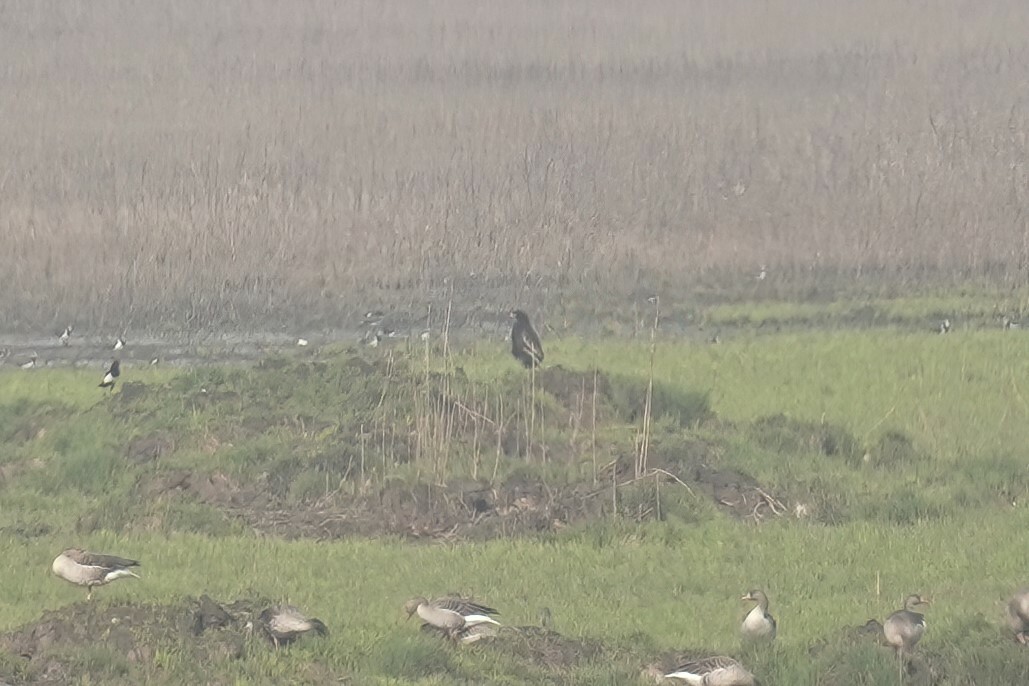
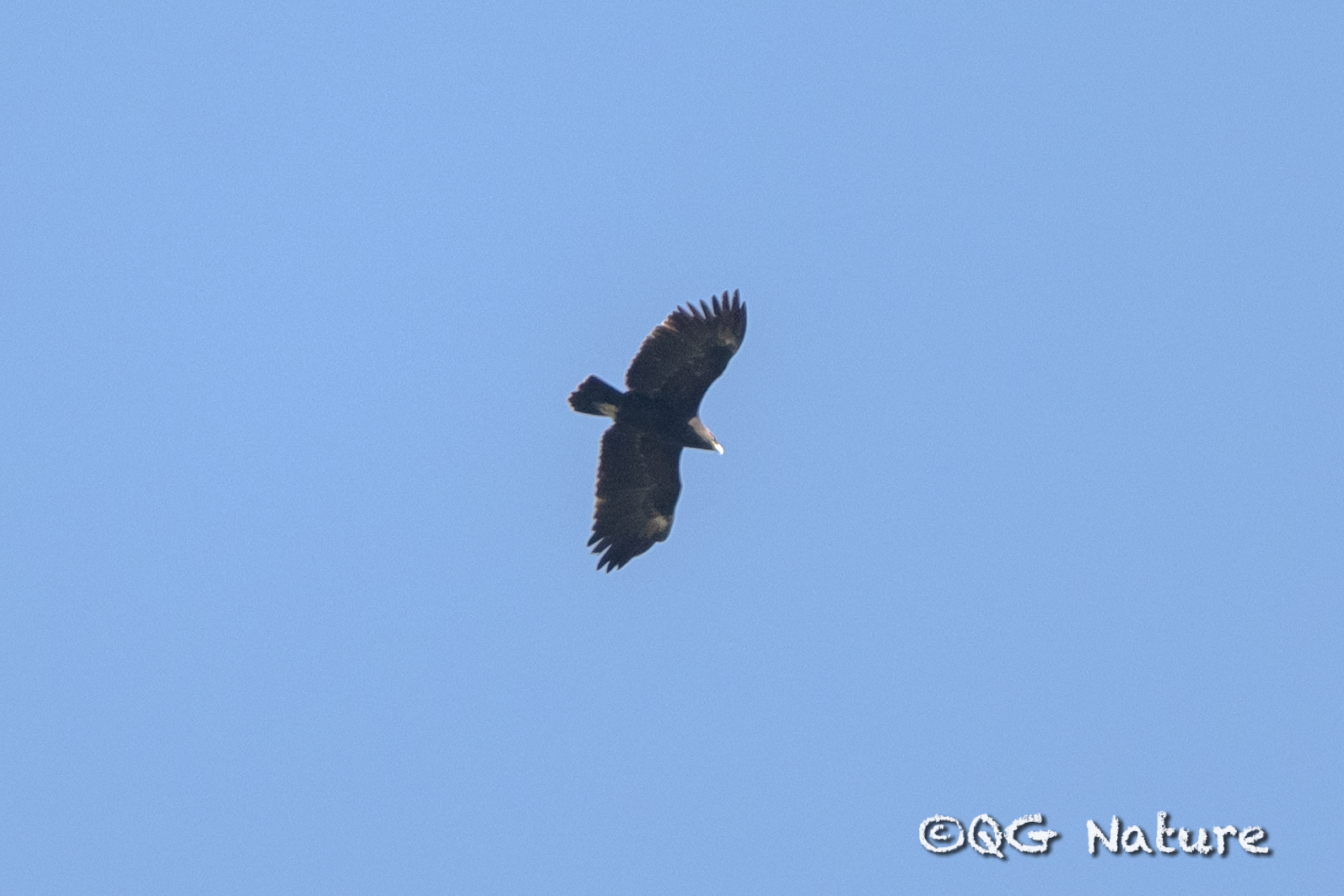
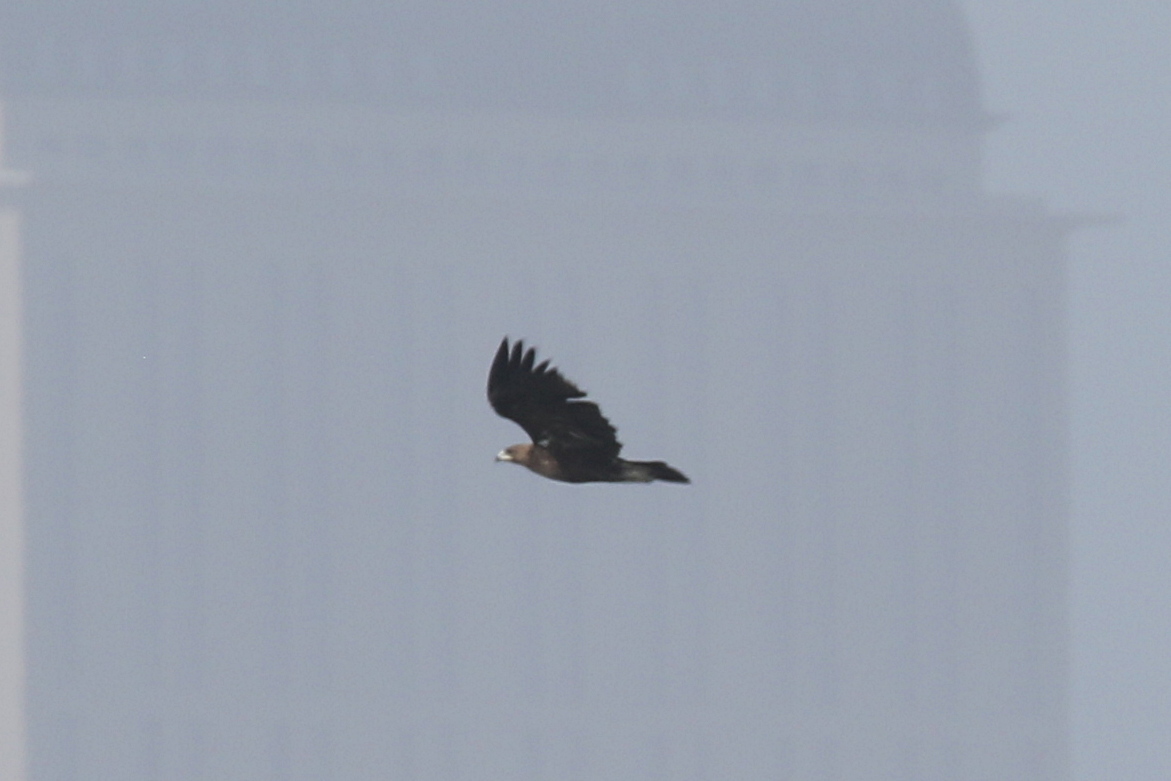
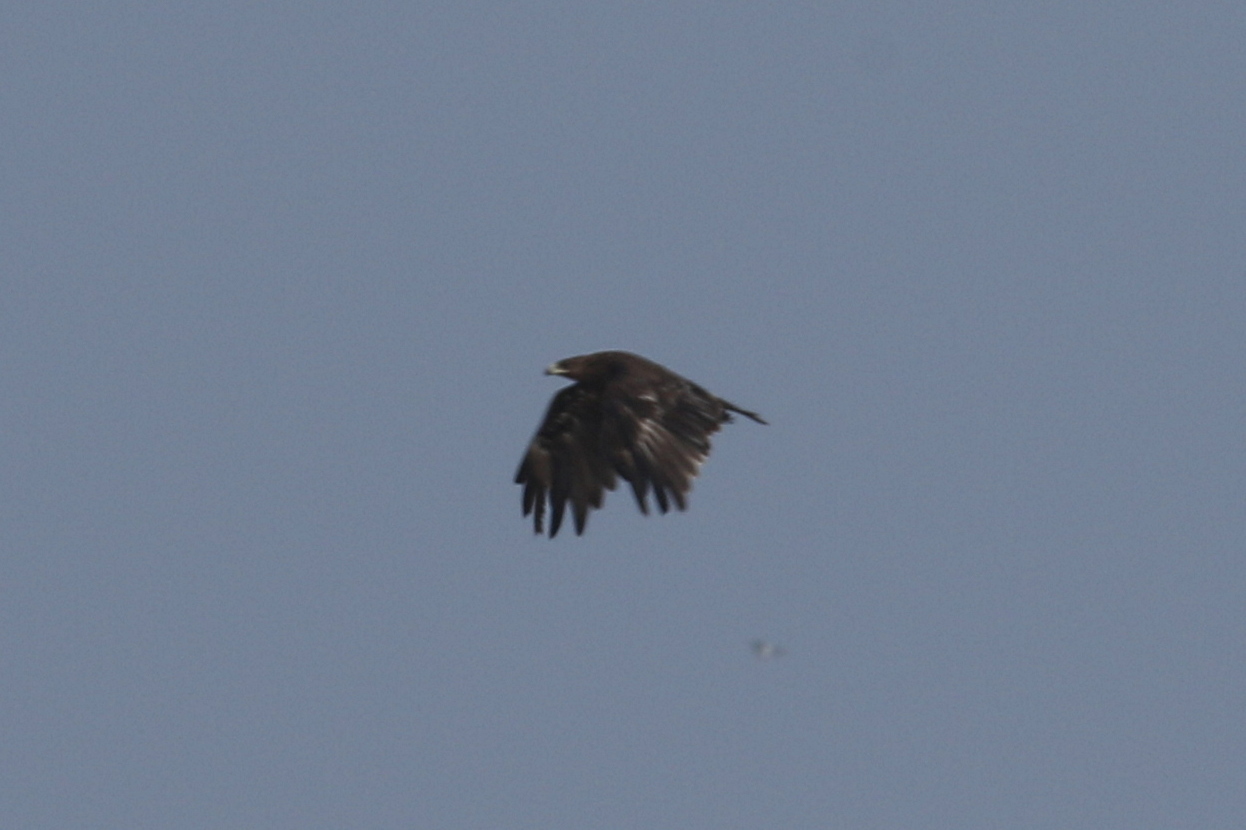
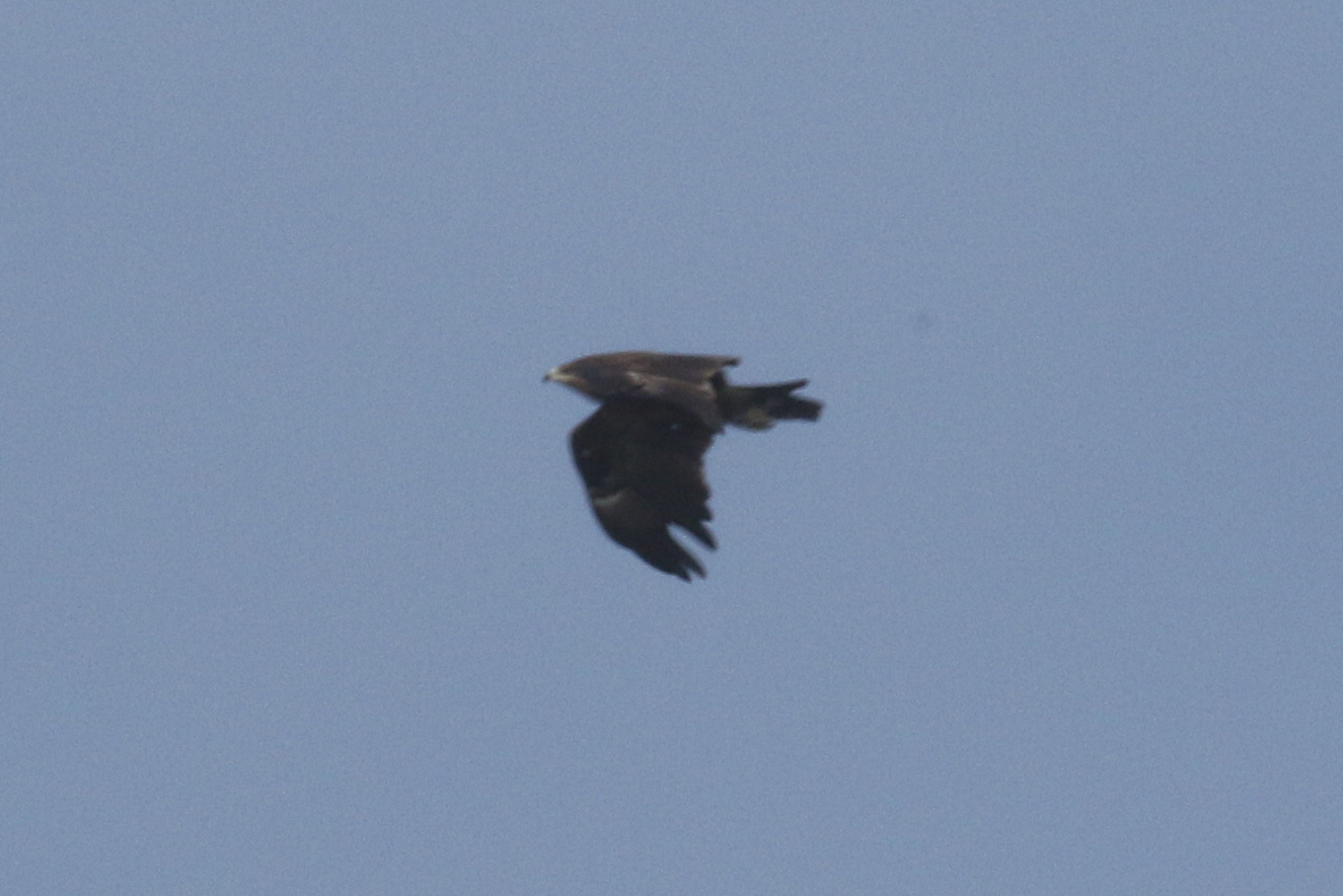
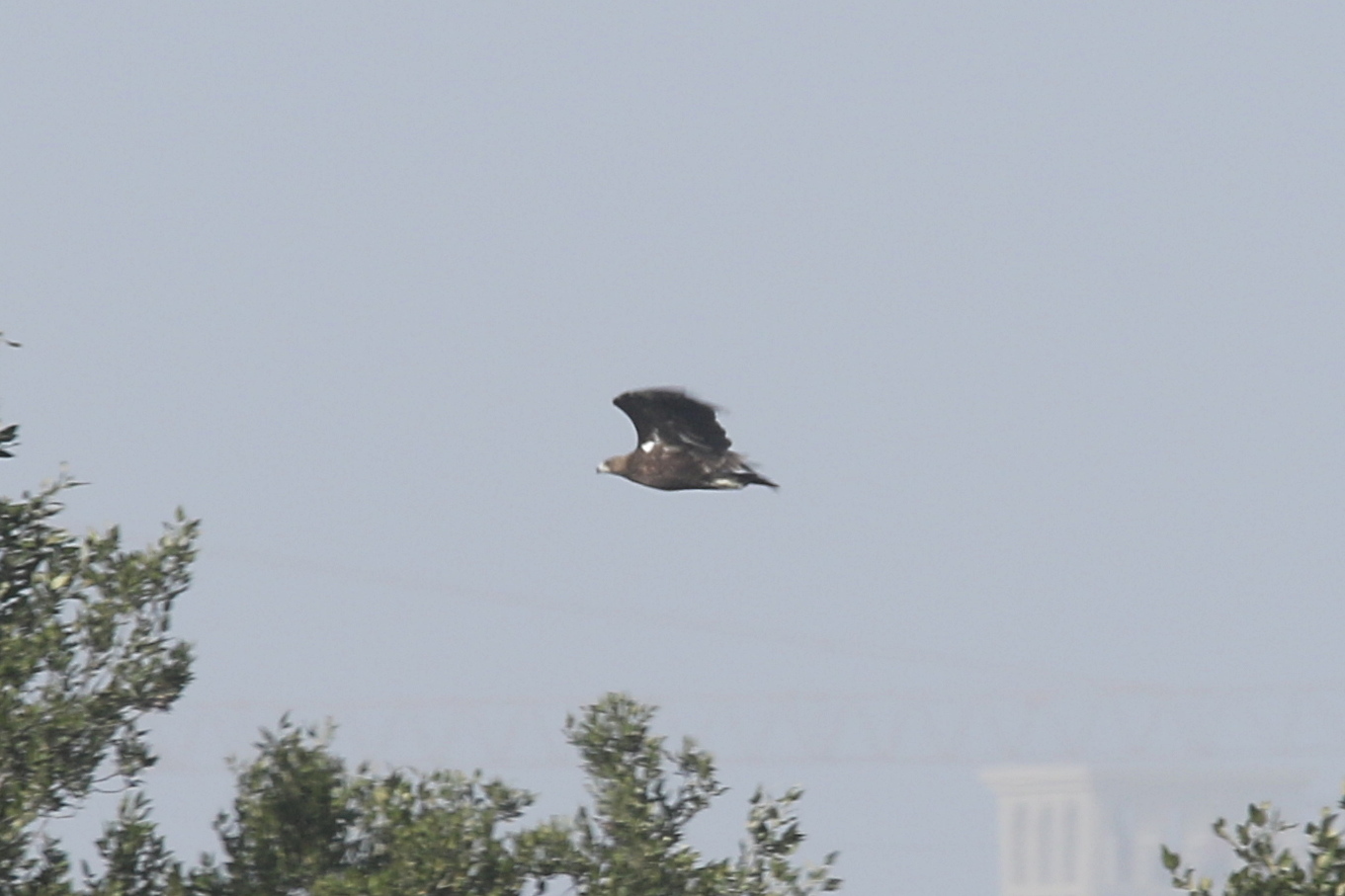
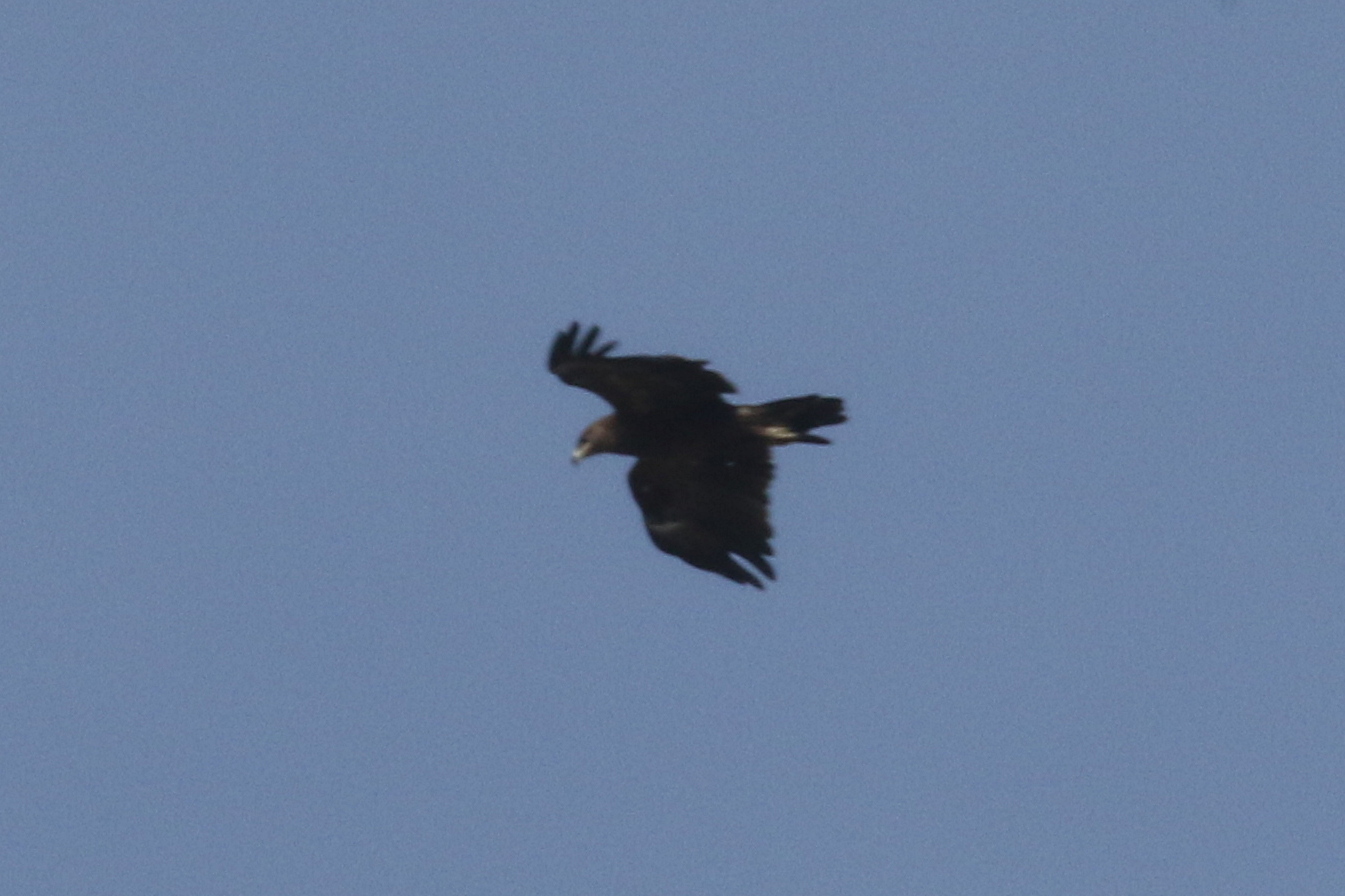
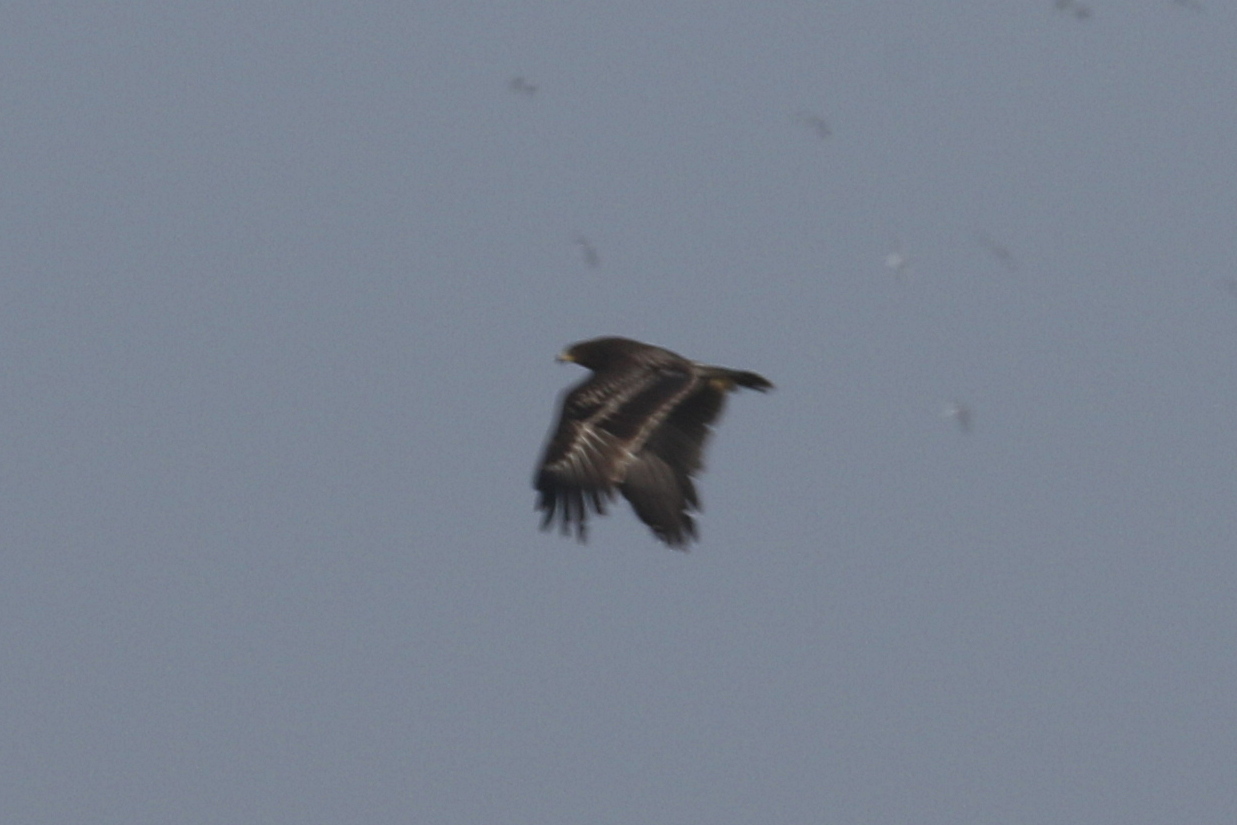
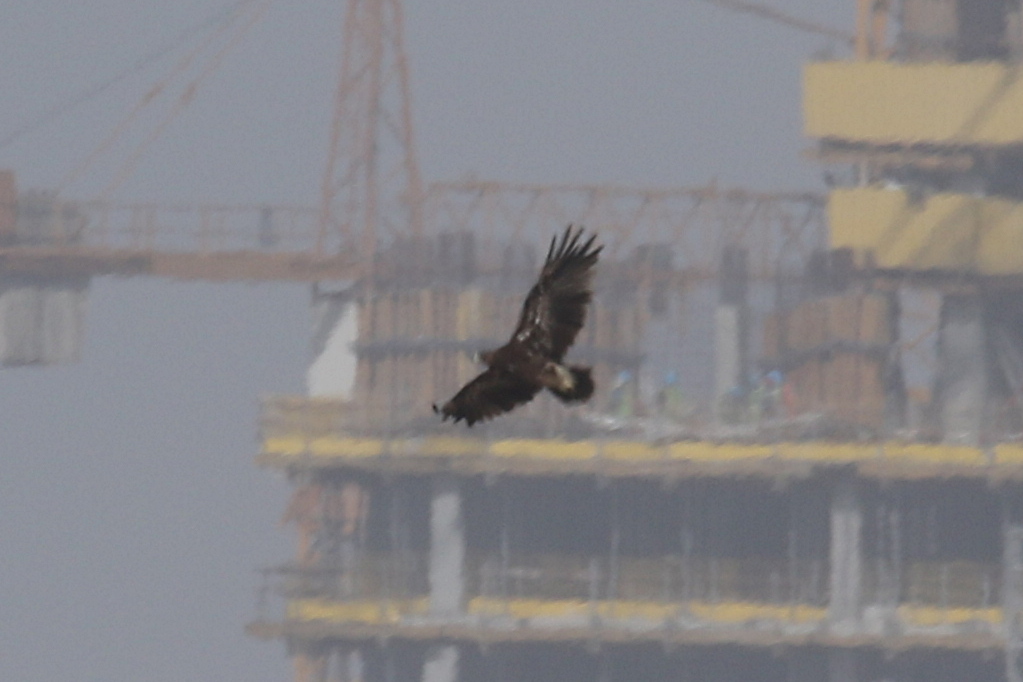
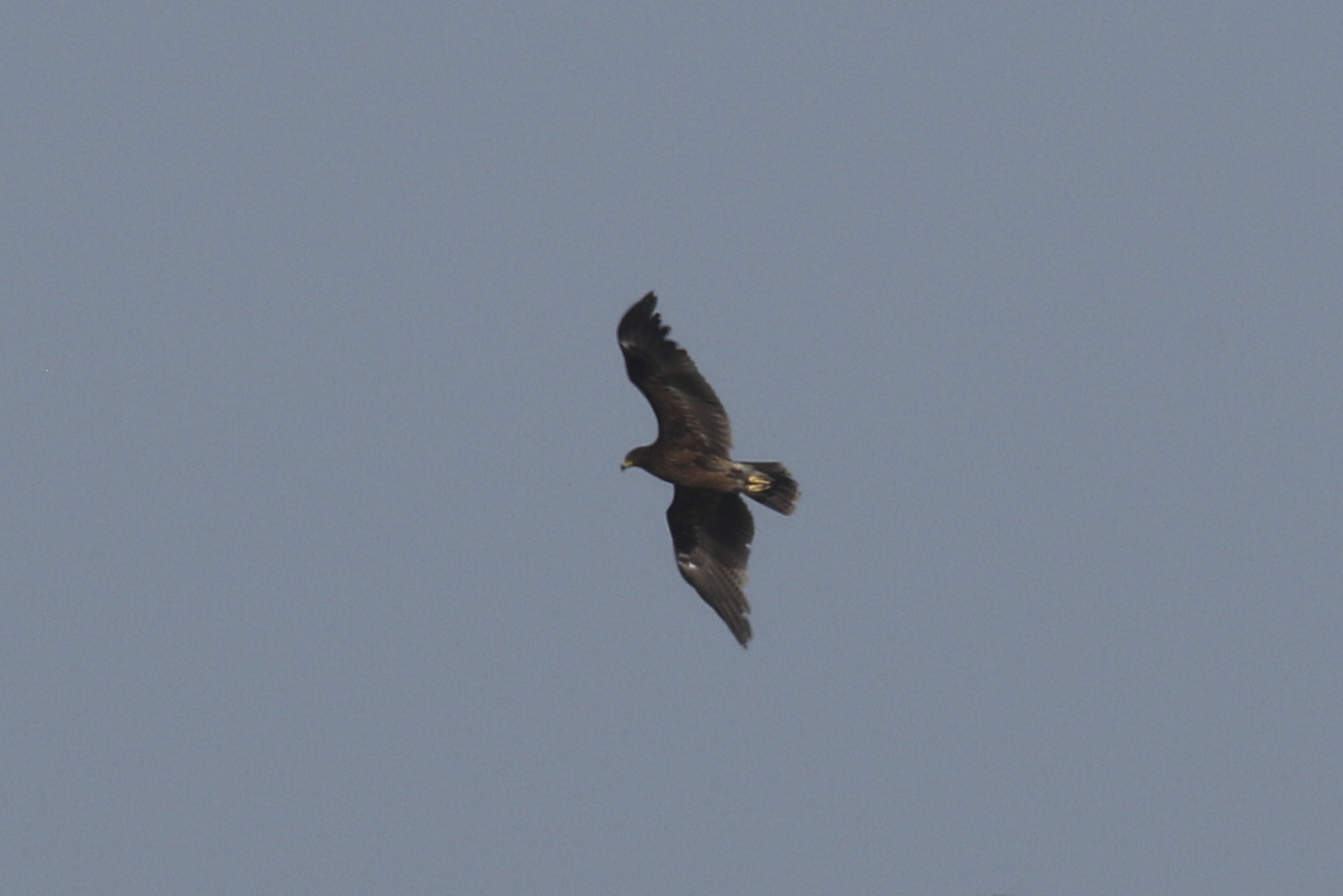
Large and compact with a total length of 59–74 cm. Males have a wingspan of 155–177 cm and weigh 1,537–2,000 g; females measure 167–185 cm in wingspan and weigh 1,820–3,250 g. Adults are generally uniform dark to blackish-brown, sometimes appearing purplish and glossy, with a contrasting yellow beak and feet. A narrow white U-shape above the tail is often concealed at rest. The rare fulvescens morph has bicolored plumage with a light yellow or pale golden buff body and blackish flight feathers. Juveniles are uniformly black-brown with whitish to yellowish drop-shaped spots, forming clear wing bars on the upperwing coverts. Eyes are dark brown at all ages.
Identification
Distinguished from the lesser spotted eagle by broader wings, a shorter tail, and a more vulture-like silhouette. Adults lack the pale nape patch seen in lesser spotted eagles and have darker, more uniform upperwing coverts. In flight, the underwing shows a single white crescent at the base of the primaries, whereas the lesser spotted eagle often shows a double crescent. Juveniles display stronger spotting and barring than juvenile lesser spotted eagles. Compared to the steppe eagle, it has a shorter neck, smaller bill, and lacks the pale nape patch. The Indian spotted eagle is smaller with a deeper gape and more distinct pale window in the primaries.
Distribution & Habitat
Breeds in the Palearctic and Indomalayan regions, including Eastern and Central Europe, European Russia, Siberia, Kazakhstan, Kyrgyzstan, northern Mongolia, Northeastern China, and northern North Korea. Migrates primarily from late August to November and returns February to April. Wintering grounds include the Mediterranean Basin, Middle East, Arabian Peninsula, Indian subcontinent, Indochina, and southern China. Vagrants have been recorded in Western Europe and various African countries. Favors wetlands, floodplains, riparian forests, and marshes during breeding; uses similar wet habitats in winter but also adapts to savannas and agricultural areas.
Behavior & Ecology
Opportunistic forager feeding on small mammals (especially voles), birds, amphibians, reptiles, and insects. Hunts mainly on the wing by quartering open ground or soaring and dropping steeply; also still-hunts from perches. Scavenges carrion and engages in kleptoparasitism, particularly in winter. Breeds from late April to August, building large stick nests in trees, often using fresh branches with foliage. Clutch size is typically two eggs, incubated for 42–44 days. Siblicide is common, with parents rarely raising more than one fledgling. Vocalizations include a high-pitched whistle and a three-syllable bark.
Conservation
Classified as Vulnerable by the IUCN. Global population estimated at 3,800–13,200 mature individuals. Populations are declining due to habitat destruction, particularly drainage of wetlands and intensified agriculture. Other threats include collisions with electrical wires, inadvertent poisoning, and hybridization with the lesser spotted eagle, which threatens genetic integrity. Legally protected in several range states including Belarus, Estonia, Poland, and Russia. Conservation efforts include restrictions on forestry near nests and international action plans.
Source: Wikipedia · CC BY-SA 3.0
Taxonomy
- Order
- Accipitriformes
- Family
- Accipitridae
- Genus
- Clanga
Taxonomy Changes
Aquila clanga → Clanga clanga
Genus transfer — GBIF Backbone Taxonomy uses the former name; AviList 2025 uses the current name.
Distribution
breeds central Eurasia and southern Asia; winters to Africa, China, and Indochina
Vocalizations
Data Sources
Species description from Wikipedia, licensed under CC BY-SA 3.0.
Bird images and sounds sourced from GBIF, contributed by citizen scientists worldwide under Creative Commons licenses.
Taxonomy data from AviList 2025.