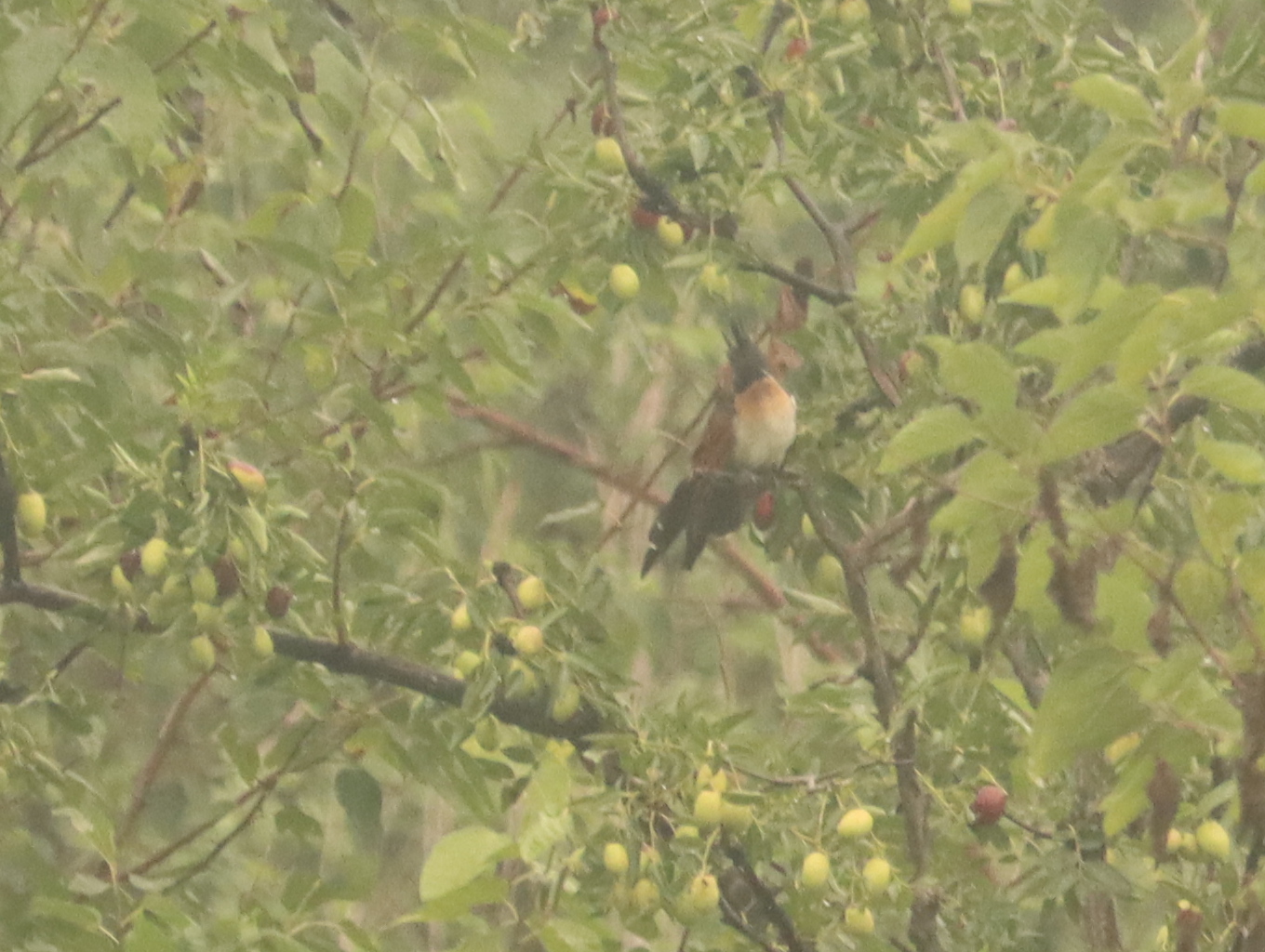
Cuculiformes / Cuculidae / Clamator
Chestnut-winged Cuckoo
Clamator coromandus · 红翅凤头鹃
Introduction
A cuckoo species found in Southeast Asia and parts of South Asia. It breeds along the Himalayas and migrates south in winter. Distinctive traits include a long crest, chestnut wings, and brood parasitism.
Description
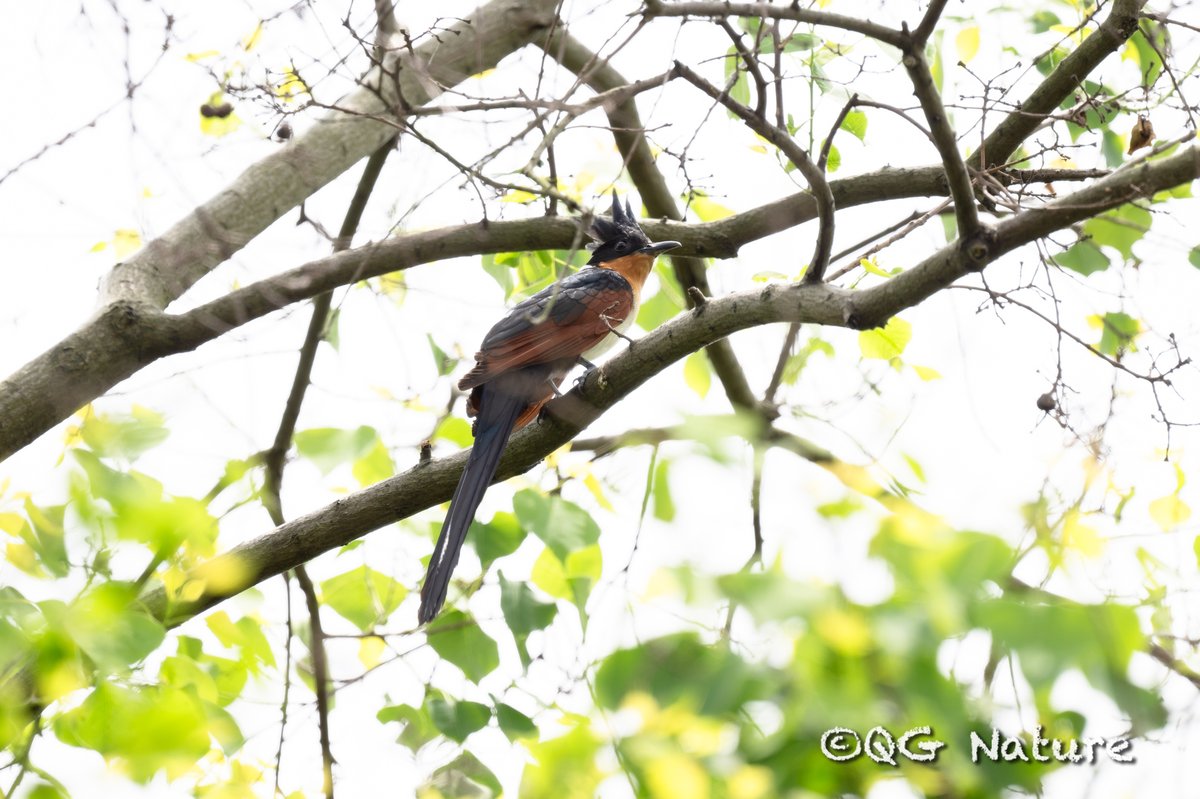
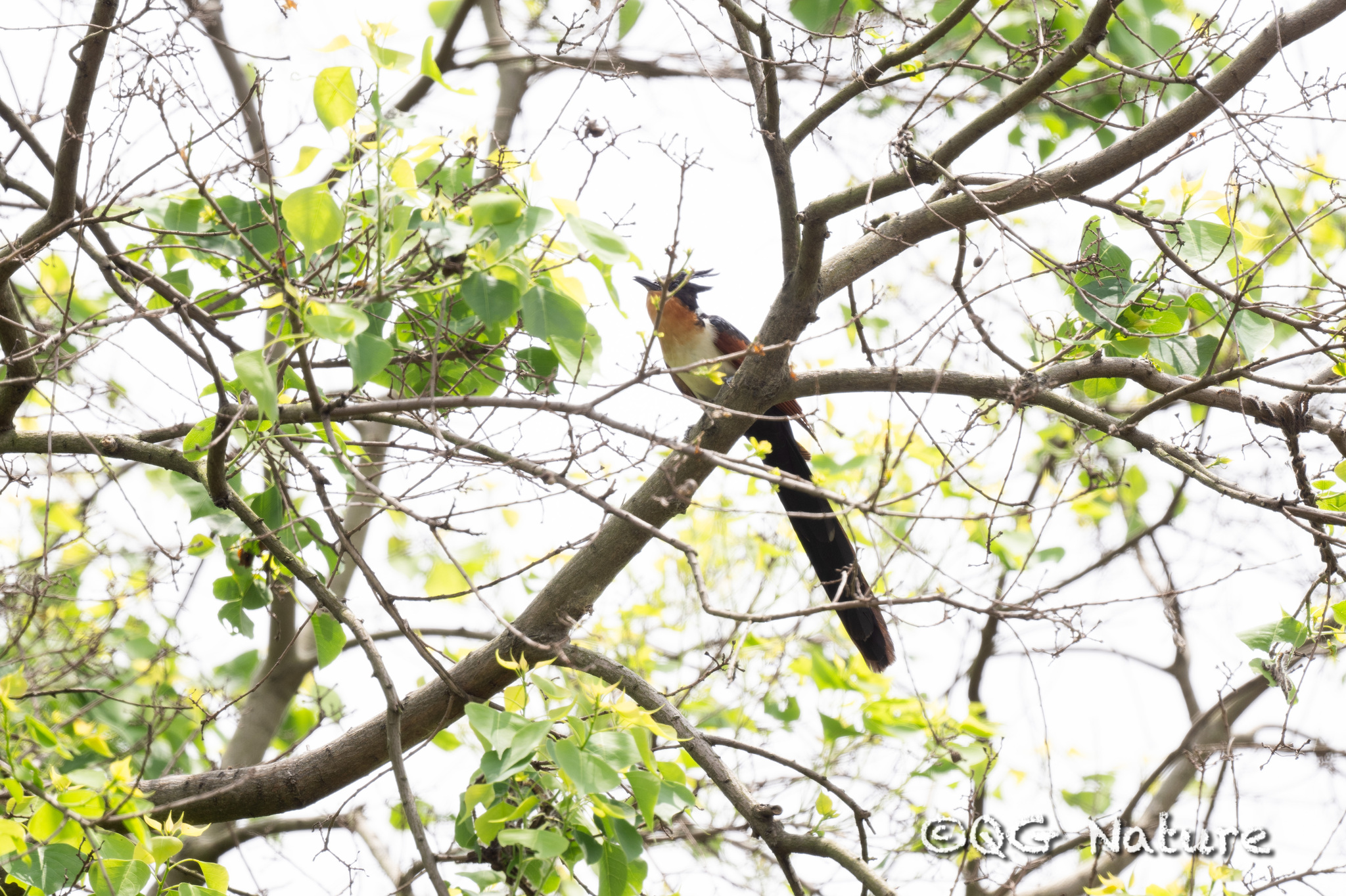
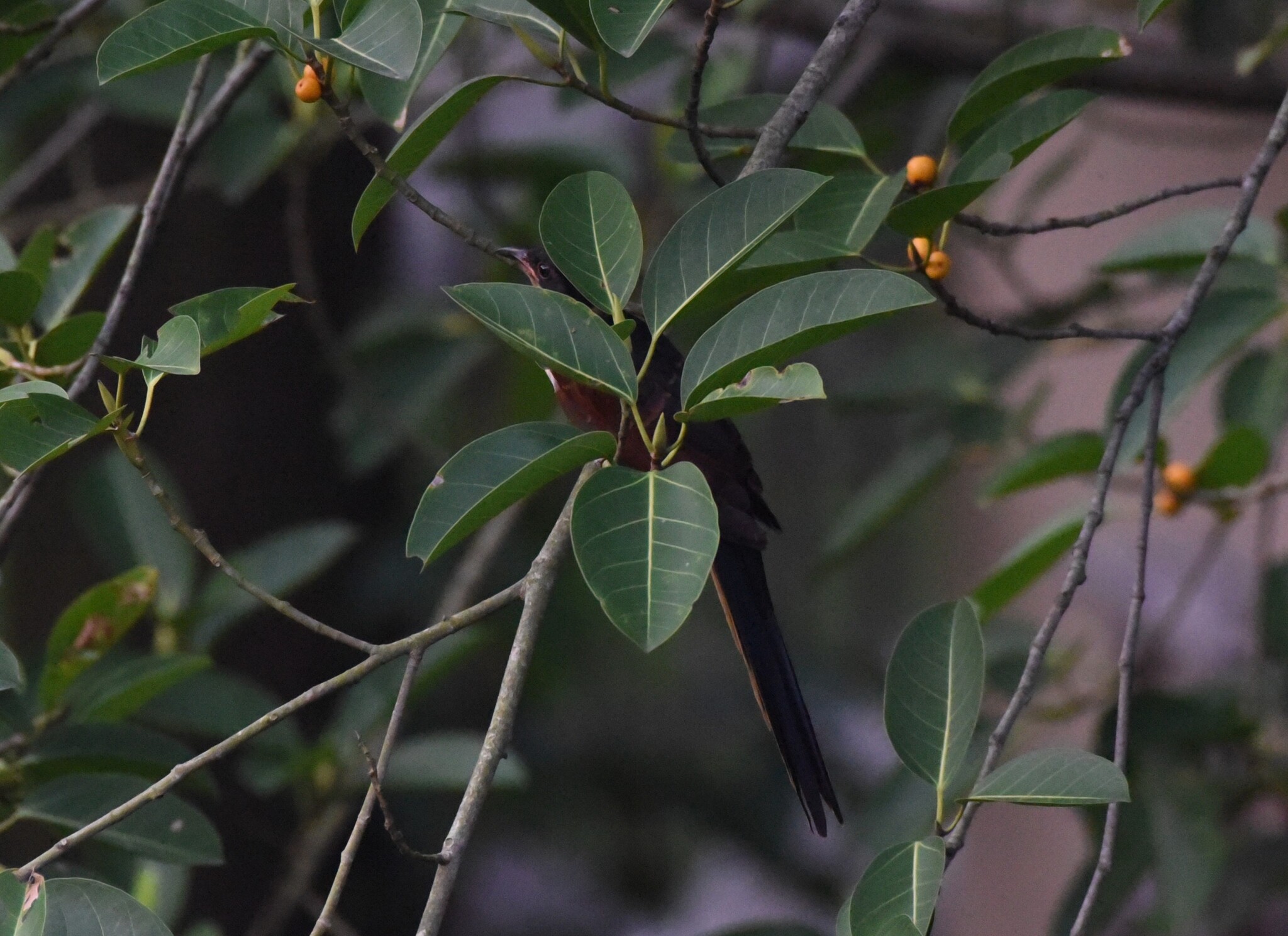
About 47 cm (19 in) long. Has dark glossy upperparts, a black head with a long glossy black crest, and chestnut wings. Features a long graduated glossy black tail with inconspicuous white terminal edges. A narrow white nuchal half collar breaks the black capping from the back. The throat is rufous, turning to dusky or dark grey towards the vent. Young birds are dusky with a scaly appearance on wing feathers.
Identification
Distinguished by chestnut wings, glossy black crest, and graduated tail lacking the prominent white tips seen in the Jacobin cuckoo. The black head cap is separated from the back by a white collar extending to the neck sides. Vocalizations include fluty twin-notes repeated at short intervals.
Distribution & Habitat
Range extends from the western to eastern Himalayas into Southeast Asia. Recorded in India, Nepal, China, Indonesia, Laos, Bhutan, Bangladesh, Cambodia, Thailand, Myanmar, Malaysia, Vietnam, Sri Lanka, and the Philippines. Breeds in the Himalayas and migrates south to Sri Lanka, southern India, and tropical Southeast Asia for winter. Some populations may be non-migratory. During migration in India, moves along the Eastern Ghats; some winter in the Western Ghats. Large numbers observed at Point Calimere in mid-October.
Behavior & Ecology
Usually seen singly but sometimes joins mixed-species foraging flocks. Acts as a brood parasite with a summer breeding season. Lays very spherical eggs mainly in the nests of laughingthrushes, especially G. monileger and G. pectoralis.
Source: Wikipedia · CC BY-SA 3.0
Taxonomy
- Order
- Cuculiformes
- Family
- Cuculidae
- Genus
- Clamator
Distribution
breeds northwestern India eastwards to eastern China and southwards to northern Indian Peninsula and southeastern Asia; winters to southern India, Sri Lanka, Greater Sundas, and Philippines
Vocalizations
Data Sources
Species description from Wikipedia, licensed under CC BY-SA 3.0.
Bird images and sounds sourced from GBIF, contributed by citizen scientists worldwide under Creative Commons licenses.
Taxonomy data from AviList 2025.