Chestnut-winged Cuckoo
Clamator coromandus
红翅凤头鹃
Introduction
The chestnut-winged cuckoo is a brood parasite occurring across South and Southeast Asia. It breeds in Himalayan foothills during summer and winters in southern India, Sri Lanka, and tropical Southeast Asia. This species occasionally joins mixed-species foraging flocks. Its vocalization is a fluty twin-note call.
Description
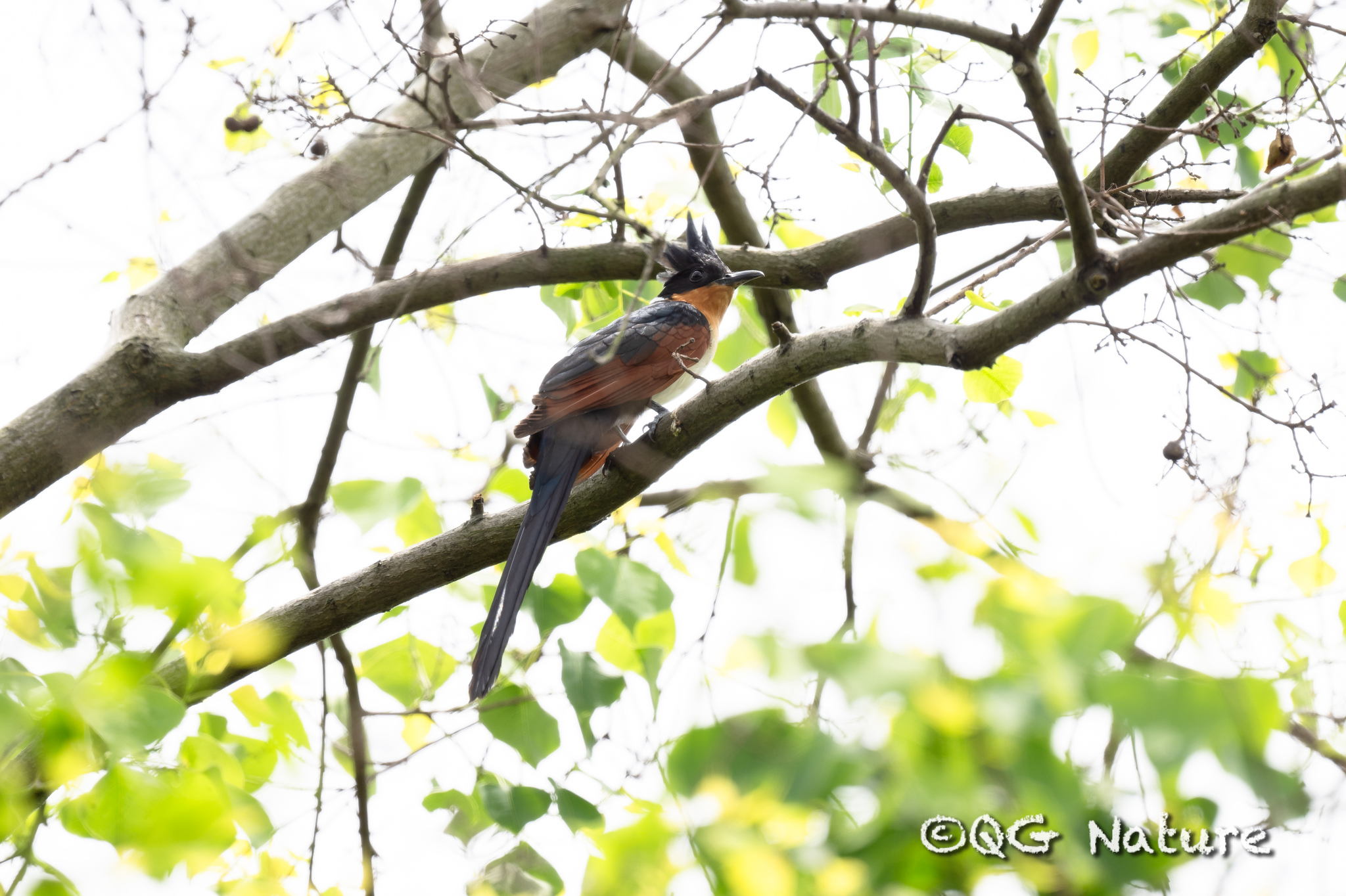
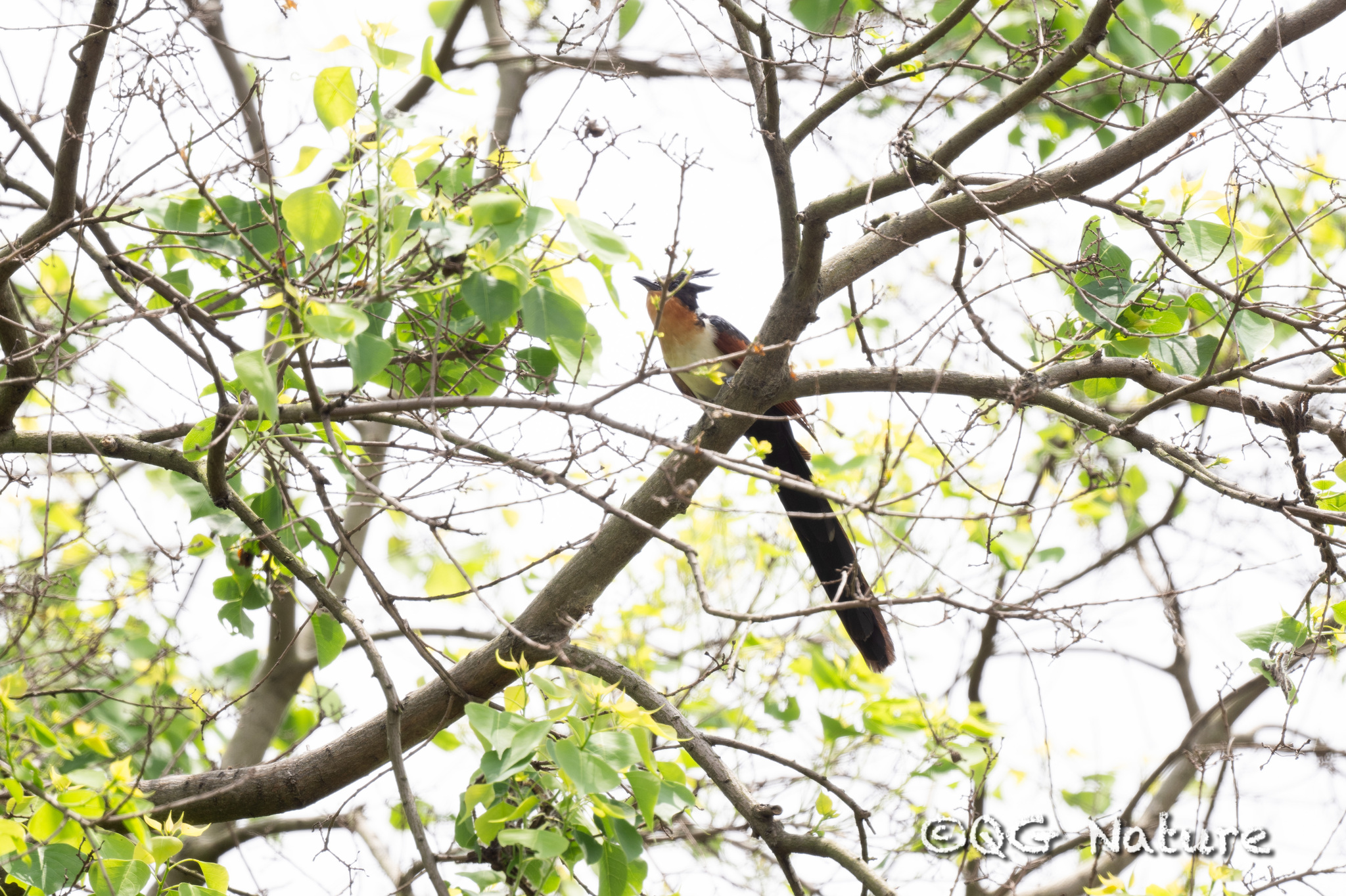
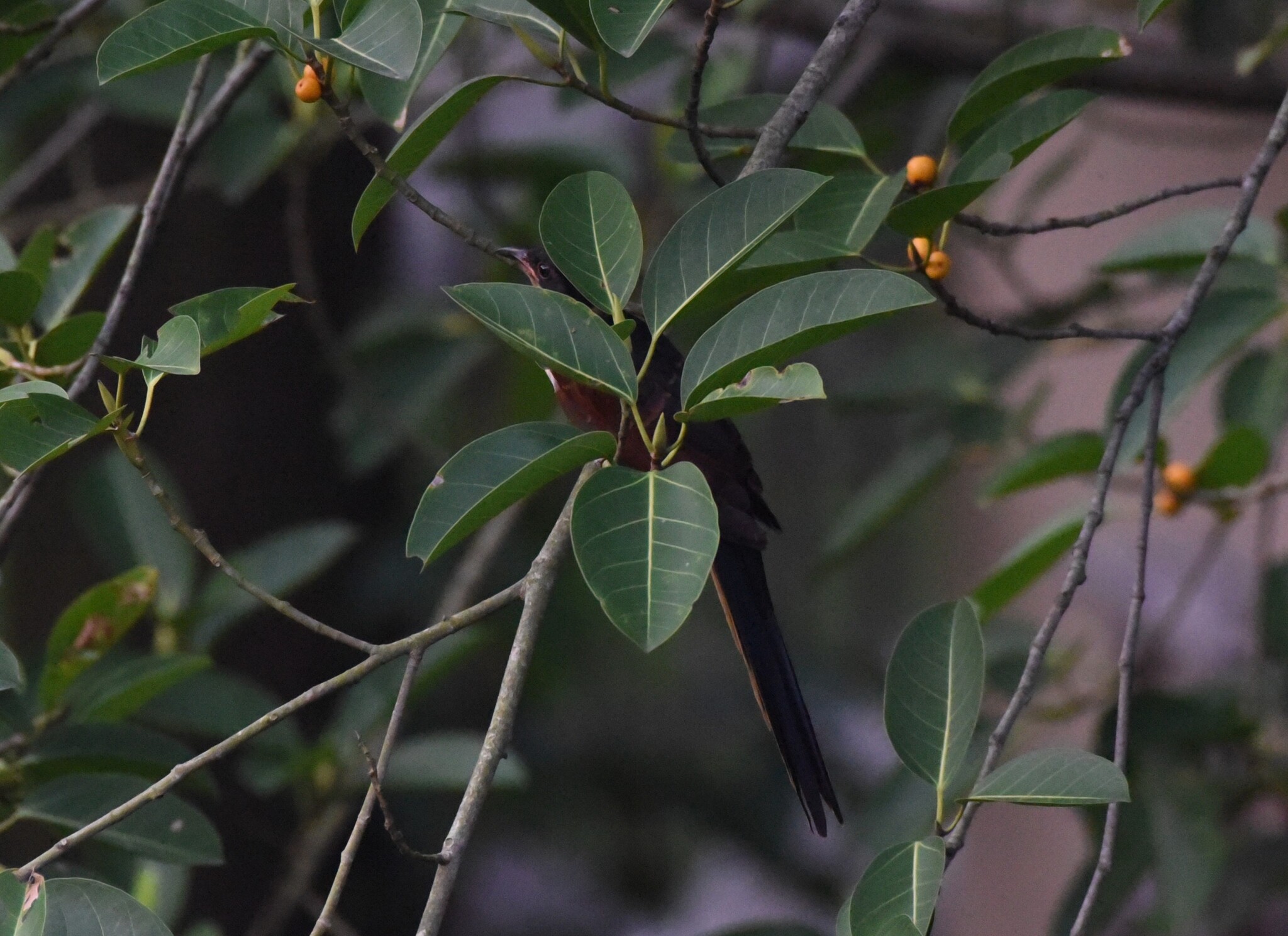
This medium-sized cuckoo measures approximately 47 cm in length and possesses a distinctive crested appearance. The upperparts are dark and glossy black, with a prominent crest on the head. The striking chestnut wings provide the species with its namesake. The tail is long and graduated, with white terminal edges that are relatively inconspicuous. A narrow white half-collar extends across the nape to the sides of the neck, separating the black head from the black back. The throat is rufous, while the lower underparts transition from rufous to dark grey toward the vent. Juveniles appear dusky with a scaly texture to their wing feathers.
Identification
The chestnut-winged cuckoo can be distinguished from the similar Jacobin cuckoo by its tail pattern—while both species have white-tipped tails, the white tips on this species are less conspicuous compared to the more prominent white tips of the Jacobin cuckoo. The combination of chestnut wings, glossy black crested head, and white nuchal collar are diagnostic features. In flight, the chestnut wing panels become prominent and aid in identification. The graduated tail structure, with feathers shortening from center to outer edges, also helps distinguish it from other crested cuckoos in its range.
Distribution & Habitat
This species breeds along the entire Himalayan range from west to east, from Pakistan through Nepal and into northeastern India. During winter migration, it disperses south to Sri Lanka, southern India, and tropical Southeast Asia including Indonesia, Thailand, the Philippines, Myanmar, Cambodia, Laos, Vietnam, Malaysia, Bangladesh, and southern China. Some populations appear to be non-migratory. In India, migration follows the Eastern Ghats southward, with exhausted individuals sometimes found near human dwellings. Notable autumn concentrations occur at Point Calimere, with some birds wintering in the Western Ghats.
Behavior & Ecology
This cuckoo is typically observed singly, though it occasionally joins mixed-species foraging flocks. As a brood parasite, breeding occurs during summer months. The species specializes in parasitizing the nests of Garrulax laughingthrushes, particularly the white-collared laughingthrush and greater necklaced laughingthrush. The eggs are notably spherical in shape. The vocalization consists of distinctive fluty twin-notes repeated at short intervals, which serves as the best clue to detecting this often secretive bird.
Culture
No specific cultural significance or folklore is documented for this species in the available sources.
Source: Wikipedia · CC BY-SA 3.0
Taxonomy
- Order
- Cuculiformes
- Family
- Cuculidae
- Genus
- Clamator
- eBird Code
- chwcuc1
Distribution
breeds northwestern India eastwards to eastern China and southwards to northern Indian Peninsula and southeastern Asia; winters to southern India, Sri Lanka, Greater Sundas, and Philippines
Vocalizations
Data Sources
Species description from Wikipedia, licensed under CC BY-SA 3.0.
Bird images and sounds sourced from GBIF, contributed by citizen scientists worldwide under Creative Commons licenses.
Taxonomy data from AviList 2025.