Passeriformes / Cisticolidae / Cisticola
Zitting Cisticola
Cisticola juncidis · 棕扇尾莺
Introduction
A widely distributed Old World warbler in the family Cisticolidae, with a breeding range spanning western and southern Europe, Africa (excluding deserts and rainforests), and southern Asia to northern Australia. Primarily inhabiting grasslands, it is characterized by a rufous rump and a zigzagging flight display during breeding.
Description
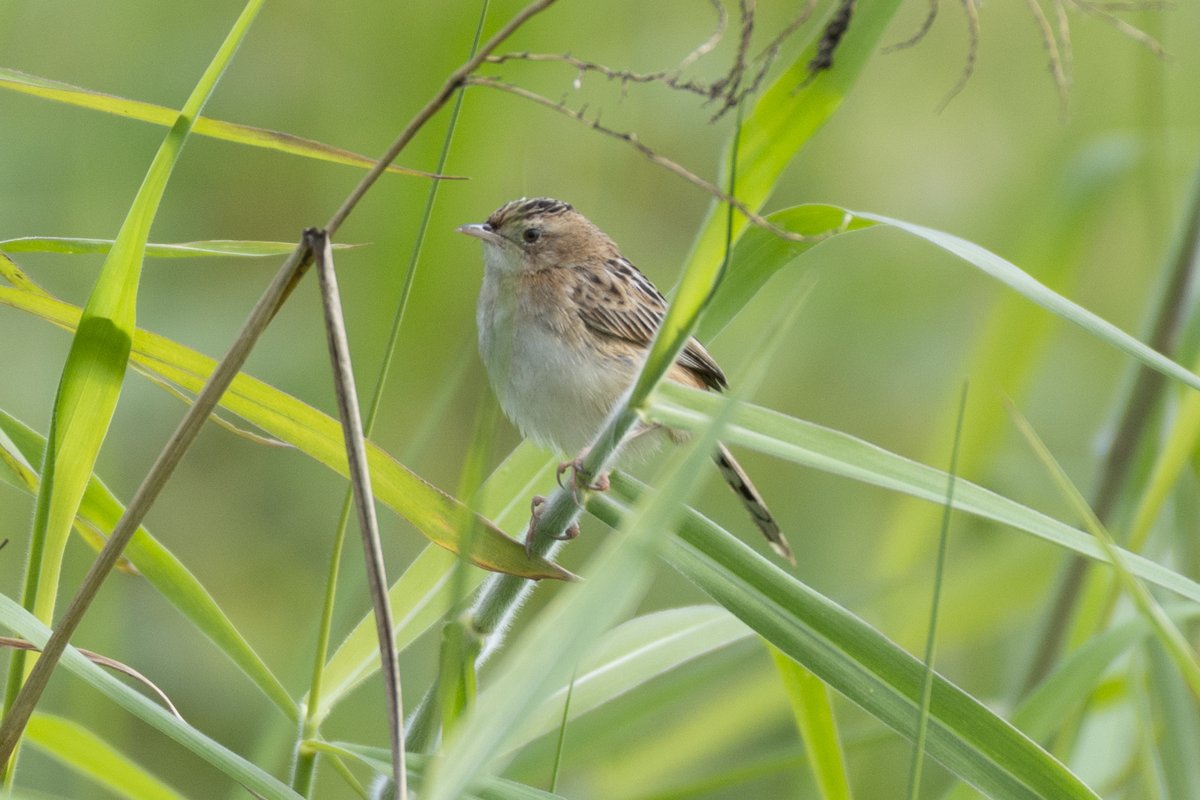
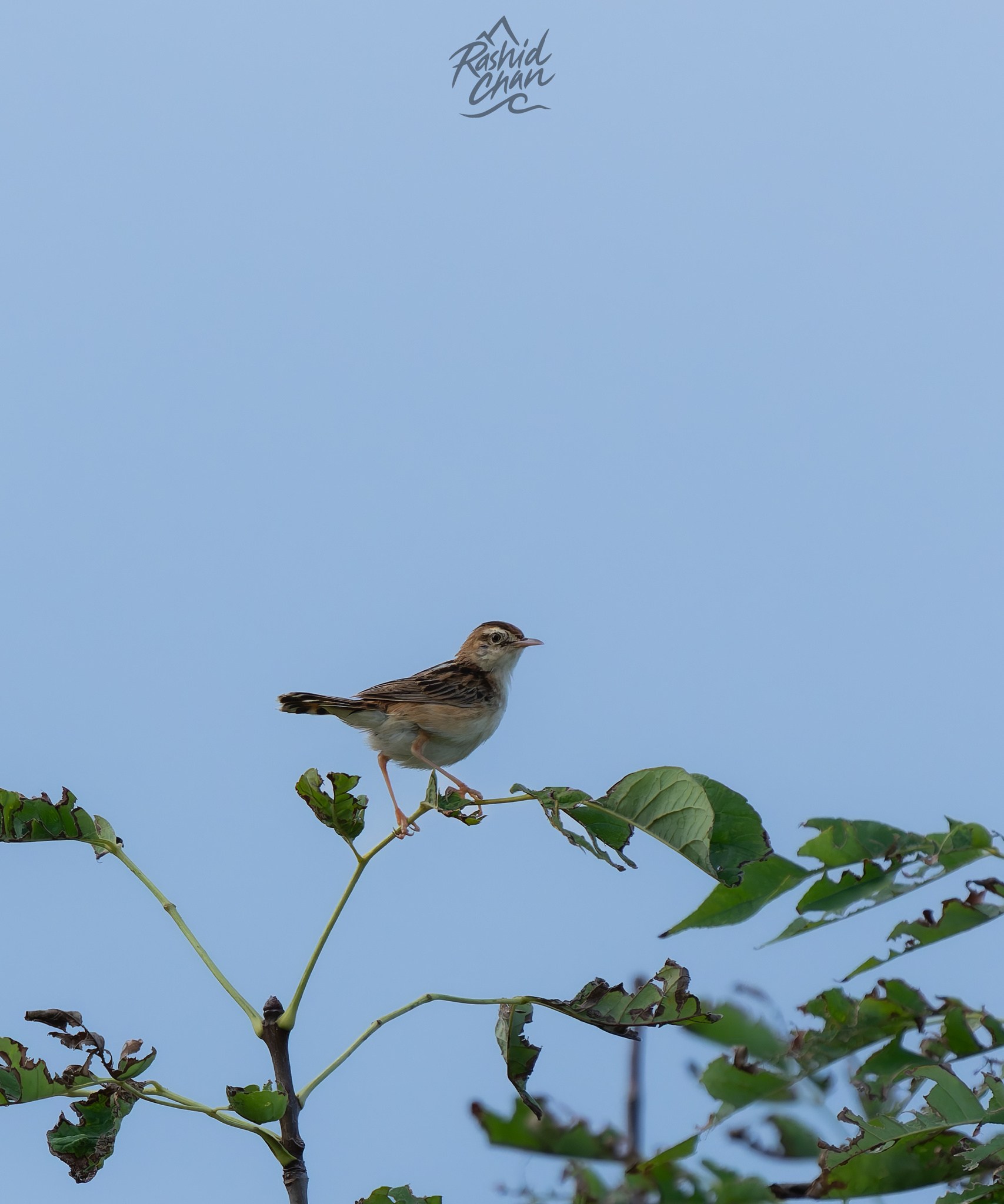
Length 10–12 cm (3.9–4.7 in). Brown above with heavy black streaking; whitish underparts. The tail is broad, brownish, and white-tipped, often flicked. Adult males exhibit less crown streaking and more back marking than females, though sexual differences are slight. Lacks a gold nuchal collar.
Identification
Best identified by the rufous rump and absence of a gold collar. Distinguished from the golden-headed cisticola by the lack of a nuchal collar. Flight involves a zigzagging display. Vocalizations include regular 'zit' calls; western populations produce evenly spaced 'zit – zit – zit', while eastern Asian populations often use a 'double zit' pattern ('zit zit – zit zit').
Distribution & Habitat
Breeds in western and southern Europe, Africa outside deserts and rainforests, and southern Asia to northern Australia. Found mainly in grasslands, often near water. Most populations are resident, but some East Asian groups migrate south in winter. In the Himalayas, ranges from below 1,300 m in winter to about 1,900 m in summer. A rare vagrant to northern Europe; European range is expanding.
Behavior & Ecology
Insectivorous, sometimes found in small groups. Breeding coincides with rains; up to two broods per year. Males are generally polygynous, building an initial nest structure deep in grasses to attract females. Accepted females complete the cup-shaped nest with a canopy of tied leaves for camouflage using felted plant-down, cobwebs, and grass. Clutch size is 3–6 eggs; incubation lasts about 10 days. Females change mates frequently and rarely stay in the same territory, while males maintain shifting, non-overlapping song territories.
Source: Wikipedia · CC BY-SA 3.0
Taxonomy
- Order
- Passeriformes
- Family
- Cisticolidae
- Genus
- Cisticola
Vocalizations
Subspecies (17)
-
Cisticola juncidis brunniceps
southern Korea, Japan (Honshu and southward, including Ryukyu and Izu islands, southern Japan), and far northern Philippines (Batan Islands)
Data Sources
Species description from Wikipedia, licensed under CC BY-SA 3.0.
Bird images and sounds sourced from GBIF, contributed by citizen scientists worldwide under Creative Commons licenses.
Taxonomy data from AviList 2025.