

Passeriformes / Corvidae / Cissa
Indochinese Green Magpie
Cissa hypoleuca · 黄胸绿鹊
Introduction
A small passerine bird in the family Corvidae, native to forests in China, Laos, Thailand, and Vietnam. It is non-migratory and inhabits tropical and subtropical moist forests, primarily in tree canopies. The species is assessed as Least Concern by the IUCN, though its population is declining.
Description
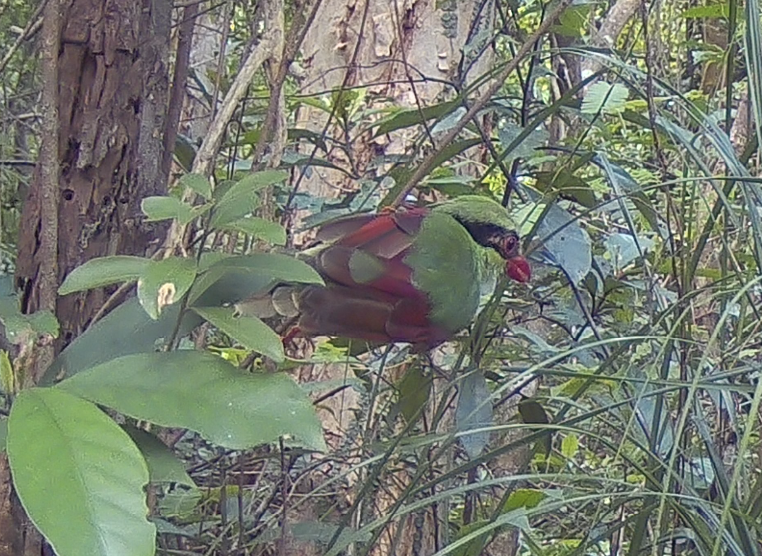
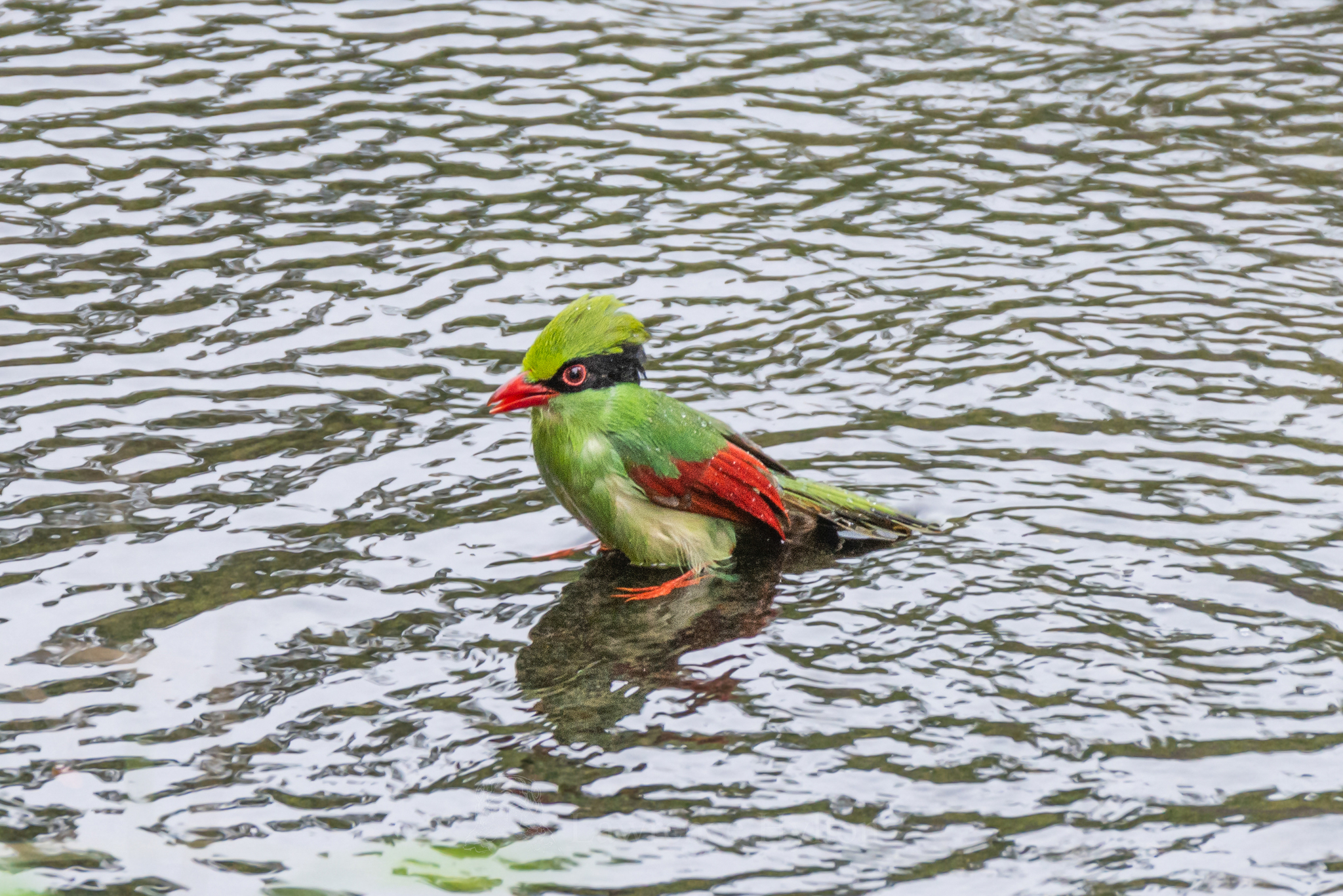
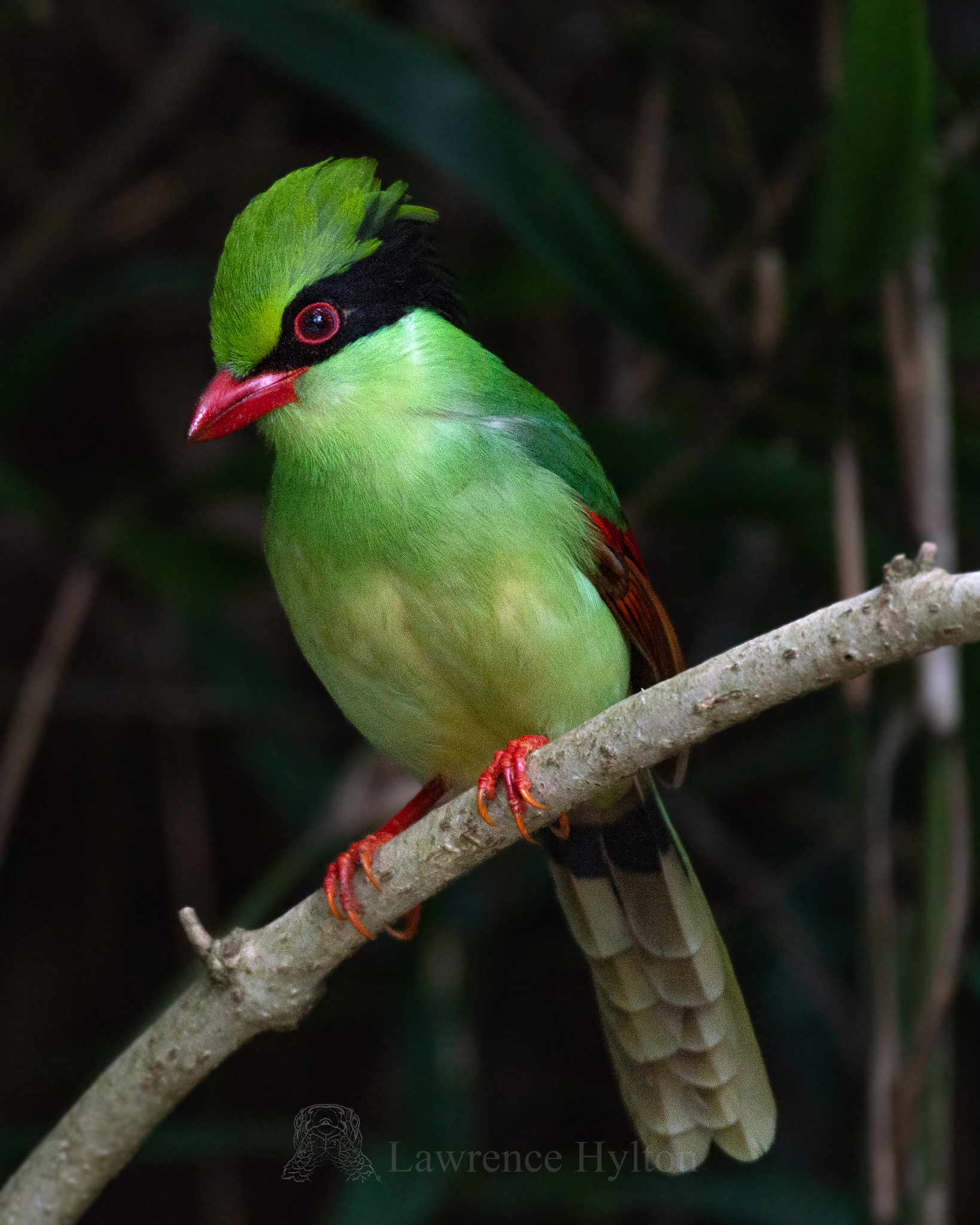
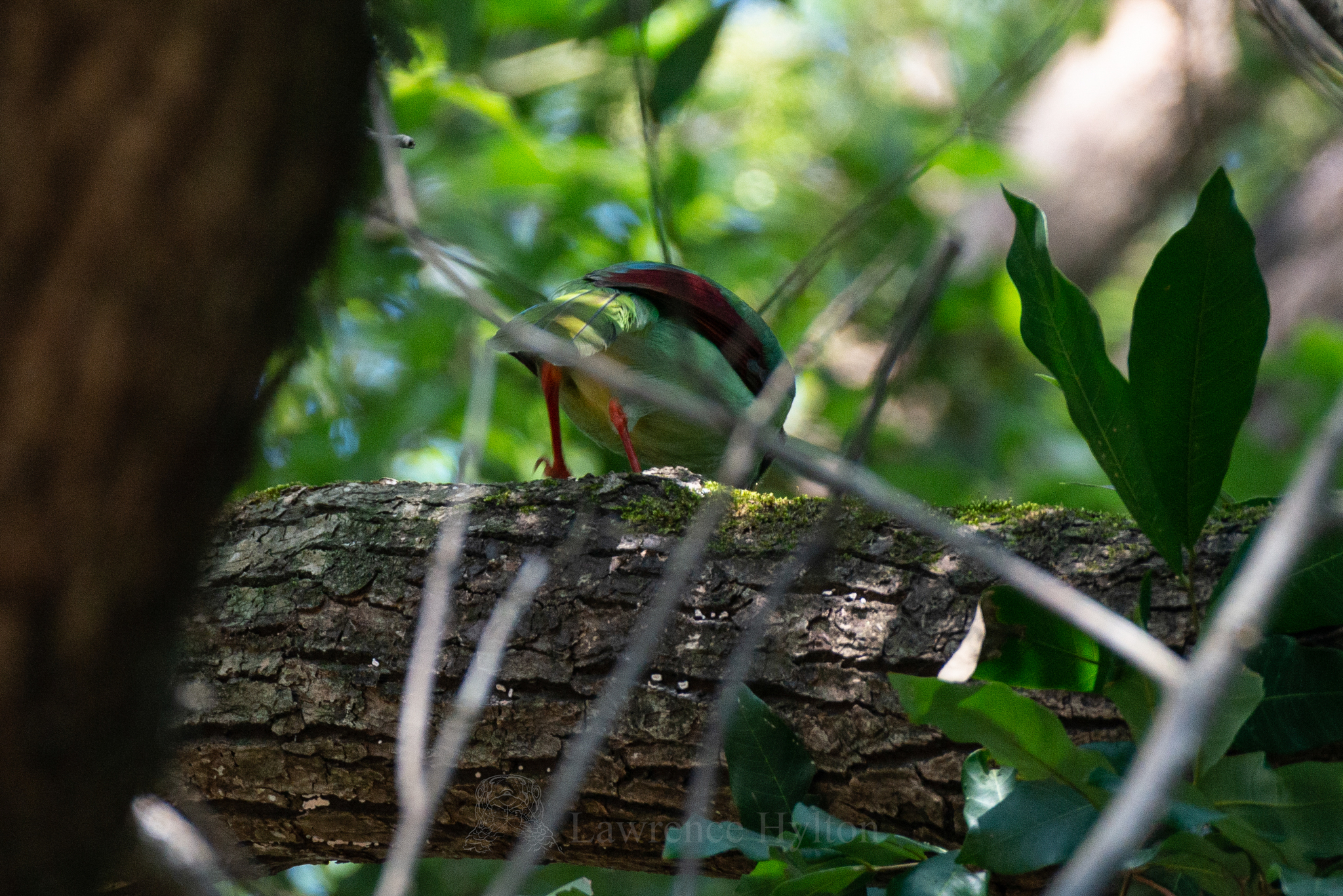
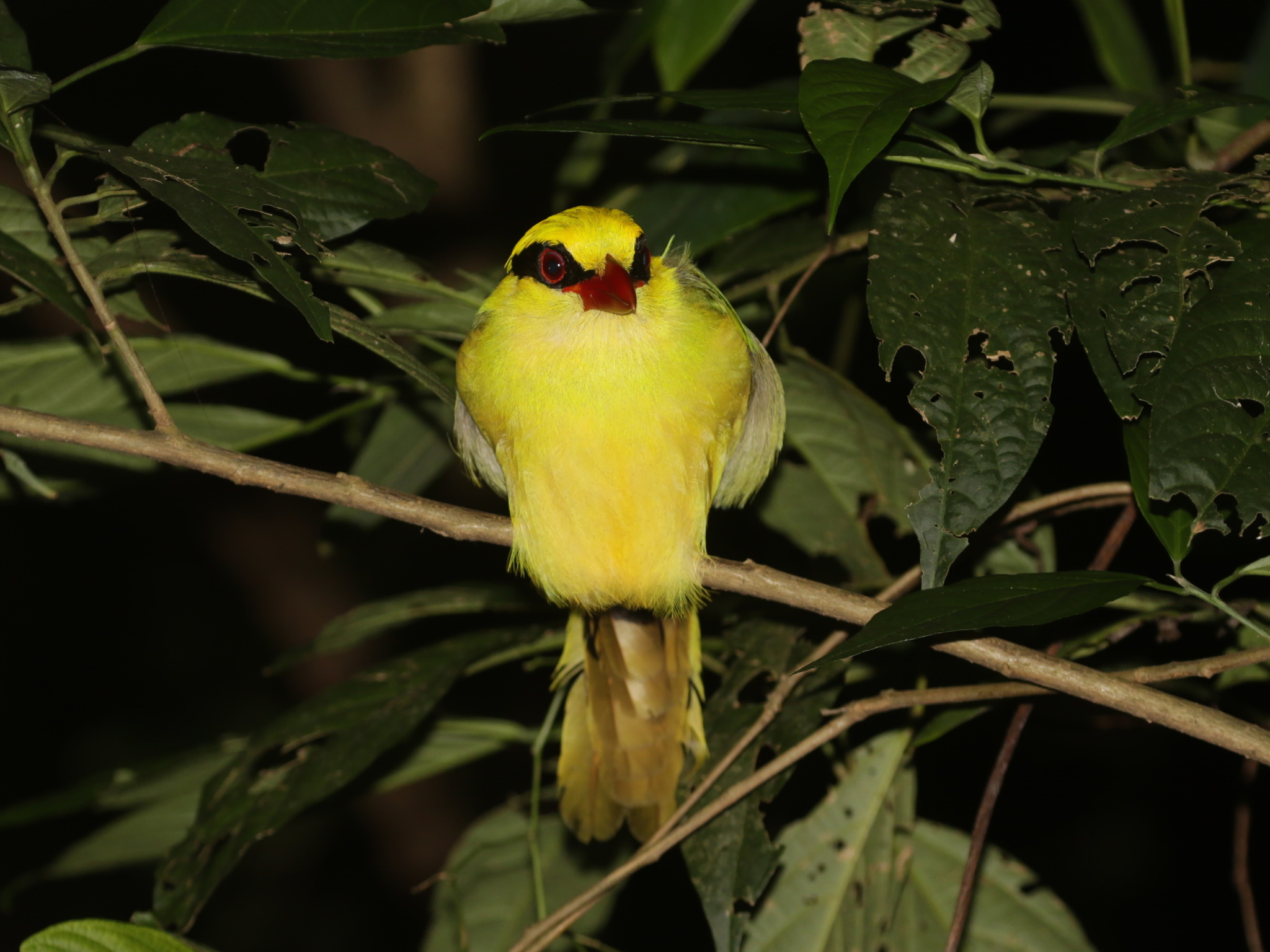
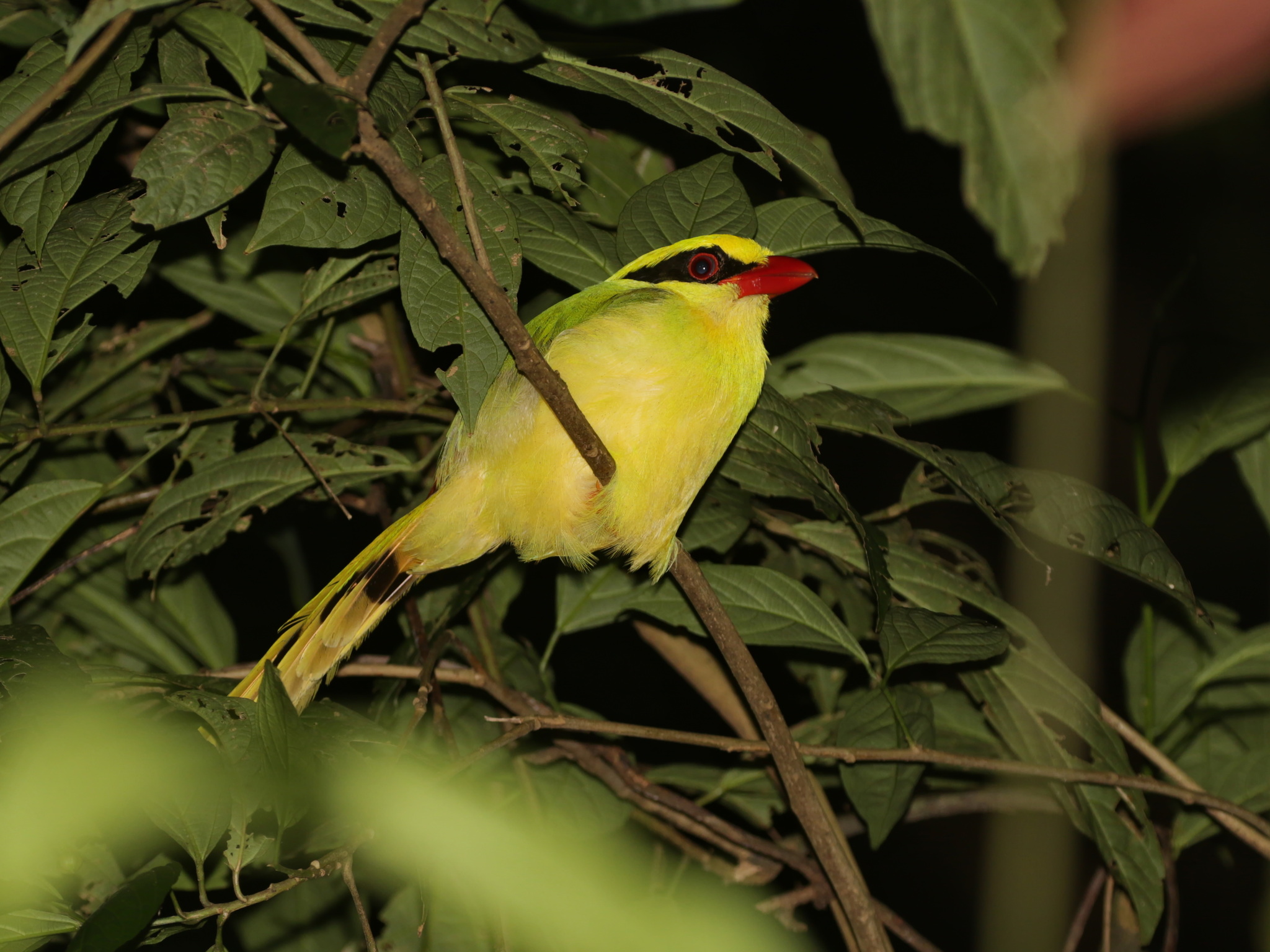
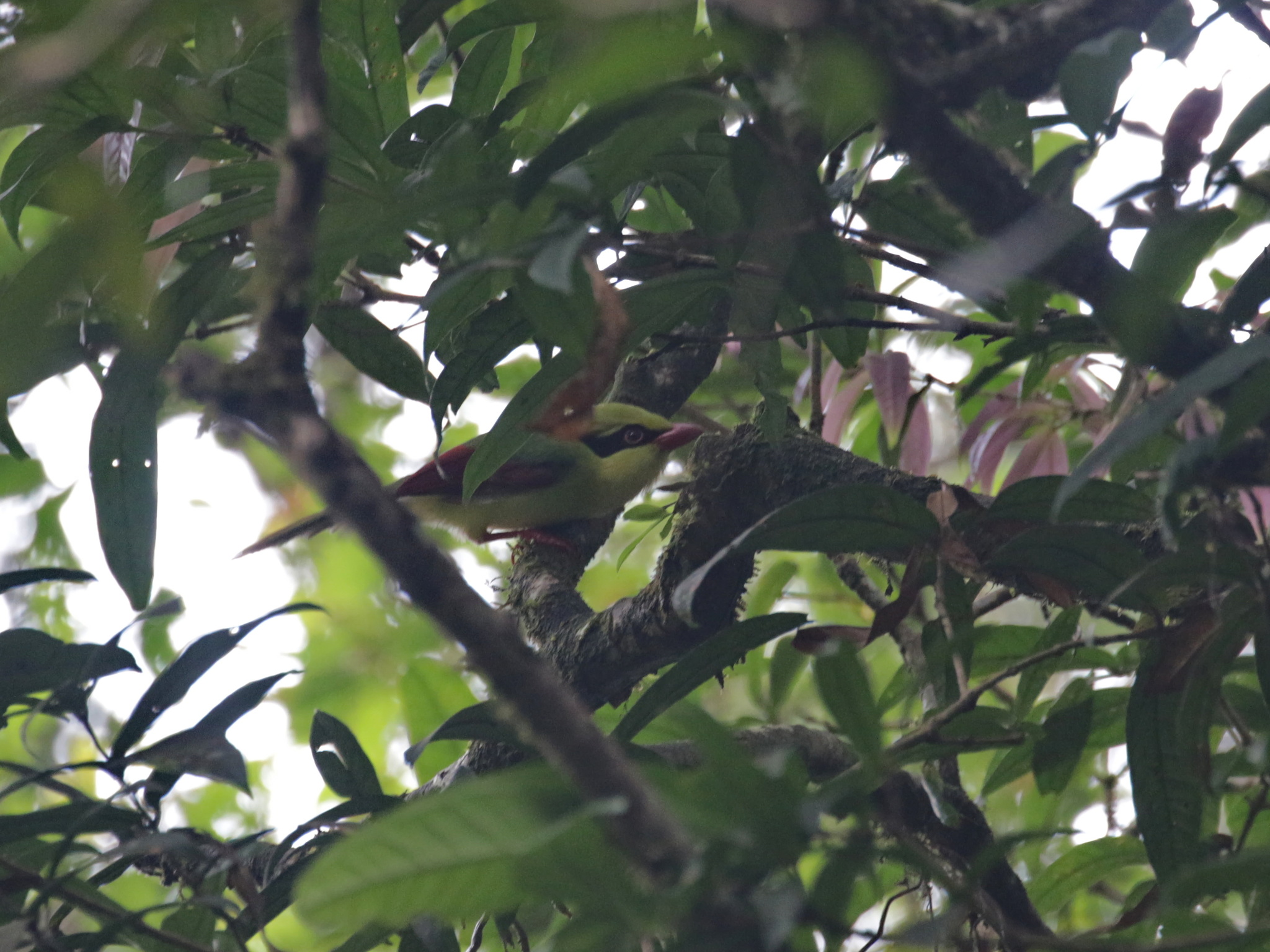
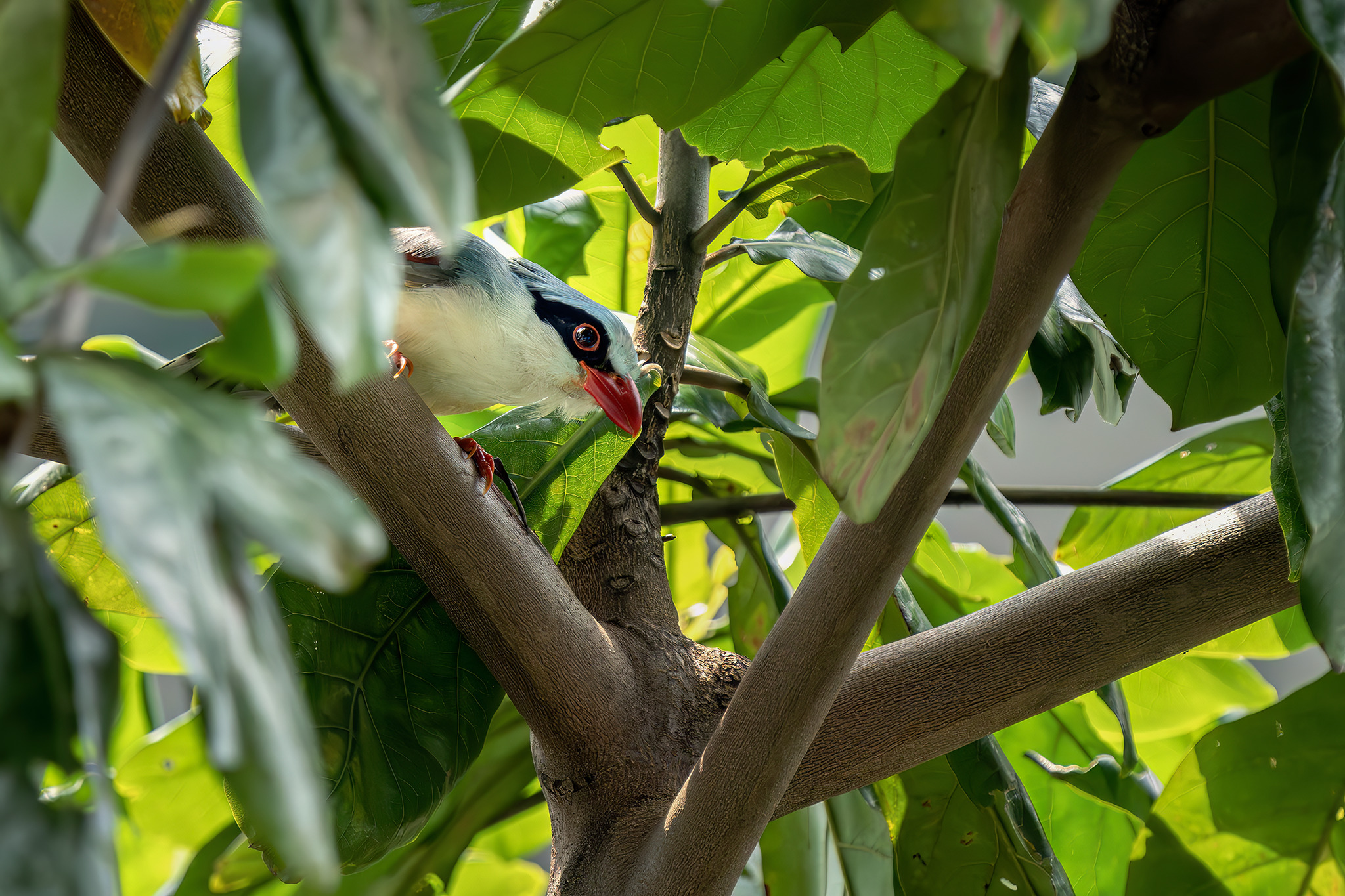
Approximately 35 cm (14 in) in length with fluorescent green plumage. Southern Southeast Asian populations have a yellow underbelly, while Chinese populations retain a green underbelly. Features a black band extending from the bill over crimson eyes to the back of the head, resembling a mask. Flight feathers are long and reddish-brown. The bill and legs are bright red. Juveniles exhibit duller colors than adults, and excessive sunlight exposure can also fade plumage color.
Identification
Distinguished by bright green plumage, a black facial mask over crimson eyes, and a bright red bill and legs. Southern populations show a yellow breast, unlike other Cissa magpies which typically have green underbellies. Vocalizations include noisy chattering, rasping notes, screeches, and ringing whistles, such as a high-pitched 'po-puueeee-chuk' followed by a lower 'eeeoooeeep groak'.
Distribution & Habitat
Native to Asia, found in China (including Hainan Island), Laos, Thailand, and Vietnam. Inhabits moist forests in tropical and subtropical regions at altitudes up to 1,500 meters (4,900 ft). The range spans approximately 1,920,000 km² (740,000 sq mi). Five subspecies are recognized across central south China, north Vietnam, central Vietnam, southeast Thailand/south Indochina, and Hainan Island.
Behavior & Ecology
Non-migratory and often seen alone, in pairs, or small groups, sometimes joining mixed flocks with laughingthrushes and drongos. Primarily carnivorous, feeding on small frogs, insects, snake and lizard eggs, and nestlings. Hunting involves stalking and cornering prey, with the male making the kill. Nests are bowl-shaped structures made of small branches, placed 2–3 meters (6.6–9.8 ft) above ground in trees. Breeding is recorded in May, with approximately 4 eggs laid in captivity. Generation length is 6.7 years, and captive individuals have lived up to 18 years.
Conservation
Assessed as Least Concern by the IUCN Red List in 2016. The population trend is declining, driven by habitat destruction in Hainan and targeting for the illegal pet trade due to its colorful appearance. Global population size has not been quantified.
Source: Wikipedia · CC BY-SA 3.0
Taxonomy
- Order
- Passeriformes
- Family
- Corvidae
- Genus
- Cissa
Taxonomy Changes
Cissa katsumatae → Cissa hypoleuca
Subspecies lump — GBIF Backbone Taxonomy uses the former name; AviList 2025 uses the current name.
Subspecies (5)
-
Cissa hypoleuca chauleti
central Vietnam
Data Sources
Species description from Wikipedia, licensed under CC BY-SA 3.0.
Bird images and sounds sourced from GBIF, contributed by citizen scientists worldwide under Creative Commons licenses.
Taxonomy data from AviList 2025.