Indochinese Green Magpie
Cissa hypoleuca
黄胸绿鹊
Introduction
The Javan Green Magpie (Cissa thalassina) is a small forest-dwelling bird in the crow family (Corvidae), belonging to the genus Cissa. It is endemic to the forests of Java and Sumatra in Southeast Asia, where it remains resident year-round. This species is characterized by bright green plumage, a black facial mask extending through the eye, and contrasting red bill and legs. It inhabits montane forest canopies from 900 to 2,400 meters elevation, moving actively through foliage while making noisy calls. It frequently associates with mixed flocks, particularly with laughingthrushes (Garrulax spp.) and drongos (Dicruridae). The species is classified as Critically Endangered due to severe population decline from trapping for the cage-bird trade.
Description
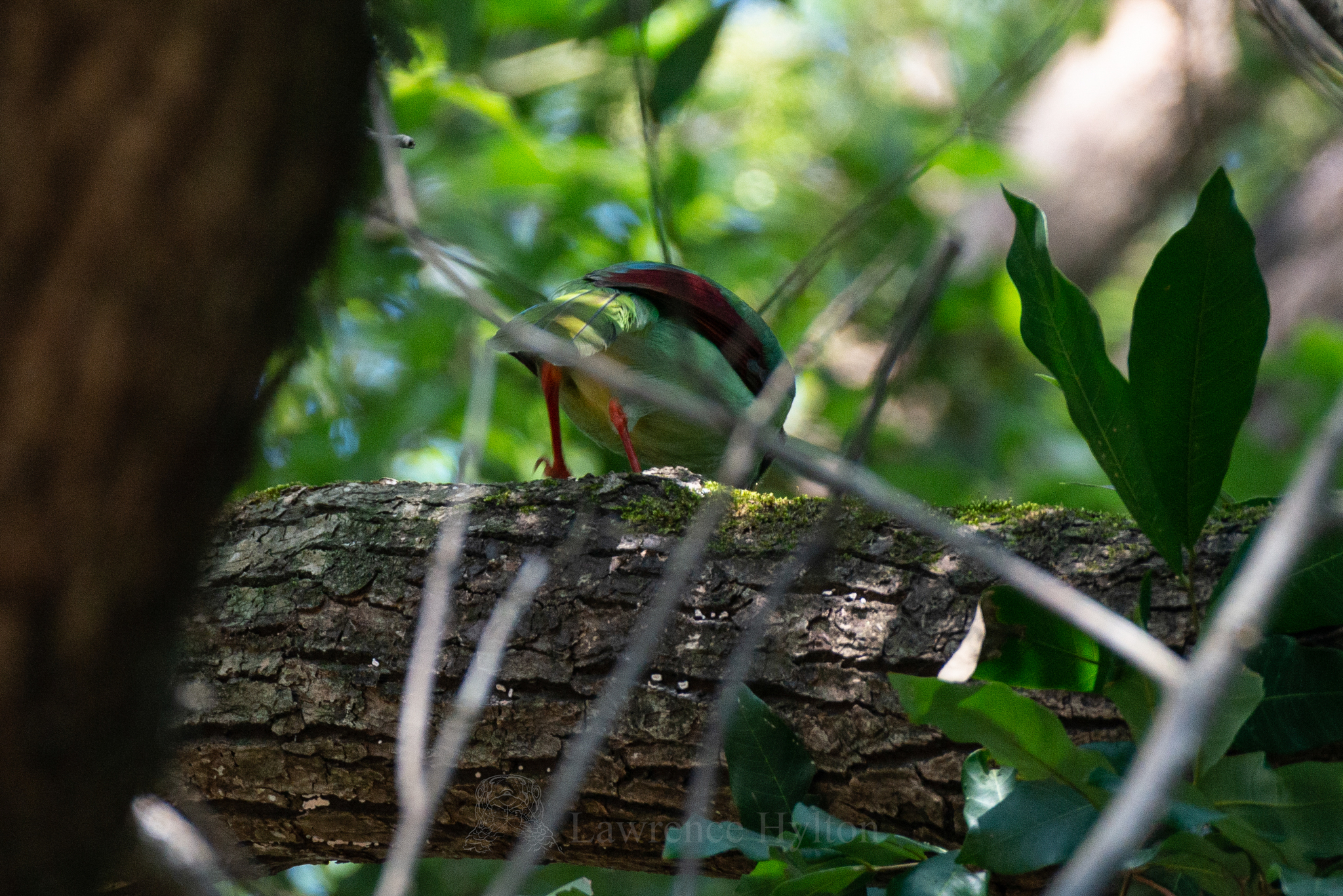
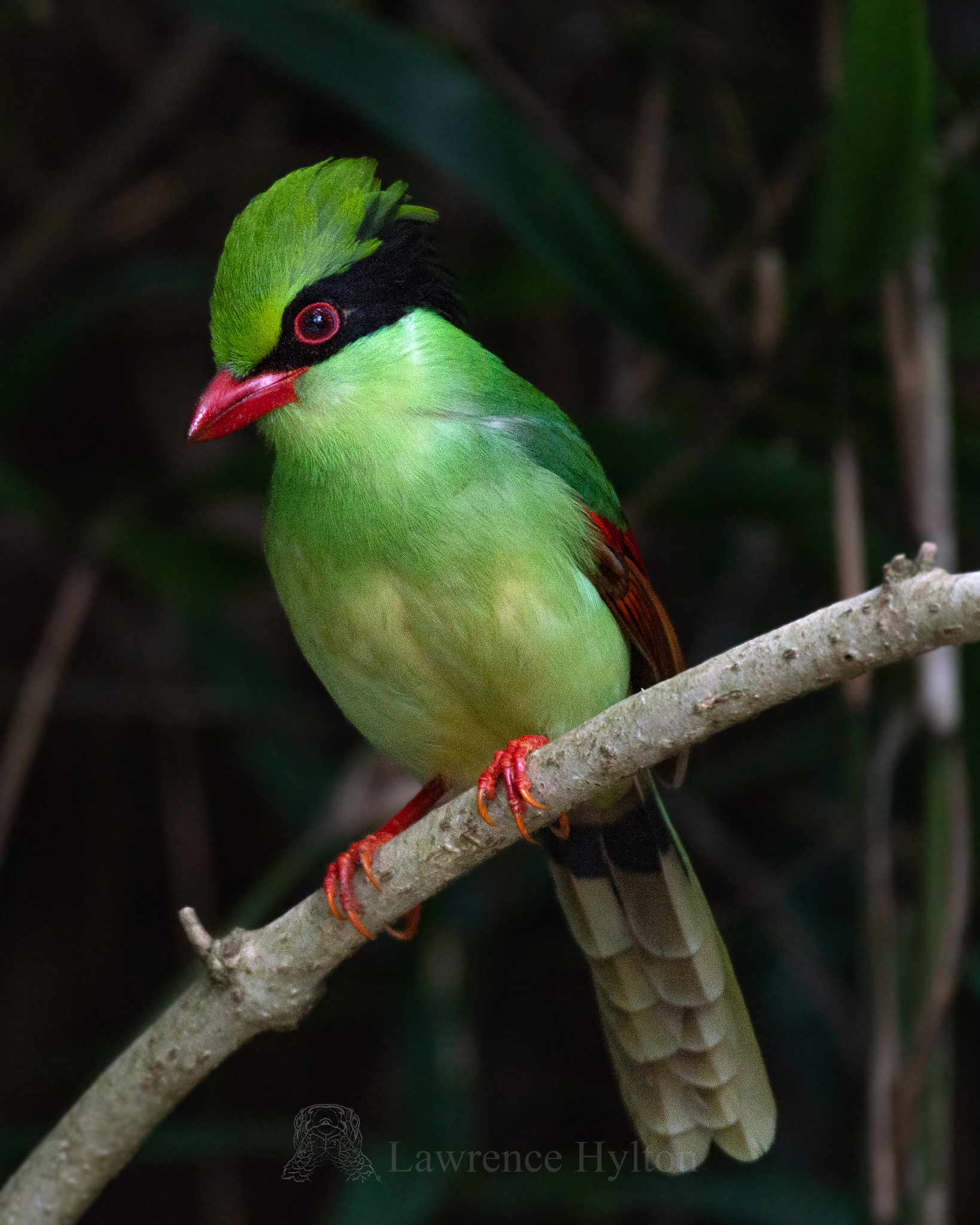
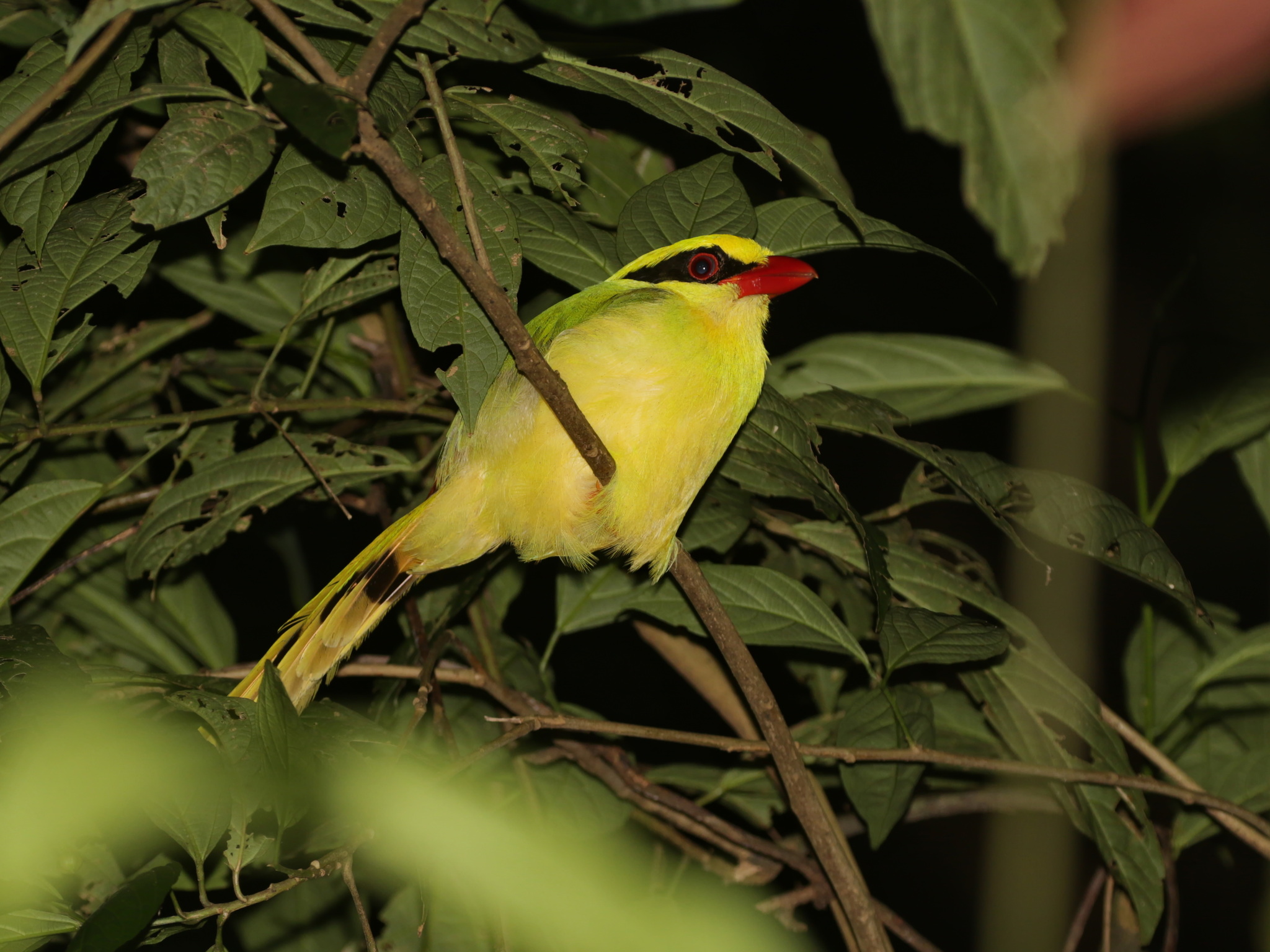
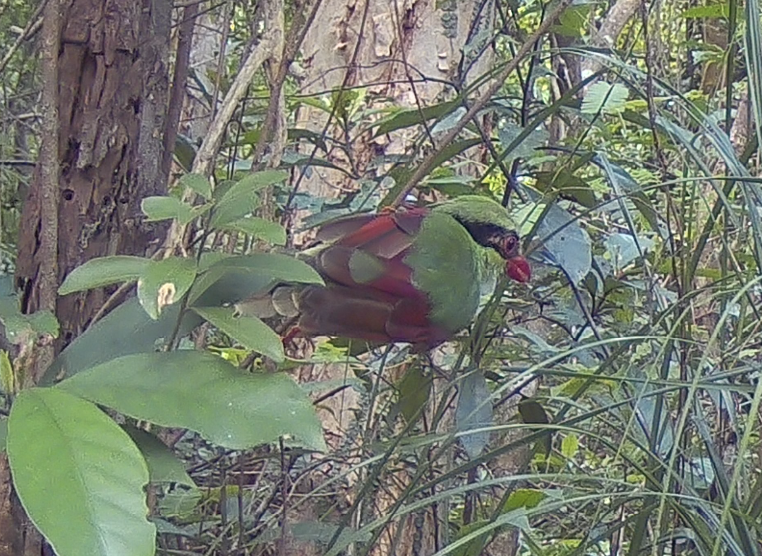
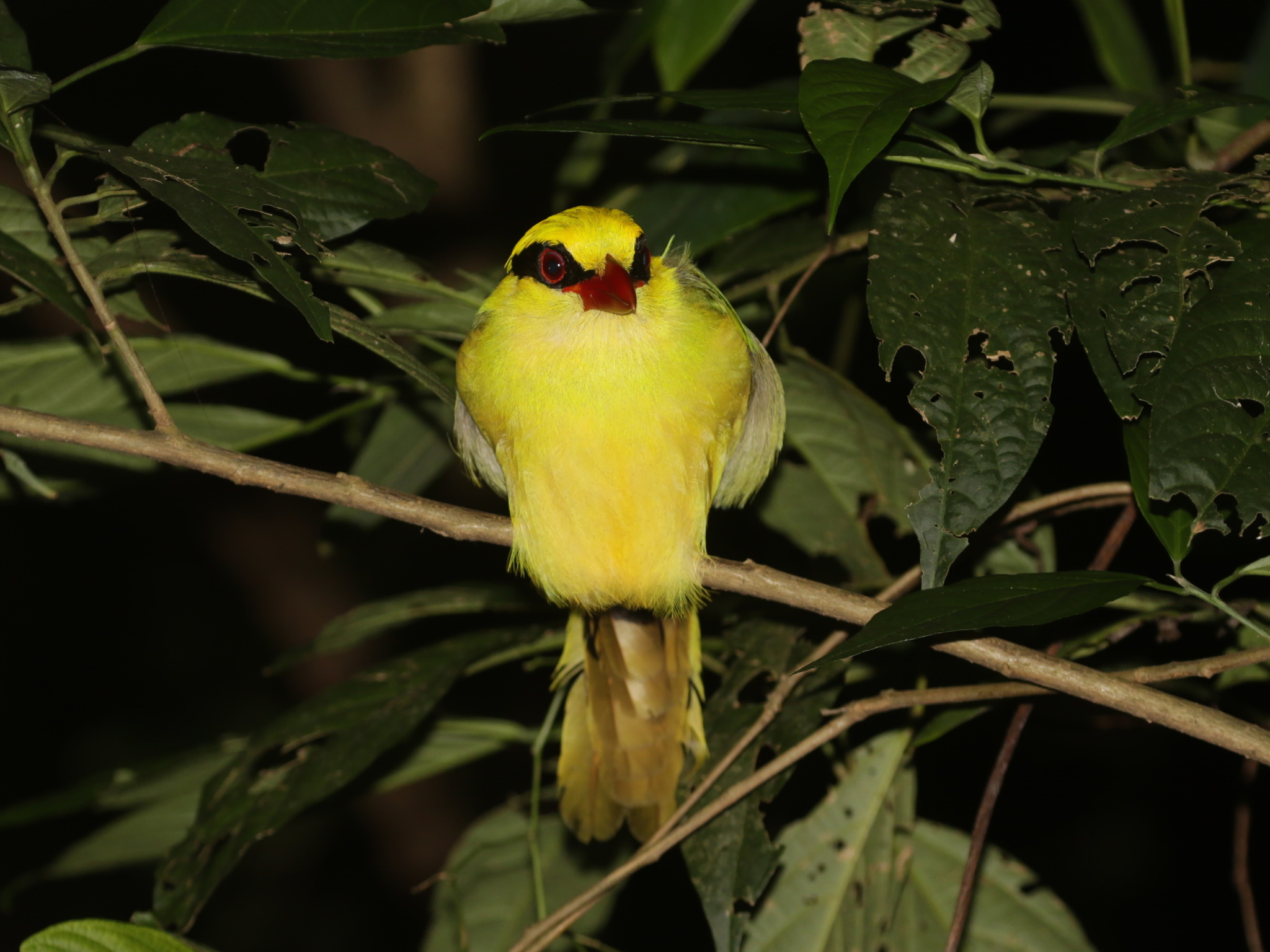
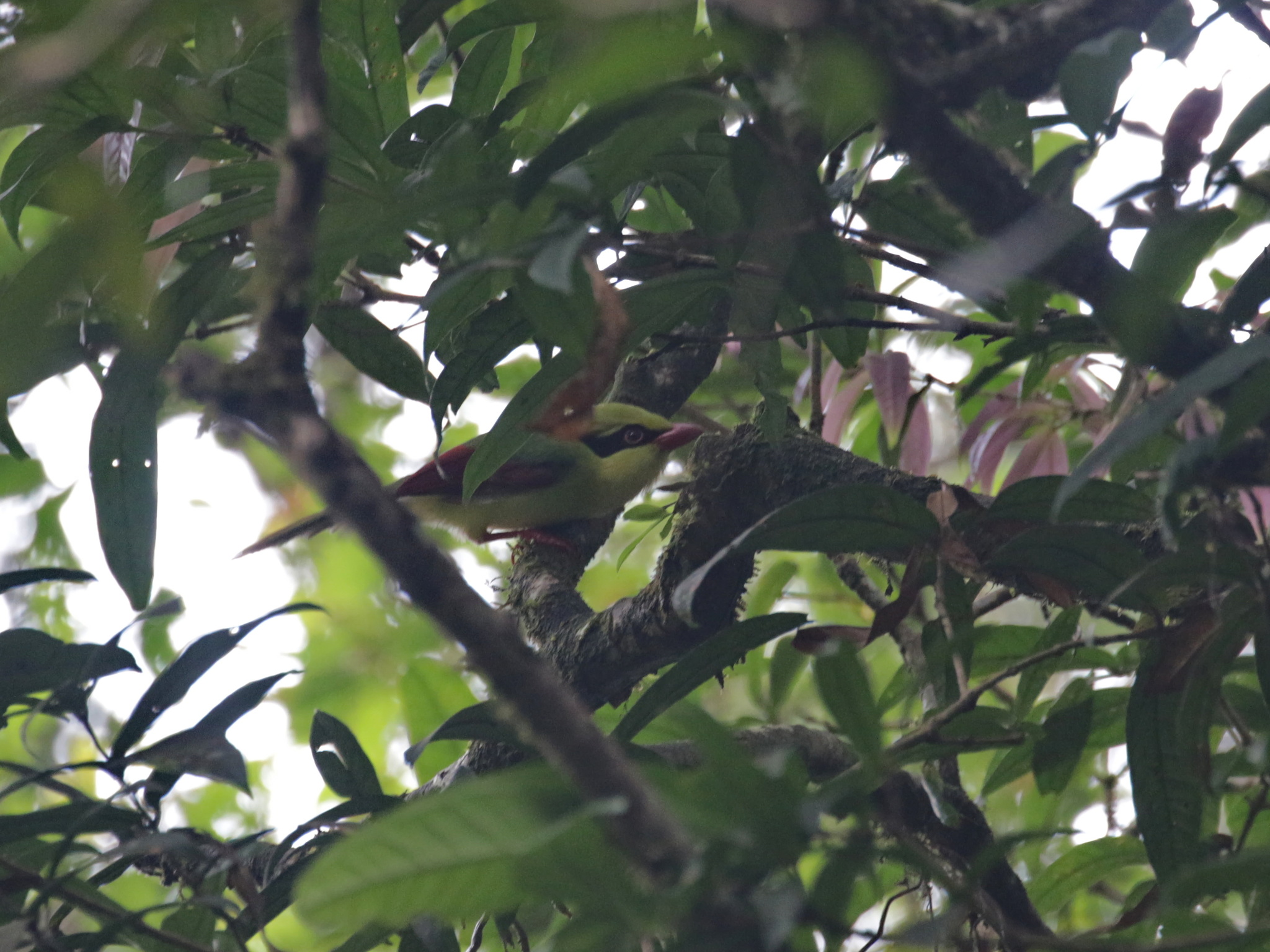
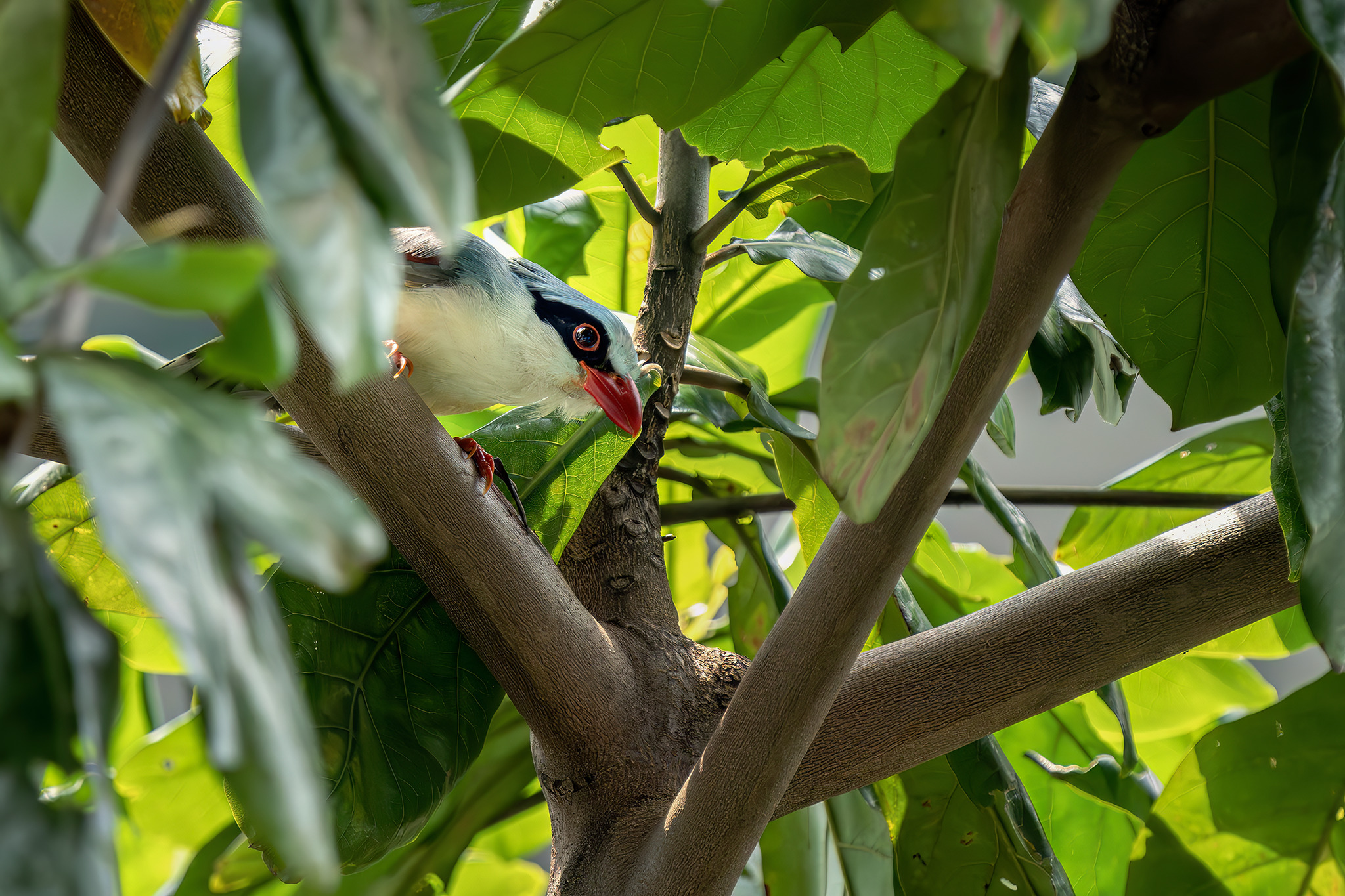
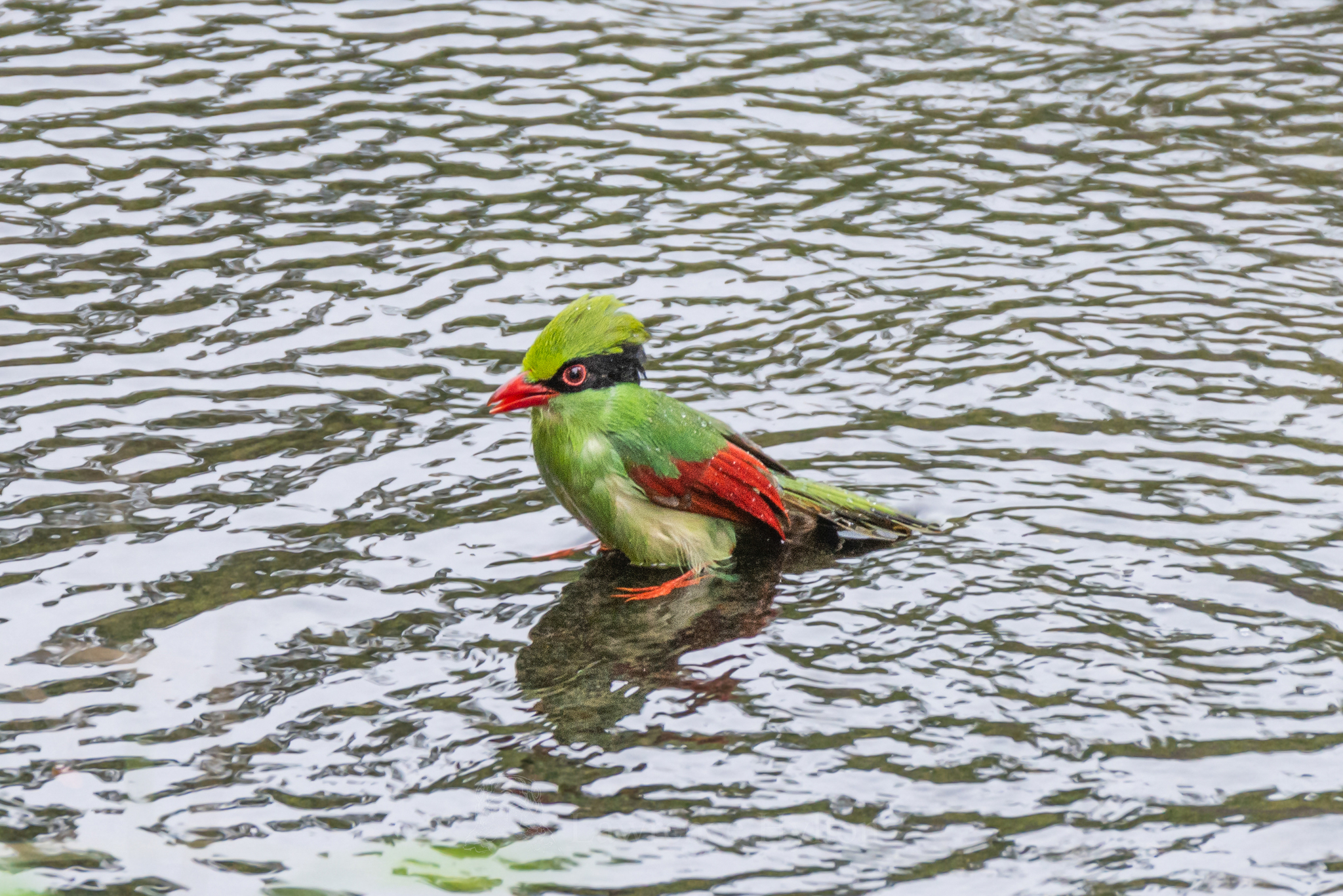
This small magpie measures approximately 35 cm in length, making it a compact and agile bird. Its plumage is predominantly a vivid, fluorescent green that appears almost glowing in sunlight. A distinguishing feature is the yellow underbelly found in southern populations, though individuals in Chinese populations retain the green underparts typical of other Cissa species. A prominent black band runs from the base of the red bill, through the crimson-colored eyes, and extends to the back of the head, creating a distinctive mask-like pattern. The wings feature long reddish-brown flight feathers that become visible during flight. Both the bill and legs are bright red, creating a striking color combination. Adults and juveniles look similar, though juveniles display noticeably duller colors throughout their plumage.
Identification
This species can be distinguished from other Cissa green magpies by its yellow underbelly, which sets it apart from the more uniformly green species found elsewhere in Asia. The black facial mask extending from the bill through the eyes to the back of the head is a key identifying feature, as is the combination of red bill, legs, and crimson eyes. The species' preference for high canopy perches and its habit of making loud calls while moving through foliage helps distinguish it from more secretive forest birds. When seen in mixed flocks, its bright green plumage and red coloration stand out among the typically brown and gray plumage of laughingthrushes and drongos.
Distribution & Habitat
This species occurs across China, Laos, Thailand, and Vietnam, inhabiting a region of approximately 1,920,000 square kilometers. It is a year-round resident throughout its range and does not undertake any migration. The bird occupies moist tropical and subtropical forests at elevations up to 1,500 meters. It shows a strong preference for the forest canopy, where its green plumage provides effective camouflage among the leaves. The species tolerates disturbed forest habitats but remains most abundant in intact primary forest environments.
Behavior & Ecology
This vocal and active bird is typically encountered alone, in pairs, or in small family groups. It occasionally joins mixed foraging flocks with white-crested laughingthrushes and various drongo species. The diet is predominantly carnivorous and includes small frogs, insects, eggs of snakes and lizards, and nestlings of other birds. Individuals have been observed stalking prey before the male makes the capture. Breeding has been recorded in May, with females laying approximately four eggs in captivity. Nests are constructed as bowl-shaped structures made of small branches and hidden in trees at heights of 2-3 meters above ground. One captive individual lived for 18 years, indicating this species can be long-lived under appropriate conditions.
Conservation
The species was assessed as Least Concern by the IUCN in 2016, though its population trend is declining. While the decline is not currently severe enough to warrant a threatened category, ongoing habitat destruction, particularly on Hainan Island, poses ongoing concerns. The illegal pet trade represents a significant threat, as the species' bright colors make it desirable to collectors. The species' reliance on intact forest habitat and its popularity in the exotic pet trade creates ongoing pressure on wild populations. Global population size has not been quantified, making precise assessments of conservation status challenging.
Culture
No specific cultural significance or folklore is documented in available sources for this species.
Source: Wikipedia · CC BY-SA 3.0
Taxonomy
- Order
- Passeriformes
- Family
- Corvidae
- Genus
- Cissa
- eBird Code
- yebmag1
Subspecies (5)
-
Cissa hypoleuca chauleti
central Vietnam
-
Cissa hypoleuca concolor
northern Vietnam
-
Cissa hypoleuca hypoleuca
eastern Thailand and southern Indochina
-
Cissa hypoleuca jini
southeastern China (Yaoshan Massif of Guangxi)
-
Cissa hypoleuca katsumatae
Hainan (southern China)
Data Sources
Species description from Wikipedia, licensed under CC BY-SA 3.0.
Bird images and sounds sourced from GBIF, contributed by citizen scientists worldwide under Creative Commons licenses.
Taxonomy data from AviList 2025.