

Accipitriformes / Accipitridae / Circus
Pied Harrier
Circus melanoleucos · 鹊鹞
Introduction
A migratory bird of prey in the family Accipitridae, endemic to Asia with a range extending from southern Siberia to the Philippines. It primarily inhabits open country such as steppes, boggy birch scrubs, paddy fields, and swamps. The species is largely solitary but may form loose groups and feeds mainly on small mammals. It is listed as Least Concern by the IUCN, though populations are decreasing.
Description
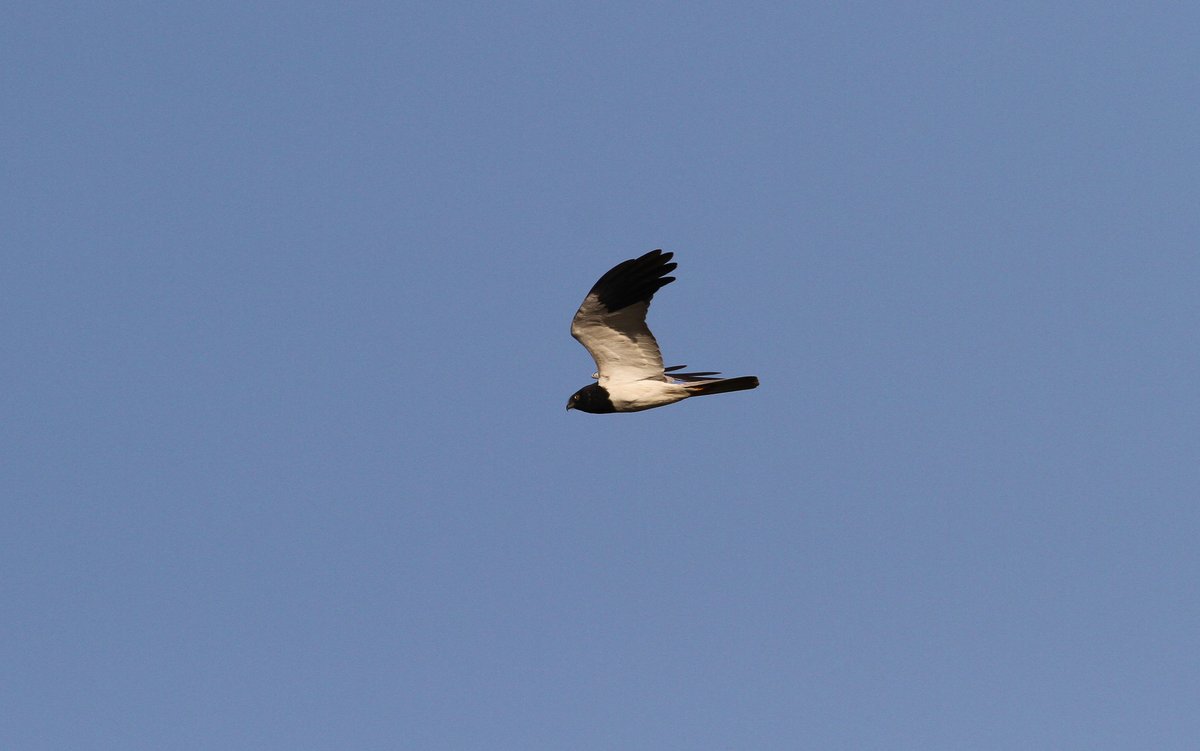
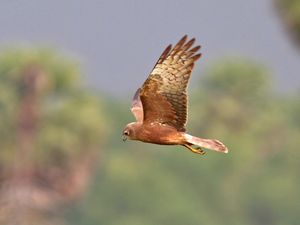
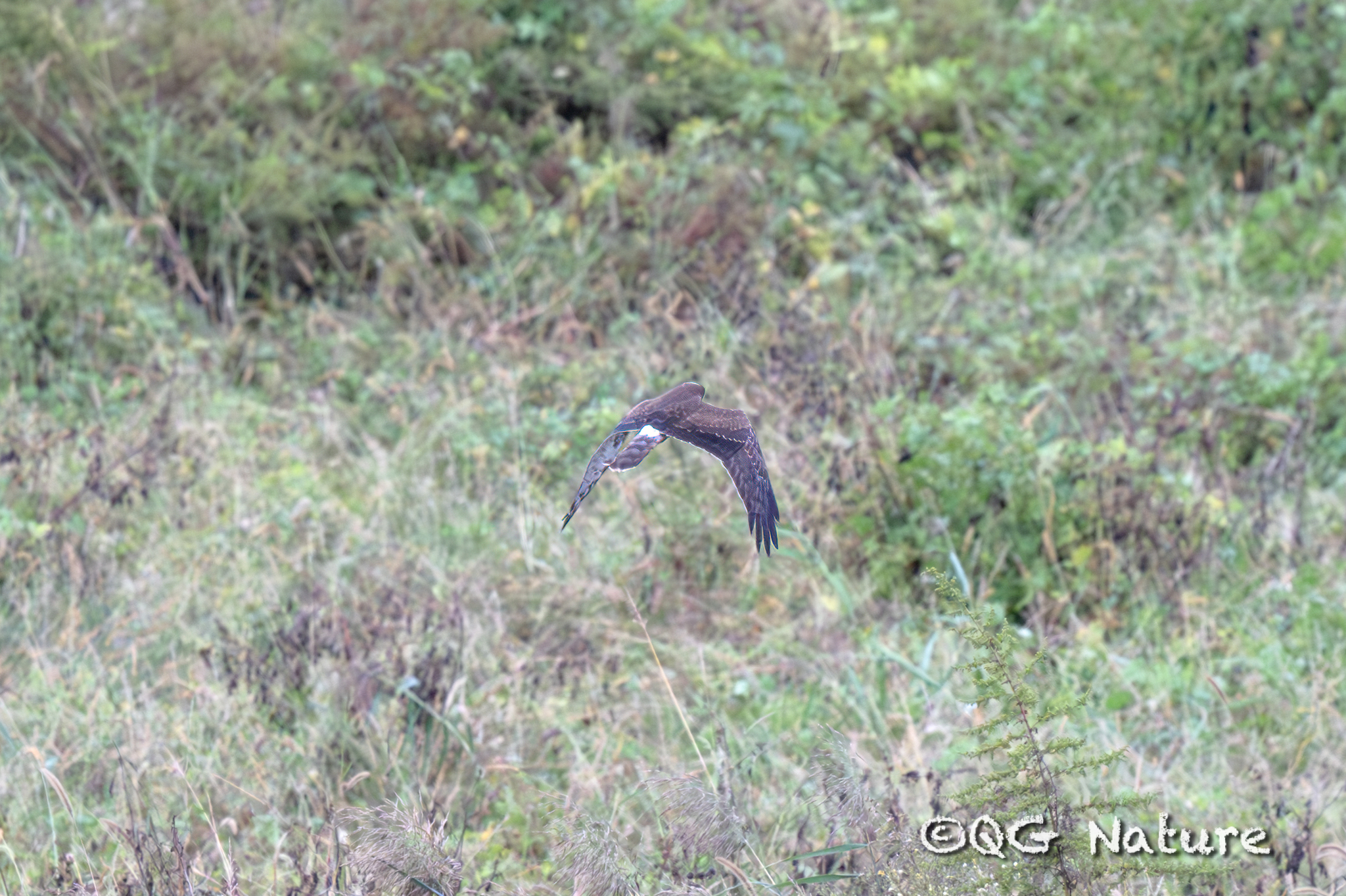
Medium-sized raptor measuring 41-49 cm (16–19 in) in length. Adult males weigh 265–325 g and feature black heads, necks, backs, breasts, and primary flight feathers, contrasted with white forewings, rumps, and underparts, along with striking yellow eyes. Adult females weigh 390–455 g, are dark brown above with pale brown to white streaked underparts, a small white rump, and generally have brown eyes. Juveniles resemble juvenile Montagu's harriers but are darker above with rich cinnamon coloring below. Wings reach far down the tail but do not extend past the tip.
Identification
In flight, resembles a hen harrier in size and shape with slightly rounded wingtips, longish narrow wings, and a long rounded tail. Flies buoyantly with leisurely wingbeats interspersed with glides, often soaring with wings in a shallow V shape. Males are distinctively black and white; females and juveniles are similar to Montagu's harrier but can be distinguished by specific plumage details and eye color (brown in females versus yellow in males).
Distribution & Habitat
Breeding range extends from Lake Baikal in southern Siberia through Mongolia and Northeast China to North Korea. Wintering range covers eastern India, Sri Lanka, Southeast Asia, the Philippines, and Borneo. Year-round populations exist in northeastern India (Assam) and Myanmar. Vagrants have been recorded in Japan. Migrates south from September to October and returns north from March to May. Habitats include northern steppes and boggy birch scrubs, and southern paddy fields and swamps, at altitudes from sea level up to 2100 m (normally breeding under 1500 m).
Behavior & Ecology
Primarily solitary but forms loose groups at roosts, feeding sites, or during migration. Diet consists mainly of small mammals like shrews, mice, and voles, occasionally supplemented by small birds (larks, pipits), frogs, lizards, snakes, insects (beetles, grasshoppers), and carrion. Hunts by flying low and surveying terrain meticulously. Ground-nesting species builds thin nests 40-50 cm wide from grass and plant matter. Female lays 4-5 eggs at 2-day intervals and incubates for over 30 days. Courtship includes high circling, male diving at female, undulating sky dances, and food passes. Vocalizations include male 'kiiy yeee' calls, female rapid 'kee-kee-kee' during display, and chattering 'chak-chak-chak-chak' when alarmed.
Conservation
Ranked as Least Concern by the IUCN, although the population is thought to be decreasing due to drainage and agricultural development. In South Korea, it is listed as an endangered species. A count in 1986 recorded over 14,500 individuals migrating over northeast China.
Source: Wikipedia · CC BY-SA 3.0
Taxonomy
- Order
- Accipitriformes
- Family
- Accipitridae
- Genus
- Circus
Distribution
breeds eastern Asia; winters to southern Asia, Philippines, and Greater Sundas
Data Sources
Species description from Wikipedia, licensed under CC BY-SA 3.0.
Bird images and sounds sourced from GBIF, contributed by citizen scientists worldwide under Creative Commons licenses.
Taxonomy data from AviList 2025.