

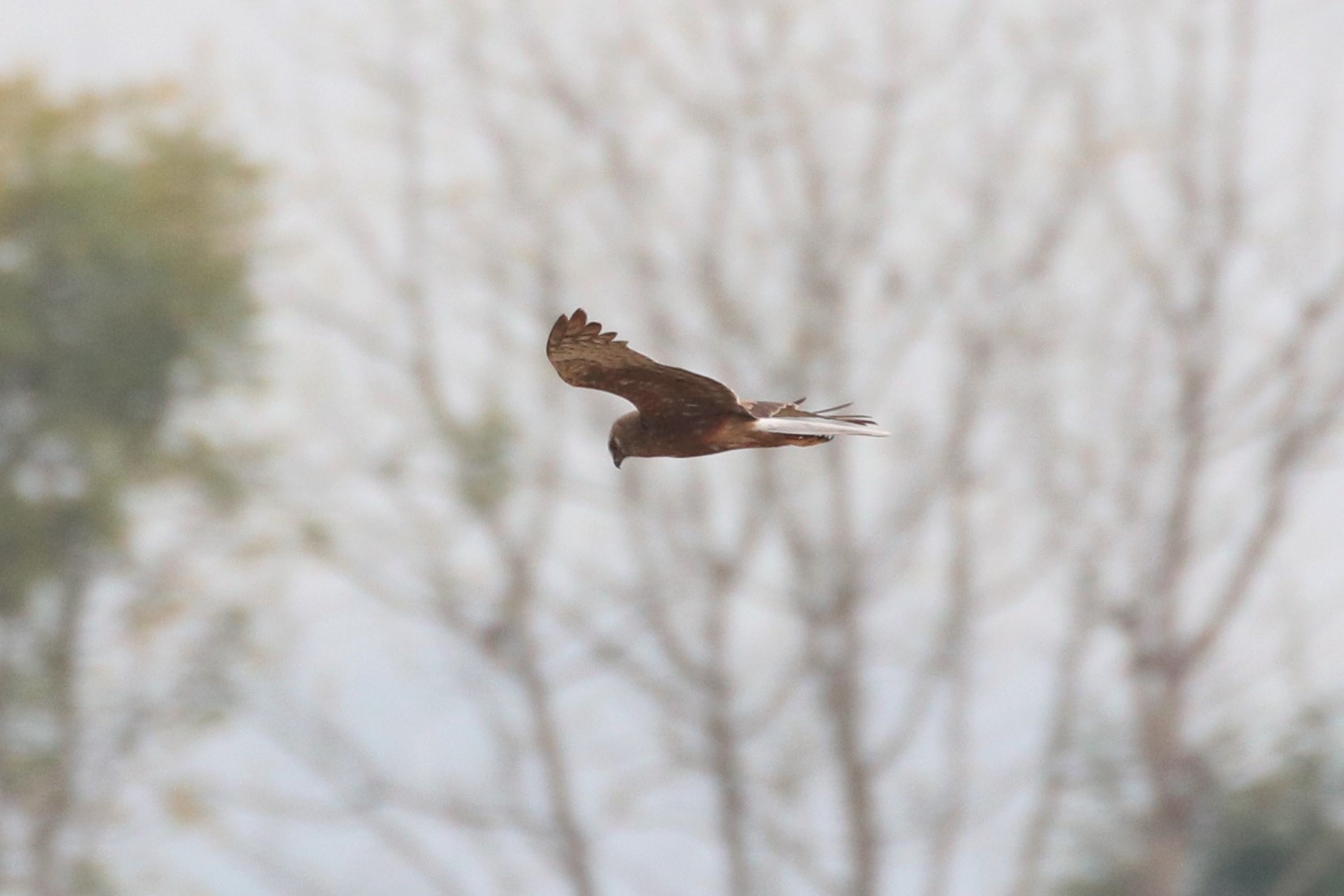
Pied Harrier
Circus melanoleucos
鹊鹞
Introduction
A medium-sized harrier with a breeding range extending across eastern Asia from southern Siberia to central China. This migratory species winters from southern China southward to the Philippines and Southeast Asia. It inhabits open grasslands, wetlands, steppes, birch scrub, and rice paddies. Adult males exhibit black and white plumage. The species hunts by systematically quartering terrain at low altitude.
Description
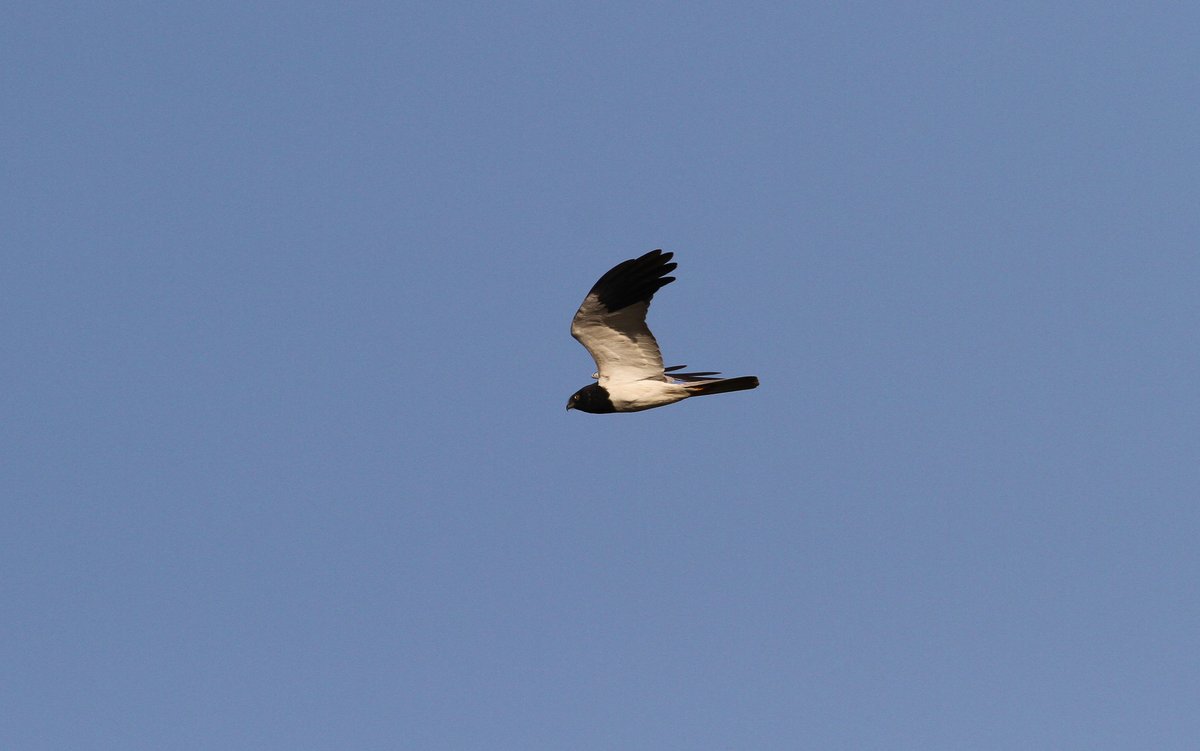
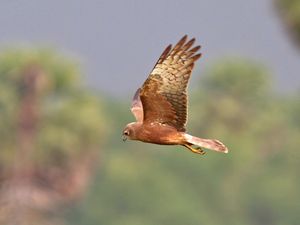
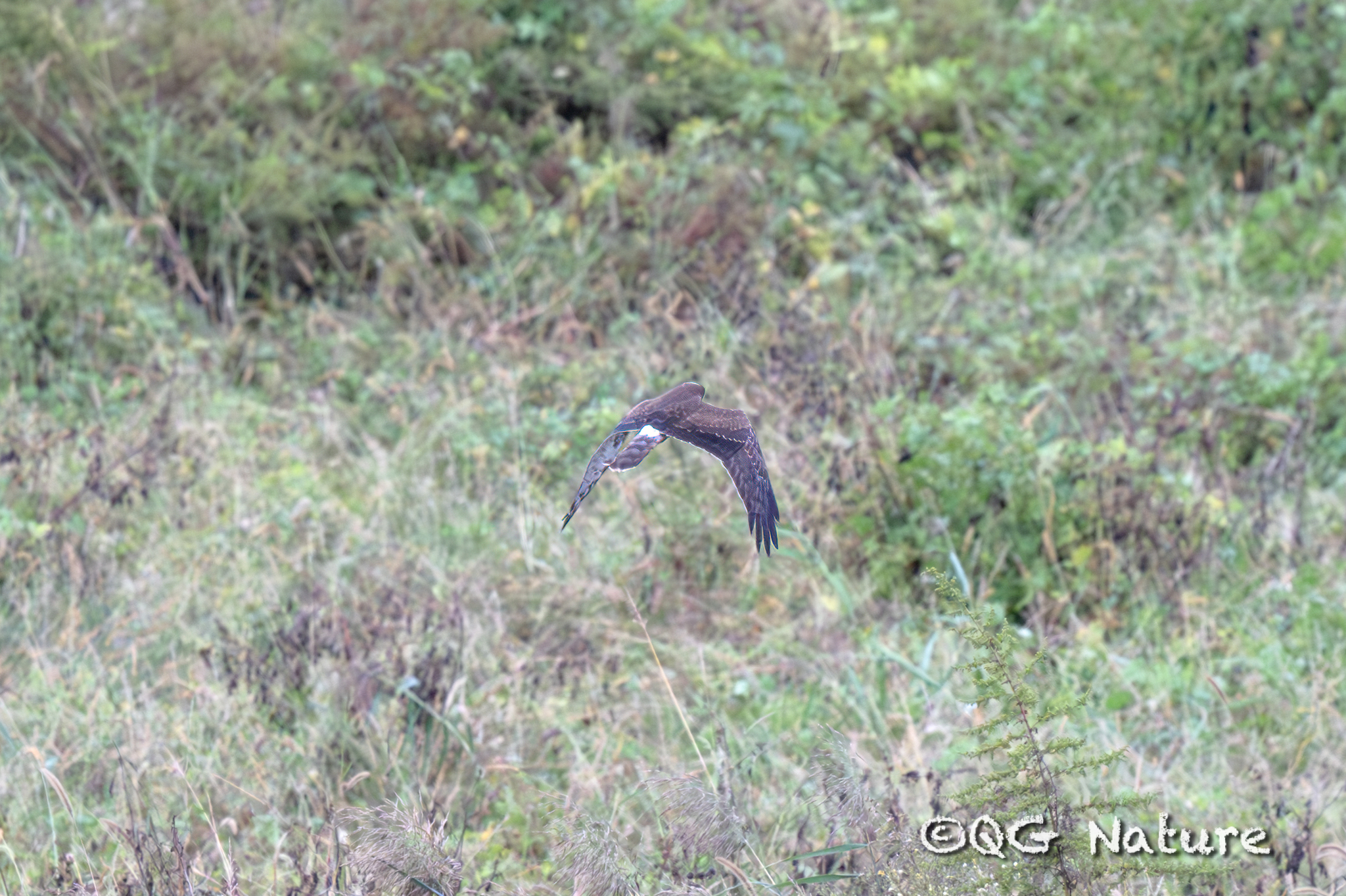
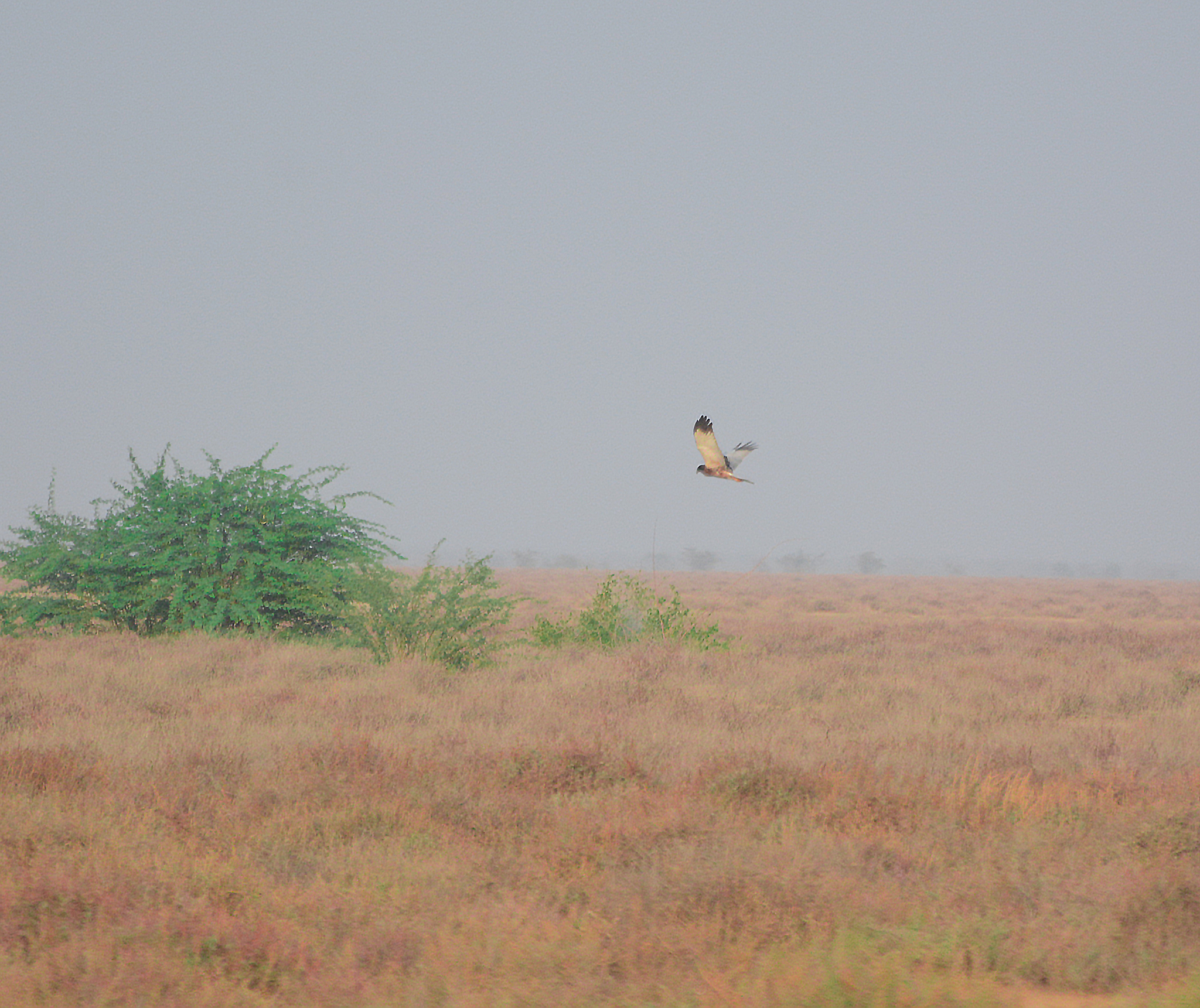
A medium-sized harrier measuring 41-49 cm in length, with males weighing 265-325 g and the larger females 390-455 g. The species has long, slightly rounded wingtips that extend well down the tail but do not reach past its tip. Adult males are boldly two-toned: black on the head, neck, back, breast, and primary flight feathers, contrasting with white on the forewing, rump, and underparts, all set off by striking yellow eyes. Adult females and juveniles are much more subdued, being generally dark brown above with pale brown to white underparts marked by dark streaking and a small white rump patch; females typically have brown eyes. Juveniles are darker above than adult females and show rich cinnamon coloration below. In flight, the wings appear longish and narrow with slightly rounded tips, while the tail is long and rounded. The species flies with the characteristic harrier mix of leisurely wingbeats and glides, holding its wings in a shallow V when soaring.
Identification
In silhouette and flight manner, this species most closely resembles the hen harrier, though the striking black-and-white male is unmistakable. Females and juveniles present greater identification challenges, as they closely resemble Montagu's harrier of the same age classes. However, juvenile individuals are noticeably darker above than juvenile Montagu's harriers and show richer cinnamon tones on the underparts. Adult females are also very similar to female Montagu's harriers but can be distinguished with careful observation of plumage details and structure. The combination of the white rump patch, dark streaked underparts, and relatively long, rounded tail helps separate this species from similar harriers in the field. The species' buoyant, moth-like flight action is characteristic of harriers and aids identification at a distance.
Distribution & Habitat
Breeds across eastern Asia from Lake Baikal in southern Siberia through Mongolia and northeastern China to North Korea. Winters from eastern India and Sri Lanka southeastward through Southeast Asia to the Philippines and Borneo, with some populations present year-round in northeastern India and Assam and Myanmar. Habitat varies by season: northern breeders favor steppes and boggy birch scrub, while wintering birds use paddy fields, swamps, and other open wetlands. The species tolerates some scrub cover but requires open terrain. Found from sea level to 2100 m elevation, though normally breeds below 1500 m. Migration occurs mainly September-October southward and March-May northward, though some individuals may remain in northern areas during years with abundant vole populations. Vagrants have been recorded in Japan.
Behavior & Ecology
Vocalizations include a repeated 'kiiy yeee' call from displaying males and a rapid 'kee-kee-kee' from females; the female gives a chattering 'chak-chak-chak-chak' alarm near the nest and an occasional anxious 'wek wek wek' otherwise. Diet consists primarily of small mammals, especially voles, shrews, and mice, with small birds such as larks and pipits taken occasionally, plus frogs, lizards, snakes, beetles, grasshoppers and carrion. Hunting involves low, systematic quartering of open ground. This ground-nesting species builds thin grass nests 40-50 cm wide; the female lays 4-5 eggs at two-day intervals and incubates for over 30 days. Courtship features aerial displays including high circling, male dives, undulating sky dances, and food passes. Primarily solitary but forms loose groups at roosts, productive feeding areas, and during migration.
Conservation
Classified as Least Concern globally, though populations are thought to be declining due to habitat loss from drainage and agricultural development. In South Korea, the species is listed as Endangered, reflecting severe local pressures. Over 14,500 individuals were counted migrating through northeast China during a single 1986 migration period, providing an indicator of significant population numbers in parts of the range. More research into population sizes, trends, and specific threats would benefit conservation planning. The species' reliance on wetlands and grasslands makes it vulnerable to the widespread agricultural conversion and drainage affecting these habitats throughout Asia.
Culture
No specific cultural or folklore traditions are documented for this species in the provided material.
Source: Wikipedia · CC BY-SA 3.0
Taxonomy
- Order
- Accipitriformes
- Family
- Accipitridae
- Genus
- Circus
- eBird Code
- piehar1
Distribution
breeds eastern Asia; winters to southern Asia, Philippines, and Greater Sundas
Data Sources
Species description from Wikipedia, licensed under CC BY-SA 3.0.
Bird images and sounds sourced from GBIF, contributed by citizen scientists worldwide under Creative Commons licenses.
Taxonomy data from AviList 2025.