Accipitriformes / Accipitridae / Circus
Hen Harrier
Circus cyaneus · 白尾鹞
Introduction
A bird of prey in the genus Circus, breeding in open areas such as marshes and grasslands across Eurasia. It is migratory, moving south outside the breeding season, though populations in milder regions like France and Great Britain may be resident. The species is sexually dimorphic and practices polygyny. Classified as Least Concern globally by the IUCN, though facing significant regional declines.
Description
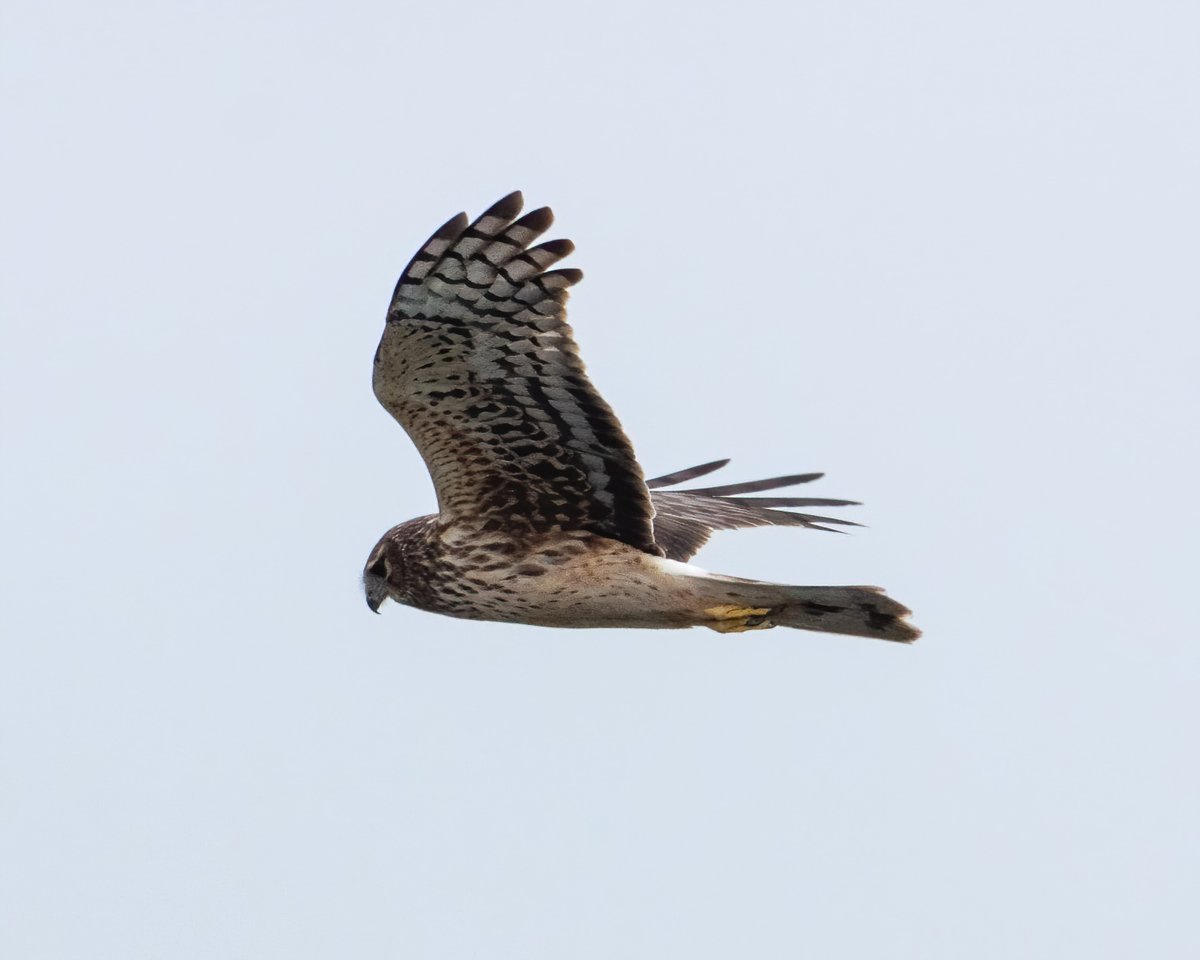
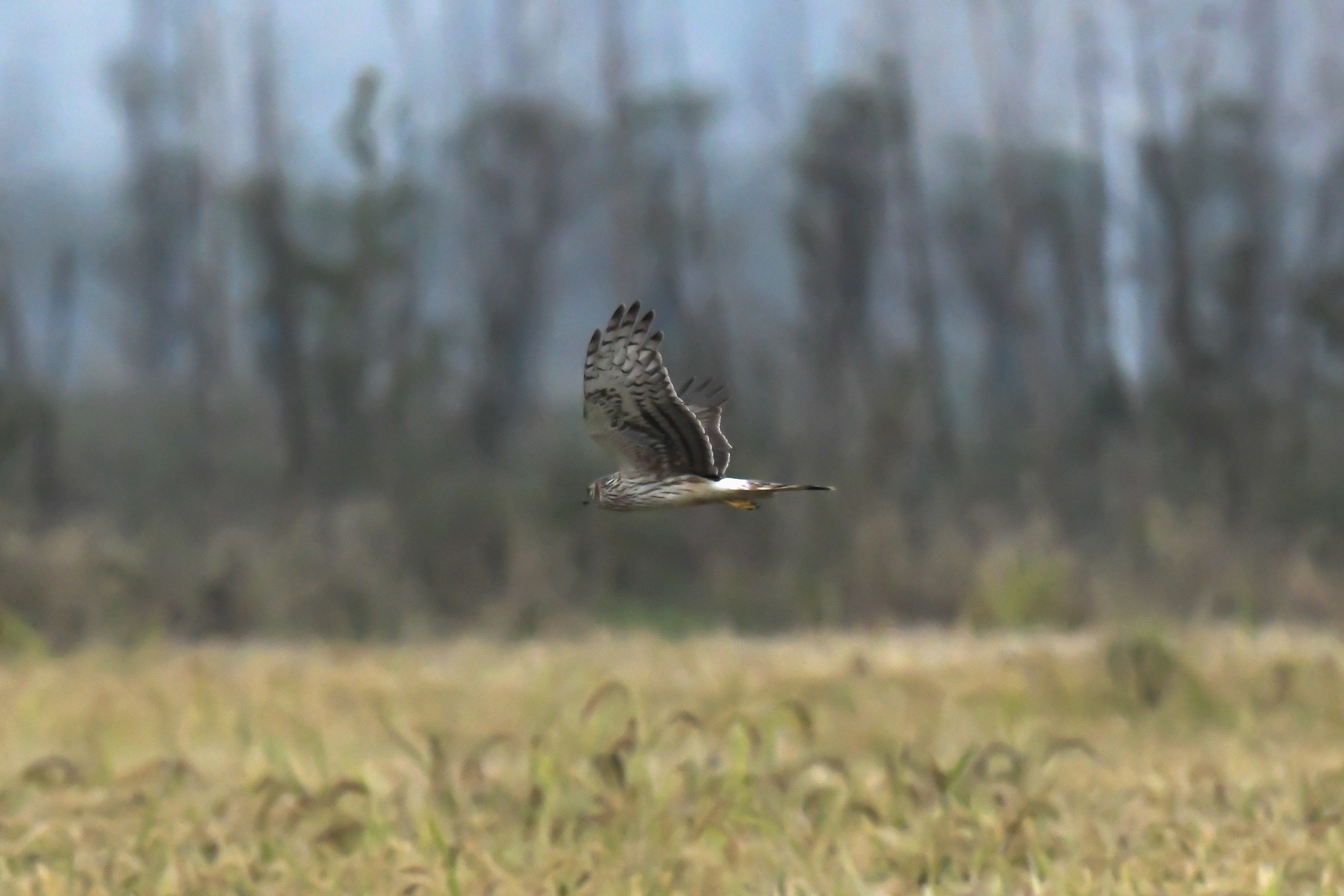
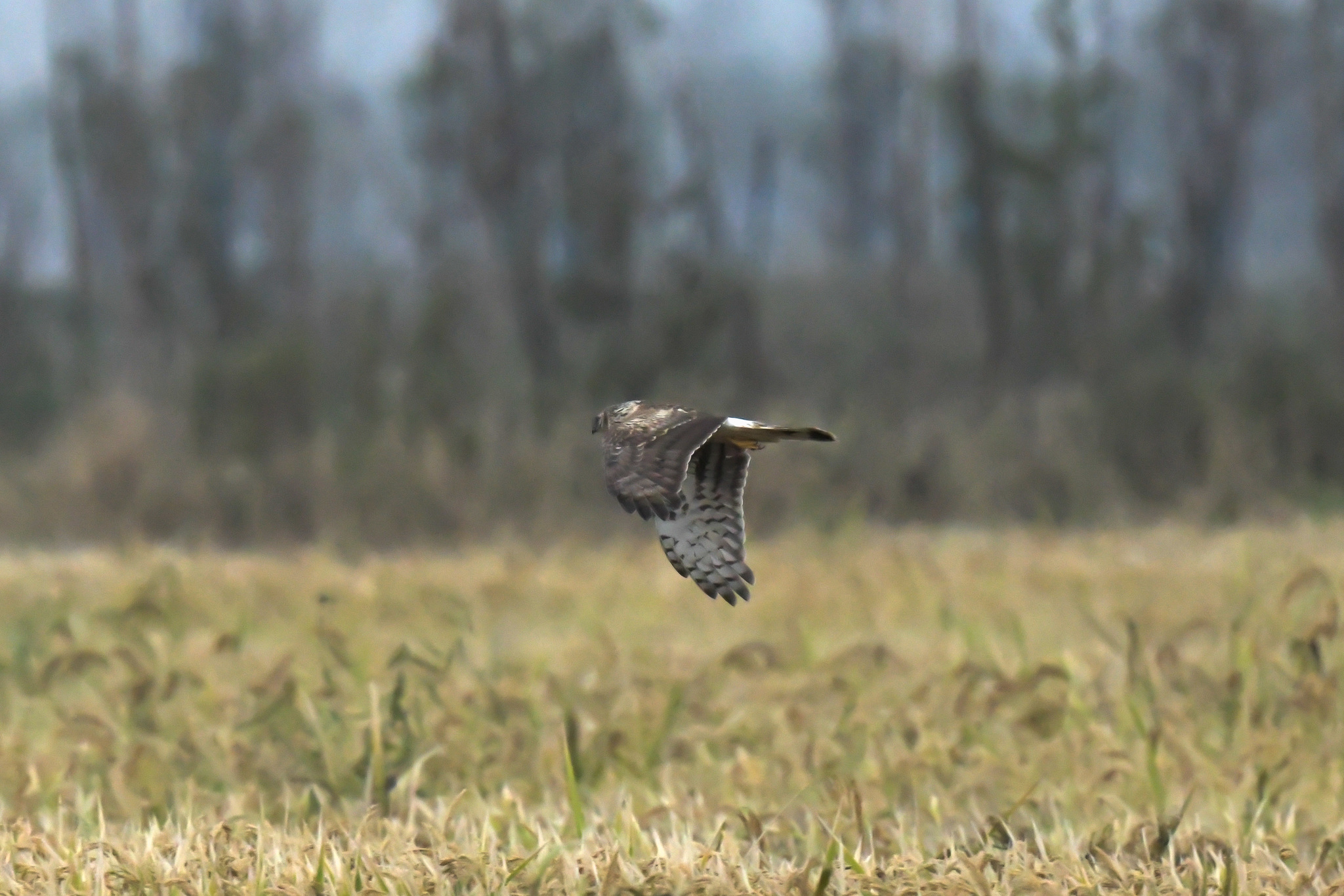
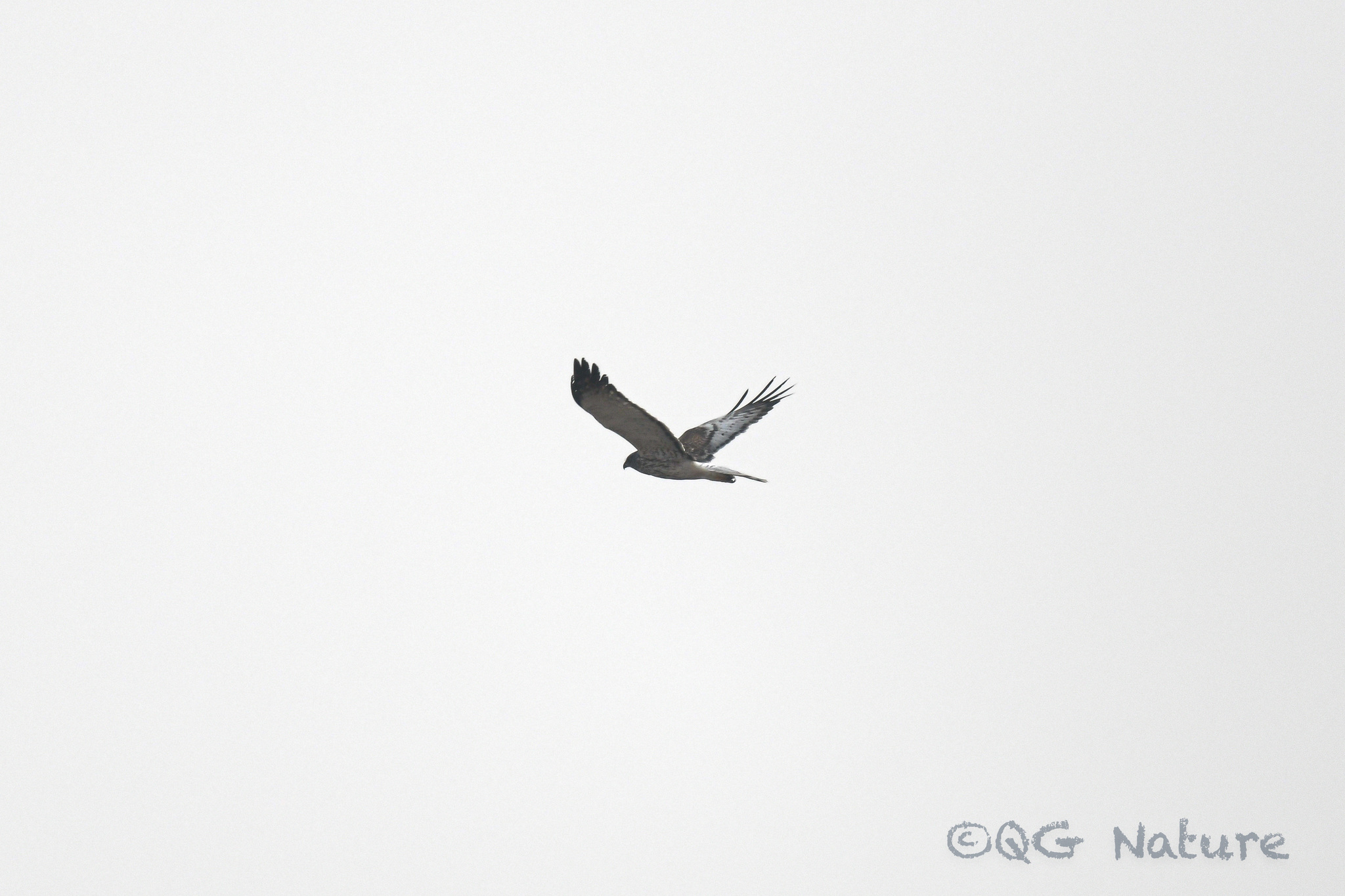
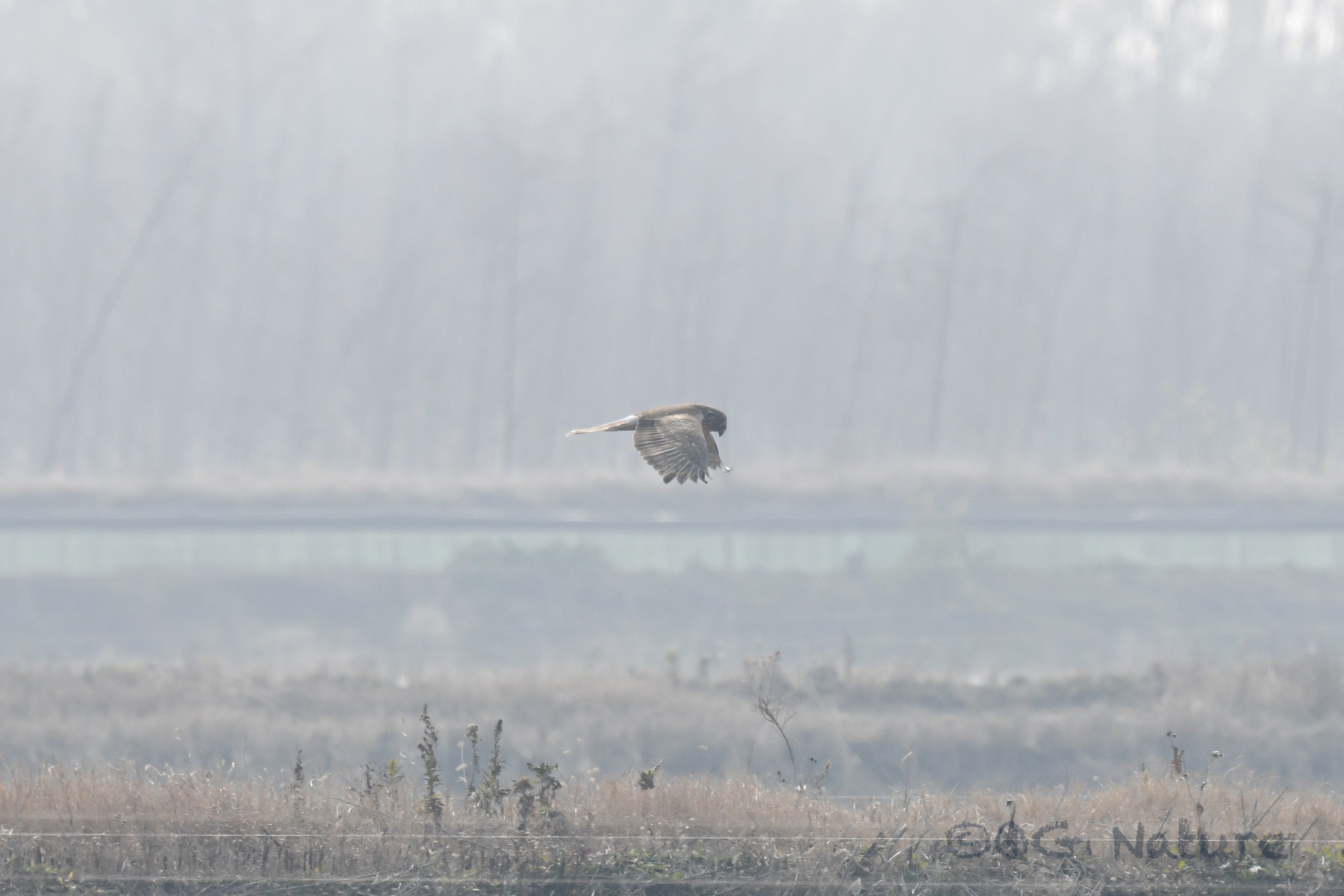
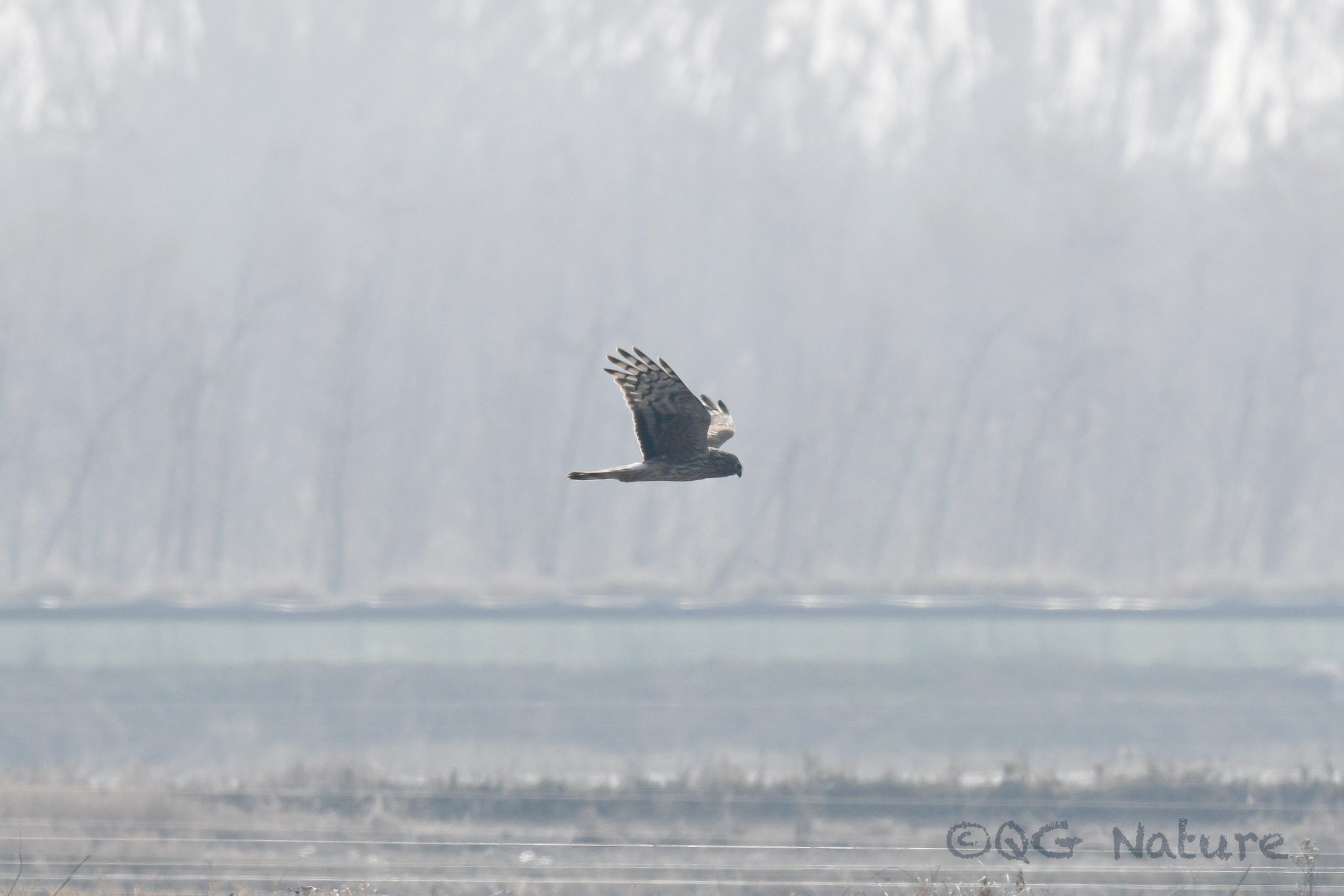
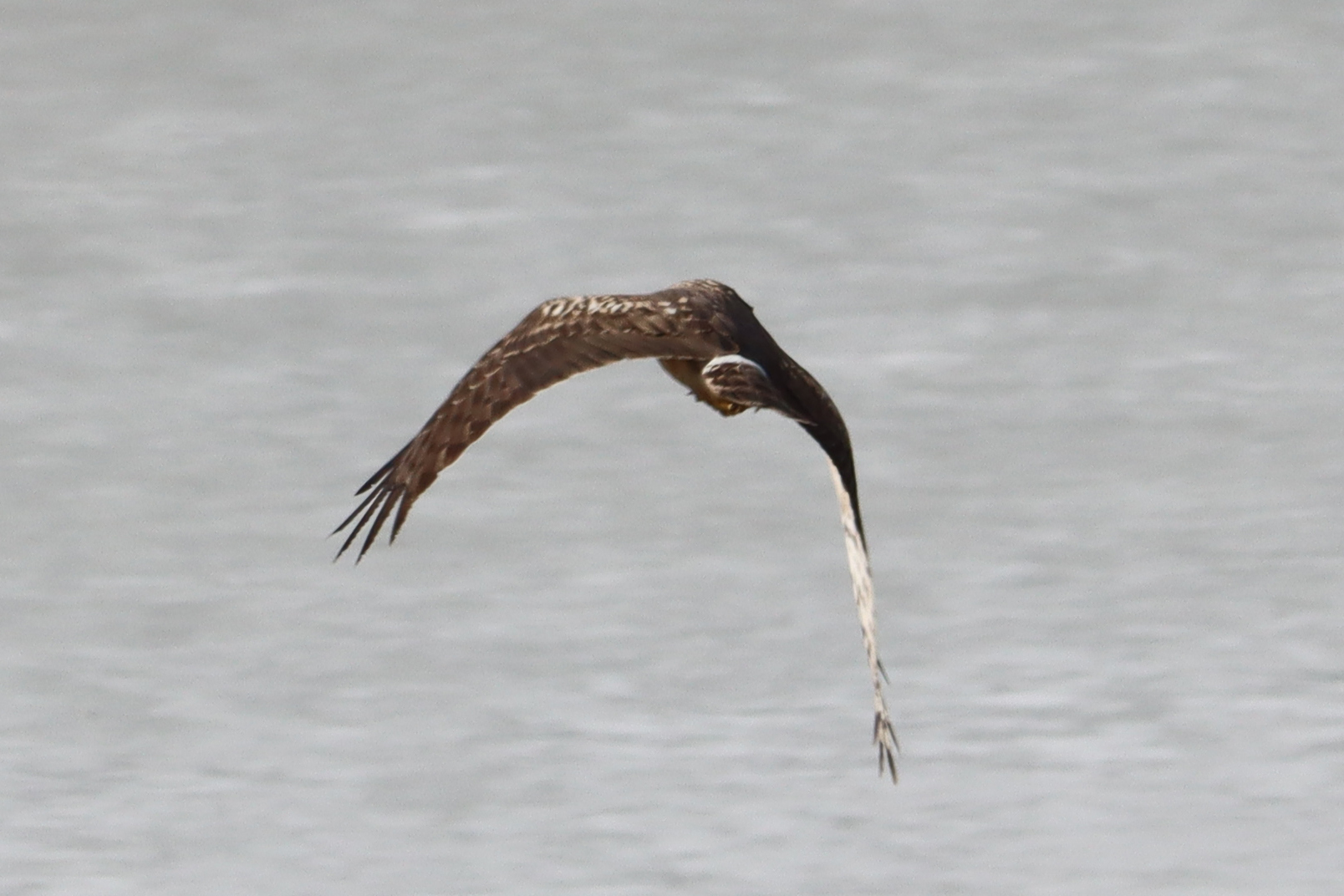
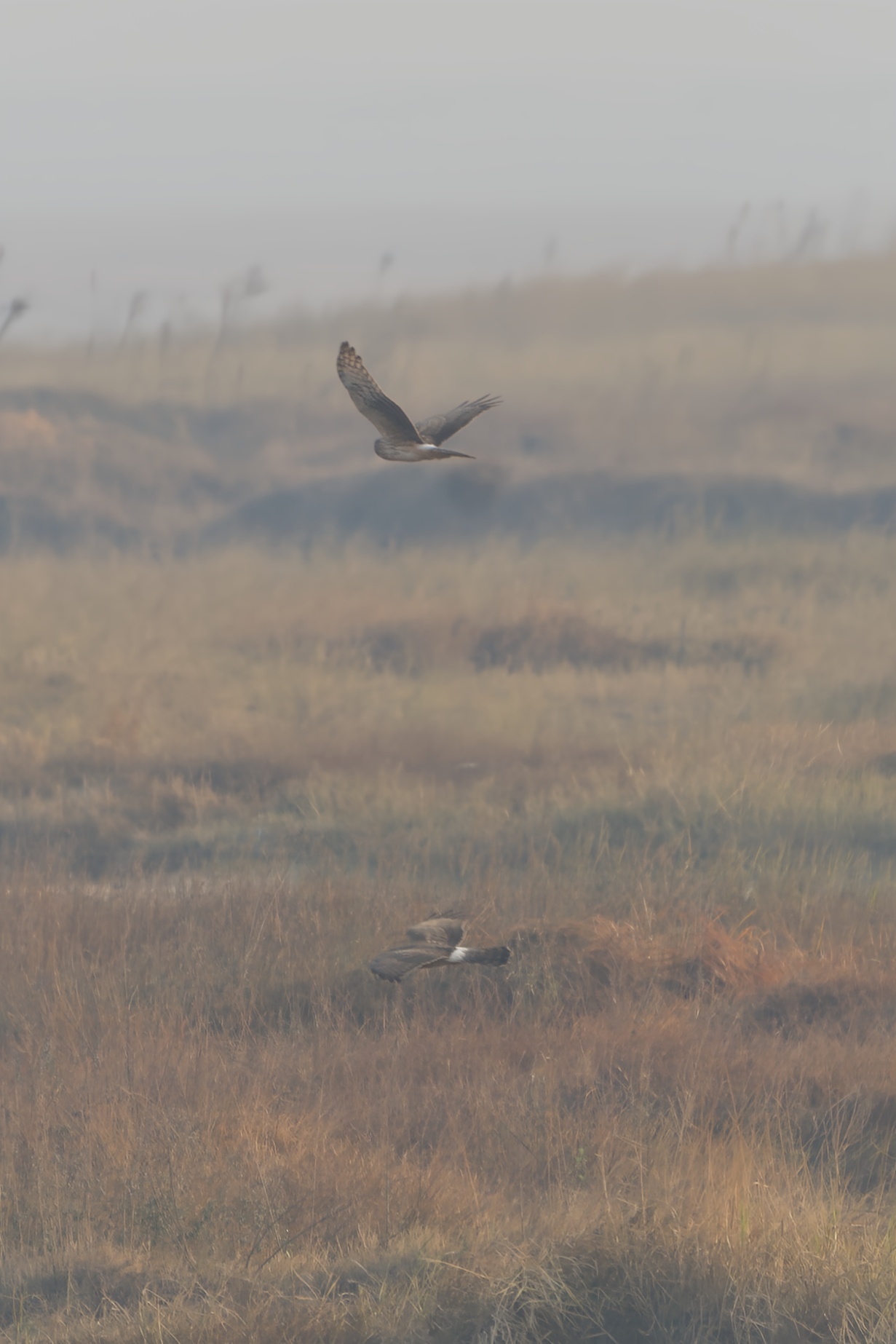
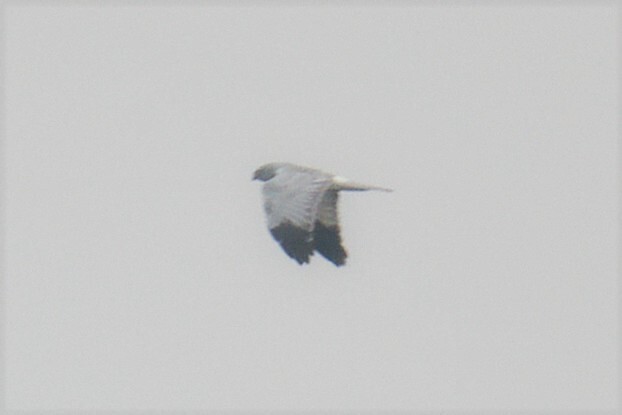
Length 41–52 cm (16–20 in) with a wingspan of 97–122 cm (38–48 in). Males weigh 290–400 g (average 350 g), while females weigh 390–750 g (average 530 g). Males are mainly grey above and white below, with grey upper breasts, white rumps, and black wingtips. Females are brown above with white upper tail coverts and buff underparts with brown barring. Juveniles resemble females but have less distinct barring, dark brown secondaries, and less-barred bellies. Both sexes possess a white rump patch, more noticeable on females and juveniles.
Identification
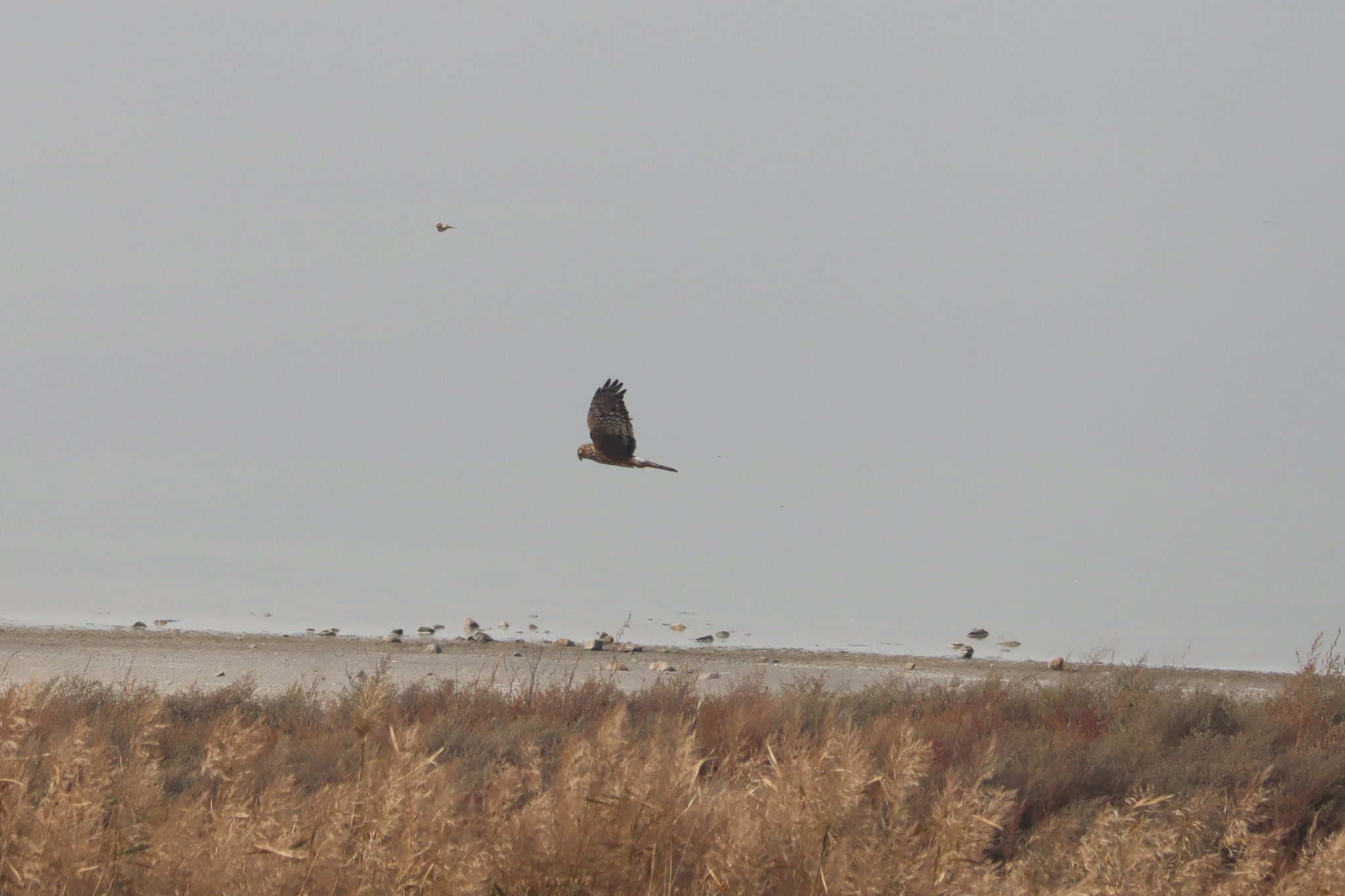
Identified by long wings held in a shallow V during low flight, hugging land contours. Distinct sexual dimorphism aids identification: grey-and-white males versus brown 'ringtail' females with white rumps. Vocalizations include a whistled 'piih-eh' from females receiving food, a 'chit-it-it-it-it-et-it' alarm call, and male calls of 'chek-chek-chek' or bouncing 'chuk-uk-uk-uk' during display.
Distribution & Habitat
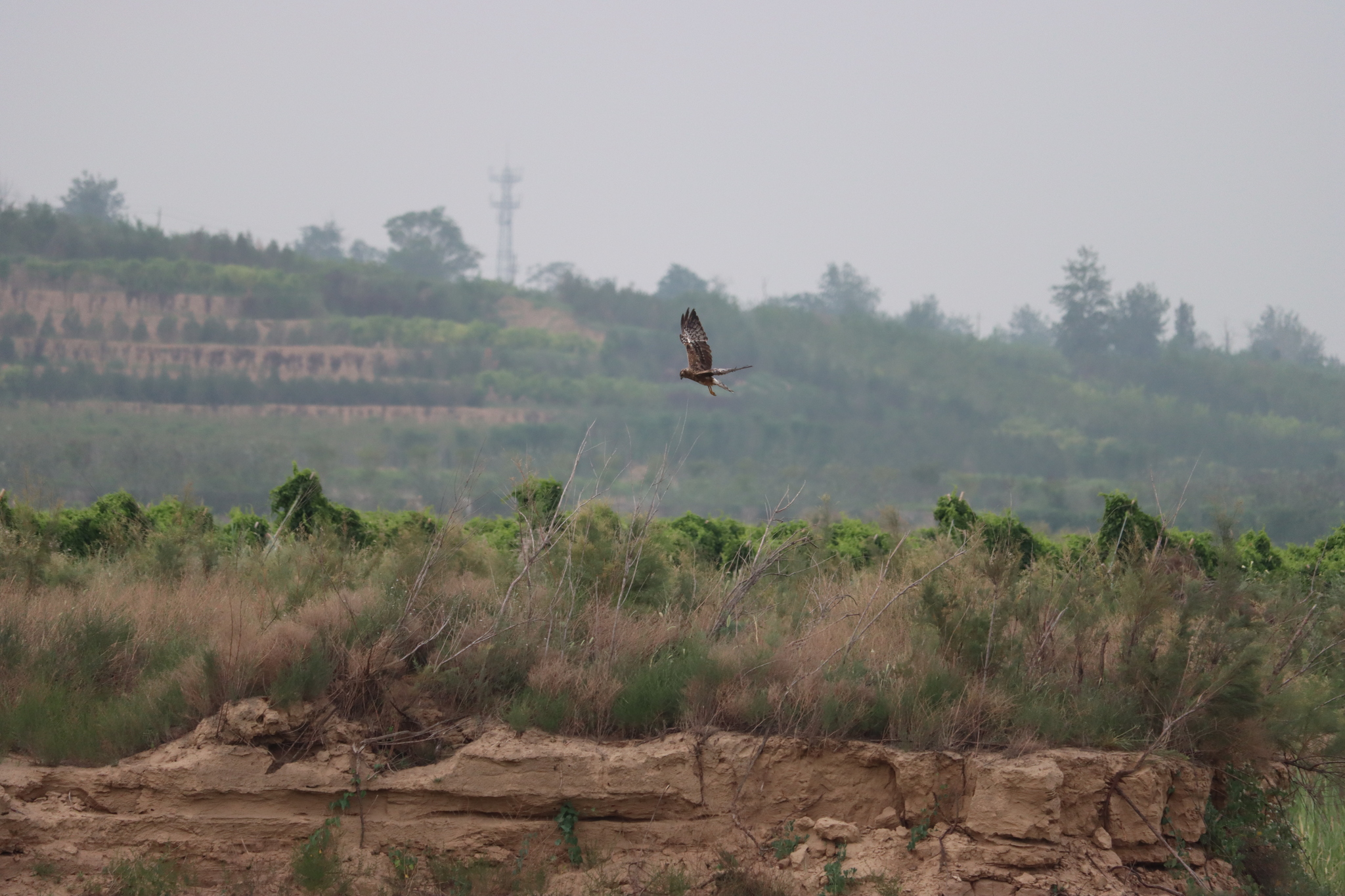
Breeds in Eurasia in moorland, bogs, farmland, marshes, grasslands, and swamps. Migratory, moving further south in winter, though birds in milder regions like France and Great Britain may remain year-round. Higher altitudes are largely deserted in winter. Wintering occurs in open country where communal roosting takes place.
Behavior & Ecology
Hunts small mammals (up to 95% of diet), birds, amphibians, reptiles, and insects by flying low and using exceptional hearing facilitated by an owl-like facial disc. One of the few raptors practicing polygyny, with up to five females mating with one male. Nests are ground-based structures of sticks lined with grass and leaves. Clutches contain 4–8 whitish eggs incubated by the female for 31–32 days. Chicks fledge at around 36 days. Communal roosting occurs in winter, often with merlins and marsh harriers.
Conservation
Globally classified as Least Concern by the IUCN, not approaching thresholds for population decline criteria. However, populations in Britain and Ireland are critical due to habitat loss and illegal shooting on grouse moors. Listed on the British red list. In England, only 34 successful nests were recorded in 2022 despite habitat capacity for over 300 pairs. The Scottish population declined by 27% between 2004 and 2016. Persecution is significant, with 102 confirmed or suspected incidents in the UK between 2020 and 2024. Afforestation with non-native conifers reduces habitat availability unless a mosaic of age classes is maintained.
Culture
Historically viewed favorably by some farmers as 'good hawks' for controlling crop-damaging mice and quail egg predators. Conversely, regarded as pests in the UK for preying on red grouse, leading to persecution. European folklore sometimes associated seeing one perched on a house with the death of three people.
Source: Wikipedia · CC BY-SA 3.0
Taxonomy
- Order
- Accipitriformes
- Family
- Accipitridae
- Genus
- Circus
Distribution
breeds Europe and central and northern Asia; winters to northern Africa and southern Asia
Data Sources
Species description from Wikipedia, licensed under CC BY-SA 3.0.
Bird images and sounds sourced from GBIF, contributed by citizen scientists worldwide under Creative Commons licenses.
Taxonomy data from AviList 2025.