Ciconiiformes / Ciconiidae / Ciconia
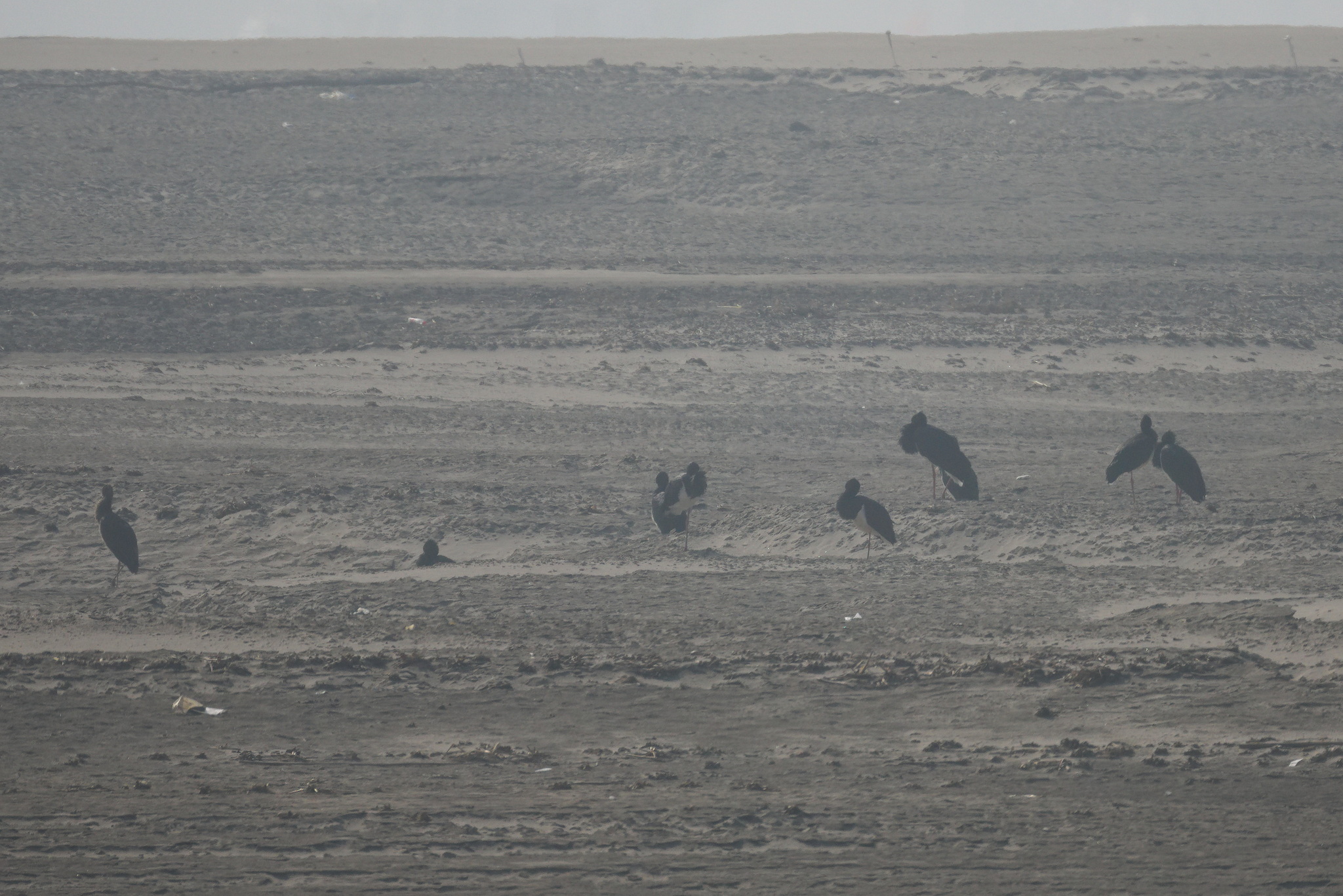
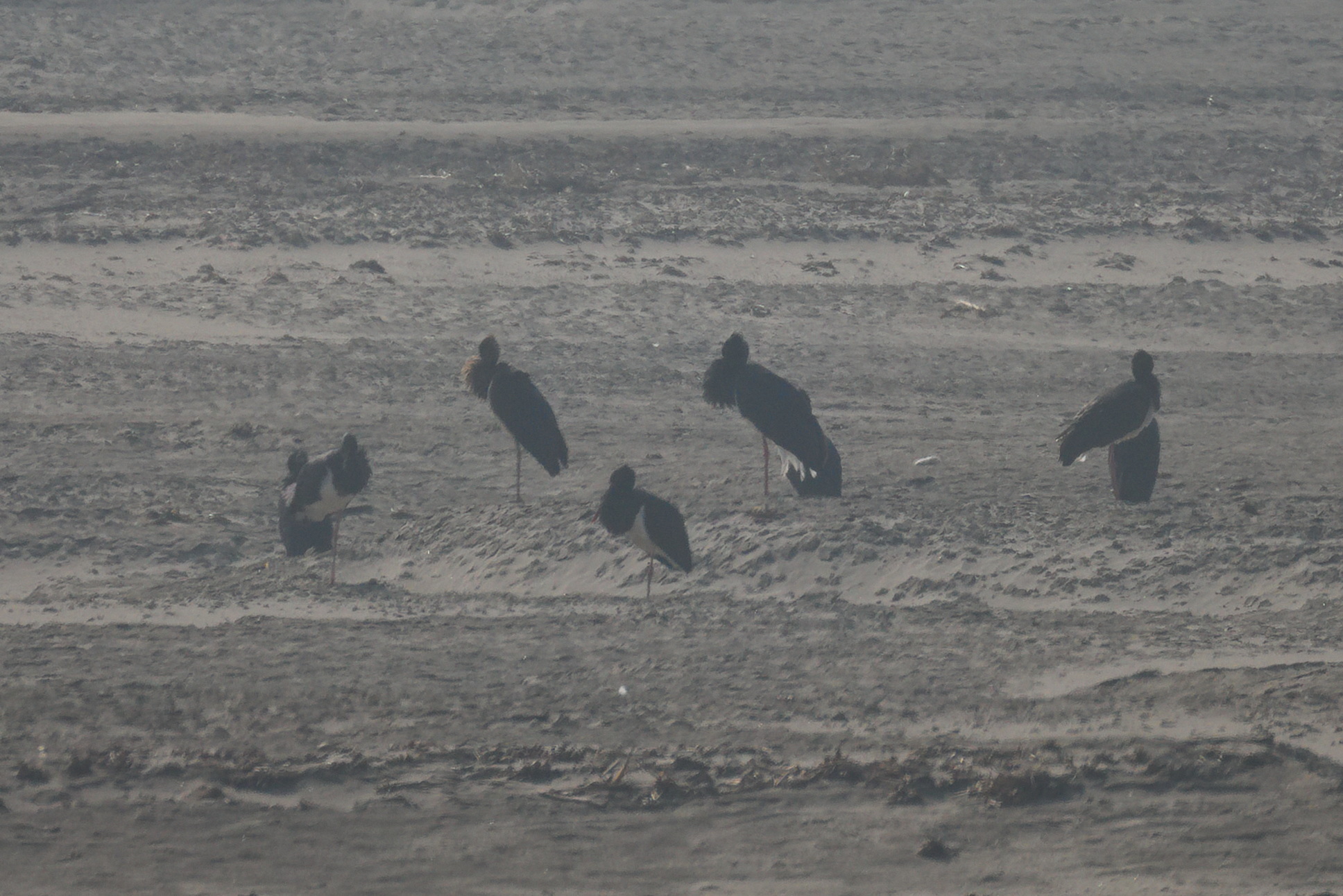
Black Stork
Ciconia nigra · 黑鹳
Introduction
A large bird in the stork family Ciconiidae, measuring 95–100 cm in length with a 145–155 cm wingspan. It breeds in scattered locations across Europe and the Palearctic to the Pacific Ocean, migrating to tropical Africa and the Indian subcontinent, with an isolated non-migratory population in Southern Africa. Distinctive traits include shy behavior, preference for wooded wetlands over open areas, and solitary or paired foraging. Classified as Least Concern by the IUCN, though populations are declining in parts of its range.
Description
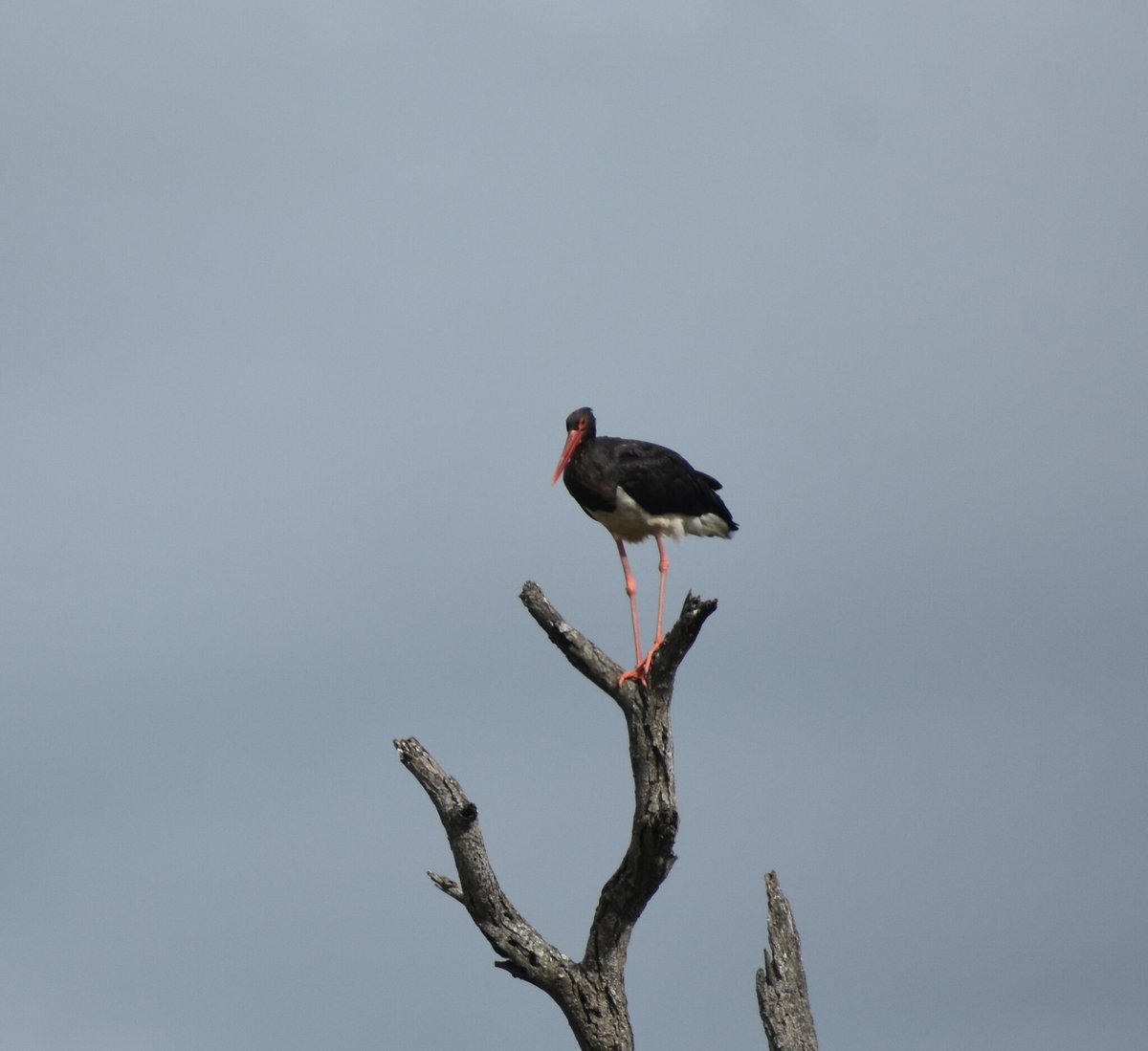
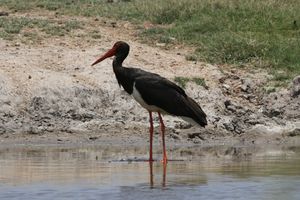
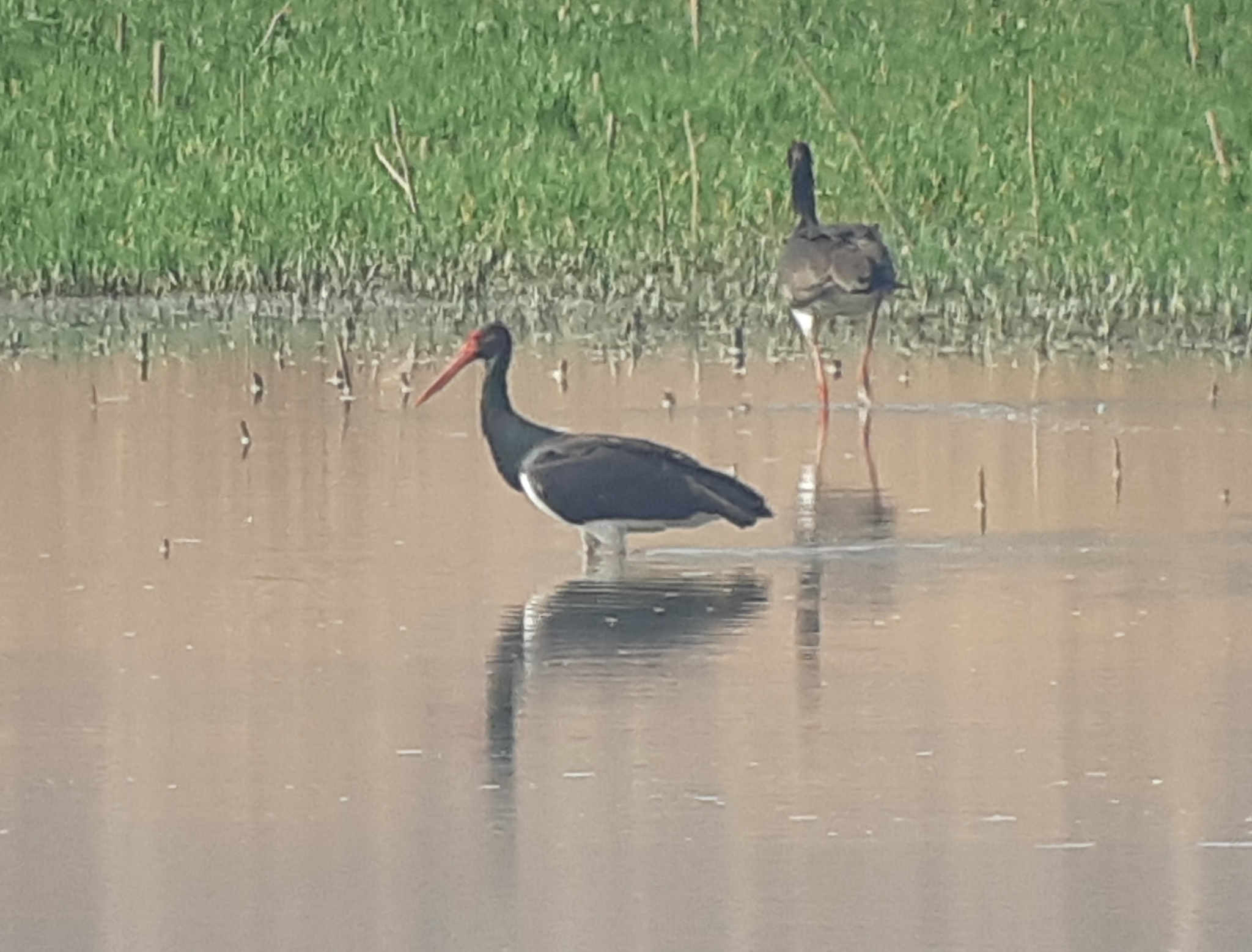
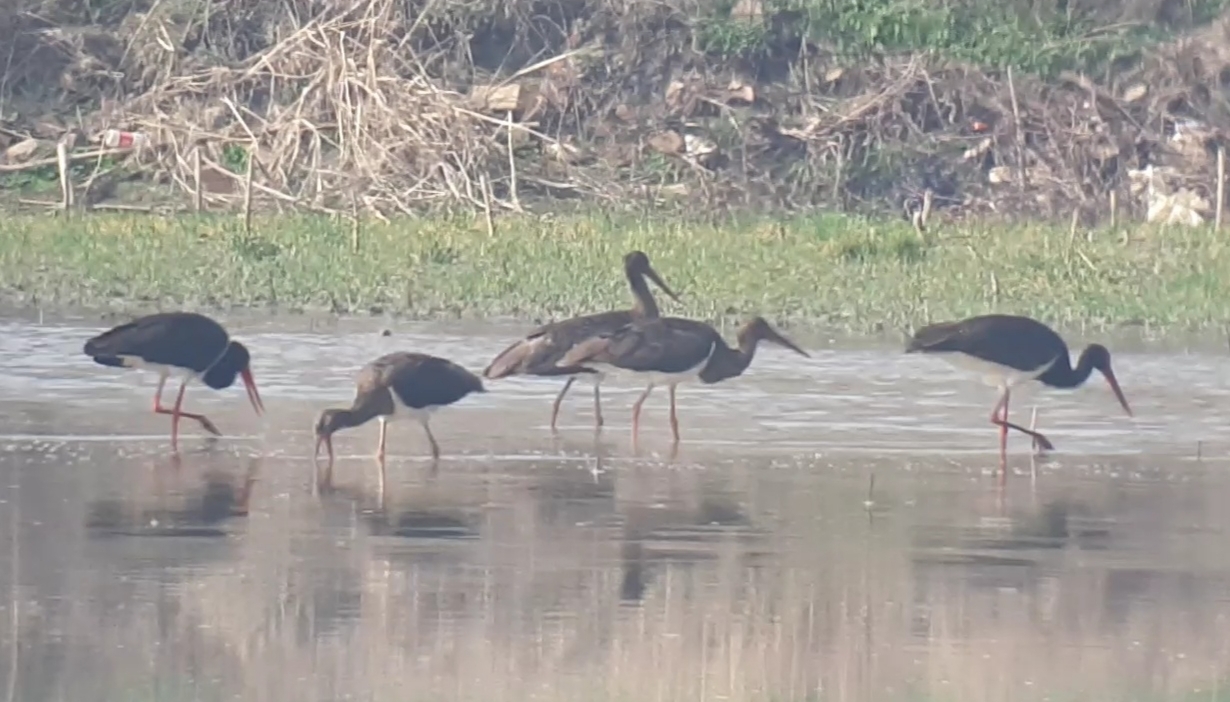
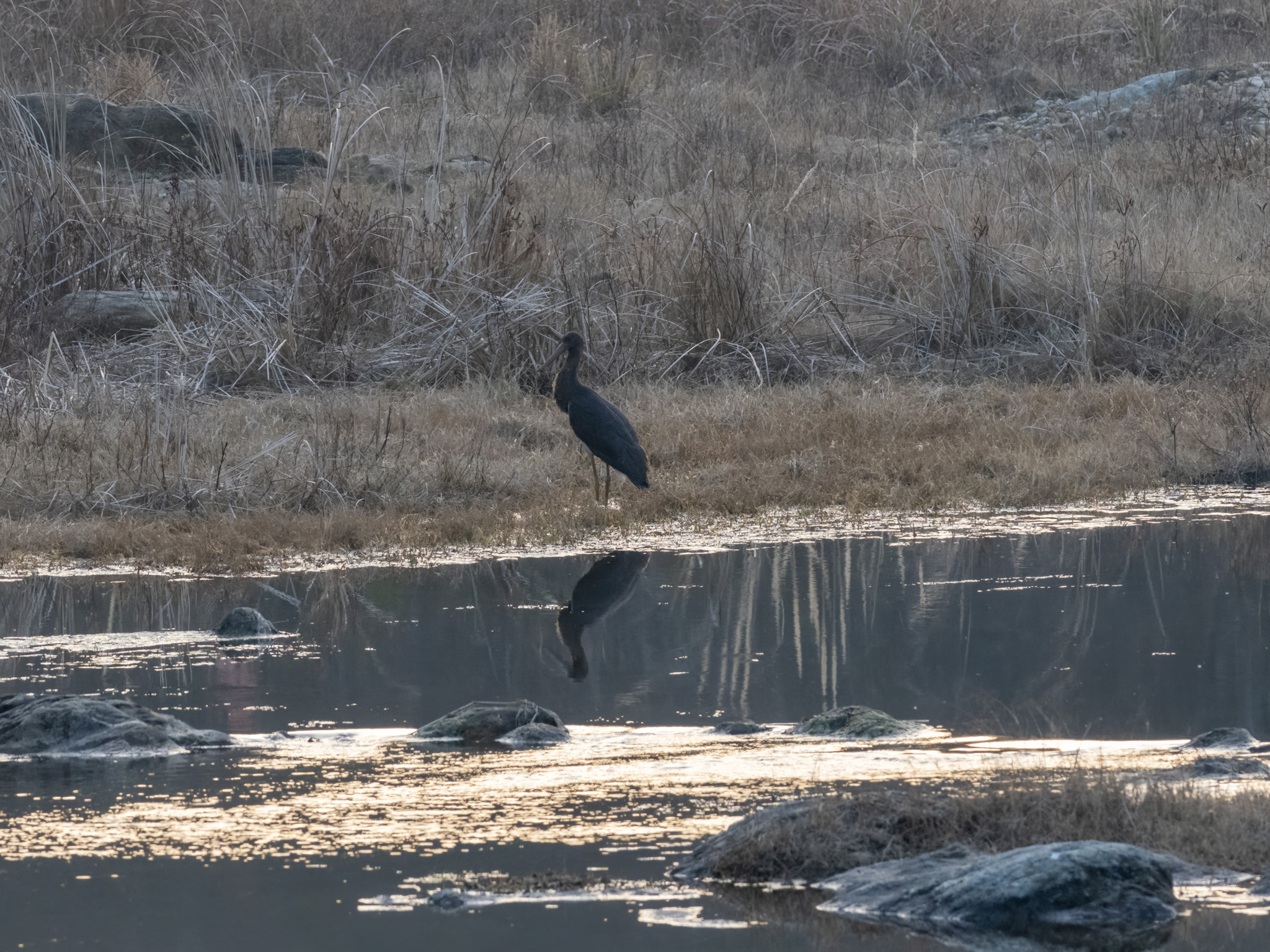
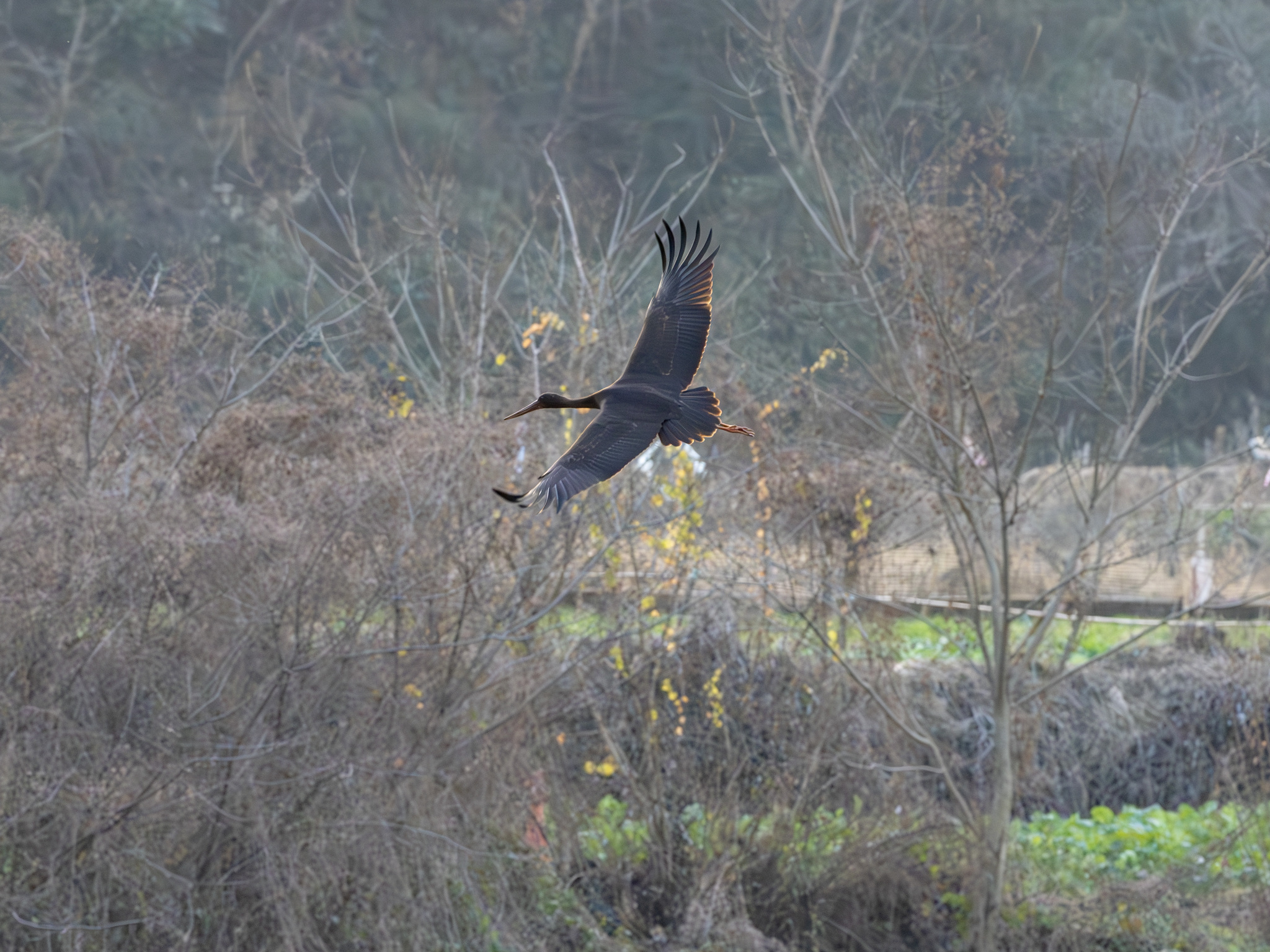
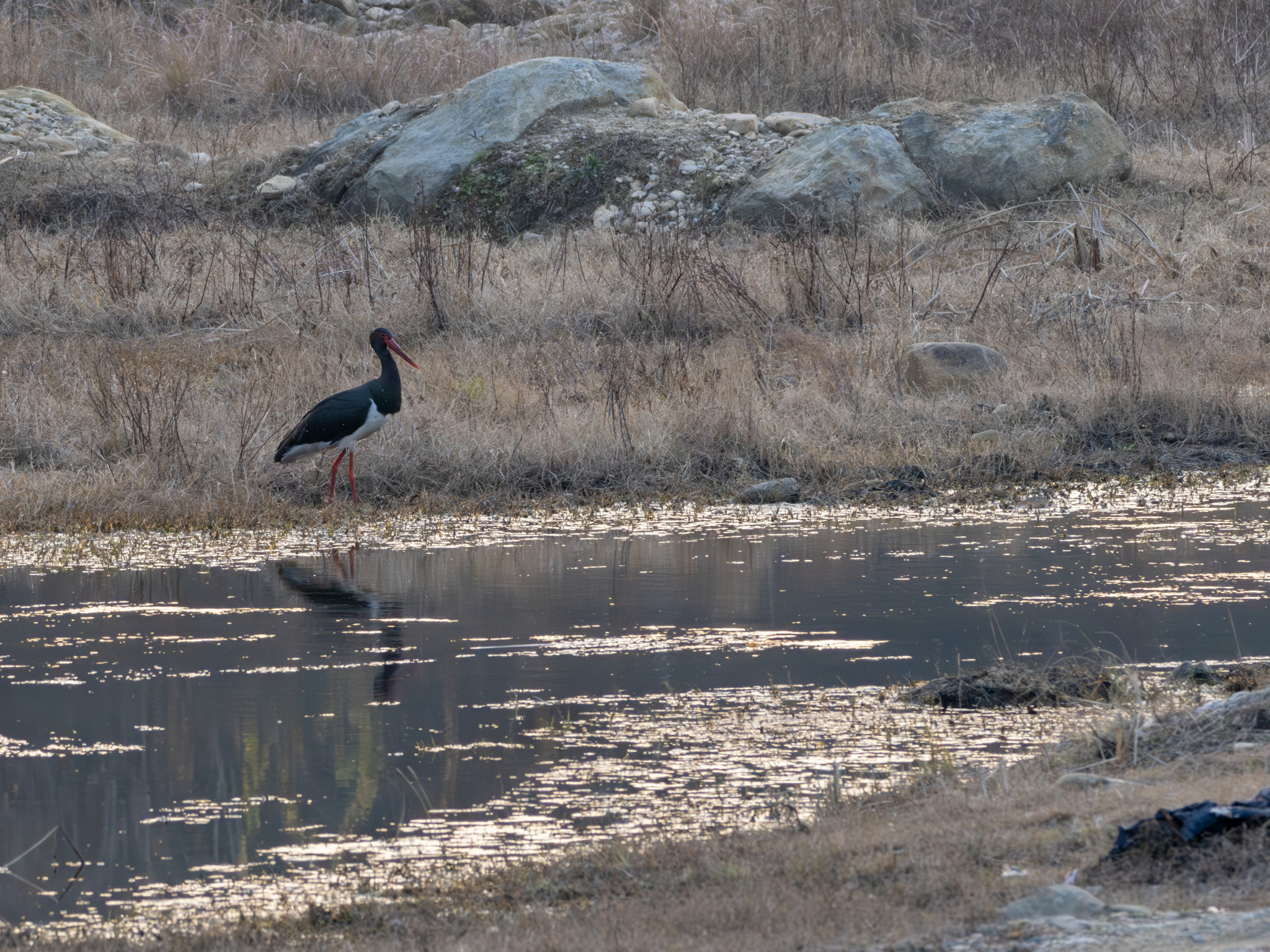
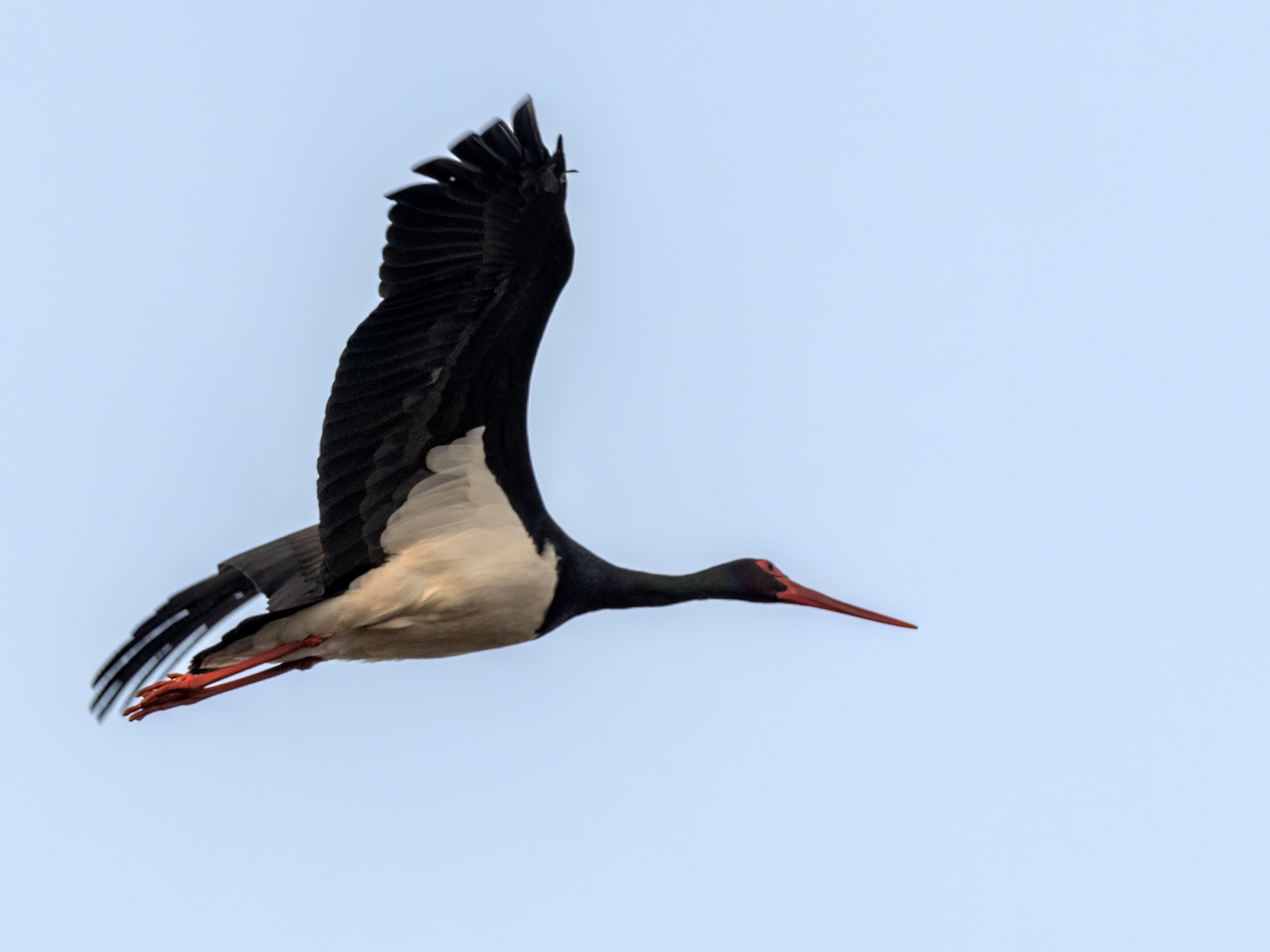
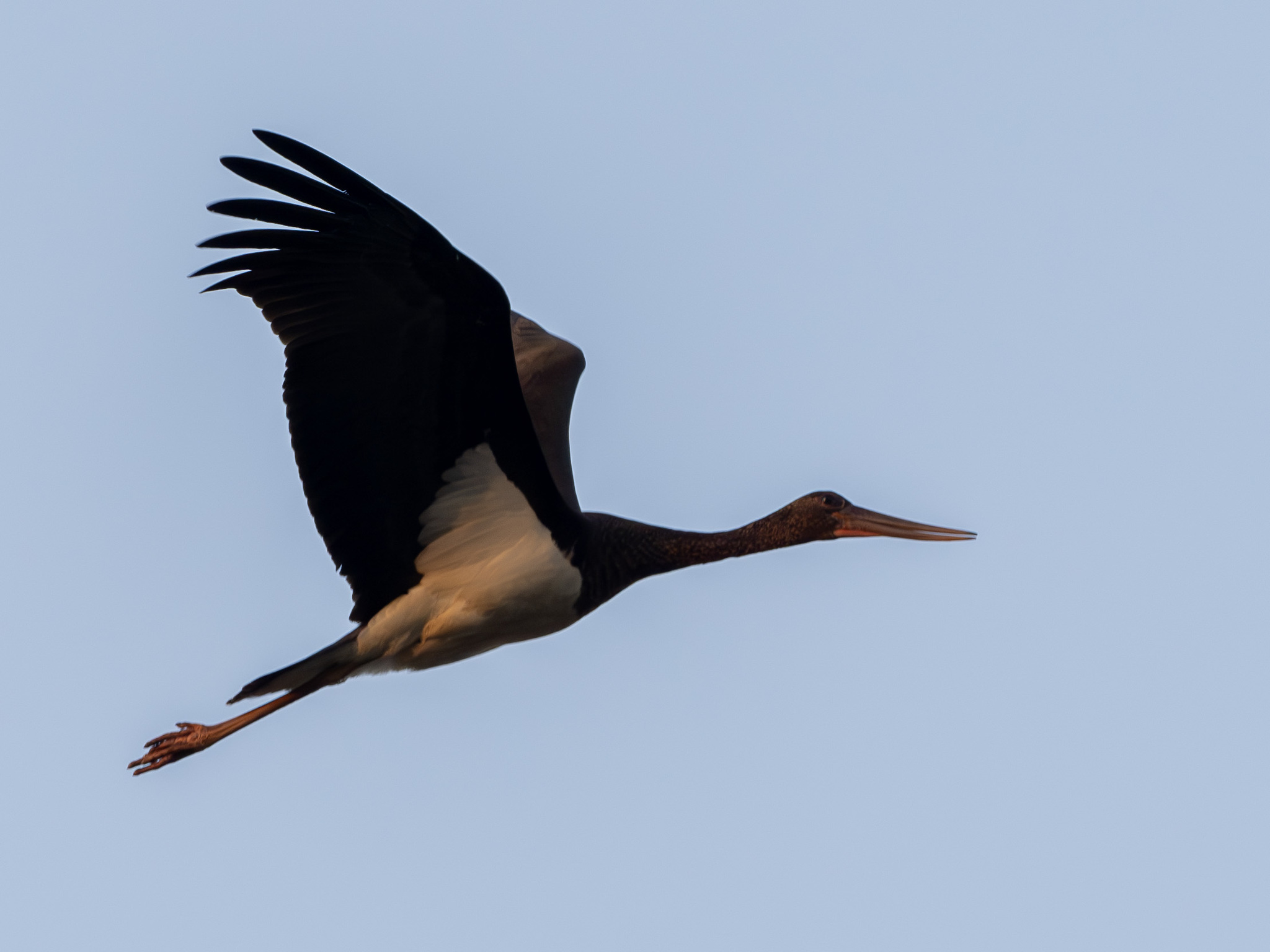
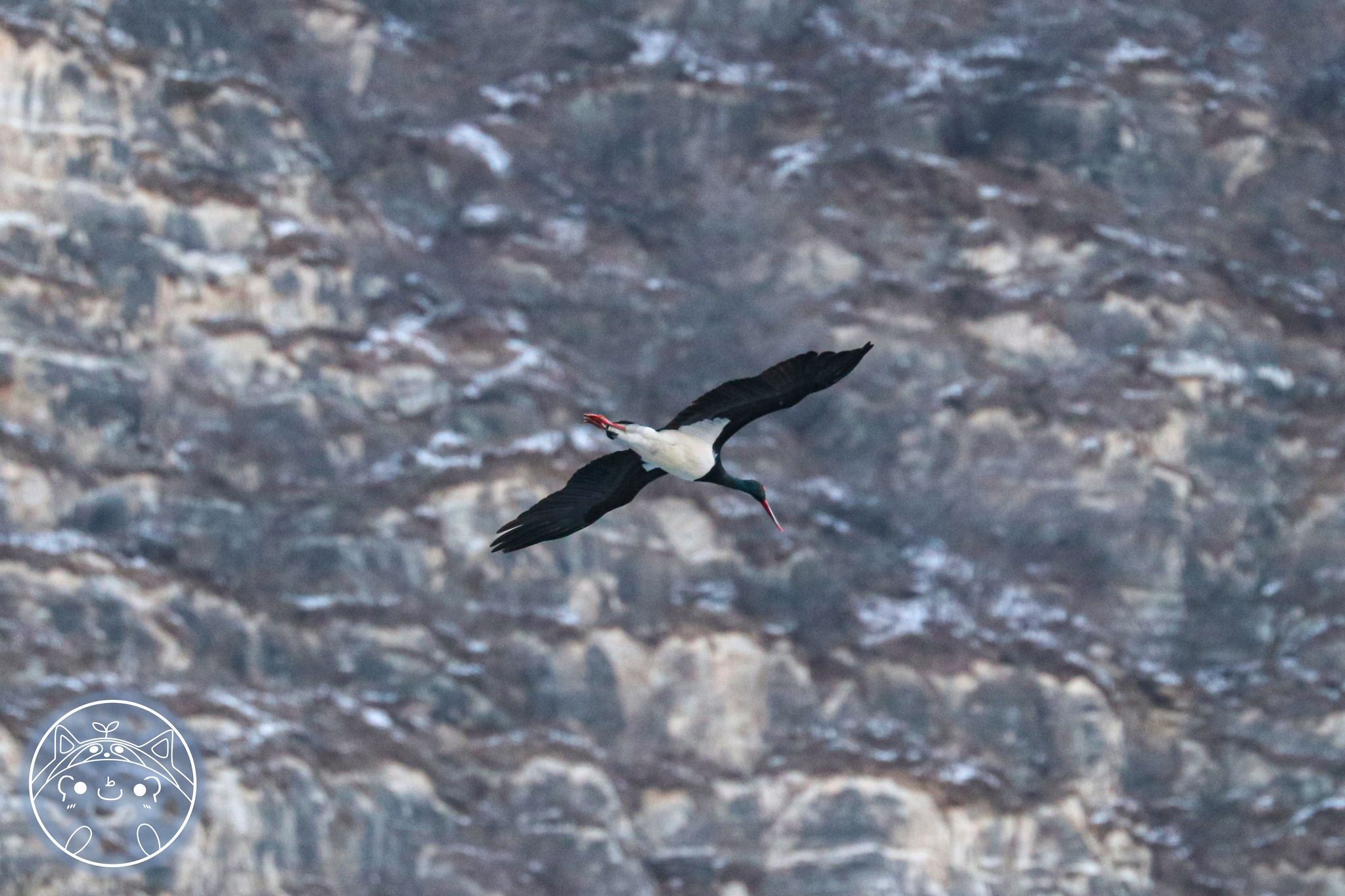
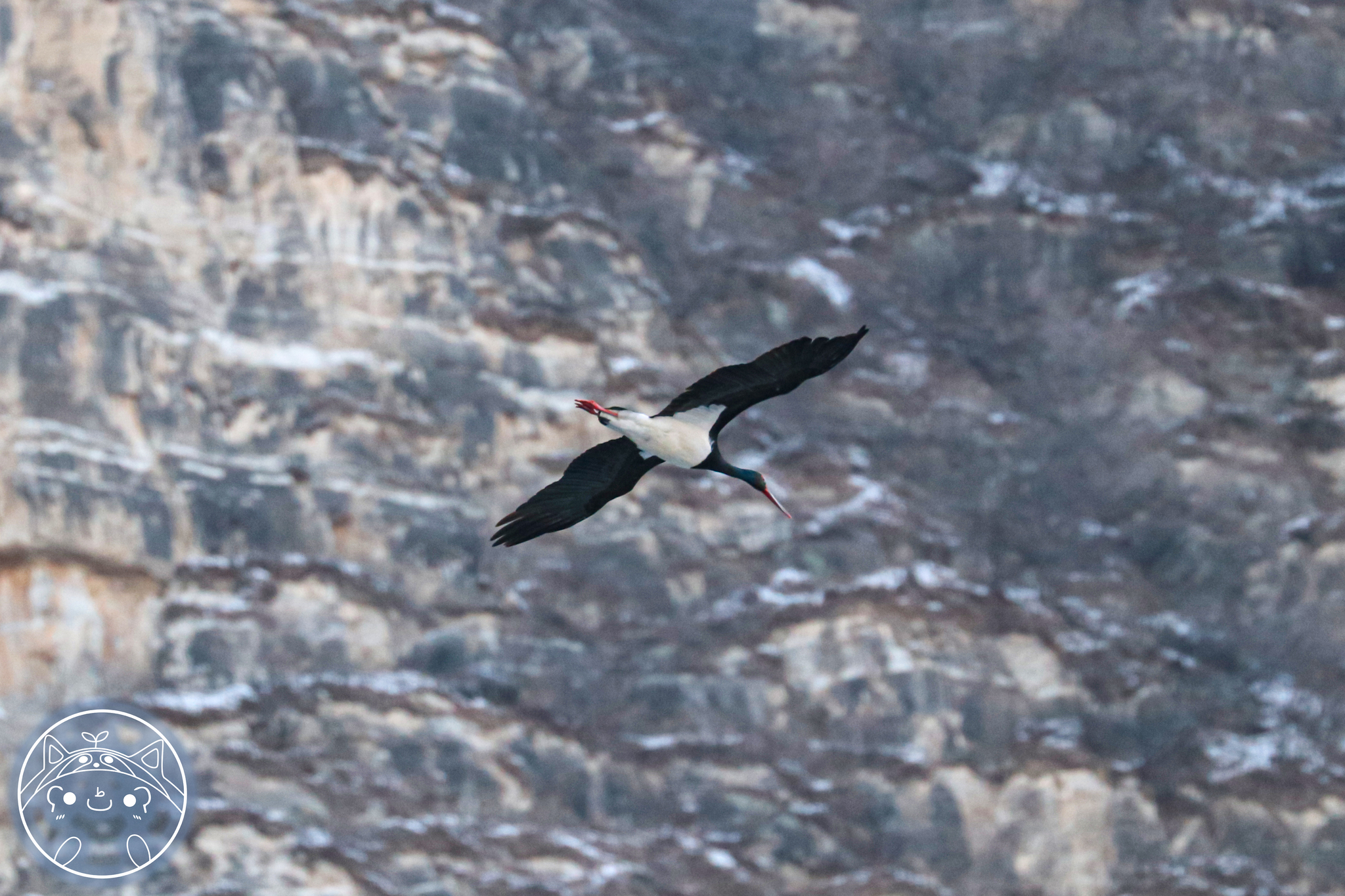
Adults have mainly black plumage with a purplish-green sheen, contrasting with white underparts including the lower breast, belly, armpits, axillaries, and undertail coverts. They possess long red legs, a long neck, and a long, straight, pointed red beak. Brown irises are surrounded by bare red skin. Males are larger than females but otherwise identical. Juveniles resemble adults but have browner, less glossy feathers with pale tips on scapulars and wing coverts; their legs, bill, and eye skin are greyish-green. Average weight is around 3 kg.
Identification
Distinguished from the similar white stork by black plumage and shyer demeanor. Differentiated from Abdim's stork by larger size, red (not green) bill and legs, and lack of a white rump. Juveniles may be confused with juvenile yellow-billed storks, but the latter has paler wings, a longer bill, and white underwing coverts. Flies with neck outstretched. Vocalizations include a loud 'chee leee' inhalation sound, hissing warnings, and wheezy squealing calls during display.
Distribution & Habitat
Breeds from Eastern Asia (Siberia, northern China) west to Central Europe, including Estonia, Poland, Germany, and the Iberian Peninsula. Migrates to wintering grounds in tropical Sub-Saharan Africa and the Indian subcontinent. European populations cross the Mediterranean via the Levant, Strait of Sicily, or Strait of Gibraltar. An isolated, largely non-migratory population exists in Southern Africa (South Africa, Mozambique, Zimbabwe, Eswatini, Botswana, Namibia). Prefers wooded marshy wetlands, rivers, and inland waters, avoiding close human contact.
Behavior & Ecology
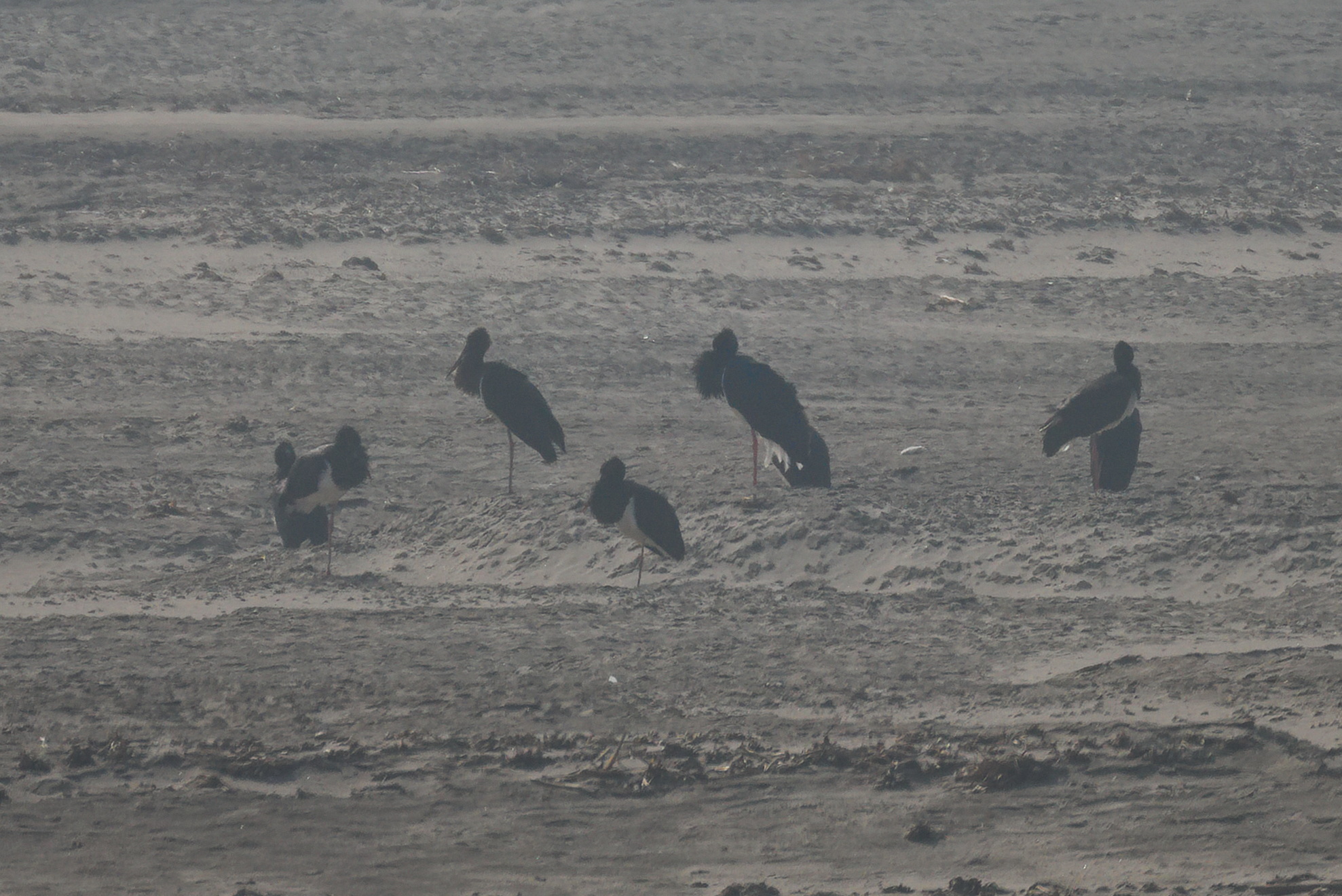
Shy and wary, typically seen singly or in pairs, wading slowly in shallow water to stalk prey such as fish, amphibians, insects, and small reptiles. May shade water with wings while hunting. Breeding pairs build large stick nests in old deciduous or coniferous trees, or on cliffs in mountainous areas. Clutches contain 2–5 greyish-white eggs. Incubation lasts 32–38 days, shared by both sexes; fledging takes 60–71 days. Courtship includes parallel soaring displays. Threat displays involve bobbing the head up and down while showing white plumage.
Conservation
Listed as Least Concern by the IUCN since 1998, with a range exceeding 20,000 km². However, populations are declining in India, China, and Western Europe, while increasing in the Iberian Peninsula. Threats include habitat loss, wetland draining, pesticide use, and hunting in southern Europe and Asia. Protected under the African-Eurasian Waterbird Agreement (AEWA) and CITES. Conservation measures include Wetlands International's Action Plan for African black storks and reintroduction efforts in Italy.
Source: Wikipedia · CC BY-SA 3.0
Taxonomy
- Order
- Ciconiiformes
- Family
- Ciconiidae
- Genus
- Ciconia
Distribution
central and southern Eurasia; southern Africa; winters to central Africa and India
Data Sources
Species description from Wikipedia, licensed under CC BY-SA 3.0.
Bird images and sounds sourced from GBIF, contributed by citizen scientists worldwide under Creative Commons licenses.
Taxonomy data from AviList 2025.