
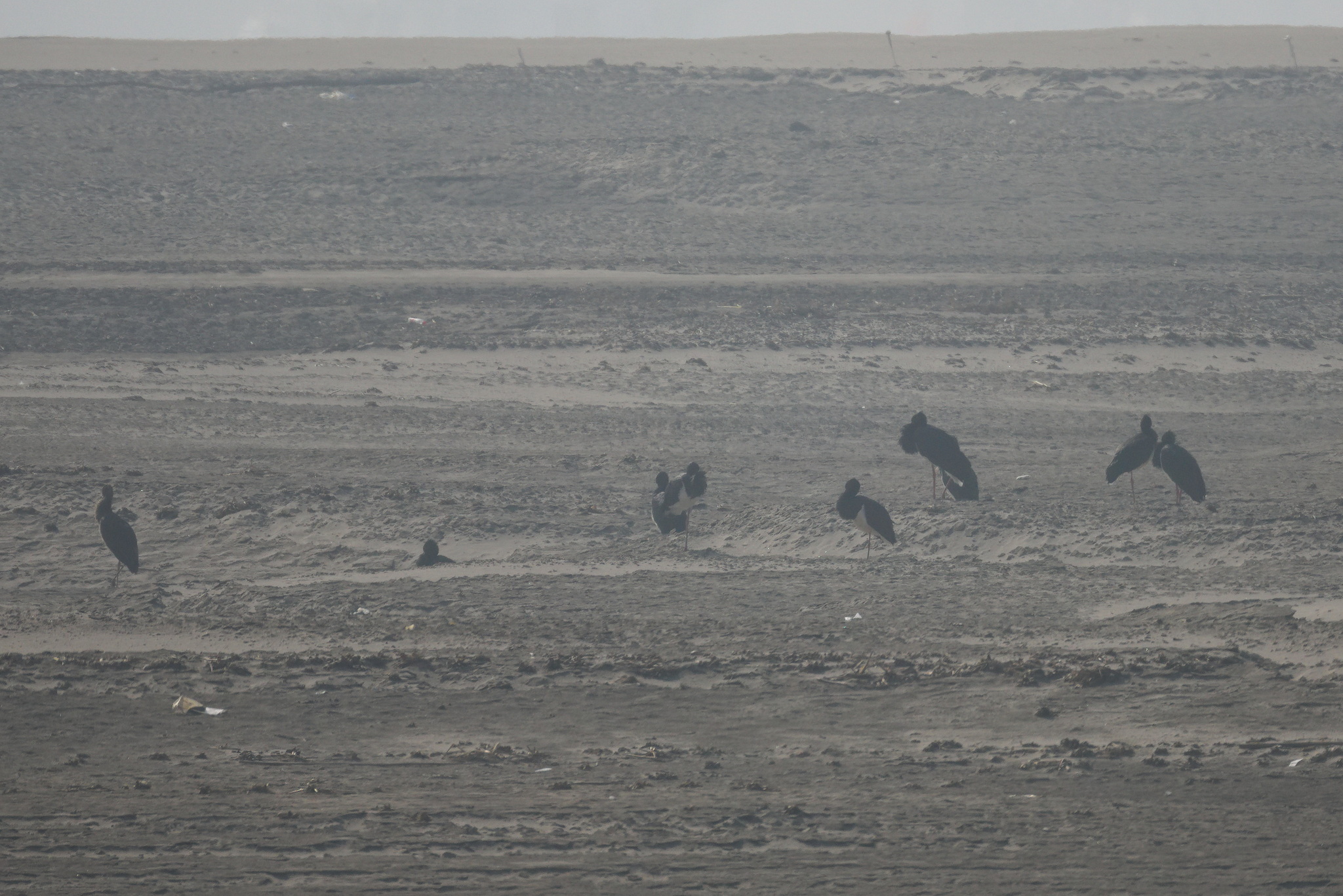
Black Stork
Ciconia nigra
黑鹳
Introduction
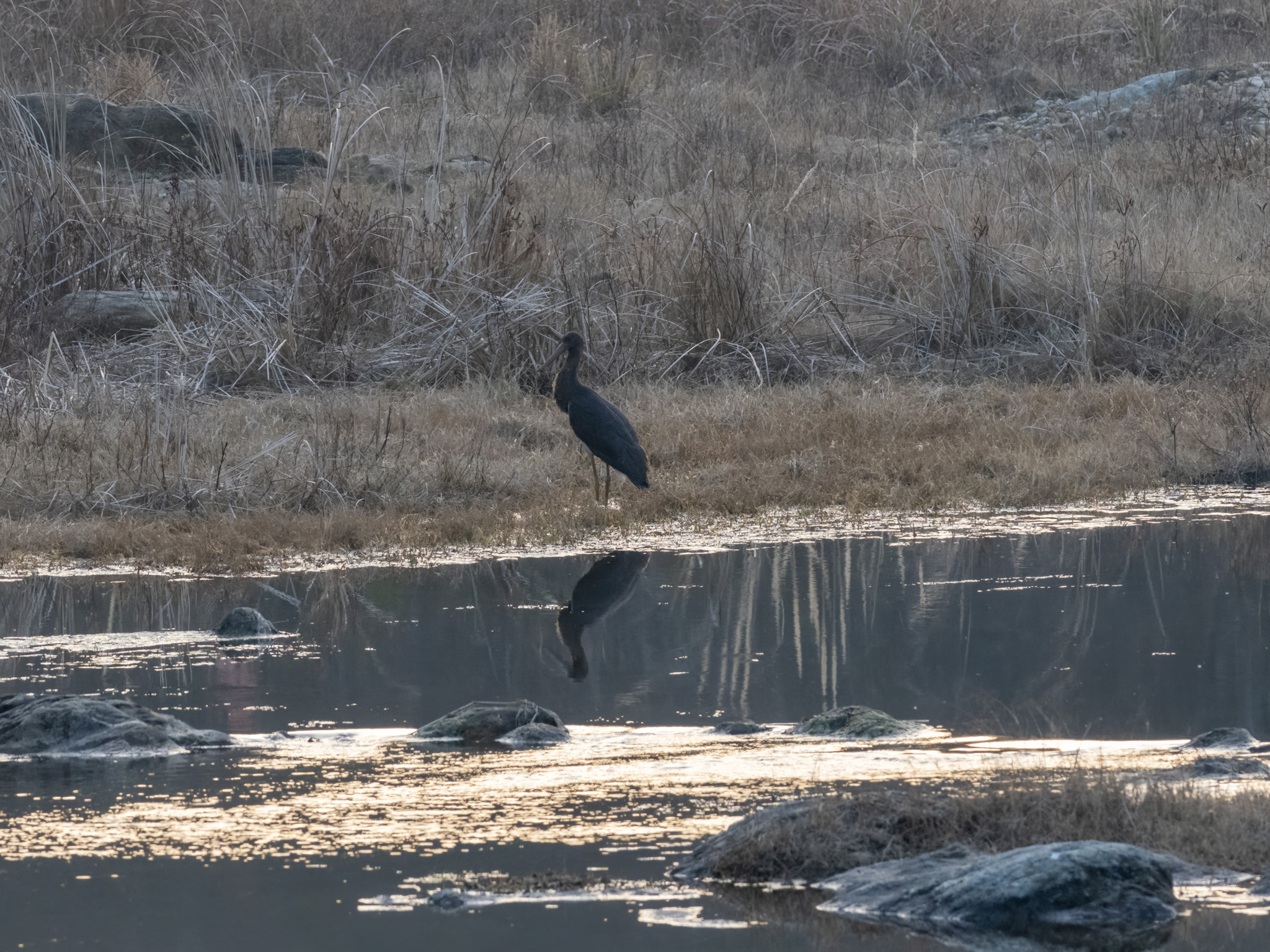
The black stork is a large wading bird that reaches nearly 1 meter in height. It occurs across Europe and Asia. It inhabits remote, wooded wetland habitats including large marshy wetlands with interspersed woodlands, rivers, lake edges, and freshwater wetlands. It is a long-distance migrant. European populations migrate to sub-Saharan Africa. Asian populations migrate to the Indian subcontinent. It wades slowly in shallow waters and perches in forest trees. It has a wary nature and solitary habits.
Description
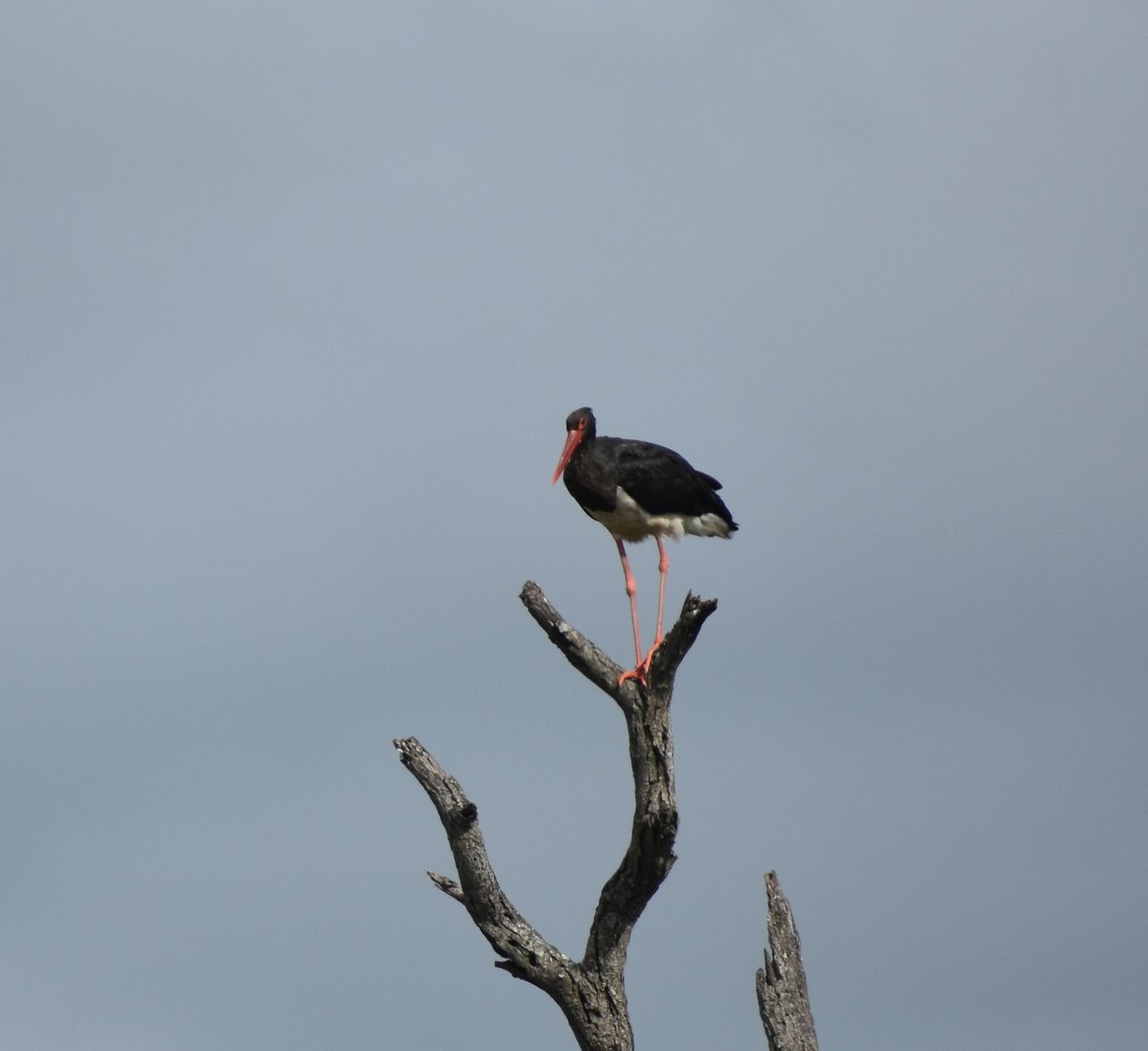
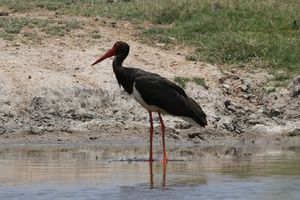
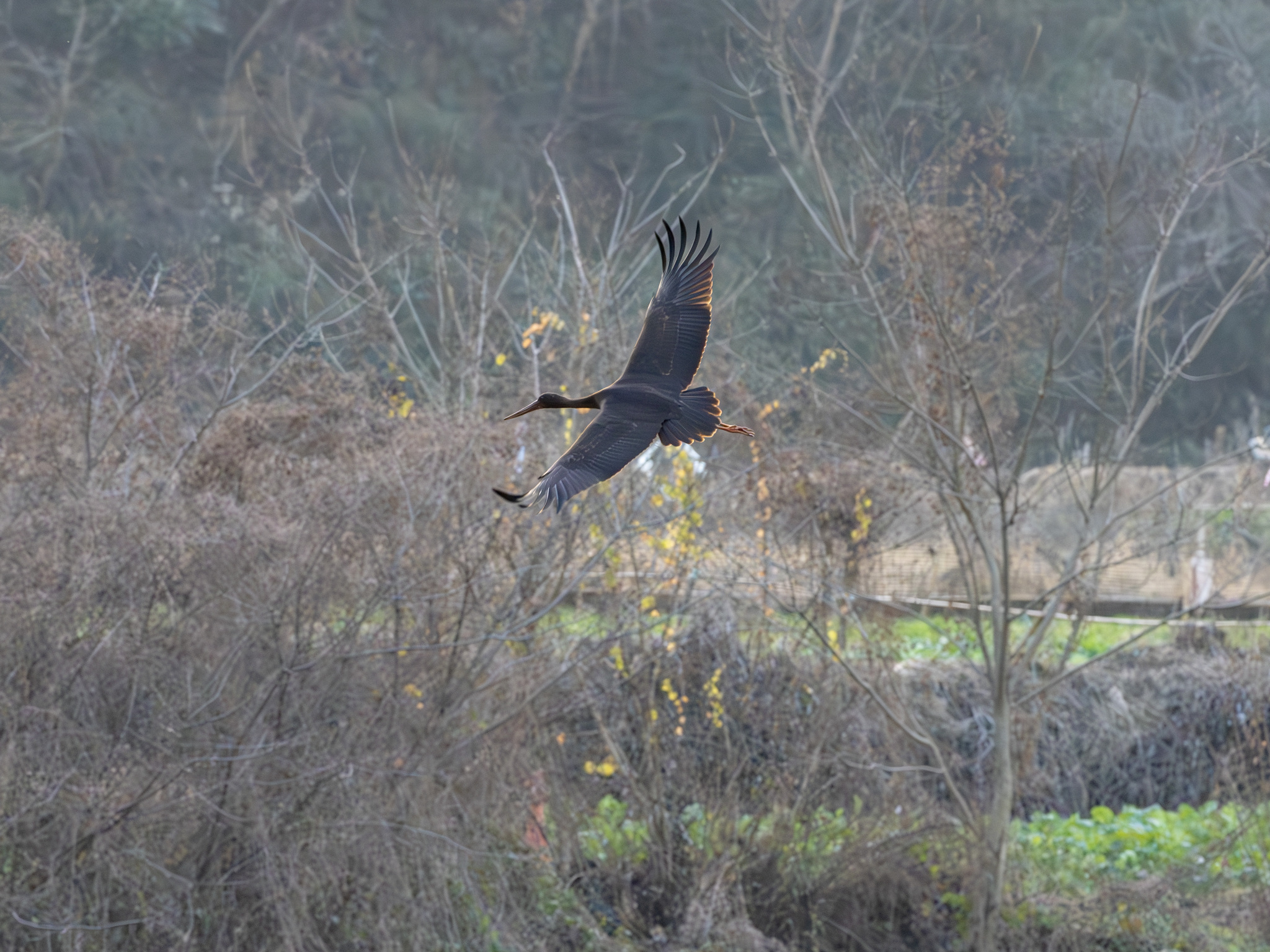
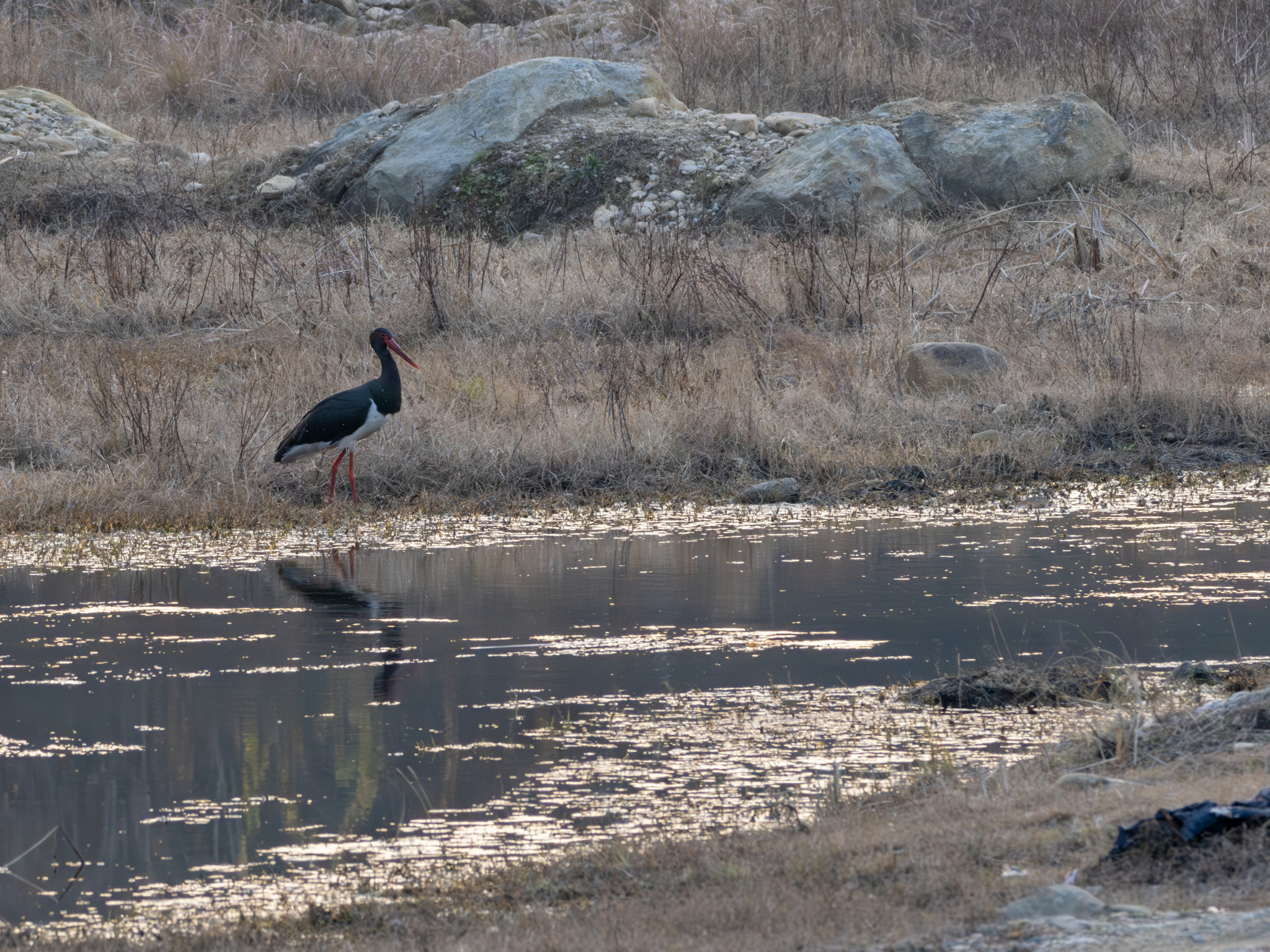
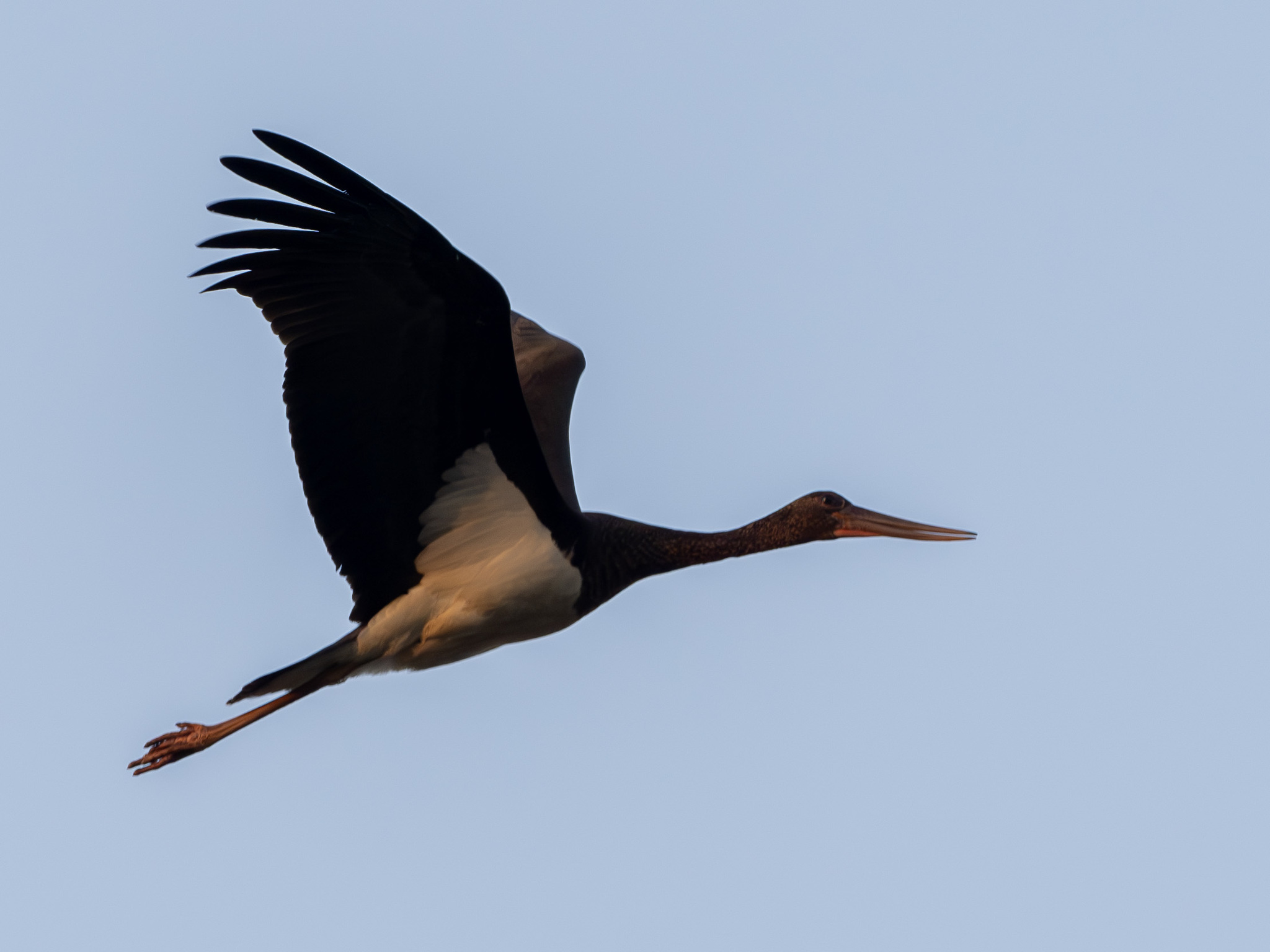
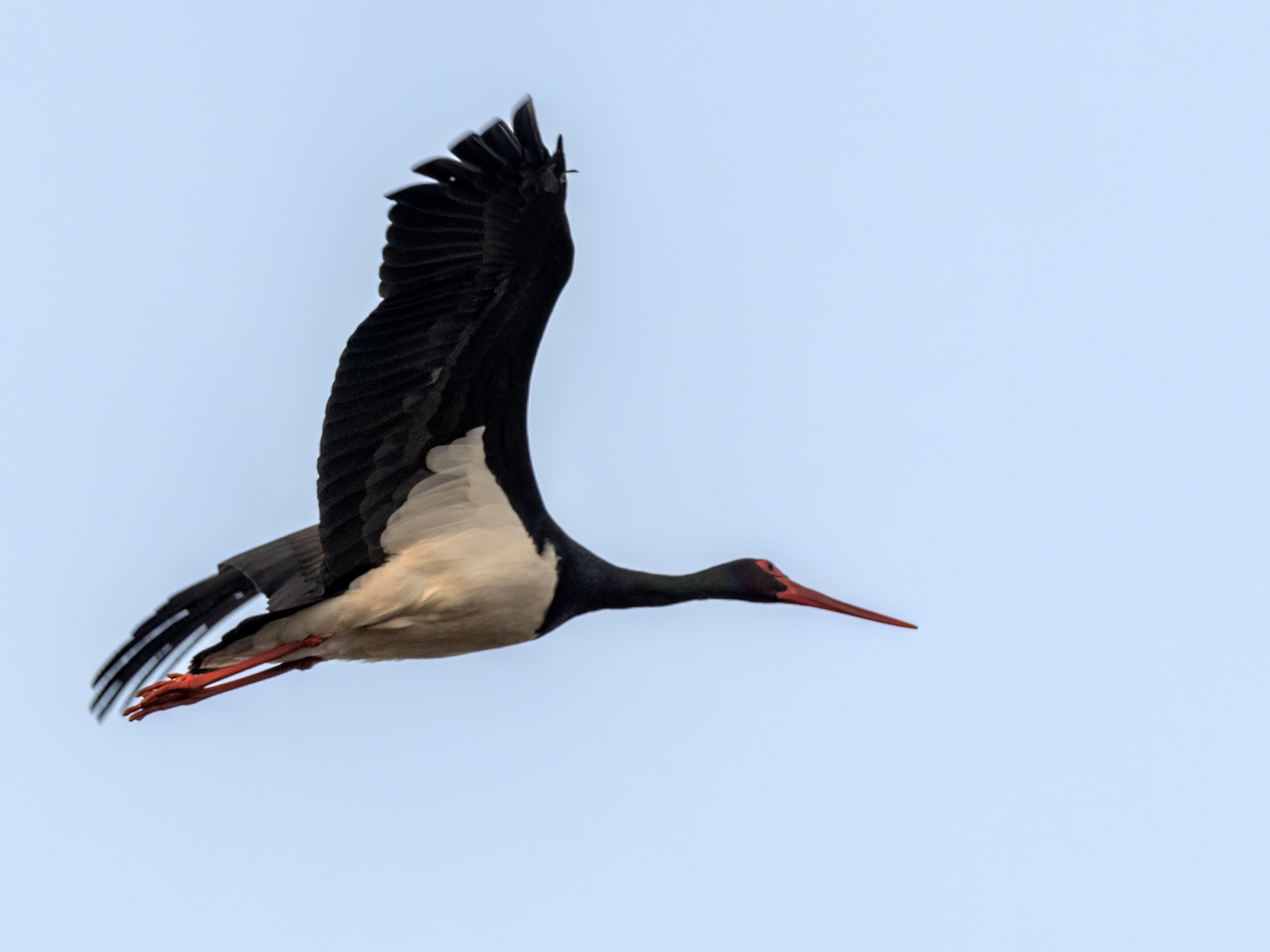
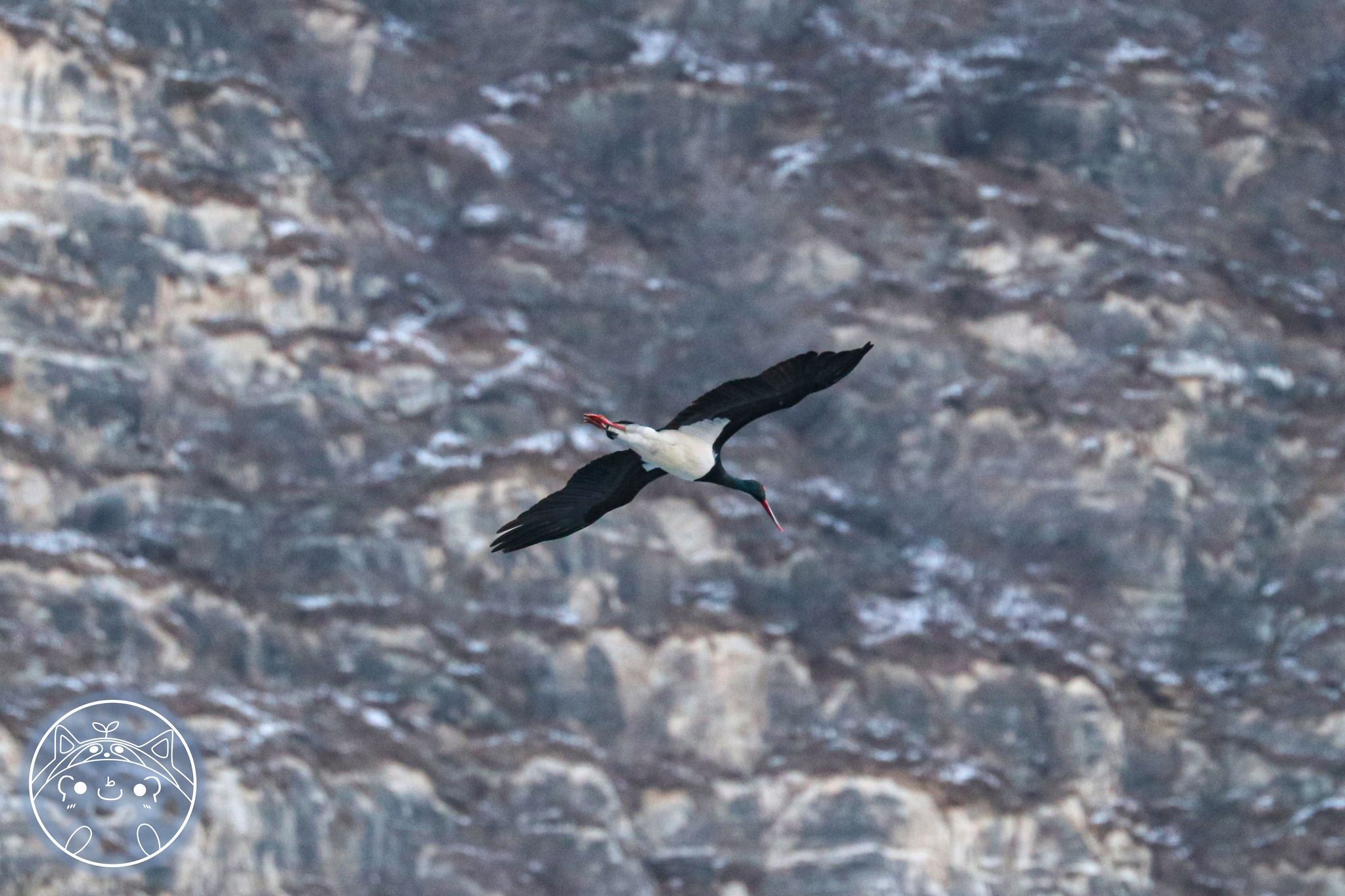
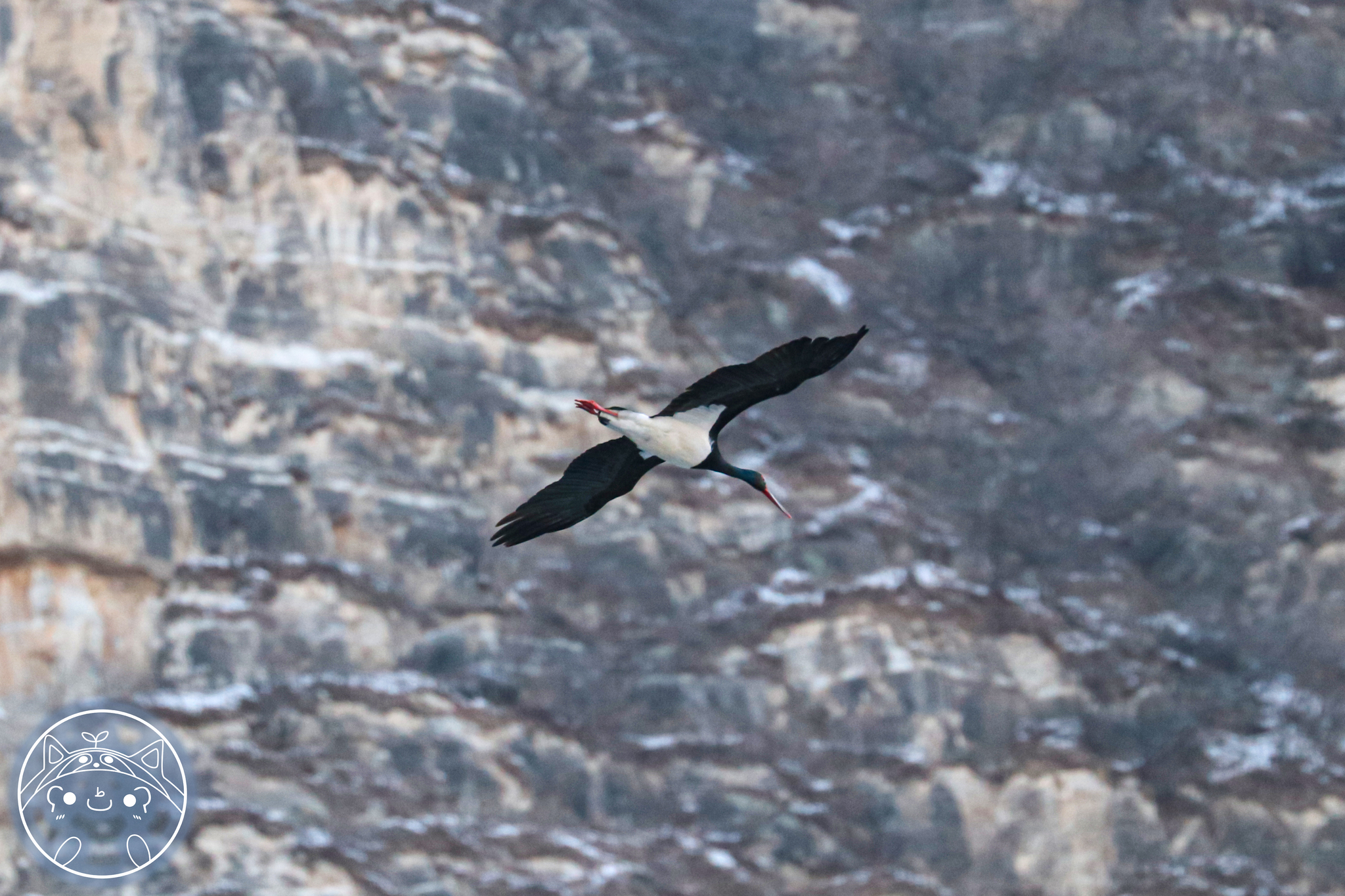
This is a large stork measuring 95-100 cm in length with a substantial 145-155 cm wingspan, and weighing around 3 kg. The adult has predominantly black plumage with an attractive purplish-green sheen, contrasting sharply with white underparts covering the lower breast, belly, armpits, and undertail coverts. It possesses long red legs and an equally long, straight, pointed red beak. The breast features distinctive long, shaggy feathers forming a ruff. The species has brown irises and bare red skin surrounding the eyes. Males are typically larger than females, though the sexes appear identical in plumage. Juveniles differ by having browner, less glossy black feathers, pale tips on the wing and tail coverts, and greyish-green coloration on the legs, bill, and facial skin.
Identification
The black stork's combination of large size, black plumage with white underparts, and red legs and beak make it distinctive when seen well. It differs from Abdim's stork, which is much smaller with predominantly green bill, legs, feet, and has a white rump and lower back. Juvenile black storks could potentially be confused with juvenile yellow-billed storks, but the latter shows paler wings and mantle, has a longer bill, and displays white under the wings. The black stork's habit of flying with outstretched neck and its slow, steady walking gait on the ground are characteristic. Unlike the gregarious white stork, this species is rarely seen in groups except during migration.
Distribution & Habitat
This species breeds across scattered locations in Europe, predominantly in Portugal, Spain, and central and eastern regions, extending east across the Palearctic to the Pacific Ocean including Siberia and northern China. An isolated non-migratory population exists in Southern Africa, particularly in eastern South Africa and Mozambique. The species is migratory: European populations winter in tropical Sub-Saharan Africa, while Asian populations migrate to the Indian subcontinent and southern China. During migration, it avoids crossing broad expanses of the Mediterranean, instead using routes through the Levant, Strait of Sicily, or Gibraltar. It prefers wooded wetlands with coniferous or broadleaved woodlands, inhabiting hills and mountains with freshwater networks including rivers, lake edges, and marshes.
Behavior & Ecology
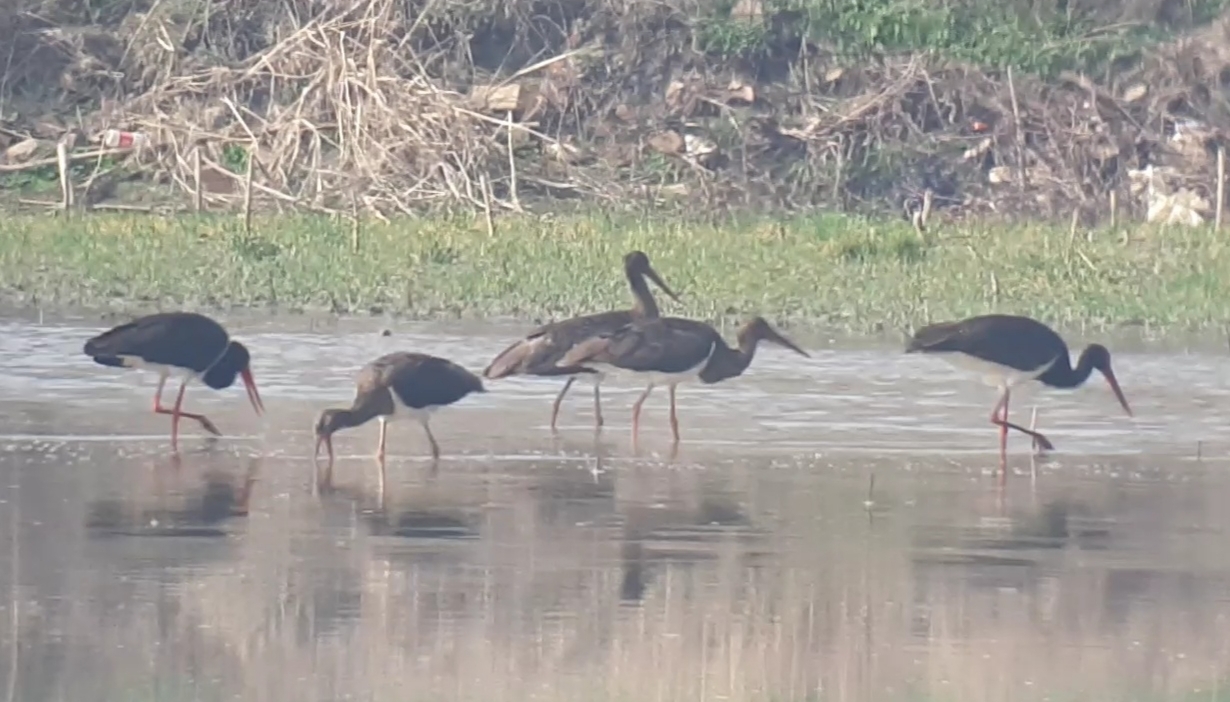
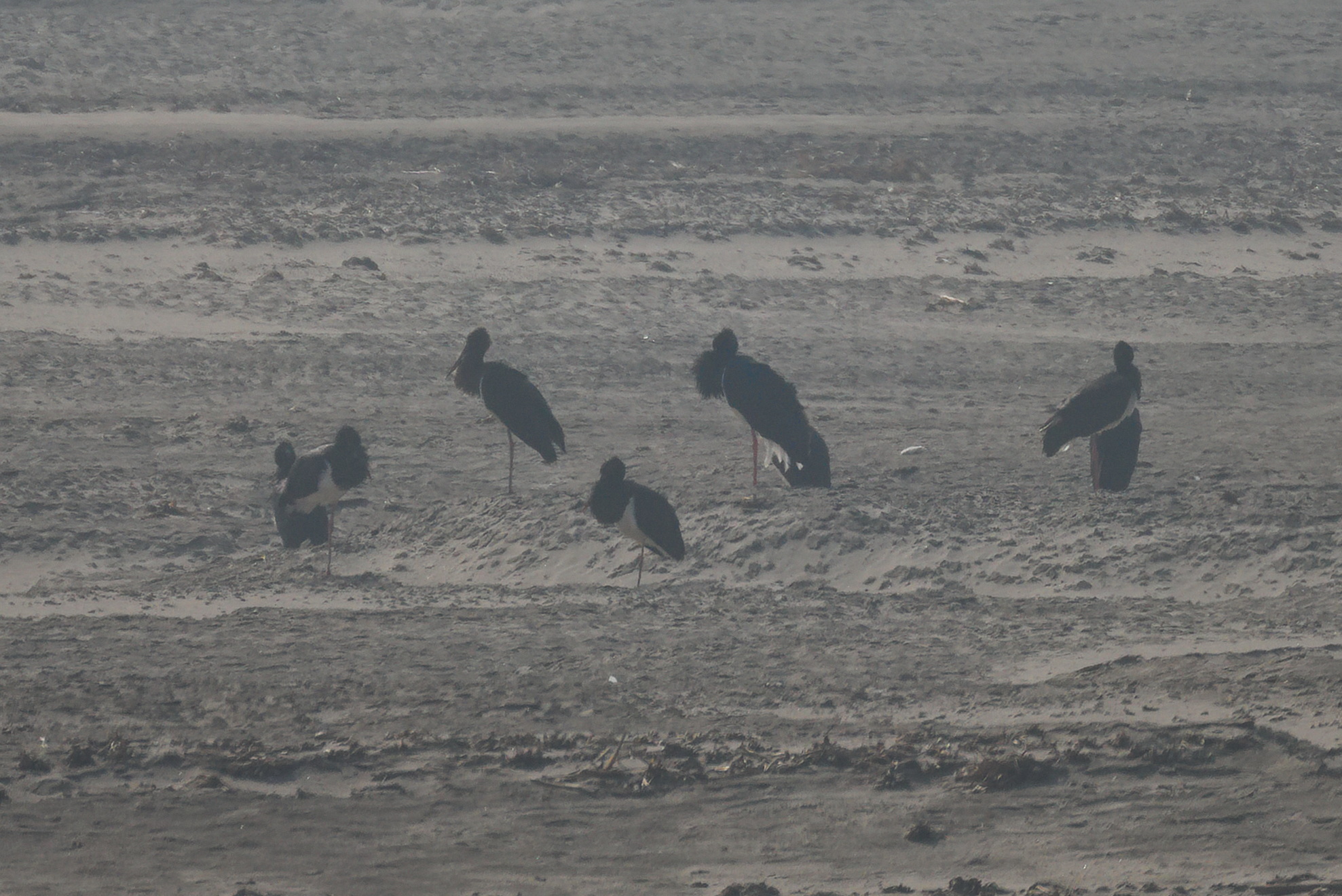
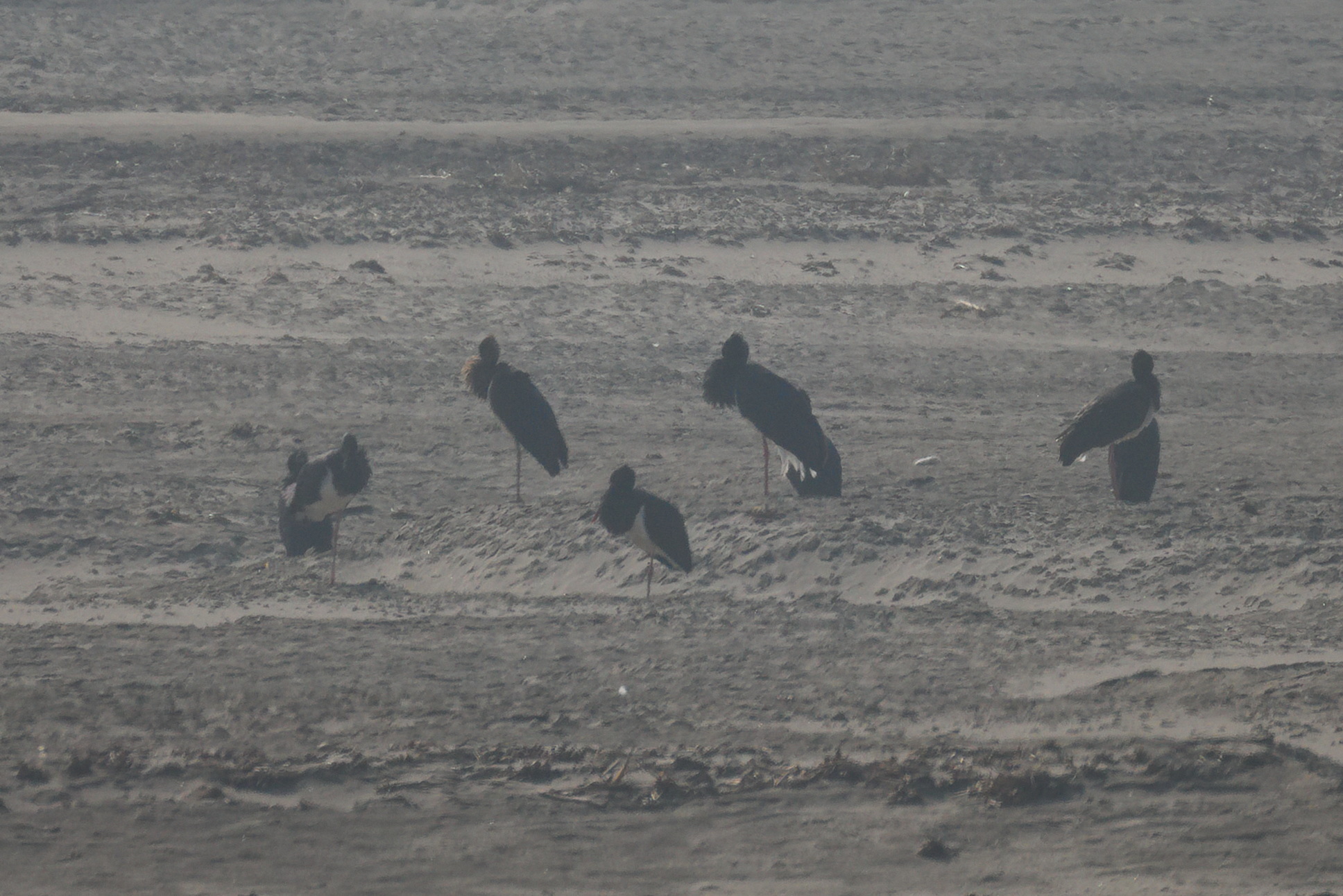
The black stork is a shy, wary species that avoids human contact. It is typically seen alone or in pairs, though flocks of up to 100 individuals form during migration and winter. Its main call is a 'chee leee' resembling a loud inhalation, and it also produces hissing sounds as warnings. Males give wheezy, raptor-like squealing calls during courtship displays. The species is a patient, slow wader in shallow water, often shading the water with its wings while hunting. It feeds primarily on fish, amphibians, insects, and occasionally small reptiles, mammals, and birds. In India, it forages in mixed flocks with white storks, woolly-necked storks, demoiselle cranes, and bar-headed geese. Breeding pairs build large stick nests high in forest trees, typically in old deciduous trees at least 80 years old, though they also use cliffs and rocky ledges in mountainous areas. The female lays 2-5 grey-white eggs, with both parents sharing 32-38 days of incubation and 60-71 days of fledging.
Conservation
The black stork is classified as Least Concern by the IUCN due to its large range exceeding 20,000 km², though its true conservation status remains uncertain. While widespread, it is nowhere abundant and appears to be declining in parts of its range including India, China, and Western Europe, though populations are increasing in the Iberian Peninsula where 405-483 pairs were estimated in 2006. The species has been extirpated from parts of northwestern Europe including the Netherlands and Scandinavia. Threats include wetland drainage, agricultural pesticide use, and hunting in southern Europe and Asia. Conservation measures include Wetlands International's Conservation Action Plan for African black storks, protection under AEWA and CITES, and reintroduction efforts in Italy's Parco Lombardo del Ticino. Since October 2021, it has been classified as Moderately Depleted on the IUCN Green Status of Species.
Culture
The black stork holds cultural significance in South Korea, where it was designated as Natural Monument 200 on May 31, 1968. Beyond this designation, the article does not provide extensive information about folklore or broader cultural significance.
Source: Wikipedia · CC BY-SA 3.0
Taxonomy
- Order
- Ciconiiformes
- Family
- Ciconiidae
- Genus
- Ciconia
- eBird Code
- blasto1
Distribution
central and southern Eurasia; southern Africa; winters to central Africa and India
Data Sources
Species description from Wikipedia, licensed under CC BY-SA 3.0.
Bird images and sounds sourced from GBIF, contributed by citizen scientists worldwide under Creative Commons licenses.
Taxonomy data from AviList 2025.