Lady Amherst's Pheasant
Chrysolophus amherstiae
白腹锦鸡
Introduction
Chrysolophus pictus. Native to southwestern China and northern Myanmar. Introduced to England in the 19th century, with feral populations established in West Bedfordshire. British populations are now considered locally extinct since 2015, though occasional sightings may represent escapees. Closely related to the golden pheasant. Interbred extensively with golden and common pheasants in introduced ranges; most golden pheasant populations now carry trace ancestry. Inhabits dense woodland with thick undergrowth. Prefers running over flying and maintains a secretive nature.
Description
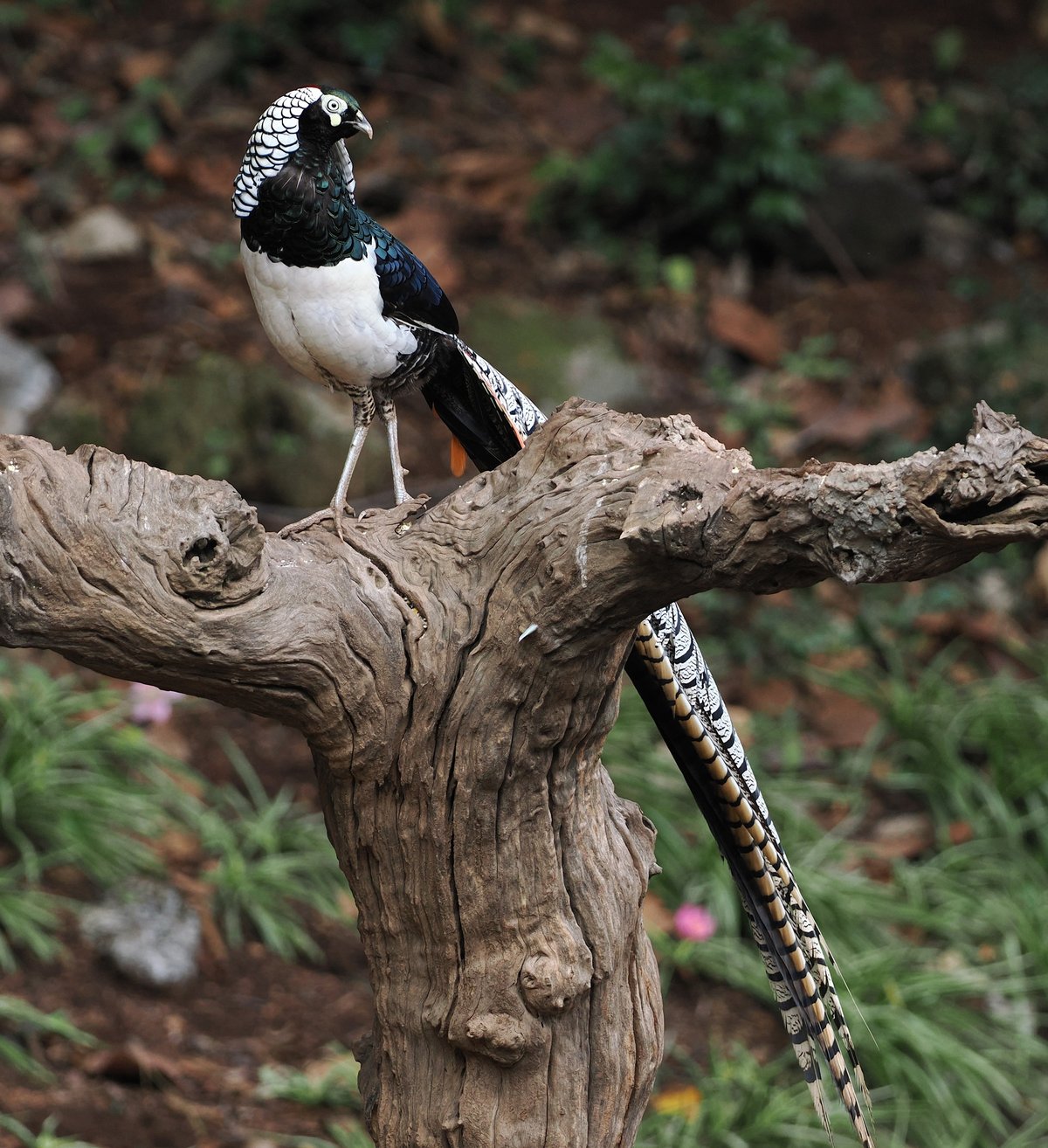
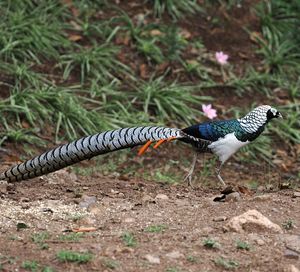
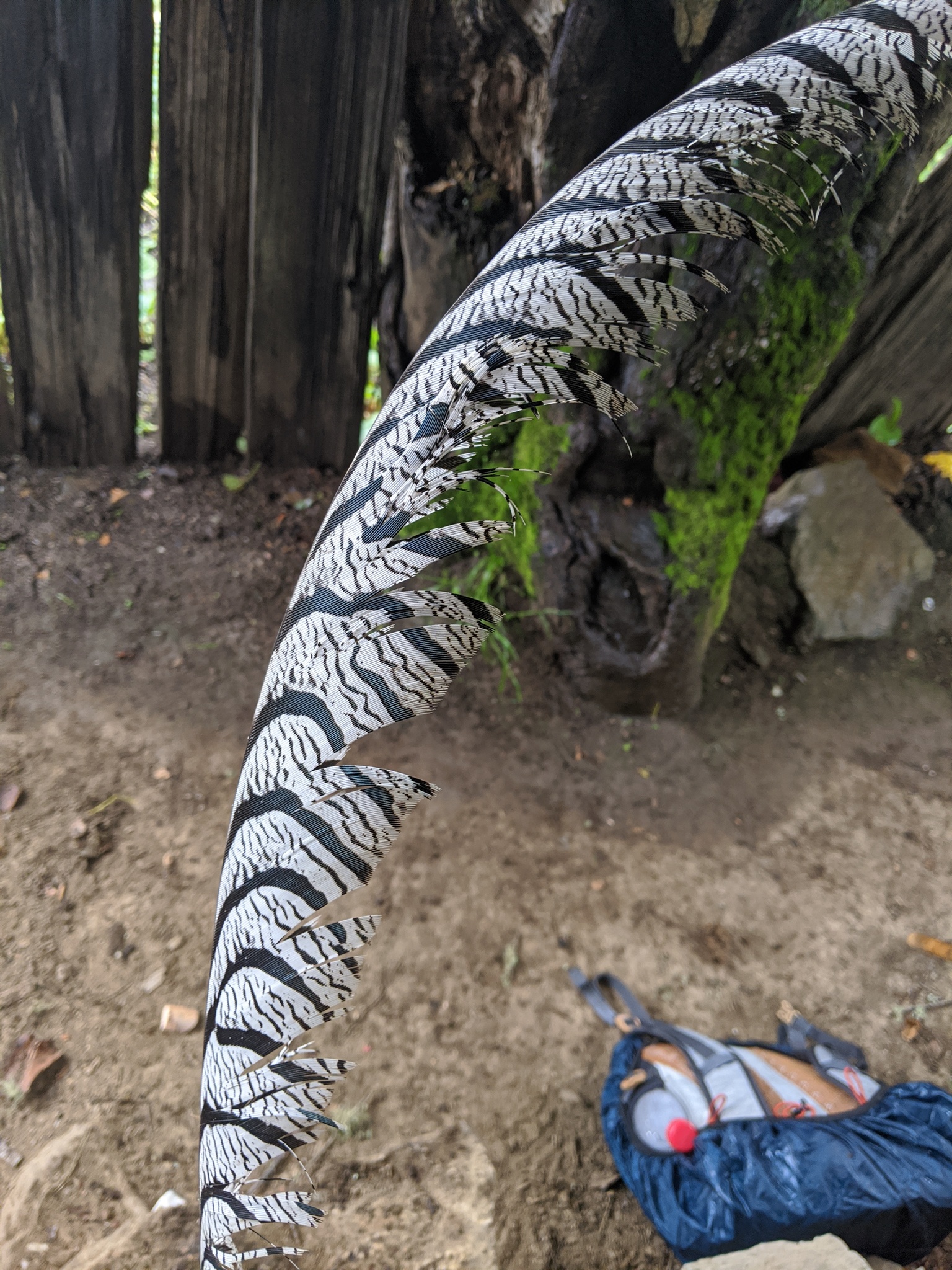
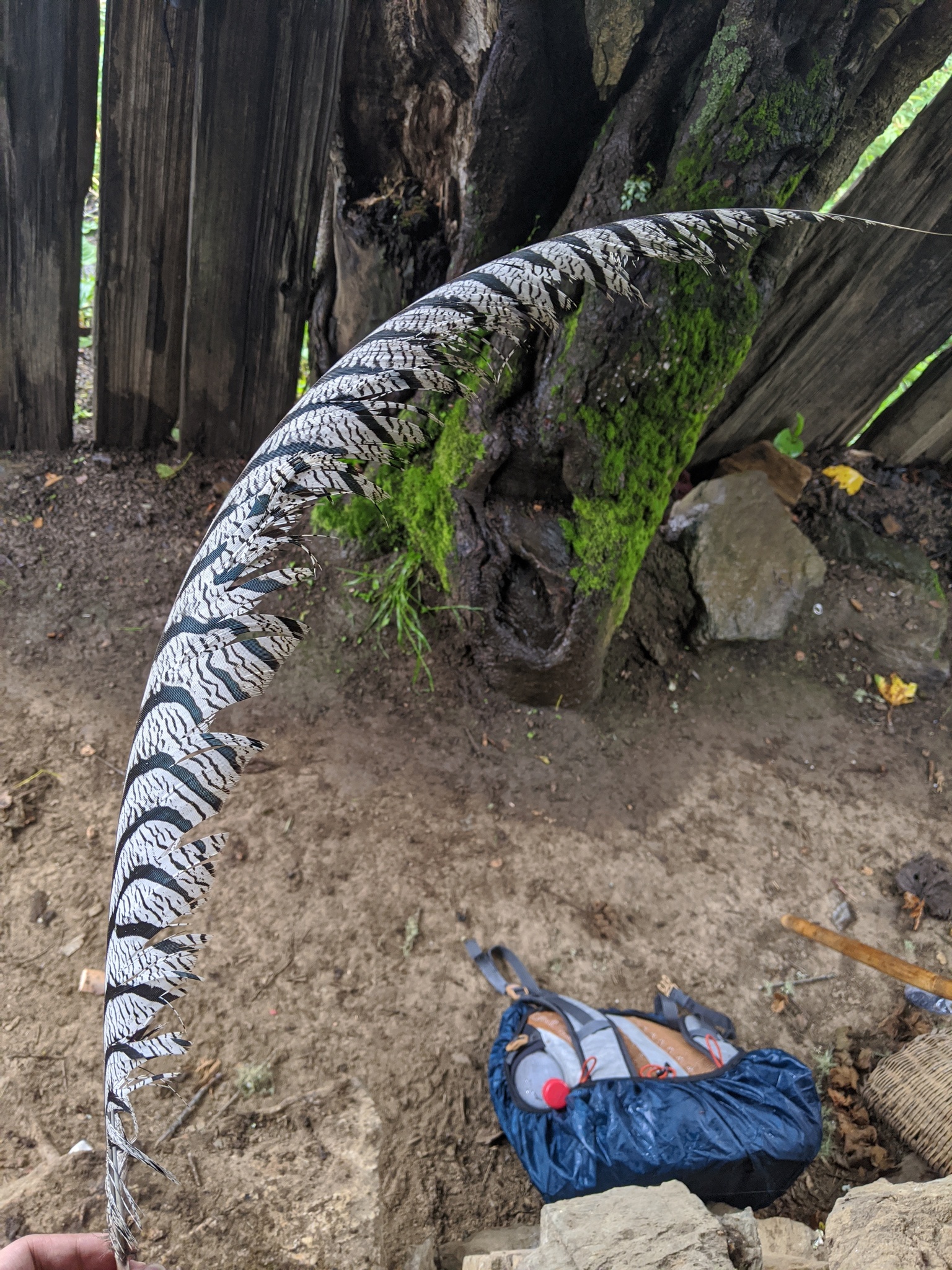
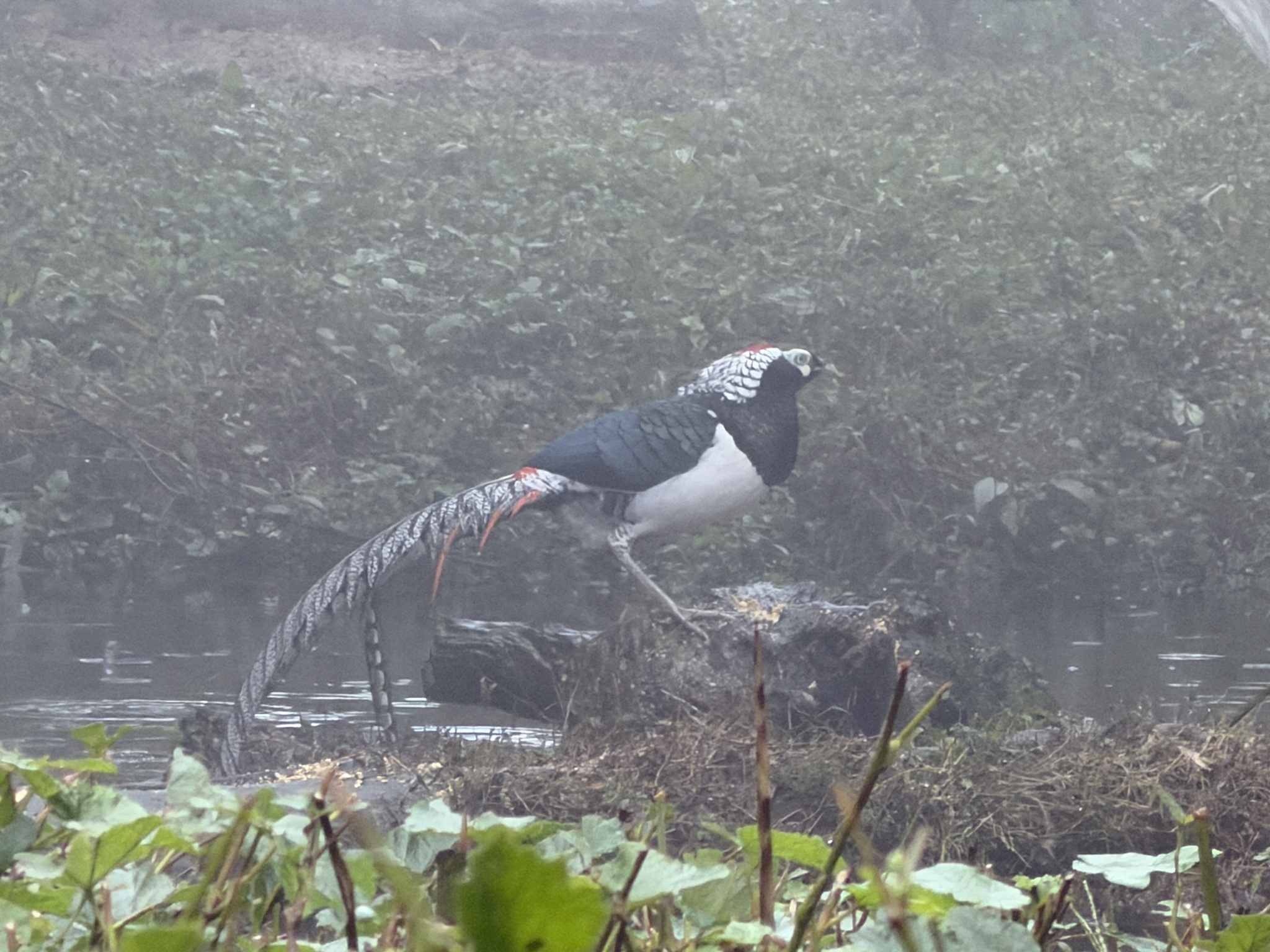
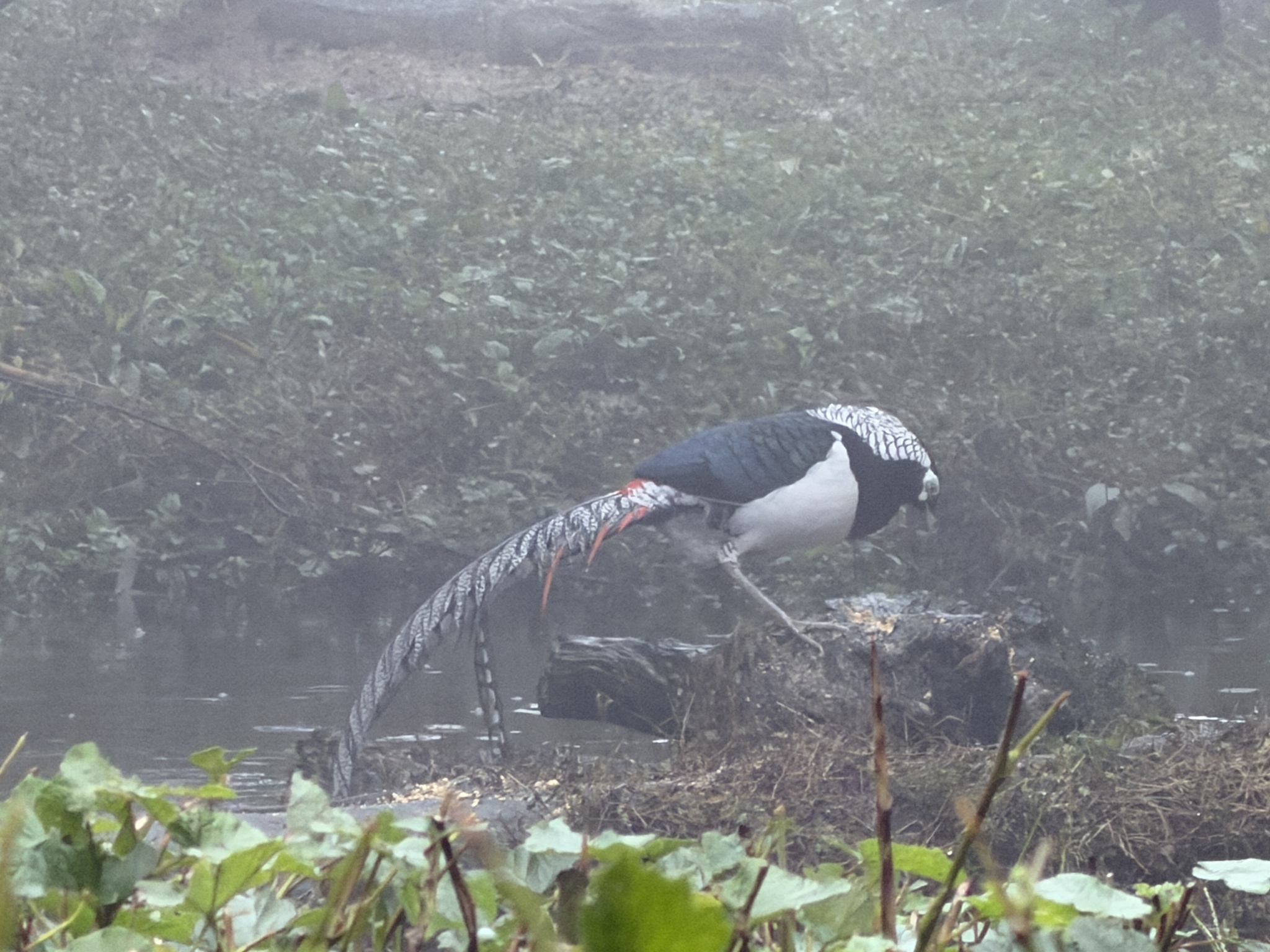
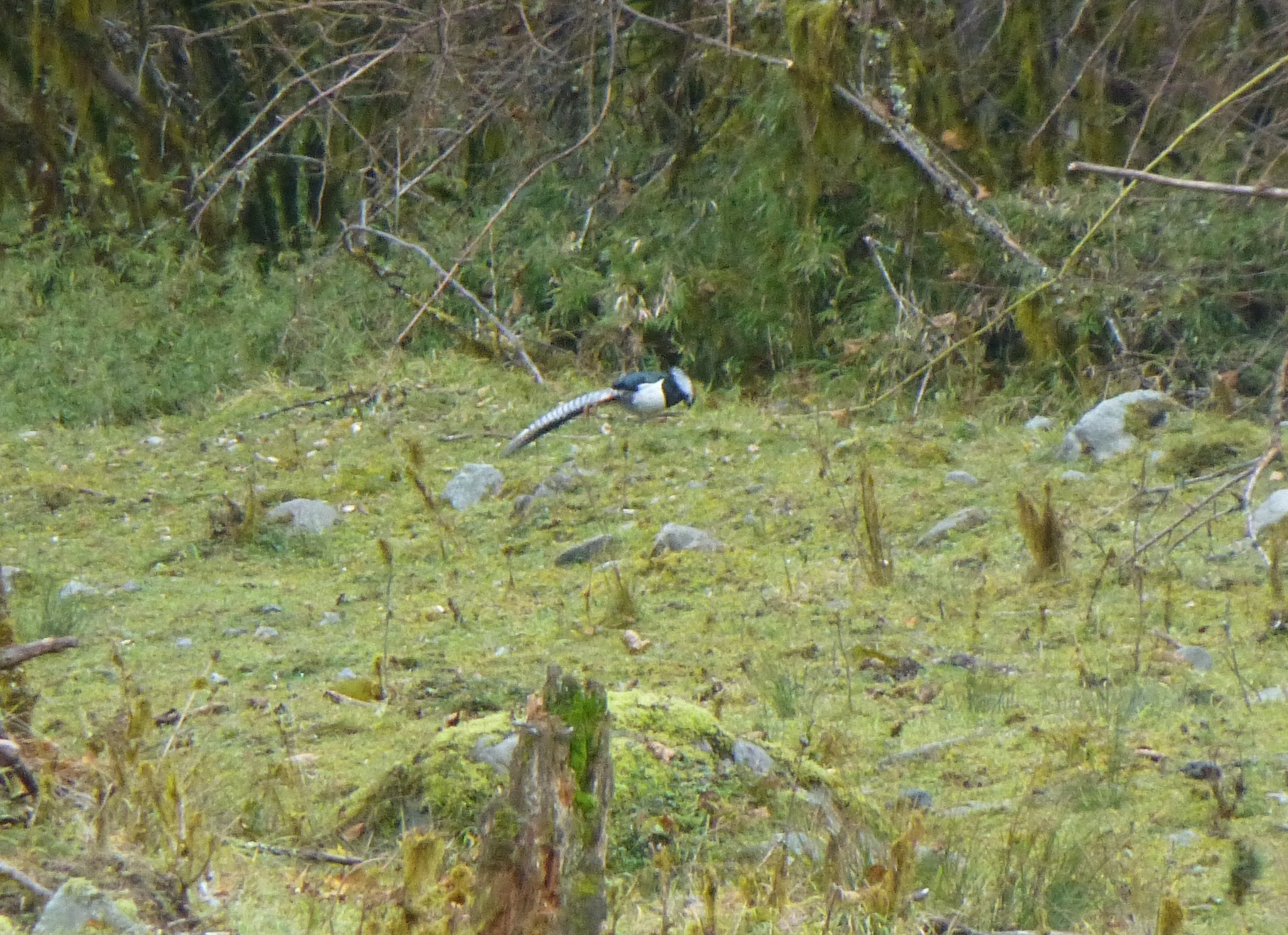
The male is a medium-sized pheasant measuring 100-120 cm in length, of which the elongated tail accounts for approximately 80 cm. The most striking feature is the nuchal cape, black with white markings, which can be raised in display. The head sports a vivid red crest, and the face shows distinctive blue-green bare skin surrounding a yellow eye. The plumage is colorful but complex: the throat is scaled green, the back dark green, wings are blue and brown, and the rump is yellow. The underparts are white, and the long, broad tail is greyish-white with black bars and red streaks at the base. The horn-colored bill and blue-gray legs complete the profile. The female is far more subdued, wearing mottled brown plumage throughout with finer barring than the female common pheasant. She can be distinguished from female golden pheasants by her darker head and cleaner underparts.
Identification
This species closely resembles the golden pheasant but averages slightly larger in size. The most reliable distinguishing feature is the eye coloration—the yellow eye surrounded by blue-green bare skin is diagnostic. Males display a distinctive black-and-white cape pattern that golden pheasants lack. Females are more challenging to separate from female golden pheasants but typically show a darker head and cleaner, less heavily marked underparts. The combination of habitat preference—dense forest understorey—and the male's unique color pattern makes identification relatively straightforward when views are obtained, though the species' secretive nature means sightings are often brief and incomplete.
Distribution & Habitat
The natural range encompasses southwestern China and far northern Myanmar, where the species inhabits dense forest environments with thick understorey cover. Introduced populations became established in England, with West Bedfordshire serving as the main stronghold. These British populations interbred extensively with golden pheasants and, to a lesser degree, common pheasants. The species has also been reported elsewhere following introductions, though no other established feral populations are documented. The English populations declined due to predation pressure from returning Eurasian goshawks, habitat degradation from Reeves's muntjac browsing, and loss of woodland through commercial softwood planting and recreational pressure.
Behavior & Ecology
These ground-dwelling birds forage on grains, leaves, and invertebrates while favoring dense cover. They roost in trees at night, though they prefer running to flying when disturbed. When startled, they can erupt upward at considerable speed, producing a distinctive wing sound. The breeding season sees the male emit a metallic call to attract mates. The species practices a polygynous mating system typical of pheasants, though detailed wild behavior remains poorly documented due to the bird's secretive nature in its dense forest habitat.
Conservation
The species is currently evaluated as Least Concern on the IUCN Red List. In its native range, populations appear stable, though localized threats from habitat degradation exist. In England, the species declined to local extinction by 2015 due to multiple factors: predation by returning Eurasian goshawks, understorey destruction by introduced Reeves's muntjac, habitat loss from hardwood forest felling and replacement with commercial softwoods, increased human recreational use of woodlands, and fragmentation of remaining populations. The extensive genetic introgression into golden pheasant populations represents a conservation concern specific to introduced areas.
Culture
The species bears the name of Sarah Amherst, who was responsible for sending the first specimen to London in 1828. Lady Amherst introduced the ornamental pheasant on her estates near Woburn Abbey, where the birds were maintained both for ornamental purposes and as game species. The specific epithet amherstiae and the English common name commemorate her role in the species' introduction to Western science and aviculture. It is also sometimes called the Chinese copper pheasant.
Source: Wikipedia · CC BY-SA 3.0
Taxonomy
- Order
- Galliformes
- Family
- Phasianidae
- Genus
- Chrysolophus
- eBird Code
- laaphe1
Distribution
mountains of southeastern Tibet and southwestern China to northern Myanmar
Data Sources
Species description from Wikipedia, licensed under CC BY-SA 3.0.
Bird images and sounds sourced from GBIF, contributed by citizen scientists worldwide under Creative Commons licenses.
Taxonomy data from AviList 2025.