

Charadriiformes / Laridae / Chroicocephalus
Black-headed Gull
Chroicocephalus ridibundus · 红嘴鸥
Introduction
A small gull species breeding across much of the Palearctic in Europe and Asia, with local populations in coastal eastern Canada. Most of the population is migratory, wintering further south, though many remain in milder areas of northwestern Europe. It breeds in colonies in reed beds, marshes, or on islands, nesting on the ground. The global population is estimated at 2–3 million pairs.
Description
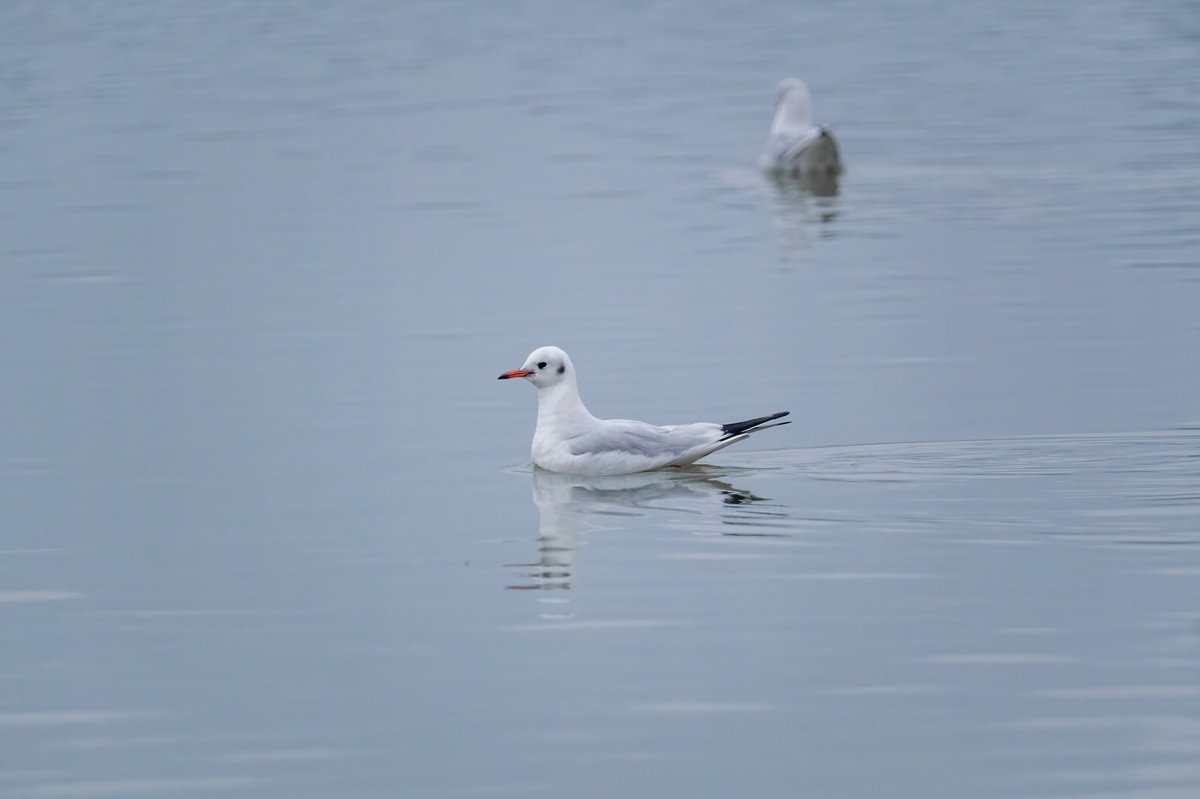
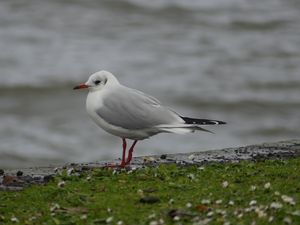
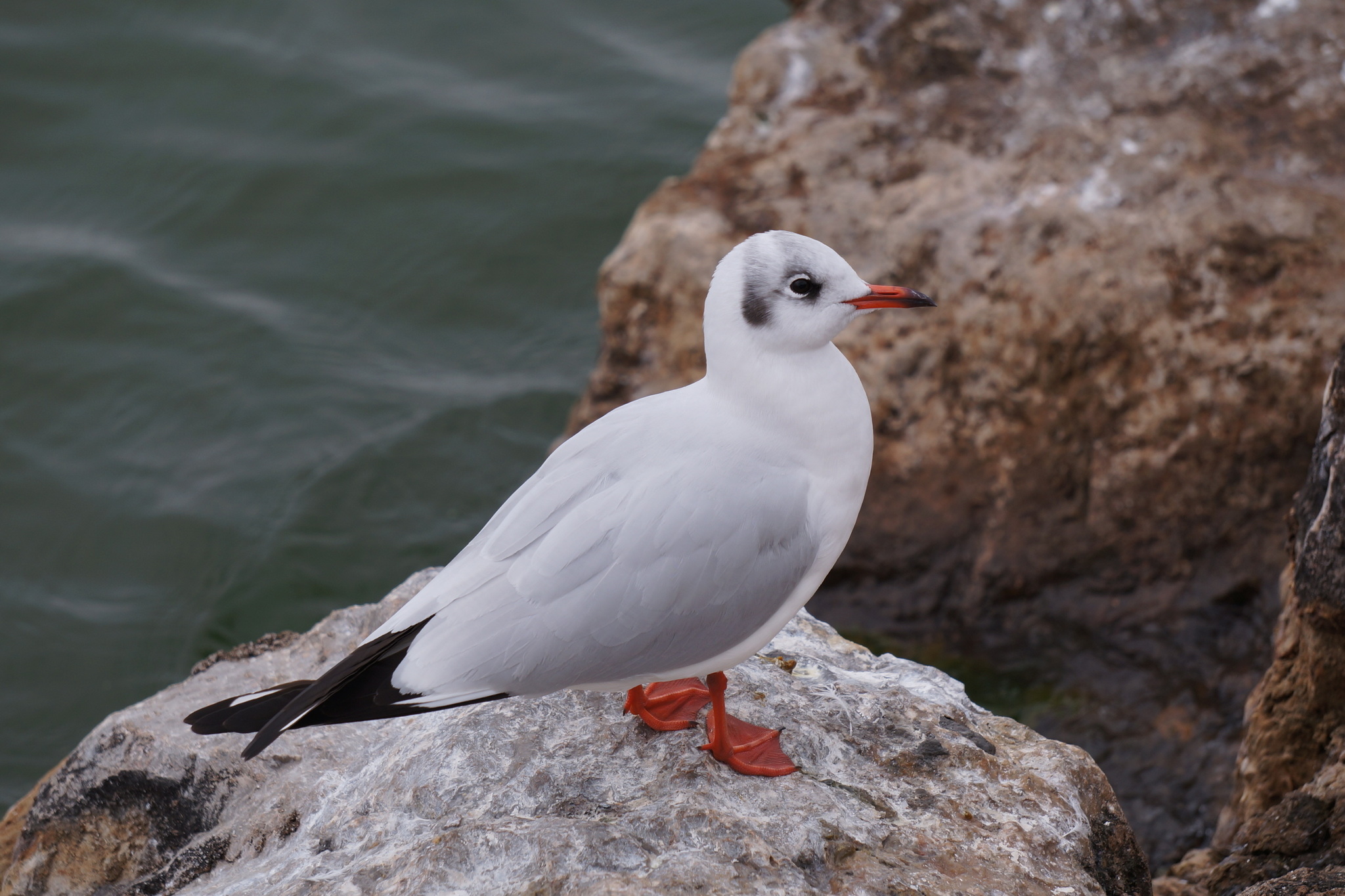
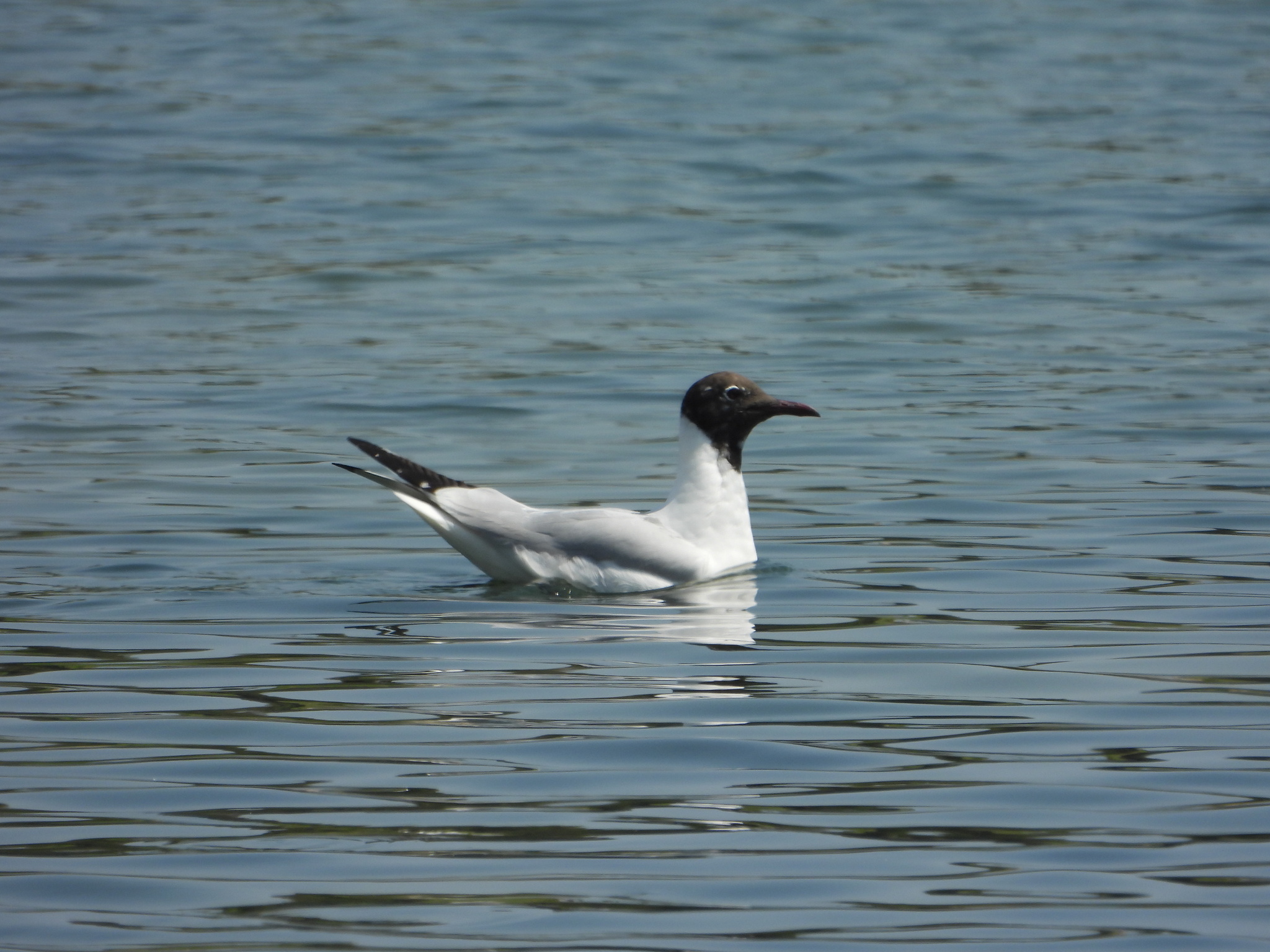
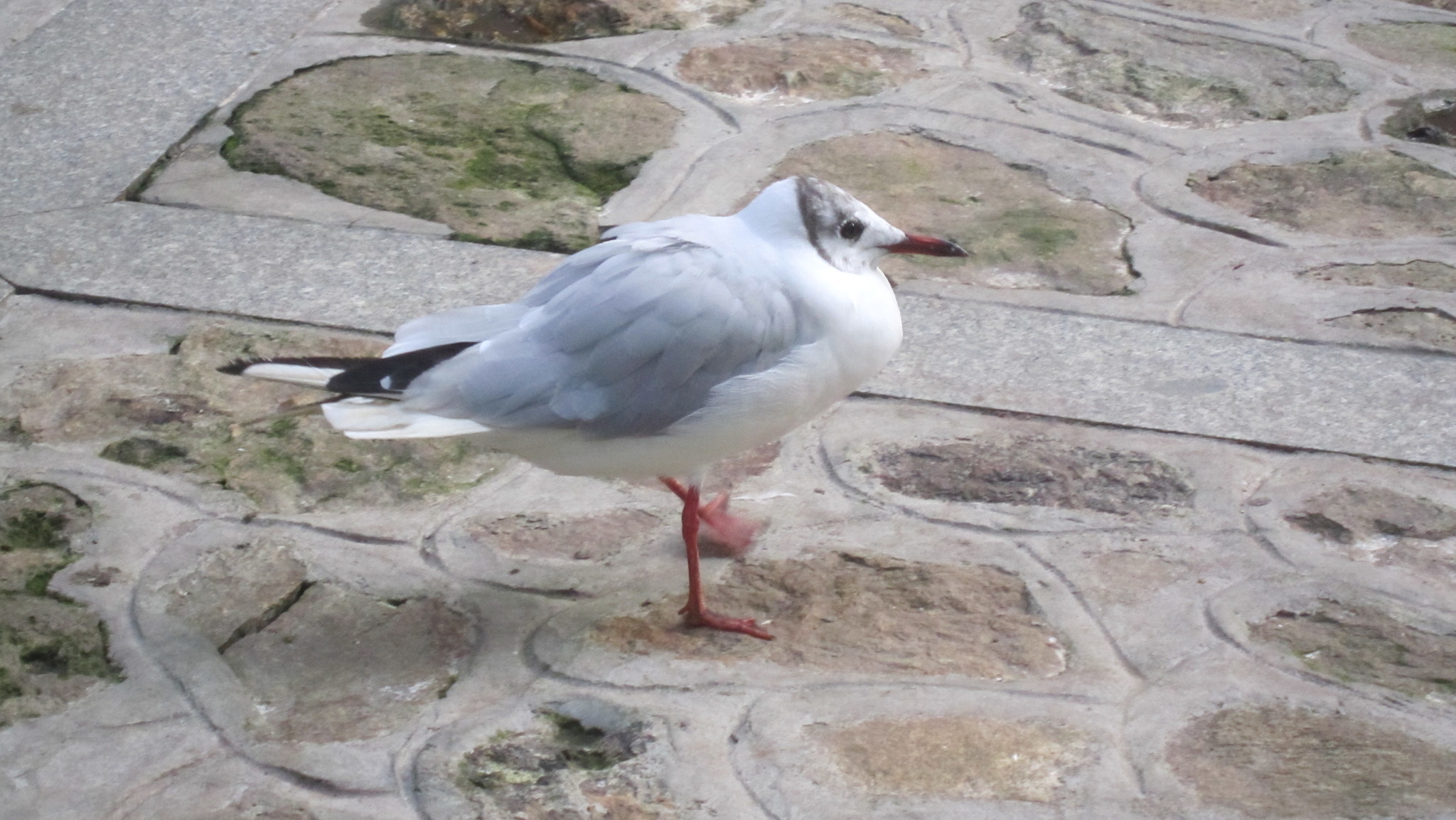
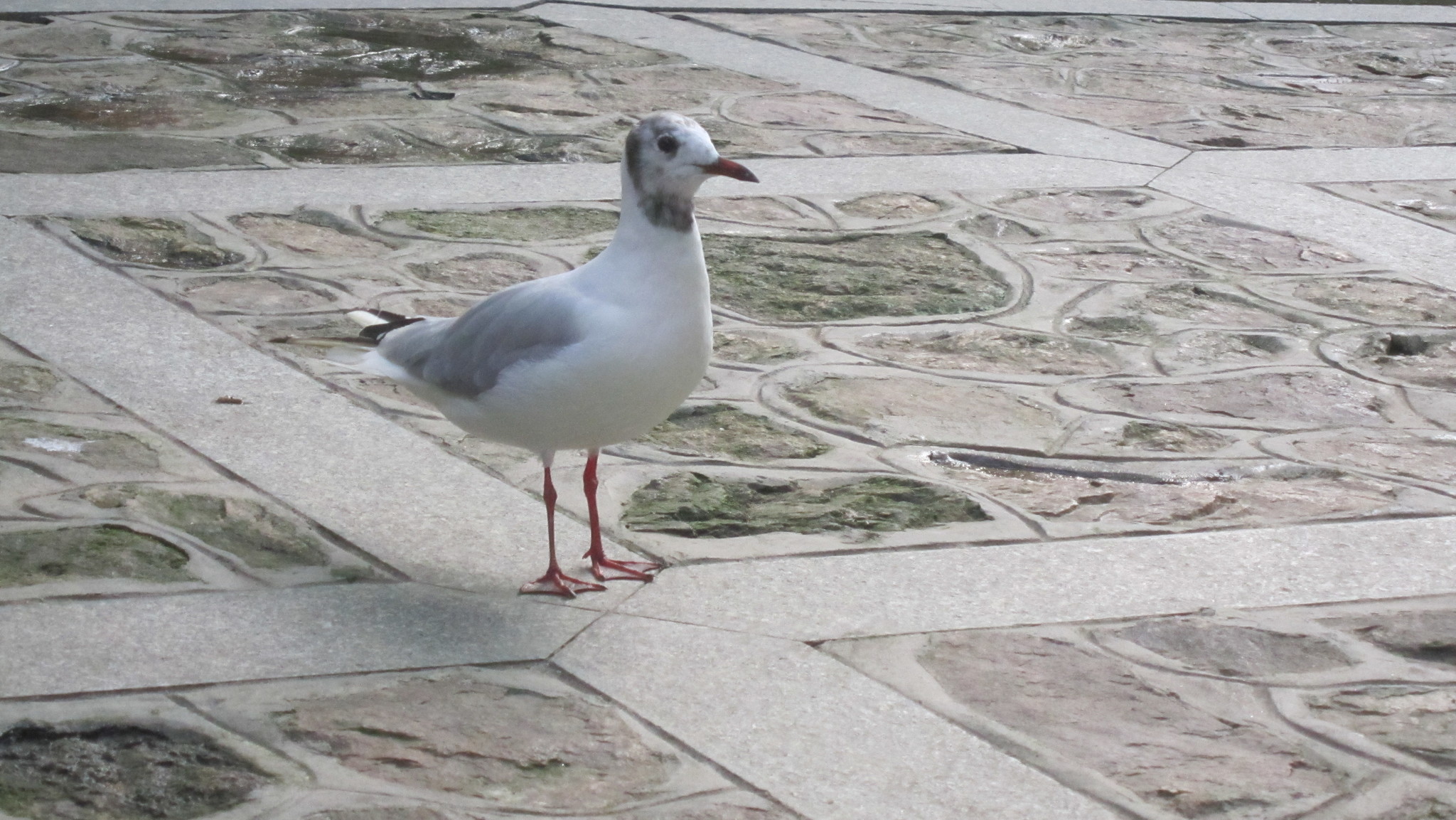
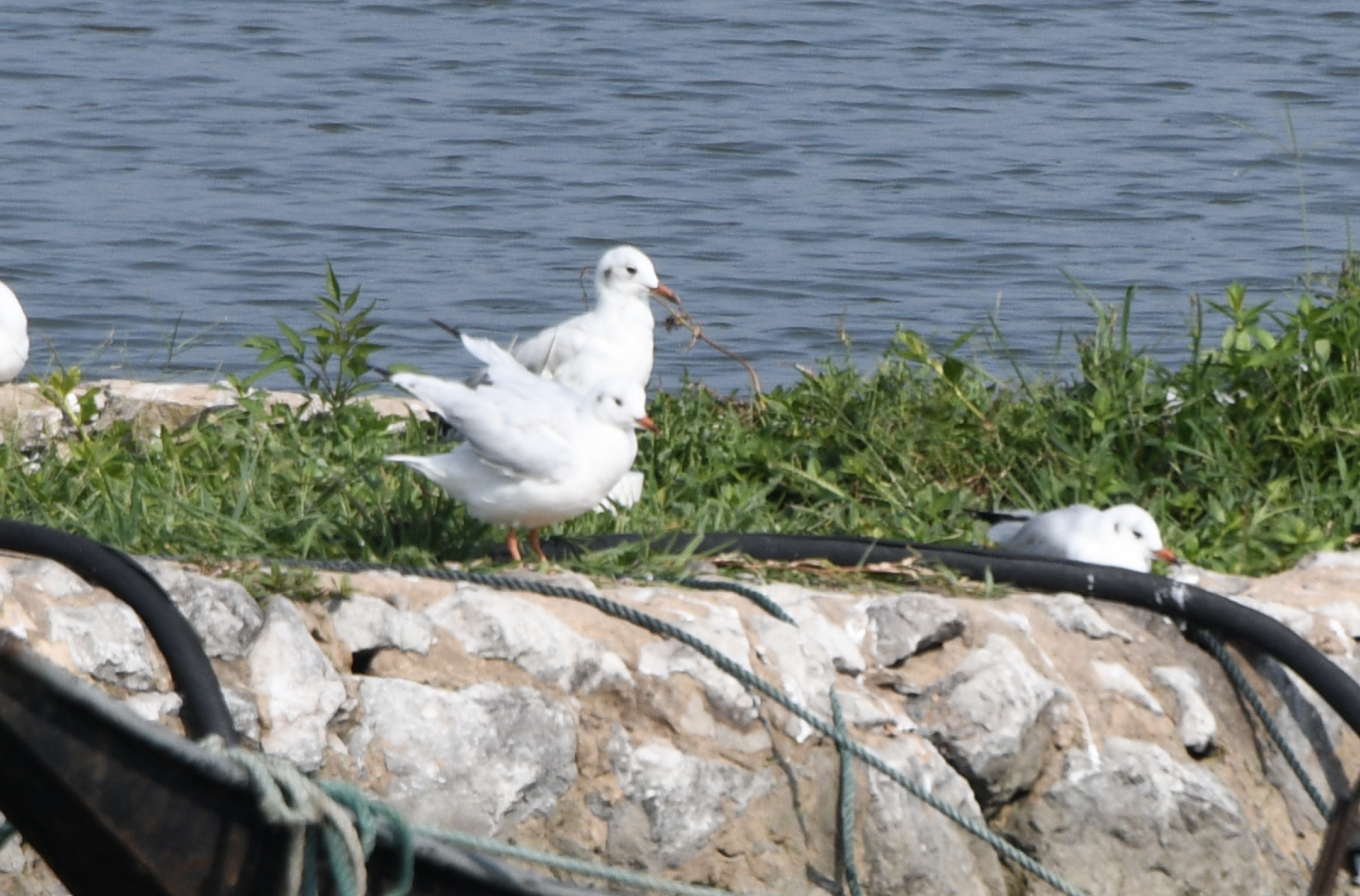
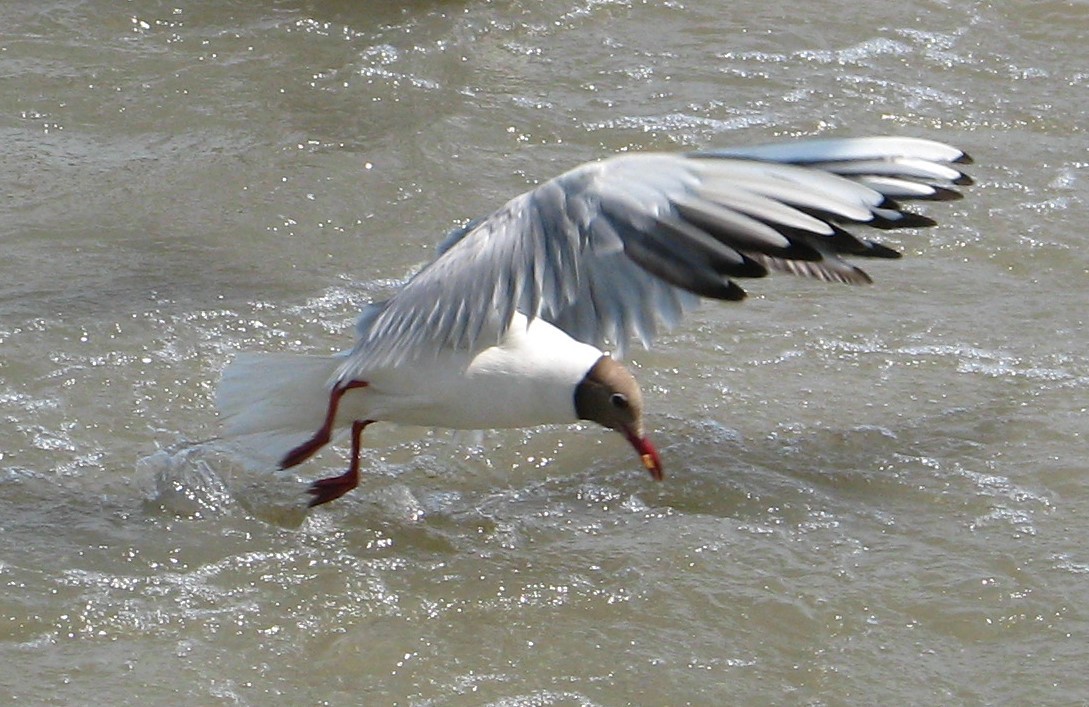
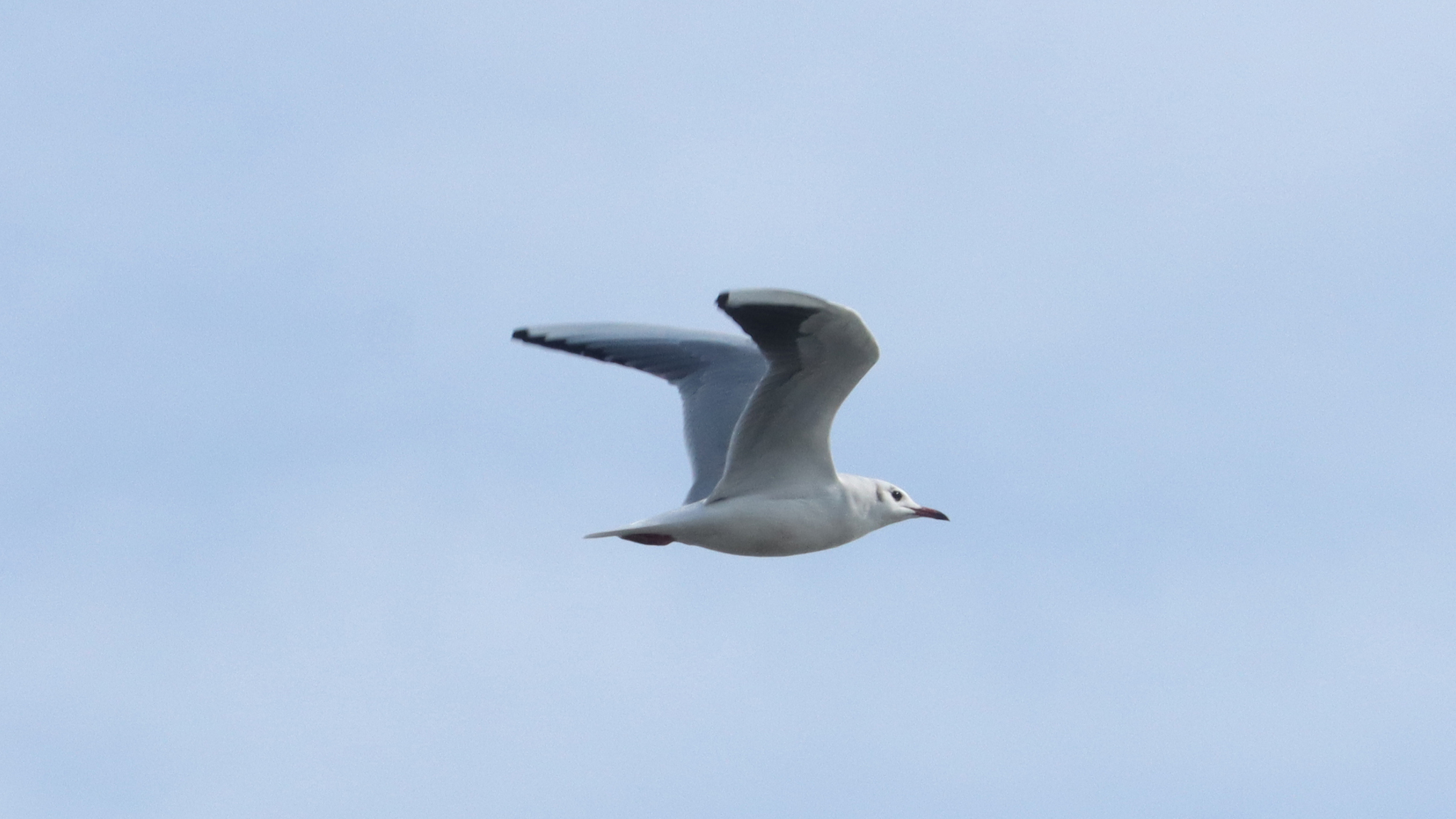
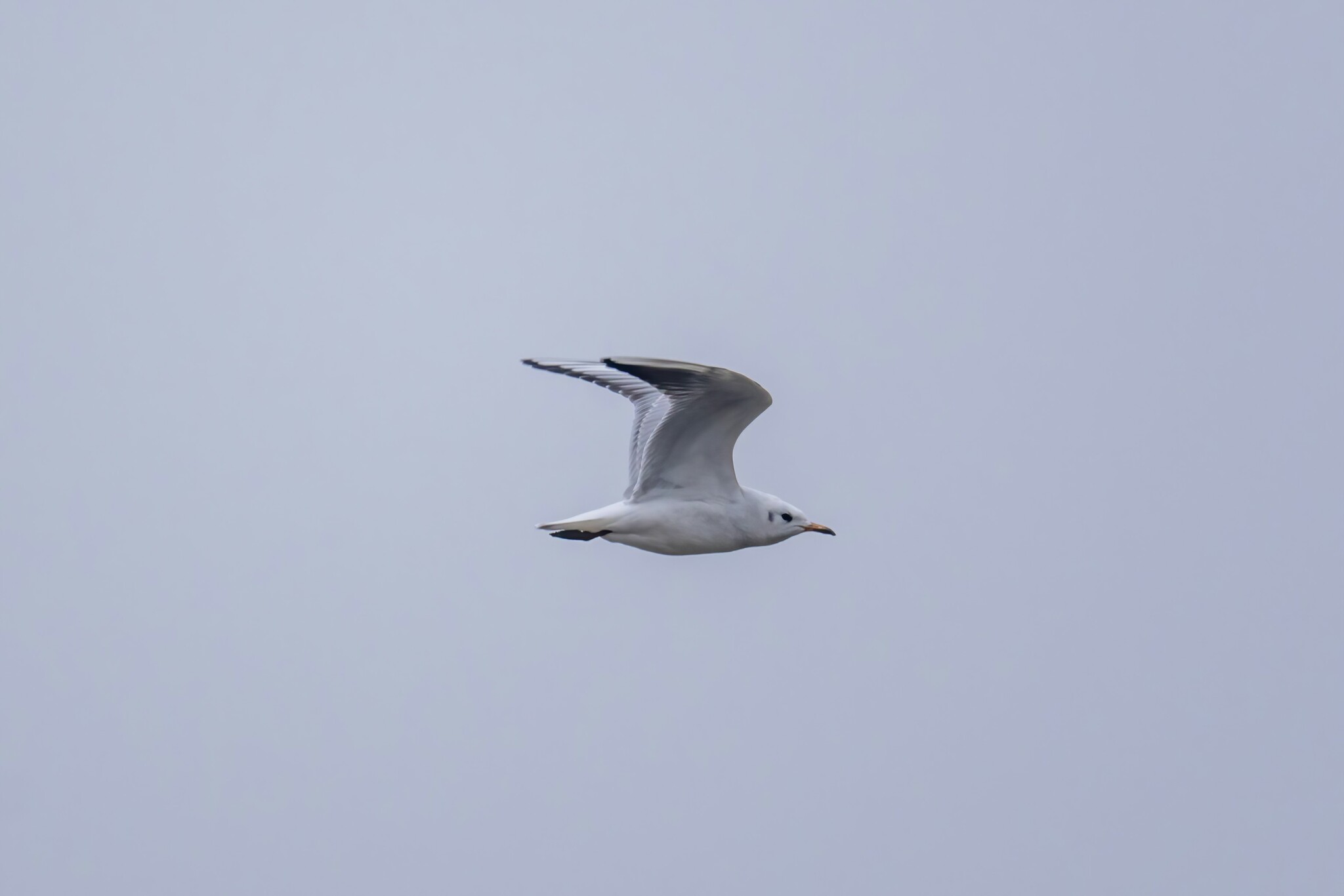
Length 34–39 cm, wingspan 100–110 cm, weight 166–400 g; males average heavier than females. Summer adults have a chocolate-brown head, white neck, underparts and tail, pale grey wings and back, black primary tips, and red bill and legs. Winter plumage lacks the hood, showing two dark spots behind the eye. Juveniles have mottled brown spots and a black tail band. First-winter birds retain a brown carpal bar and blackish secondaries. No plumage difference between sexes.
Identification
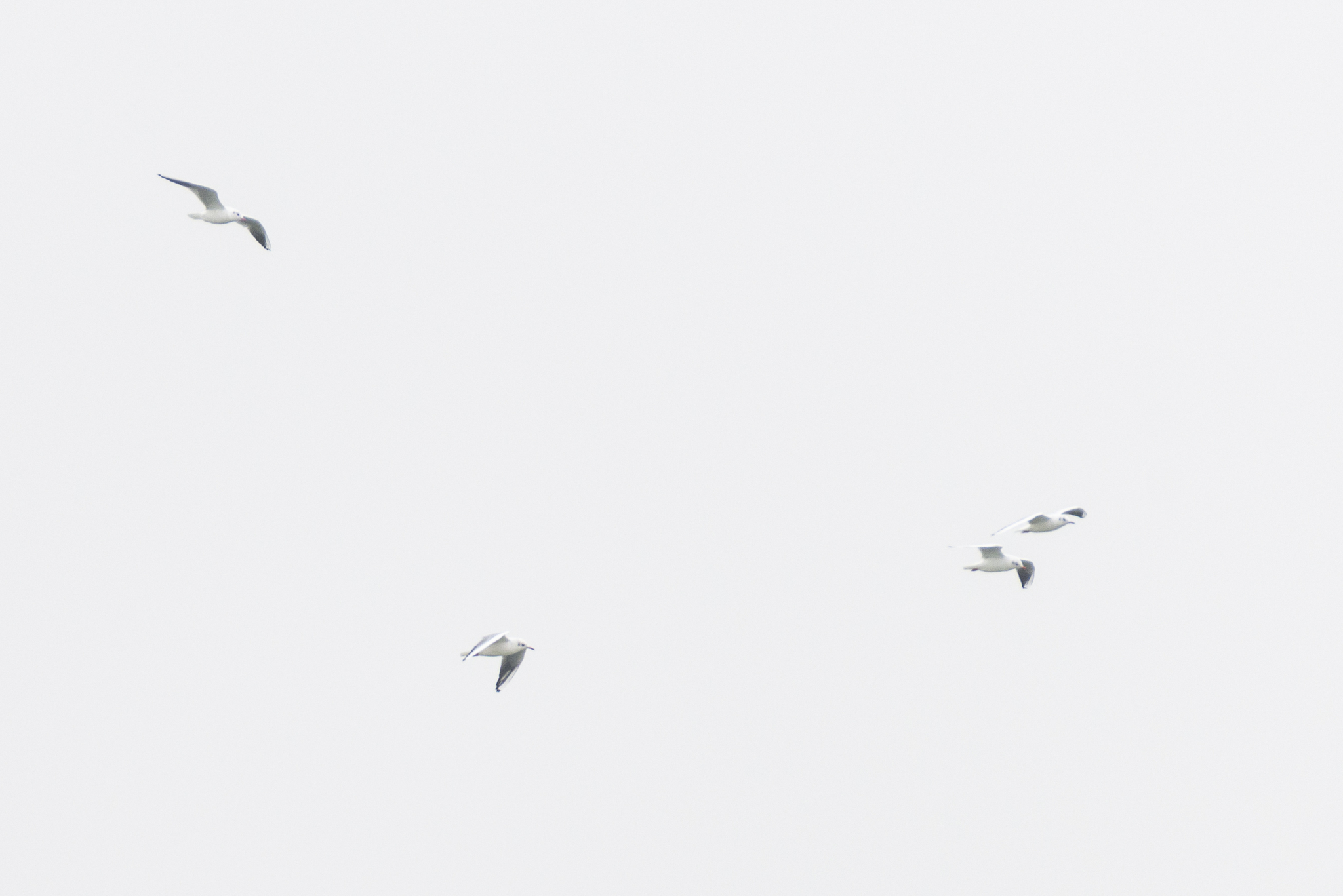
In flight, distinguished by a white leading edge on the outer wing combined with a dark underside of the inner primaries, unlike the white underside in Bonaparte's gull. Summer adults show a chocolate-brown head (appearing black from a distance) and red bill and legs. Winter adults lack the hood, retaining only two dark ear spots. Juveniles display a mottled brown pattern and black tail band.
Distribution & Habitat
Breeds across the Palearctic from Iceland and Ireland east to Japan and eastern China. Migrates south and west to northern Africa and southern Asia; some reach the Equator. Large winter influxes occur in Great Britain from Scandinavia and Russia. Small numbers winter in northeast North America as far south as Virginia. Range expanding westwards, with colonization of Iceland (1911), Greenland (1969), and Newfoundland (1977). Vagrants recorded in Australia, Caribbean, Mexico, and South Africa.
Behavior & Ecology
Bold, opportunistic feeder consuming insects, fish, seeds, worms, scraps, and carrion. Highly gregarious in winter. Breeds in colonies ranging from single pairs to over 10,000 pairs. Displays include head-bobbing walking for foraging and synchronized vigilance. Parents remove eggshells after hatching to reduce predation risk. Chicks synchronize begging signals to increase feeding efficiency. Conspecific brood parasitism occurs, particularly with early-laid eggs. Extra-pair paternity rates vary by population. Maximum recorded wild age is 32.9 years.
Conservation
Global population estimated at 2–3 million pairs. Heavily impacted by the 2023 avian influenza outbreak, with over 4,000 deaths reported in Great Britain by early May, and high mortality in France, the Netherlands, Italy, and Germany.
Culture
Official bird of Tokyo, Japan; the Yurikamome transit line is named after it. Featured as the character Kehaar in Richard Adams' novel Watership Down and its adaptations. Eggs were historically considered a delicacy in the UK and are still collected under strict license between April 1 and May 15.
Source: Wikipedia · CC BY-SA 3.0
Taxonomy
- Order
- Charadriiformes
- Family
- Laridae
- Genus
- Chroicocephalus
Distribution
breeds southern Greenland, Iceland, and western Europe eastward across Russia to Yakutsk region (eastern Russia), southward through Caspian Seato northeastern China, also west-central Newfoundland (southeastern Canada); winters to Africa, southern Asia, and eastern North America
Data Sources
Species description from Wikipedia, licensed under CC BY-SA 3.0.
Bird images and sounds sourced from GBIF, contributed by citizen scientists worldwide under Creative Commons licenses.
Taxonomy data from AviList 2025.