







Charadriiformes / Laridae / Chlidonias
Whiskered Tern
Chlidonias hybrida · 灰翅浮鸥
Introduction
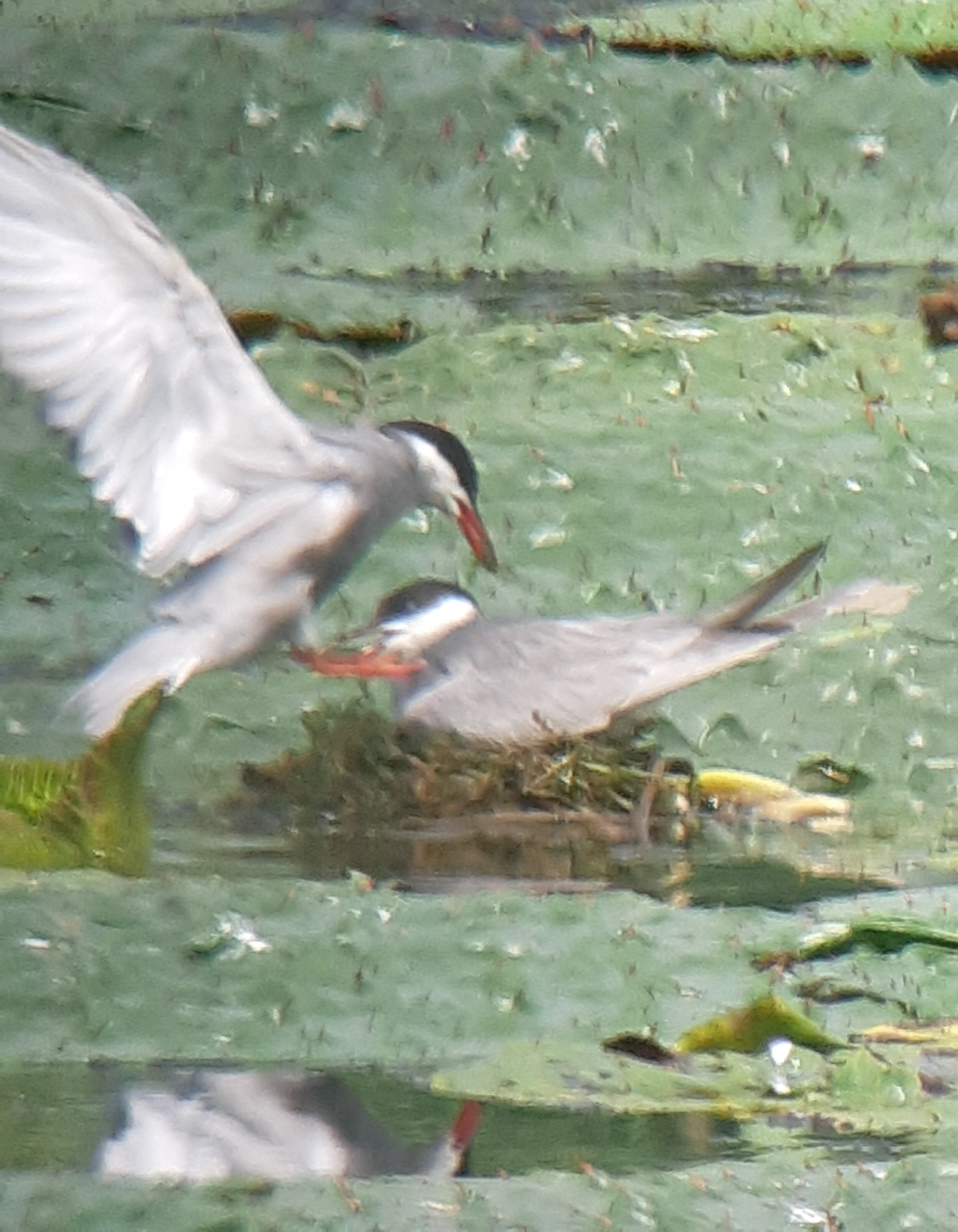
A tern in the family Laridae and the largest marsh tern. It breeds in colonies on inland marshes, sometimes amongst black-headed gulls. Tropical forms are resident, while European and Asian populations migrate south for winter.
Description
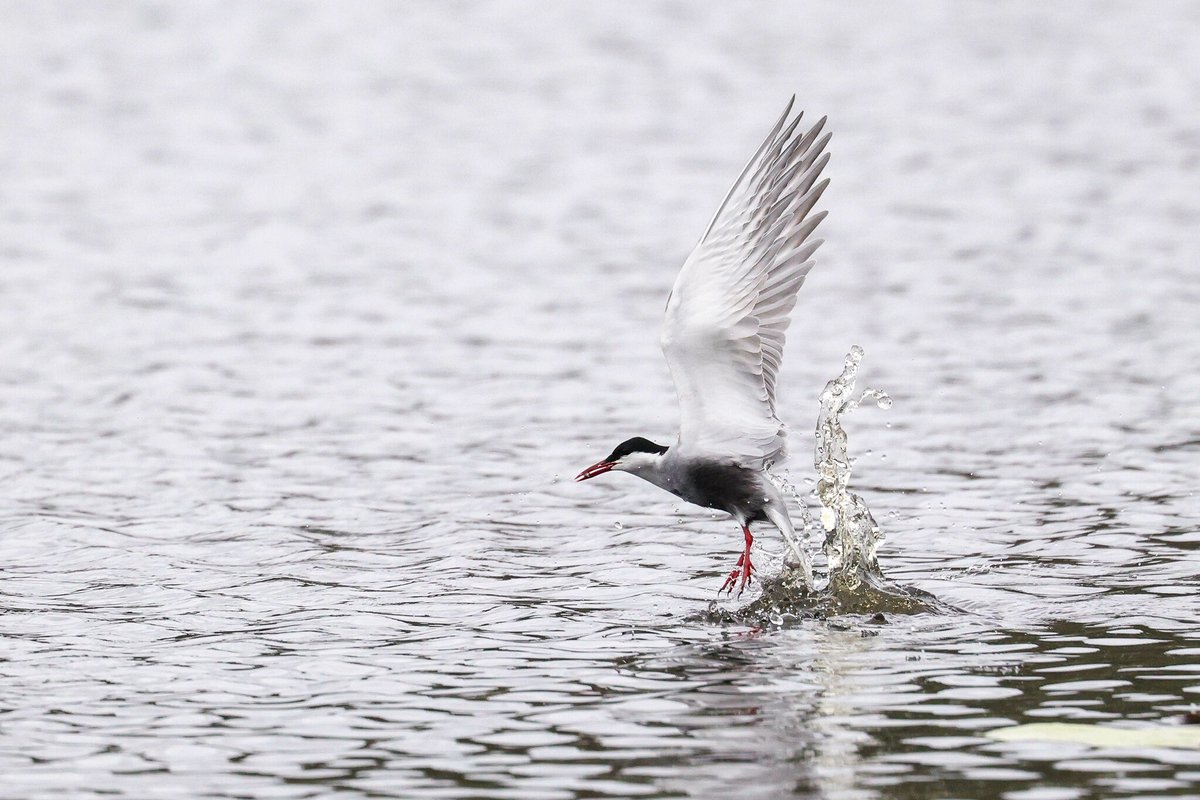
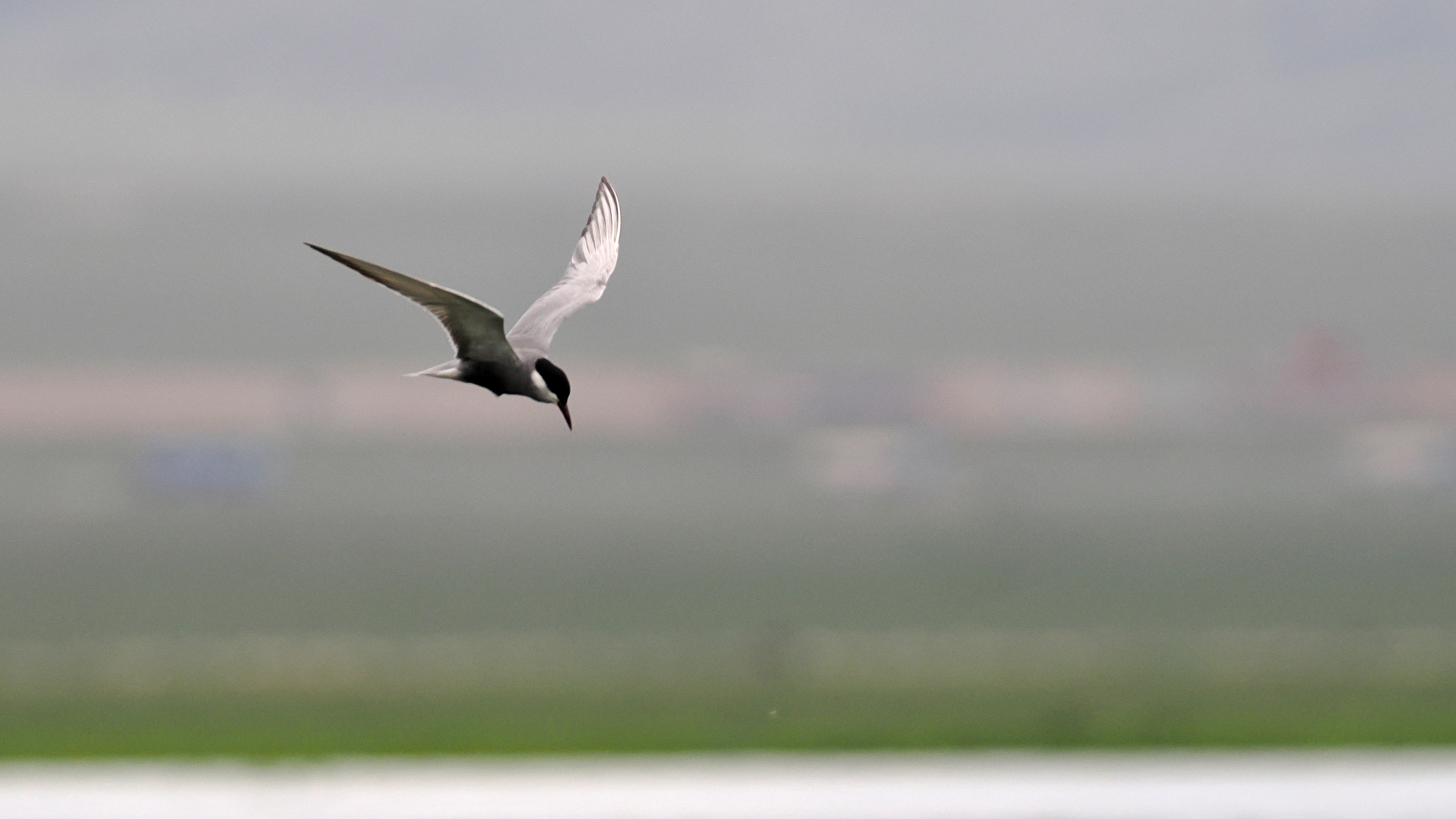
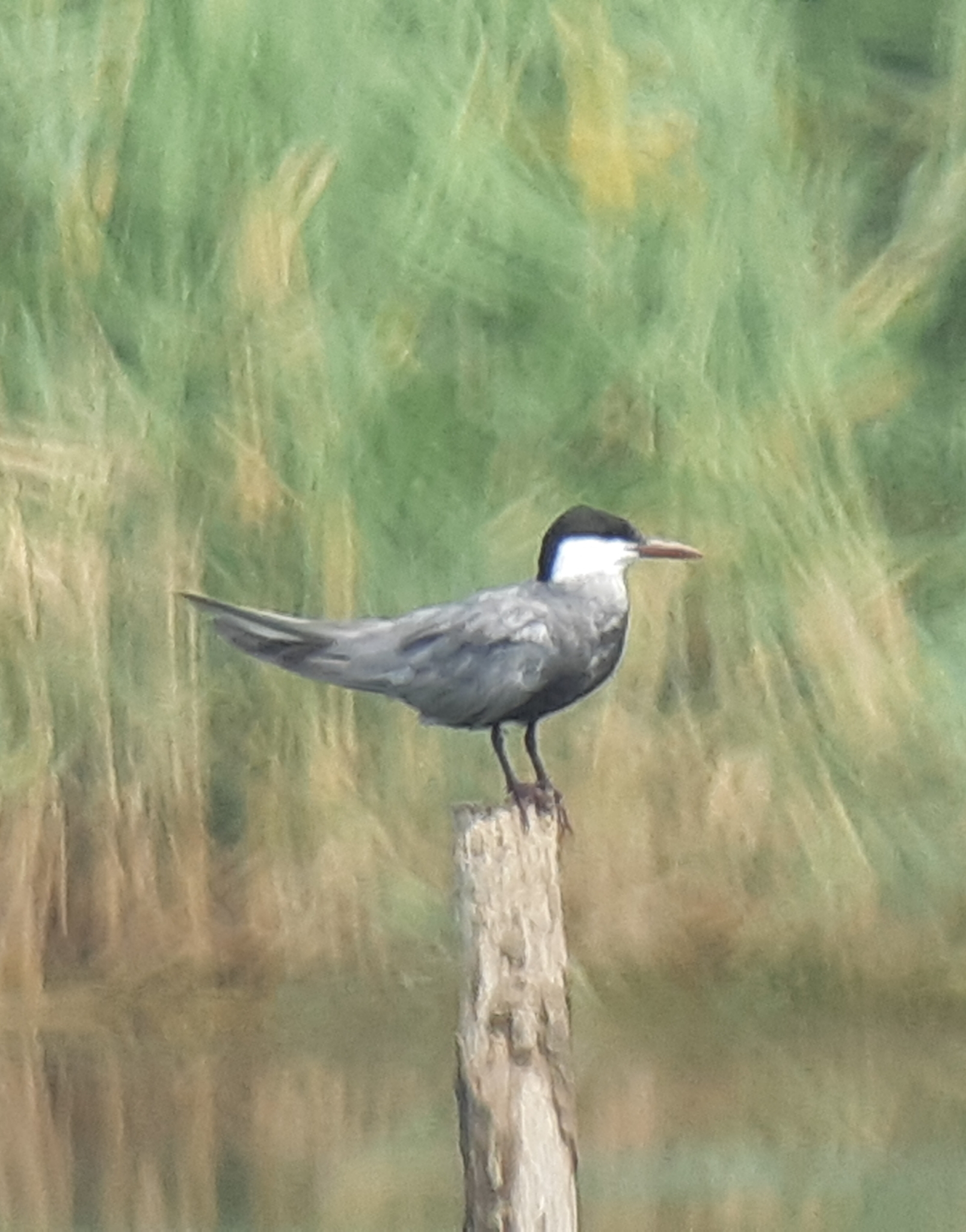
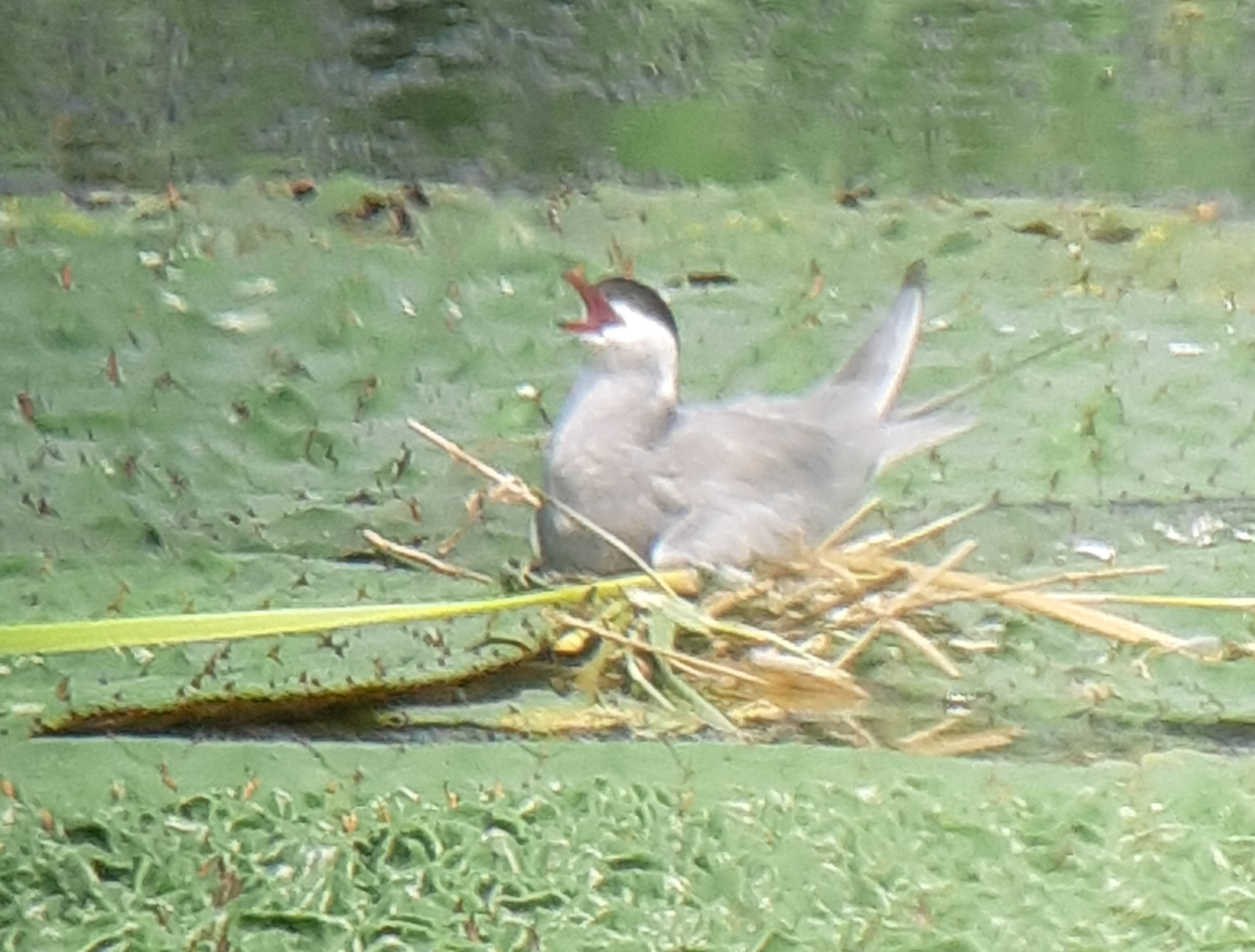
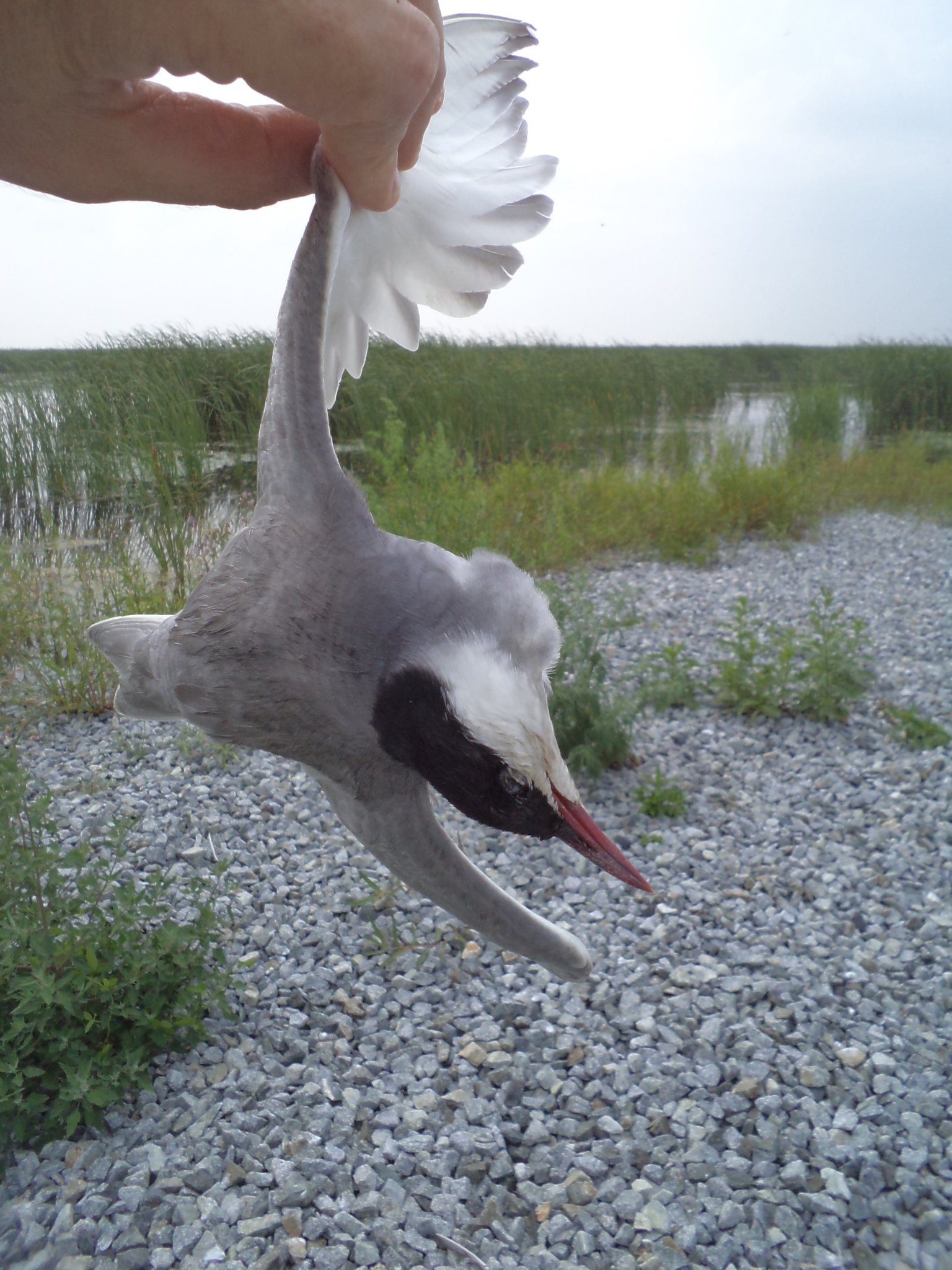
Summer adults have a black cap, white cheeks, red legs and bill, and dark grey plumage above and below. The bill is strong, measuring 29–34 mm in males and 25–27 mm in females, with a pronounced gonys. The tail is short and forked-looking. In winter, the forehead becomes white, body plumage turns paler grey, and the black ear-coverts join the hindcrown to form a C-shaped band mottled with white. Juveniles have a ginger scaly back with dark brown feathers featuring broad buff edgings, and a crown flecked with white. The mantle is silvery-gray in adults.
Identification
Recalls common or Arctic tern in size and flight but is distinguished by a short, forked-looking tail and dark grey breeding plumage. Key marks include white cheeks in summer and a C-shaped black band on the head in winter. The call is a characteristic krekk.
Distribution & Habitat
Breeds on inland marshes across Europe and Asia. Tropical forms are resident. European and Asian birds winter south to Africa and the Indian subcontinent. Recorded at Manakudi Bird Sanctuary, Tamil Nadu, India.
Behavior & Ecology
Breeds in colonies, often associating with black-headed gulls for protection. Diet consists of small fish, amphibians, insects, and crustaceans.
Source: Wikipedia · CC BY-SA 3.0
Taxonomy
- Order
- Charadriiformes
- Family
- Laridae
- Genus
- Chlidonias
Subspecies (3)
-
Chlidonias hybrida delalandii
eastern and southern Africa and Madagascar
Data Sources
Species description from Wikipedia, licensed under CC BY-SA 3.0.
Bird images and sounds sourced from GBIF, contributed by citizen scientists worldwide under Creative Commons licenses.
Taxonomy data from AviList 2025.