









Whiskered Tern
Chlidonias hybrida
灰翅浮鸥
Introduction
The whiskered tern (Chlidonias hybrida) is the largest species within the marsh tern group. It breeds across much of Europe and Asia, wintering in Africa, Australia, and southern Asia. Its habitat includes inland marshes, lakes, and coastal wetlands. Adults measure 24-26 cm in length with a wingspan of 70-80 cm. A key distinguishing feature is its intermediate morphology between typical white Sterna terns and darker marsh terns. The species forages with shallow, fluttering flight over emergent vegetation rather than the diving behavior of typical terns. The call is a harsh 'krekk'. It breeds in freshwater wetlands, constructing floating nests among emergent vegetation.
Description
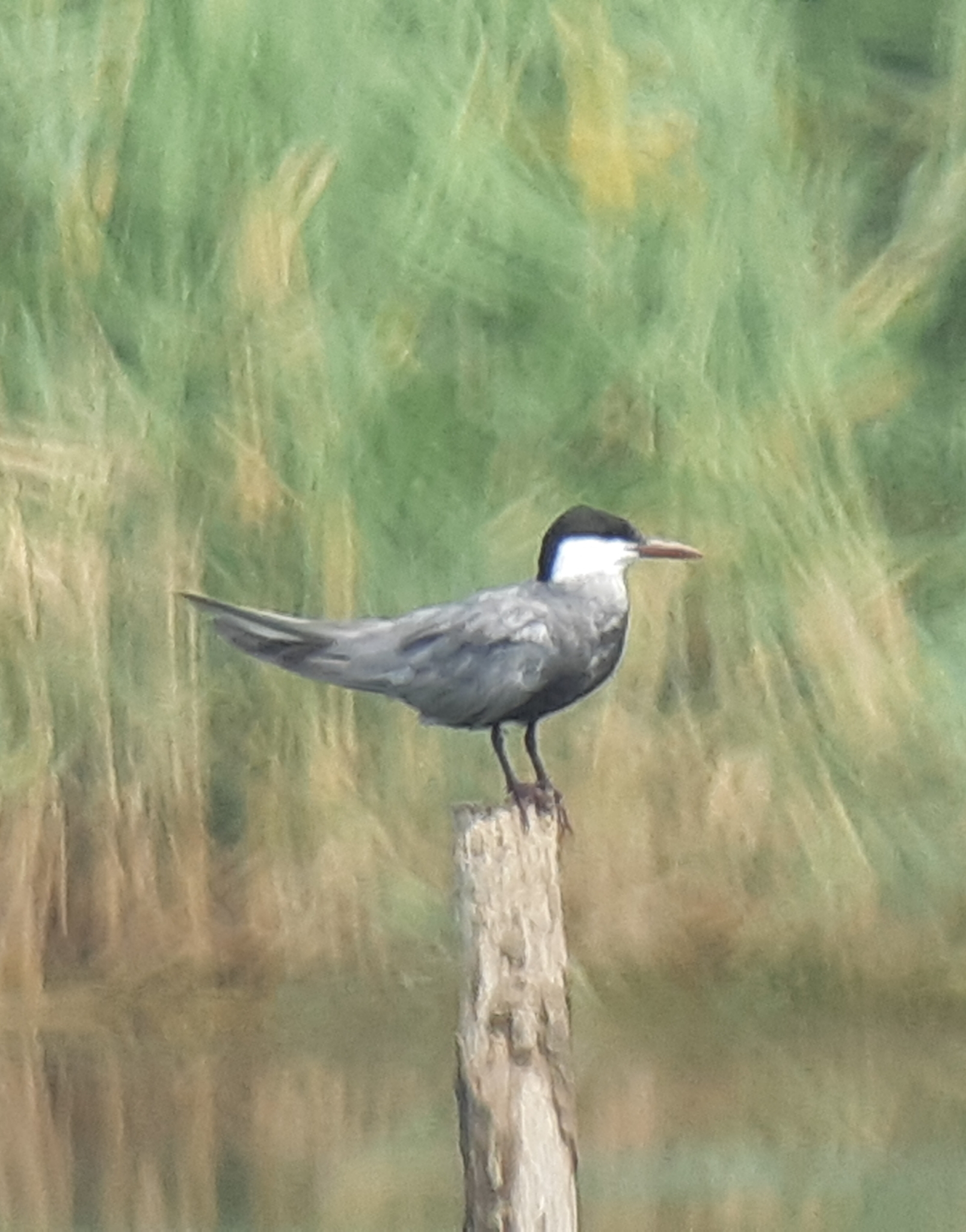
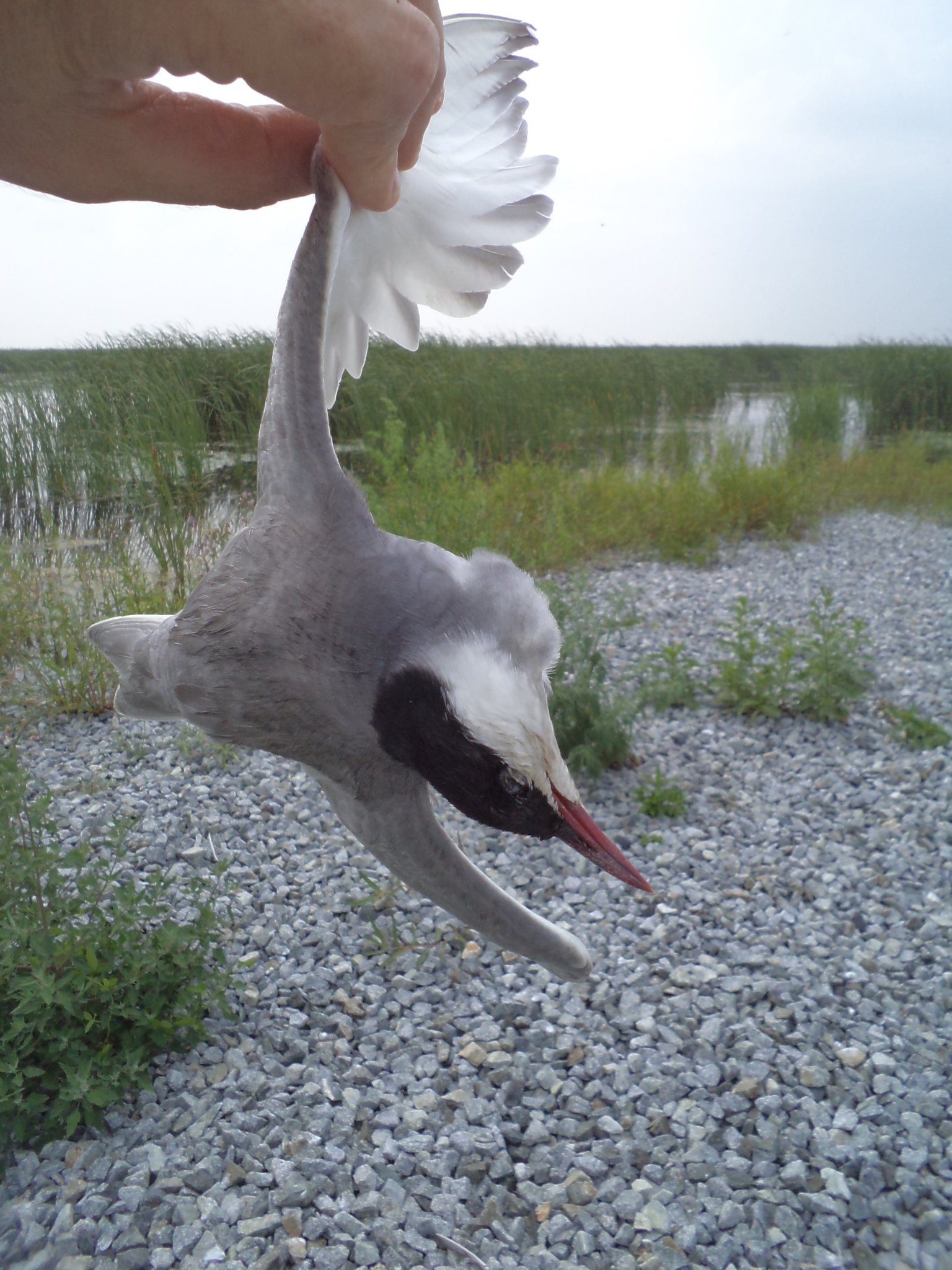
This is the largest marsh tern species. Adults in breeding plumage display dark grey upperparts and underparts with white cheeks, red legs, and a strong bill measuring 29-34mm in males and 25-27mm in females. The crown shows white flecking in juveniles, becoming more uniformly blackish, while winter adults have white-flecked foreheads. The black ear-coverts connect to the hindcrown, creating a distinctive C-shaped band. The rump remains pale grey year-round. juveniles feature dark brown mantle feathers with broad buff edgings and subterminal buff bars, often showing early gray feather replacement on the mantle. The adult mantle appears silvery-gray.
Identification
The whiskered tern can be distinguished from common and Arctic terns by its shorter, forked-looking tail and dark grey breeding plumage rather than the pale upperparts typical of those species. The strong bill and black cap initially suggest common or Arctic tern, but the entirely dark underparts and marsh tern structure are distinctive. In winter plumage, the white forehead and pale grey body separate it from the white-winged black tern. The ginger-scaly back of juveniles is diagnostic among marsh terns. The combination of size, bill structure, and dark grey coloration (rather than black) helps separate it from the black tern.
Distribution & Habitat
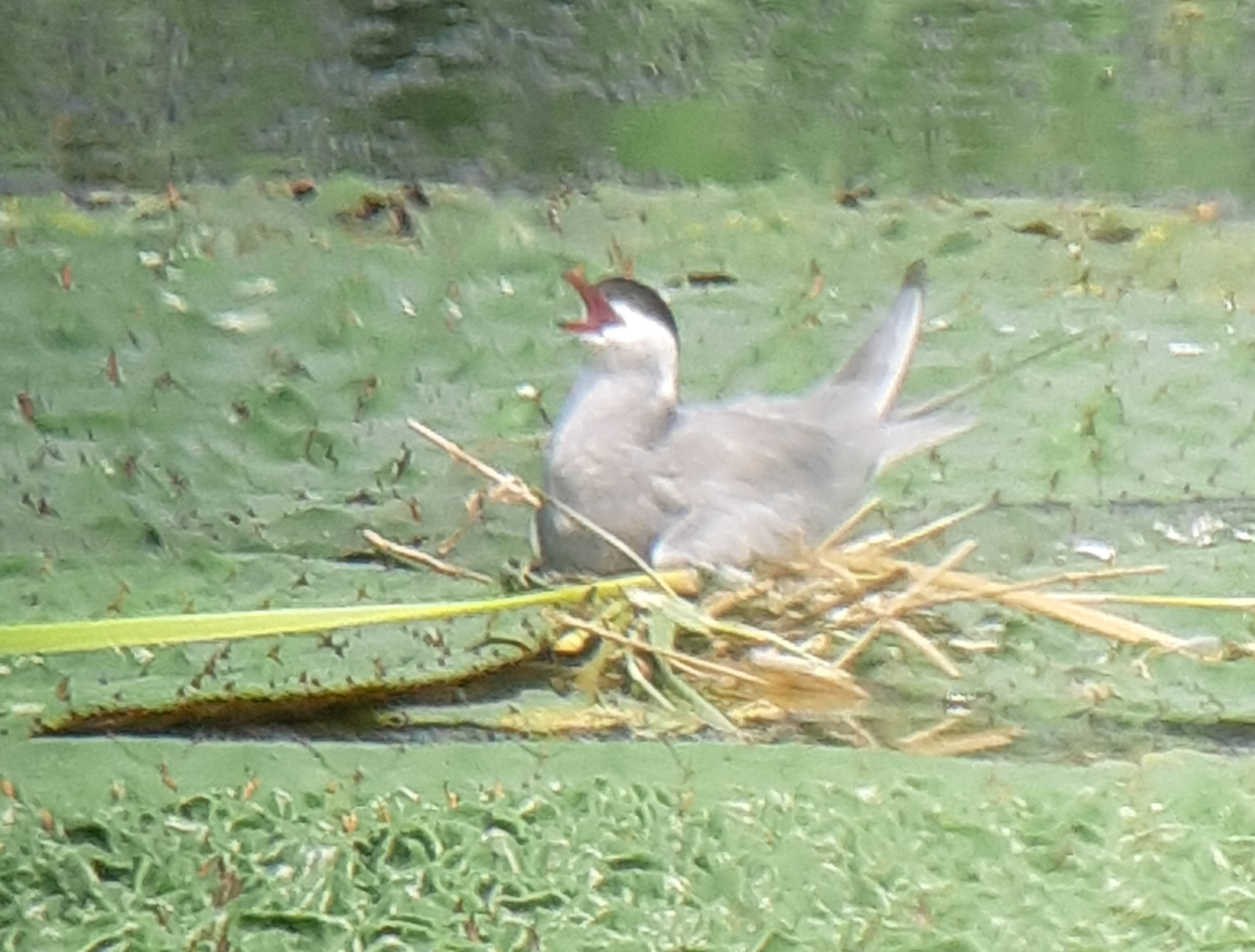
This species breeds across temperate Europe and Asia, occupying inland marsh habitats where it forms colonies. Tropical populations are resident, while European and Asian birds migrate south to Africa and the Indian subcontinent for winter. A tagged individual was recorded at Manakudi Bird Sanctuary in Tamil Nadu, India in April 2021. The species shows geographic variation across its range, with different subspecies differing primarily in size and minor plumage details. It inhabits freshwater marshes, lakes, and wetlands, often nesting among black-headed gulls for added protection.
Behavior & Ecology
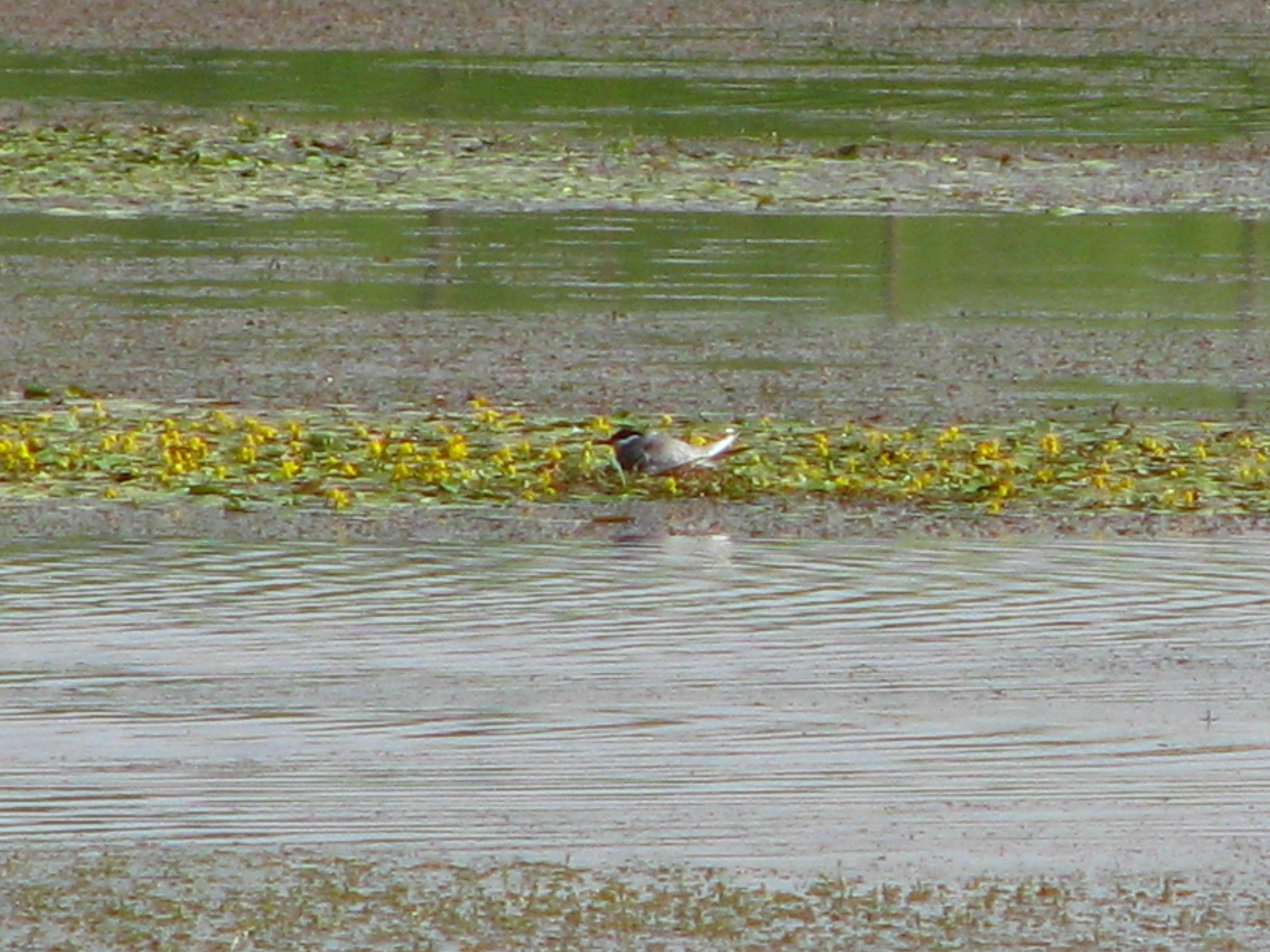
The whiskered tern feeds on small fish, amphibians, insects, and crustaceans, hunting by diving or skimming over water surfaces. It breeds in colonies on inland marshes, sometimes associating with black-headed gulls which provide some predator protection. The colonies are established on floating vegetation or marshy ground near water. The characteristic call is a sharp 'krekk', useful for identification in the field. These terns are social outside the breeding season, gathering in flocks at roosting and feeding sites. The breeding behavior includes typical tern courtship displays and cooperative nest defense.
Source: Wikipedia · CC BY-SA 3.0
Taxonomy
- Order
- Charadriiformes
- Family
- Laridae
- Genus
- Chlidonias
- eBird Code
- whiter2
Subspecies (3)
-
Chlidonias hybrida delalandii
eastern and southern Africa and Madagascar
-
Chlidonias hybrida hybrida
breeds central and southern Europe and northwestern Africa eastward to southeastern Siberia, eastern China, and southward to Pakistan and northern India; winters Africa and southern and southeastern Asia to Thai-Malay Peninsula, Sulawesi, and Philippines
-
Chlidonias hybrida javanicus
breeds inland Australia (except Tasmania and western deserts); winters northern Australia northward to New Guinea, Indonesian Archipelago, and Philippines
Data Sources
Species description from Wikipedia, licensed under CC BY-SA 3.0.
Bird images and sounds sourced from GBIF, contributed by citizen scientists worldwide under Creative Commons licenses.
Taxonomy data from AviList 2025.