
Coraciiformes / Alcedinidae / Ceryle
Pied Kingfisher
Ceryle rudis · 斑鱼狗
Introduction
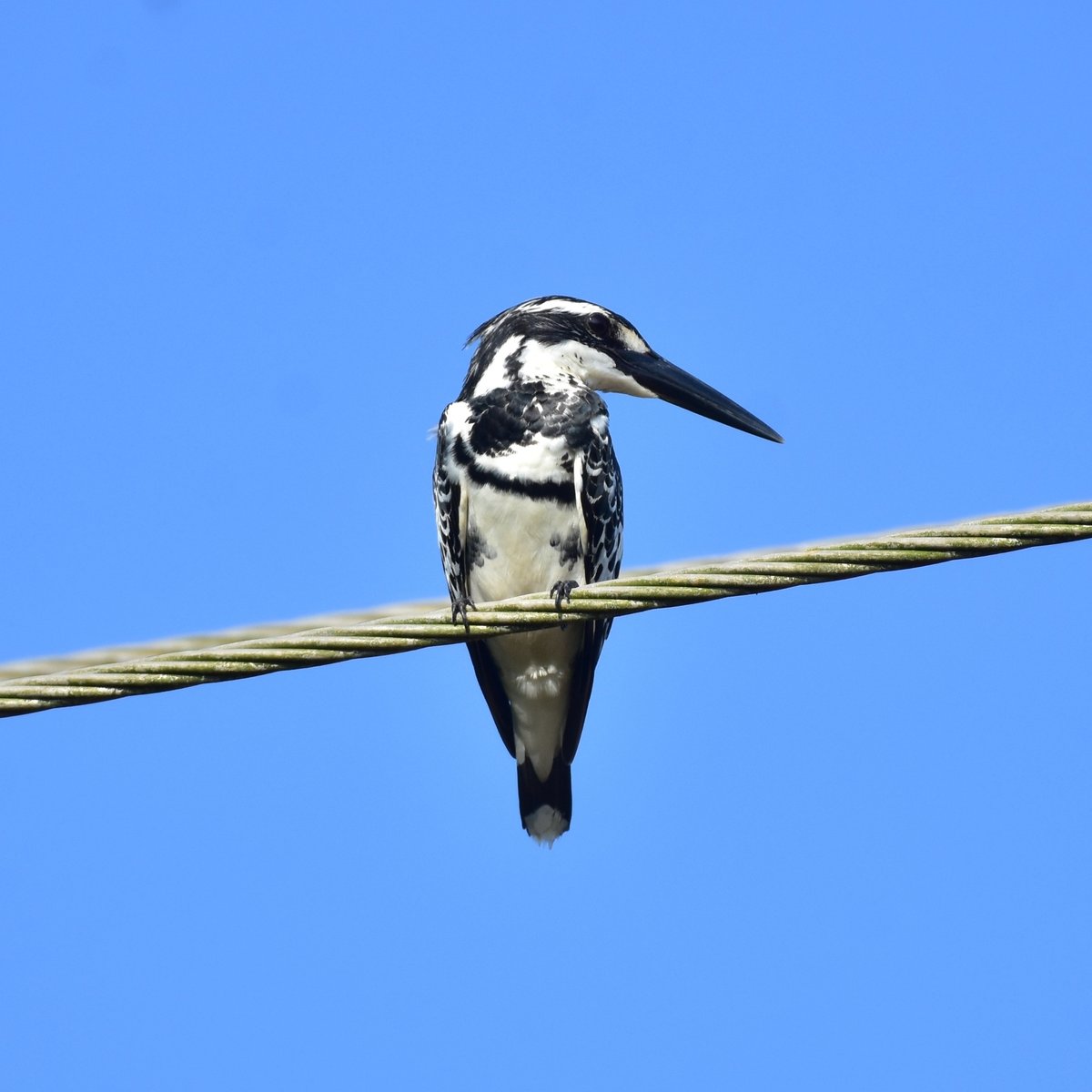
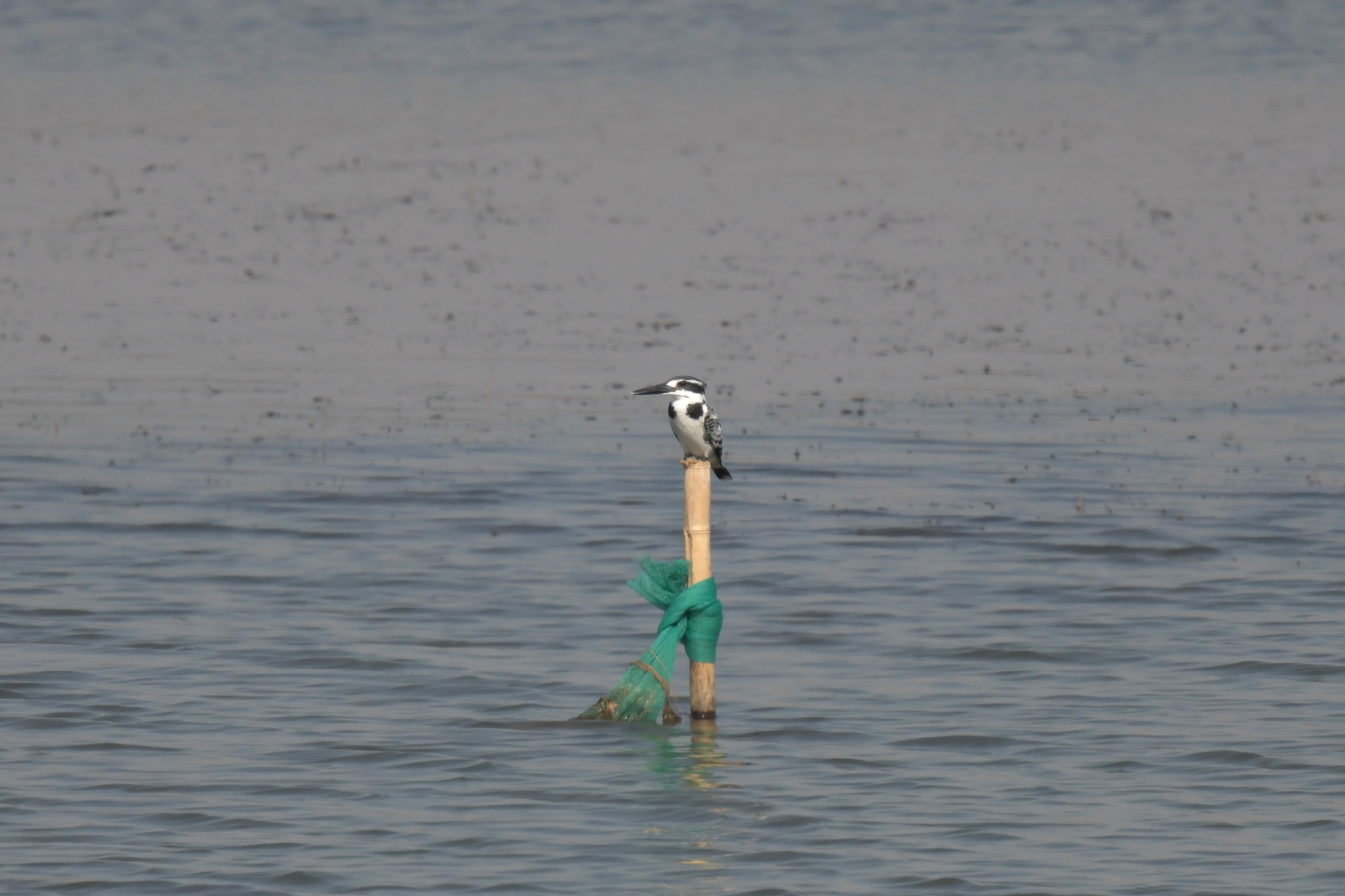
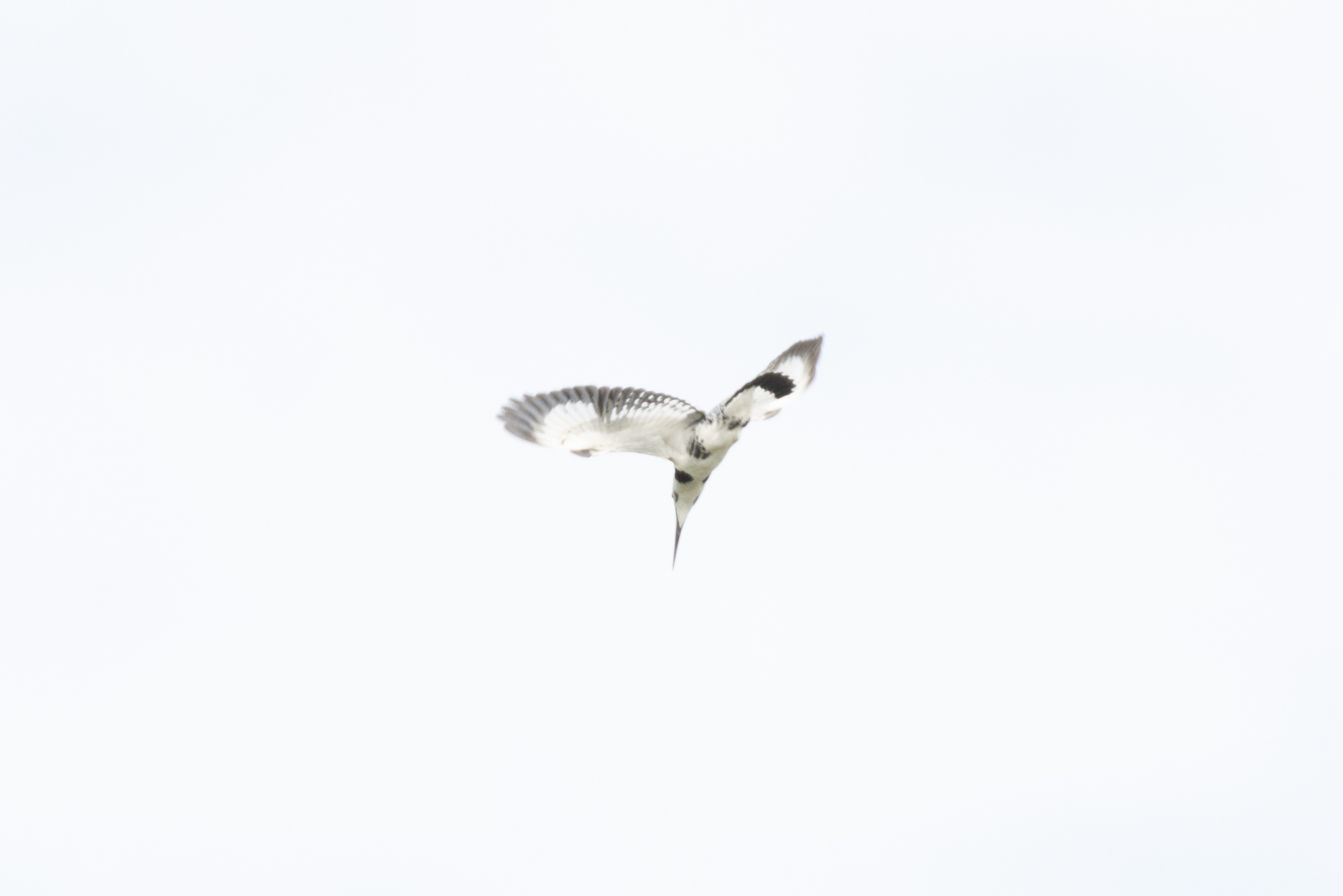
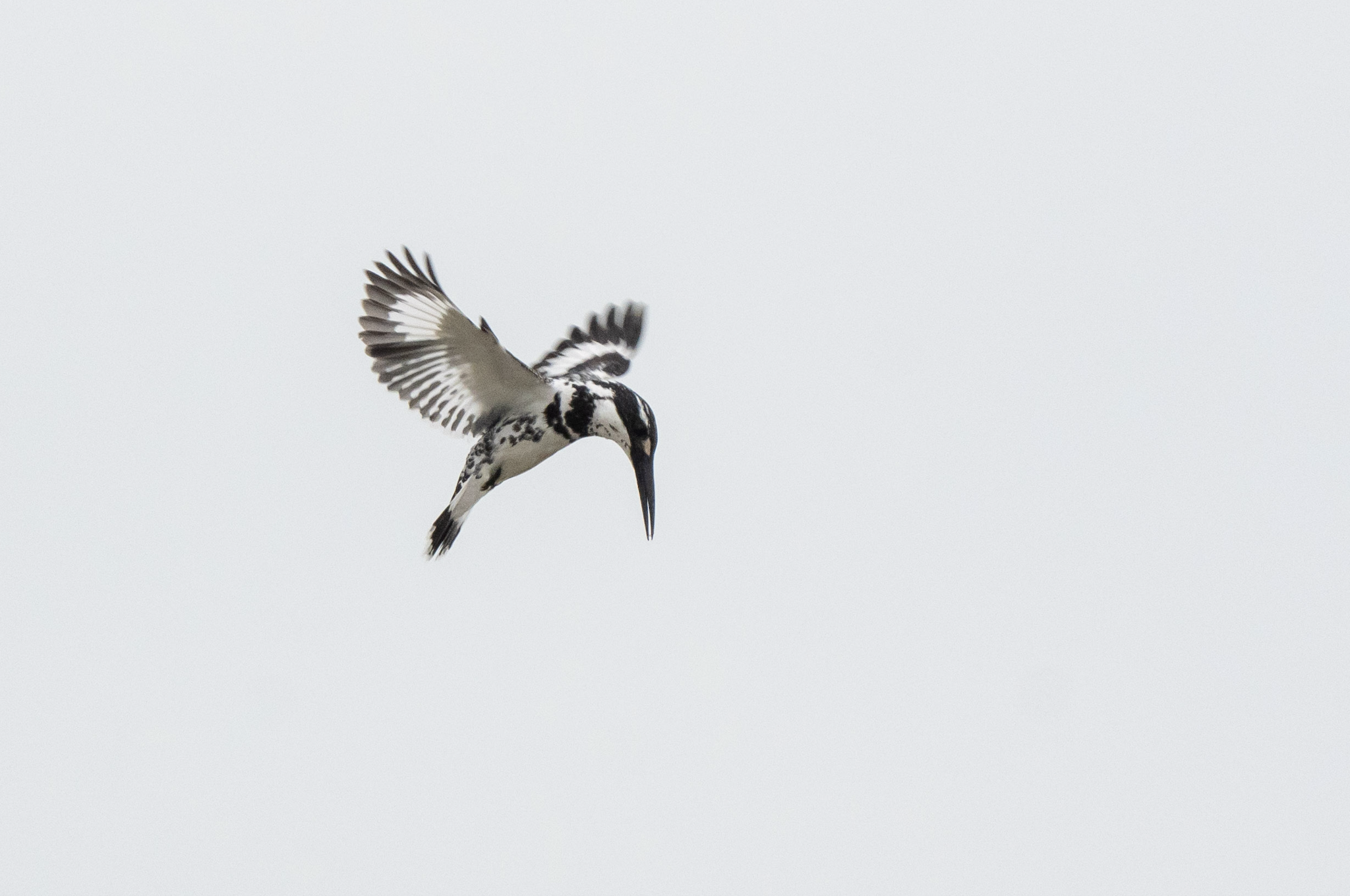
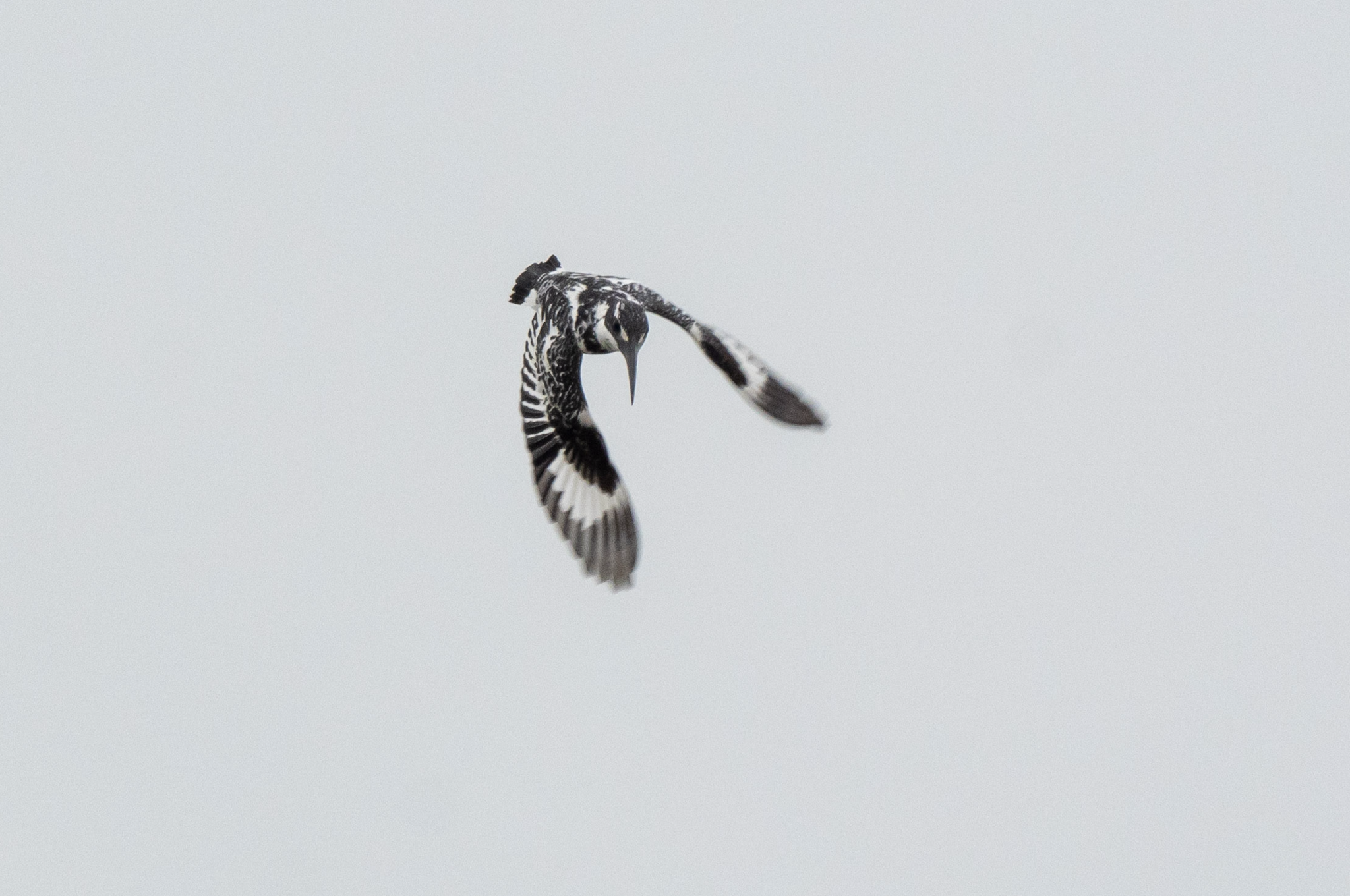
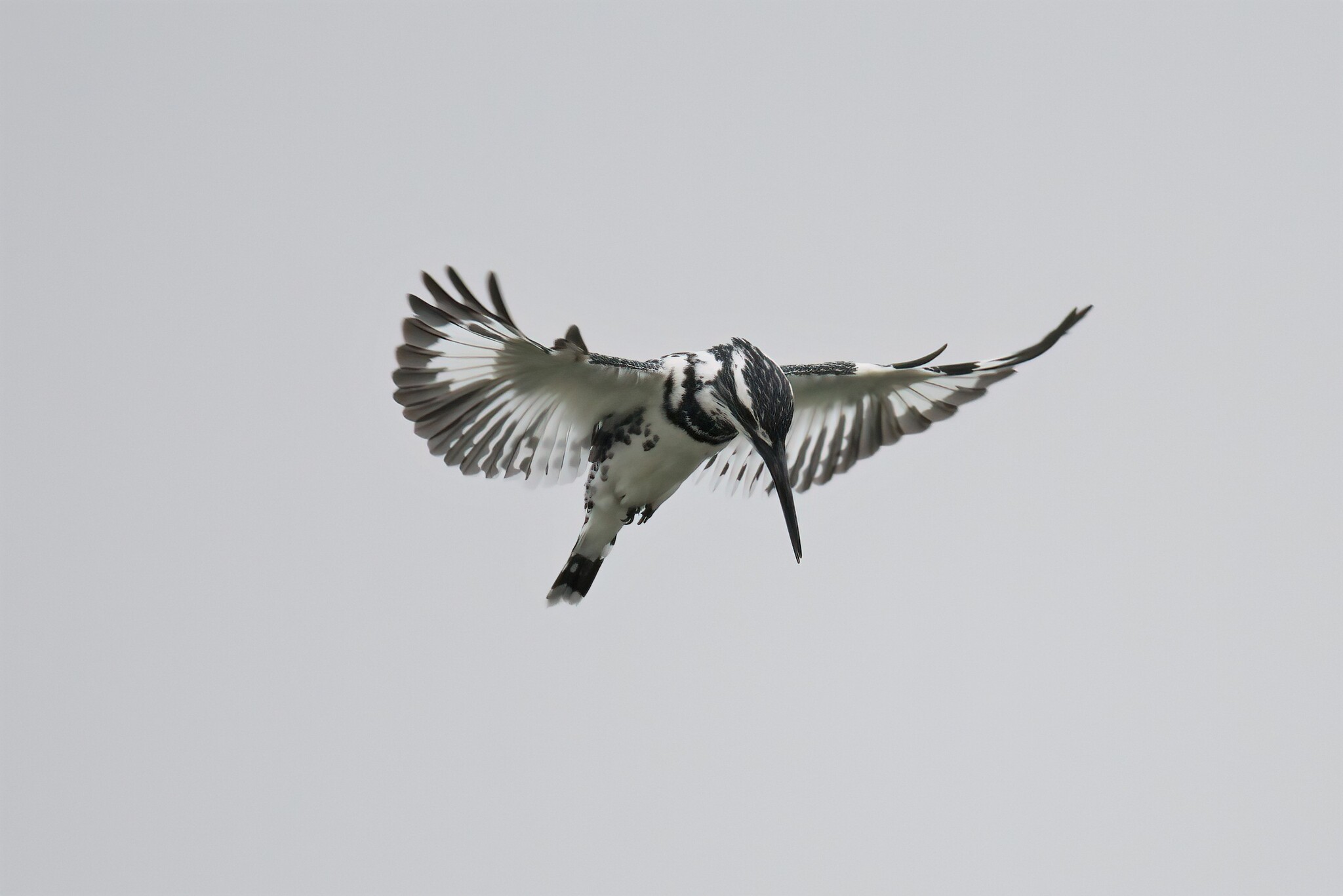
A water kingfisher species widely distributed across Africa and Asia, and the only member of the genus Ceryle. It is characterized by black and white plumage, a crest, and a distinctive hunting behavior of hovering over clear water before diving for fish. The species is resident with only short-distance seasonal movements and is estimated to be one of the three most numerous kingfishers globally.
Description
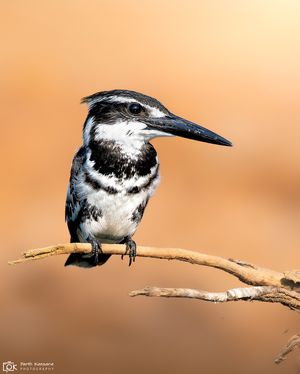
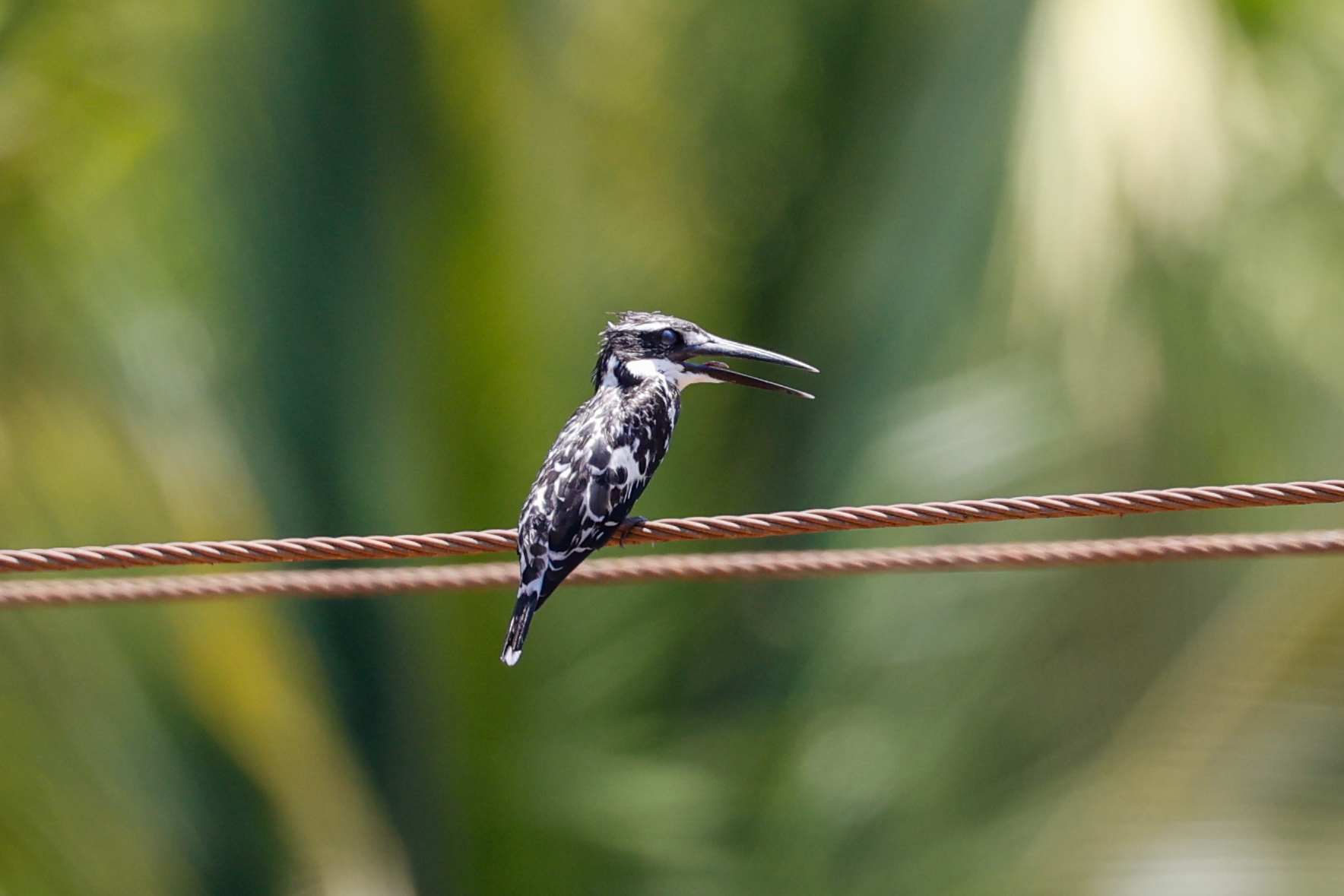
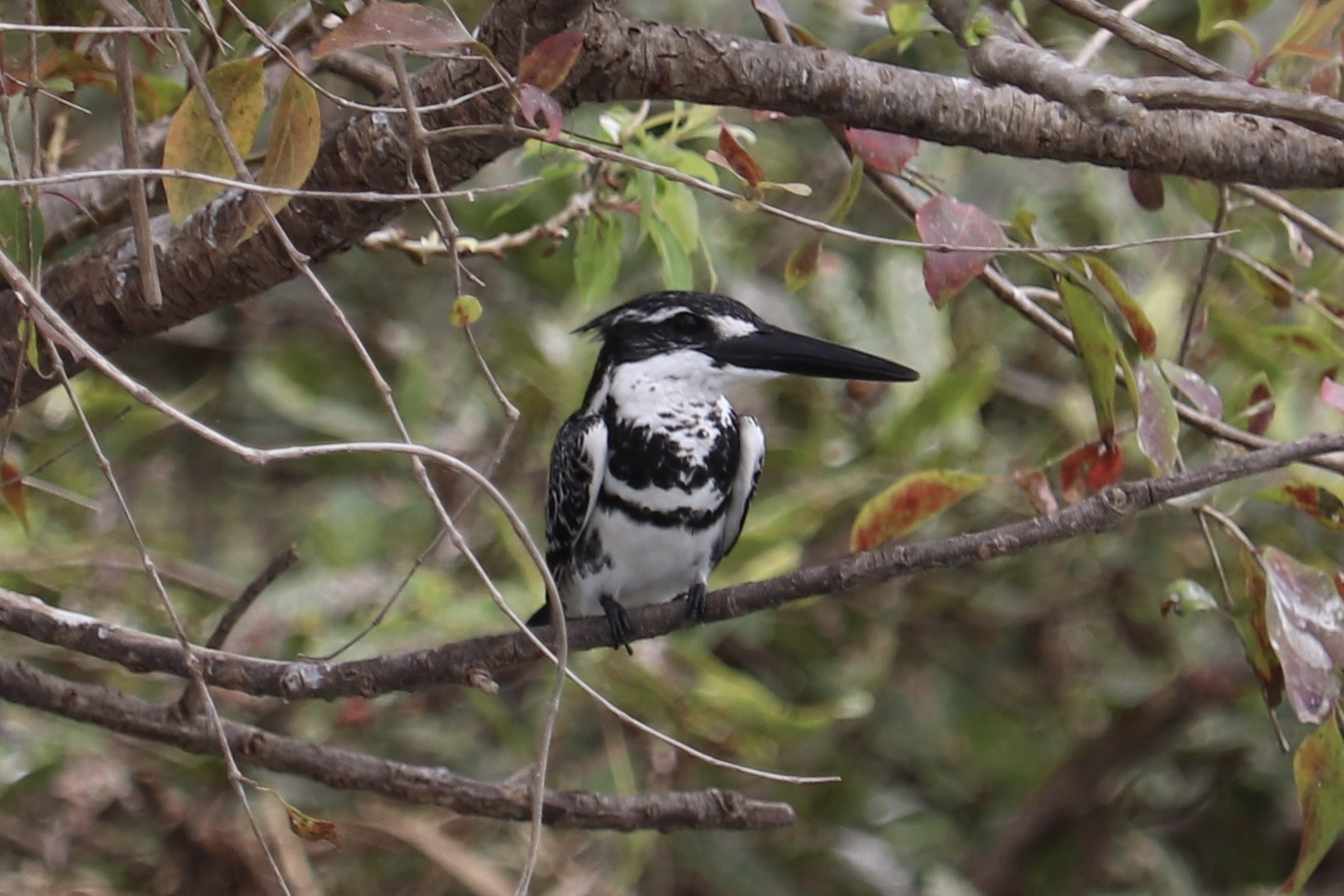
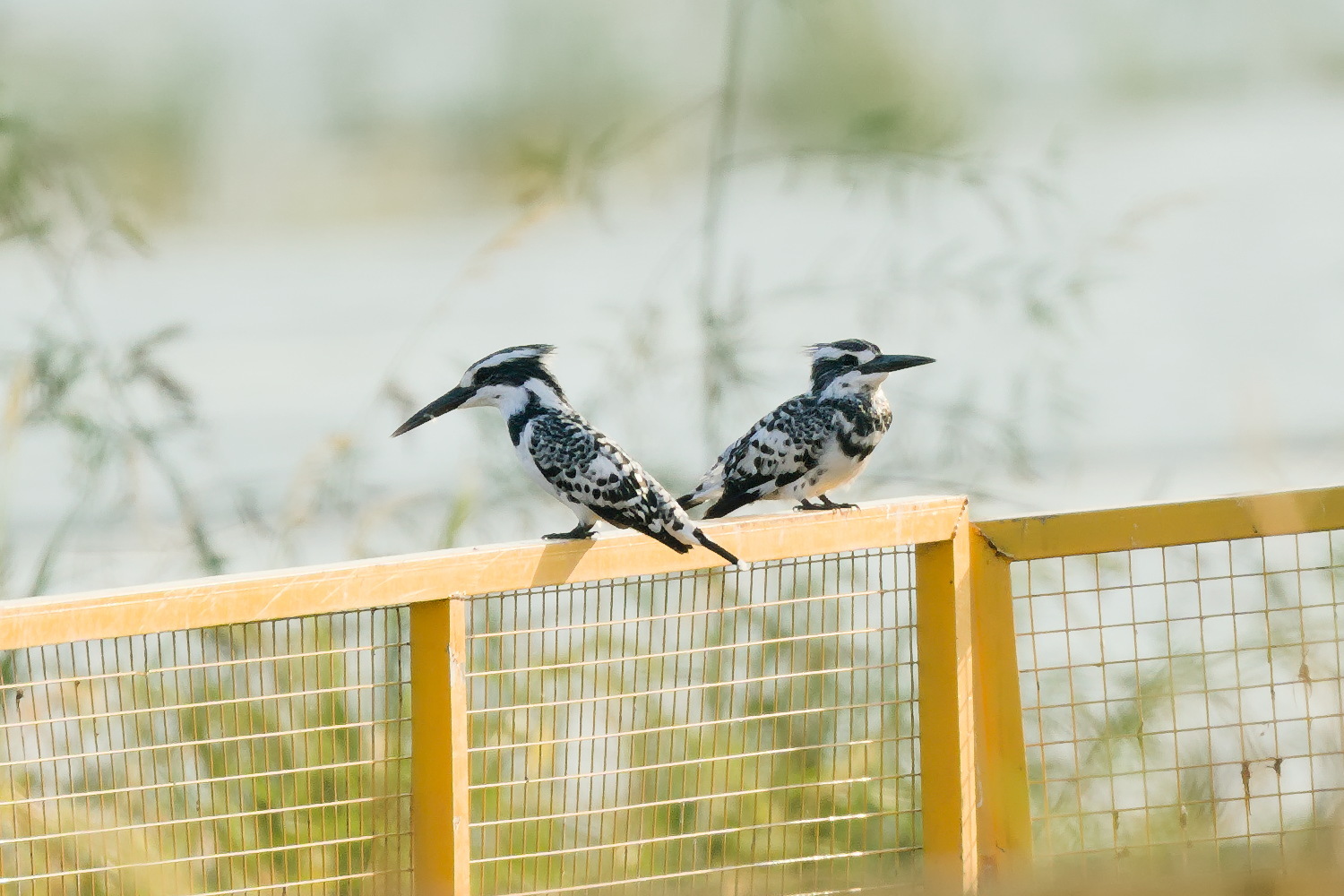
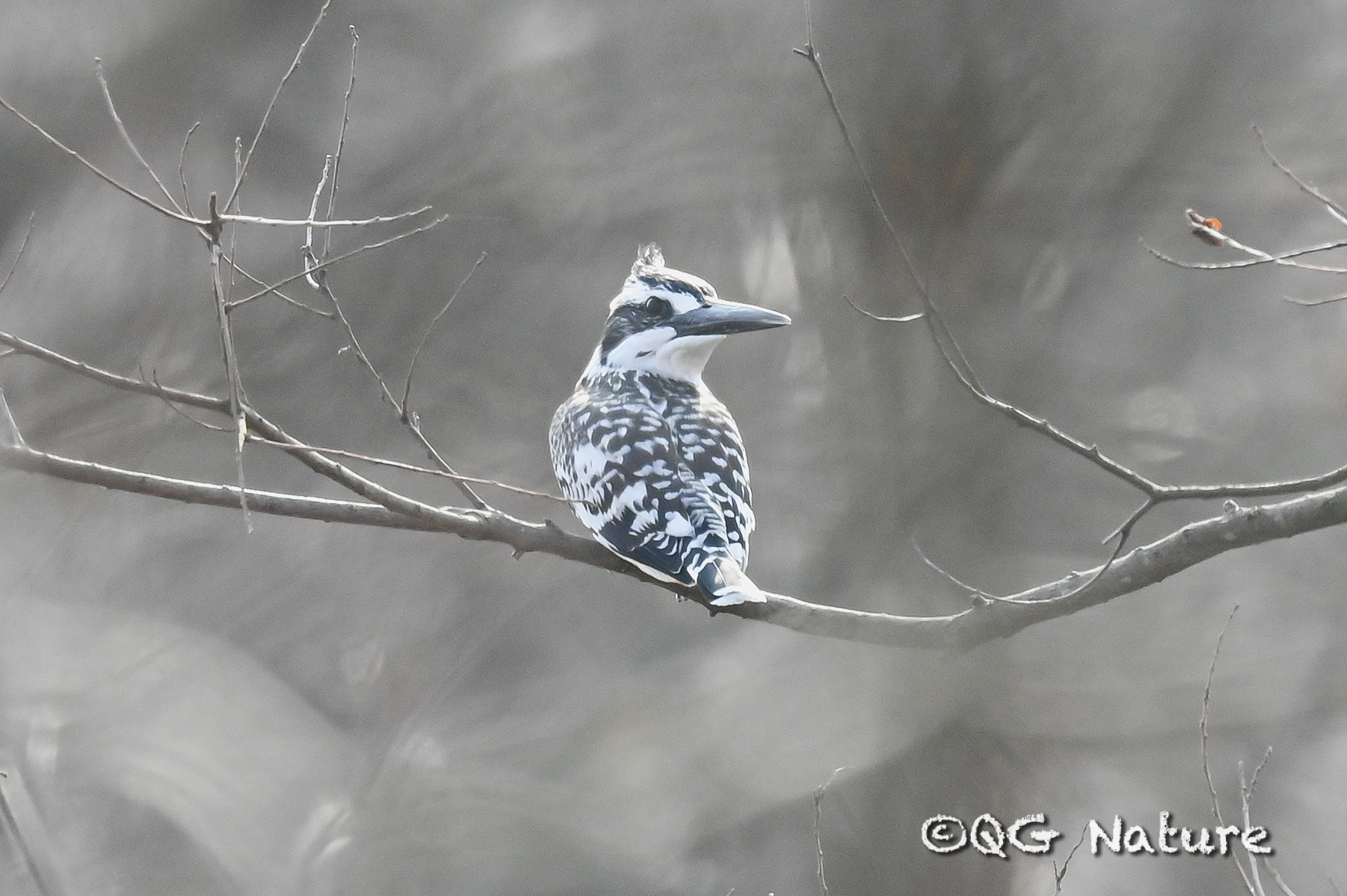
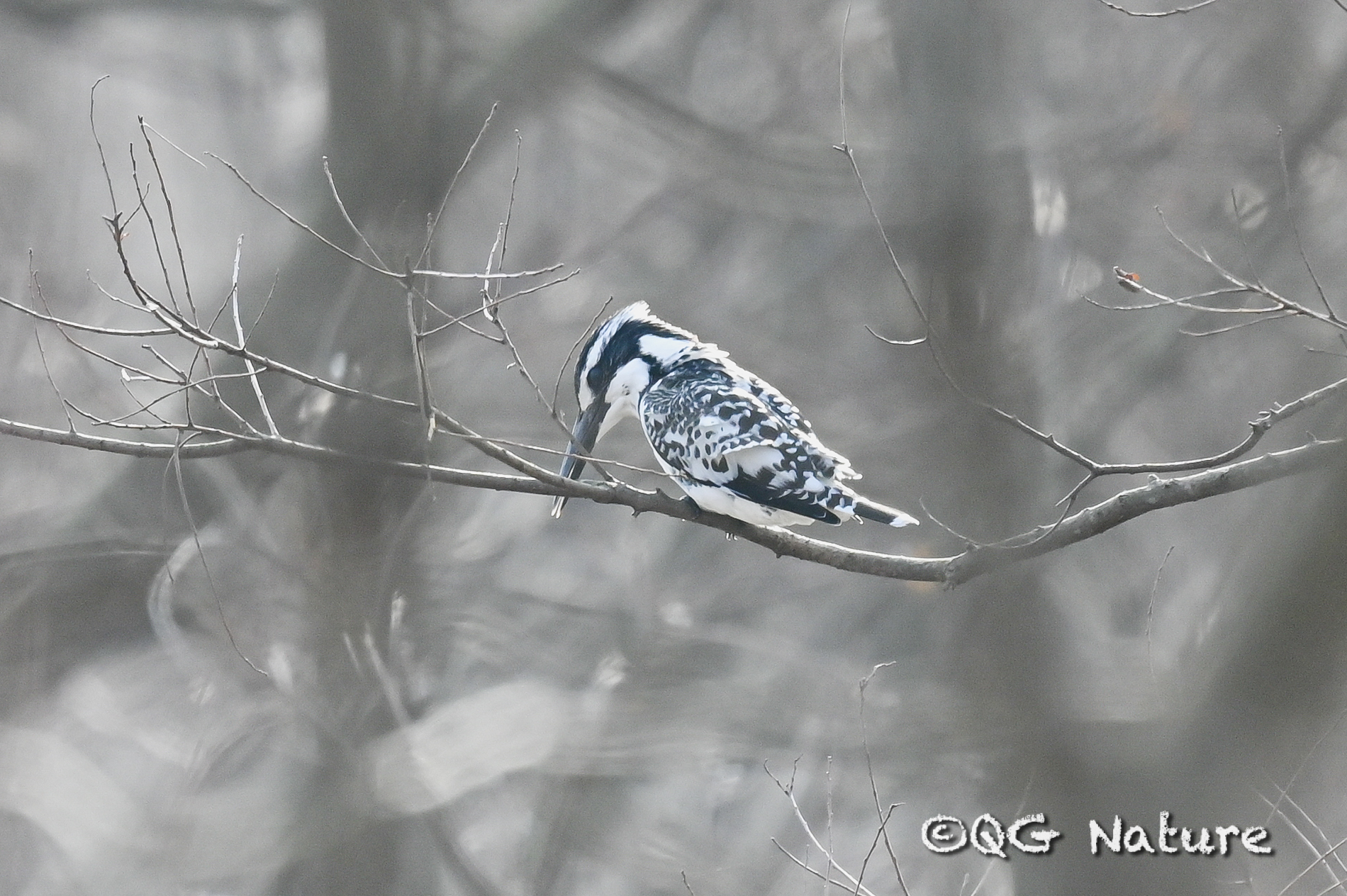
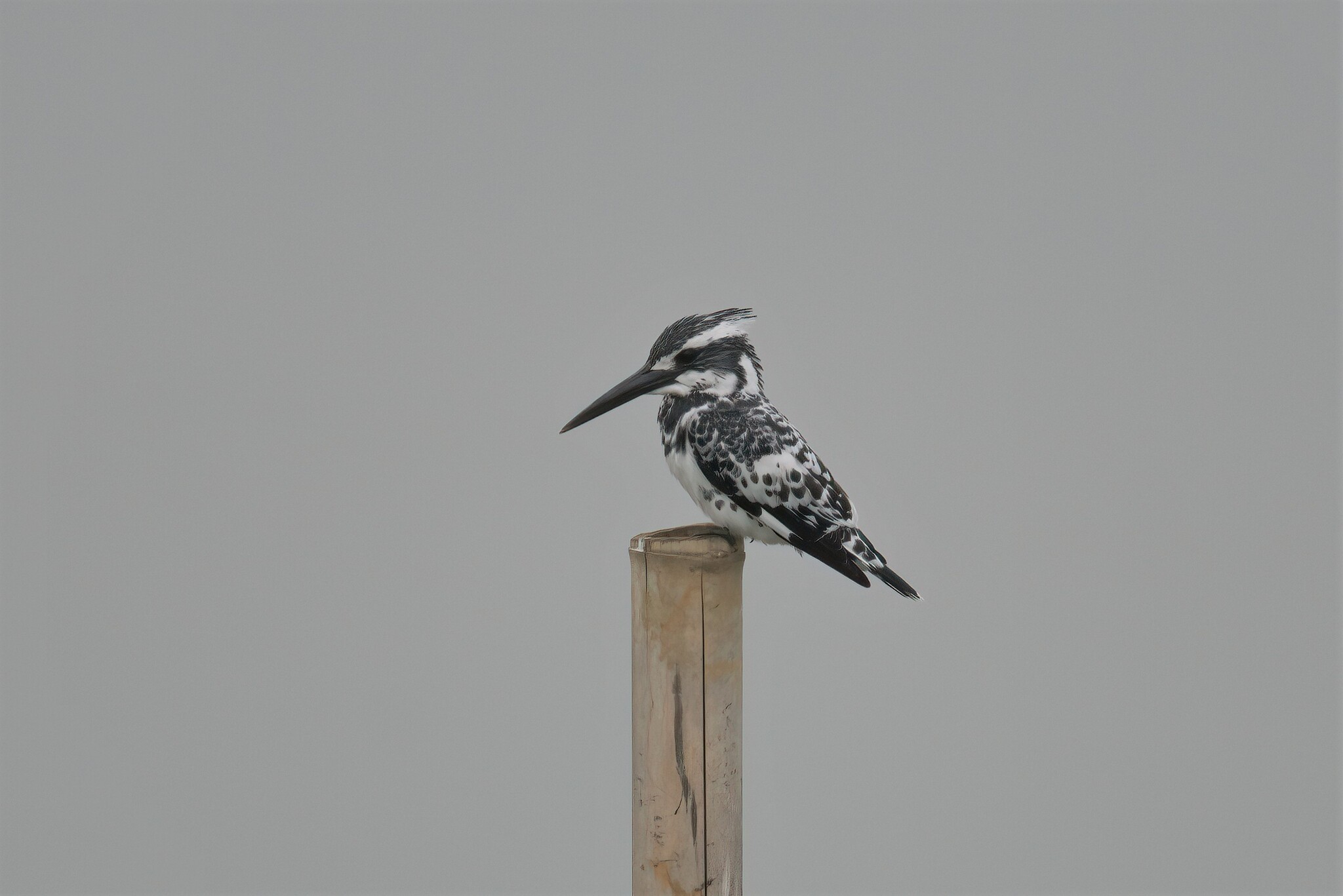
Medium-sized, approximately 25 cm (9.8 in) long. Plumage is black and white with a neat crest, white supercilium, black mask, and black-barred upperparts. Males possess a double breast band, while females have a single broken breast band. Subspecies vary: syriacus is larger; travancoreensis is darker with reduced white; insignis has a much larger bill.
Identification
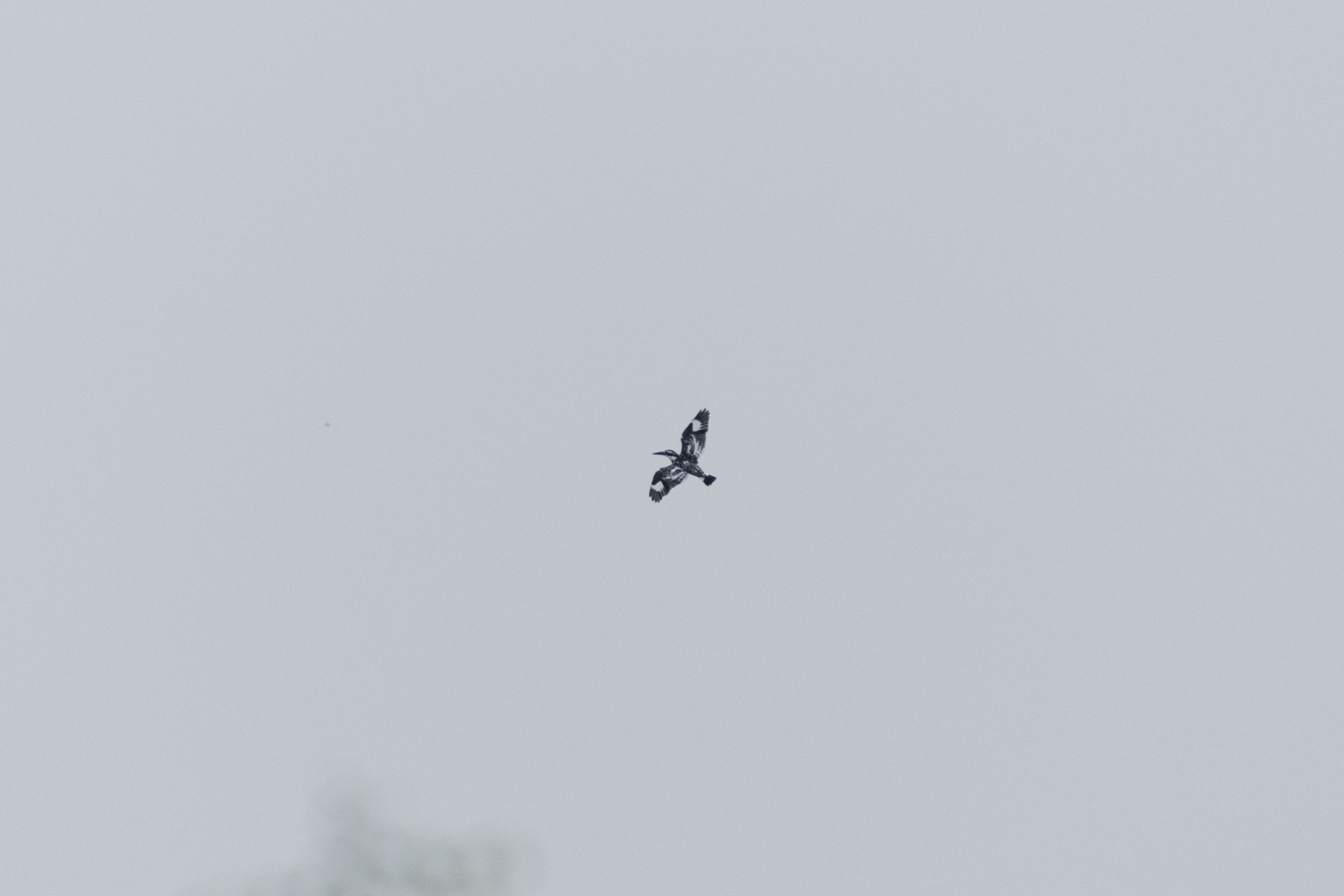
Distinctive black and white pattern with a crest. Key field mark is the breast banding: males show two bands, females one broken band. Often identified by its habit of hovering over water before diving. Flight is straight and rapid, reaching speeds near 50 km/h. Vocalizations include sharp chirruk chirruk notes.
Distribution & Habitat
Common throughout sub-Saharan Africa and southern Asia, ranging from Turkey through India to China. Five subspecies are recognized: C. r. syriacus (Turkey to Iran), C. r. rudis (Egypt and sub-Saharan Africa), C. r. leucomelanurus (Afghanistan to Indochina), C. r. travancoreensis (southwest India), and C. r. insignis (east/southeast China and Hainan). Mostly resident, inhabiting plains and avoiding higher Himalayan hills.
Behavior & Ecology
Gregarious, often forming large night roosts and found in pairs or small family groups. Perched birds frequently bob their heads and flick their tails. Feeds mainly on fish, also crustaceans and large aquatic insects. Hunts by hovering over water and diving vertically bill-first; can swallow prey in flight without perching. Breeding season in India is February to April. Nests are holes excavated in vertical mud banks, 4–5 feet deep, containing 3–6 white eggs. Cooperative breeding occurs, with helpers assisting parents. Nestlings may suffer from maggot or leech infestations.
Culture
In 1947, zoologist Hugh B. Cott observed that hornets avoided the flesh of this species, leading to a study suggesting conspicuously plumaged birds might be less palatable, though subsequent reanalysis did not support this conclusion.
Source: Wikipedia · CC BY-SA 3.0
Taxonomy
- Order
- Coraciiformes
- Family
- Alcedinidae
- Genus
- Ceryle
Vocalizations
Subspecies (5)
-
Ceryle rudis insignis
eastern China (south of Yangtze River Valley) and Hainan
Data Sources
Species description from Wikipedia, licensed under CC BY-SA 3.0.
Bird images and sounds sourced from GBIF, contributed by citizen scientists worldwide under Creative Commons licenses.
Taxonomy data from AviList 2025.