

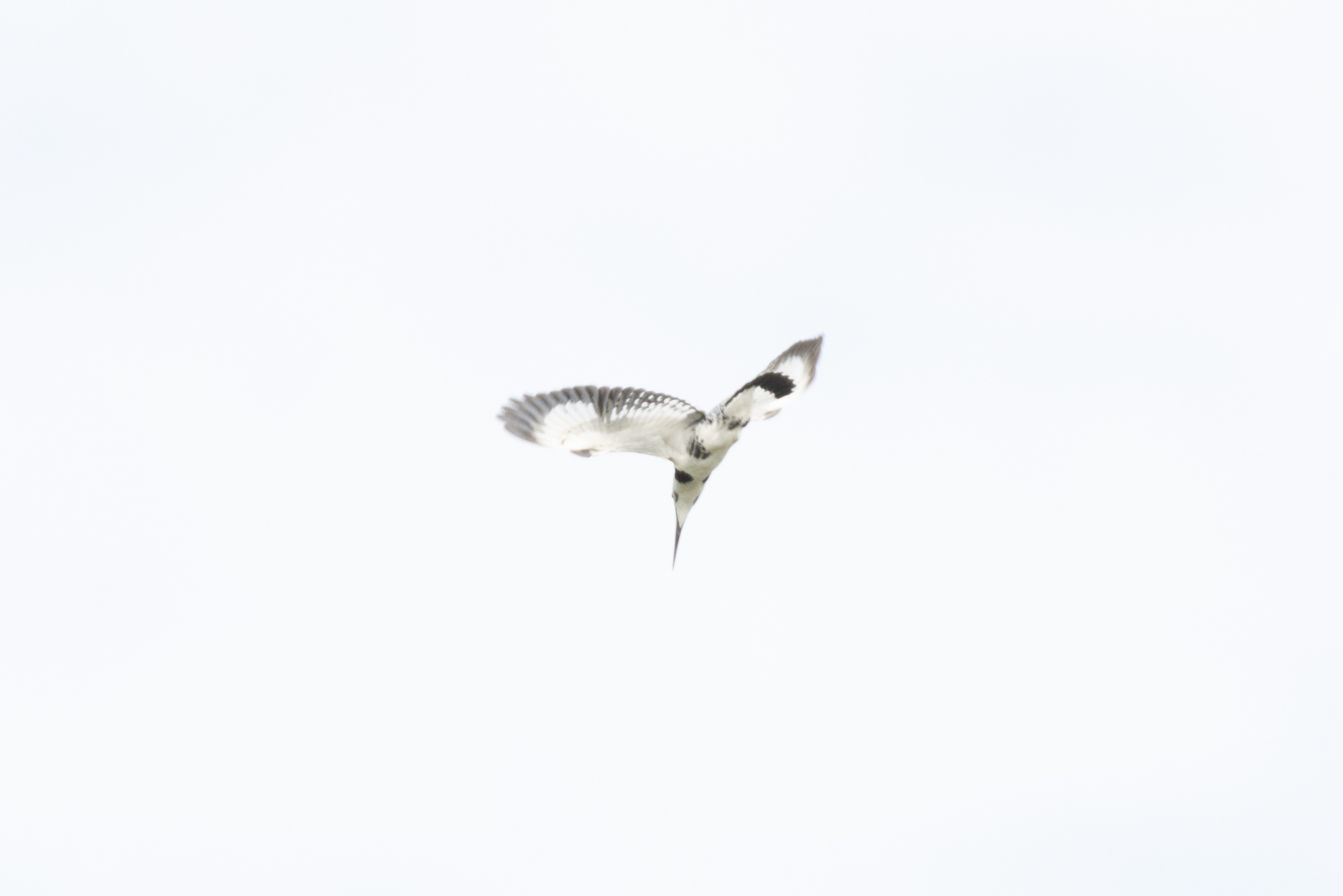

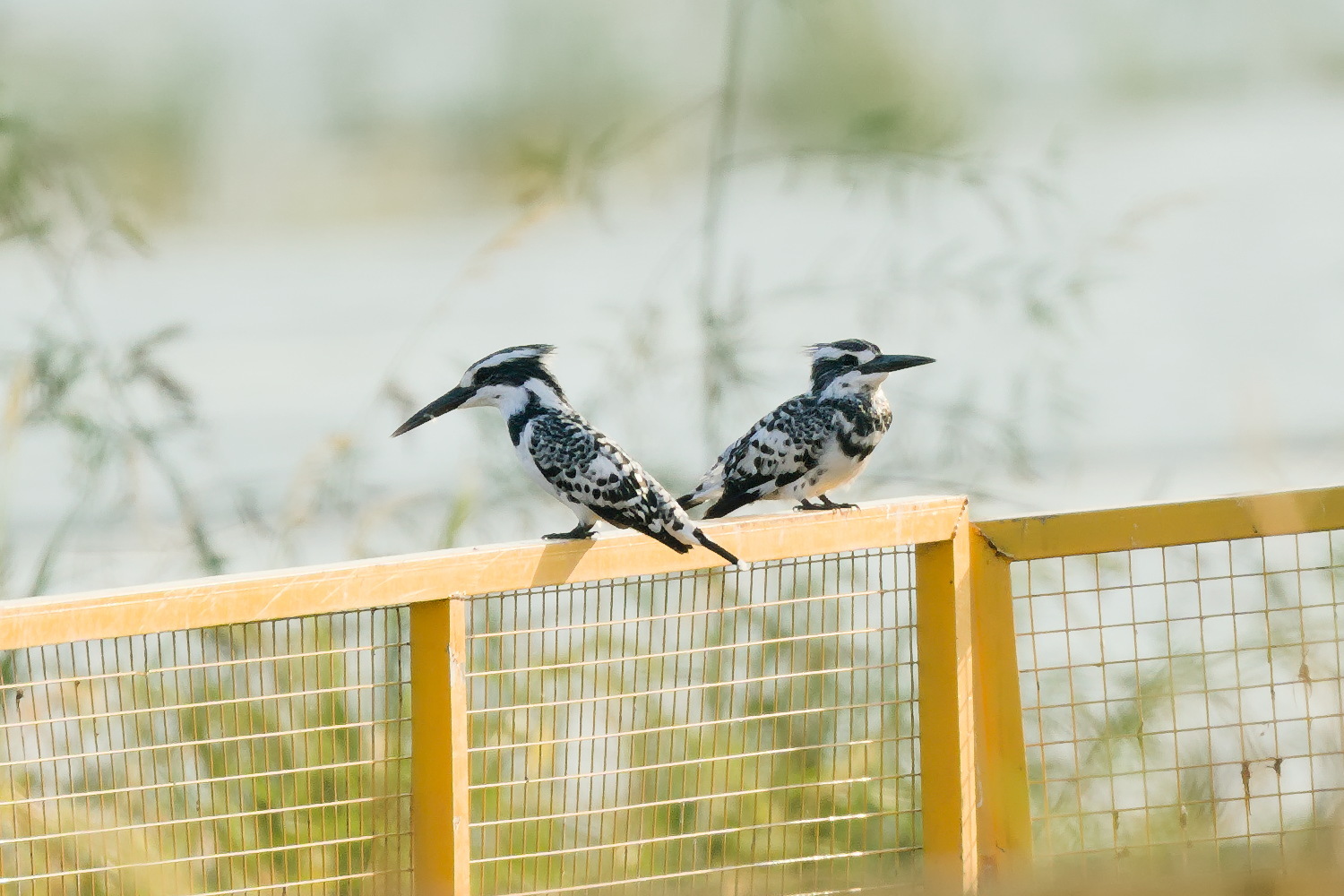
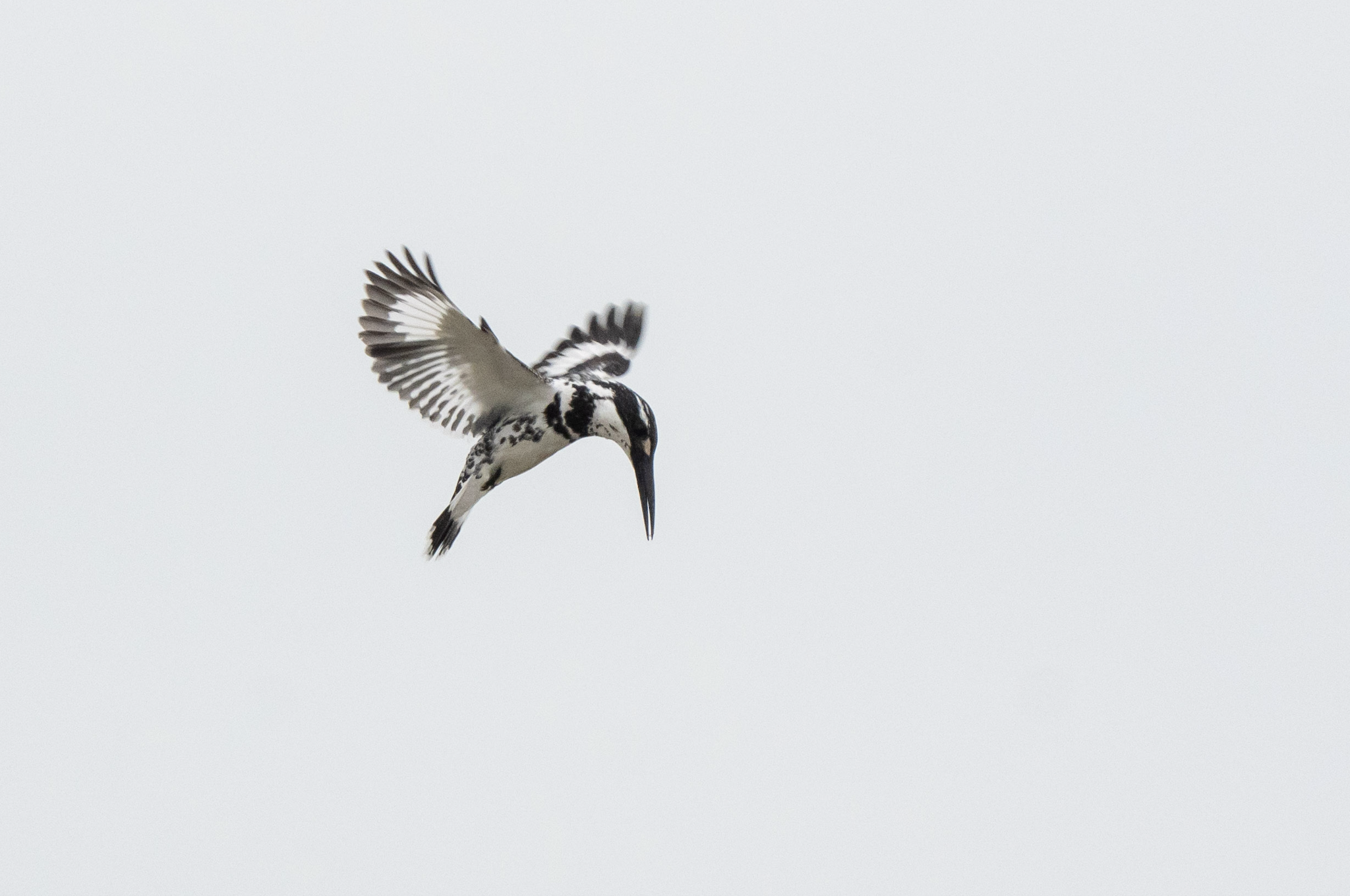
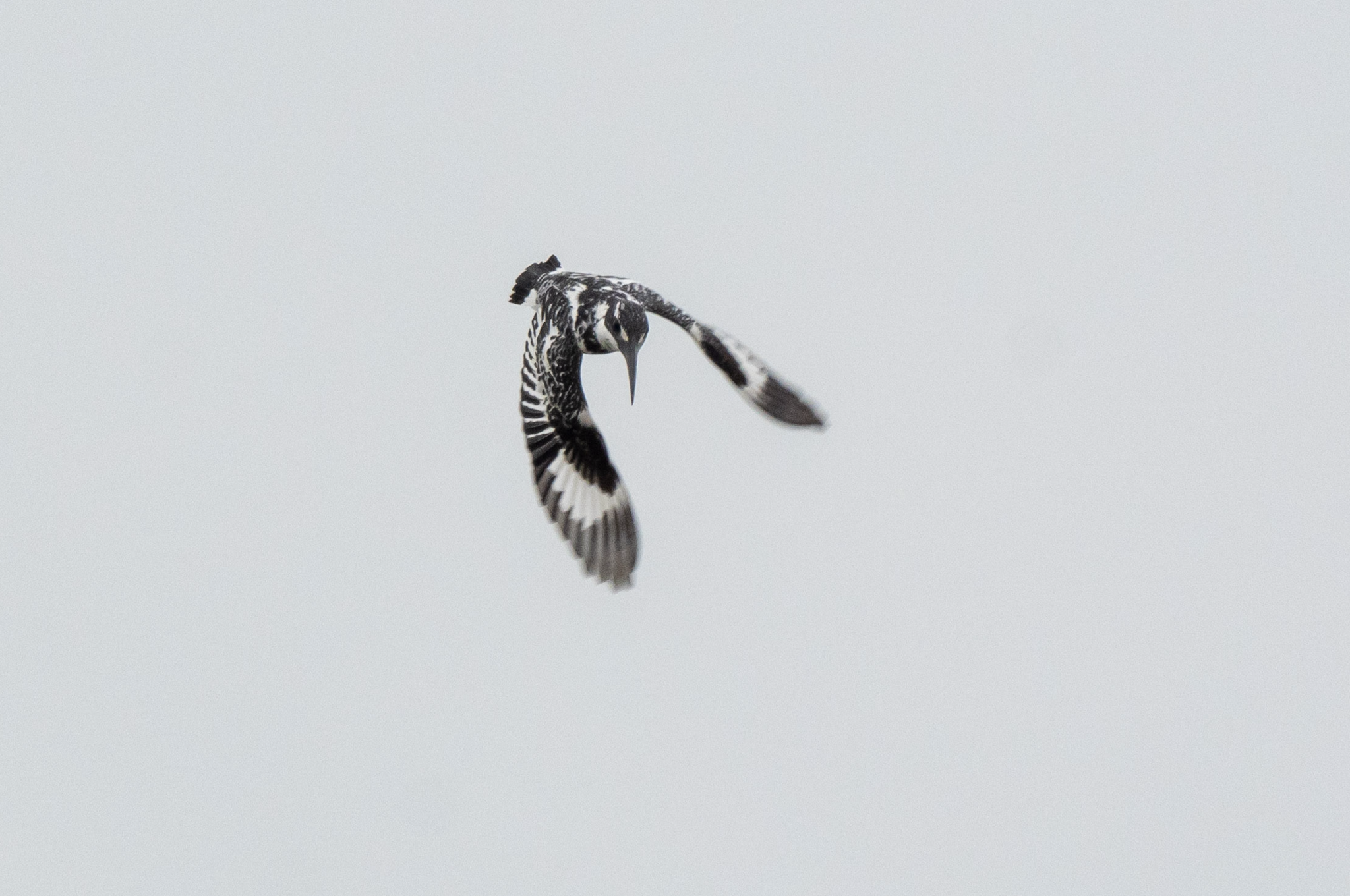
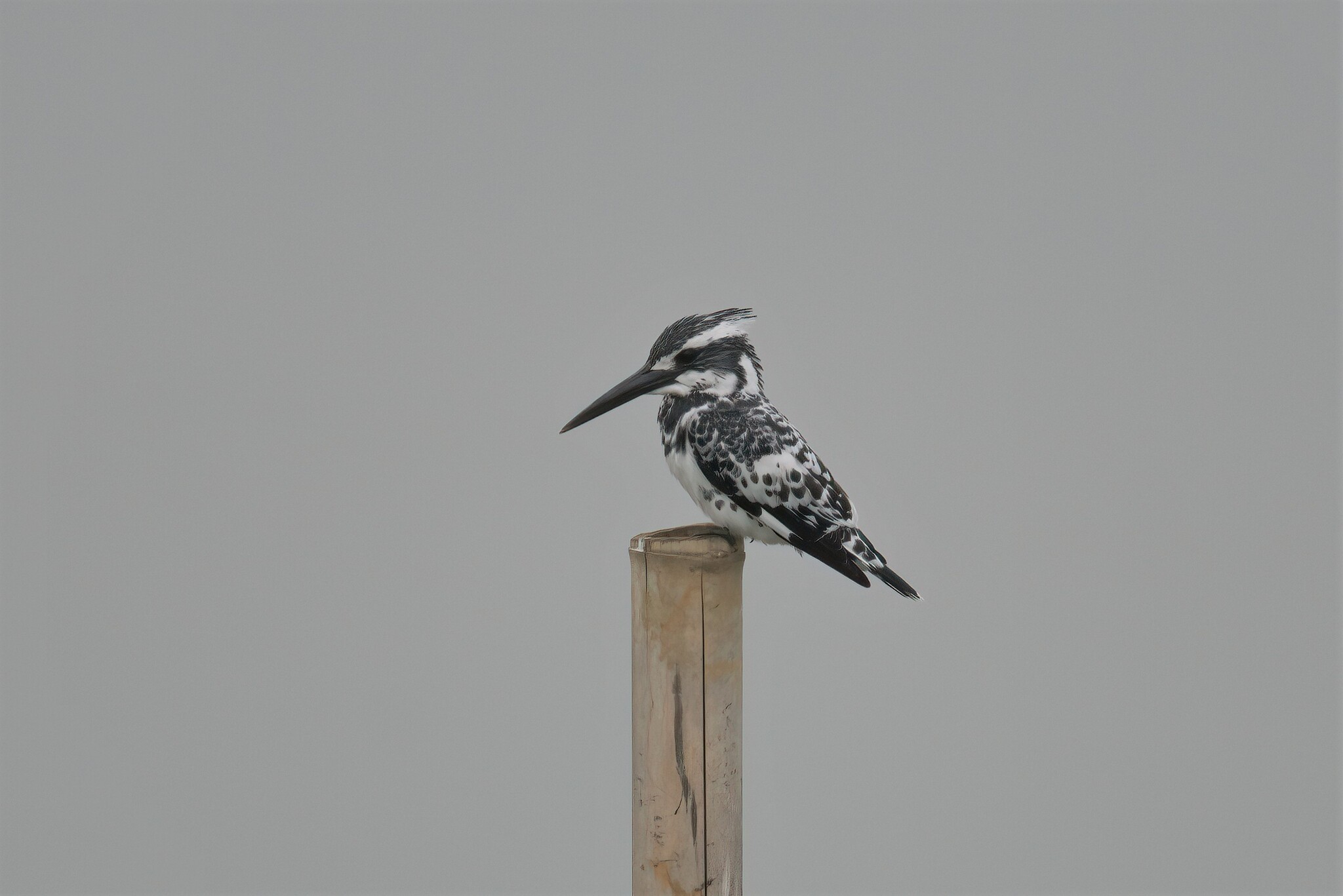
Pied Kingfisher
Ceryle rudis
斑鱼狗
Introduction
The white-throated kingfisher (Halcyon smyrnensis) is a water kingfisher in the family Alcedinidae. It occurs throughout the Indian subcontinent, across Southeast Asia to the Philippines, and west into the Middle East and eastern Mediterranean. It inhabits open woodland, forest edges, parks, and gardens near water, including rivers, lakes, streams, and coastal areas. This species reaches 28 cm in length with a wingspan of 41 cm. Unlike many kingfishers that hunt from perches, it employs a hovering technique, remaining stationary over clear water before diving to capture prey. It also takes insects, small reptiles, and amphibians. The species typically occurs in pairs or small family groups and produces sharp, frequent calls. When perched, individuals characteristically bob their heads and flick their tails upward. Its diet and habitat flexibility have enabled range expansion into urban areas.
Description
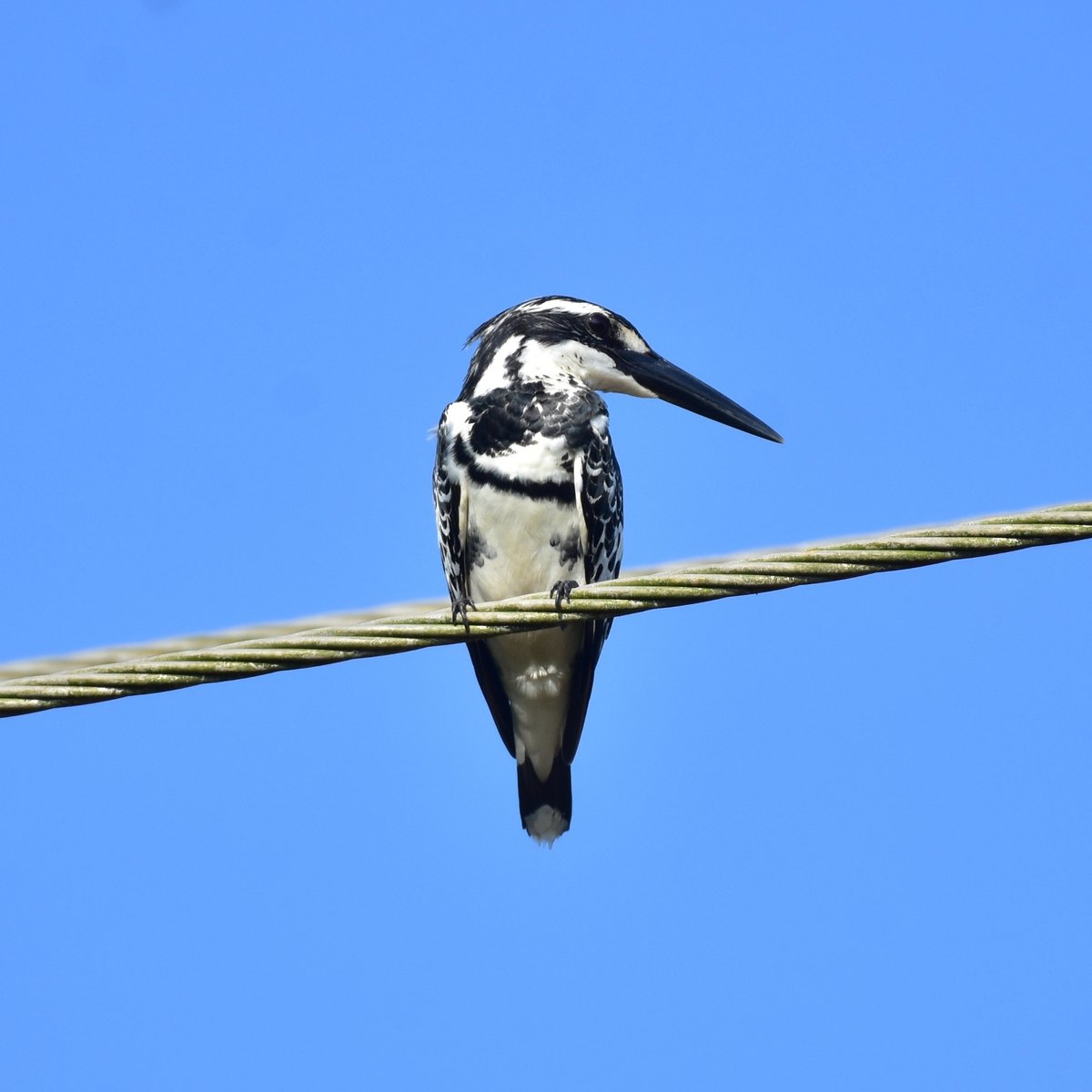
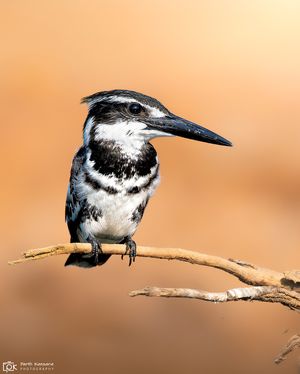
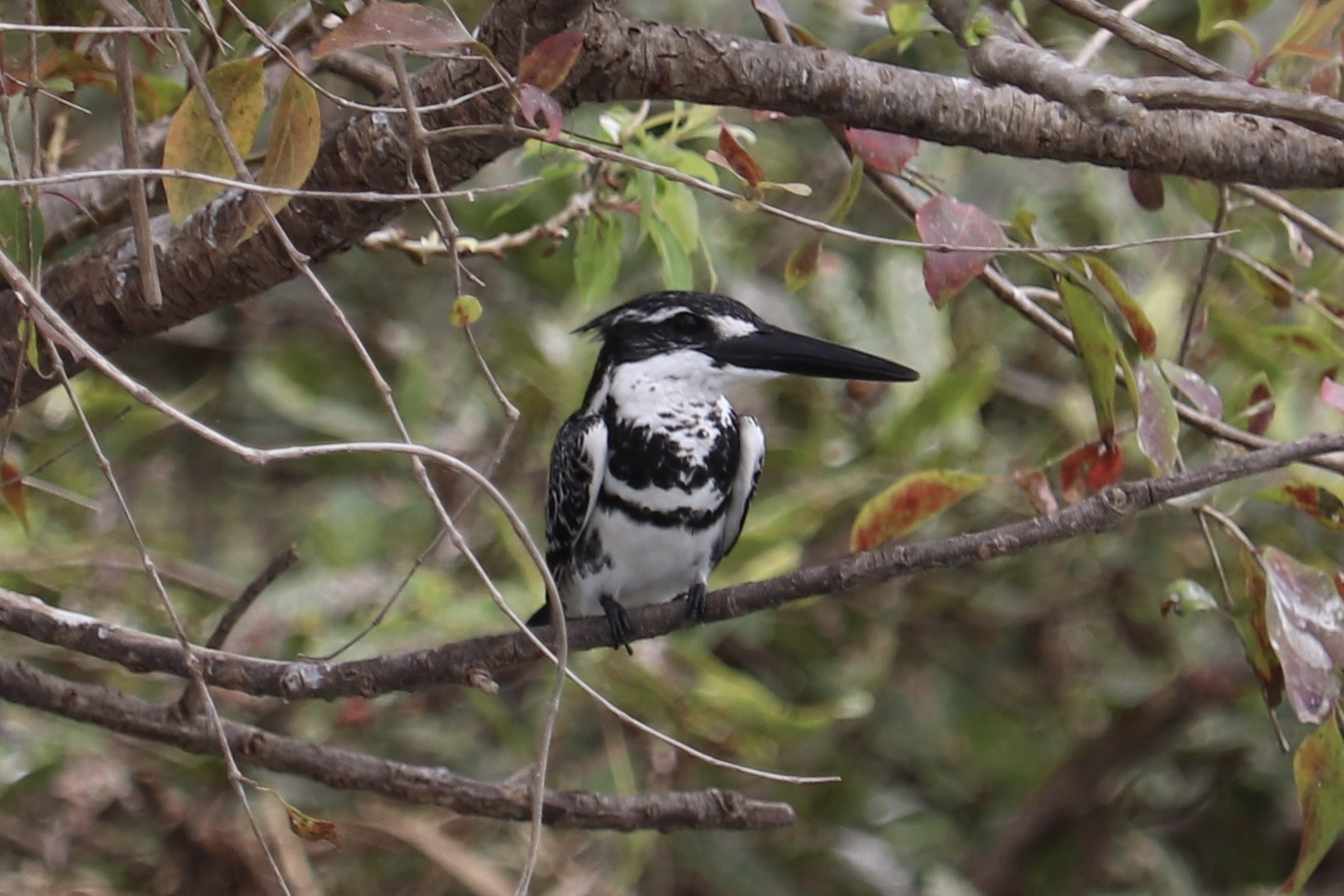
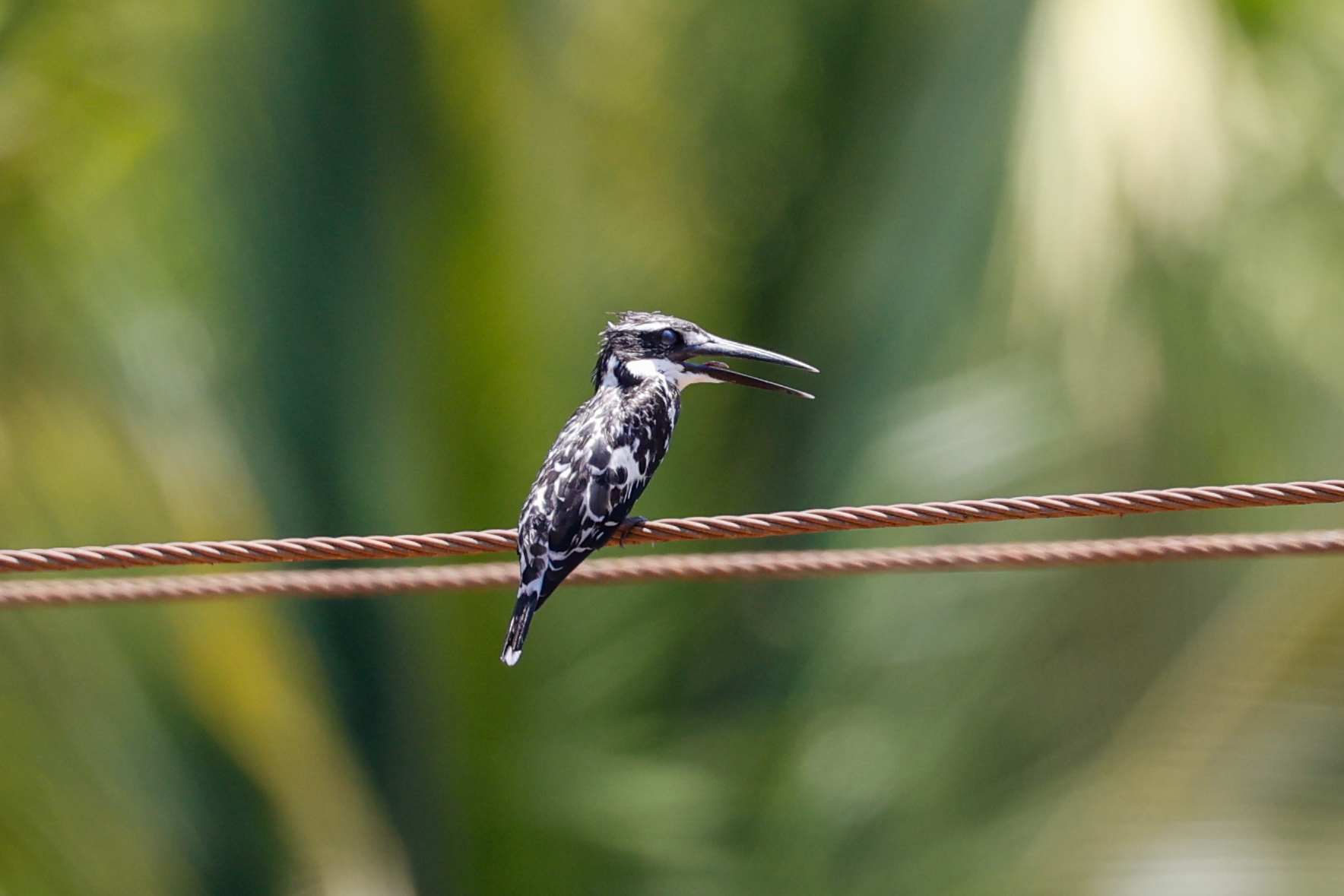
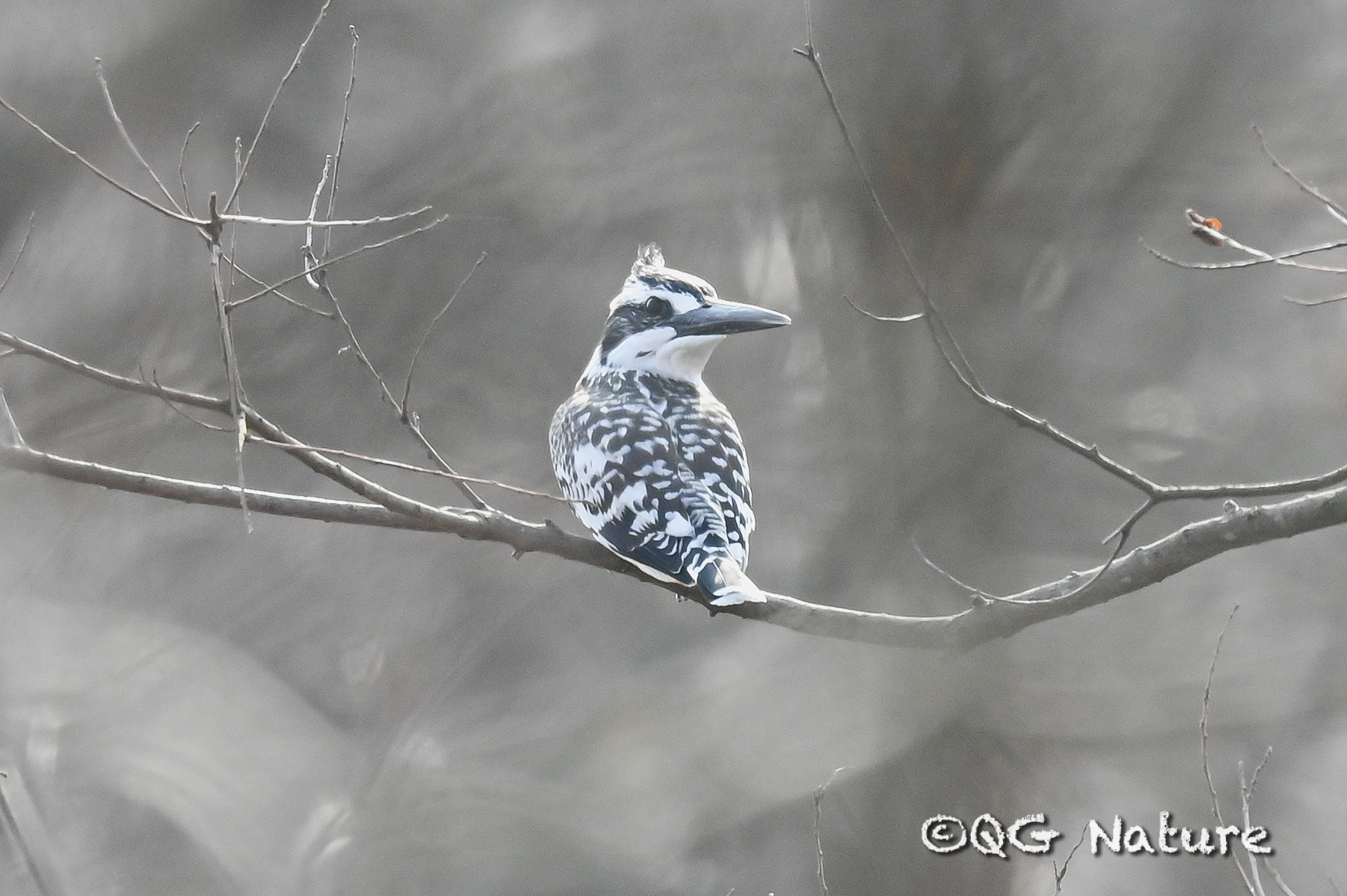
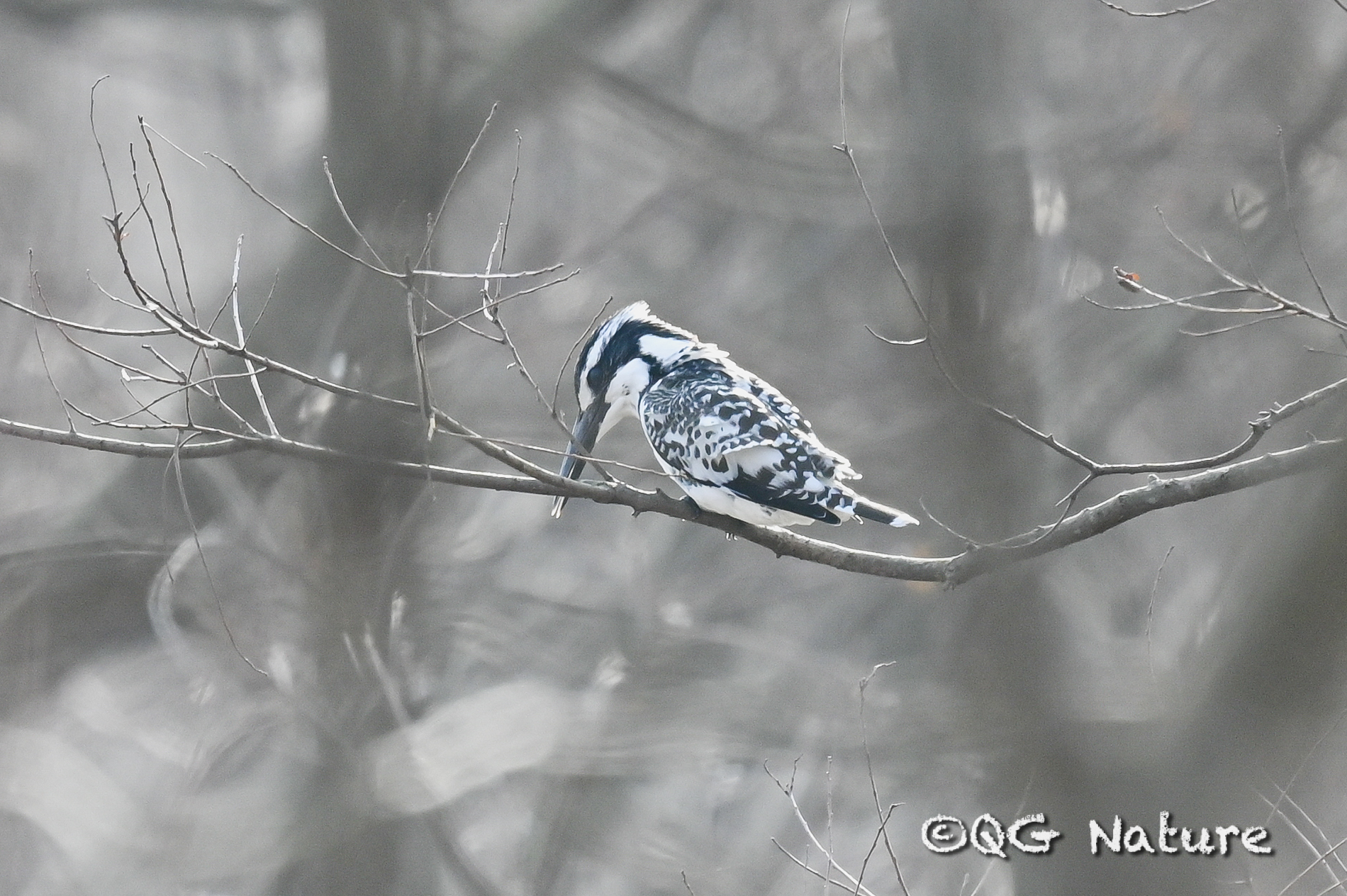
This medium-sized kingfisher reaches approximately 25 cm in length with a compact, stocky build. The plumage is boldly patterned in black and white throughout. The head features a distinctive black mask surrounding the eye, a prominent white supercilium, and a neat, compact crest. The upperparts are barred in black against a white background. The breast pattern differs between sexes: males display two complete black breast bands, while females show a single broken breast band. Several subspecies exhibit geographic variation in size and coloration. Northern populations tend to be larger, while western Indian birds are darker with reduced white markings. The bill is robust and dark, adapted for capturing fish, and the legs and feet are relatively small compared to other kingfishers.
Identification
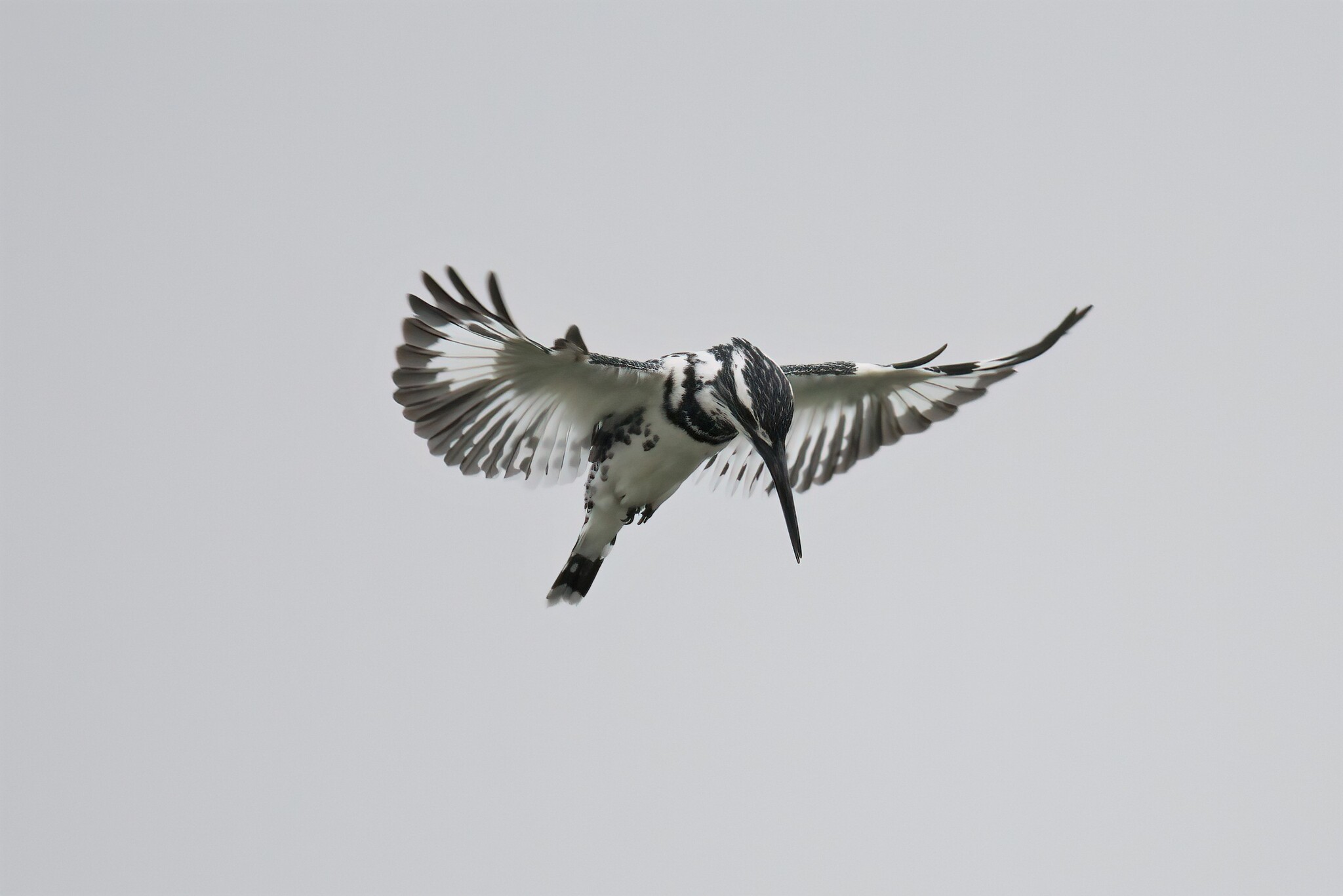
The striking black-and-white plumage is diagnostic across most of its range and sets this species apart from all other kingfishers except the American green kingfishers. The habit of hovering over water before diving is a key field mark, as few other kingfishers employ this technique. Sexing is straightforward: males show two complete black breast bands while females have only one broken band. In the Himalayan foothills, birdwatchers should note that this species is replaced by the larger crested kingfisher, which lacks the bold black-and-white pattern and has a more extensive crest. The combination of medium size, black-and-white plumage, and hovering behavior should distinguish it from all similar species across its range.
Distribution & Habitat
This species has an extensive range across sub-Saharan Africa and southern Asia, from Turkey and the Middle East east through India to China. It is generally common throughout this vast distribution. The birds are primarily resident, though some populations make short-distance seasonal movements in response to water level changes or local conditions. In the Indian subcontinent, it occurs mainly on the lowland plains and is absent from the higher Himalayan elevations, where the crested kingfisher takes its place. The species adapts to various freshwater habitats including lakes, rivers, estuaries, and coastal lagoons, particularly favoring waters with clear visibility for hunting and adequate fish populations.
Behavior & Ecology
This kingfisher feeds predominantly on fish, though crustaceans and large aquatic insects such as dragonfly larvae are also taken. Its hunting strategy is distinctive: it hovers above the water to locate prey before diving vertically to capture fish. Unlike many kingfishers, it can swallow prey in flight without returning to a perch, allowing it to hunt over large, open waters that lack suitable perching sites. When not hunting, it flies rapidly and directly, sometimes reaching speeds near 50 km/h. The species is notably gregarious, forming large communal roosts at night. The breeding season in India runs from February to April. Nests are excavated in vertical mud banks about 1.5 meters above water, with tunnels extending 1.2-1.5 meters to a breeding chamber. Clutches contain three to six white eggs. Cooperative breeding occurs, with offspring from previous broods sometimes assisting parents with raising young.
Conservation
The species is estimated to be one of the three most numerous kingfishers globally, suggesting a substantial overall population. While specific population figures are not provided, its extensive range and adaptability to various freshwater habitats indicate a generally secure status. Local populations have faced challenges in some areas, such as the introduction of Nile perch in Lake Victoria, which reduced the availability of preferred prey species. Habitat degradation and pollution affecting water quality in some regions may also impact local populations. The species' ability to exploit man-made water bodies and its relatively broad habitat tolerance suggest reasonable resilience to environmental changes.
Culture
No specific cultural significance, folklore, or mythological references to this species were found in the available sources.
Source: Wikipedia · CC BY-SA 3.0
Taxonomy
- Order
- Coraciiformes
- Family
- Alcedinidae
- Genus
- Ceryle
- eBird Code
- piekin1
Vocalizations
Subspecies (5)
-
Ceryle rudis insignis
eastern China (south of Yangtze River Valley) and Hainan
-
Ceryle rudis leucomelanurus
Kashmir and northeastern Afghanistan to India and Indochina
-
Ceryle rudis rudis
Egypt and Africa south of the Sahara
-
Ceryle rudis syriacus
Türkiye eastward to southwestern Iran
-
Ceryle rudis travancoreensis
far southwestern India (Cape Comorin to northern Kerala)
Data Sources
Species description from Wikipedia, licensed under CC BY-SA 3.0.
Bird images and sounds sourced from GBIF, contributed by citizen scientists worldwide under Creative Commons licenses.
Taxonomy data from AviList 2025.