Passeriformes / Certhiidae / Certhia
Hodgson's Treecreeper
Certhia hodgsoni · 霍氏旋木雀
Introduction
A small passerine bird from the southern rim of the Himalayas, recently validated as distinct from the common treecreeper. It inhabits temperate to cool tropical montane forests and is classified as Least Concern by the IUCN.
Description
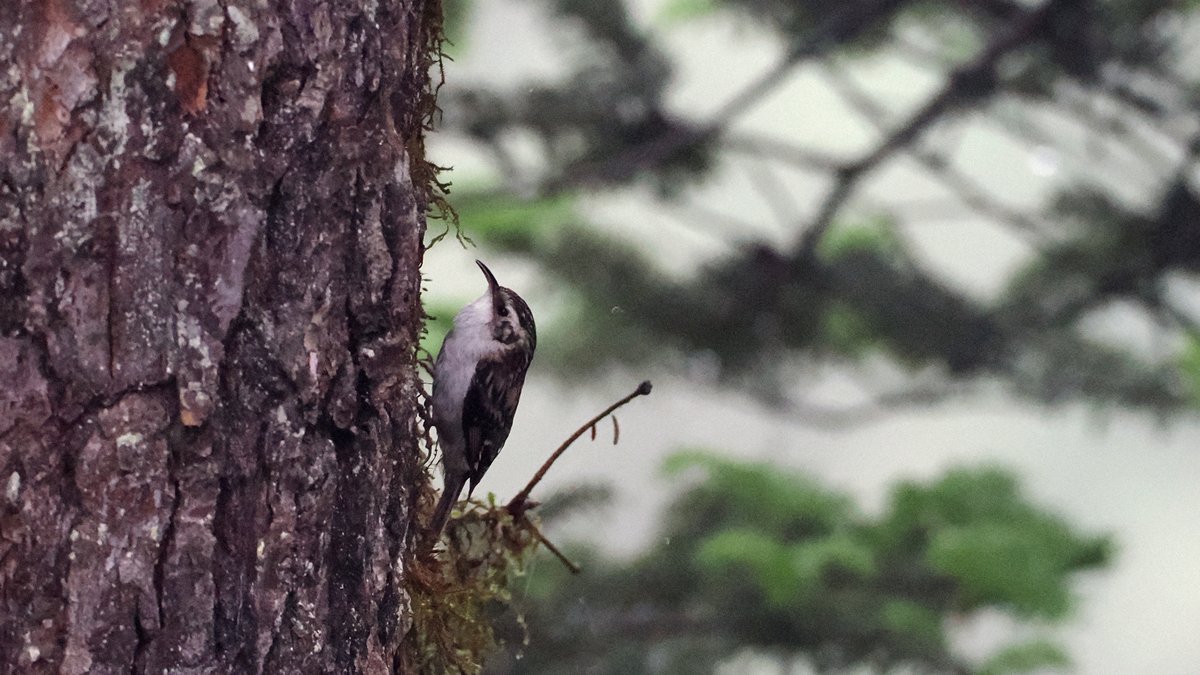
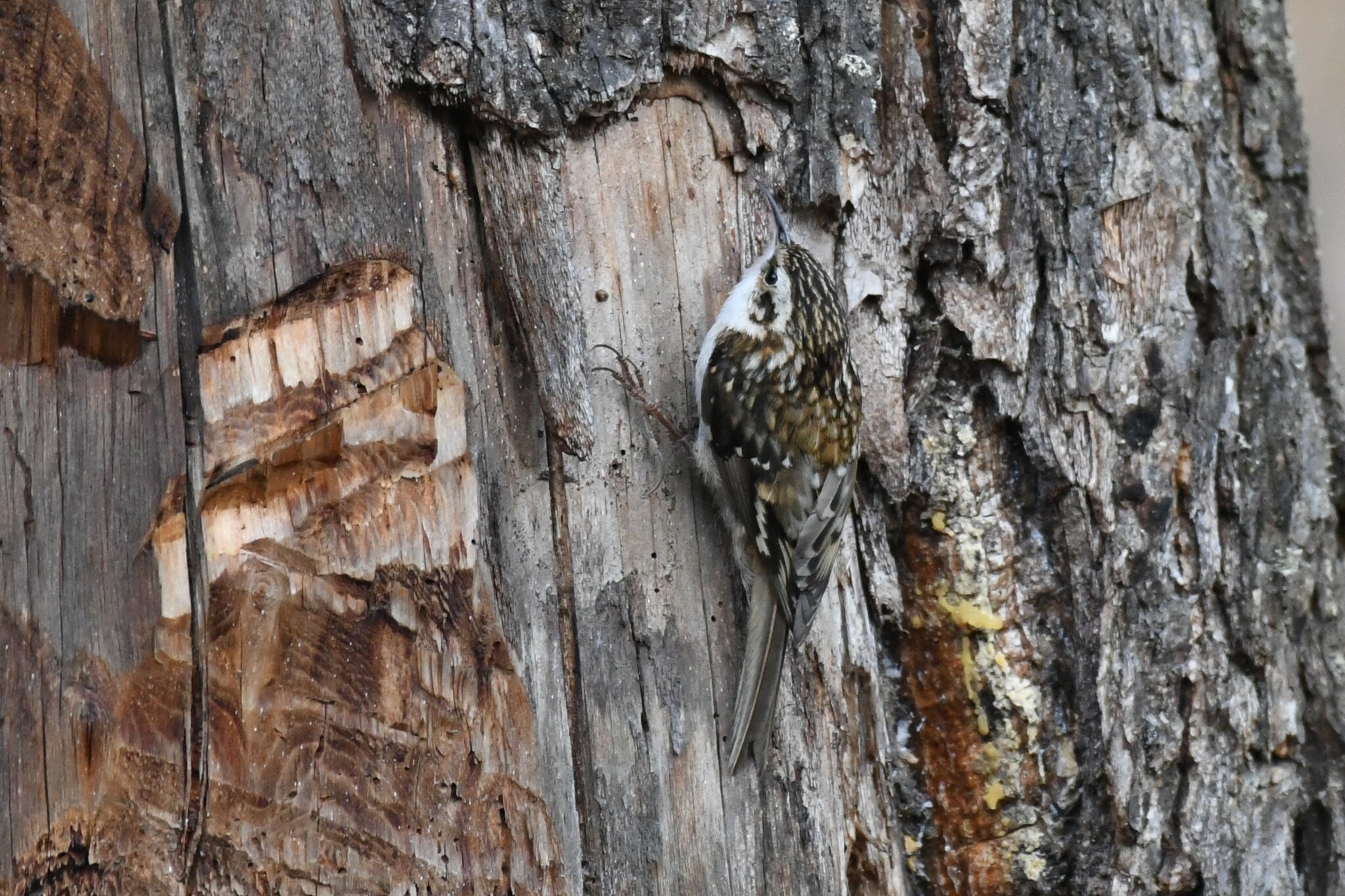
Small bird, 12.5 cm (4.9 in) long, with a fairly drab appearance. Plumage is brownish with lighter and darker streaks above, and off-white below and on the supercilium. It is browner above than the common treecreeper, featuring a contrasting rufous rump. Possesses a long curved bill and long stiff tail feathers.
Identification
Distinguished from the common treecreeper by being browner above with a contrasting rufous rump. Song begins with two 'shree' calls, followed by warbling calls, and ends with up- and downslurring notes. The song lasts 2 to 2.5 seconds, dropping in pitch from 7.5 kHz to 6 kHz, slurring down to 4 kHz at the end.
Distribution & Habitat
Found in Bhutan, China, India, Myanmar, Nepal, and Pakistan. Three subspecies: C. h. hodgsoni (N Pakistan to NW India), C. h. mandellii (Nepal, Bhutan, NE India), and C. h. khamensis (SW China, Myanmar, perhaps NE India). Inhabits temperate to cool tropical montane forests, mostly resident in coniferous woodlands, moving downhill to oak/rhododendron woodlands in winter.
Behavior & Ecology
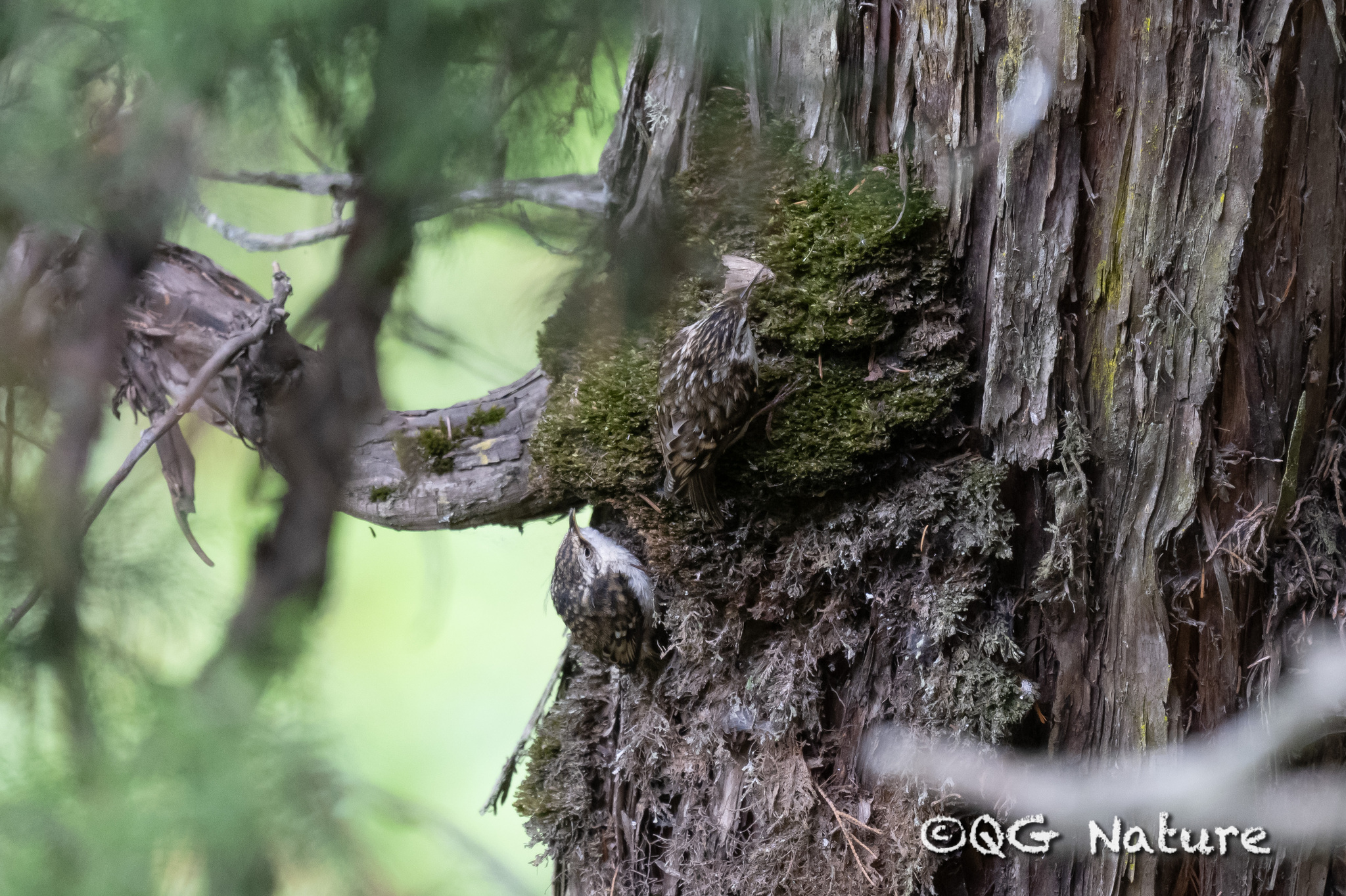
Uses stiff tail feathers to creep up vertical tree trunks while foraging for arthropod prey. Nests in tree crevices. Typical clutch size is 4–6 reddish-brown blotched pinkish-white eggs.
Conservation
IUCN considers it a Species of Least Concern. Although the range is prone to habitat fragmentation, the species remains as common as its northern relatives.
Source: Wikipedia · CC BY-SA 3.0
Taxonomy
- Order
- Passeriformes
- Family
- Certhiidae
- Genus
- Certhia
Subspecies (3)
-
Certhia hodgsoni hodgsoni
western Himalayas (eastward to Himachal Pradesh)
Data Sources
Species description from Wikipedia, licensed under CC BY-SA 3.0.
Bird images and sounds sourced from GBIF, contributed by citizen scientists worldwide under Creative Commons licenses.
Taxonomy data from AviList 2025.