Hodgson's Treecreeper
Certhia hodgsoni
霍氏旋木雀
Introduction
The Sikkim Treecreeper (Certhia himalayana) occupies montane forests across Bhutan, China, India, Myanmar, Nepal, and Pakistan. Formerly classified as a subspecies of the Common Treecreeper (C. familiaris), genetic and morphological analysis has confirmed it as a distinct species. This species belongs to the Holarctic treecreeper lineage and is most closely related to the Common Treecreeper and Short-toed Treecreeper (C. brachydactyla). Other Himalayan treecreeper species belong to a different evolutionary lineage that originated in subtropical southern China.
Description
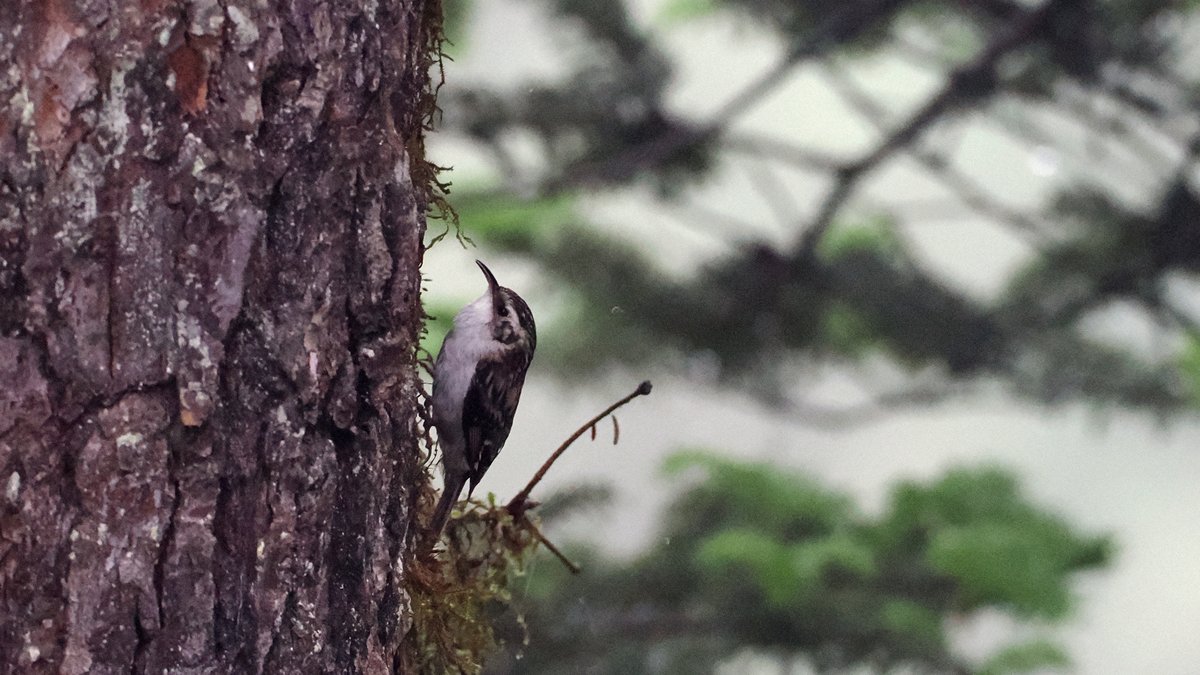
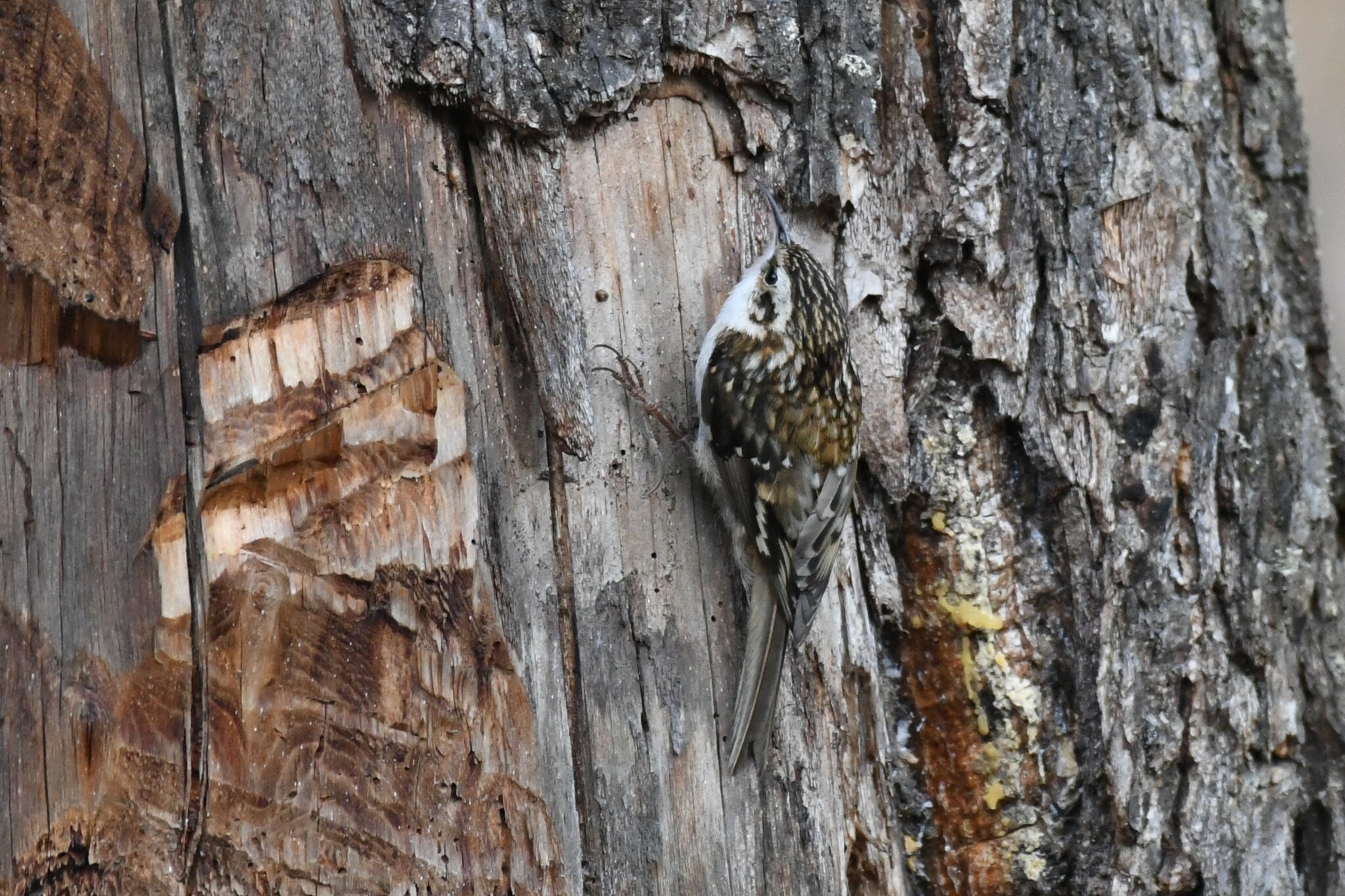
This is a diminutive bird measuring 12.5 centimeters in length with a rather subdued plumage pattern. The upperparts display a brown coloration with alternating light and dark streaks, while the underparts and the supercilium are off-white. The bird is browner above compared to the common treecreeper, notably featuring a contrasting rufous-colored rump. It possesses a distinctive long curved bill and characteristic long stiff tail feathers that serve as a prop while climbing vertical tree trunks.
Identification
The rufous rump contrasts distinctly with the otherwise brown upperparts, helping separate this species from the common treecreeper, which appears grayer overall. The song pattern provides reliable identification: it begins with two 'shree' calls, followed by one or several warbling notes, and concludes with typically two upslurring and downslurring notes. Each individual sound lasts approximately 0.3 seconds, with the complete song lasting 2 to 2.5 seconds. The pitch drops steadily from around 7.5 kHz initially to 6 kHz, finally slurring down to 4 kHz once or twice at the conclusion.
Distribution & Habitat
This species occurs across the Himalayan region, including Bhutan, China, India, Myanmar, Nepal, and Pakistan. It inhabits temperate to cool tropical montane forests throughout this range. While primarily resident in coniferous woodlands, populations may descend to oak and rhododendron woodlands during winter months. In Bhutan, the subspecies C.h. mandellii remains common year-round in moist Bhutan fir forests between approximately 3,000 and 4,000 meters above sea level.
Behavior & Ecology
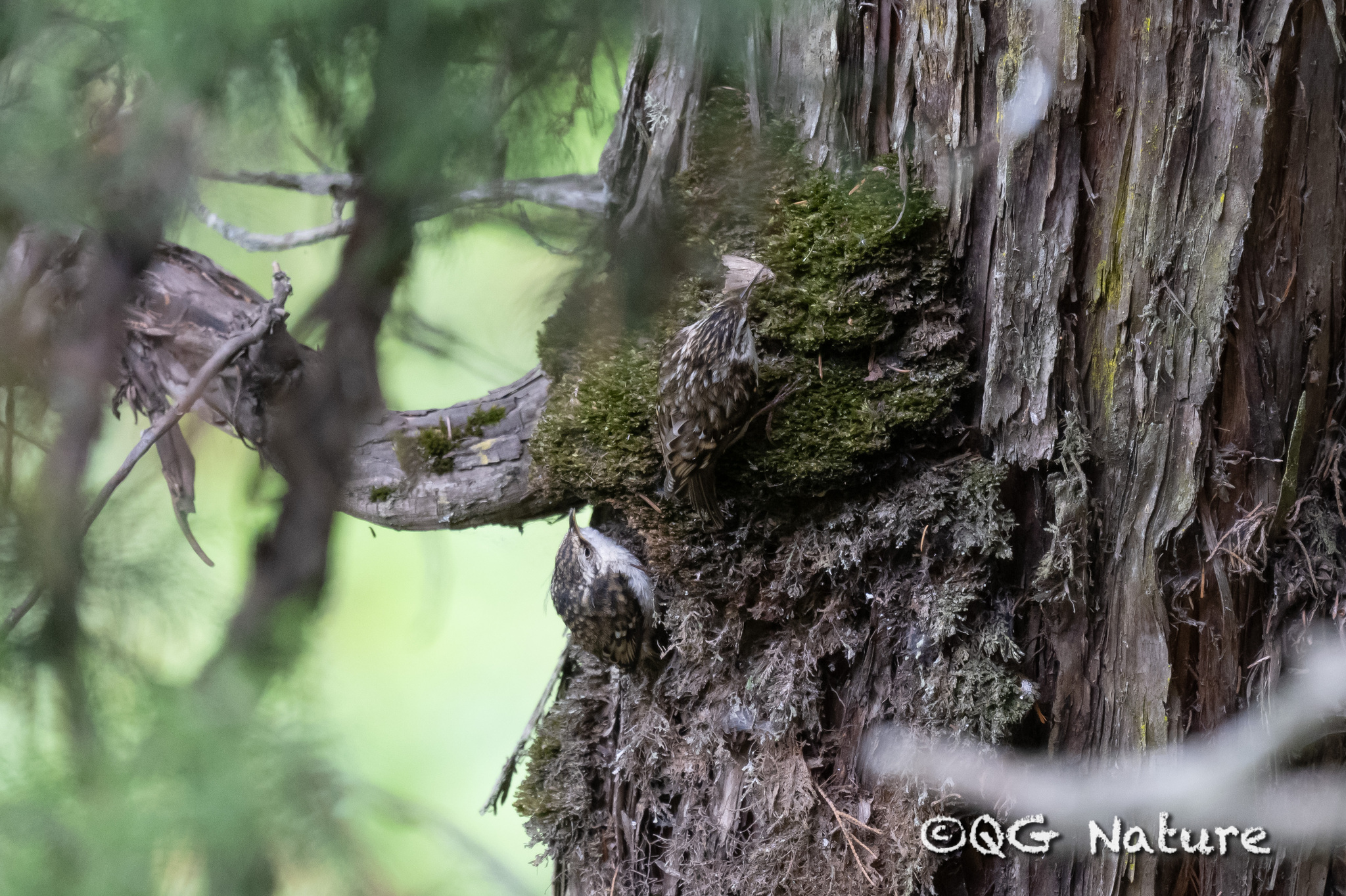
The species forages by climbing vertical tree trunks using its stiff tail feathers as a support, searching the bark crevices for arthropod prey. It constructs nests in tree crevices, where the female lays a clutch of 4 to 6 eggs. The eggs are pinkish-white with reddish-brown blotches. The vocal repertoire includes a distinctive song that combines 'shree' calls with warbling notes and upslurring-downslurring elements.
Conservation
The IUCN Red List classifies this species as Least Concern. Although the species' relatively stretched-out range across multiple countries makes it potentially vulnerable to habitat fragmentation in the long term, current populations remain common and stable, comparable to its northern relatives.
Culture
The species' English and scientific names honor Brian Houghton Hodgson, a 19th-century English naturalist and ethnologist who conducted significant work in British India. Hodgson contributed substantially to the natural history and ethnographic documentation of the Himalayan region during his career.
Source: Wikipedia · CC BY-SA 3.0
Taxonomy
- Order
- Passeriformes
- Family
- Certhiidae
- Genus
- Certhia
- eBird Code
- eurtre3
Subspecies (3)
-
Certhia hodgsoni hodgsoni
western Himalayas (eastward to Himachal Pradesh)
-
Certhia hodgsoni khamensis
southern China (southern Gansu) to southern Tibet, Yunnan, northeastern Myanmar, and Bhutan
-
Certhia hodgsoni mandellii
Himalayas (Himachal Pradesh to far western Arunachal Pradesh)
Data Sources
Species description from Wikipedia, licensed under CC BY-SA 3.0.
Bird images and sounds sourced from GBIF, contributed by citizen scientists worldwide under Creative Commons licenses.
Taxonomy data from AviList 2025.