Passeriformes / Certhiidae / Certhia
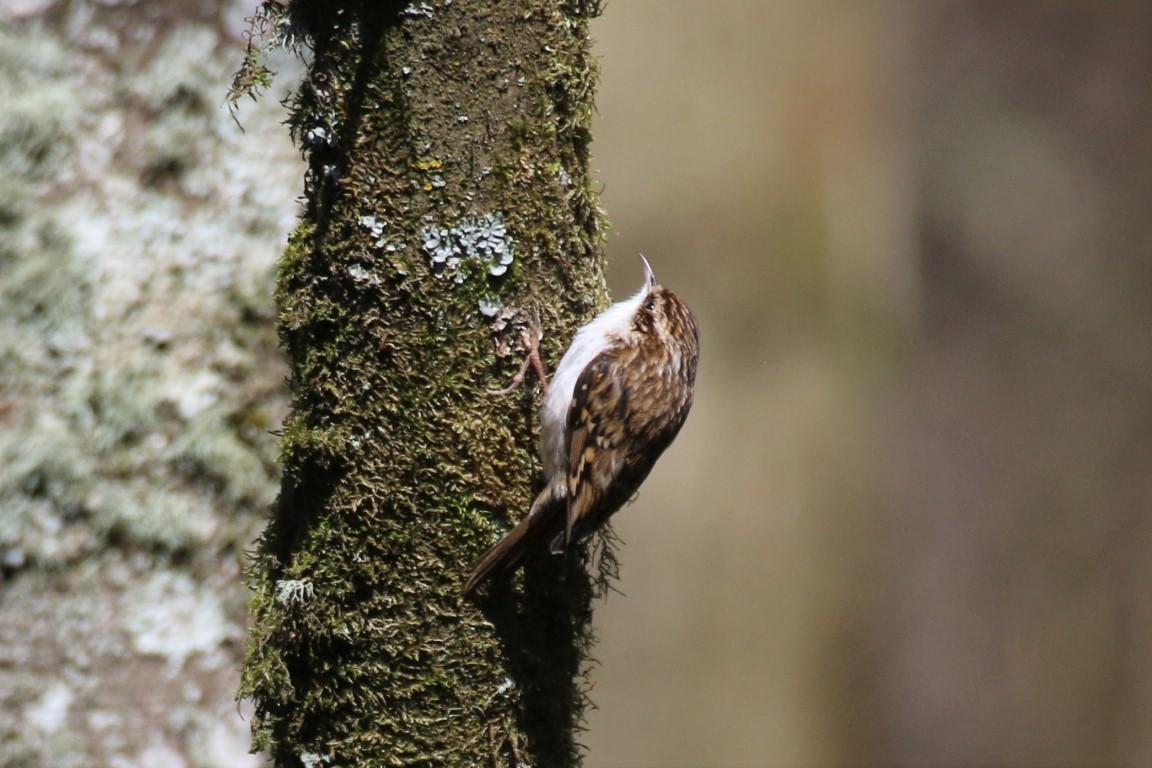
Eurasian Treecreeper
Certhia familiaris · 欧亚旋木雀
Introduction
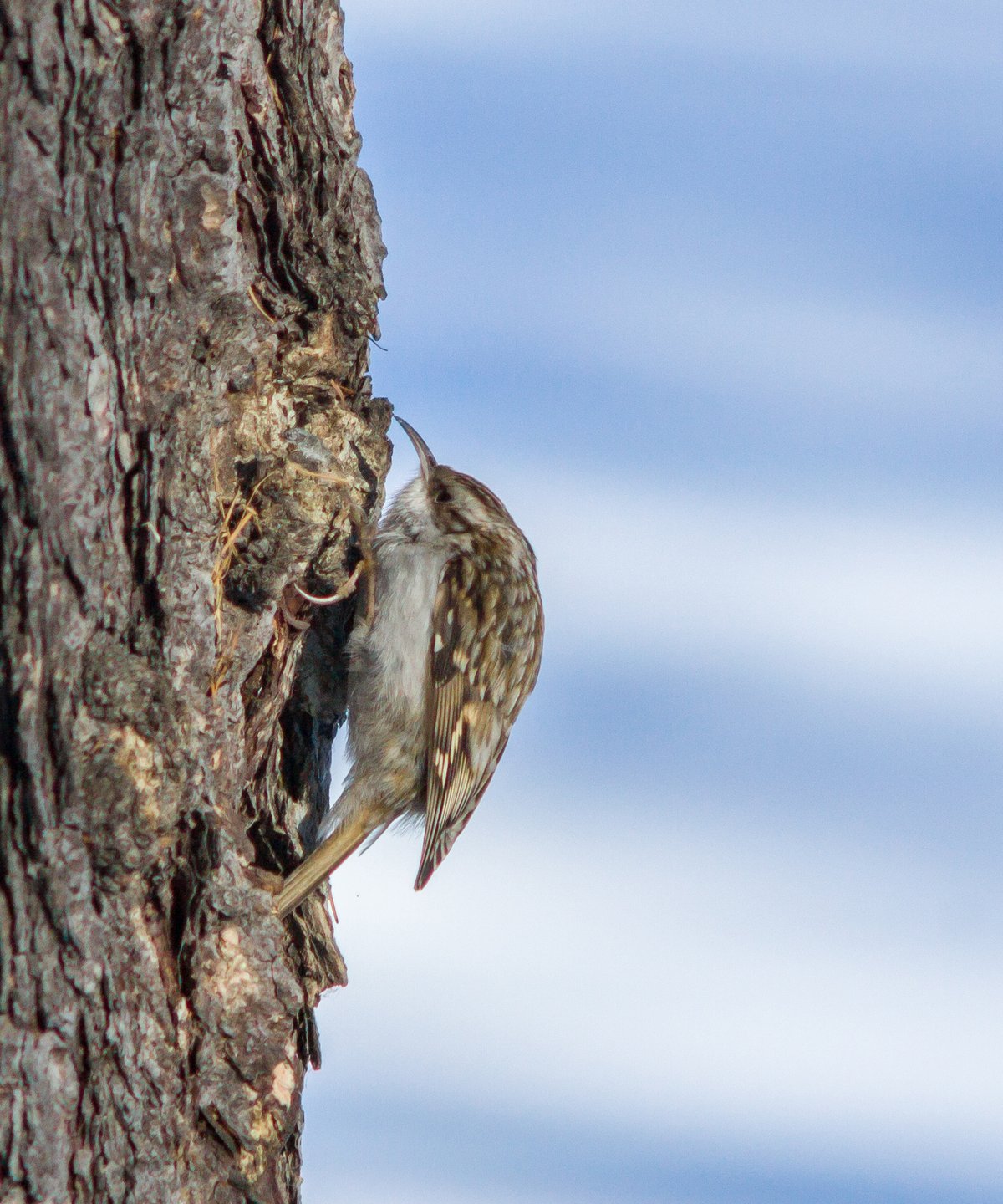
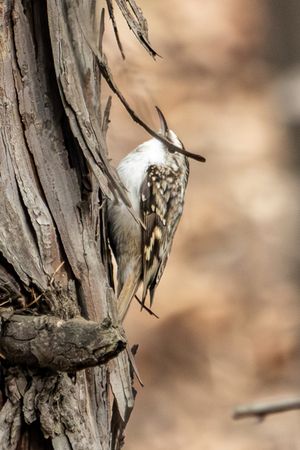
A small passerine bird in the genus Certhia, breeding in temperate woodlands across the Palearctic from Ireland to Japan. It is characterized by a curved bill, patterned brown upperparts, and stiff tail feathers used for support while climbing tree trunks. The species is insectivorous, foraging by creeping up bark to extract prey, and exhibits erratic flight between trees. It is evaluated as Least Concern by the IUCN.
Description
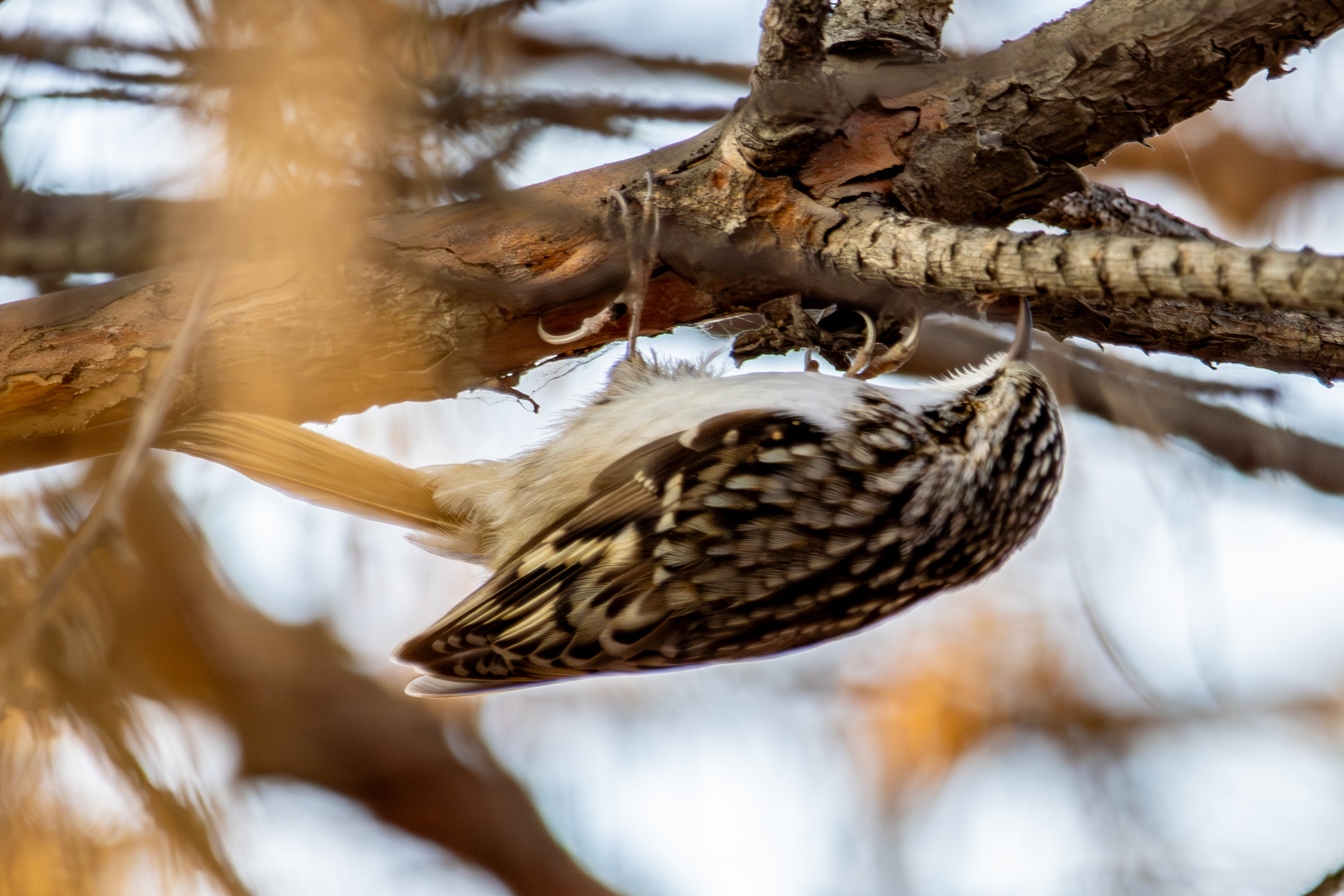
Length 12.5 cm (4.9 in); weight 7.0–12.9 g (0.25–0.46 oz). Upperparts are warm brown intricately patterned with black, buff, and white; rump is rufous. Underparts, including belly, flanks, and vent, are whitish tinged with buff. Tail is plain brown. Bill is long, thin, and decurved. Sexes are similar. Juveniles have duller upperparts and dull white underparts with dark fine spotting on the flanks.
Identification
Distinguished from the short-toed treecreeper by being whiter below, warmer and more spotted above, having a whiter supercilium, and a slightly shorter bill. Visual identification can be difficult; song is a key discriminator: begins with srrih, srrih, followed by twittering notes, a descending ripple, and a whistle that falls then rises. Contact call is a quiet, high-pitched sit; distinctive call is a penetrating tsree with vibrato. Differentiated from bar-tailed treecreeper by plain tail (no bars) and from brown-throated treecreeper by white throat.
Distribution & Habitat
Breeds in temperate woodlands across the Palearctic from Ireland to Japan. In western Europe, overlaps with short-toed treecreeper and favors coniferous forests (spruce, fir) or higher altitudes; elsewhere frequents broadleaved or mixed woodland, parks, and gardens. Breeds from sea level in the north to highlands in the south (e.g., above 1,370 m in Pyrenees, 400–2,100 m in China). Non-migratory in mild regions; northern and mountain populations move south or to lower altitudes in winter. Vagrants recorded in South Korea, Orkney, Channel Islands, Majorca, and Faroe Islands.
Behavior & Ecology
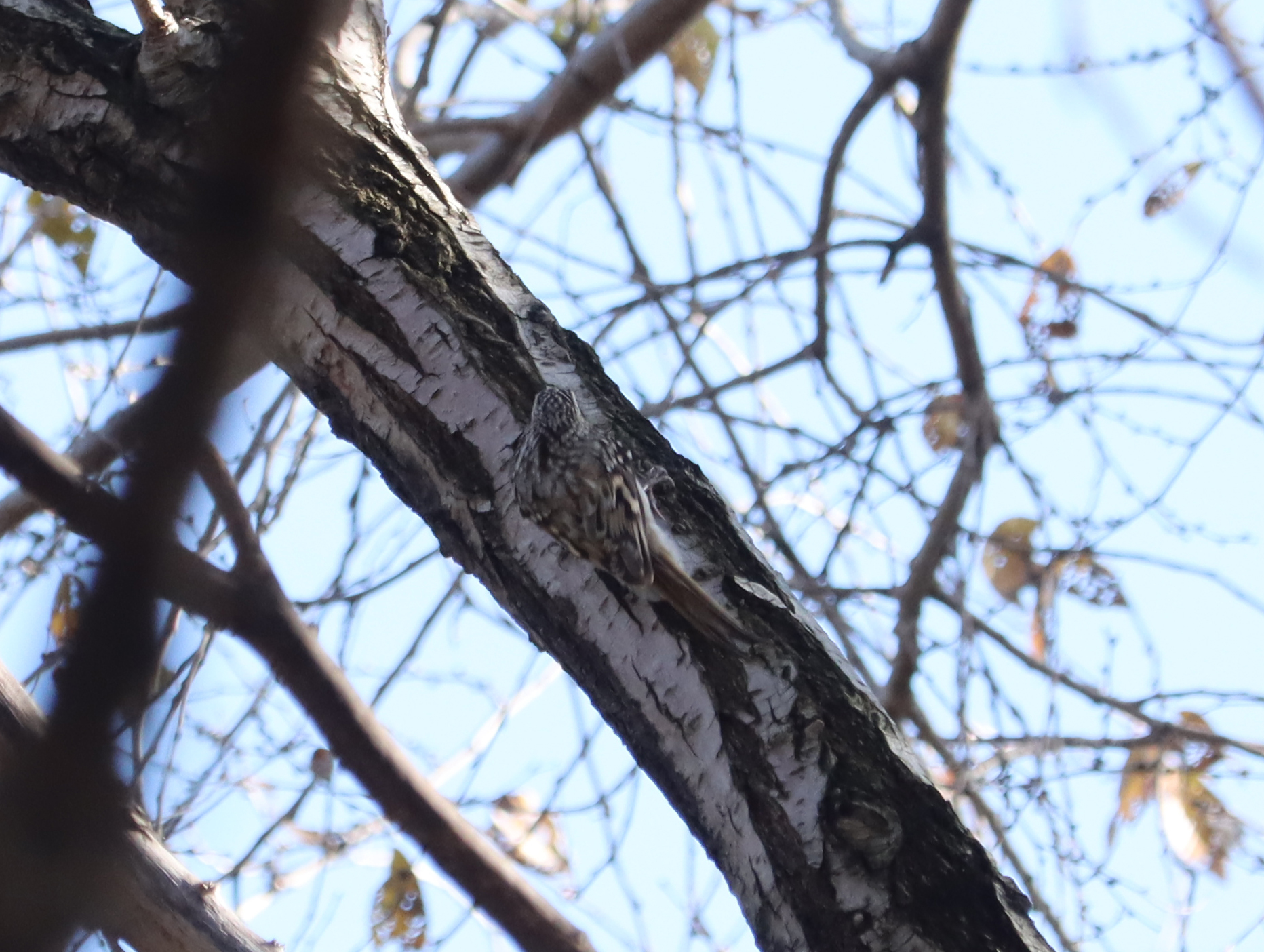
Insectivorous, feeding on insects and spiders extracted from bark crevices using a curved bill. Climbs tree trunks from base upwards using stiff tail for support, then flies erratically to the base of another tree. Females forage on upper trunk parts, males on lower parts. Nests in tree crevices, behind bark flakes (favoring giant sequoia where available), or artificial boxes. Clutch size is 5–6 eggs in Europe (March–June) or 3–5 in Japan (May–July). Eggs are white with pink speckles, incubated by female for 13–17 days; chicks fledged after 15–17 days. About 20% of pairs raise a second brood. Solitary in winter but forms communal roosts in cold weather. Adult annual survival rate is 47.7%; maximum recorded age is eight years and ten months.
Conservation
Evaluated as Least Concern by the IUCN. Extensive range of about 10 million km². Large population estimated at 11–20 million individuals in Europe. Population trends not quantified but not believed to approach decline thresholds. Vulnerable to hard winters, especially ice glaze on trees. Predation rates are higher in fragmented landscapes (32.4%) compared to solid woodland blocks (12.0%).
Culture
Known simply as treecreeper in the British Isles, where it is the only living member of its genus.
Source: Wikipedia · CC BY-SA 3.0
Taxonomy
- Order
- Passeriformes
- Family
- Certhiidae
- Genus
- Certhia
Subspecies (10)
-
Certhia familiaris bianchii
west-central China (eastern Qinghai, Gansu, Shaanxi, and Shanxi)
Data Sources
Species description from Wikipedia, licensed under CC BY-SA 3.0.
Bird images and sounds sourced from GBIF, contributed by citizen scientists worldwide under Creative Commons licenses.
Taxonomy data from AviList 2025.