Cuculiformes / Cuculidae / Centropus
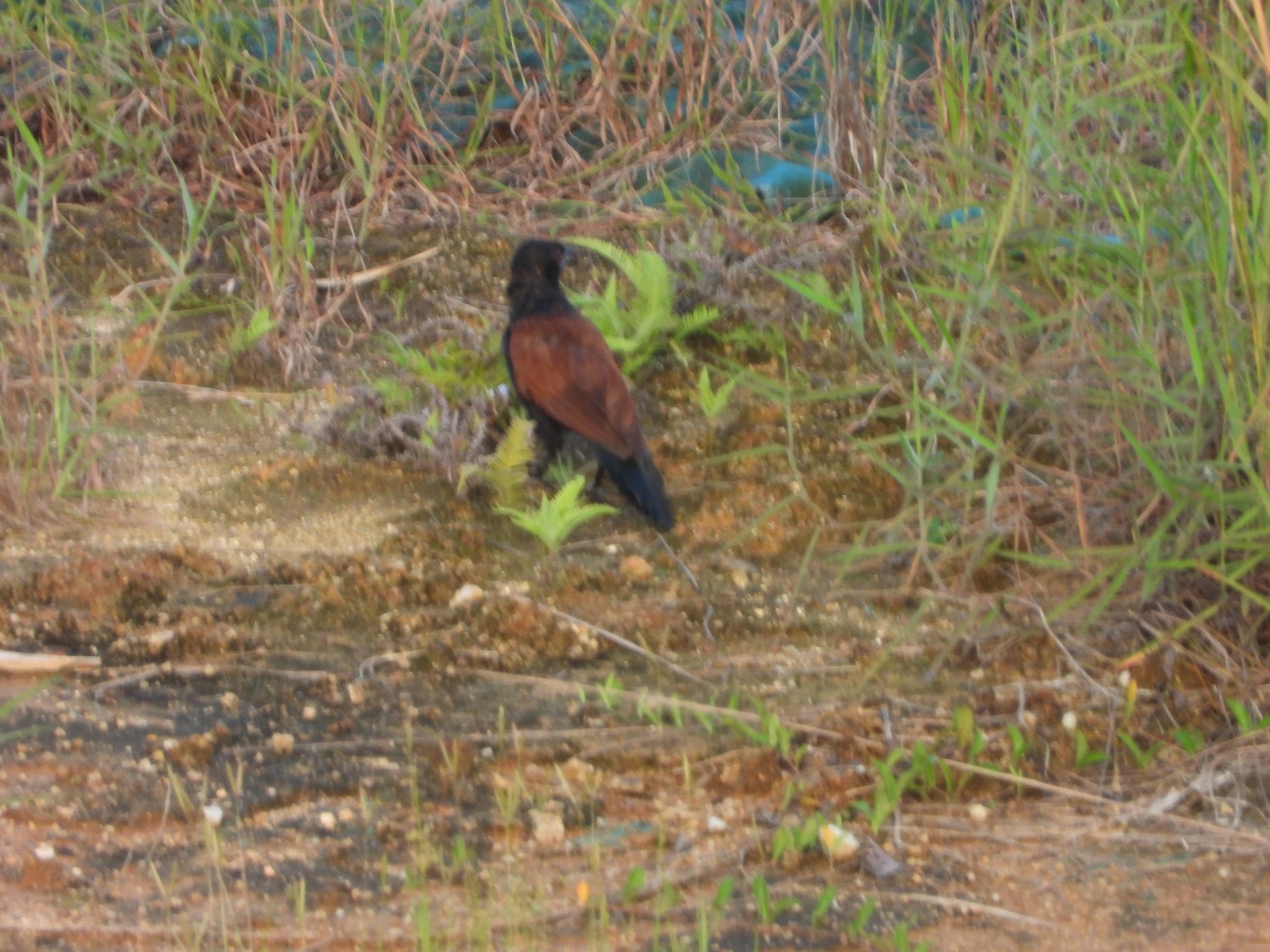
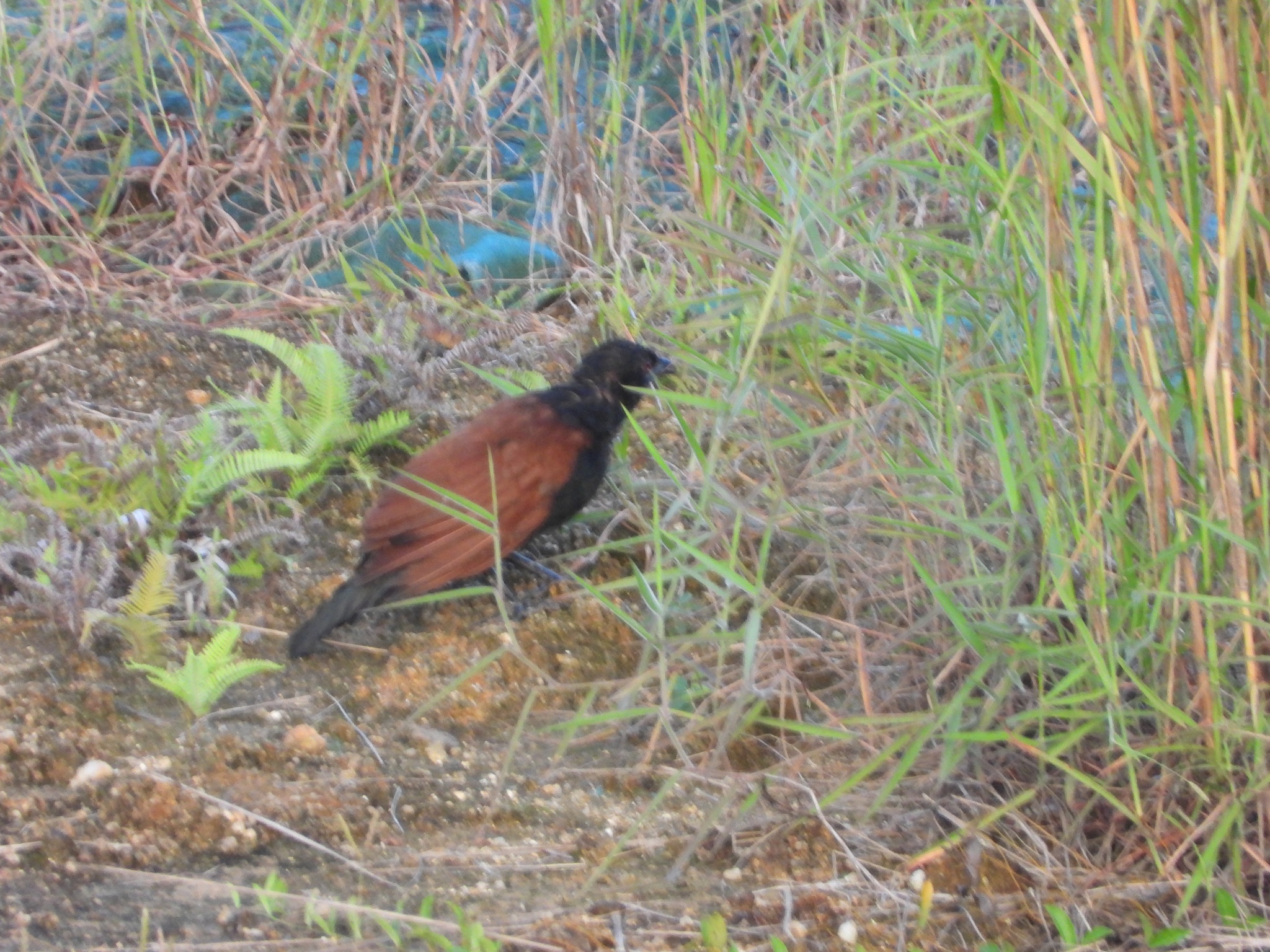
Greater Coucal
Centropus sinensis · 褐翅鸦鹃
Introduction
A large non-parasitic member of the cuckoo order (Cuculiformes), widespread as a resident in the Indian subcontinent and Southeast Asia. It inhabits diverse environments ranging from jungle to cultivation and urban gardens. Distinctive traits include weak flight, terrestrial foraging behavior, and a deep resonant call.
Description
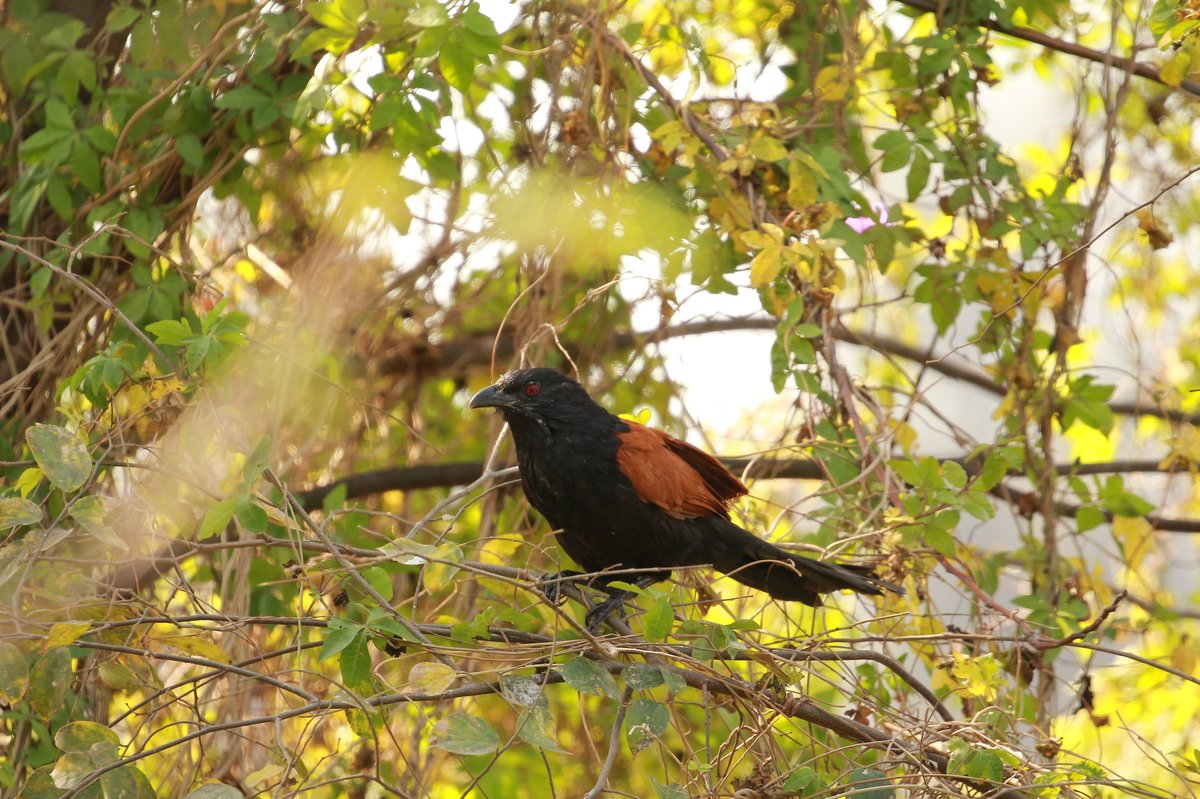
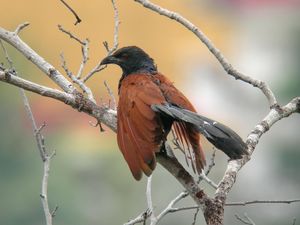
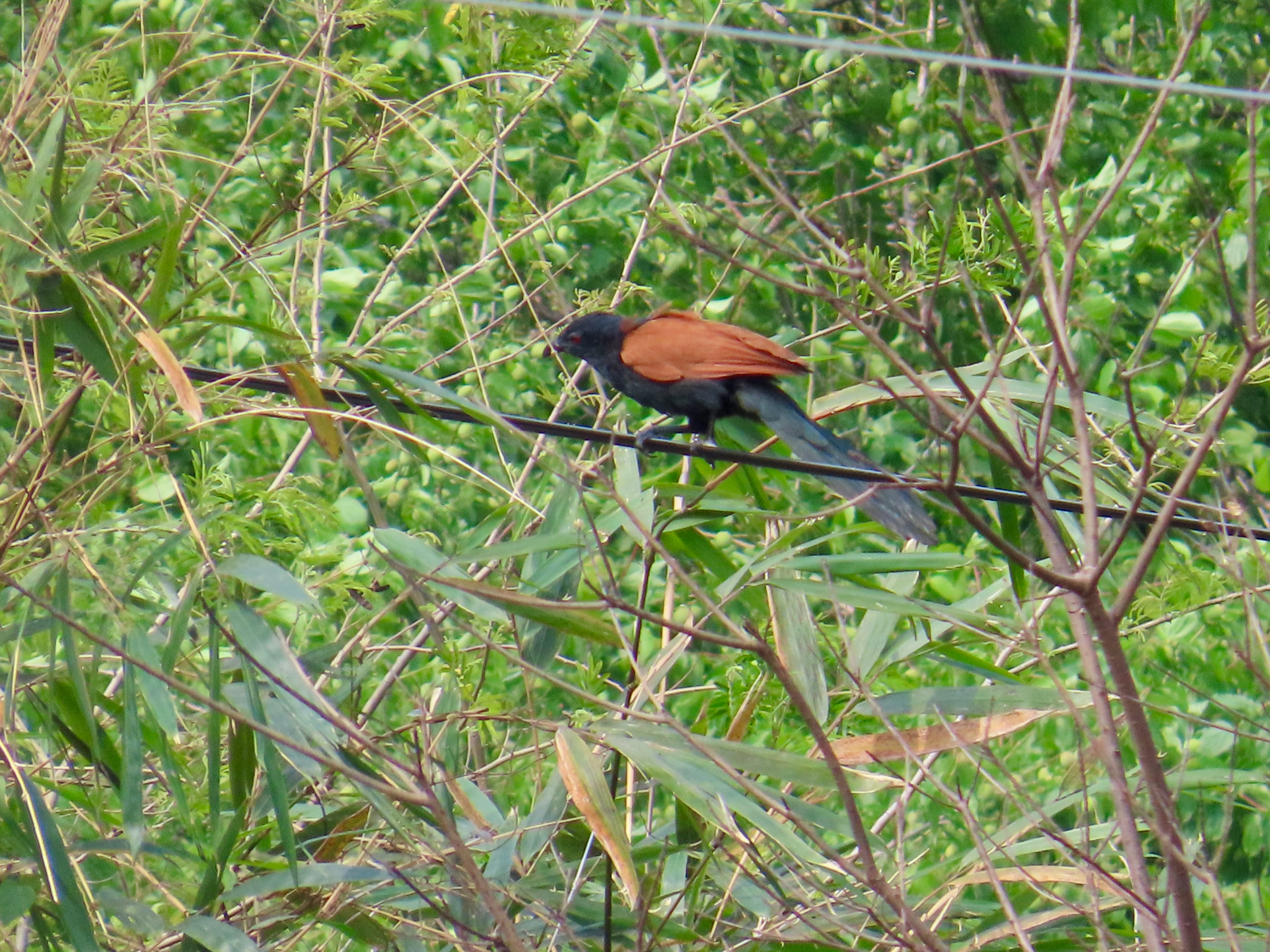
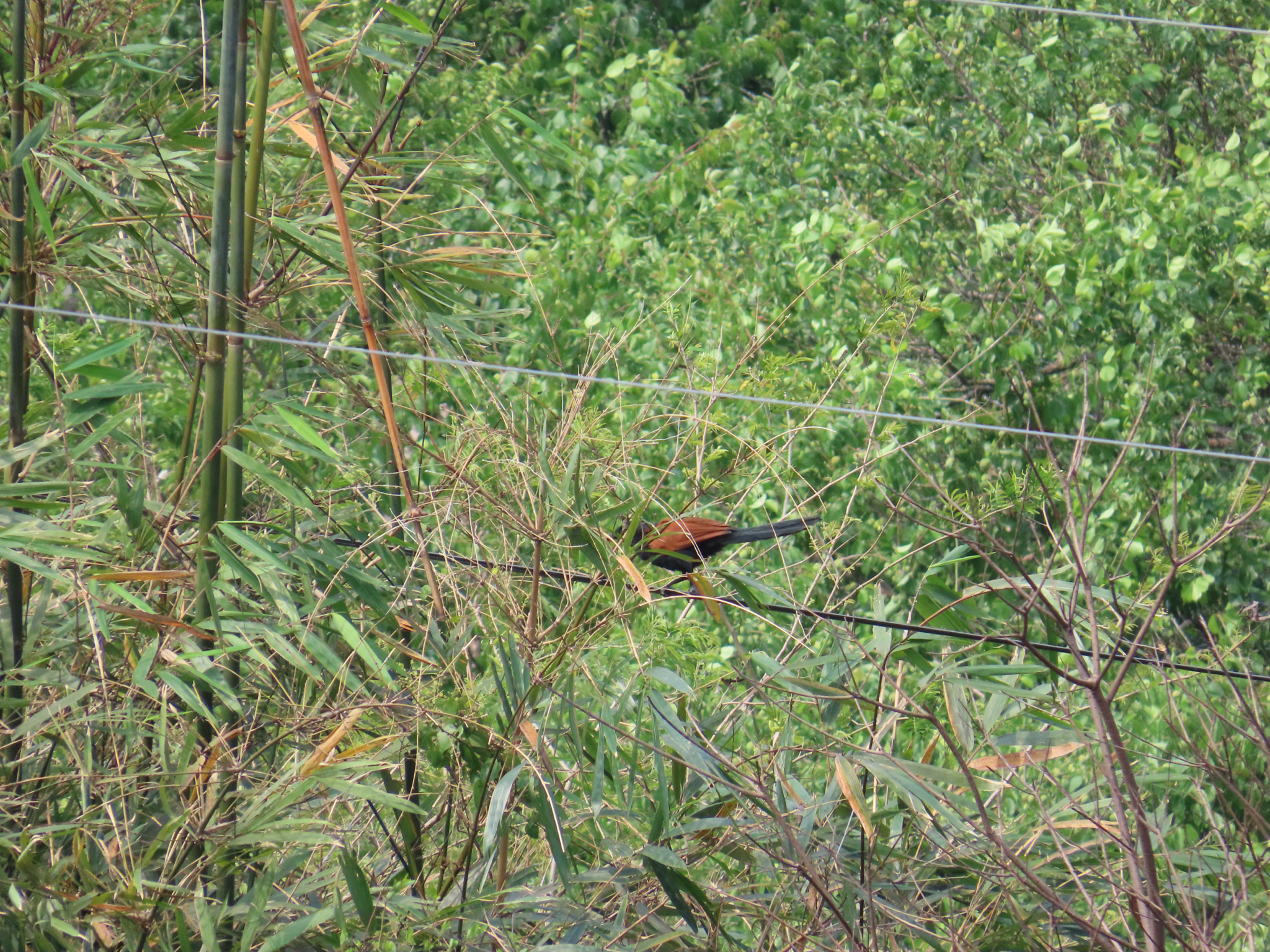
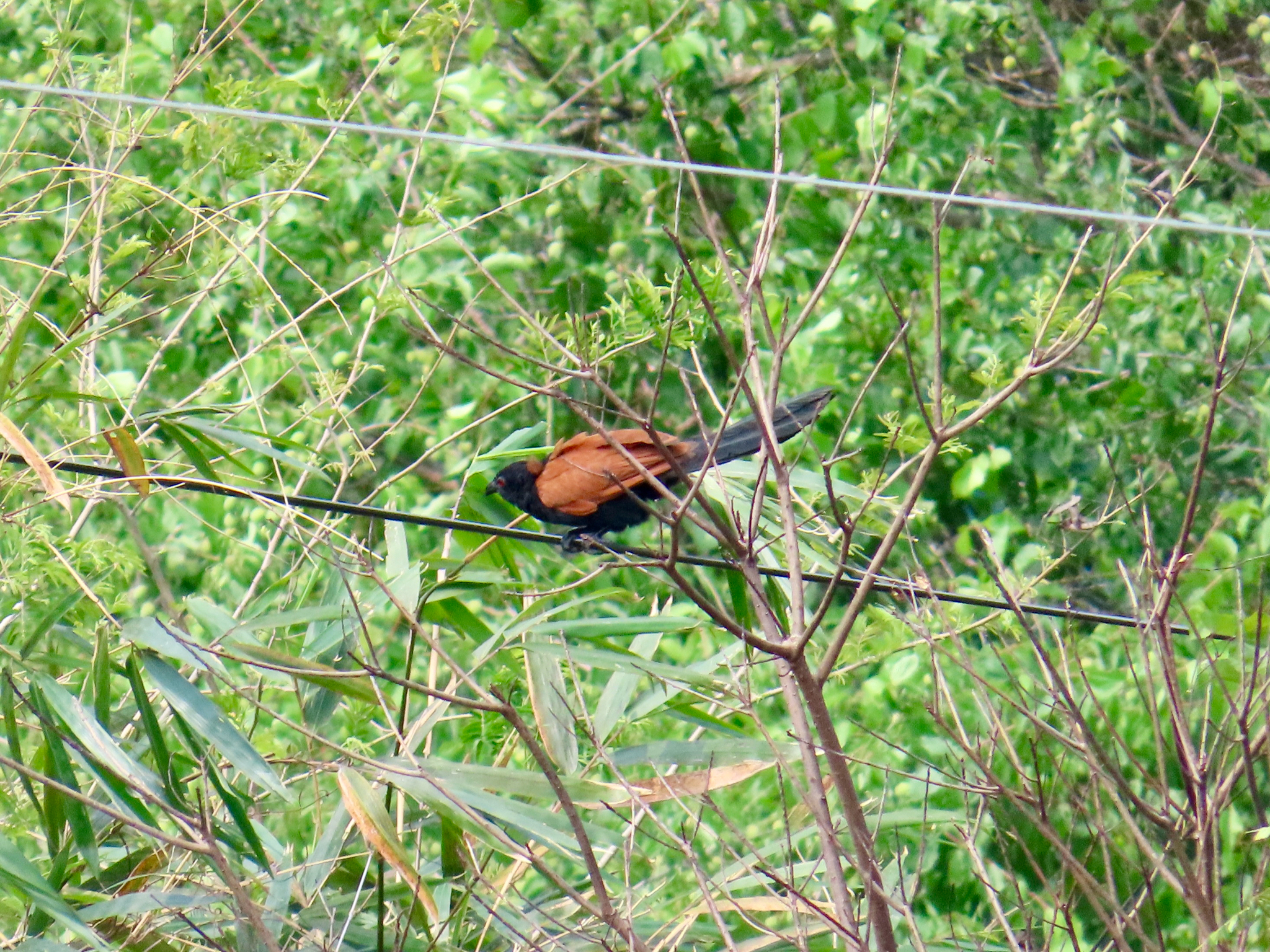
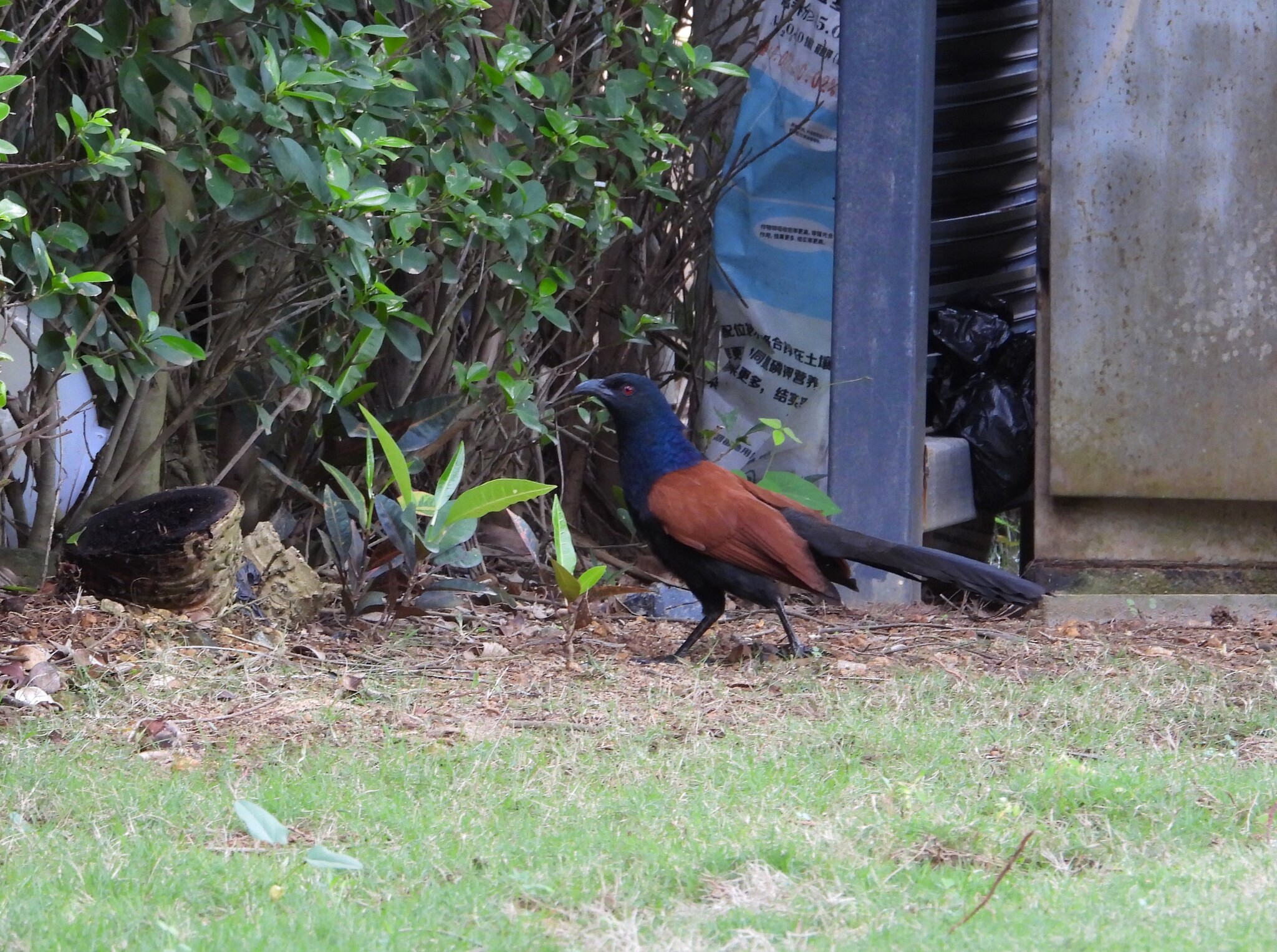
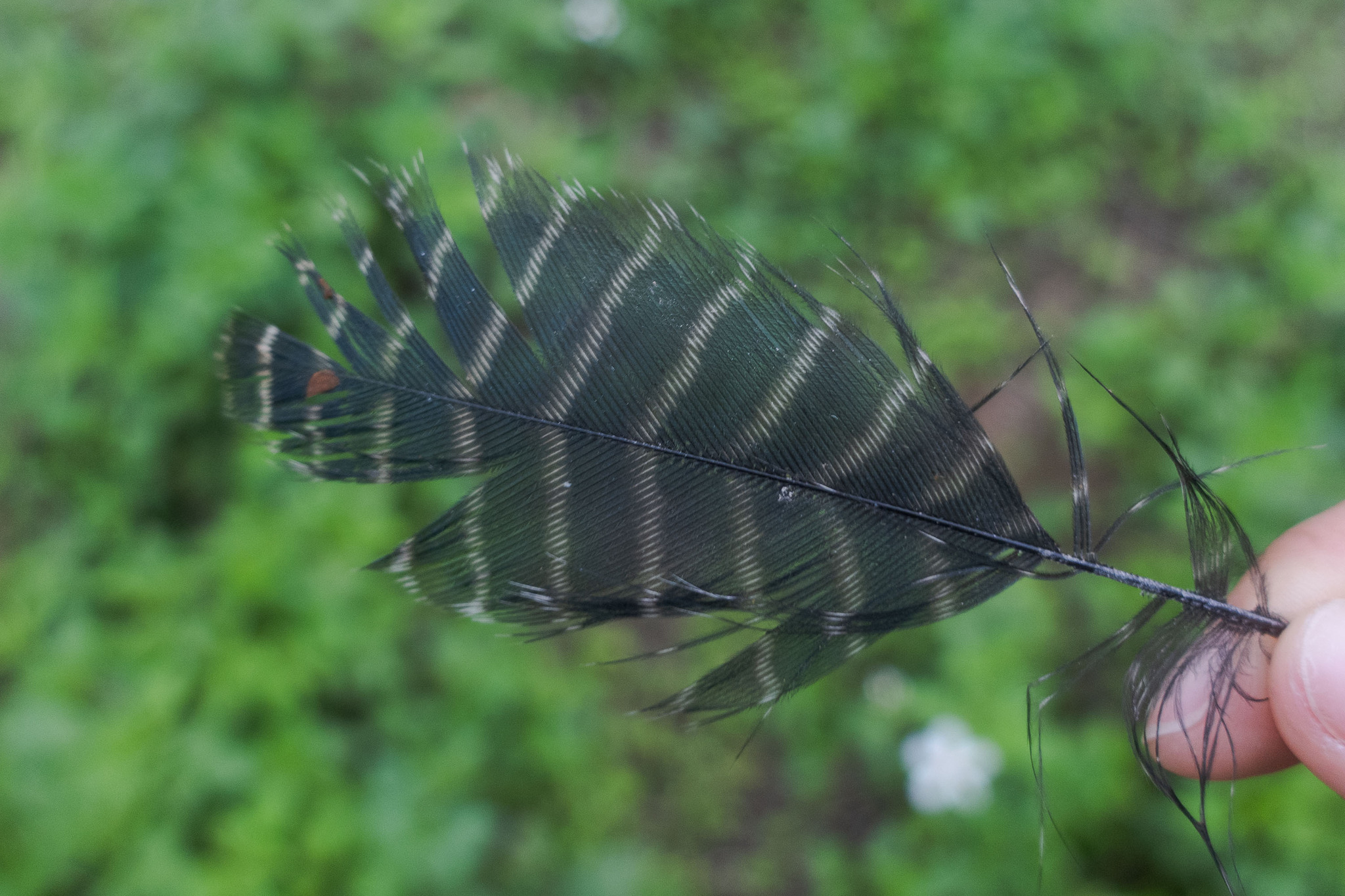
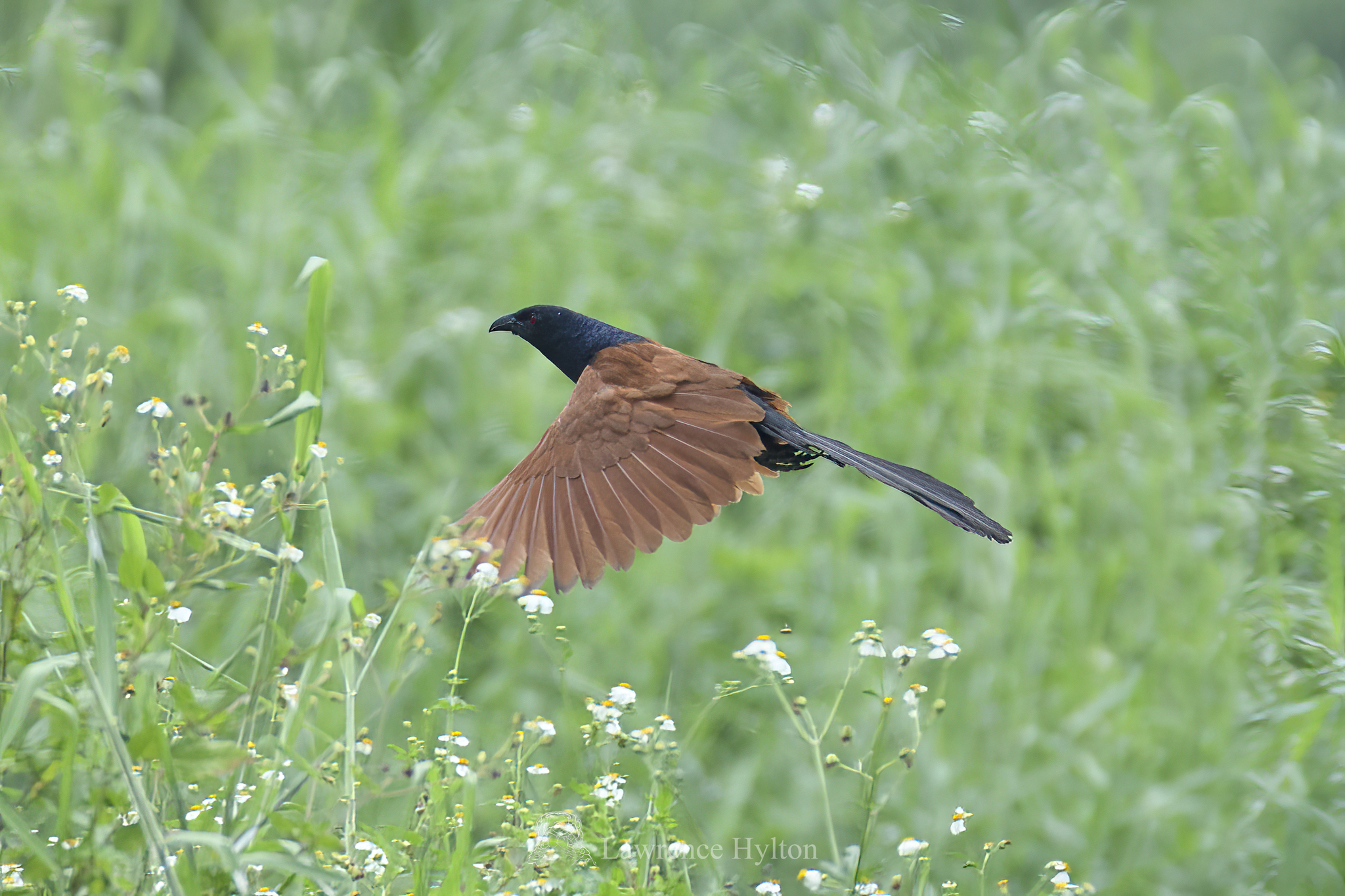
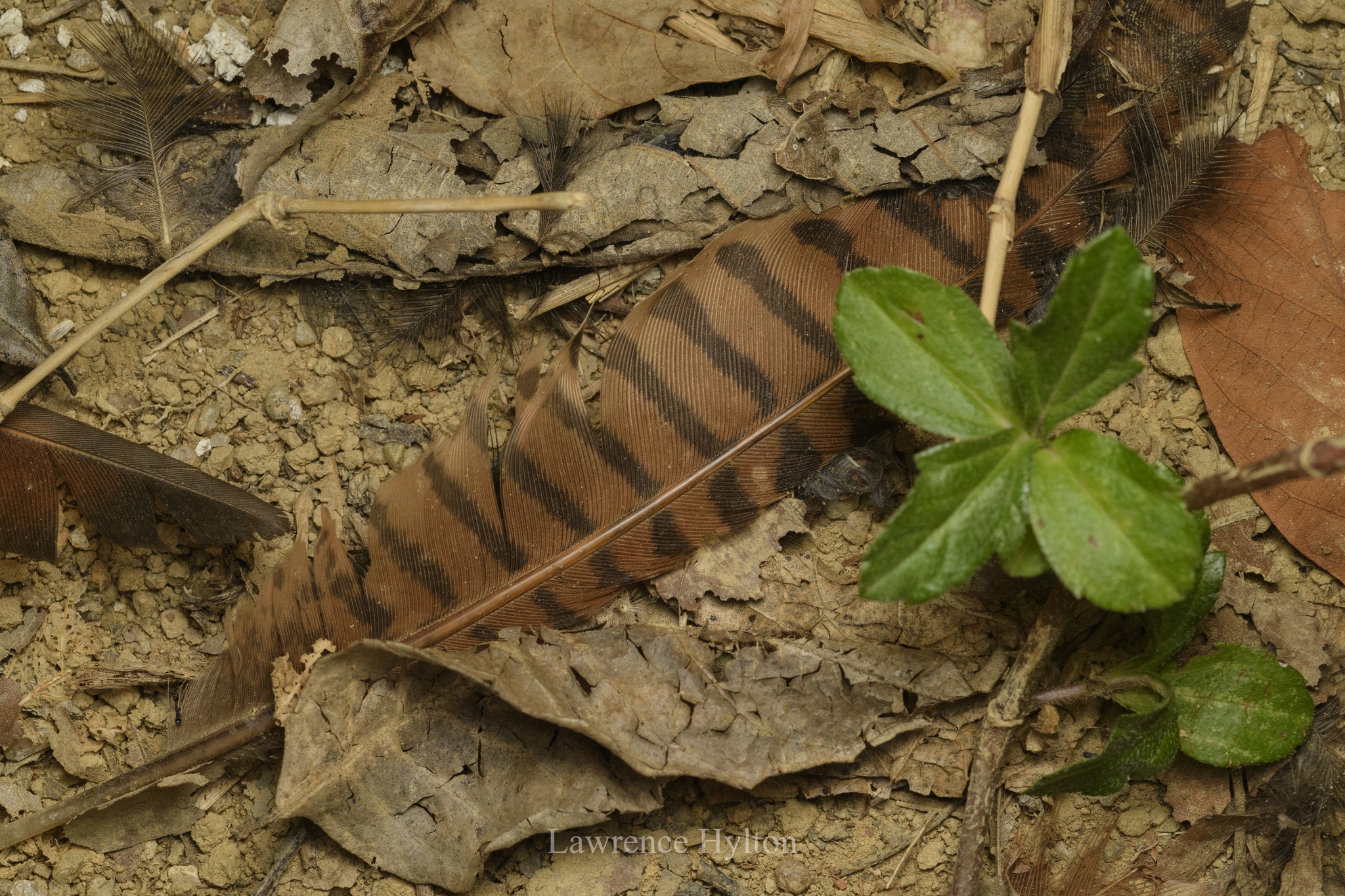
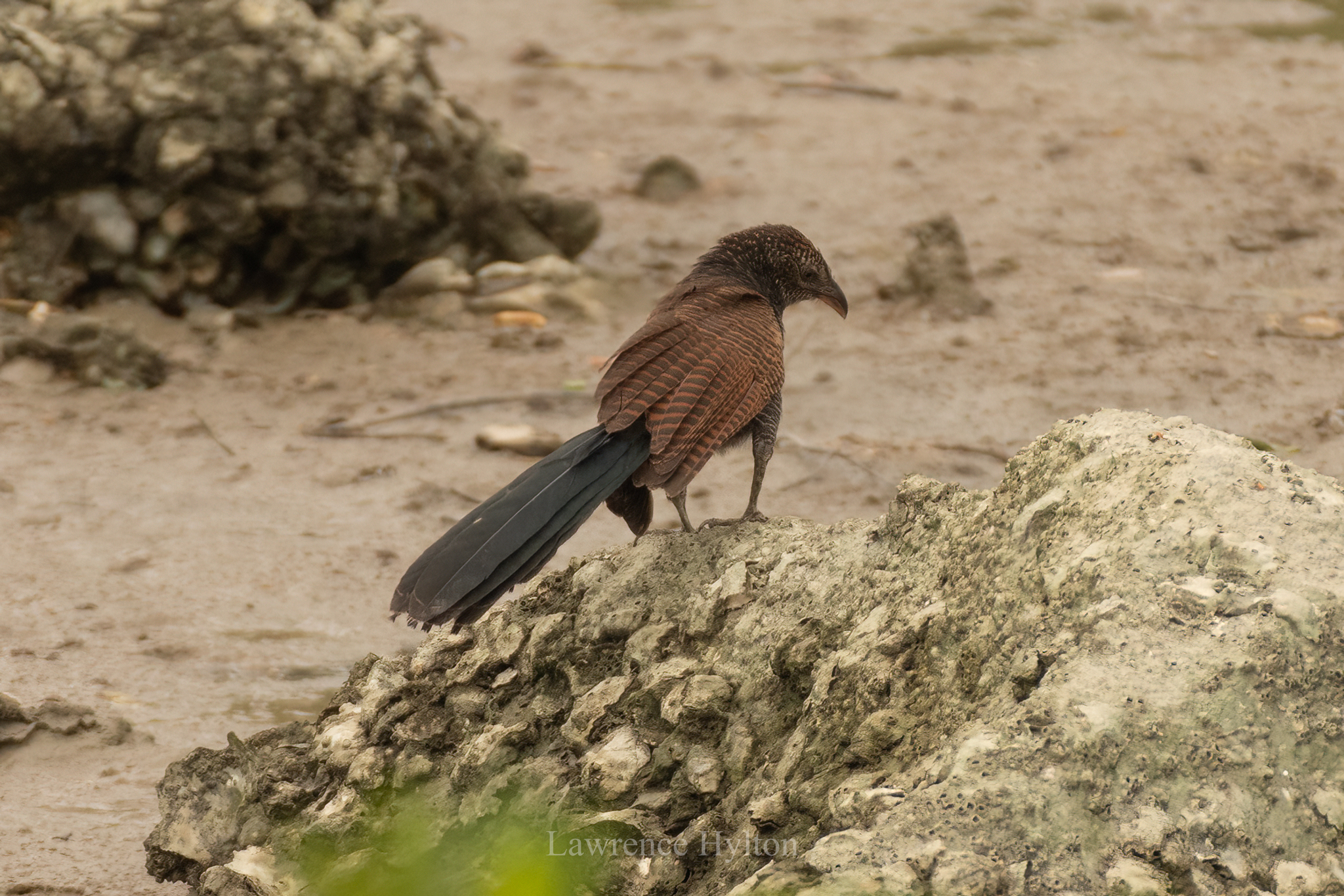
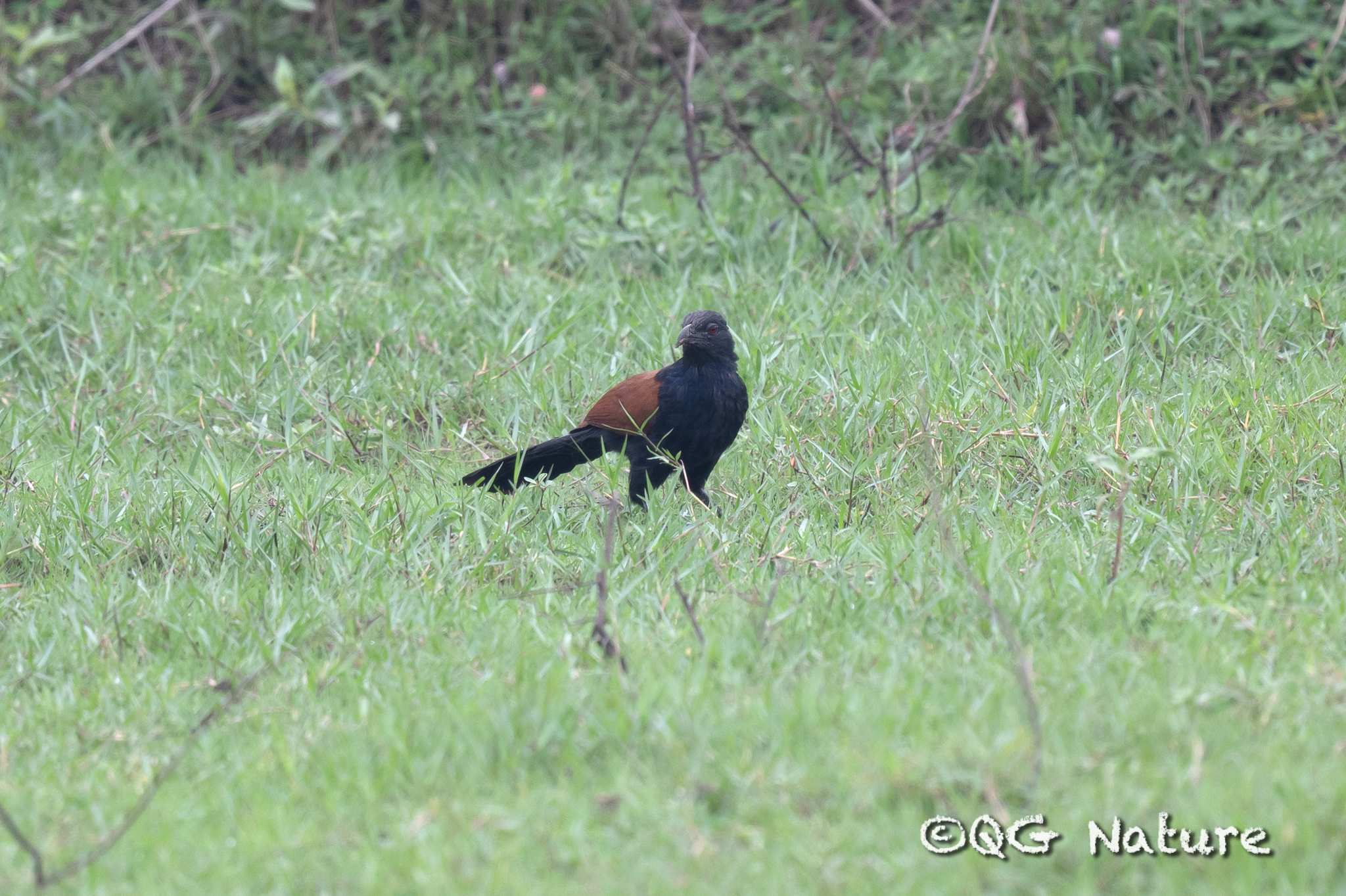
Large cuckoo measuring 48 cm. The head, upper mantle, and underside are black with a purple gloss; the back and wings are chestnut brown without pale shaft streaks on the coverts. Eyes are ruby red. Females are slightly larger than males but similar in plumage. Juveniles are duller black with spots on the crown and whitish bars on the underside and tail. Leucistic specimens have been observed. Geographic races show variation: race parroti has a black head with blue-glossed underparts and brownish forehead, face, and throat; race intermedius is smaller; race bubutus has paler rufous wings.
Identification
Distinguished by large size, crow-like appearance, long tail, and coppery brown wings. Weak flier, often seen clambering in vegetation or walking on the ground. In the Western Ghats, similar in size to the lesser coucal, but that species has a stubbier bill, shorter tail, wing tips extending beyond tertials, chestnut wing lining, dark eyes, and a tail with green/bronze sheen. Vocalizations include a deep booming 'coop-coop-coop', rapid rattling 'lotok, lotok...', harsh scolding 'skeeaaaw', and hissing threat calls. During duets, the female produces a lower-pitched call.
Distribution & Habitat
Widespread resident across the Indian subcontinent and Southeast Asia. Nominate race occurs from the Indus Valley through sub-Himalayan and Gangetic plains to Nepal, Assam, Bhutan foothills, and southern China (Guangxi, Zhejiang, Fujian). Race parroti is found in Peninsular India (Maharashtra, Madhya Pradesh, Orissa southwards). Race intermedius inhabits Bangladesh, west Cachar, Myanmar, Chin Hills, China (Yunnan, Hainan), Thailand, Indochina, and northern Malay Peninsula. Race bubutus ranges from southern Malay Peninsula to Sumatra, Nias, Mentawai Islands, Java, Bali, Borneo, and western Philippines. Race anonymus is in southwestern Philippines (Basilan, Sulu Islands). Race kangeangensis is found in the Kangean Islands.
Behavior & Ecology
Forages for insects, caterpillars, snails (predominantly Helix vittata in Tamil Nadu), small vertebrates including saw-scaled vipers, bird eggs, nestlings, fruits, and seeds. Consumes toxic fruits of Cascabela thevetia and fleshy mesocarps of ripe oil palm fruits. Sunbathes singly or in pairs with wings spread. Most active in warm morning hours and late afternoon. Monogamous; courtship involves ground chases and male food gifts. Female signals acceptance by lowering tail and drooping wings. Nest is a deep domed cup built mostly by the male in dense vegetation, creepers, bamboo, or Pandanus, up to 6m high. Clutch size is typically 3–5 chalky white eggs (36–28 mm, 14.8 g) with a yellow glaze. Incubation lasts 15–16 days; chicks fledge in 18–22 days. Both sexes participate in nest building. Study in southern India showed 77% hatching and 67% fledging success. Host to Haemoproteus centropi and immature Haemaphysalis ticks.
Culture
Deep calls are associated with spirits and omens. In Bengal, folklore held that monocled cobras mated with male greater coucals. British recruits in India mistakenly shot it as a pheasant, noting its 'evil flavoured' meat, earning the nickname 'Griff's pheasant'. Flesh was historically consumed as a folk cure for tuberculosis and pulmonary ailments.
Source: Wikipedia · CC BY-SA 3.0
Taxonomy
- Order
- Cuculiformes
- Family
- Cuculidae
- Genus
- Centropus
Vocalizations
Subspecies (6)
-
Centropus sinensis anonymus
southwestern Philippines (Basilan and Sulu Islands of Jolo, Tawitawi, and Sanga Sanga)
Data Sources
Species description from Wikipedia, licensed under CC BY-SA 3.0.
Bird images and sounds sourced from GBIF, contributed by citizen scientists worldwide under Creative Commons licenses.
Taxonomy data from AviList 2025.