Greater Coucal
Centropus sinensis
褐翅鸦鹃
Introduction
This species occurs across the Indian subcontinent, Southeast Asia, and southern China. It inhabits forests, forest edges, cultivated areas, and gardens from lowlands to approximately 1500-1800 m elevation. This non-parasitic cuckoo forages by clambering through dense vegetation and walking deliberately on the ground; it is a weak flier. The call is a low, resonant "coop-coop-coop." Several subspecies exist across its range.
Description
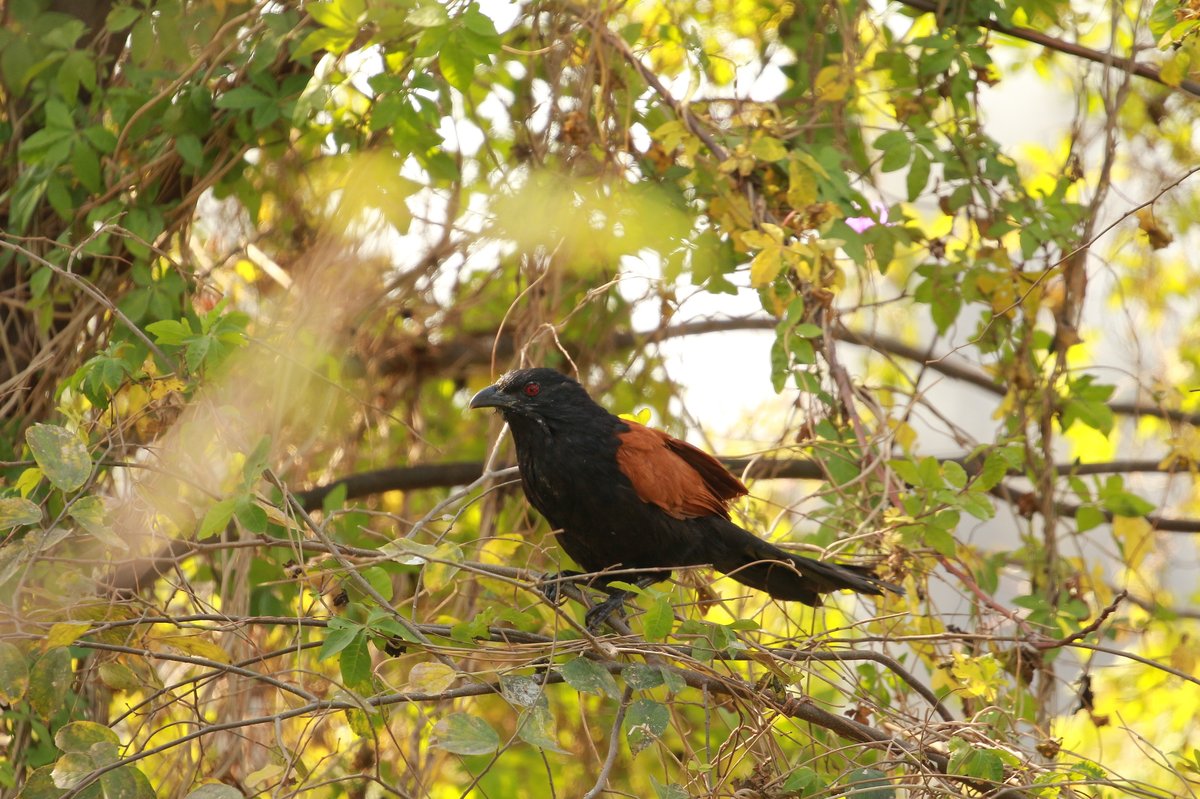
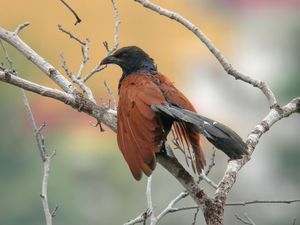
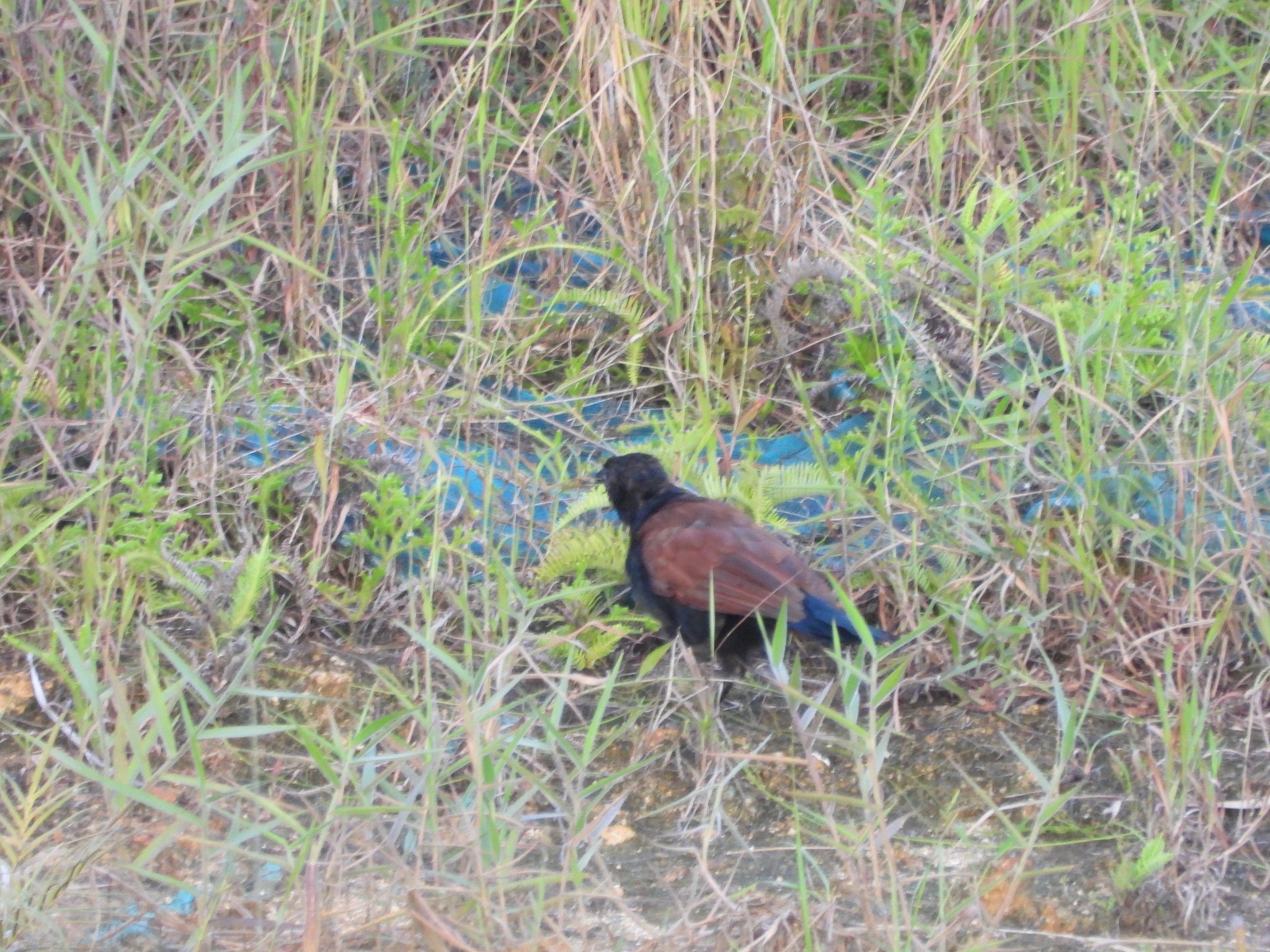
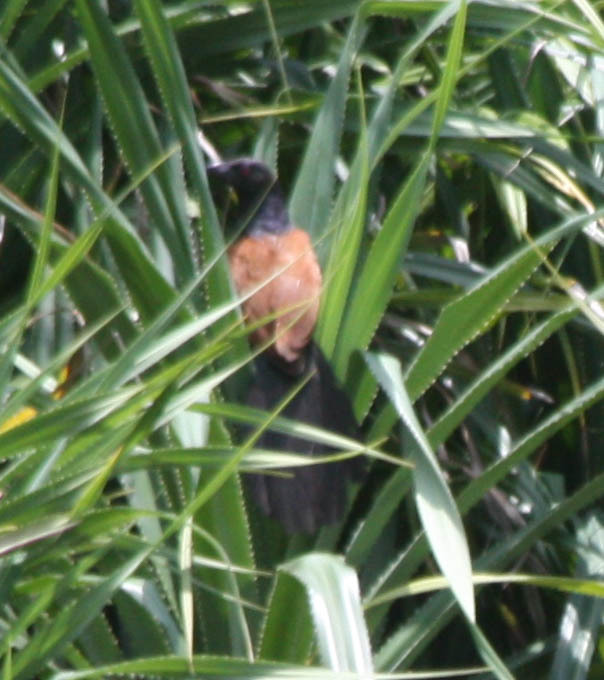
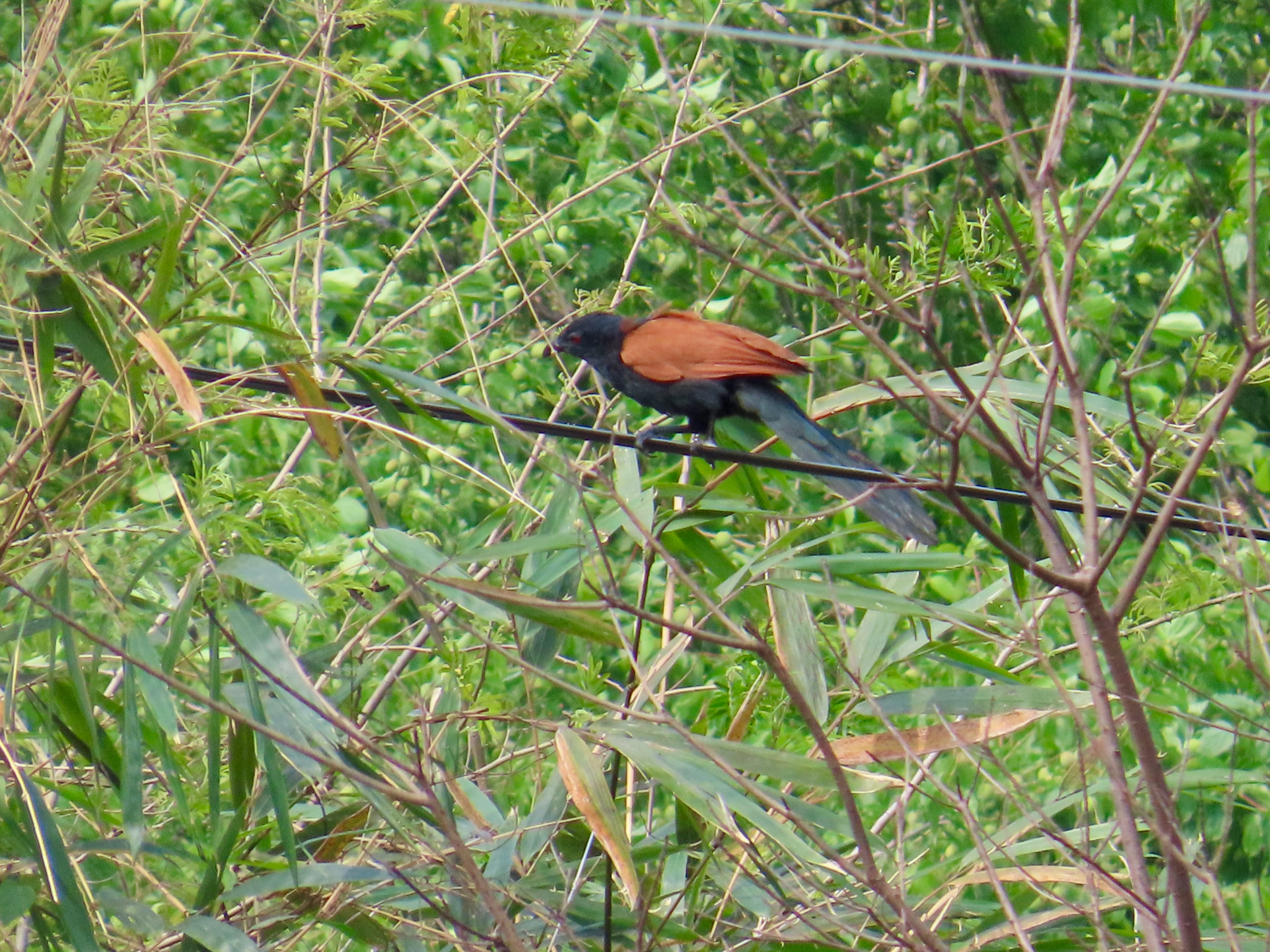
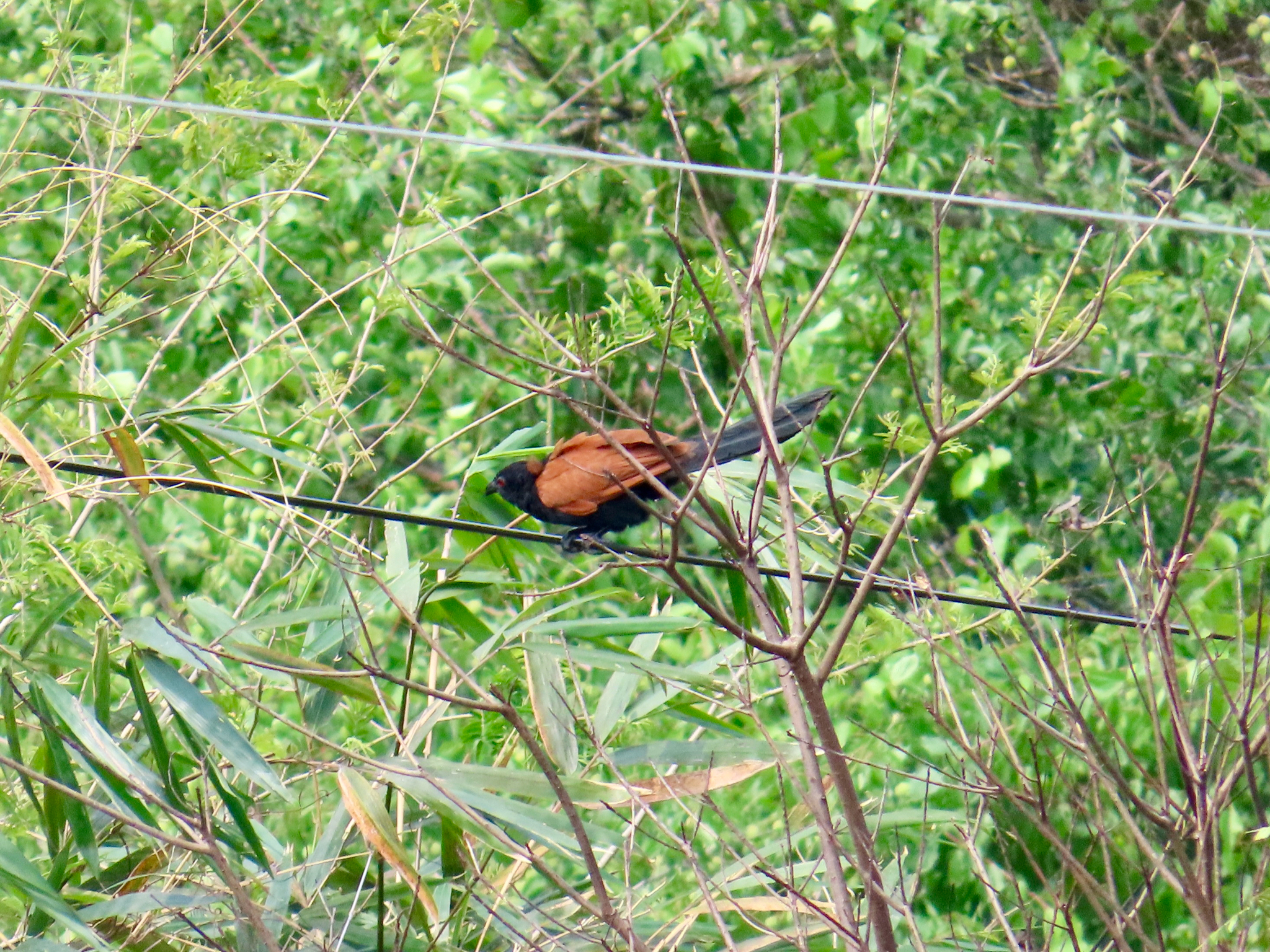
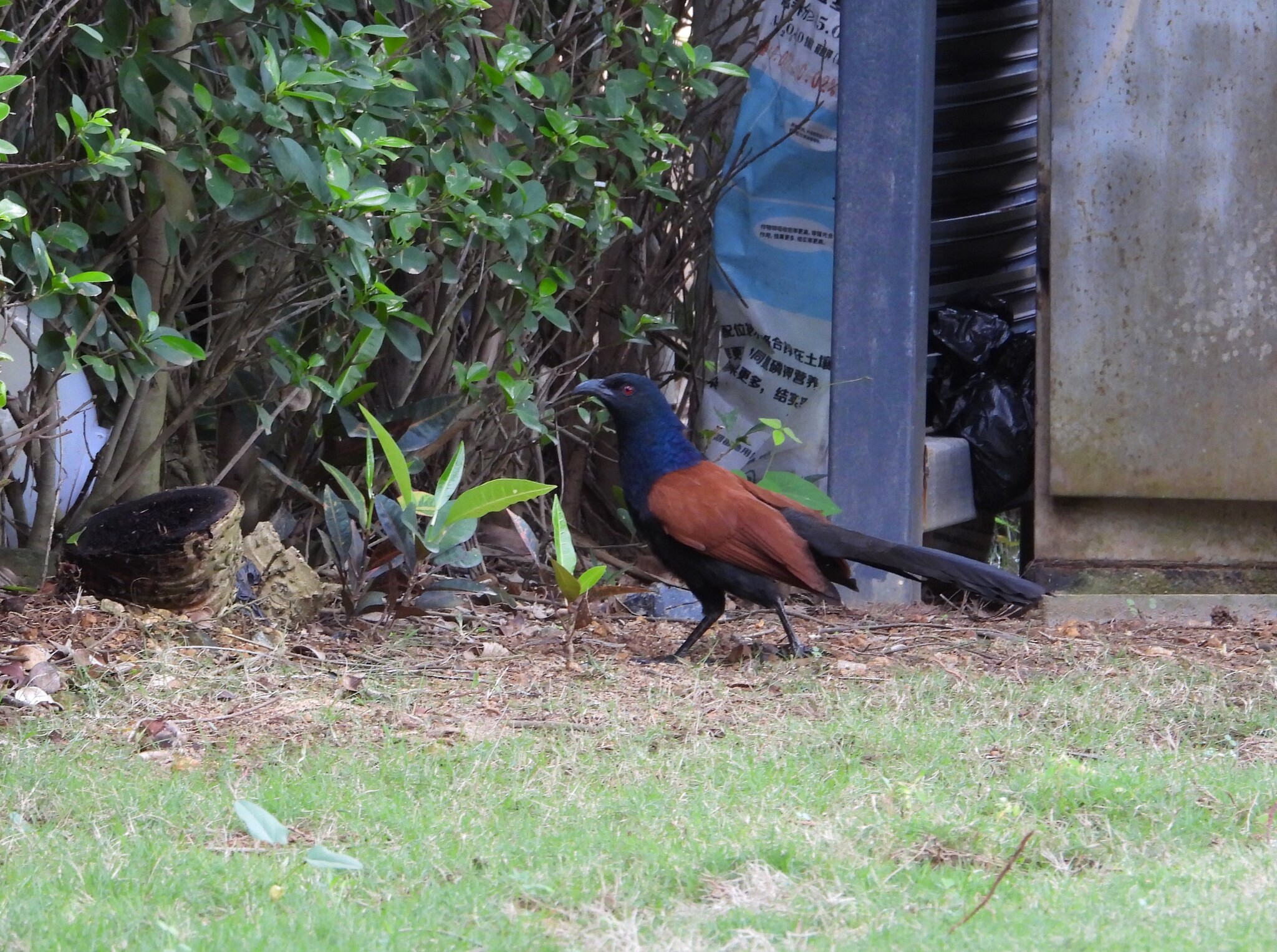
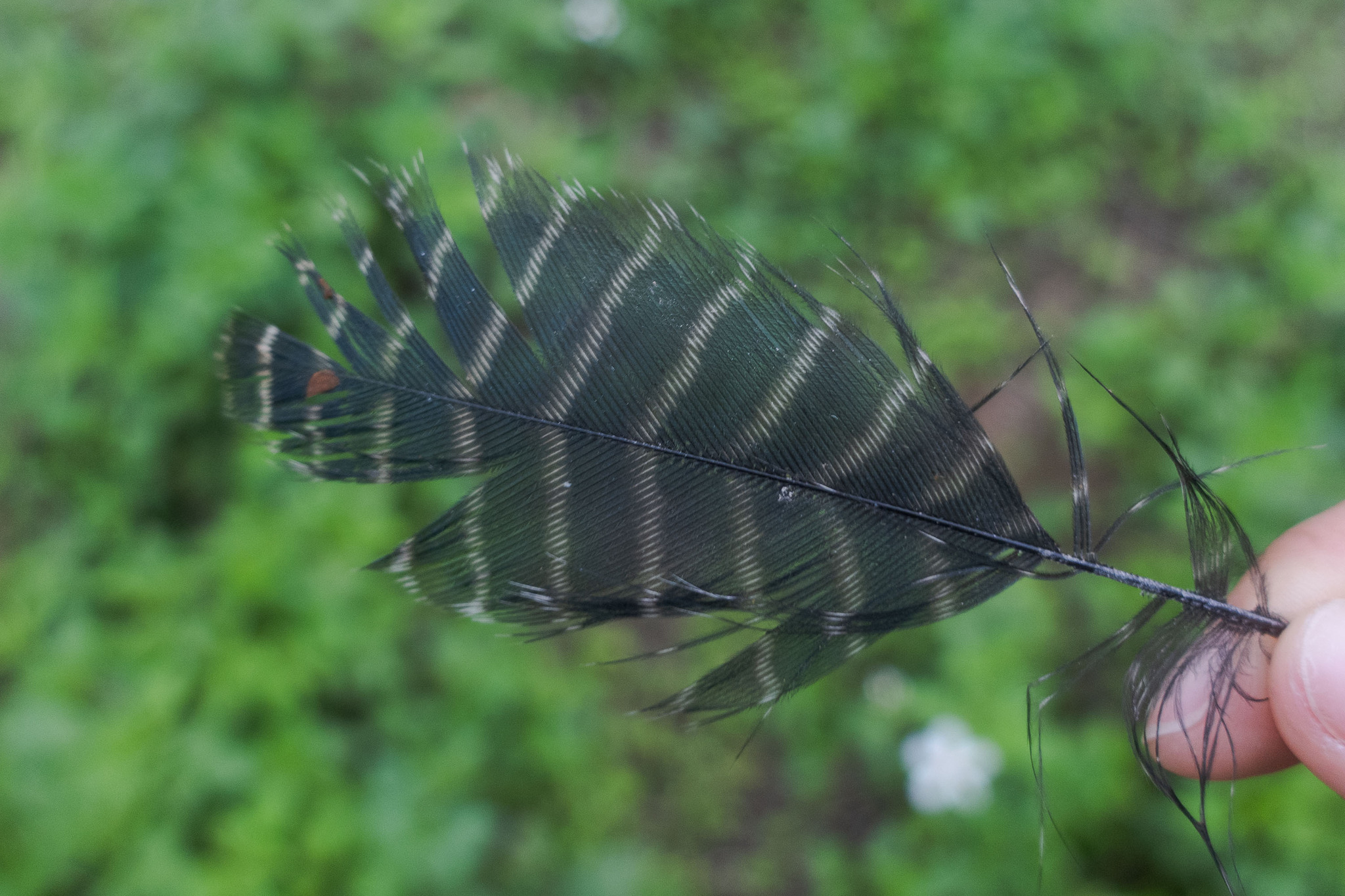
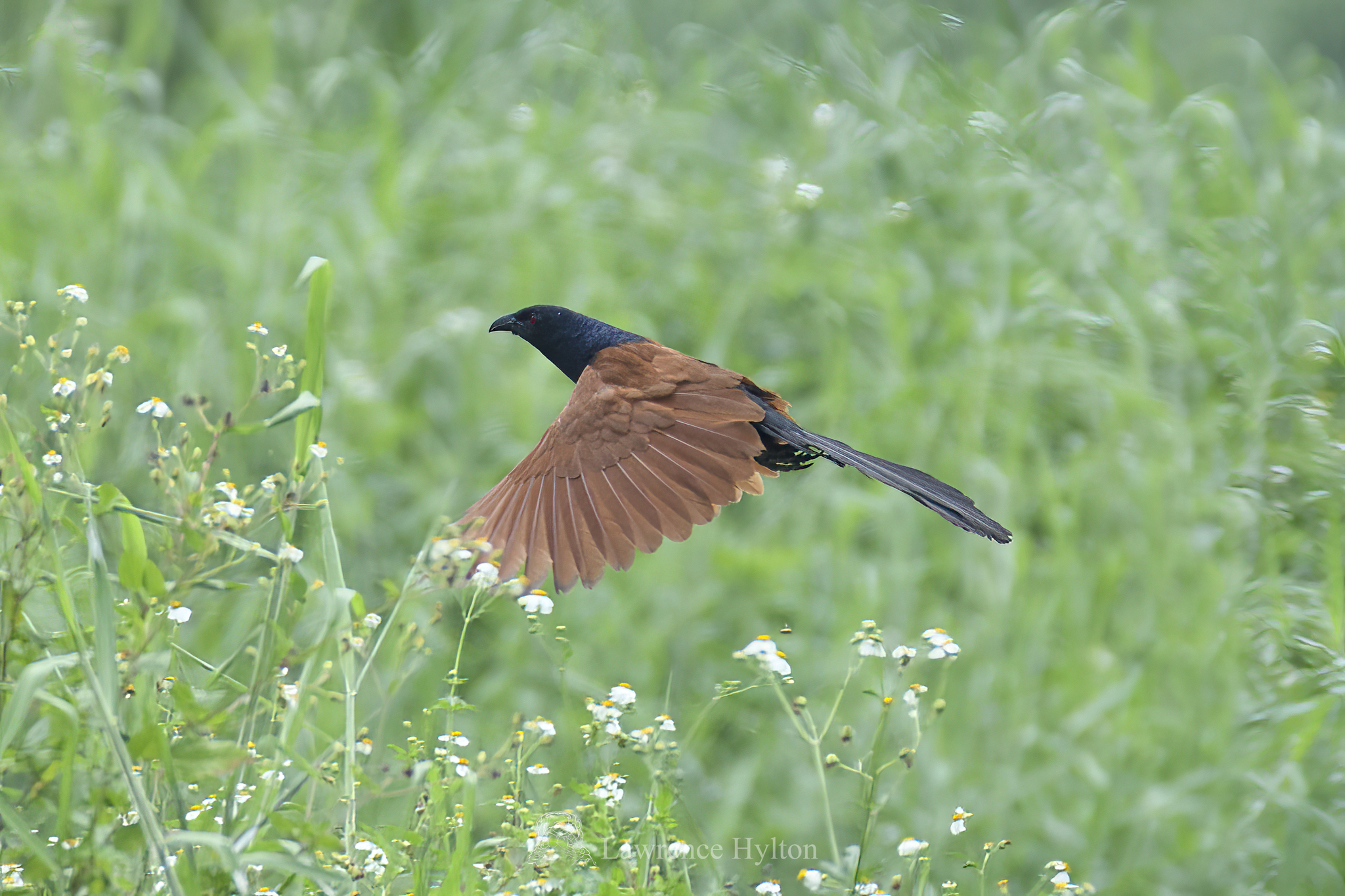
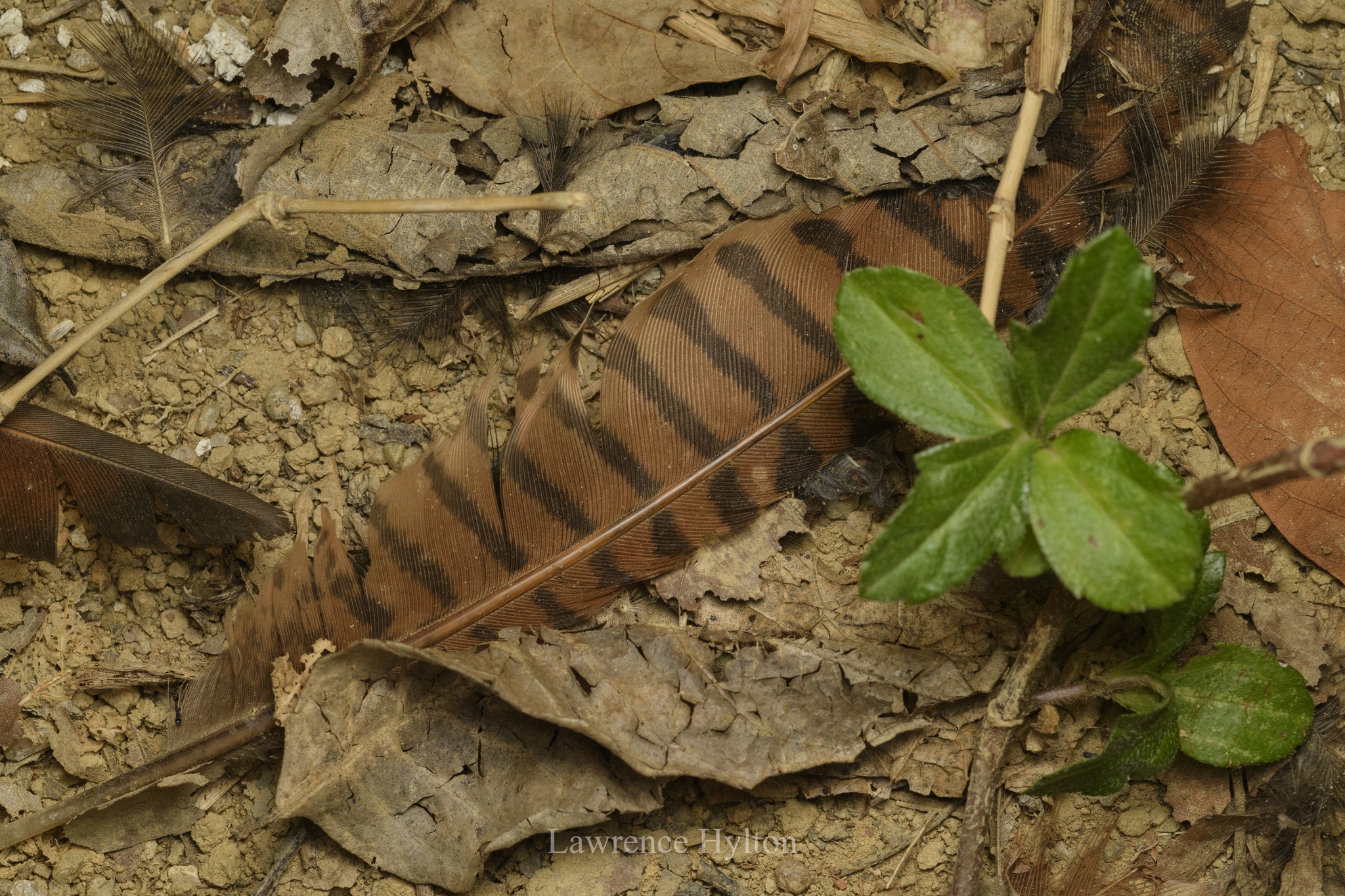
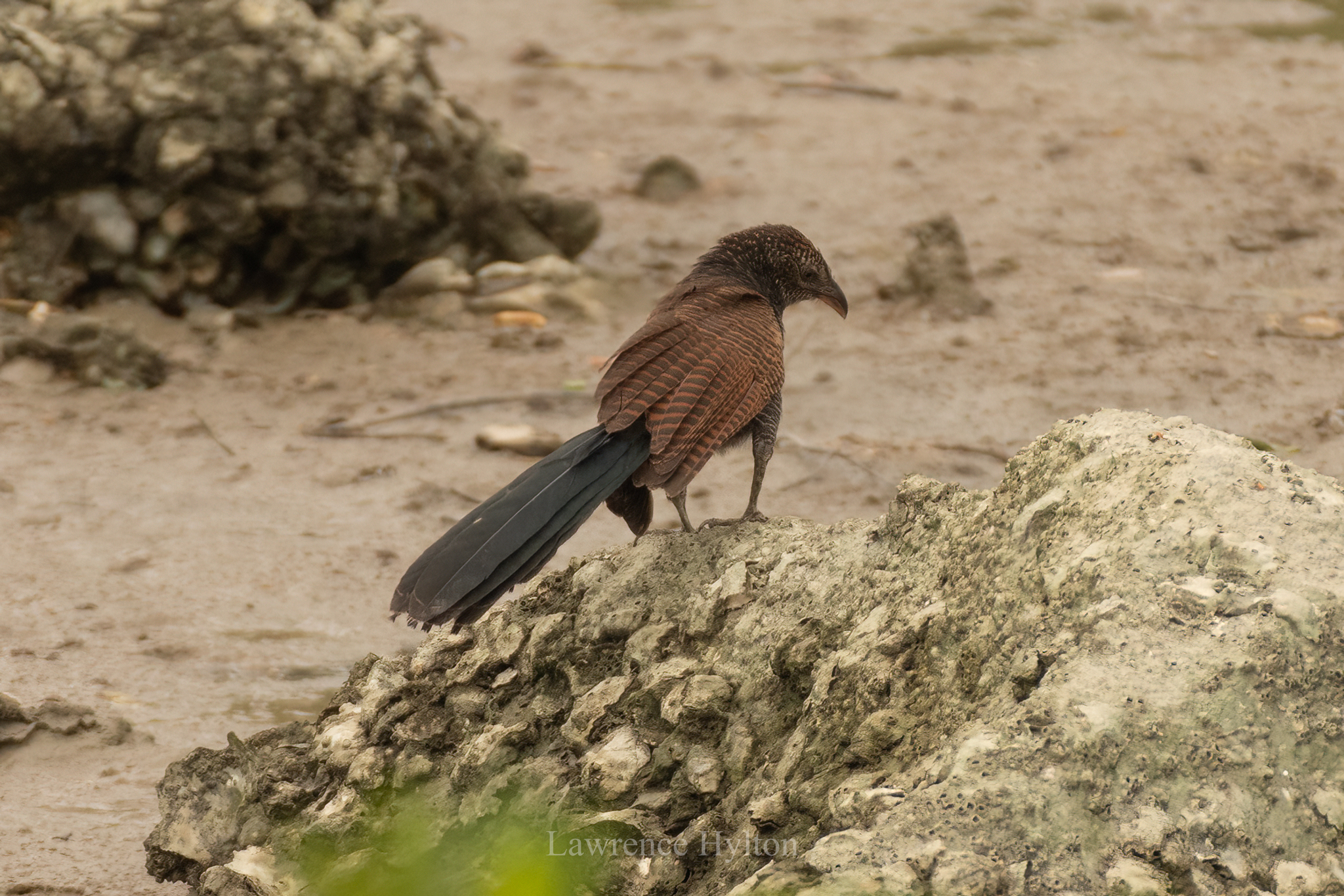
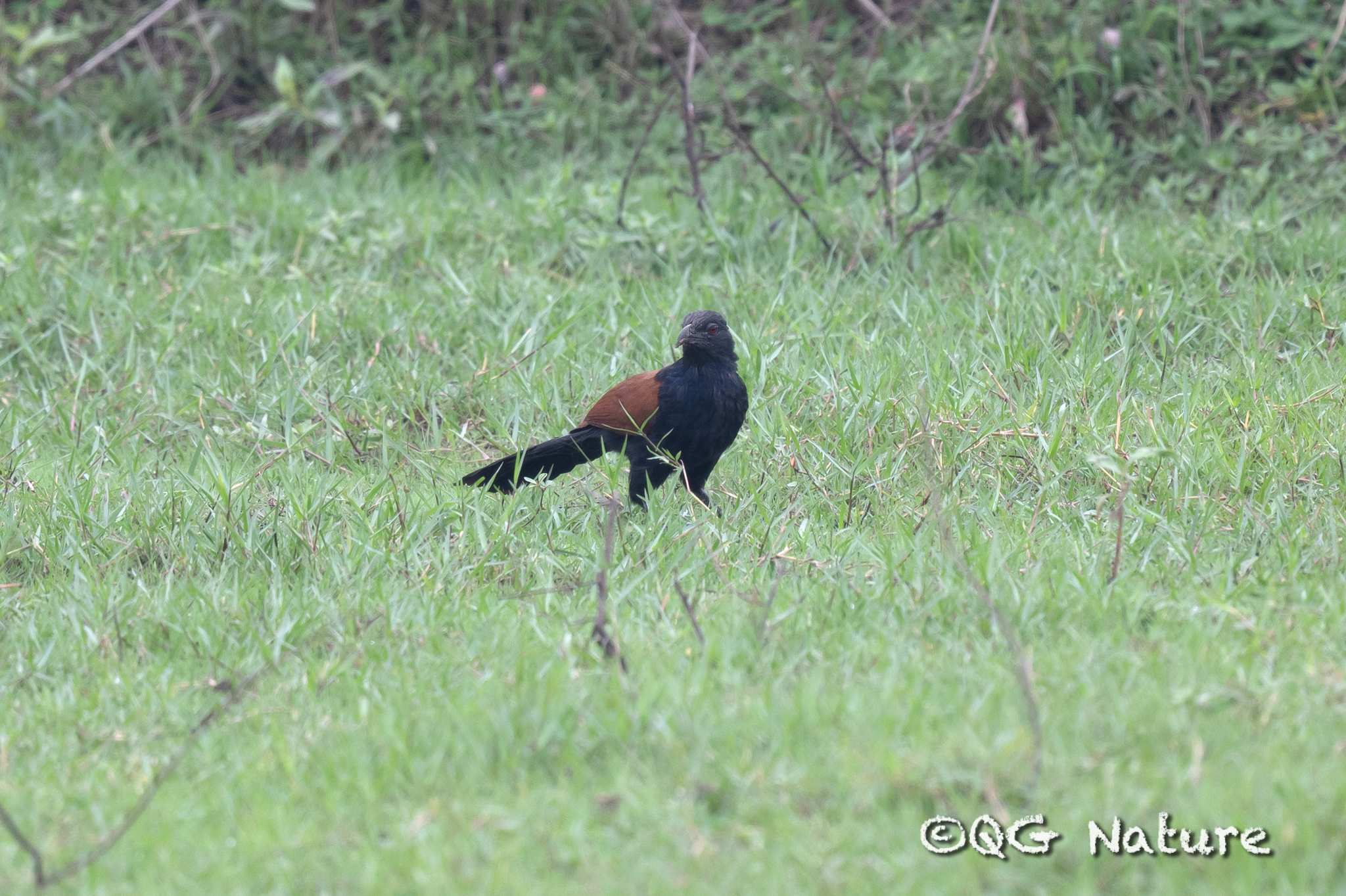
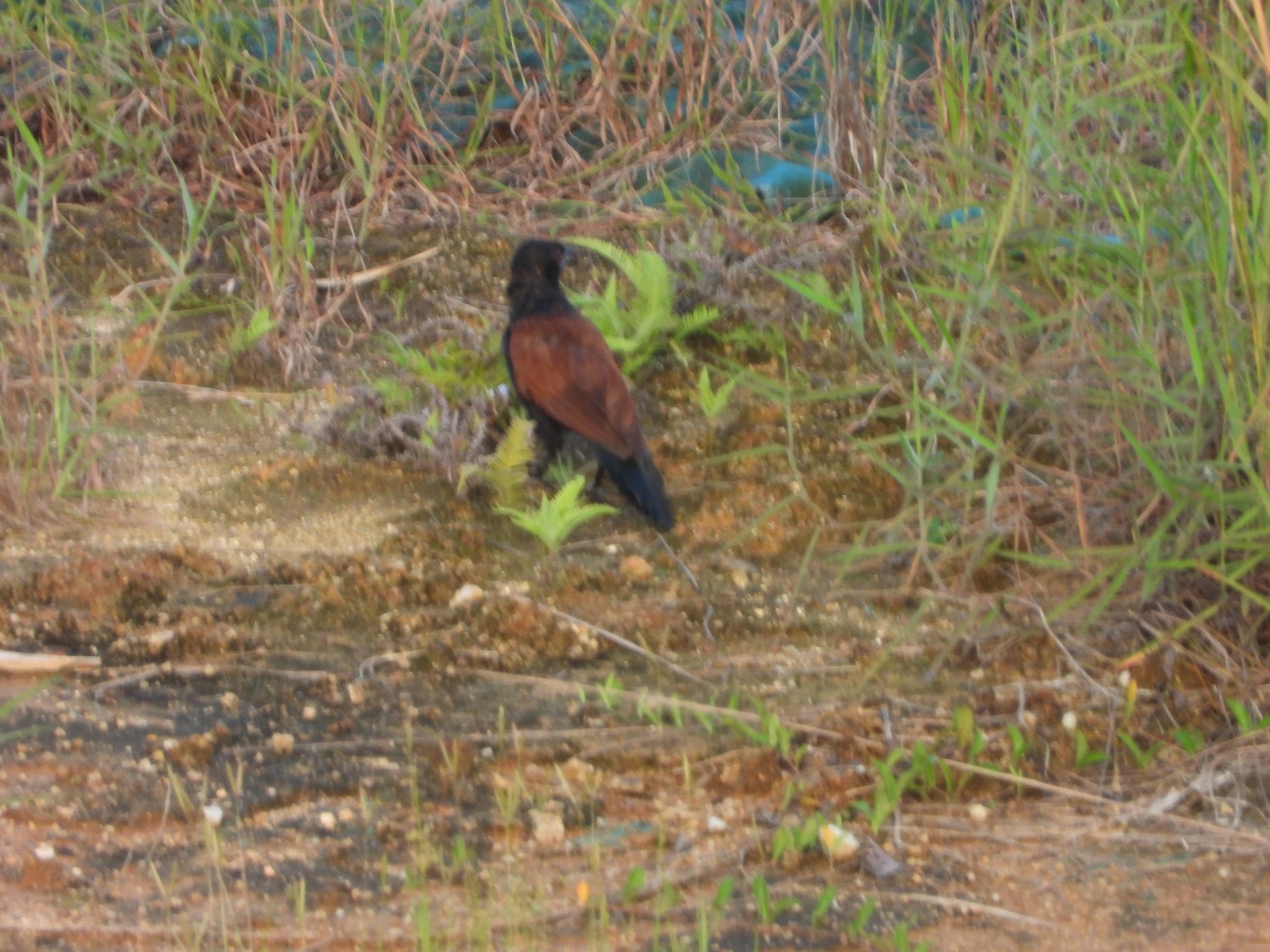
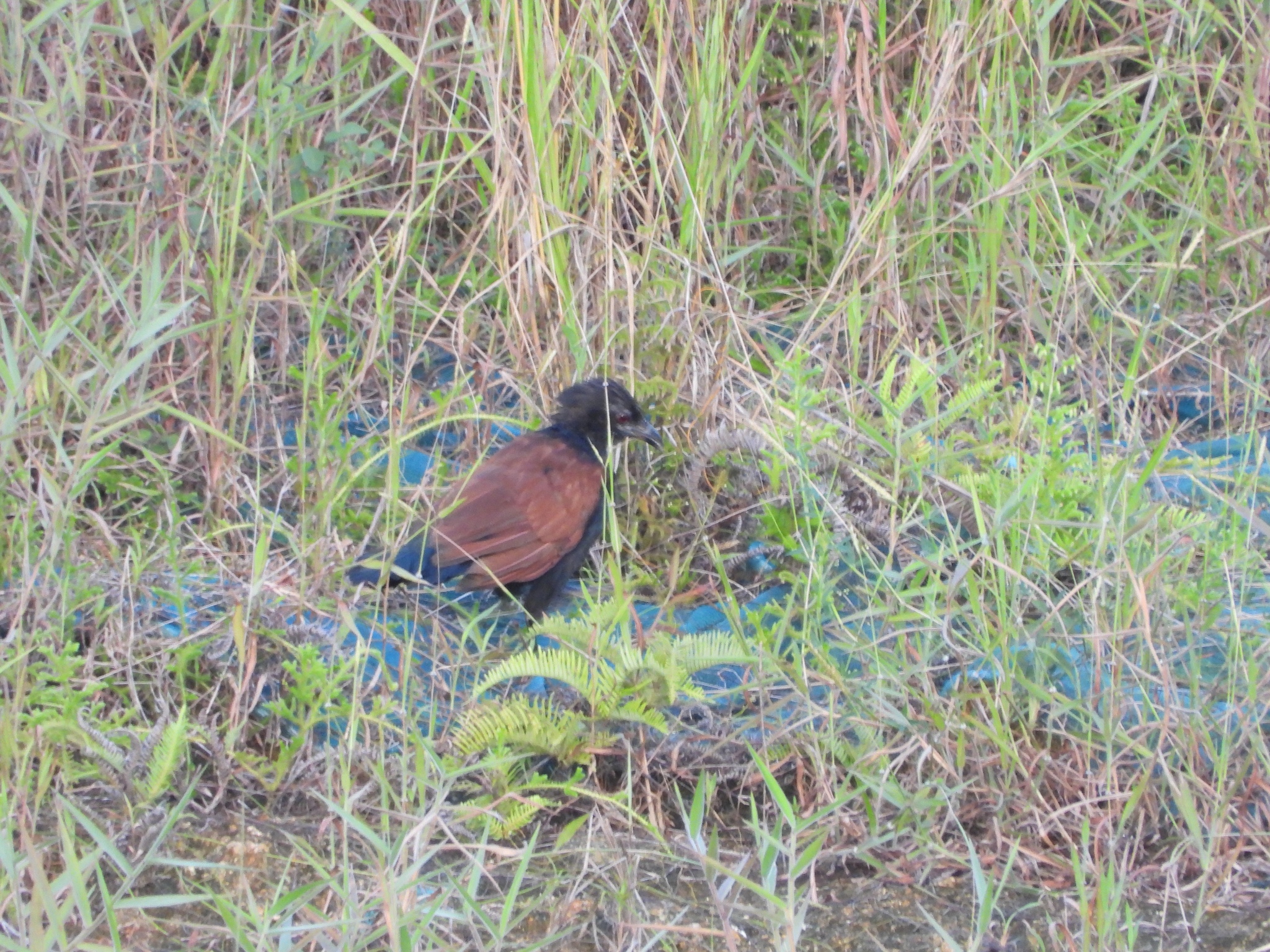
This is a substantial cuckoo measuring 48 centimeters in length. The adult has a black head, with the upper mantle and underparts showing black plumage glossed with purple. The back and wings are a rich chestnut brown, lacking any pale shaft streaks on the coverts. The eyes are a striking ruby red, providing excellent contrast against the dark head. Sexes appear similar in plumage, though females are notably larger. Juveniles are duller overall, with black plumage featuring spots on the crown and whitish barring on the underside and tail. Leucistic individuals have been documented in some populations. Regional variations exist, with the southern race (parroti) showing a black head with underparts glossed blue and brownish tones on the forehead, face, and throat.
Identification
This species can be distinguished from the similar lesser coucal by its larger size and more robust build. Western Ghats individuals overlap in size with lesser coucals but can be separated by the lesser species' stubbier bill, shorter tail, chestnut wing lining, dark eyes, and tail with a green or bronze sheen. The greater coucal's wing tips do not extend beyond the tertials, unlike the lesser coucal. The race intermedius is smaller than the nominate race, while race parroti in southern India develops distinctive dusky or sooty wing coverts in females between November and January. Vocal differences also exist between populations, with the Southeast Asian race bubutus having a distinctly different call from northern forms.
Distribution & Habitat
This species is a widespread resident across the Indian subcontinent and Southeast Asia. The nominate race occurs from the Indus Valley through the sub-Himalayan and Gangetic plains to Nepal, Assam, Bhutan foothills, and into southern China including Guangxi, Zhejiang, and Fujian. Race parroti occupies peninsular India while intermedius extends through Bangladesh, Myanmar, Thailand, Indochina, and northern Malaysia. Race bubutus is found throughout the Malay Peninsula into Sumatra, Java, Borneo, and western Philippine islands. Additional subspecies occur in the southwestern Philippines and Kangean Islands. It inhabits diverse environments including jungle, cultivation, gardens, and urban areas.
Behavior & Ecology
This bird is most active during warm morning hours and late afternoon. It forages by walking on the ground or climbing through vegetation, consuming a varied diet of insects, caterpillars, snails, small vertebrates including saw-scaled vipers, bird eggs, nestlings, fruits, and seeds. In Tamil Nadu, snails form a significant part of the diet. It has been noted as an agricultural pest in oil palm plantations due to fruit damage. Individuals sunbathe in morning hours with wings spread on vegetation. Territory size for nesting pairs averages 3.8 hectares. The species is monogamous, with courtship involving ground chases and male food offerings. The nest is a domed cup built by both sexes in dense vegetation up to 6 meters high. Clutches contain 3-5 eggs, incubated for 15-16 days with fledging occurring at 18-22 days. Vocalizations include a low 'coop-coop-coop' call, with duets between pairs where the female has a lower pitch, plus a rapid rattling 'lotok' and harsh scolding notes.
Conservation
The article does not provide specific conservation information.
Culture
This bird holds significant cultural associations throughout its range. Its deep, resonant calls are traditionally linked to spirits and omens in many cultures, giving it an almost mystical reputation among local communities. In Bengal, folklore told of monocled cobras having no males and mating with male greater coucals. During the British colonial period, new arrivals to India often mistook this species for a pheasant, and upon shooting it discovered what was described as 'evil-flavored' meat, earning it the nickname 'Griff's pheasant'. Its flesh was historically consumed as a folk remedy for tuberculosis and other pulmonary ailments.
Source: Wikipedia · CC BY-SA 3.0
Taxonomy
- Order
- Cuculiformes
- Family
- Cuculidae
- Genus
- Centropus
- eBird Code
- grecou1
Vocalizations
Subspecies (6)
-
Centropus sinensis anonymus
southwestern Philippines (Basilan and Sulu Islands of Jolo, Tawitawi, and Sanga Sanga)
-
Centropus sinensis bubutus
Greater Sundas and adjacent islands to southwestern Philippines
-
Centropus sinensis intermedius
Bangladesh to Myanmar, southern Thailand, Indochina, and Malay Peninsula
-
Centropus sinensis kangeangensis
Kangean Islands (Java Sea)
-
Centropus sinensis parroti
southern peninsular India and Sri Lanka
-
Centropus sinensis sinensis
Pakistan to northern India and southern China
Data Sources
Species description from Wikipedia, licensed under CC BY-SA 3.0.
Bird images and sounds sourced from GBIF, contributed by citizen scientists worldwide under Creative Commons licenses.
Taxonomy data from AviList 2025.