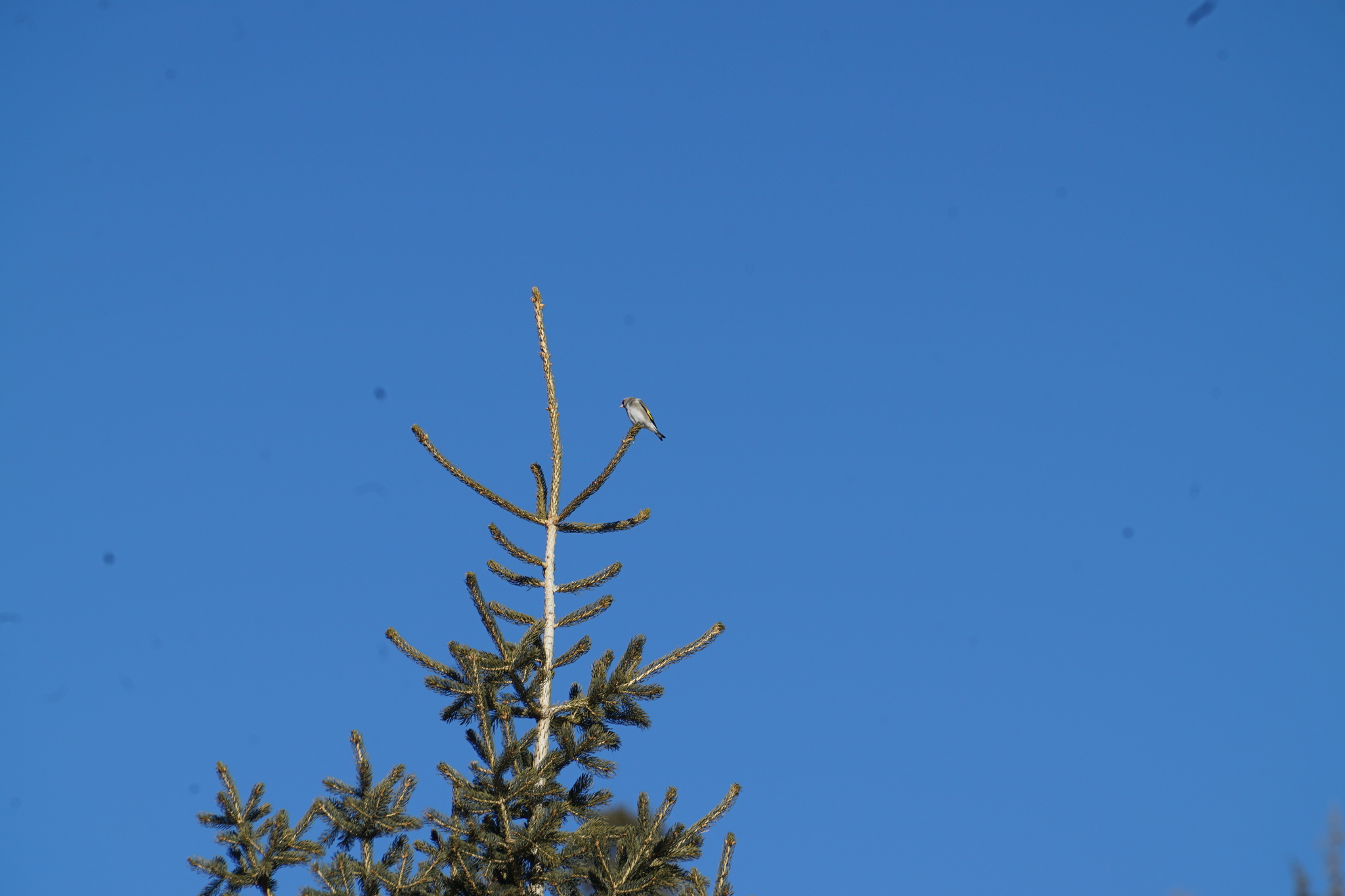
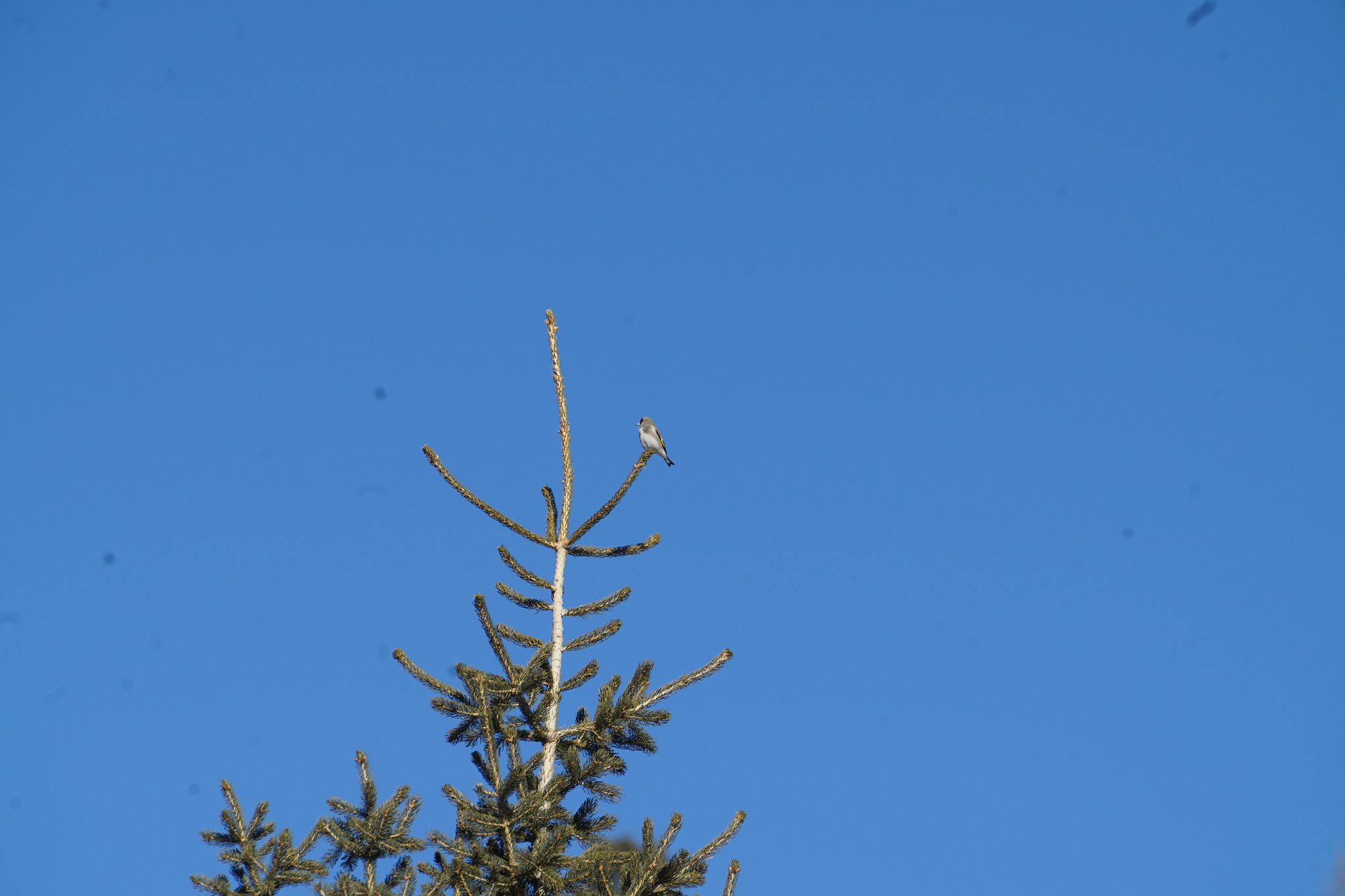
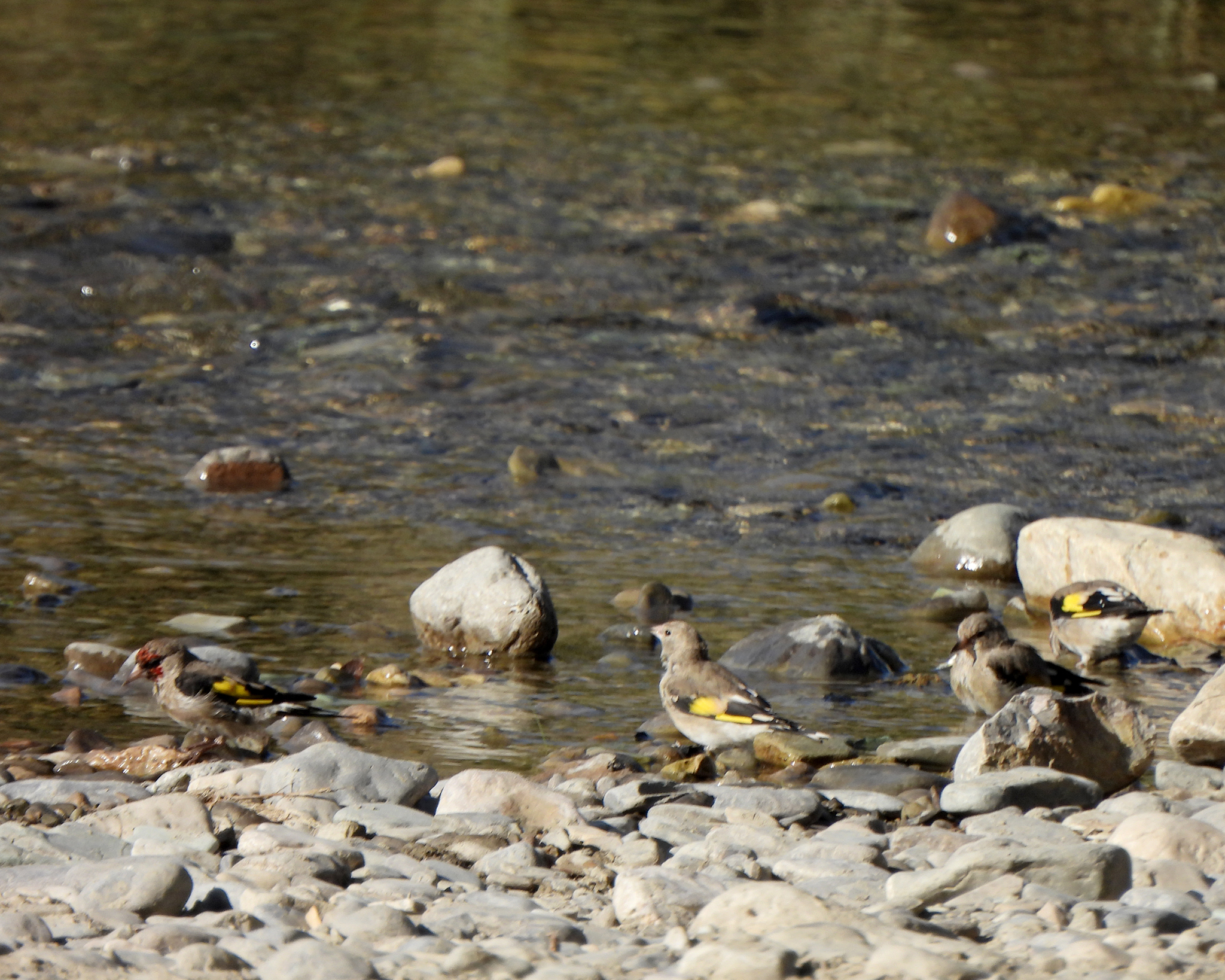
Grey-crowned Goldfinch
Carduelis caniceps
灰冠金翅雀
Introduction
Inhabits mountainous regions of Central Asia and the Himalayas. This species was split taxonomically from the European goldfinch and recognized as distinct in 2016 based on plumage differences. Occurs in Pakistan, India, Nepal, and Central Asian republics. Inhabits alpine meadows, forest edges, open woodland, and scrub habitats at higher elevations than the European goldfinch. Four subspecies are recognized, showing clinal variation in coloration and size across its range from Iran to western China. Forages on the ground in small flocks.
Description
This compact finch measures 10.5-14 cm in length with a wingspan of 21.5-25.5 cm and weighs between 15-21 g. The plumage shows the characteristic red, black, and white facial pattern typical of goldfinches, though notably lacks the black crown and vertical line behind the ear coverts found in the European species. Males display brighter and more extensive red on the face and more vivid yellow wing panels than females, which otherwise appear similar. Both sexes have a pinkish conical bill suited to seed-eating. Juveniles are more subdued, lacking the red facial coloration entirely and showing faint streaking on the breast with buffish tips to the wing coverts and tertial markings. The overall impression is of a small, active finch with contrasting wing patterns visible in flight.
Identification
The most reliable distinguishing feature from the European goldfinch is the absence of the black crown and vertical line behind the ear coverts. The grey-crowned goldfinch also tends to show a more extensive grey on the face and generally paler overall coloration in most subspecies. In the field, the combination of the red facial mask, yellow wing bars, and pink bill against a greyish head pattern is distinctive. At higher altitudes where this species occurs, confusion with similar finches is less likely due to its specialized habitat preferences. The subspecies subulata, the largest and most easterly form, shows pale buffish-grey upperparts that may be tinged with cinnamon, helping distinguish it from the darker caniceps subspecies found in the western Himalayas.
Distribution & Habitat
The species breeds across a vast territory from southern and eastern Iran, through Afghanistan, to the western Himalaya in Pakistan, northwestern India, and western Nepal, extending northeast through Central Asia to western Xinjiang in China. It is an altitudinal migrant, breeding at 2,400-4,200 meters (rarely to 1,500 m) in the Himalayas and descending to 1,900-2,400 meters (rarely as low as 75 m) in winter. In Kazakhstan, similar altitudinal movements occur. Habitat includes open deciduous and mixed woodland, forest edges between 2,100-3,600 meters, orchards, parks, and gardens. This finch consistently occurs at higher elevations than its European counterpart. Vagrants have been recorded in Beijing, and escaped captive birds occasionally appear in North America, though much less frequently than European goldfinches.
Behavior & Ecology
These social birds form flocks of four to several dozen individuals, often associating with other finch species. They typically forage on the ground, searching for seeds among vegetation. The diet centers on seeds from various flowers including thistles, sunflowers, zinnias, chinar trees, and dandelions, with occasional arthropods taken as well. The breeding season spans April to August, with nests built in groups of up to five in a single tree. Females construct neat cup-shaped nests using mosses and grasses, positioning them up to 18 meters high. Clutches consist of bluish-white eggs speckled with red and brown, measuring approximately 1.8 by 1.3 cm. The female incubates for 9-12 days, and young fledge after 13-18 days, receiving continued parental care for up to 10 days post-fledging. The typical call is a twittering 'deedelit' or 'chirik'.
Conservation
The species has not yet been formally assessed on the IUCN Red List as a separate species, though the newly recognized taxon appears to maintain healthy population levels across its extensive range. The vast distribution spanning multiple countries and habitats provides some buffer against localized threats. Hybridization occurs with other Carduelis species in specific contact zones, particularly with C. carduelis major in Siberia and C. carduelis loudoni in Iran, but this does not appear to threaten population viability. As a high-altitude species, potential climate change impacts on alpine habitats may warrant future monitoring.
Culture
While this bird shares the broader cultural associations of the goldfinch family in Eurasian art and symbolism, no specific folklore or cultural traditions are uniquely associated with this particular species. Its recent taxonomic separation from the European goldfinch means it has not yet developed distinct cultural narratives in its own right, though it likely appears in local traditions throughout its range where people observe and appreciate mountain birds.
Source: Wikipedia · CC BY-SA 3.0
Taxonomy
- Order
- Passeriformes
- Family
- Fringillidae
- Genus
- Carduelis
- eBird Code
- eurgol2
Subspecies (4)
-
Carduelis caniceps caniceps
western Himalayas (Kashmir to Nepal and western Tibet)
-
Carduelis caniceps paropanisi
Iran to northern Afghanistan and western China (Xinjiang)
-
Carduelis caniceps subulata
south-central Siberia to Lake Baikal and northwestern Mongolia
-
Carduelis caniceps ultima
southern Iran
Data Sources
Species description from Wikipedia, licensed under CC BY-SA 3.0.
Bird images and sounds sourced from GBIF, contributed by citizen scientists worldwide under Creative Commons licenses.
Taxonomy data from AviList 2025.