Caprimulgiformes / Caprimulgidae / Caprimulgus
Grey Nightjar
Caprimulgus jotaka · 普通夜鹰
Introduction
A medium-sized nightjar species found in East Asia, breeding from southeastern Russia south through China, the Korean Peninsula, and Japan to northern Indochina and westward along the Himalayas. It is largely migratory, wintering in Indochina south to Java, but resident in warmer southern areas. The bird breeds and forages in early successional habitats surrounded by forests and is crepuscular to nocturnal, feeding on flying insects. The global population is stable and listed as Least Concern.
Description
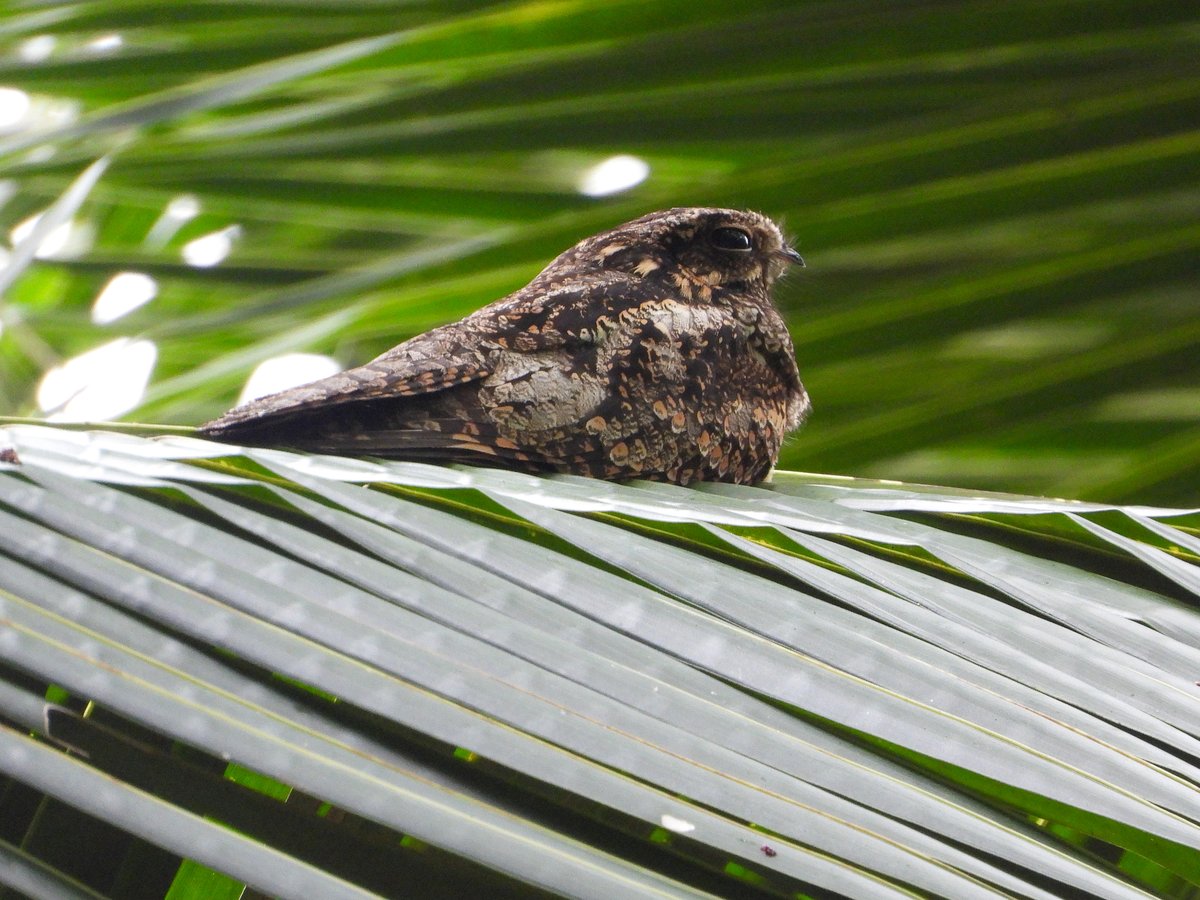
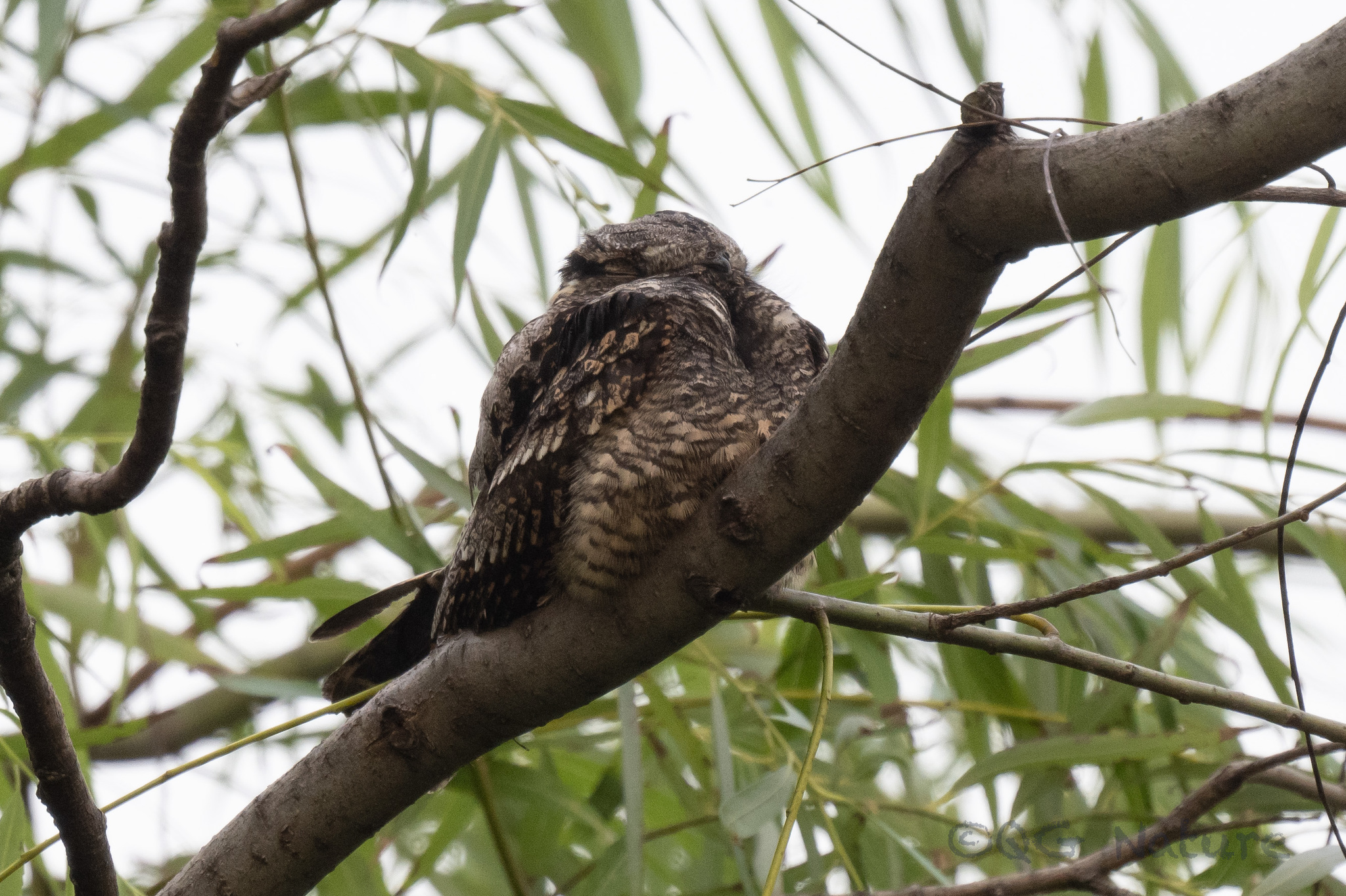
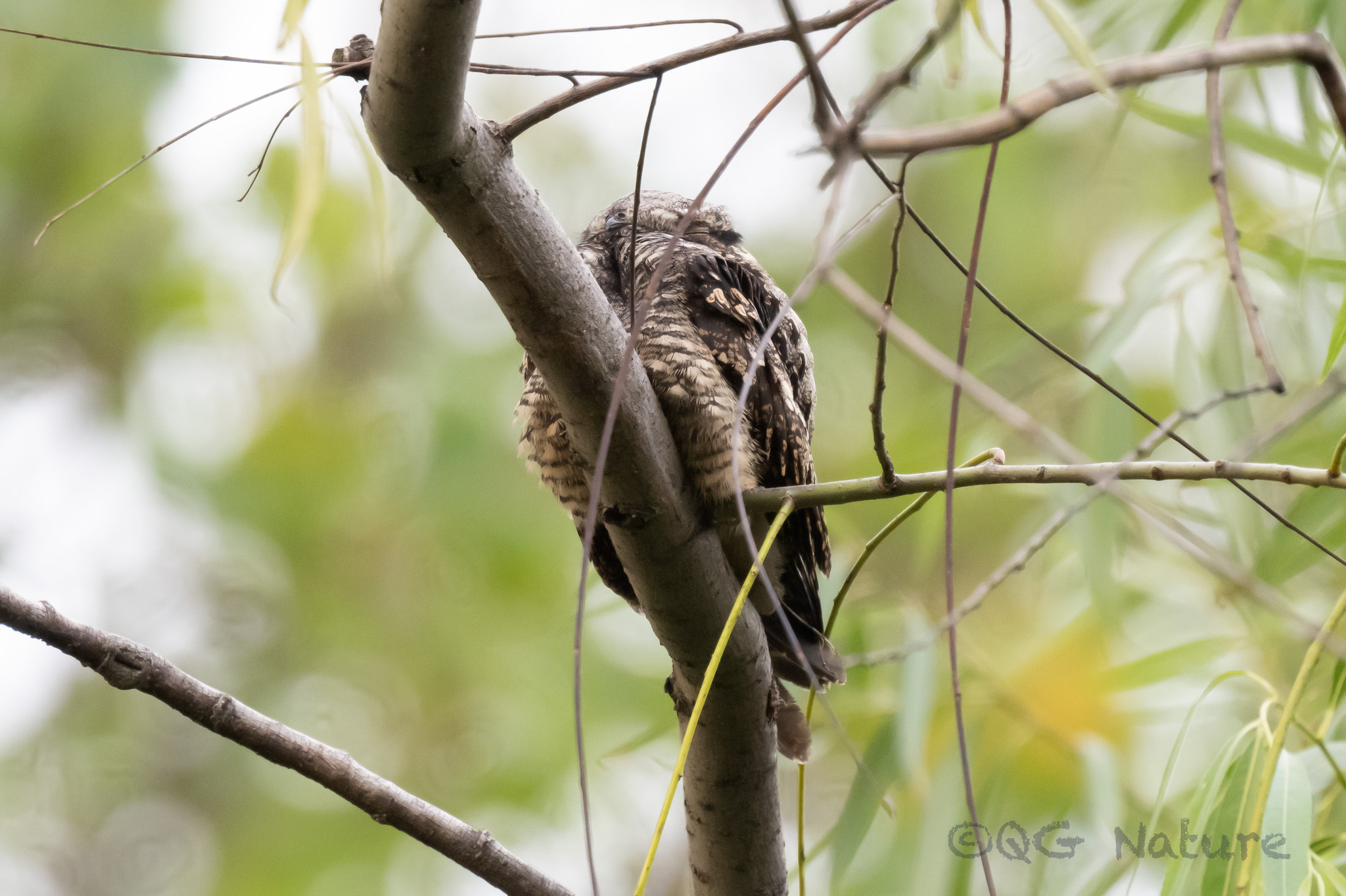
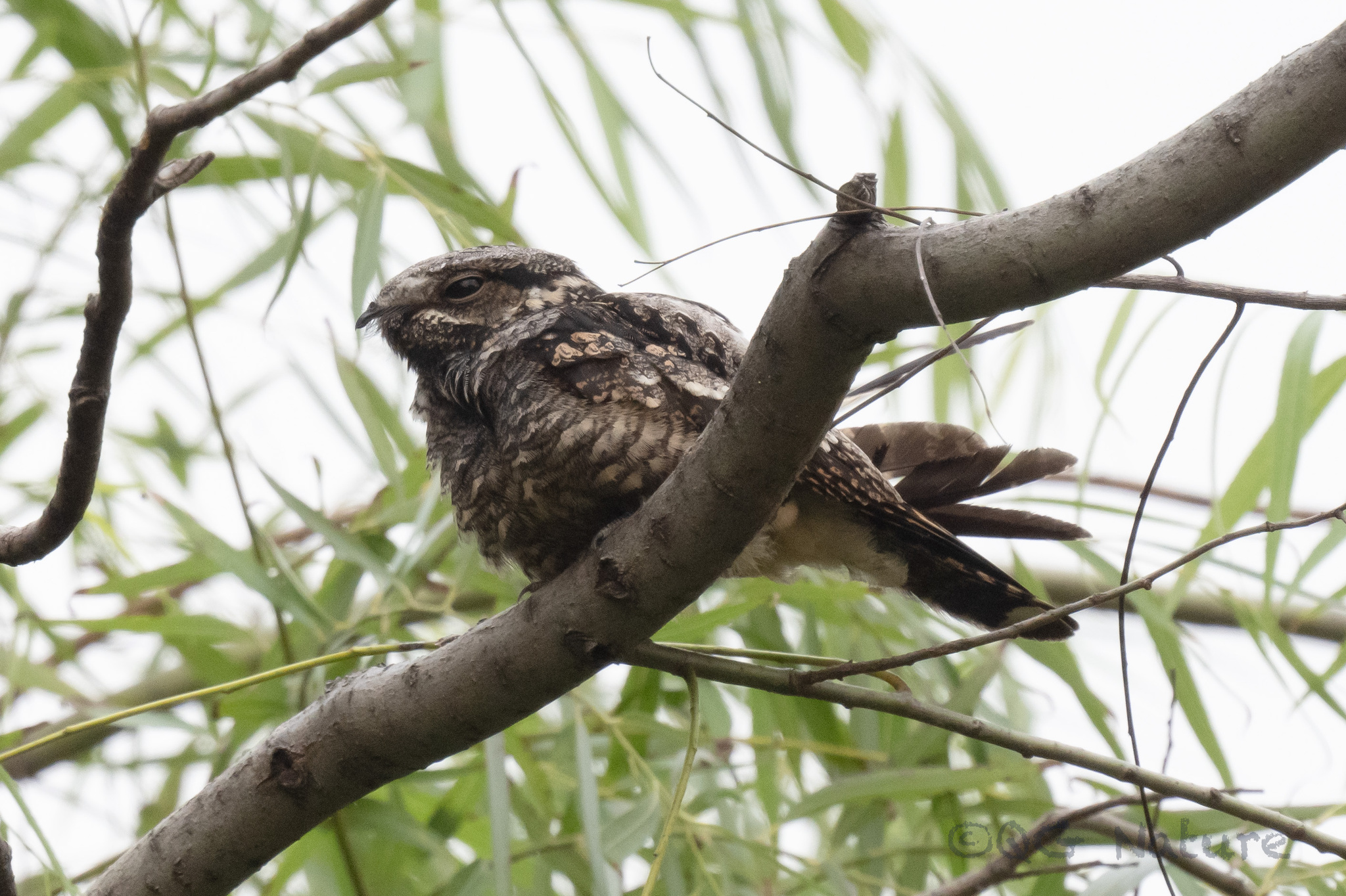
Medium-sized with a large head, large eye, long tail, weak bill, and short legs. Plumage is mottled grayish-white and dark brown with black longitudinal streaks; the central crown stripe is prominent. Upperparts have dark brown horizontal bars. Scapulars are black with brownish-yellow spots. Wing coverts have round brownish-yellow spots; primaries and secondaries are edged with reddish-brown serrated markings. The first primary has a white circular patch on the inner web; the second to fourth have white horizontal bars. Central tail feathers are gray-brown with 6–7 black wavy bands; outer tail feathers have prominent white subterminal patches. Throat has a conspicuous white patch. Underparts are pale brownish-yellow with dark brown stripes. Females are paler, with a smaller, brown-tinged throat patch and lack white spots on flight feathers or tail patches. Iris dark brown; beak black; tarsus and toes horny brown; claws black.
Identification
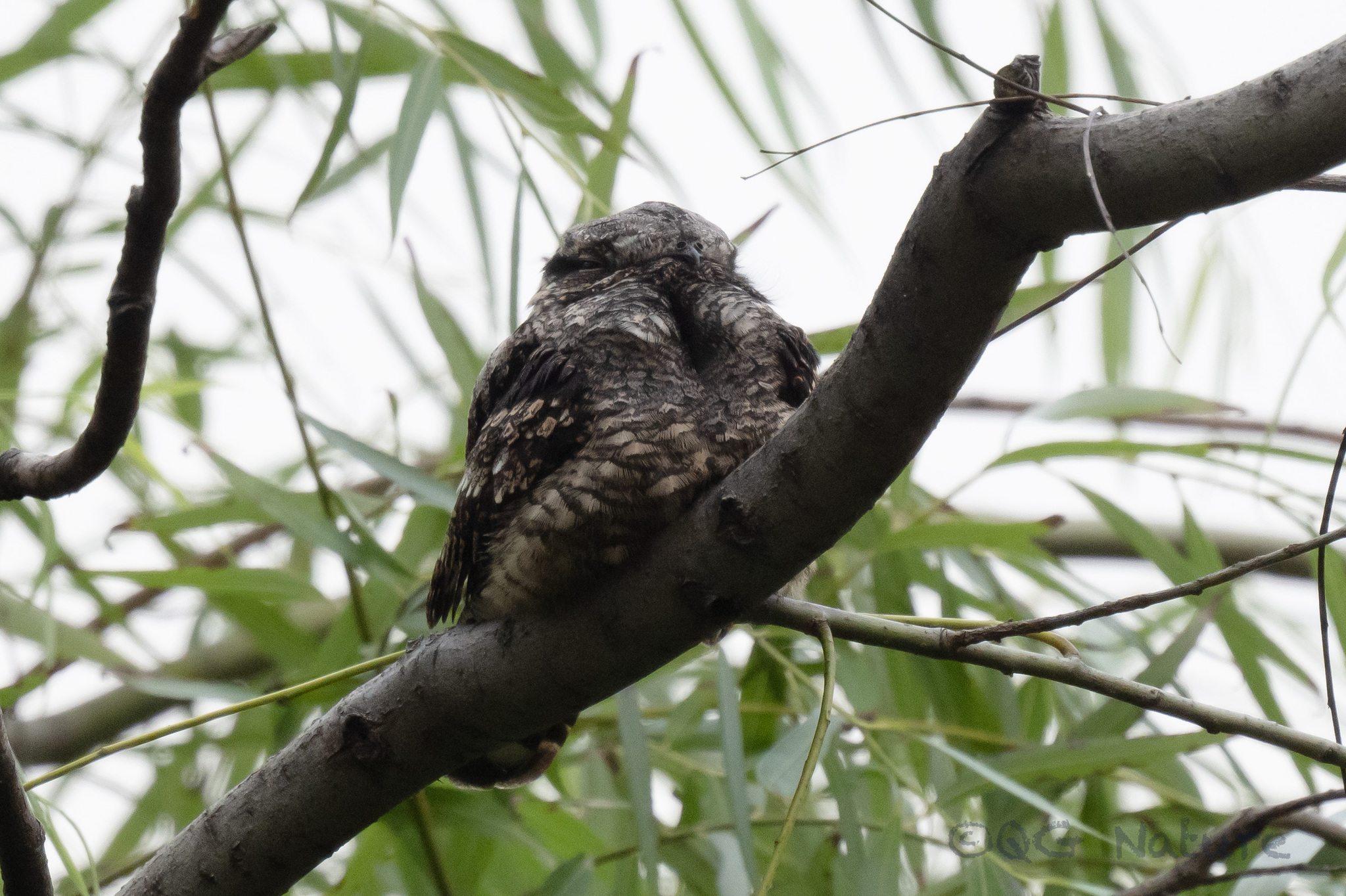
Differentiated from relatives by tail feather patterns. Key field mark is the song: a series of hollow 'byuck' notes lasting 2–4 seconds, repeated at short intervals. Distinct from the jungle nightjar, which sings bouncing 'pooKIHpooKIHpooKIH' notes. In flight, it exhibits slow wing beats, occasional gliding or hovering, and circular or erratic flight paths. When perching, the body aligns parallel to branches, providing camouflage.
Distribution & Habitat
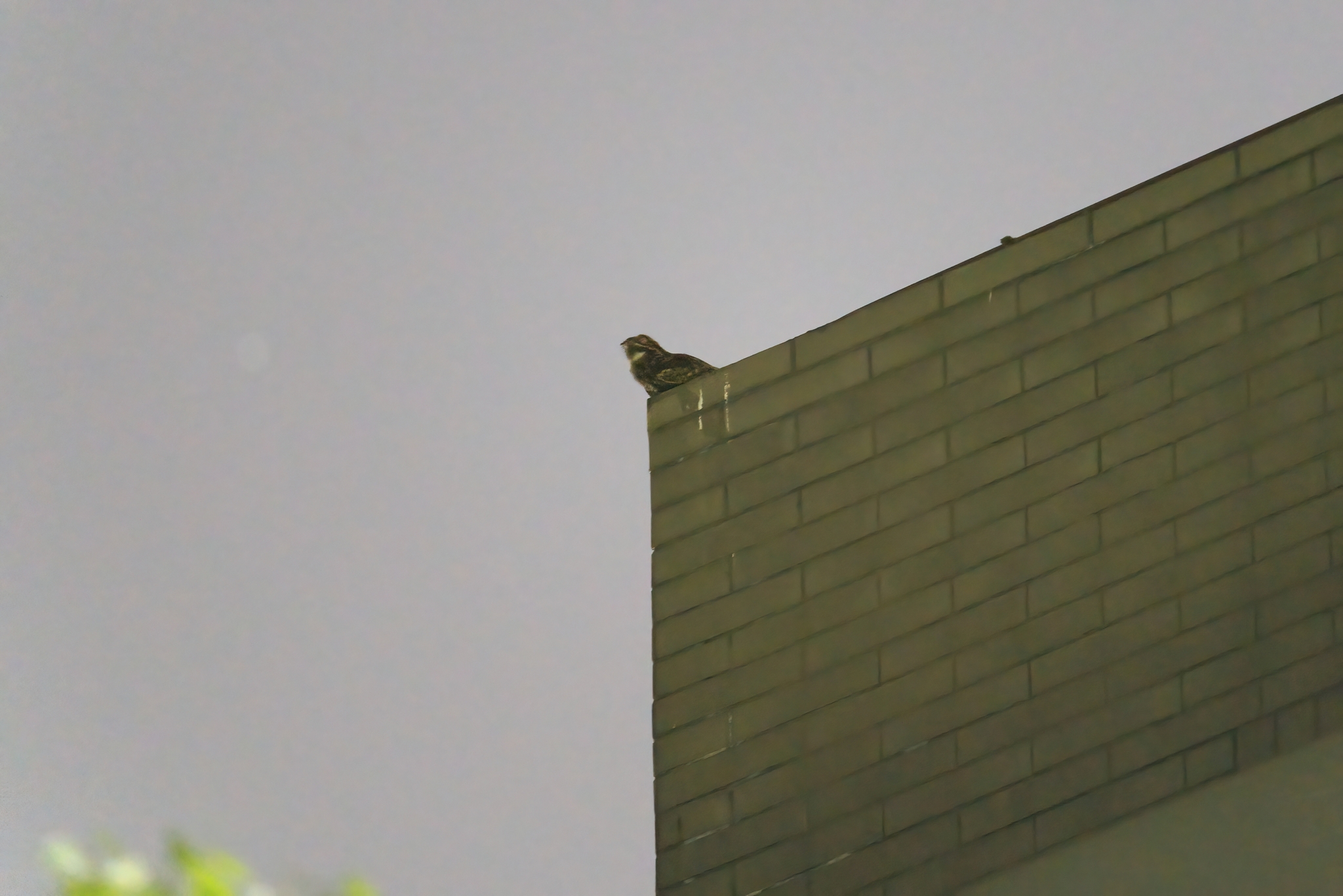
Range extends from South Asia to southeastern Russia and east to Japan, with an estimated extent of occurrence of 17,700,000 km². Resident in Bangladesh, Bhutan, China, Hong Kong, India, Malaysia, Myanmar, Nepal, Pakistan, and Singapore. Migratory populations breed in Japan, North Korea, South Korea, Mongolia, and Vietnam. Non-breeding occurrences in Brunei, Cambodia, Indonesia, Laos, Philippines, Eastern Asian Russia, and Thailand. Vagrants recorded in south Alaska. Habitat includes forests, shrubland, cliffs, and anthropogenic constructions up to 3,300 m altitude, primarily broadleaf and mixed forests.
Behavior & Ecology
Crepuscular to nocturnal insectivore, feeding mainly on Coleoptera, Lepidoptera, and Hymenoptera, including moths, beetles, flying ants, and grasshoppers. Occasionally consumes seeds, wood, glass shards, and gravel. Breeds May–July with one nesting cycle per year. No nest is constructed; two elliptical white eggs with grayish-brown speckles (avg. 30.7 x 22.7 mm, 6.5 g) are laid on the ground, rocks, or in dense vegetation. Female incubates during the day; male takes over at dawn and dusk. Average generation length is 5.6 years.
Conservation
Listed as Least Concern on the IUCN Red List (2016 assessment). Global population is stable. The species integrates into urban areas, reducing concern regarding habitat fragmentation. Populations are tracked by local governments across many conservation sites, though no systematic monitoring scheme exists.
Source: Wikipedia · CC BY-SA 3.0
Taxonomy
- Order
- Caprimulgiformes
- Family
- Caprimulgidae
- Genus
- Caprimulgus
Vocalizations
Subspecies (2)
-
Caprimulgus jotaka hazarae
northeastern Pakistan to Bangladesh, southern China, Myanmar, and Malay Peninsula
Data Sources
Species description from Wikipedia, licensed under CC BY-SA 3.0.
Bird images and sounds sourced from GBIF, contributed by citizen scientists worldwide under Creative Commons licenses.
Taxonomy data from AviList 2025.