Passeriformes / Muscicapidae / Calliope
Chinese Rubythroat
Calliope tschebaiewi · 白须黑胸歌鸲
Introduction
A small passerine bird in the family Muscicapidae, closely related to the Siberian rubythroat but distinguished by white tail-tips and bases. It is found along the Himalayan ranges from Pakistan to Myanmar and inhabits open woodland and scrub. The species is monotypic.
Description
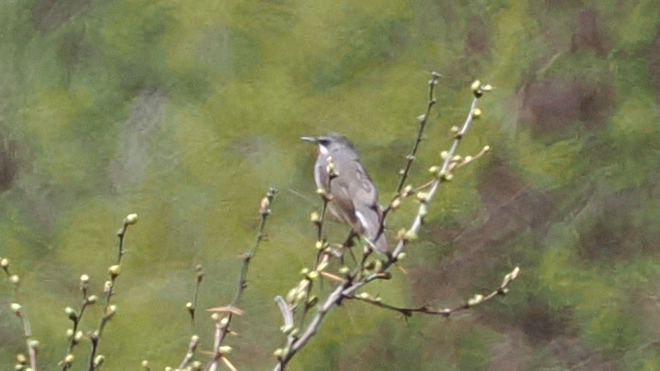
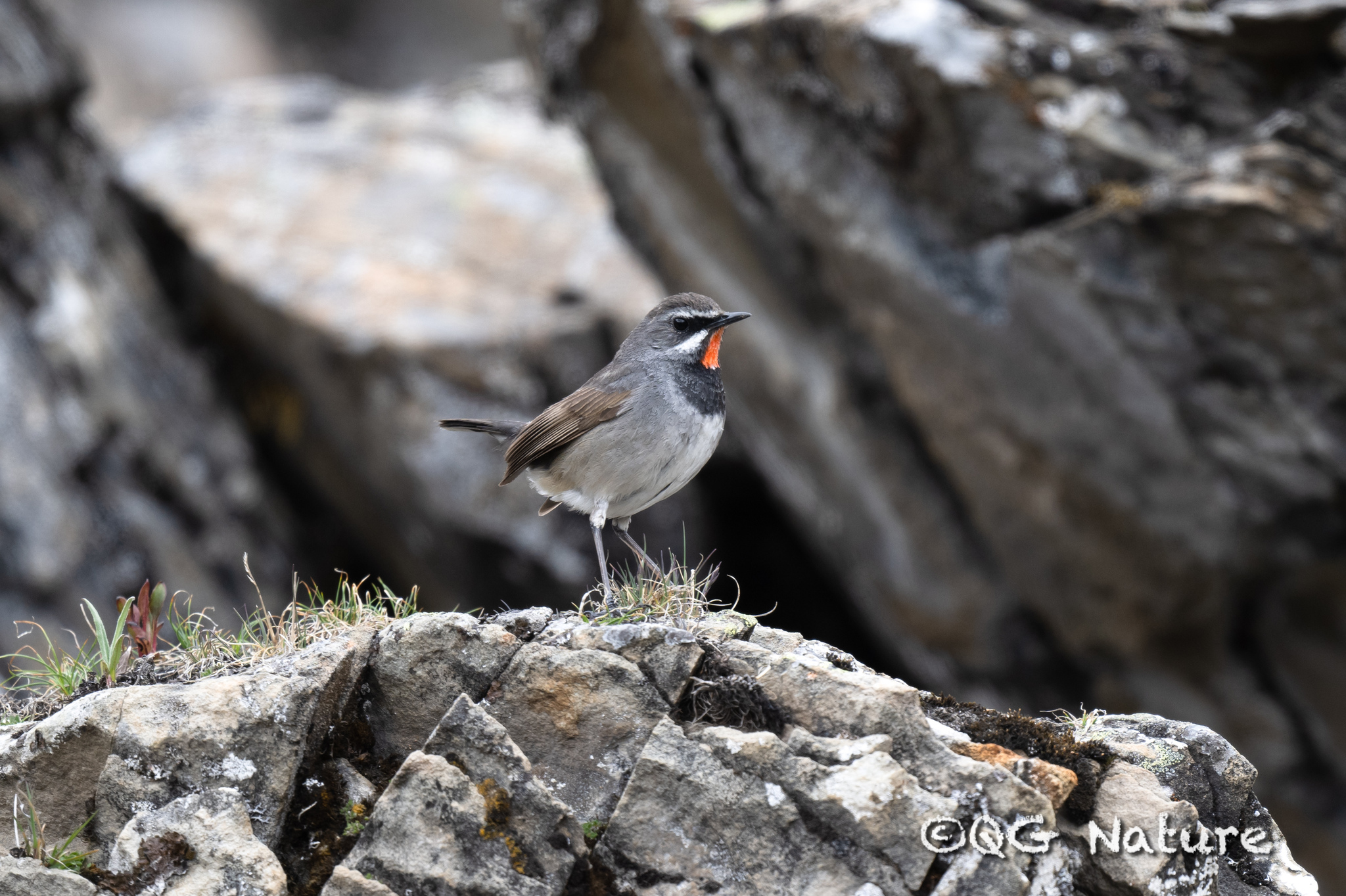
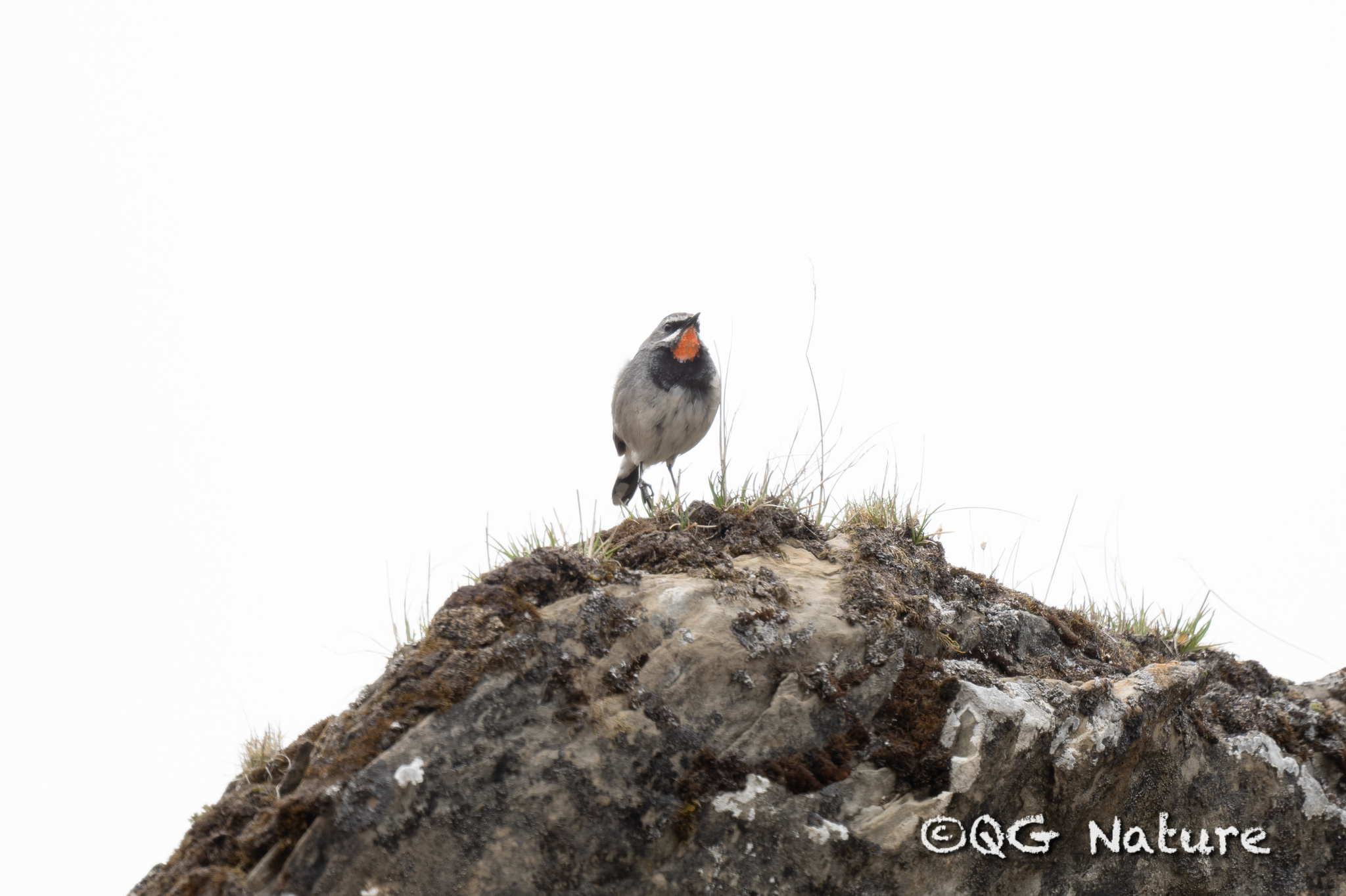
The male is slaty brown above with a white forehead and supercilium. Wings are brownish, and the tail is blackish with white base and tips. The sides of the throat and breast are black, narrowly fringed with grey, while the centre of the chin and throat is scarlet. The belly and vent are white. The female is dull brownish-grey above with a diffuse supercilium and smoky underparts. The centre of the throat and short moustachial stripe are whitish.
Identification
Distinguished from the Siberian rubythroat by distinctive white tail-tips and white tail bases. Previously considered conspecific with the Himalayan rubythroat under the name white-tailed rubythroat.
Distribution & Habitat
Found in Central Asia and the Indian subcontinent, ranging across Bangladesh, Bhutan, India, Myanmar, Nepal, Pakistan, Russia, and Thailand. It breeds along the edge of the Tibetan plateau and winters to the south from Nepal to Assam. In the Tien Shan region, it occurs at altitudes of 2500 to 2700 m. The species migrates north to higher altitudes in summer and south to lower elevations in winter.
Behavior & Ecology
Adults are shy, often seen singly or in pairs during breeding. They feed mainly on small insects including beetles and ants. Males sing from exposed perches; the song consists of squeaky notes with variation. Females produce an upward inflected whistle following a gruff note. The alarm call is a sharp yapping 'skyap'. Nests are built in shrubs or dense tussocks, typically as a loose ball with a side entrance. The female lays a clutch of 4 to 6 greenish-blue eggs with rusty dots. Incubation lasts around 14 days, mostly by the female, while both parents feed nestlings. Young fledge after about 16 days. Parents may abandon nests if parasitized by cuckoos.
Culture
The specific epithet tschebaiewi honours Cossack Pamfili Tschebaeiv, who accompanied Nikolay Przhevalsky.
Source: Wikipedia · CC BY-SA 3.0
Taxonomy
- Order
- Passeriformes
- Family
- Muscicapidae
- Genus
- Calliope
Distribution
breeds eastern Ladakh to northwestern China (Gansu), southeastern Tibet, and far northern Myanmar; winters in foothills from eastern Nepal to northeastern India, northeastern Bangladesh, northern Myanmar, and southern Yunnan
Data Sources
Species description from Wikipedia, licensed under CC BY-SA 3.0.
Bird images and sounds sourced from GBIF, contributed by citizen scientists worldwide under Creative Commons licenses.
Taxonomy data from AviList 2025.