Charadriiformes / Scolopacidae / Calidris
Long-toed Stint
Calidris subminuta · 长趾滨鹬
Introduction
A small wader in the genus Calidris, most closely related to Temminck's stint. It breeds across northern Asia and is strongly migratory, wintering in south and southeast Asia and Australasia. It forages on mudflats by sight or probing, feeding mainly on small crustaceans, insects, and snails. The IUCN lists it as Least Concern.
Description
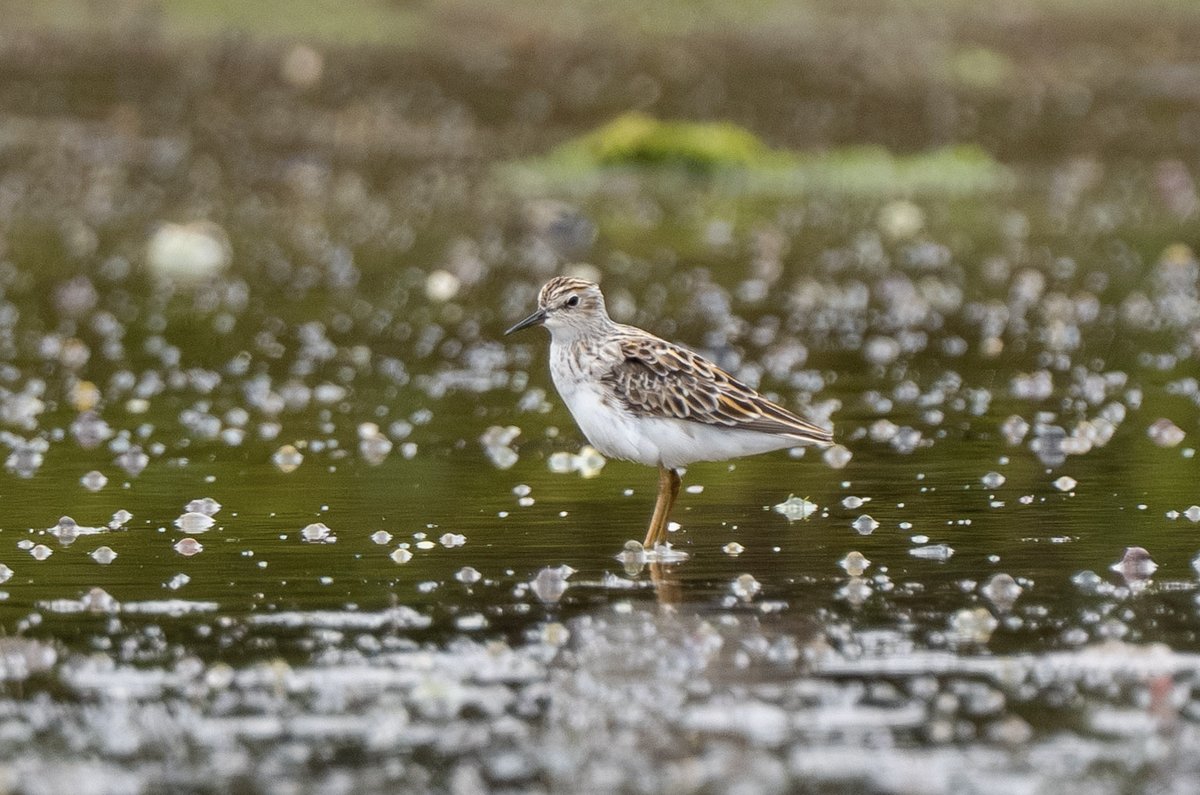
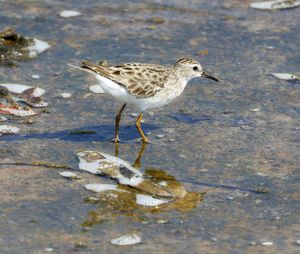
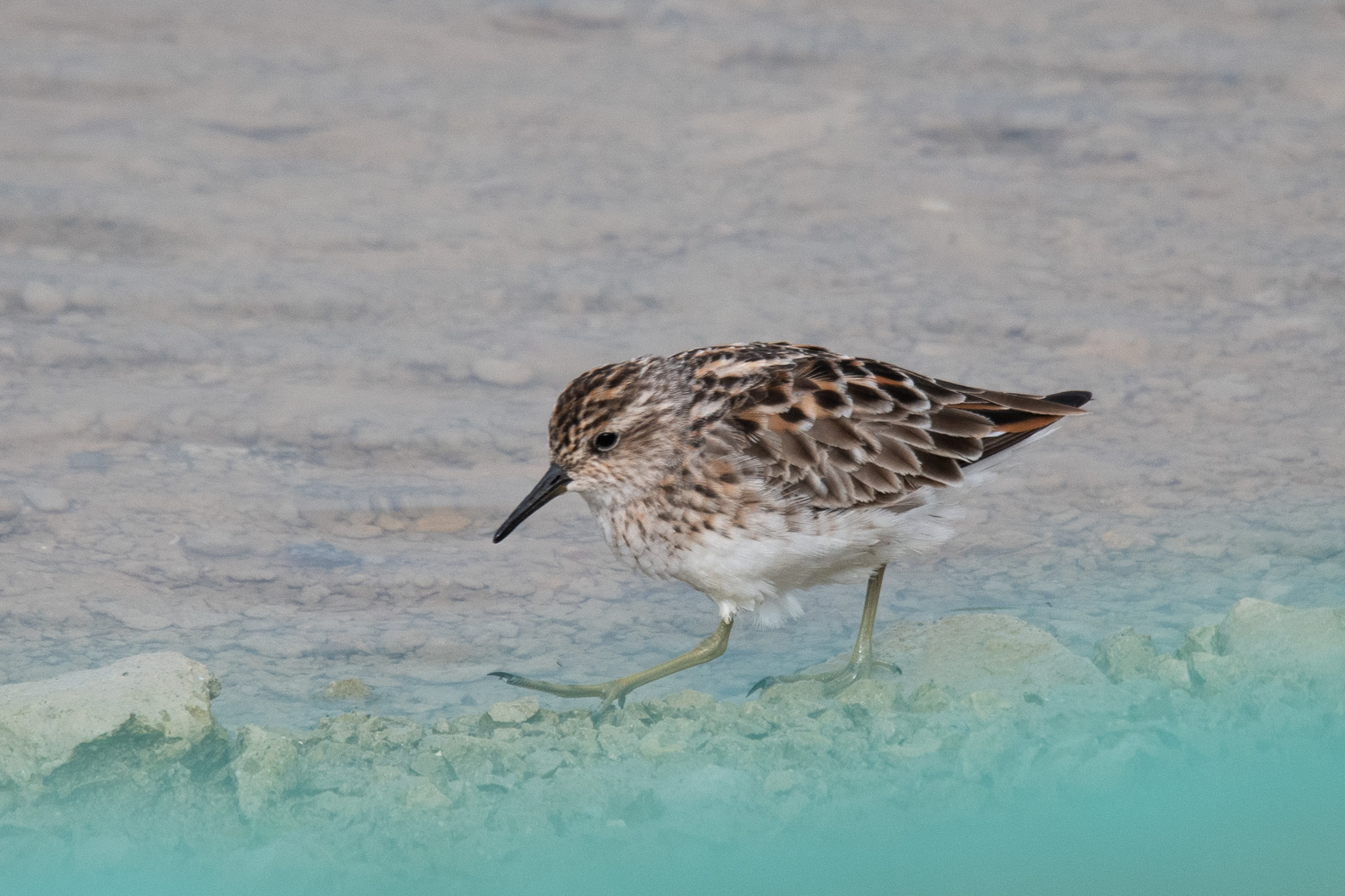
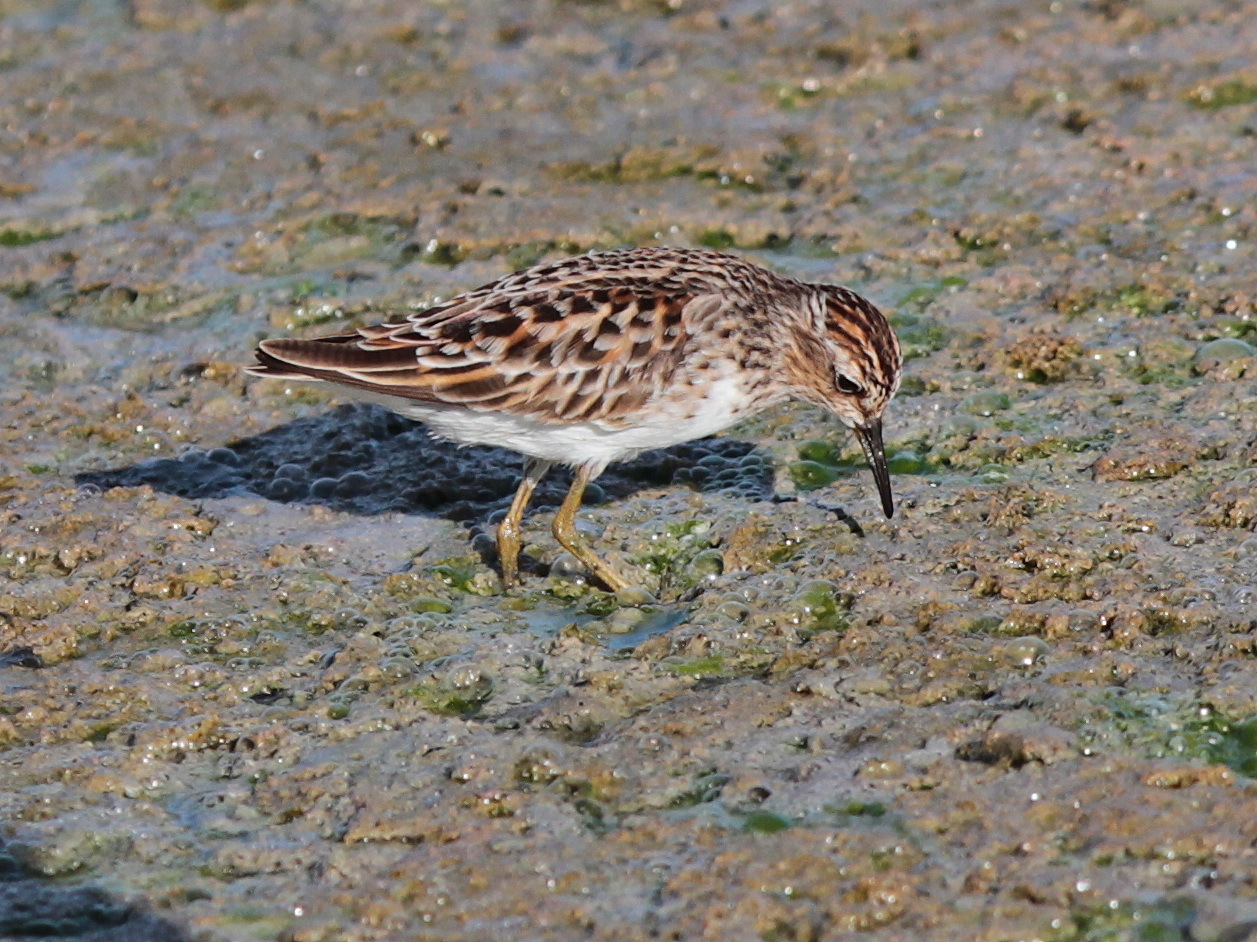
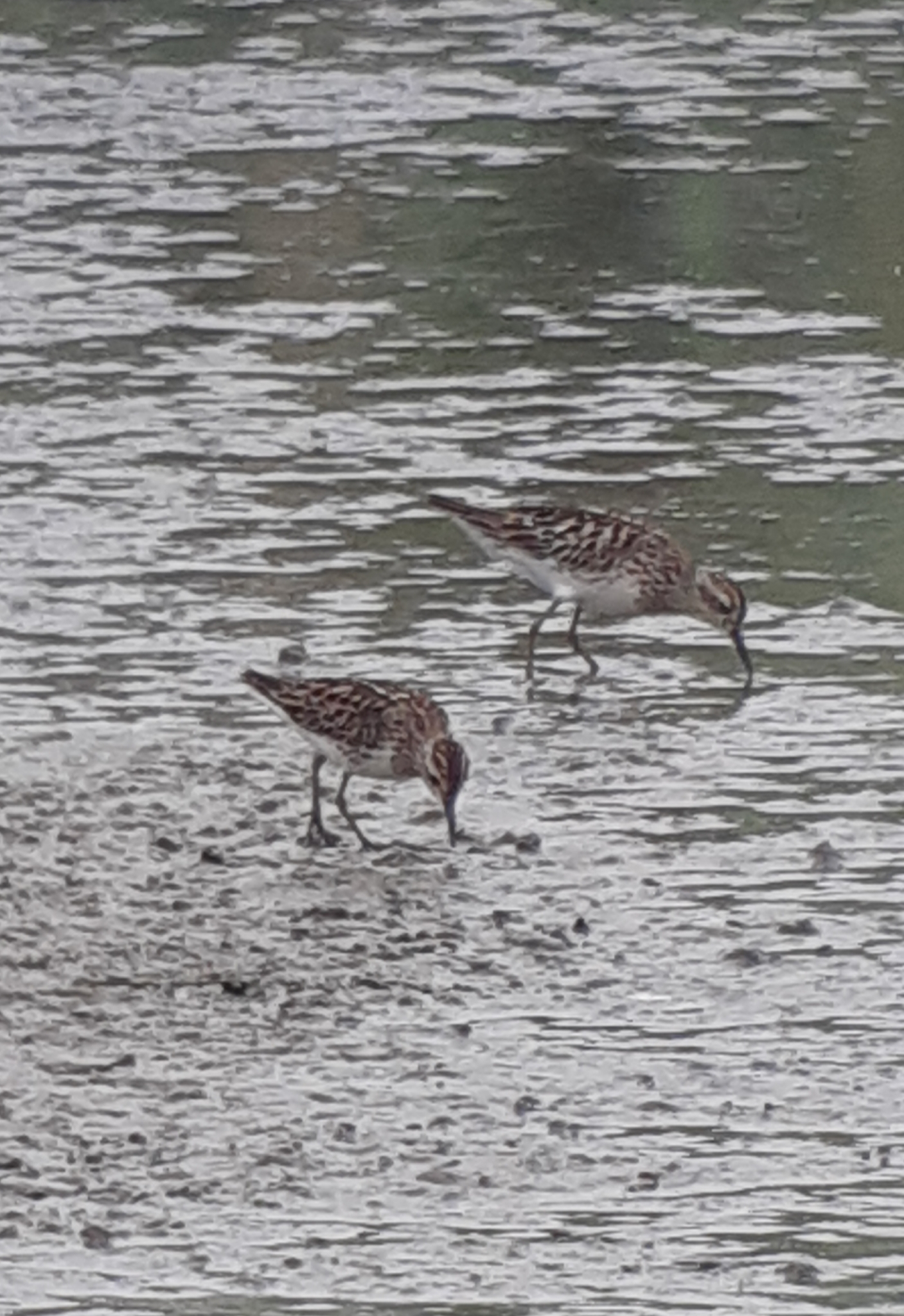
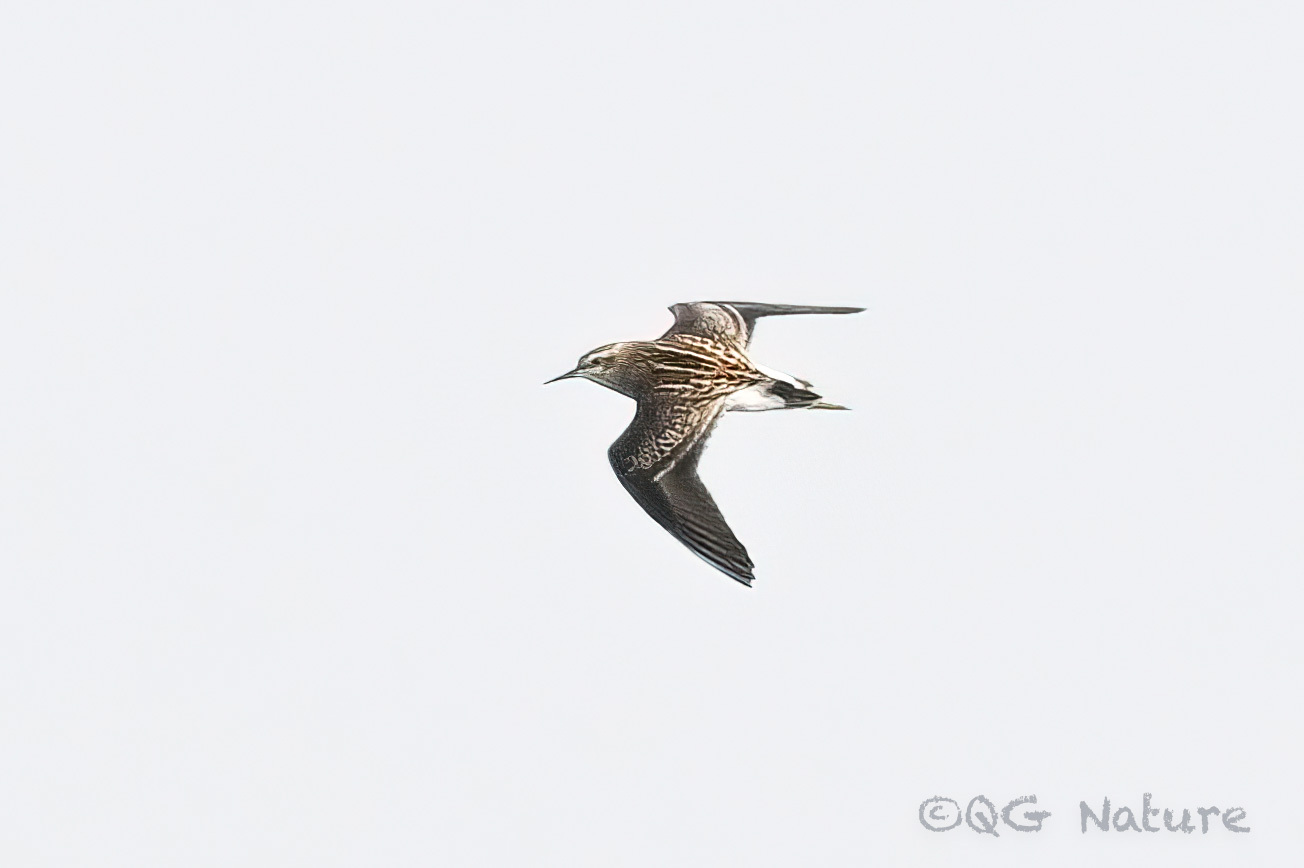
Measures 13 to 16 cm in length with a wingspan of 26.5 to 30.5 cm and weighs about 25 g. It has a small head, short straight sharp-tipped beak, slender neck, rounded belly, and long legs set well back. Toes are long and slender, especially the middle one. Primary feathers extend to the tail. Breeding adults are rich brown with darker feather centers above, white underneath, a light line above the eye, and a brown crown. Winter plumage is grey above. Juveniles are brightly patterned above with rufous coloration and white mantle stripes. Legs and feet are yellow; the beak is dark brown with a yellow or pale brown base on the lower mandible.
Identification
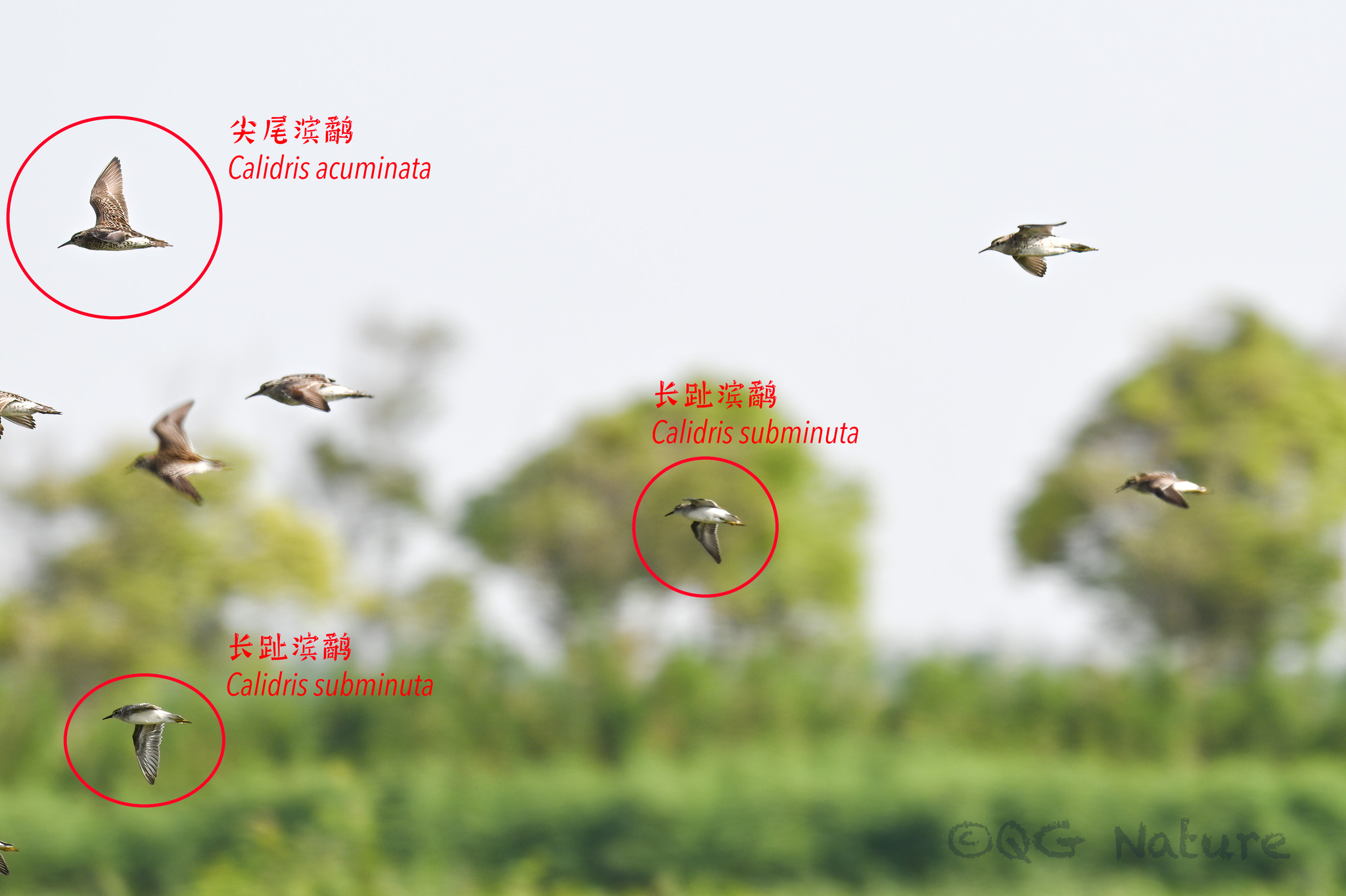
Distinguished by a distinctive stance, slender longer-necked appearance, longer toes, and brighter colors compared to similar species. Differs from the least sandpiper by having a weaker wingbar. Distinguished from the red-necked stint by being more finely built and slightly smaller. Flight call distinguishes it from other sandpipers.
Distribution & Habitat
Breeds in Siberia, including the Chukchi Peninsula, Koryak Plateau, Commander Islands, Kuril Islands, land bordering the Sea of Okhotsk, north Verkhoyansky District, and around the Ob and Irtysh Rivers. Migrates south through China, Indochina, Malaysia, and the Philippines, and west to Burma, Bangladesh, Nepal, Sri Lanka, and the Maldive Islands. Winters in New Guinea and Australia. Vagrant to Great Britain, Sweden, South Africa, Melanesia, Hawaii, northwestern USA, and the vicinity of the Bering Sea. Winter habitats include shallow freshwater or brackish areas, lakes, swamps, floodplains, marshes, lagoons, muddy shores, and sewage ponds.
Behavior & Ecology
Forages in wet habitats by probing the ground or picking up food by sight. Diet includes molluscs, crustaceans, amphibians, insects, other invertebrates, and seeds. Roosts in hollows in soft mud or low vegetation. Breeds in tundra, taiga, open grassy bogs, or swamps. Nests in a well-hidden, shallow depression on a mound of sedge or dried grass among mosses, sedges, and dwarf willows. The male performs a display flight.
Conservation
IUCN status is Least Concern. Global population is estimated between 10,000 and 100,000 individuals, with approximately 25,000 breeding pairs. Population trend is unknown. No particular threats have been identified.
Source: Wikipedia · CC BY-SA 3.0
Taxonomy
- Order
- Charadriiformes
- Family
- Scolopacidae
- Genus
- Calidris
Distribution
breeds subarctic to temperate bogs of disjunctly in Chukotskiy Peninsula, northern Kuril and Commander islands (eastern Russia) and (perhaps) northern Mongolia; winters eastern India and Sri Lanka eastward through southern Asia to southern Japan and southward to southeastern Australia
Data Sources
Species description from Wikipedia, licensed under CC BY-SA 3.0.
Bird images and sounds sourced from GBIF, contributed by citizen scientists worldwide under Creative Commons licenses.
Taxonomy data from AviList 2025.