Long-toed Stint
Calidris subminuta
长趾滨鹬
Introduction
Long-toed Stint (Calidris subminuta) is a small wader inhabiting East Asian and Australian wetlands. Body length is 13-16 cm. It is characterized by yellow legs and elongated toes, distinguishing it from other small sandpipers. Foraging behavior involves active prey selection from mudflats rather than deep probing. Breeding plumage features brown upperparts with darker feather centers creating a scaled pattern; non-breeding plumage is grey. The species is a long-distance migrant breeding in Siberia, wintering across south and southeast Asia, New Guinea, and Australia. Global population is estimated at 10,000-100,000 individuals.
Description
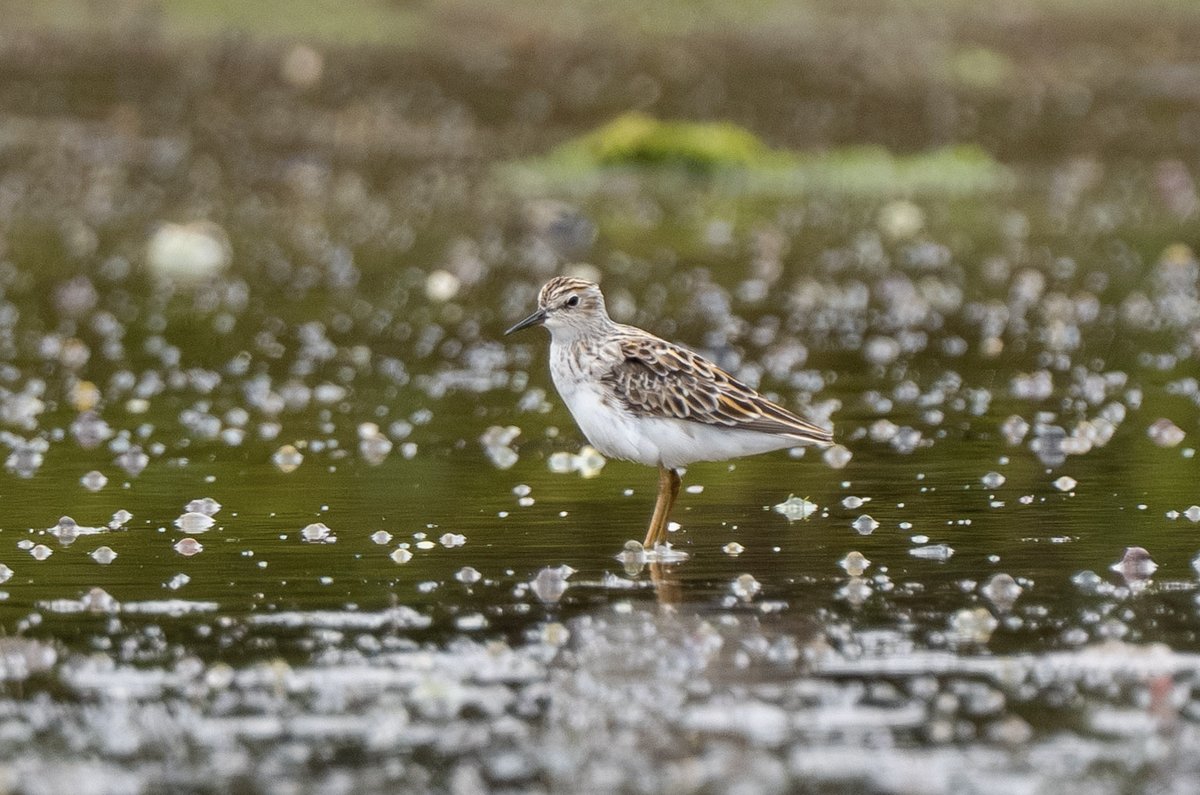
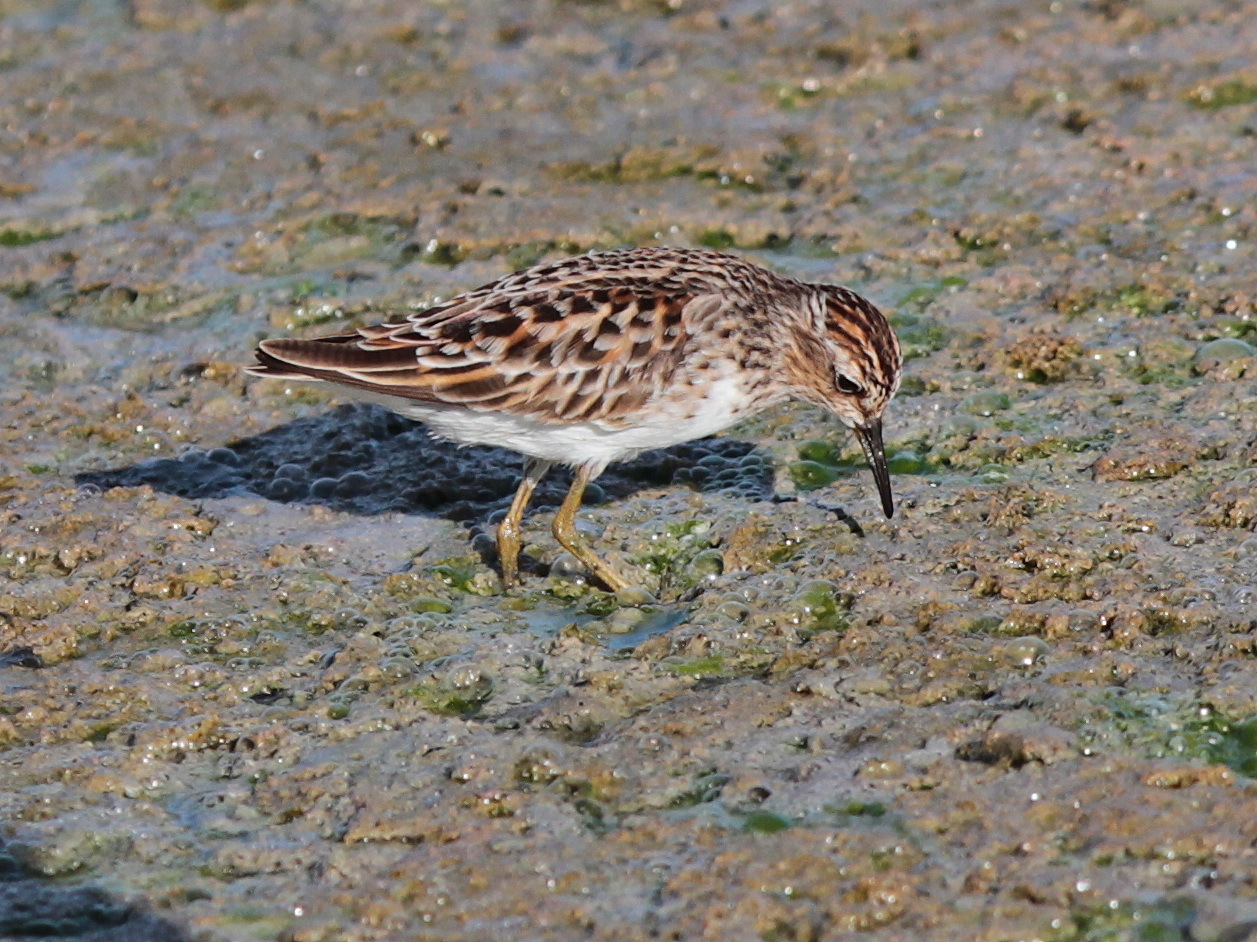
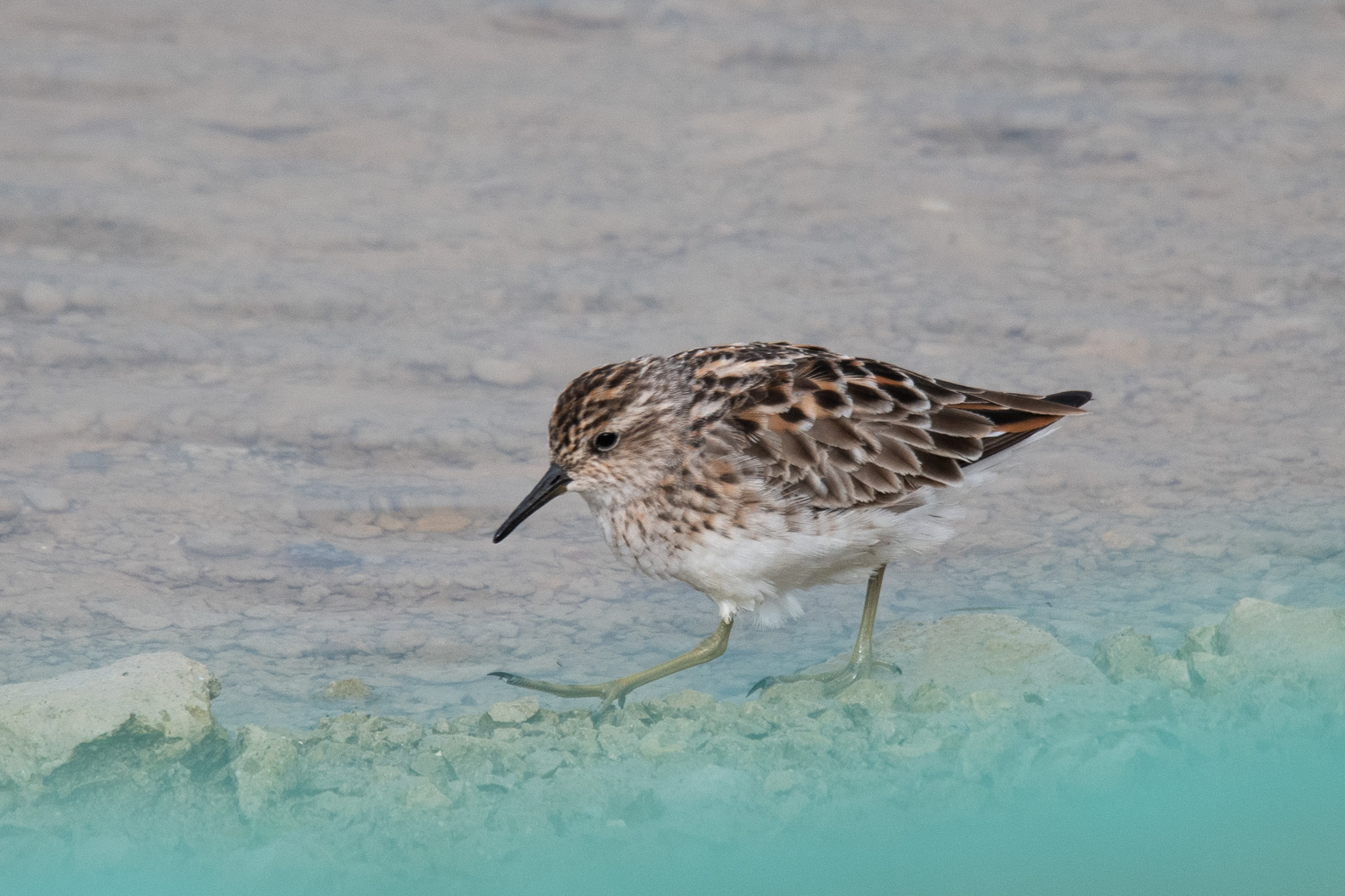
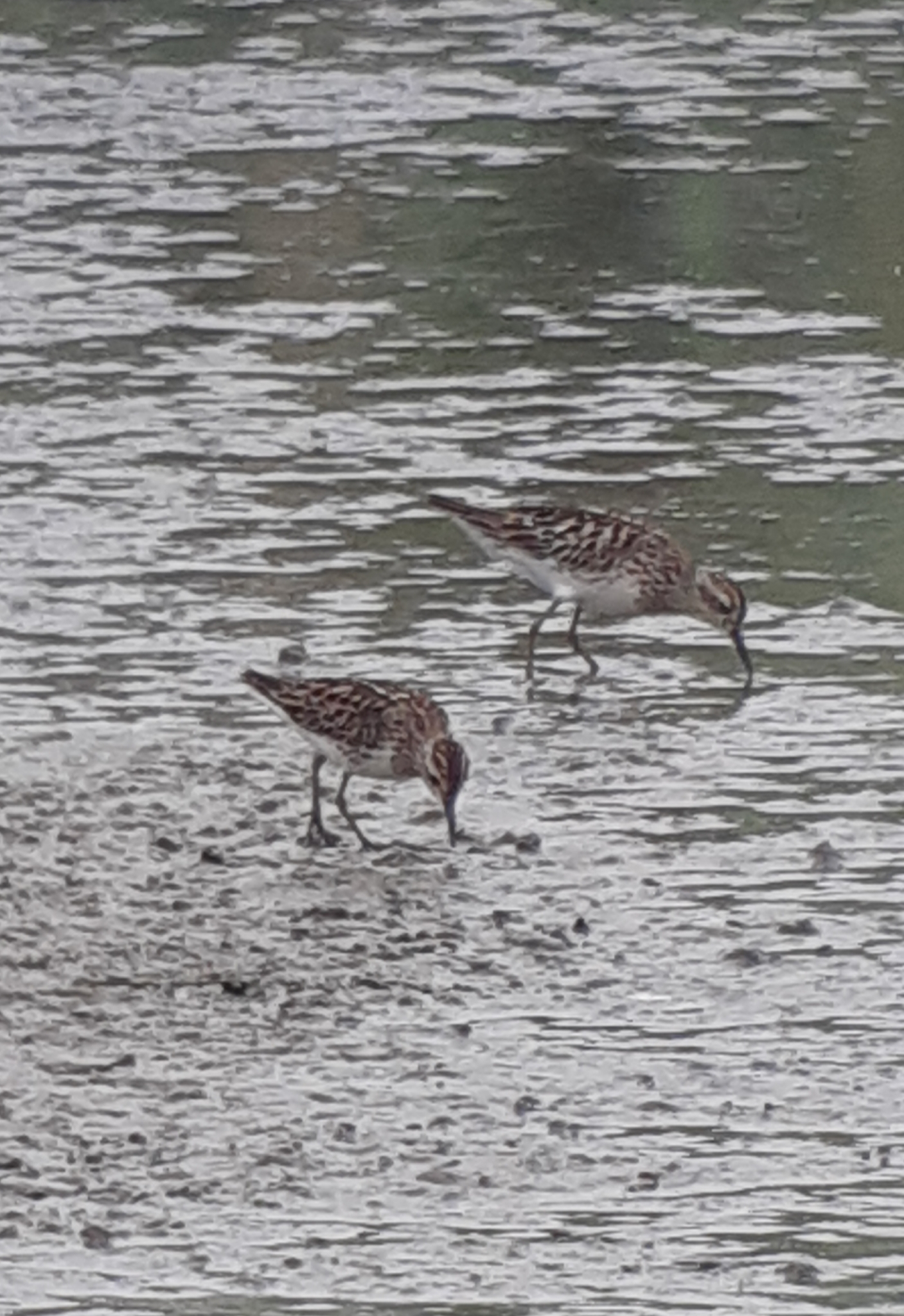
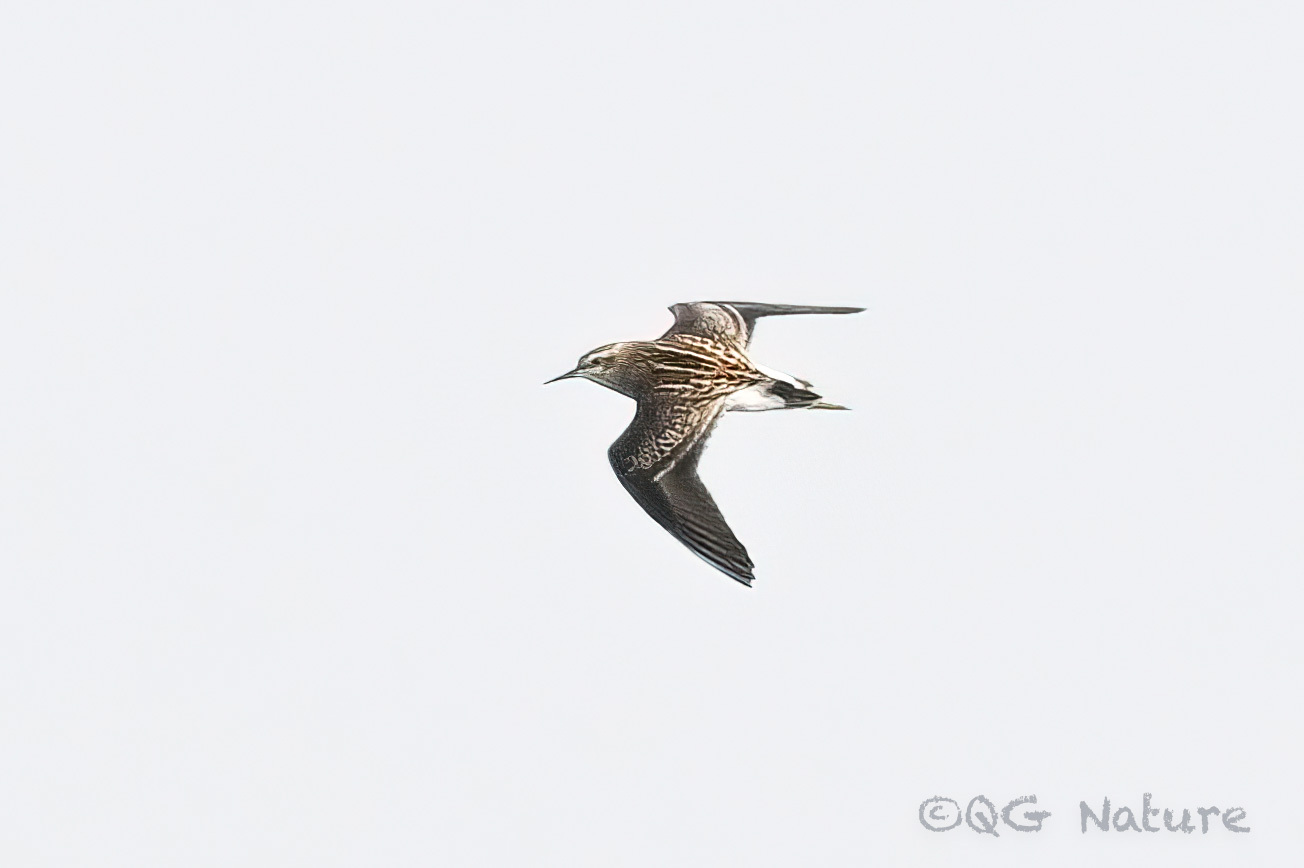
This is a very small sandpiper measuring 13-16 cm in length with a wingspan of 26.5-30.5 cm and weighing around 25 grams. It has a small head and short, straight, sharp-tipped bill. The neck is slender, the belly rounded, and the long legs are set well back on the body. The toes are notably long and slender, especially the middle toe - this distinctive feature gives the species its common name. The crown is brown with a pale streak running just above the eye. Upperparts are brown with darker brown feather centers, while the breast is speckled with pale brown and the underparts are pure white. The yellow legs and feet are conspicuous in the field, and the dark brown bill has a yellow or pale brown base on the lower mandible.
Identification
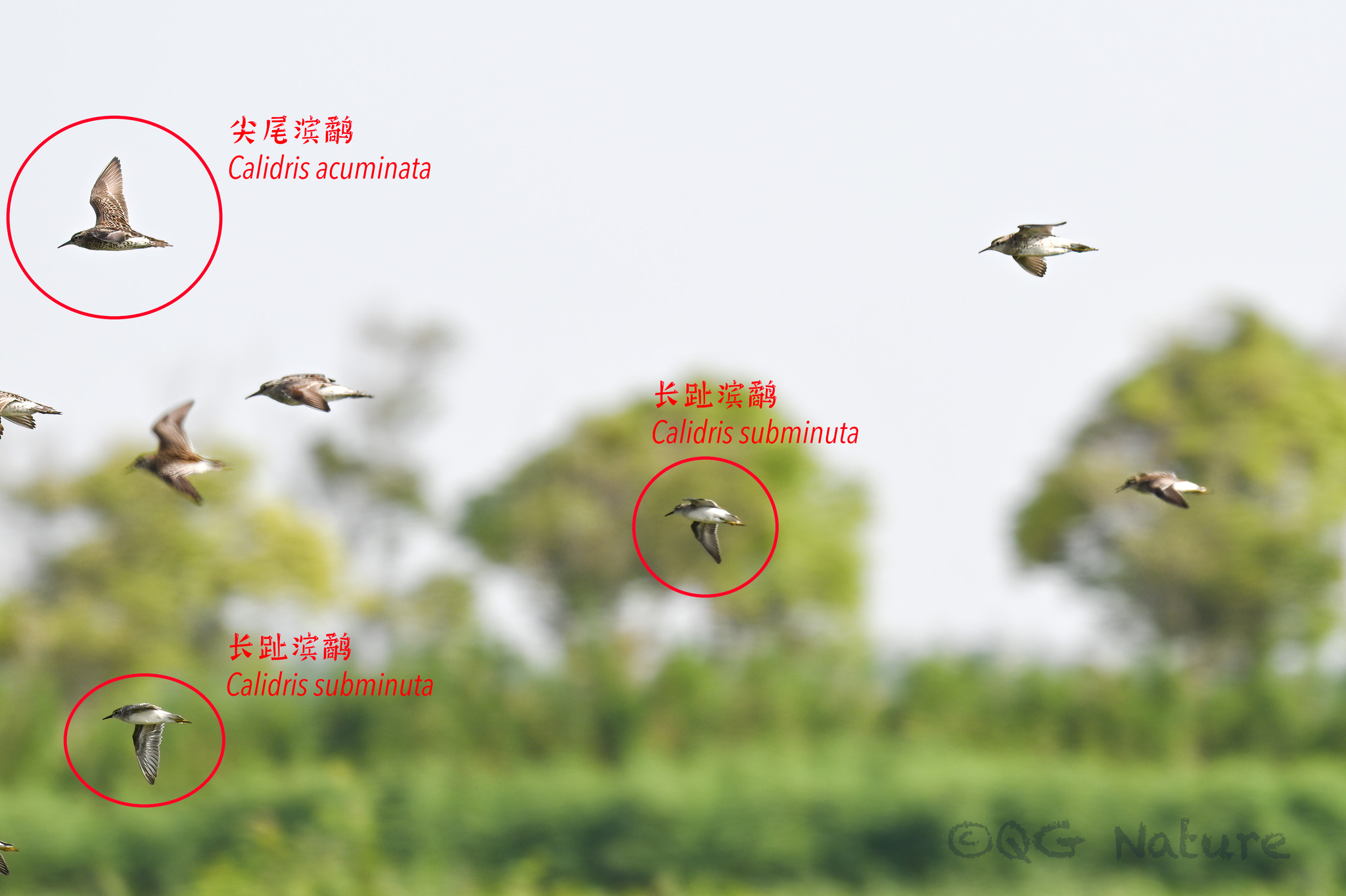
Field identification of this species requires careful observation, as it closely resembles other tiny waders collectively called 'peeps.' It is most similar to the least sandpiper but differs in its more slender, longer-necked appearance, longer toes, somewhat brighter colors, and weaker wingbar. It can also be confused with the red-necked stint but is more finely built and slightly smaller overall. The species has a distinctive stance that helps separate it from other calidrids. Its flight call is diagnostic and provides the most reliable way to distinguish it from other sandpipers in flight. When observed on the ground, the combination of yellow legs, long toes, and the specific plumage pattern should be noted carefully.
Distribution & Habitat
This species breeds across northern Siberia, including the Chukchi Peninsula, Koryak Plateau, Commander Islands, Kuril Islands, Sea of Okhotsk region, Verkhoyansky District, and areas along the Ob River and Irtysh River. After breeding, it migrates southward through China, Indochina, Malaysia, and the Philippines, also spreading west to Burma, Bangladesh, Nepal, Sri Lanka, and the Maldives. It winters in south and southeast Asia, New Guinea, and Australia. It occurs as a rare vagrant in western Europe, as well as in South Africa, Melanesia, Hawaii, and the northwestern United States. In its winter range, it inhabits various wetland types including shallow freshwater and brackish lakes, swamps, floodplains, marshes, lagoons, muddy shores, and sewage ponds.
Behavior & Ecology
These birds forage in wet habitats, probing the ground with their bills and picking up food by sight. They feed on molluscs, crustaceans, amphibians, insects, other invertebrates, and occasionally seeds. When not feeding, they roost in hollows in soft mud or among low vegetation bordering their feeding areas. In their breeding range across Russia, they inhabit tundra, taiga, and open grassy bogs or swamps. The nest is a well-hidden, shallow depression placed on a mound of sedge or dried grass, typically in areas with mosses, sedges, and dwarf willows. Little is known about their breeding habits, though they do nest on the ground and the male performs a display flight. They are generally found alone or in small groups.
Conservation
The IUCN Red List classifies this species as Least Concern. It has an extremely wide range with a global population estimated between 10,000 and 100,000 individuals, roughly 25,000 breeding pairs. The population trend is unknown. No particular threats have been identified for this species, and it appears to maintain stable numbers across its vast range. The remoteness of its breeding grounds and the diversity of its migration and wintering habitats likely contribute to its security from major conservation concerns.
Culture
No specific cultural significance, folklore, or mythological associations were documented in available sources for this species.
Source: Wikipedia · CC BY-SA 3.0
Taxonomy
- Order
- Charadriiformes
- Family
- Scolopacidae
- Genus
- Calidris
- eBird Code
- lotsti
Distribution
breeds subarctic to temperate bogs of disjunctly in Chukotskiy Peninsula, northern Kuril and Commander islands (eastern Russia) and (perhaps) northern Mongolia; winters eastern India and Sri Lanka eastward through southern Asia to southern Japan and southward to southeastern Australia
Data Sources
Species description from Wikipedia, licensed under CC BY-SA 3.0.
Bird images and sounds sourced from GBIF, contributed by citizen scientists worldwide under Creative Commons licenses.
Taxonomy data from AviList 2025.