Charadriiformes / Scolopacidae / Calidris
Broad-billed Sandpiper
Calidris falcinellus · 阔嘴鹬
Introduction
A small wading bird in the genus Calidris, formerly placed in the monospecific genus Limicola. It breeds in wet taiga bogs in Arctic northern Scandinavia and Siberia, with two disjunct breeding regions corresponding to its subspecies. The species is strongly migratory, wintering from eastern Africa through South and Southeast Asia to Australasia. It is classified as Vulnerable by the IUCN due to population declines exceeding 30% over three generations.
Description
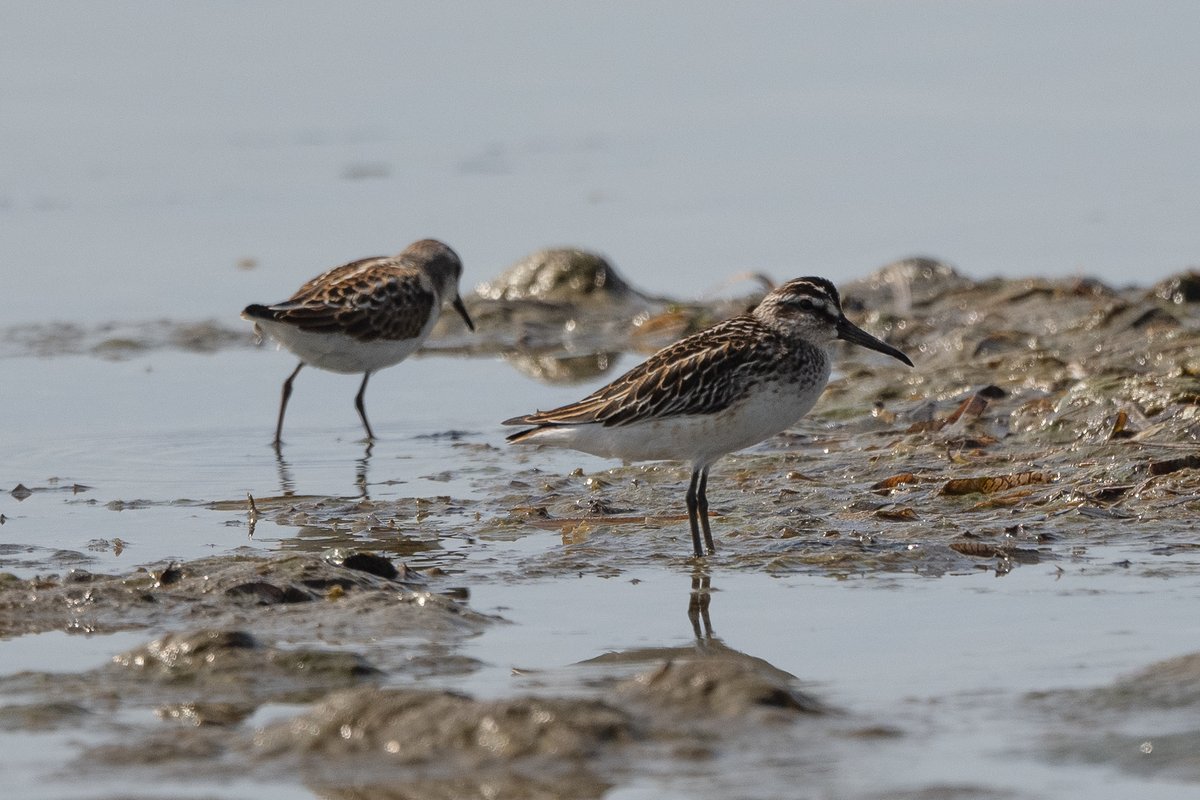
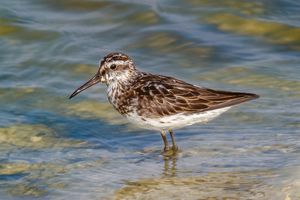
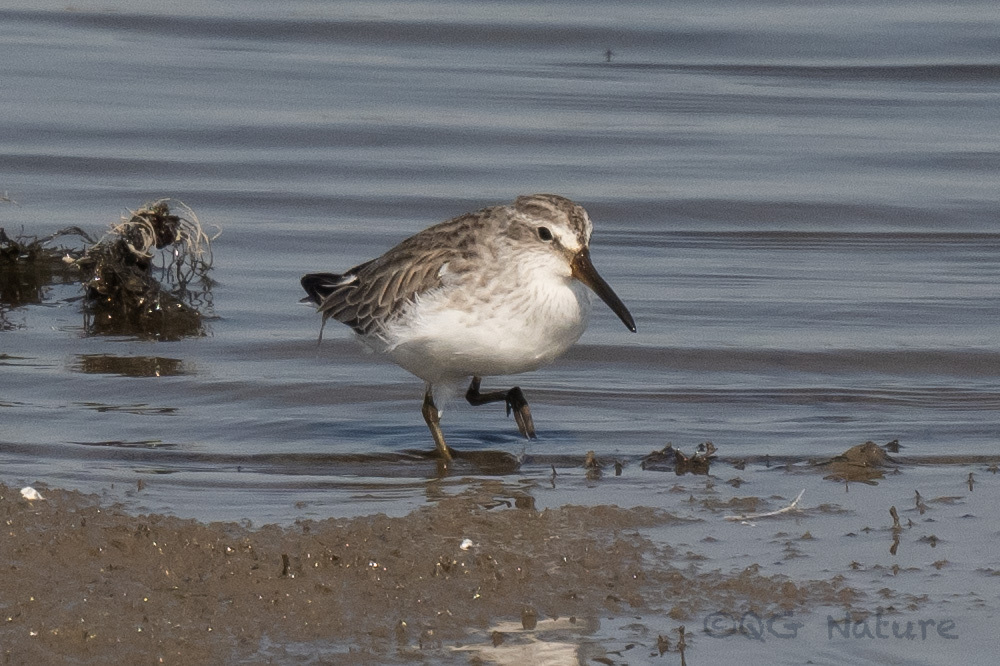
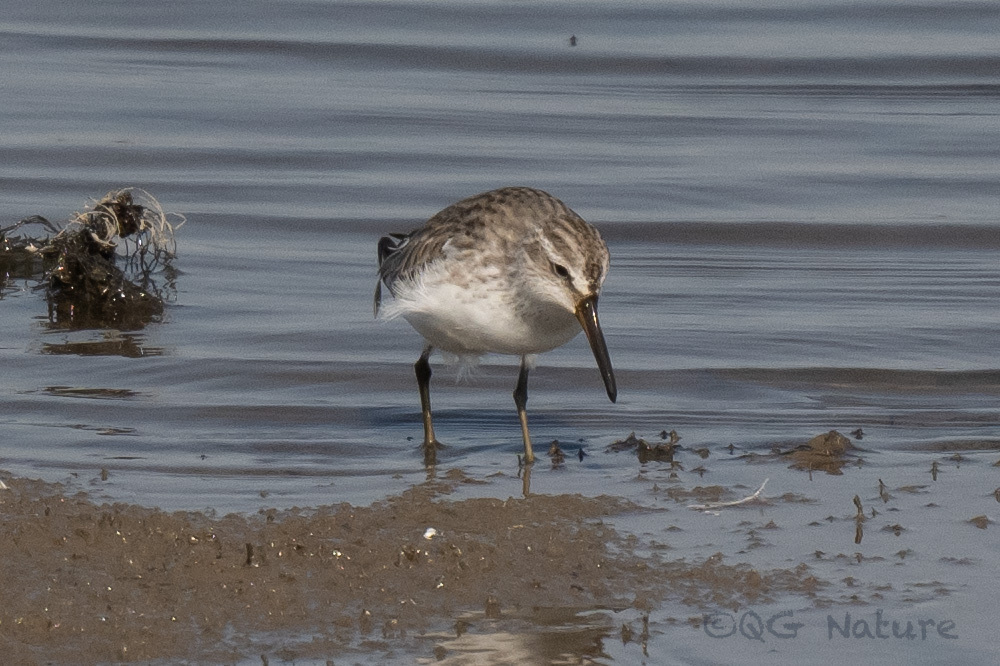
Small wader, 16–18 cm long, slightly smaller than a dunlin but larger than a little stint. It has a longer, straighter bill with a tip distinctly kinked down, and shorter legs than a dunlin. Breeding adults have dark brown upperparts with narrow, pale feather fringes (white in nominate subspecies, brighter rufous-toned in sibirica), white underparts with blackish breast markings, a pale crown stripe, and a distinctive double supercilium. Winter plumage is paler and greyer above with white below, retaining the head pattern. Juveniles show pale 'tramlines' on the mantle, white flanks and belly, and a brown-streaked breast.
Identification
Key field marks include the distinct double (split) supercilium and pale crown stripe. The bill is slightly broader than most other Calidris species, though this is rarely evident in the field. Differentiated from dunlin by shorter legs and a straighter, kinked-tipped bill. Juveniles are distinguished by white flanks and belly combined with a brown-streaked breast. Contact call is a dry, whistling 'dree-it, dree-it' and a clicking 'dik dik'.
Distribution & Habitat
Breeds in two disjunct regions: C. f. falcinellus in northern Scandinavia and northwest Russia; C. f. sibirica in central and eastern Siberia. Strongly migratory with a south-easterly route, making it rare on passage in western Europe. Winters from easternmost Africa through the Middle East, India, and Southeast Asia to Australasia. Breeding habitat consists of wet taiga bogs; non-breeding habitats include marshes and coasts.
Behavior & Ecology
Gregarious, often forming flocks with other scolopacid waders, particularly dunlins. Forages in soft mud on marshes in summer and on coasts in winter, mainly picking up food by sight. Diet consists mostly of insects and other small invertebrates. During courtship, the male performs an aerial display. Nests in a ground scrape, laying four eggs.
Conservation
Classified as Vulnerable by the International Union for Conservation of Nature and Natural Resources. Although it has a wide distribution and large population, global trends show a decline likely exceeding 30% in the past three generations. It is listed under the Agreement on the Conservation of African-Eurasian Migratory Waterbirds.
Source: Wikipedia · CC BY-SA 3.0
Taxonomy
- Order
- Charadriiformes
- Family
- Scolopacidae
- Genus
- Calidris
Subspecies (2)
-
Calidris falcinellus falcinellus
breeds Scandinavia and northwestern Russia (Kanin Peninsula); winters coastal eastern Africa eastward to southern India and Sri Lanka
Data Sources
CBR Notes: IUCN红色名录等级由LC升为VU
Species description from Wikipedia, licensed under CC BY-SA 3.0.
Bird images and sounds sourced from GBIF, contributed by citizen scientists worldwide under Creative Commons licenses.
Taxonomy data from AviList 2025.