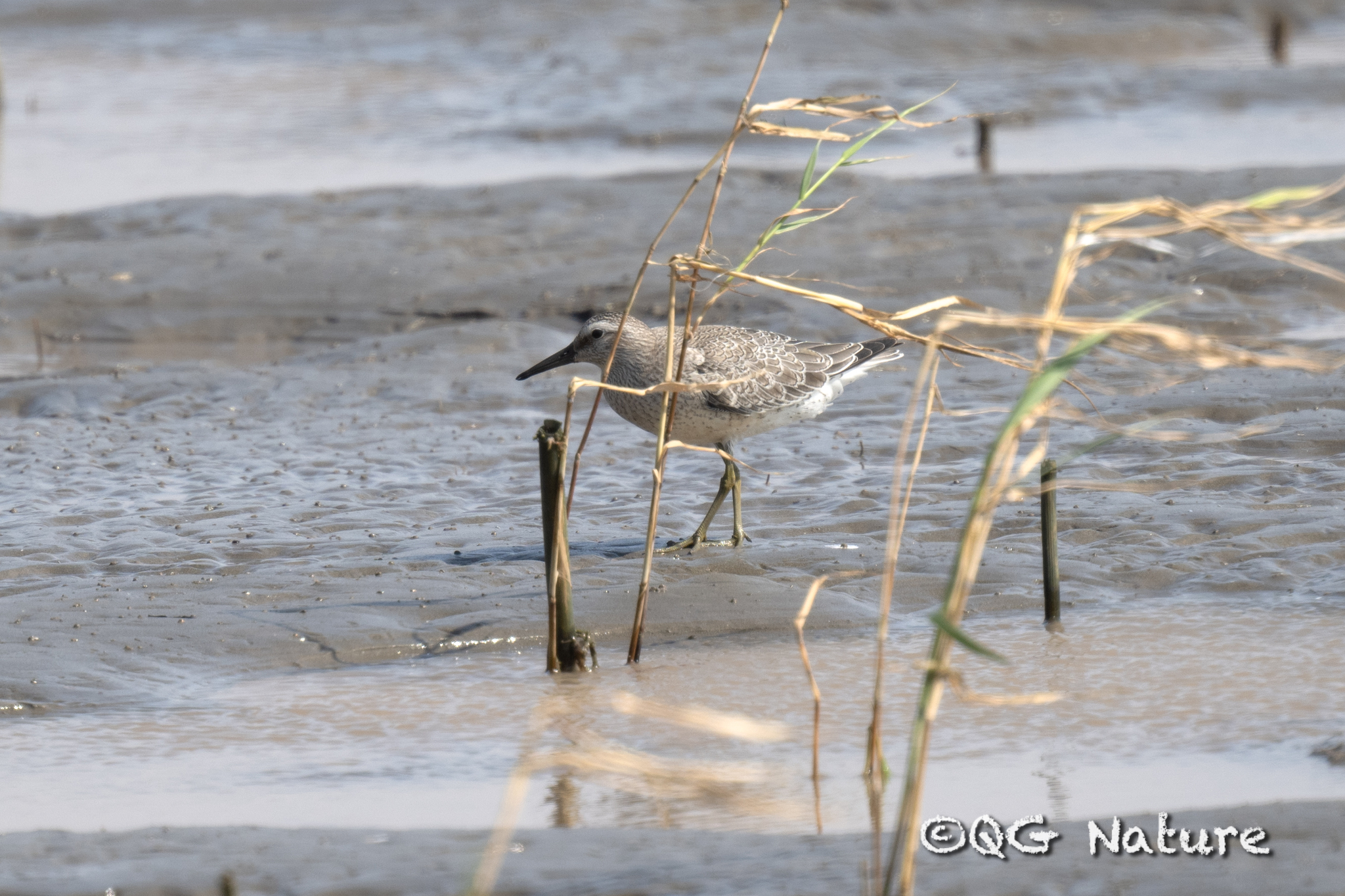
Charadriiformes / Scolopacidae / Calidris
Red Knot
Calidris canutus · 红腹滨鹬
Introduction
A medium-sized shorebird and large member of the Calidris sandpipers, second only in size to the great knot. It breeds in tundra and the Arctic Cordillera across Canada, Europe, and Russia. The species undertakes one of the longest migrations of any landbird, traveling up to 14,000 km annually. It forms enormous flocks outside the breeding season and relies on tactile foraging for hard-shelled molluscs during migration and winter. Six subspecies are recognized. The global population is estimated at about 1.1 million individuals, and the species is evaluated as Least Concern by the IUCN, though the rufa subspecies is listed as federally threatened in the United States.
Description
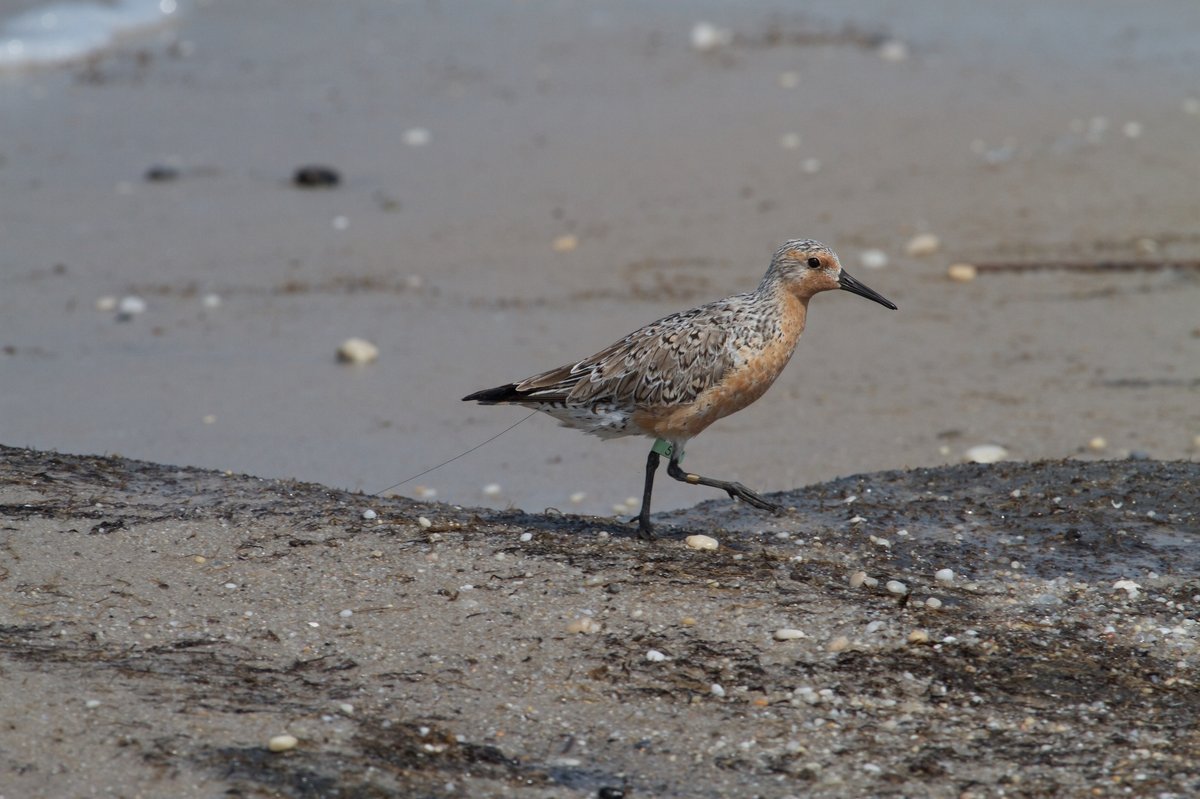
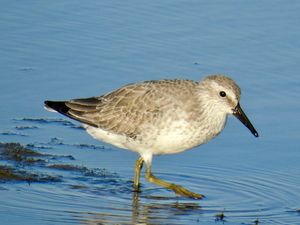
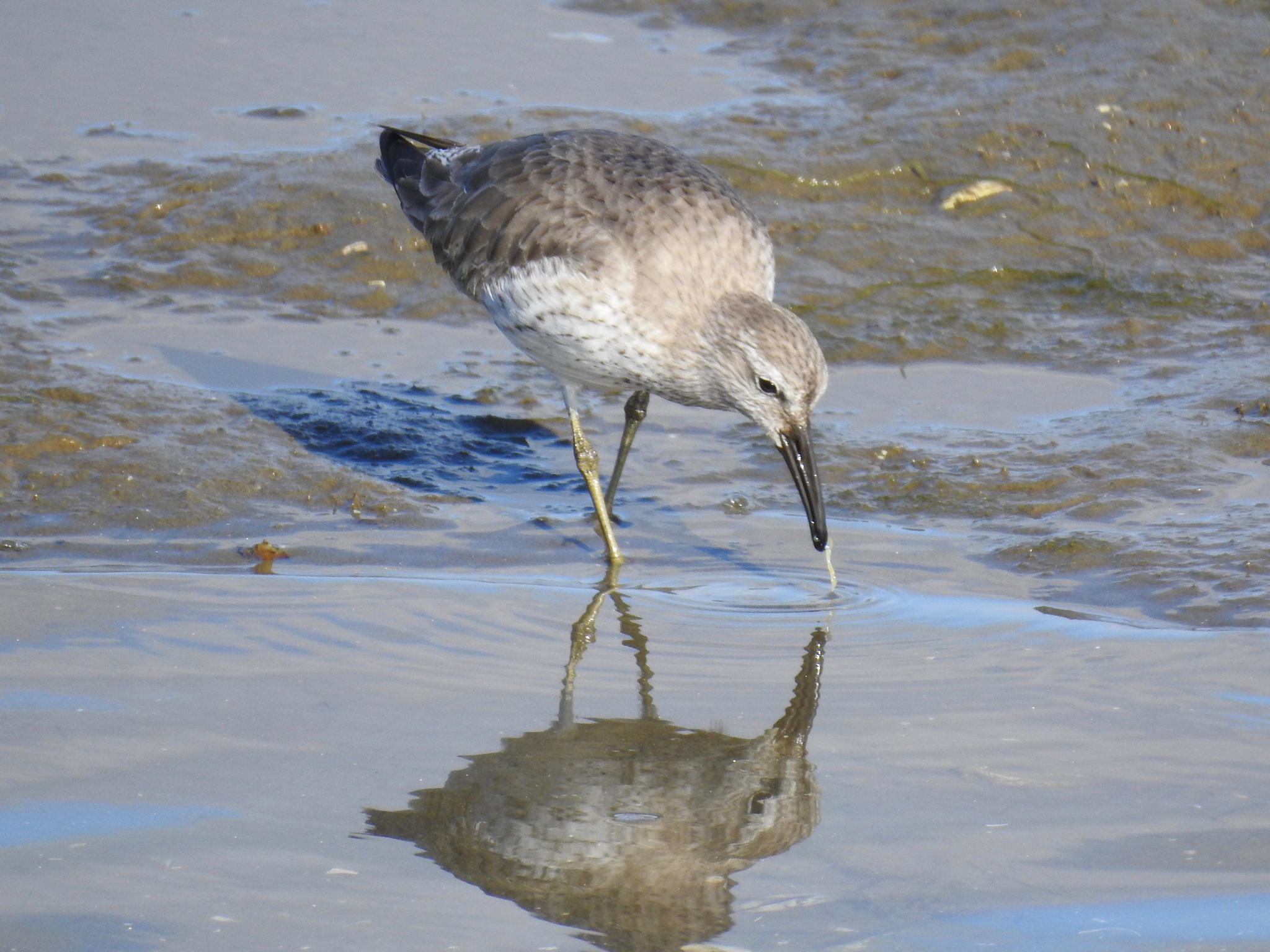
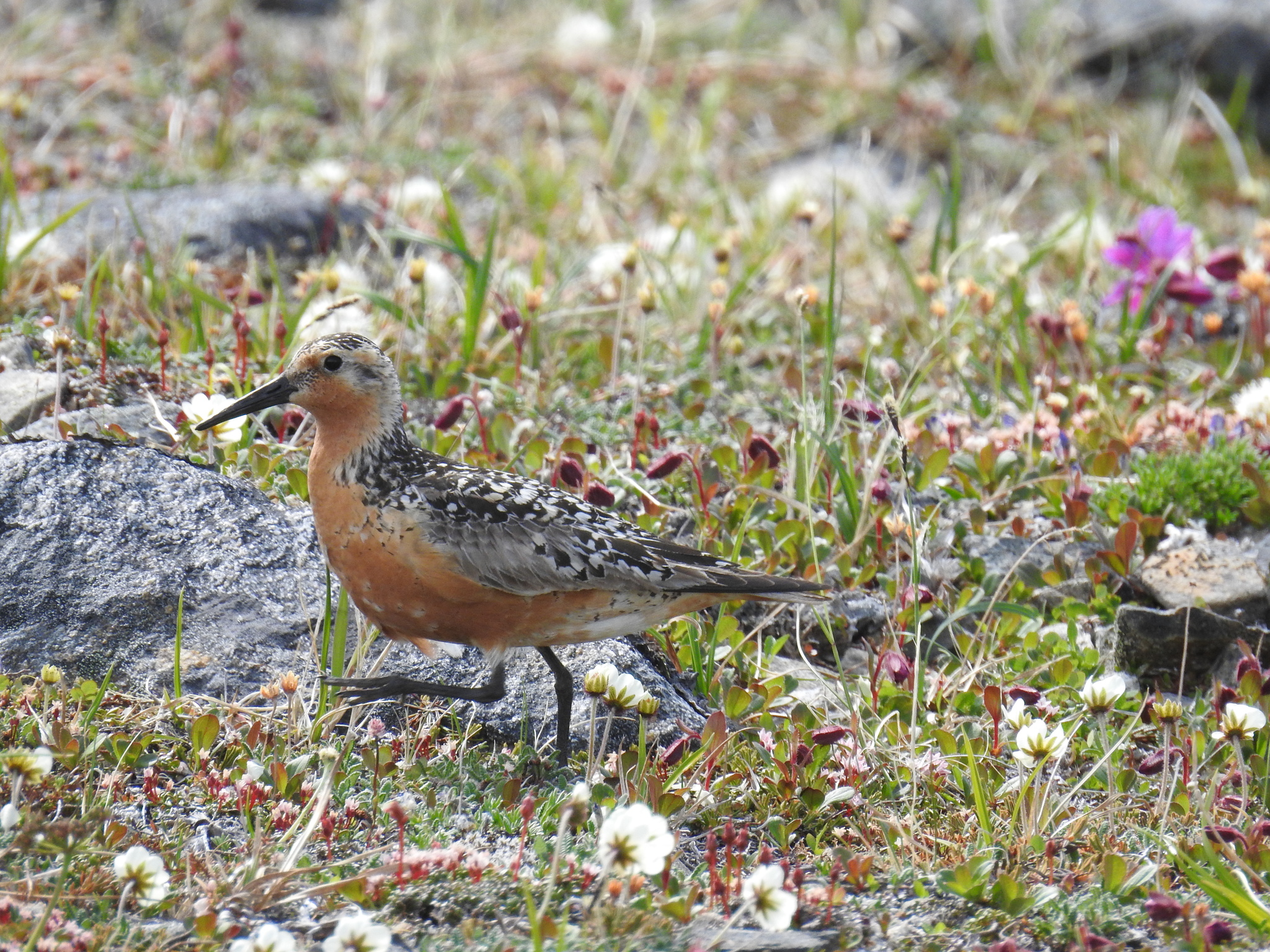
Measures 23–26 cm (9.1–10.2 in) long with a 47–53 cm (19–21 in) wingspan. Weight ranges between 100 and 200 g (3.5 and 7.1 oz), potentially doubling prior to migration. It has a small head, short neck, short dark legs, and a medium thin dark bill no longer than its head. Winter plumage is uniformly pale grey. Breeding plumage features mottled grey upperparts with a cinnamon face, throat, and breast; females are slightly lighter with a less distinct eye-line. Subspecies vary in darkness, with C. c. rufa being the lightest. Juveniles have distinctive submarginal lines and brown coverts.
Identification
Identified in flight by large size, white wing bar, and grey rump and tail. Feeding birds exhibit a characteristic 'low-slung' appearance due to short dark greenish legs. Vocalizations include a low monosyllabic knutt when flying in flocks and a disyllabic knuup-knuup during migration. The male display song is a fluty poor-me. Distinguished from similar sandpipers by its robust build and specific plumage patterns, such as the cinnamon underparts in breeding season.
Distribution & Habitat
Breeds in a circumpolar distribution across the high Arctic, including the Canadian Arctic, Greenland, Siberia (Taymyr Peninsula, Chukchi Peninsula, New Siberian Islands, Wrangel Island), and Alaska. Migrates to coastal areas worldwide, wintering at latitudes between 60° N and 55° S. North American breeders migrate to South America (Tierra del Fuego) and coastal Europe; Eurasian populations winter in Africa, Papua New Guinea, Australia, and New Zealand. Key stopover sites include Delaware Bay, where up to 80% of migrating rufa subspecies refuel.
Behavior & Ecology
Diet varies seasonally: arthropods, spiders, and larvae on breeding grounds; hard-shelled molluscs (bivalves, gastropods), small crabs, and horseshoe crab eggs on wintering and migratory grounds. Uses tactile probing in mudflats and visual pecking on breeding grounds. Can detect buried molluscs via pressure changes sensed by Herbst corpuscles in the bill. Digestive organs, particularly the gizzard, change size seasonally to adapt to food hardness. Breeds June to August in ground scrapes lined with vegetation. Both sexes incubate eggs for ~22 days; females leave after hatching, leaving males to care for precocial chicks. Forms enormous flocks outside breeding season.
Conservation
Evaluated as Least Concern globally with a population of ~1.1 million, but local declines are significant. The rufa subspecies is listed as federally threatened in the US. Major threats include climate change affecting Arctic breeding habitats and body size, sea-level rise, and overharvesting of horseshoe crabs, which reduces critical food supplies at stopover sites like Delaware Bay. Population numbers declined about 75% from the 1980s to 2000s but have stabilized recently due to management measures such as harvest quotas and sanctuaries for horseshoe crabs. Protected under the Agreement on the Conservation of African-Eurasian Migratory Waterbirds (AEWA).
Culture
The common name may derive from King Cnut, referencing the bird's foraging along the tide line, or be onomatopoeic based on its grunting call. A notable individual of the rufa subspecies, tagged 'B95' and nicknamed 'Moonbird', was at least 20 years old as of 2014.
Source: Wikipedia · CC BY-SA 3.0
Taxonomy
- Order
- Charadriiformes
- Family
- Scolopacidae
- Genus
- Calidris
Vocalizations
Subspecies (6)
-
Calidris canutus canutus
breeds Taymyr Peninsula (north-central Siberia); winters to western and southern Africa
Data Sources
Species description from Wikipedia, licensed under CC BY-SA 3.0.
Bird images and sounds sourced from GBIF, contributed by citizen scientists worldwide under Creative Commons licenses.
Taxonomy data from AviList 2025.