Red Knot
Calidris canutus
红腹滨鹬
Introduction
This sandpiper of the genus Calidris, second only to the great knot in size, undertakes annual migrations of over 14,000 kilometers between Arctic breeding grounds and southern wintering areas. The species breeds across the circumpolar Arctic in tundra and Arctic Cordillera regions of Canada, Europe, and Russia. Six recognized subspecies migrate along generally predictable routes, with North American populations wintering in coastal Europe and South America and Eurasian populations wintering in Africa, Australia, and New Zealand. The species exhibits pronounced seasonal plumage variation, with cinnamon-toned breeding plumage transitioning to pale grey non-breeding plumage.
Description
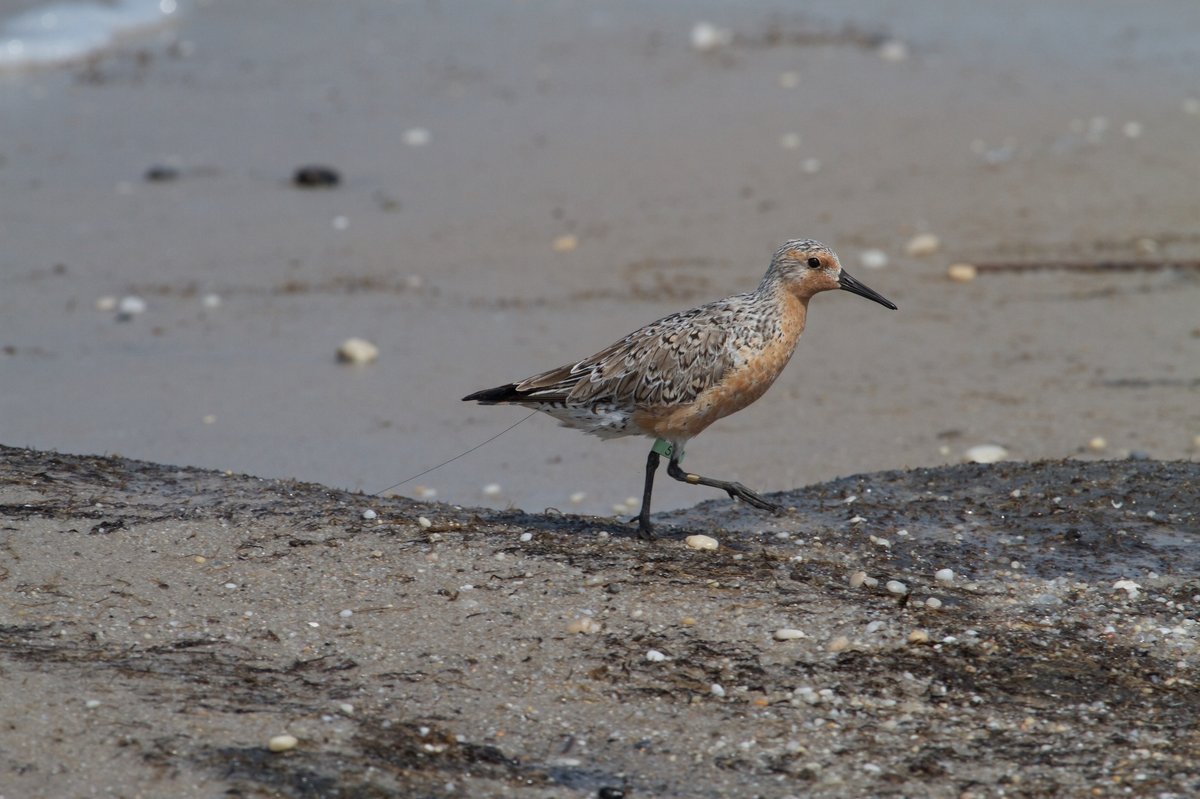
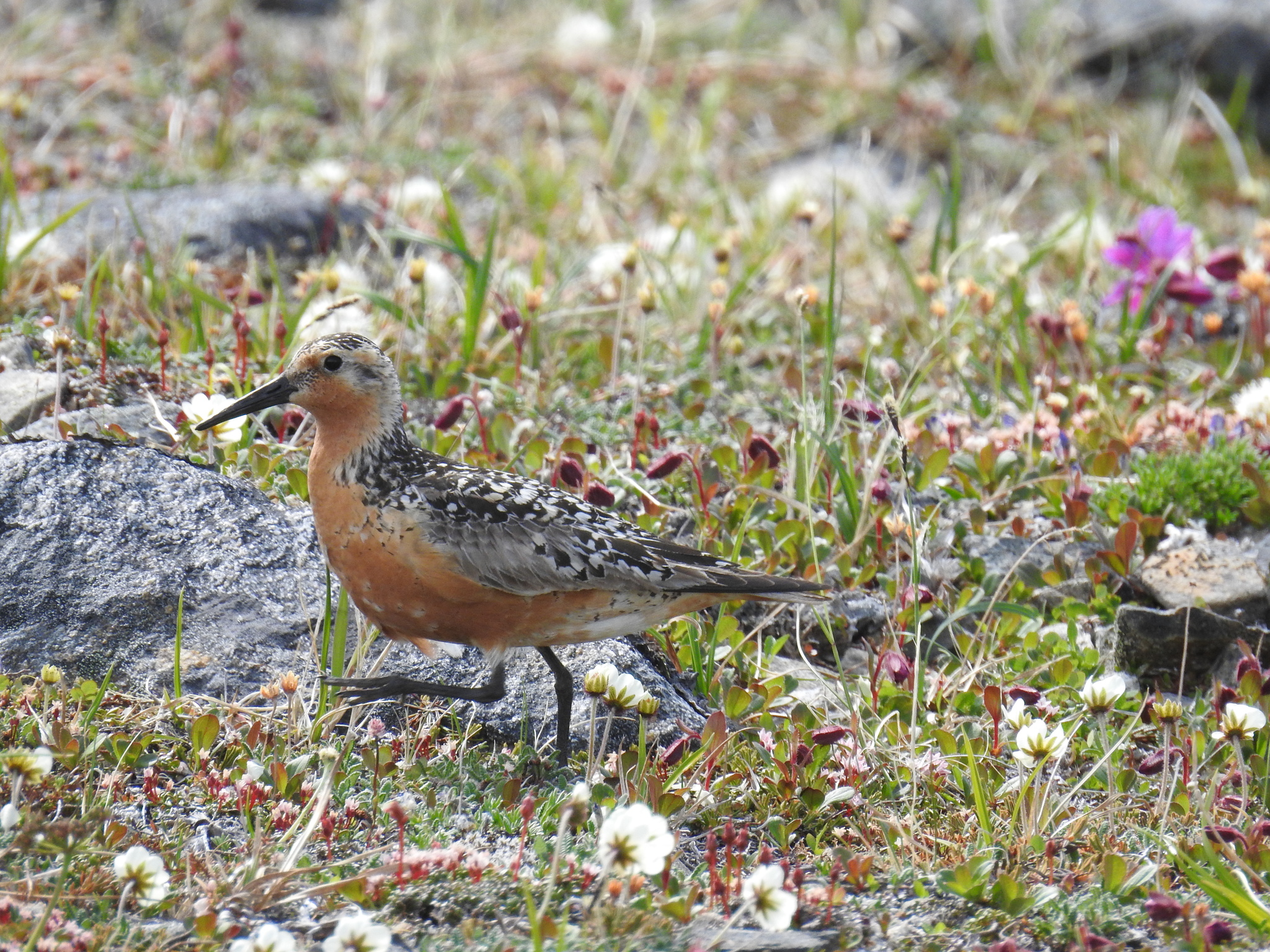
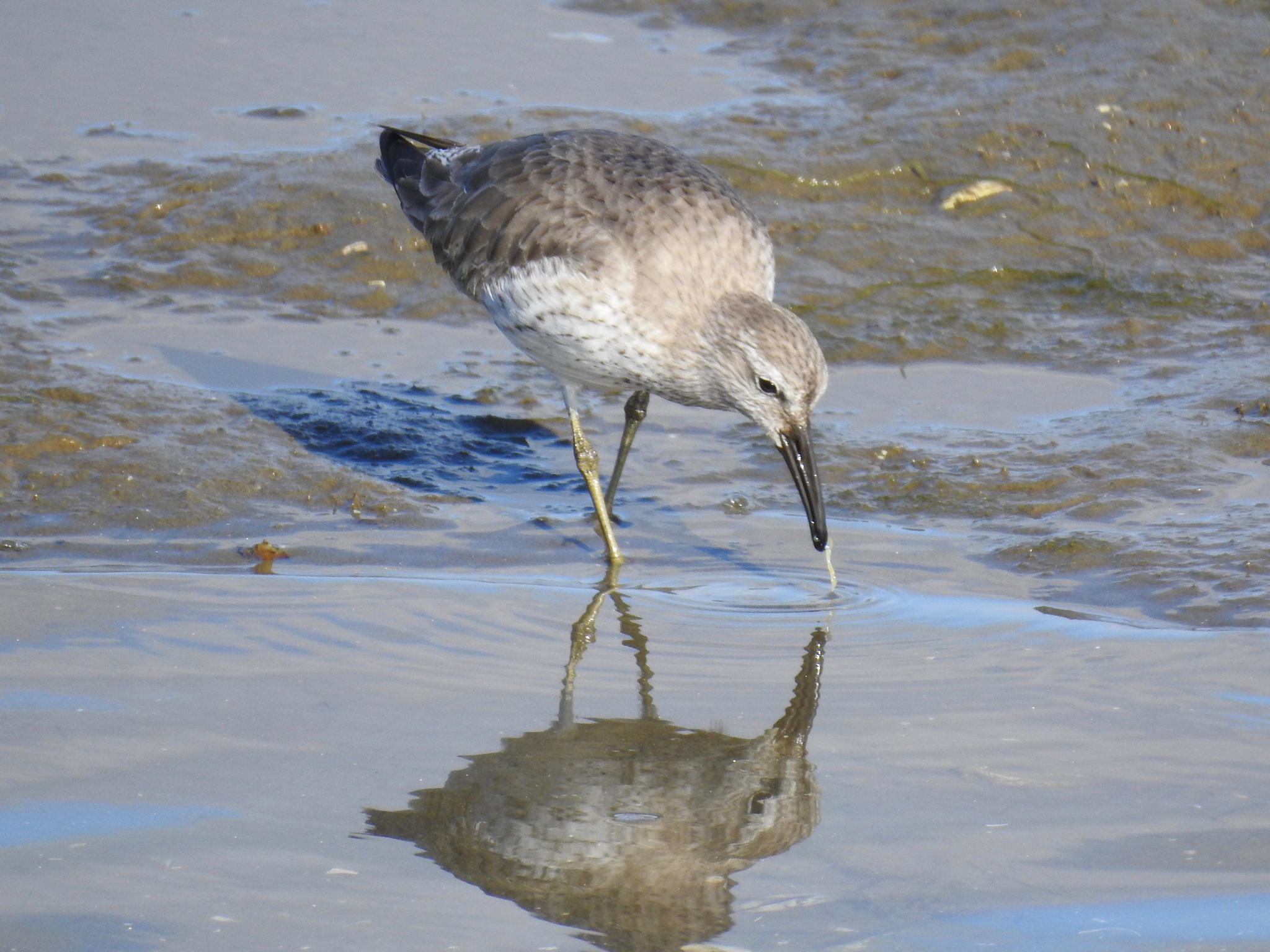
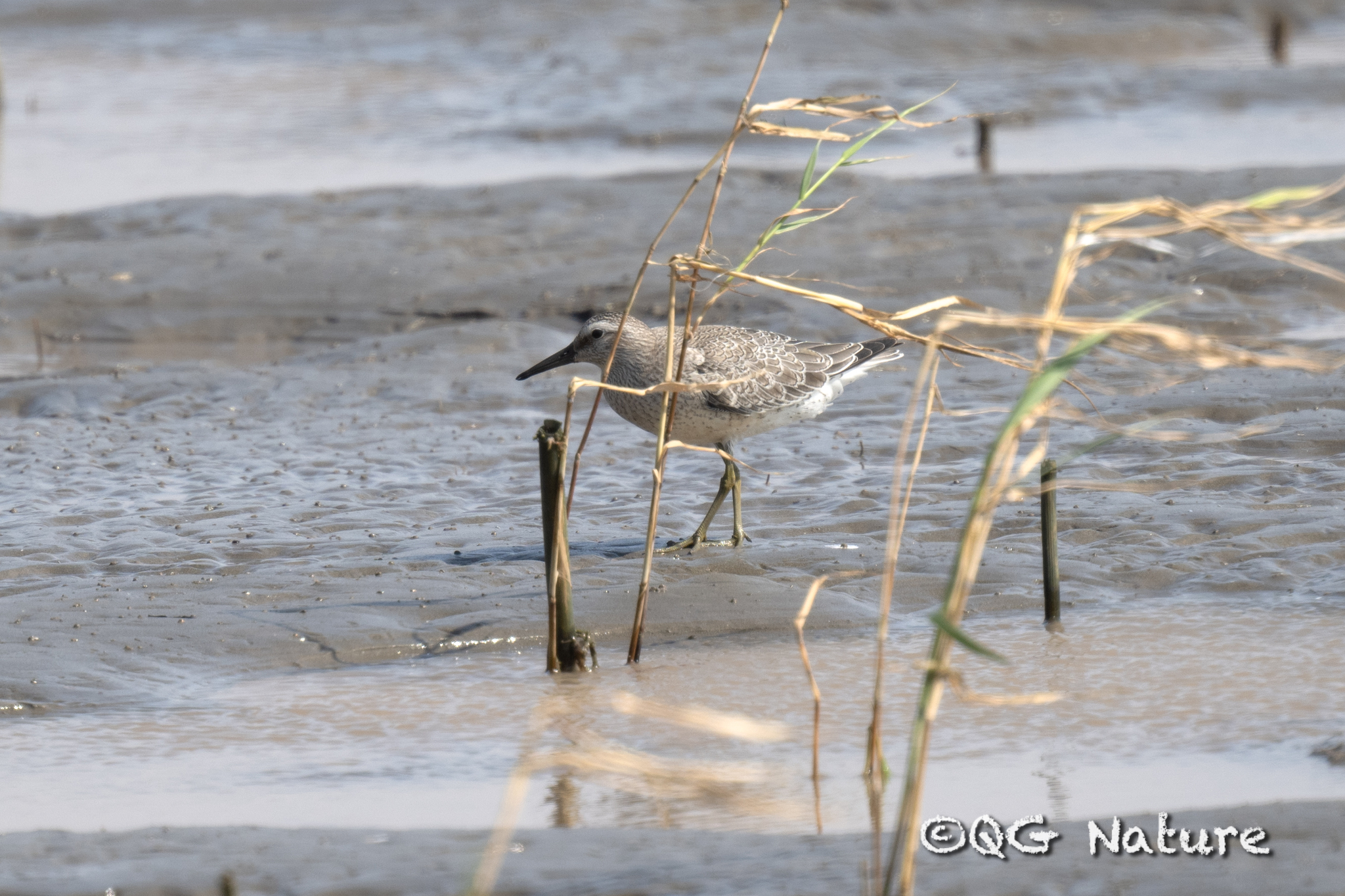
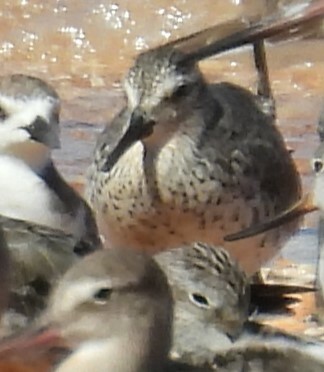
This sandpiper measures 23–26 centimeters in length with a wingspan of 47–53 centimeters, making it the third or fourth largest member of its genus. It possesses the typical Calidris silhouette: a small head and eyes, short neck, and a slightly tapering bill no longer than its head. Short dark legs and a medium-thin dark bill complete the portrait. In winter plumage, both sexes appear uniformly pale grey, creating a sleek, unmarked appearance. The breeding plumage is more distinctive, featuring mottled grey upperparts contrasted with cinnamon coloring on the face, throat, and breast, plus a light-colored rear belly. Females display similar patterns but with lighter tones and a less pronounced eye-line. The six subspecies vary subtly in overall plumage darkness, with C. c. rufa being the lightest and C. c. islandica among the darker forms. Weight ranges from 100–200 grams, and individuals can nearly double their body mass before migration.
Identification
In flight, this species stands out through its large size combined with a white wing bar and grey rump and tail. When feeding, the short dark green legs create a characteristic low-slung appearance as they probe mudflats. The foraging behavior itself is distinctive among sandpipers. Voice provides additional identification clues: flocks produce a low monosyllabic 'knutt' call, while migrating birds utter a disyllabic 'knuup-knuup.' Males deliver a fluty 'poor-me' display song during courtship. The combination of size, wing pattern, and feeding posture separates it from smaller Calidris sandpipers, while the grey rump and tail distinguish it from species with white rumps.
Distribution & Habitat
During breeding season, this species occupies a circumpolar range across the high Arctic, then disperses to coastal areas worldwide for winter, from 60° N in the Shetland Islands to 55° S in Tierra del Fuego. The nominate race breeds on the Taymyr Peninsula and migrates through Western Europe to winter in western and southern Africa. The C. c. rogersi subspecies breeds in eastern Siberia and winters in Australia and New Zealand. C. c. islandica breeds in the Canadian high Arctic and Greenland, migrating through Iceland to Western Europe. The recently described C. c. piersmai breeds in the New Siberian Islands and winters in northwestern Australia. Populations are highly faithful to traditional stopover sites, with the Delaware Bay serving as a crucial spring staging area where birds time their arrival with horseshoe crab spawning.
Behavior & Ecology
Diet shifts dramatically with season: breeding birds consume spiders, arthropods, and larvae through surface pecking, while wintering and migrating individuals target hard-shelled molluscs including bivalves, gastropods, and small crabs, which are swallowed whole and crushed in the gizzard. On mudflats, they are tactile feeders, probing unseen prey using specialized pressure-sensing organs in their bill. In Delaware Bay, they concentrate on horseshoe crab eggs, a nutrient-rich food source available during spring migration. The species is territorial and seasonally monogamous during breeding. Males arrive first and defend territories through aggressive displays including high circling with quivering wing beats and tumbling flights. Both parents share incubation duties equally over approximately 22 days. The nest is a shallow scrape lined with vegetation, typically containing four eggs. Chicks are precocial and leave the nest within a day of hatching, with females departing before fledging while males remain with the young.
Conservation
The species holds a global IUCN assessment of Least Concern, with an extensive range of 100,000–1,000,000 square kilometers and a population of approximately 1.1 million individuals. However, the rufa subspecies was listed as federally threatened in the United States in 2014, reflecting severe local declines. Populations in Tierra del Fuego and Delaware Bay declined approximately 75% from the 1980s to 2000s, driven largely by horseshoe crab overharvesting that reduced critical food availability during migration. Climate change poses growing threats through Arctic habitat degradation, sea level rise affecting coastal habitats, and potential mismatches between migration timing and food availability. The species benefits from protection under the Agreement on the Conservation of African-Eurasian Migratory Waterbirds, which commits signatories to habitat protection, regulated harvesting, and population monitoring. Conservation measures focus on horseshoe crab harvest management and beach access restrictions at key stopover sites.
Culture
Individual birds have captured public imagination through extraordinary longevity records. One bird ringed in Scotland in 1978 was resighted in the Netherlands 27 years later, while a bird nicknamed 'Moonbird' (tagged B95) of the rufa subspecies was documented traveling for at least 20 years until its last sighting in 2014. These remarkable journeys symbolize the species' connection across continents and have made it an ambassador for migratory bird conservation. The species appears in the Agreement on the Conservation of African-Eurasian Migratory Waterbirds, reflecting its importance in international conservation agreements. Beyond practical conservation, the red knot has become a cultural icon representing the wonder of long-distance bird migration and the interconnectedness of global ecosystems.
Source: Wikipedia · CC BY-SA 3.0
Taxonomy
- Order
- Charadriiformes
- Family
- Scolopacidae
- Genus
- Calidris
- eBird Code
- redkno
Vocalizations
Subspecies (6)
-
Calidris canutus canutus
breeds Taymyr Peninsula (north-central Siberia); winters to western and southern Africa
-
Calidris canutus islandica
Canadian high Arctic and northern Greenland; winters in western Europe and Mediterranean
-
Calidris canutus piersmai
breeds New Siberian Archipelago (north-central Siberia); winters to northwestern Australia
-
Calidris canutus rogersi
breeds Chukotskiy Peninsula (eastern Siberia); winters Australasia
-
Calidris canutus roselaari
breeds Wrangel Island (northeastern Siberia) and northwestern Alaska; winters Pacific coasts of North and Central America
-
Calidris canutus rufa
breeds central Arctic islands of north-central Canada; winters to southern South America
Data Sources
Species description from Wikipedia, licensed under CC BY-SA 3.0.
Bird images and sounds sourced from GBIF, contributed by citizen scientists worldwide under Creative Commons licenses.
Taxonomy data from AviList 2025.