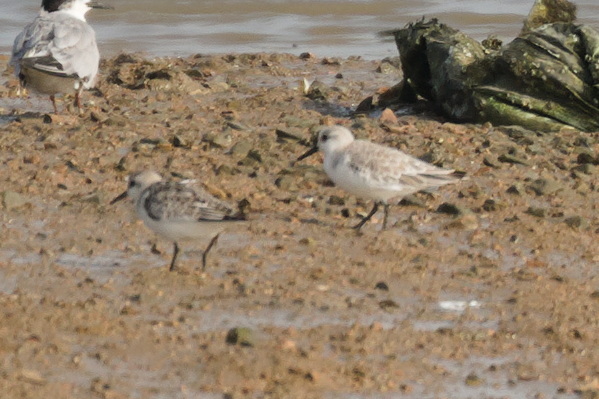
Charadriiformes / Scolopacidae / Calidris
Sanderling
Calidris alba · 三趾滨鹬
Introduction
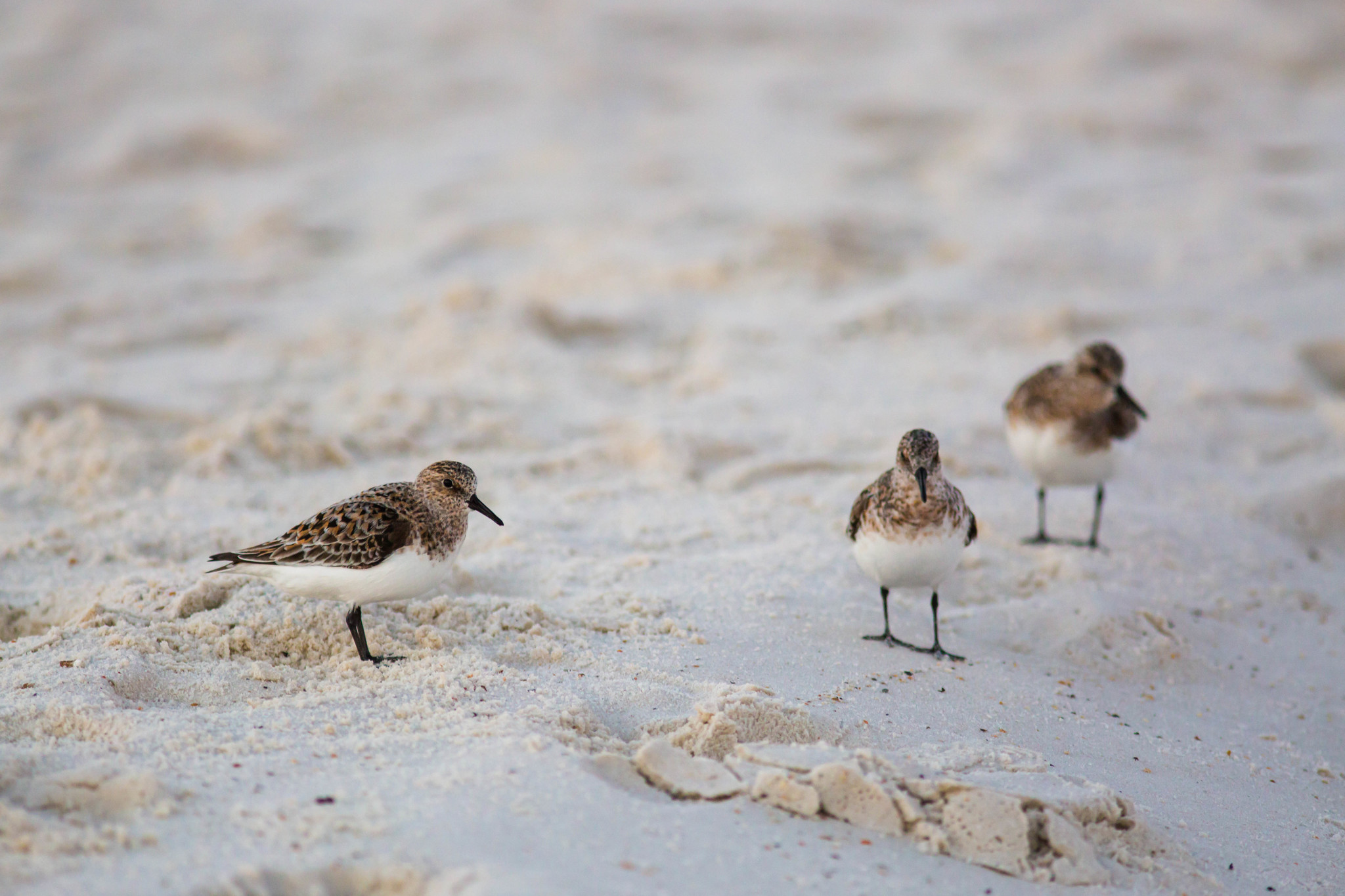
A small wading bird and circumpolar Arctic breeder, nesting on tundra north of the 5°C July isotherm. It is a long-distance migrant wintering in South America, Europe, Africa, and Australia. Highly gregarious in winter, it forms large flocks on coastal mudflats or sandy beaches. Distinctive for lacking a hind toe and exhibiting a characteristic running feeding style along the surf line.
Description
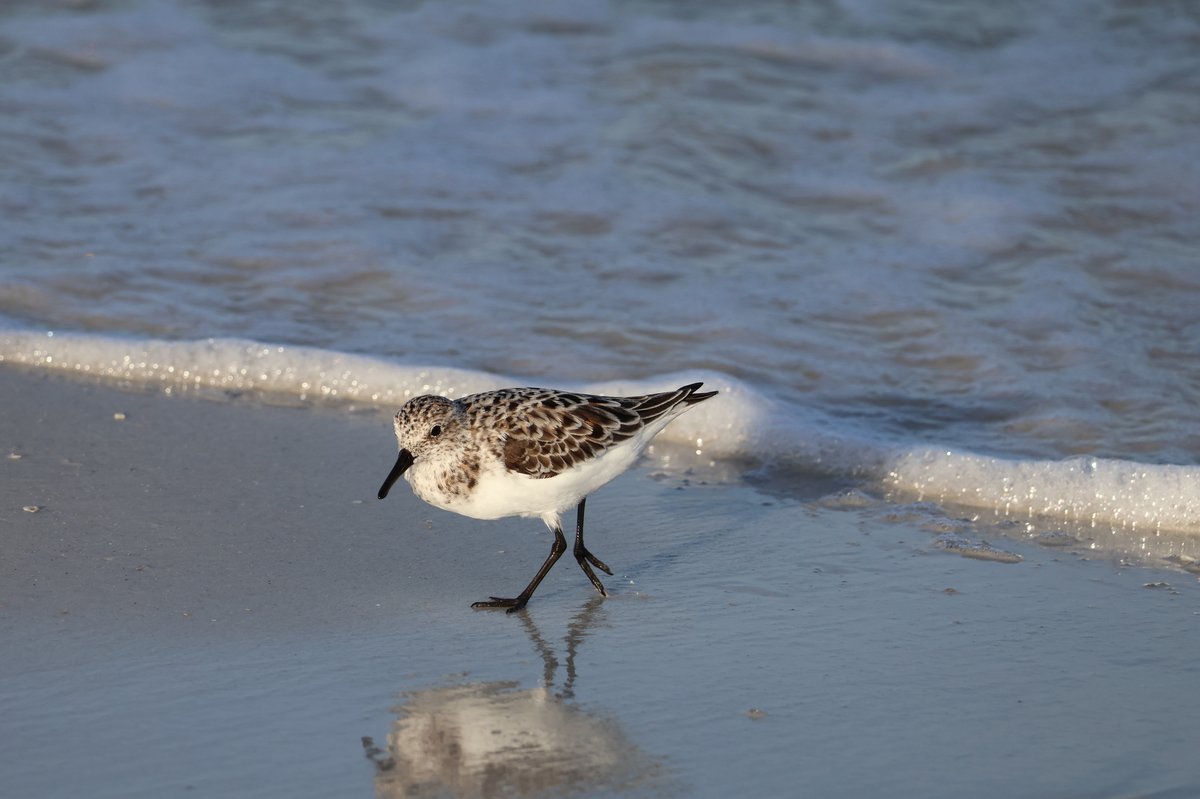
Small plump sandpiper, 18–20 cm (7–8 in) in length, weighing 40–100 g (1.5–3.5 oz). Stouter than similar-sized dunlin with a thick bill. Winter plumage is very pale, almost white, with a dark shoulder patch. In summer, the face and throat become brick-red. Juveniles are spangled black and white with high contrast. Lacks a hind toe.
Identification
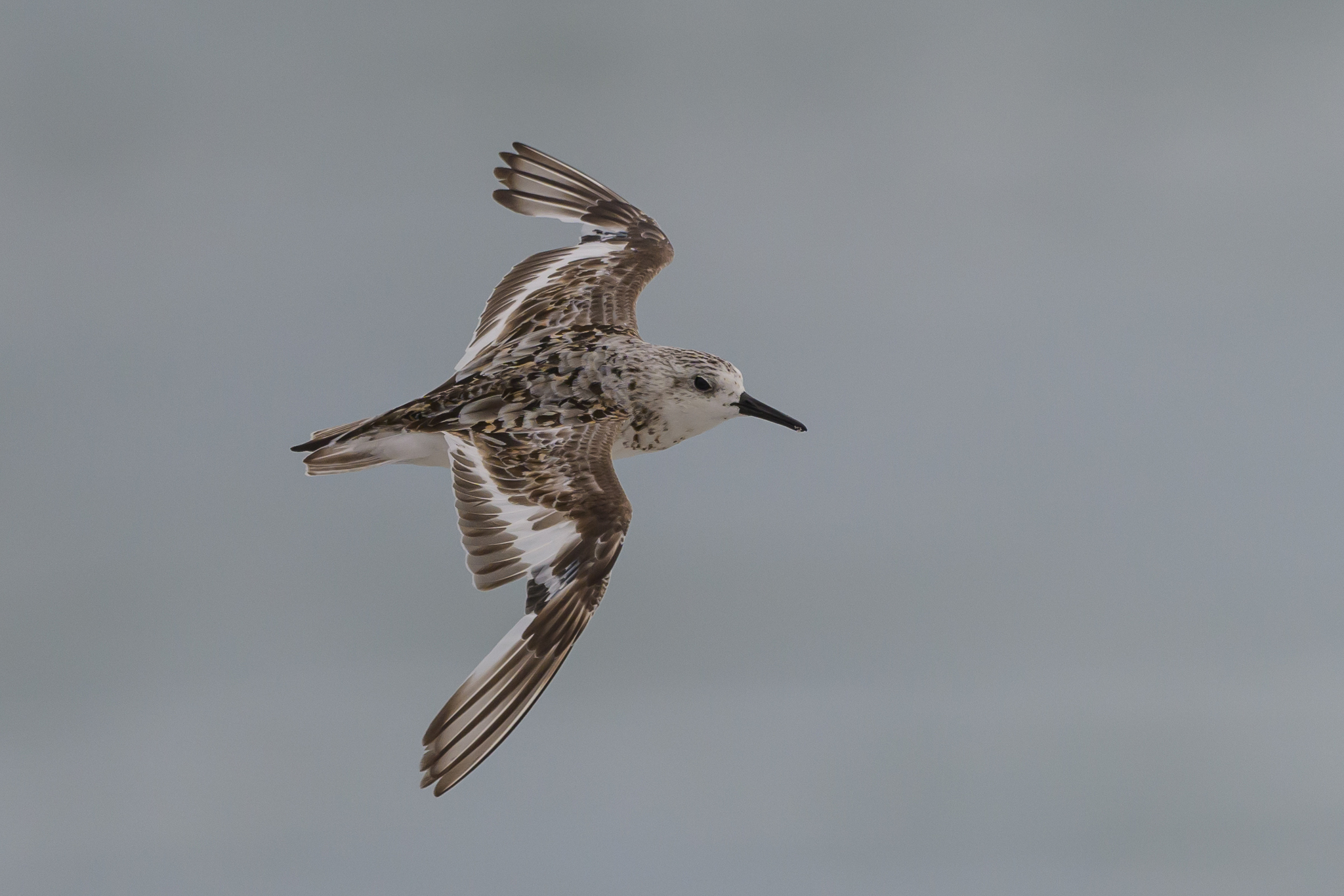
Distinguished from other small waders by the lack of a hind toe. Shows a strong white wingbar in flight. Characteristic behavior includes running along sandy beaches with a 'bicycling' leg action, stopping frequently to pick food. Winter birds may be mistaken for dunlin or red knot; breeding birds may resemble stints if size is misjudged.
Distribution & Habitat
Breeds in High Arctic areas of North America (Canadian Arctic Archipelago, Nunavut, Greenland, Alaska), Europe (Svalbard, Spitsbergen), and Asia (northern Russia, Taymyr Peninsula, New Siberian Islands). Two subspecies: C. a. alba breeds in Ellesmere Island, east Greenland, Svalbard, Franz Josef Land, and Taymyr Peninsula; C. a. rubida breeds in northeast Siberia, Alaska, and northern Canada. Migrates 3,000–10,000 km to winter on marine coasts worldwide, including South America, western and southern Europe, Africa, and Australia. Breeding habitat is coastal tundra on dry stony areas near wet areas, 60–800 m above sea level. Winter habitat includes coastal sandy beaches, tidal sand flats, mud flats, and lake or river shores.
Behavior & Ecology
Feeds on invertebrate prey buried in sand in the upper intertidal zone, including isopods and mole crabs. Hunts by plunging beaks into softening sand as waves retreat, penetrating 2–3 cm. In spring, consumes horseshoe crab eggs in Delaware Bay. On breeding grounds, eats insects and plant material. Territorial during breeding; males defend territory aggressively. Mating systems include monogamous pairs or polyandry (one female, two males). Adults leave breeding grounds in July and early August; juveniles leave in late August and early September. Northward migration begins in March.
Conservation
Subject to the Agreement on the Conservation of African-Eurasian Migratory Waterbirds (AEWA). In 2024, a mortality event caused by clade 2.3.4.4b highly pathogenic avian influenza (H5N1) was documented along the Atlantic coast of the United States, notably in Virginia, causing severe brain and pancreas lesions.
Source: Wikipedia · CC BY-SA 3.0
Taxonomy
- Order
- Charadriiformes
- Family
- Scolopacidae
- Genus
- Calidris
Vocalizations
Subspecies (2)
-
Calidris alba alba
breeds far northern Canada (Ellesmere Island), Greenland, and Svalbard eastward at least to Severnaya Zemlya Islands and the Taymyr Peninsula; winters on coasts of western and southern Europe, Africa, and southern Asia eastward to Australasia and some tropical Pacific islands
Data Sources
Species description from Wikipedia, licensed under CC BY-SA 3.0.
Bird images and sounds sourced from GBIF, contributed by citizen scientists worldwide under Creative Commons licenses.
Taxonomy data from AviList 2025.