
Hume's Short-toed Lark
Calandrella acutirostris
细嘴短趾百灵
Introduction
A member of the Alaudidae family. It inhabits high plateaus and arid landscapes of south-central Asia, ranging from Iran and Kazakhstan through the Himalayan region to western China. It frequents open grasslands, steppes, and semi-desert habitats at moderate to high elevations. During the breeding season, males are vocal. The species is not rare within its range but occupies remote habitats.
Description
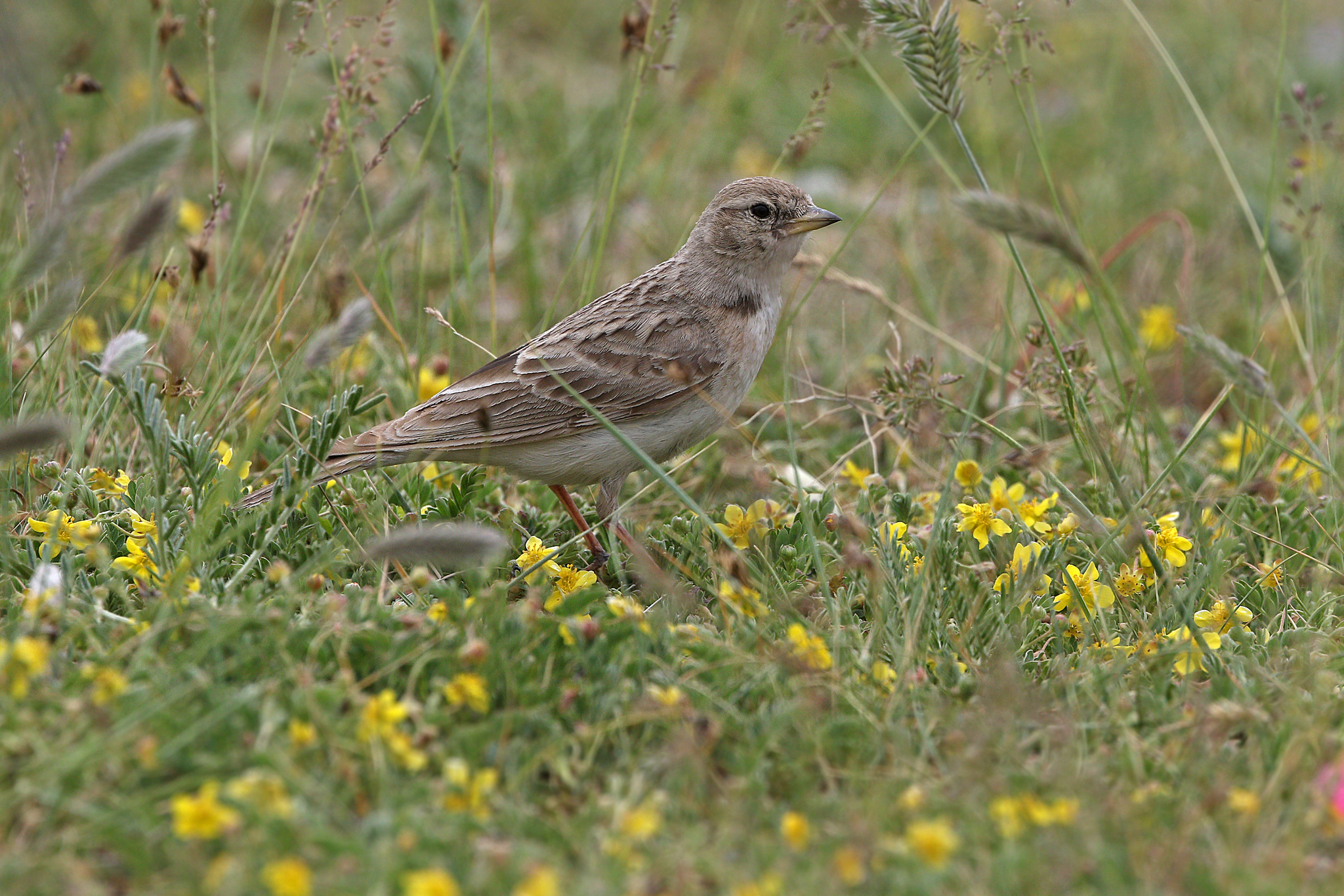
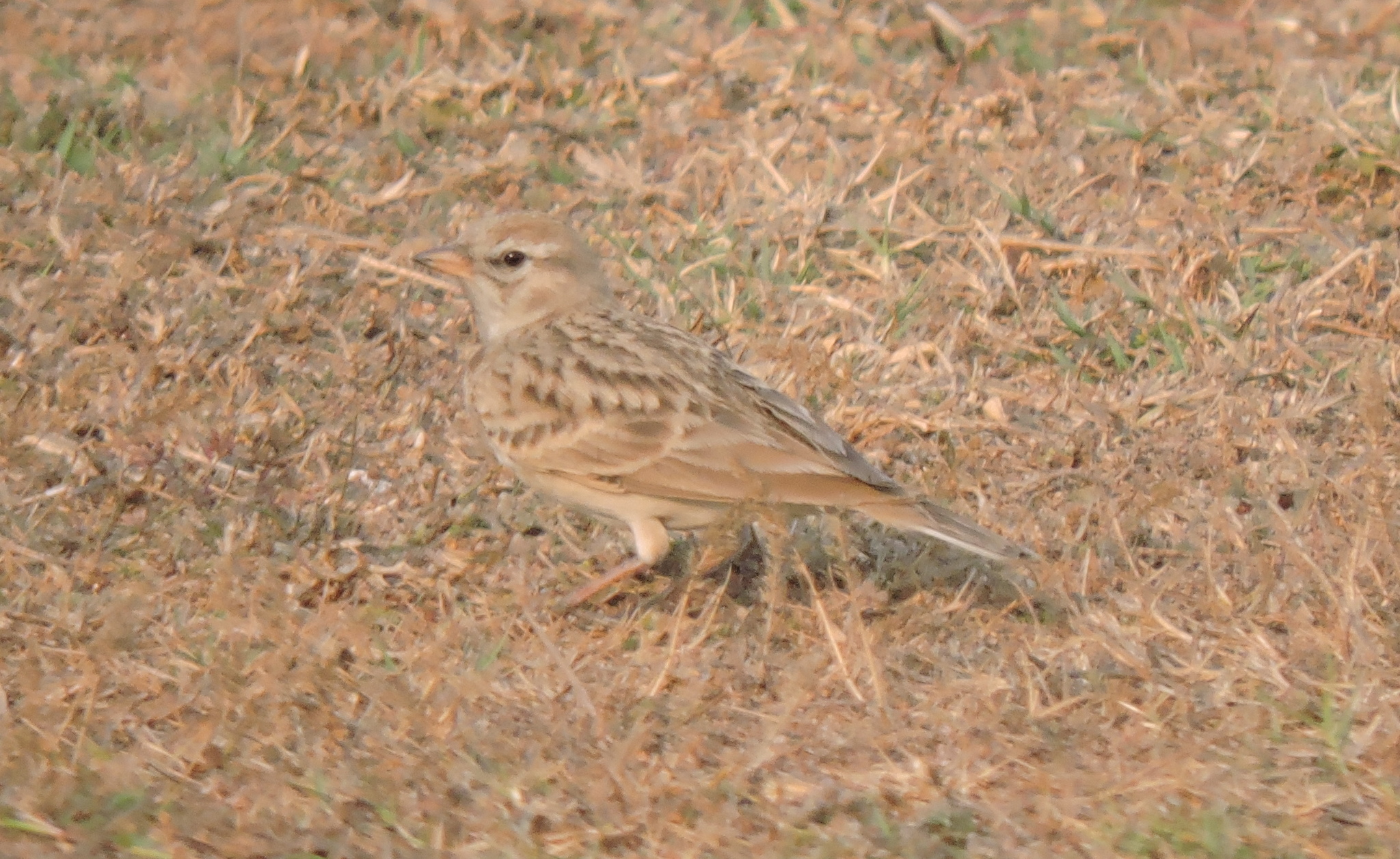
A compact lark measuring 13 to 14 cm in length with a wingspan typical of its genus. The plumage is predominantly brown and sandy, providing excellent camouflage in its arid habitat. The crown shows subtle diffuse streaking against a brown background, while the cheeks display rufous-brown tones accented by a prominent white supercilium. The upperparts range from greyish-brown to sandy brown with darker streaking, and the upper tail coverts exhibit a rufous wash. The wings are greyish-brown marked with black barring and pale feather tips. Underparts are mostly whitish, featuring a distinctive dark neck patch and a buffish-grey breast band, with the breast itself remaining unstreaked. The sexes appear identical.
Identification
Close resemblance to the greater short-toed lark makes visual identification challenging; this species is generally duller with slightly darker plumage and a proportionately smaller bill. However, coloration varies considerably across its extensive range, making plumage an unreliable distinguishing feature. The voice provides the most reliable identification cue, with characteristic vocalizations including a sharp, shrill 'trree' and a more rolling 'drreep'. When observed in flight or from a vantage point, the combination of overall coloration, breast pattern, and vocalizations helps separate it from similar Calandrella species.
Distribution & Habitat
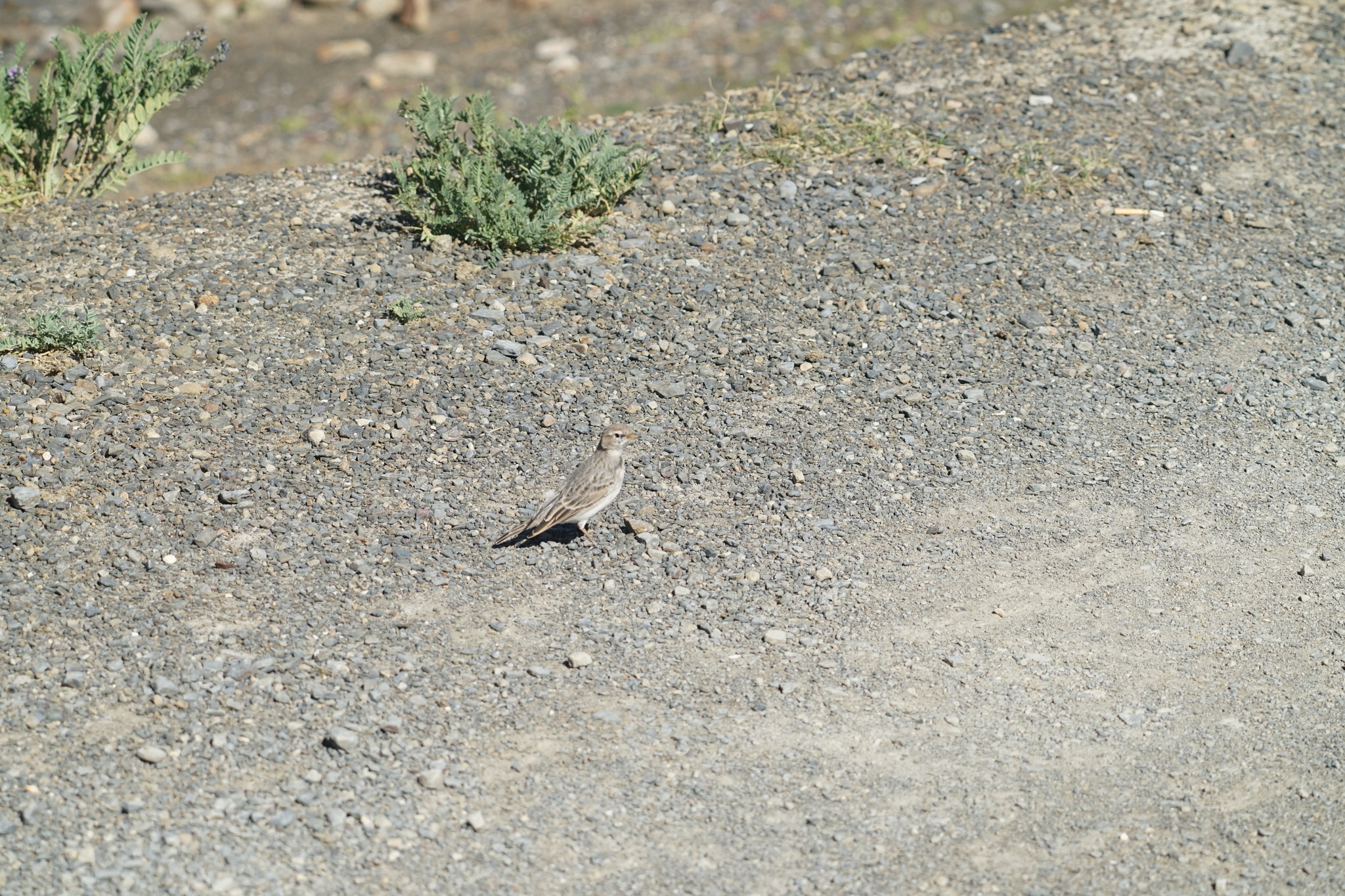
This species occupies a broad swath of south-central Asia, breeding across north-eastern Iran, eastern Kazakhstan, and extending eastward through Pakistan to the Tibetan Plateau in western China. The nominate subspecies (C. a. acutirostris) occupies the western portion of the range from Iran and Kazakhstan to western China, while the Tibet short-toed lark subspecies (C. a. tibetana) is found from north-eastern Pakistan across the Tibetan Plateau. It inhabits open grasslands, semi-desert steppes, and rocky montane slopes at elevations ranging from moderate to high altitudes.
Behavior & Ecology
The article provides limited behavioral details, though like other larks, it likely forages on the ground for seeds and insects. The species is known for its vocal nature, with individuals frequently calling from the ground or during display flights. Breeding behavior likely follows the typical lark pattern of ground nesting, though specific details are not documented in the source material.
Conservation
Classified as Least Concern on the IUCN Red List due to its extensive geographic range, stable population trend, and population size that does not approach threatened thresholds. The species' remote and extensive habitat provides a buffer against significant anthropogenic pressures, though localized threats may exist in areas of habitat degradation or agricultural expansion.
Culture
No cultural significance, folklore, or mythological associations are documented in the available source material.
Source: Wikipedia · CC BY-SA 3.0
Taxonomy
- Order
- Passeriformes
- Family
- Alaudidae
- Genus
- Calandrella
- eBird Code
- humlar1
Subspecies (2)
-
Calandrella acutirostris acutirostris
breeds southern Kazakhstan and far western China (western Xinjiang) southward to Afghanistan and southern Pakistan; winters mainly Pakistan and northwestern India; recorded in northeastern Iran
-
Calandrella acutirostris tibetana
breeds Himalayas of northern Pakistan to northern India and eastern Tibet; winters to India
Data Sources
Species description from Wikipedia, licensed under CC BY-SA 3.0.
Bird images and sounds sourced from GBIF, contributed by citizen scientists worldwide under Creative Commons licenses.
Taxonomy data from AviList 2025.