Accipitriformes / Accipitridae / Buteo
Rough-legged Buzzard
Buteo lagopus · 毛脚鵟
Introduction
Medium-large bird of prey in the genus Buteo. Breeds in arctic and subarctic regions of North America, Europe, and Asia, migrating south for winter. Distinctive for regularly hovering while hunting and having feathered legs (tarsi) adapted to cold climates. Nests on cliffs or in trees.
Description
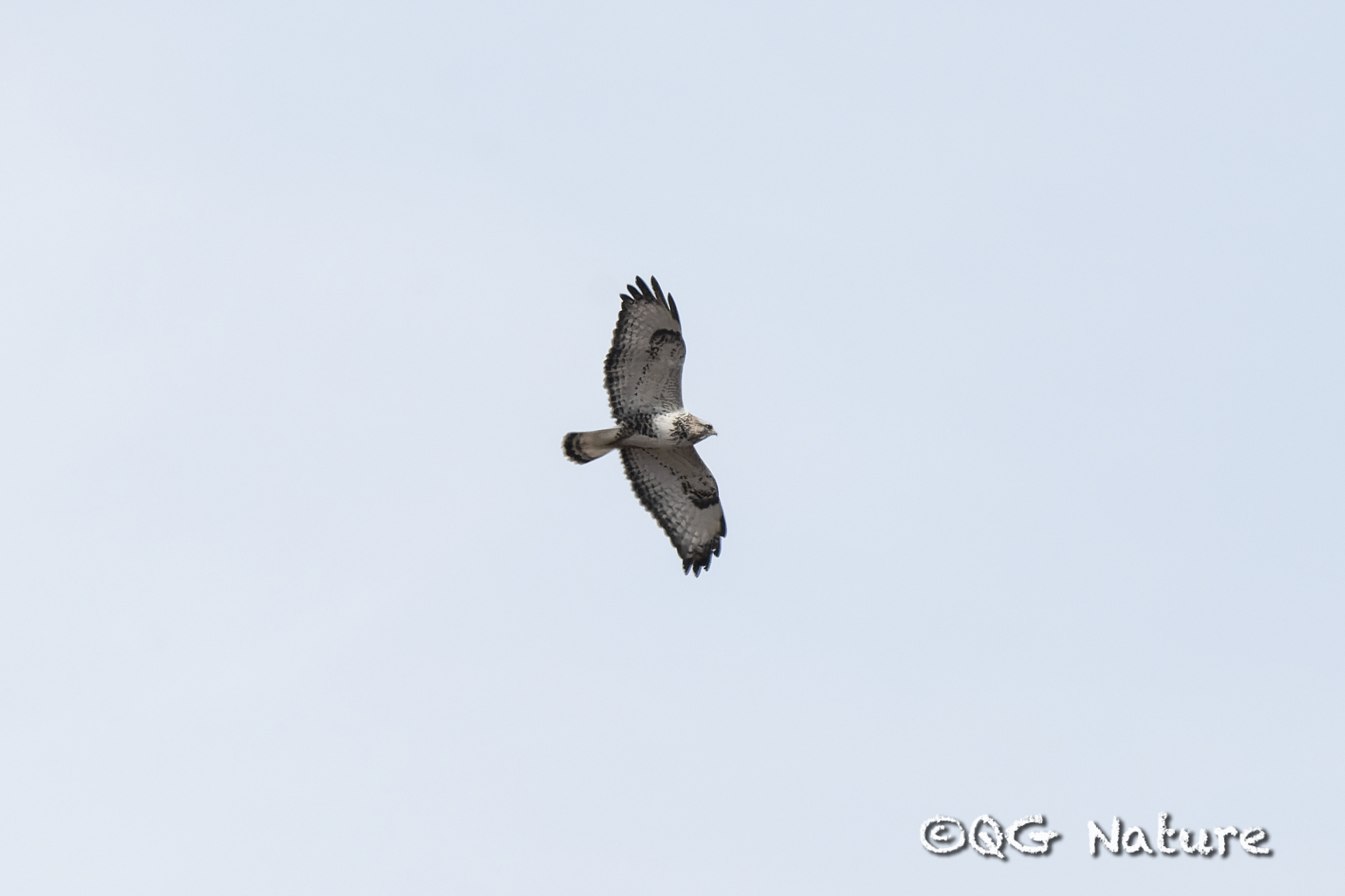
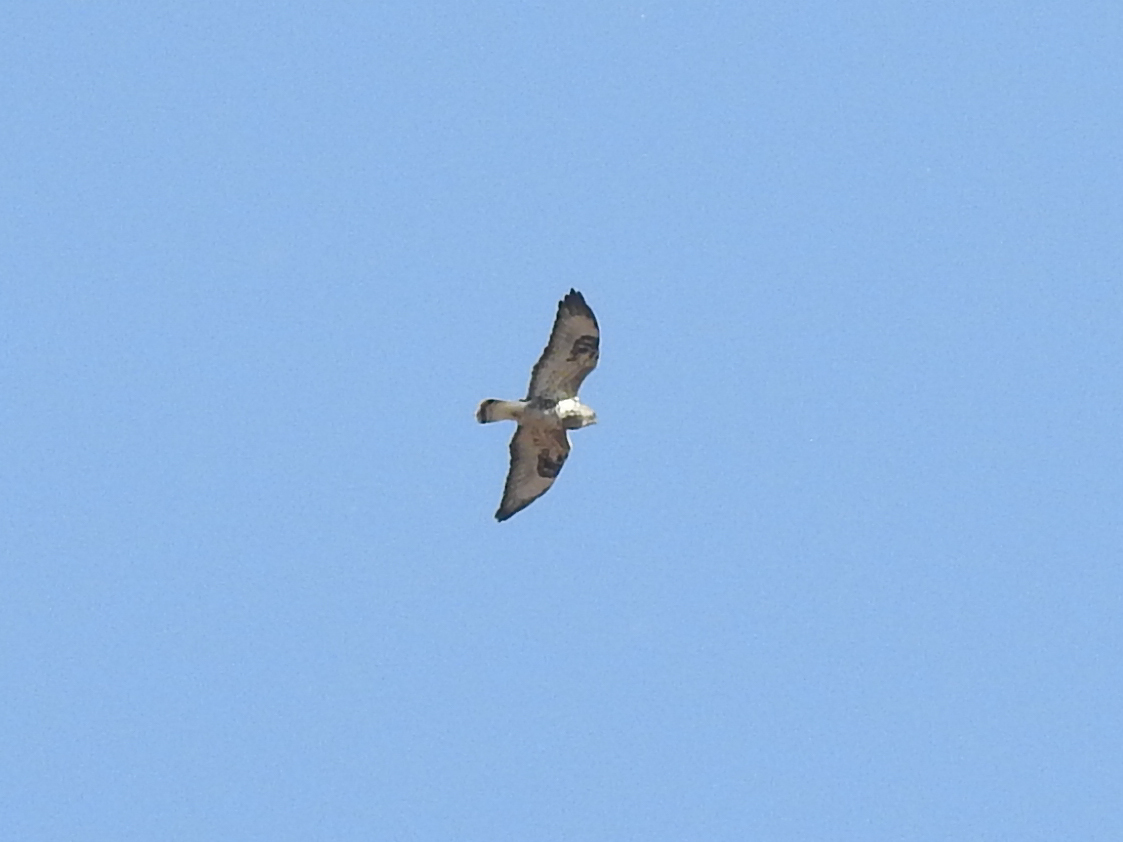
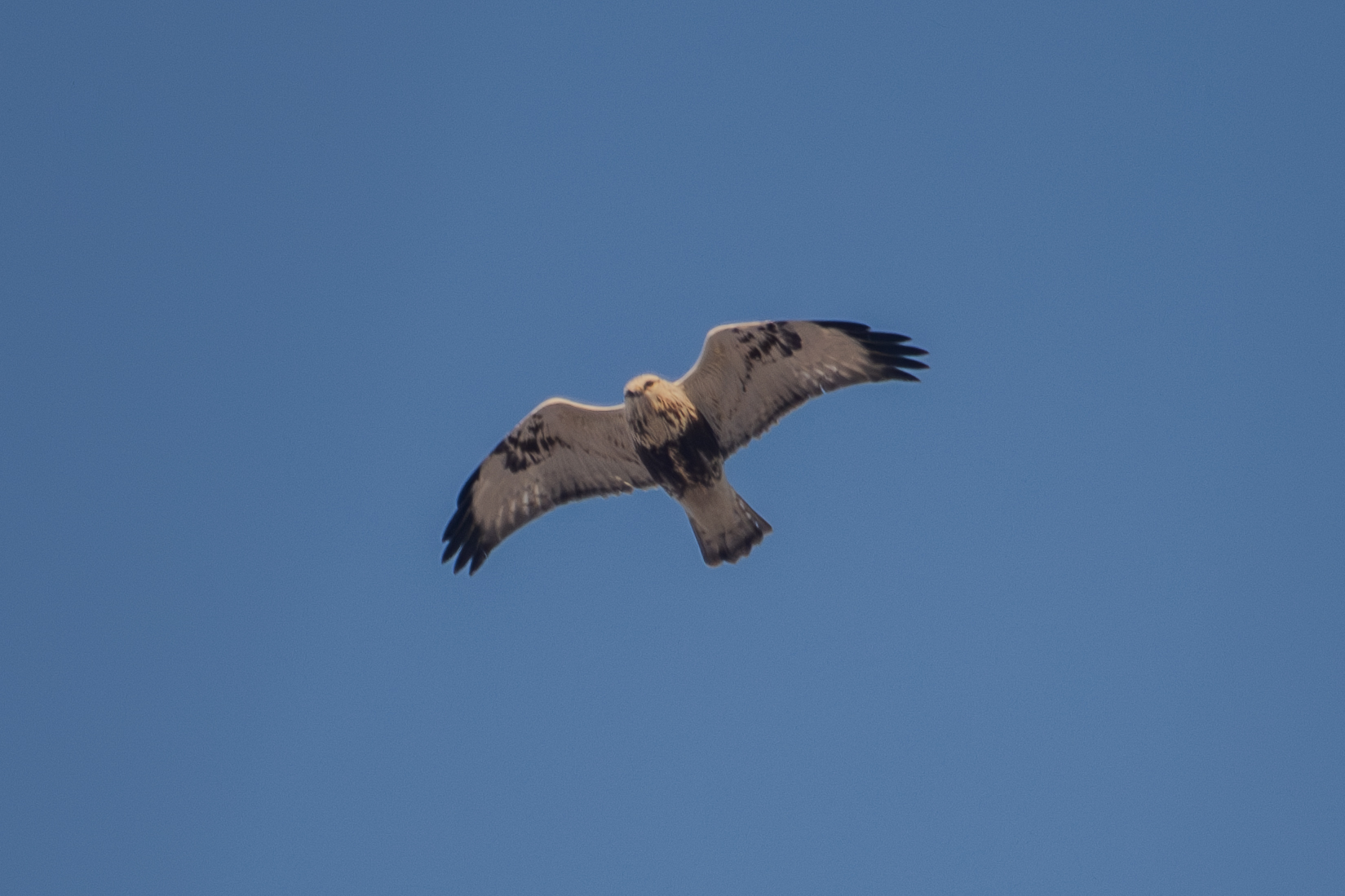
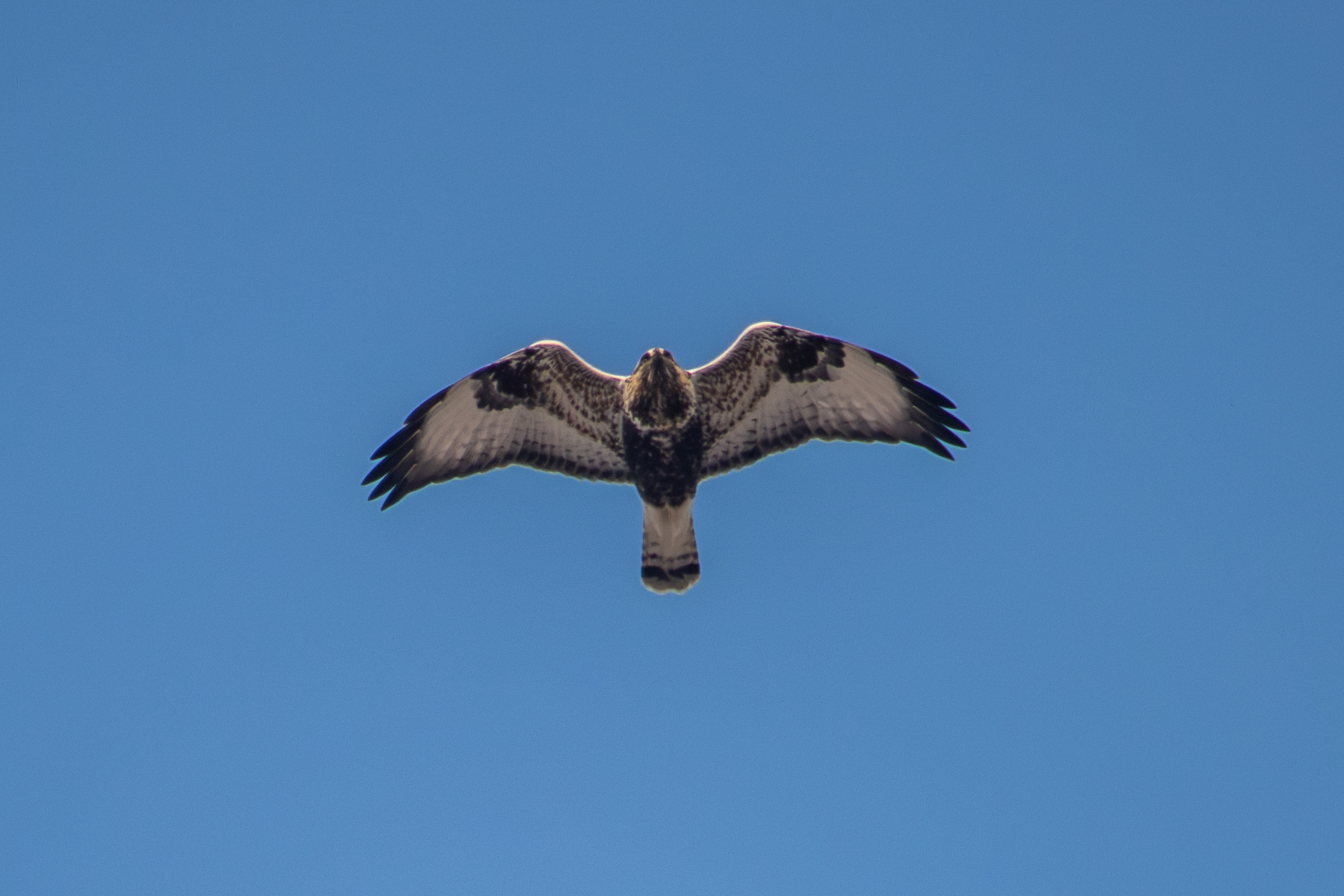
Body length 46–68 cm (18–27 in); wingspan 120–153 cm (47–60 in). Weight ranges from 600 to 1,660 g (1.32–3.66 lb), with females larger than males. Adult male average weight increases from 822 g in summer to 1,027 g in winter; female from 1,080 g to 1,278 g. Wing chord 37.2–48.3 cm; tail 18.6–25.5 cm. Plumage is predominantly brown and white with high speckling. Most plumages show a broad brown chest-band. Light morphs display a square dark carpal patch contrasting with white under-wings. Legs are feathered down to the toes. Talons are relatively small. Wing tips reach or extend past the tail when perched.
Identification
Key marks include long white tail feathers with one or more dark subterminal bands and a square dark carpal patch on light morphs. Distinguished from the common buzzard by longer wings and a more eagle-like appearance. Differs from the red-tailed hawk by lacking a dark leading edge to the wings, having no white base to the tail, and possessing a black wrist patch rather than barring. Larger than the common buzzard but may be outweighed by the red-tailed hawk. The only raptor of its size (except the osprey) to regularly hover by beating wings quickly.
Distribution & Habitat
Breeds in tundra and taiga habitats of North America and Eurasia between latitudes 61° and 76° N (locally south to 48° in Newfoundland and 58° N in southern Norway). North American populations migrate to southern Canada and central United States; Eurasian birds migrate to central Europe and Asia, with some reaching eastern Great Britain. Wintering occurs mostly between latitudes 43° and 58° N in marshes, moorland, prairies, and agricultural regions. Complete circumpolar distribution.
Behavior & Ecology
Carnivorous diet consists of 62–98% small mammals, primarily lemmings and voles (up to 80–90% seasonally). Also preys on birds (passerines, ptarmigan, waterfowl), insects, and occasionally carrion. Hunts by still-hunting from perches or hovering. Activity duration increases with day length, expanding from 13.1 to 19.0 hours as daylight extends from 7.2 to 24 hours. Migrates in a 'foxtrot' pattern: a quick phase (~100 km/day) over forested regions followed by a slow phase (~10 km/day) over open landscapes. Breeding is monogamous; nests built on cliffs or in trees using twigs and sedges. Clutch size typically 3–5 eggs. Incubation lasts at least 31 days, performed mainly by the female. Fledging occurs after 4–6 weeks.
Conservation
Adults can live up to 19 years in the wild, though many do not survive past their first two years. Threats to young include starvation, freezing, and predation by arctic foxes, brown bears, wolverines, ravens, skuas, and snowy owls. Adult mortality is often caused by human activity, including collisions with power lines, buildings, and vehicles, incidental ingestion of poison or lead, and illegal hunting. Adults may also be preyed upon by golden eagles and large owls.
Source: Wikipedia · CC BY-SA 3.0
Taxonomy
- Order
- Accipitriformes
- Family
- Accipitridae
- Genus
- Buteo
Subspecies (4)
-
Buteo lagopus kamtschatkensis
breeds Kamchatka Peninsula; winters in east-central Asia
Data Sources
Species description from Wikipedia, licensed under CC BY-SA 3.0.
Bird images and sounds sourced from GBIF, contributed by citizen scientists worldwide under Creative Commons licenses.
Taxonomy data from AviList 2025.