Common Buzzard
Buteo buteo
欧亚鵟
Introduction
Medium-to-large bird of prey. Most widespread diurnal raptor across Europe. Total population estimates in the millions. Occupies diverse habitats including lowland farmland, woodland edges, mountainous regions, and rural, suburban, and peri-urban environments. Often seen soaring on broad wings in characteristic dihedral or perched on tree tops, fence posts, and telegraph poles. Opportunistic predator with varied diet but shows marked preference for small mammals, particularly voles. Population cycles closely tied to those of prey species. Flexible hunting techniques and nesting habits contribute to its wide distribution.
Description
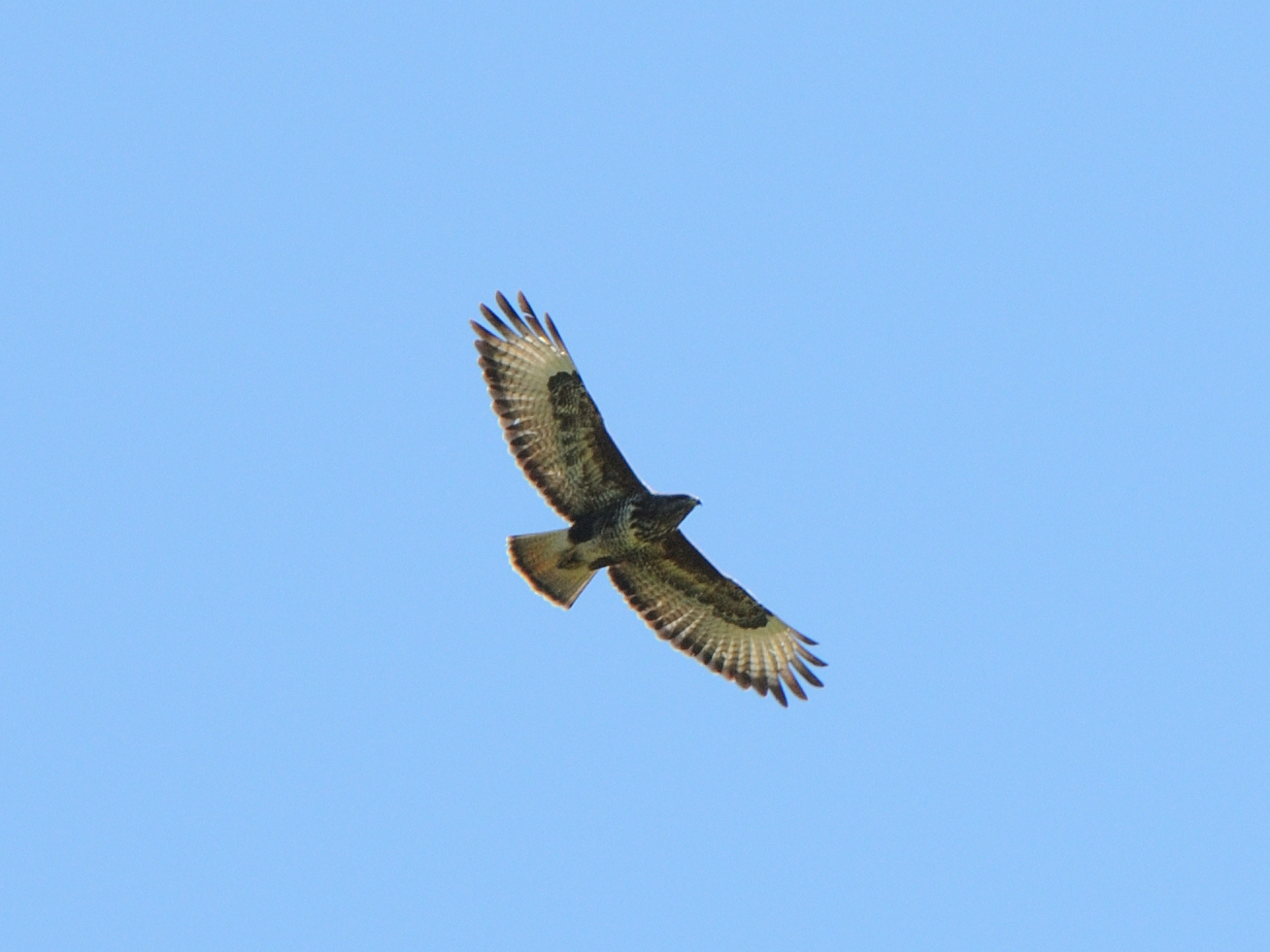
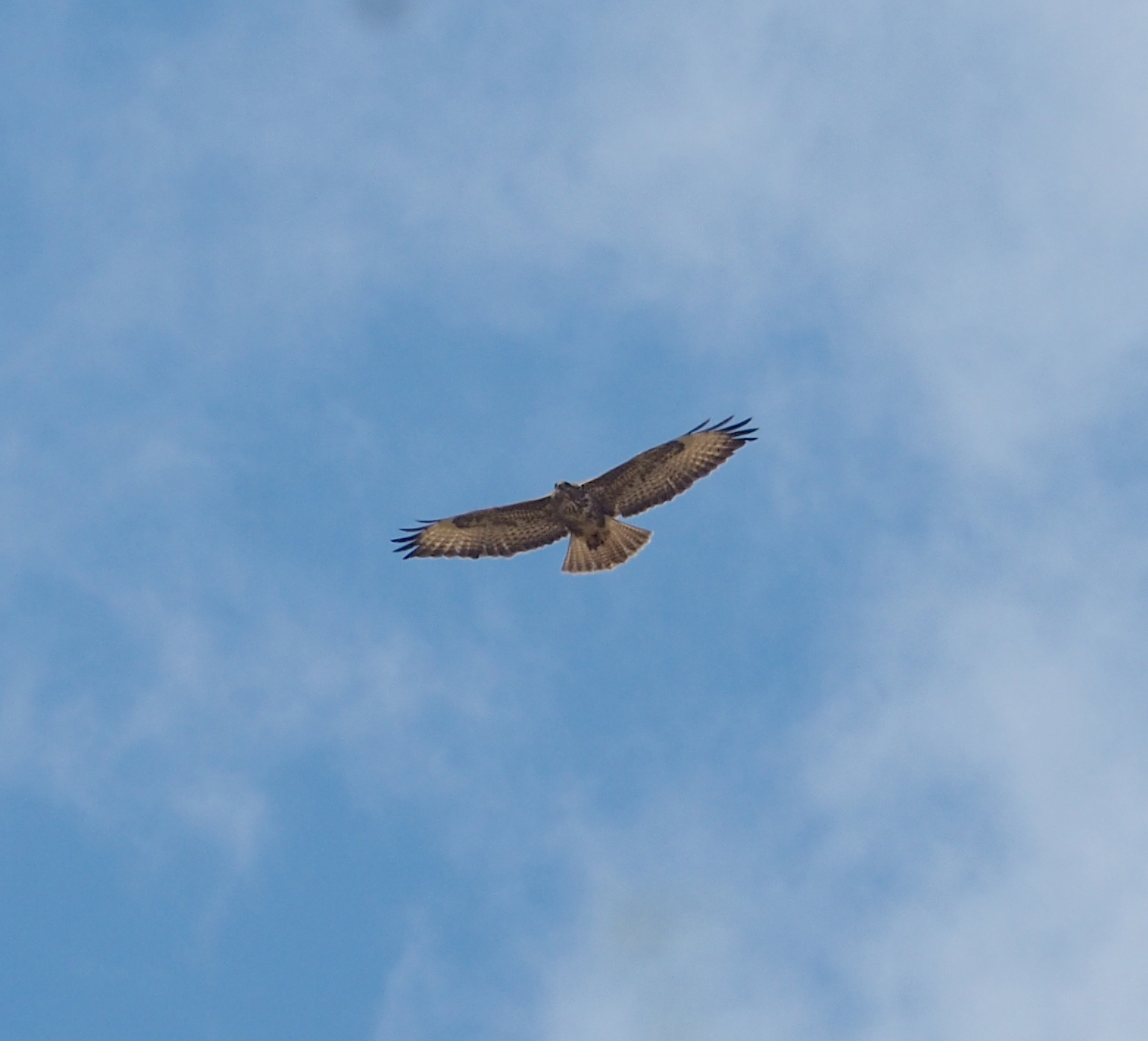
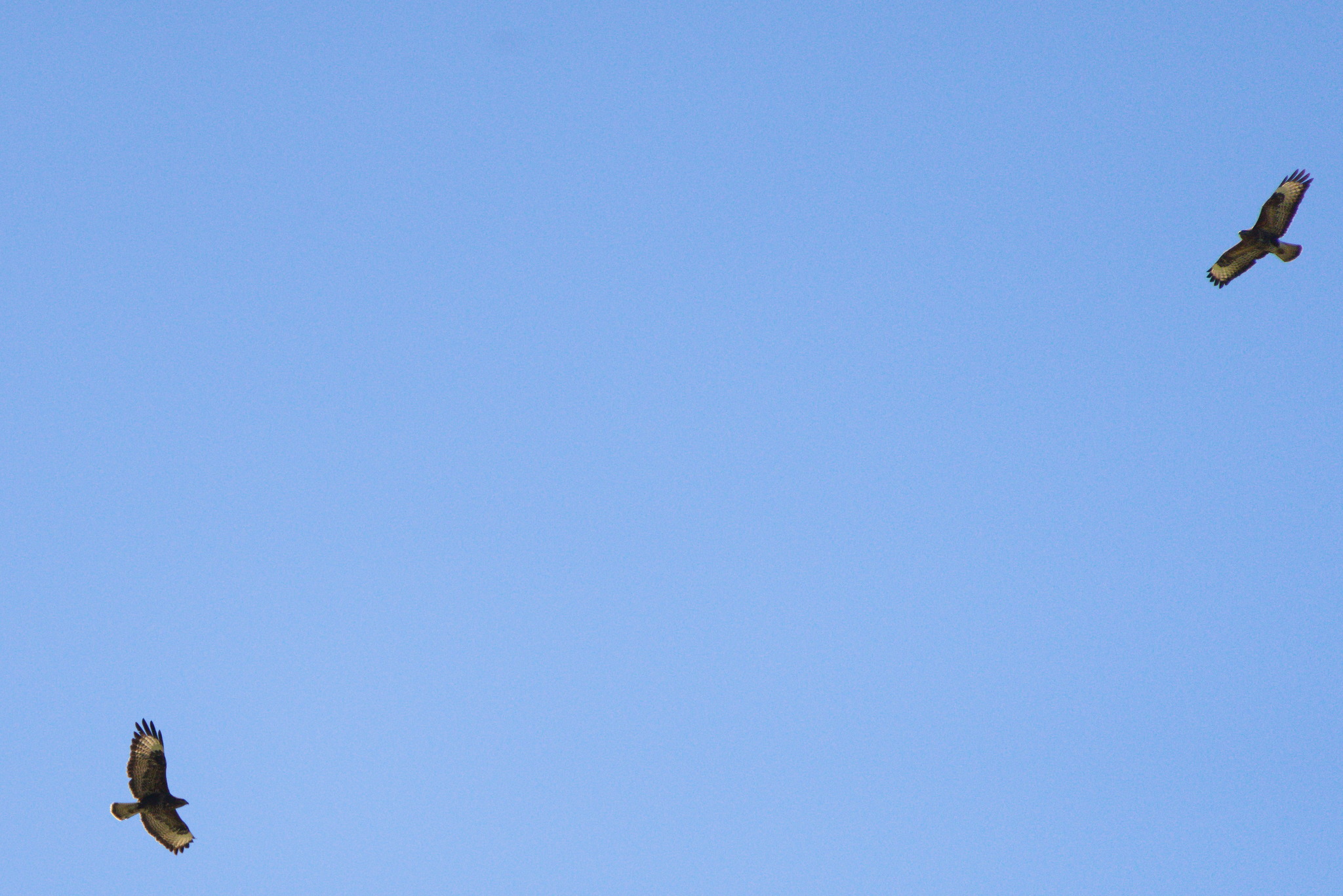
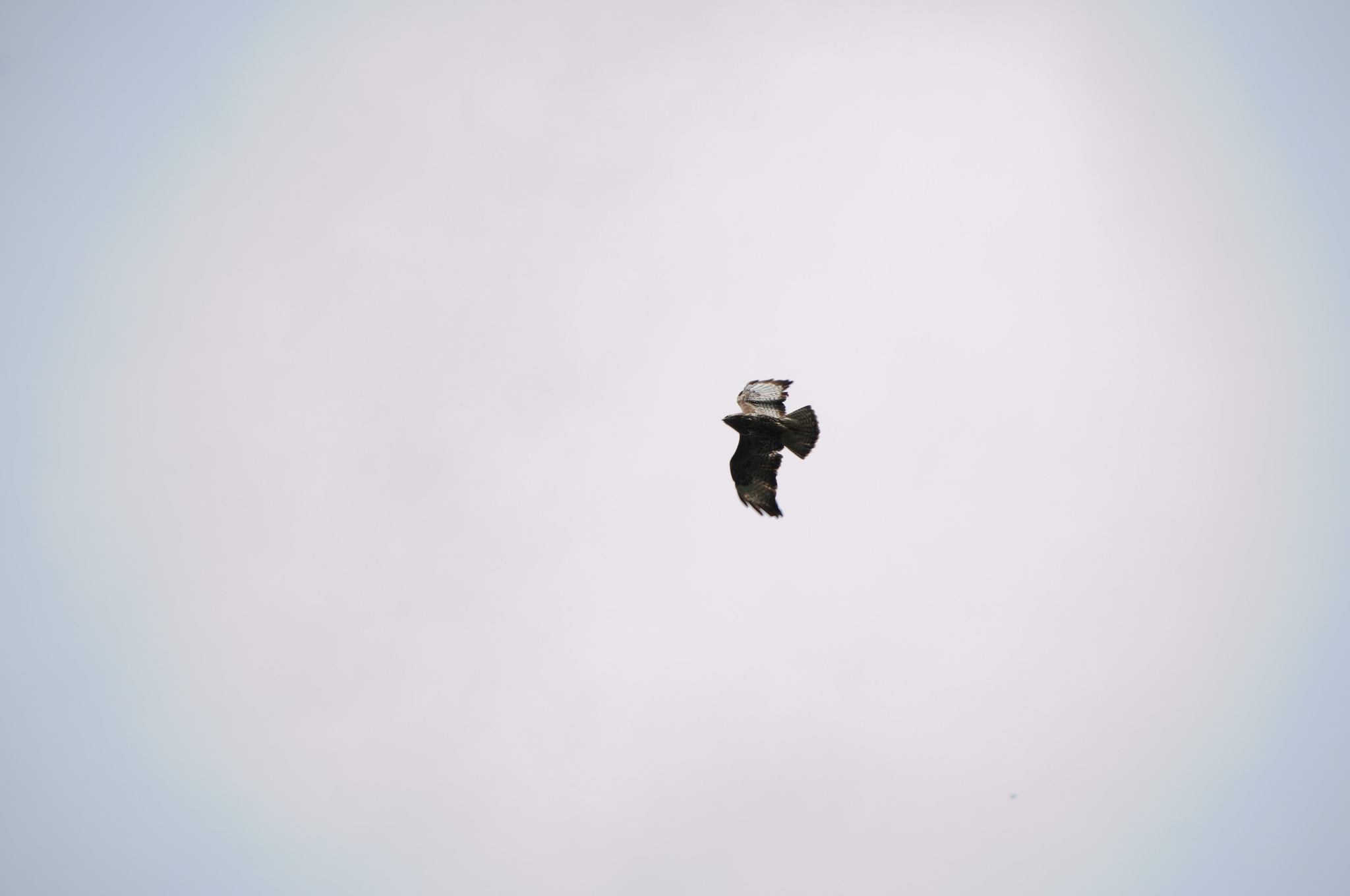
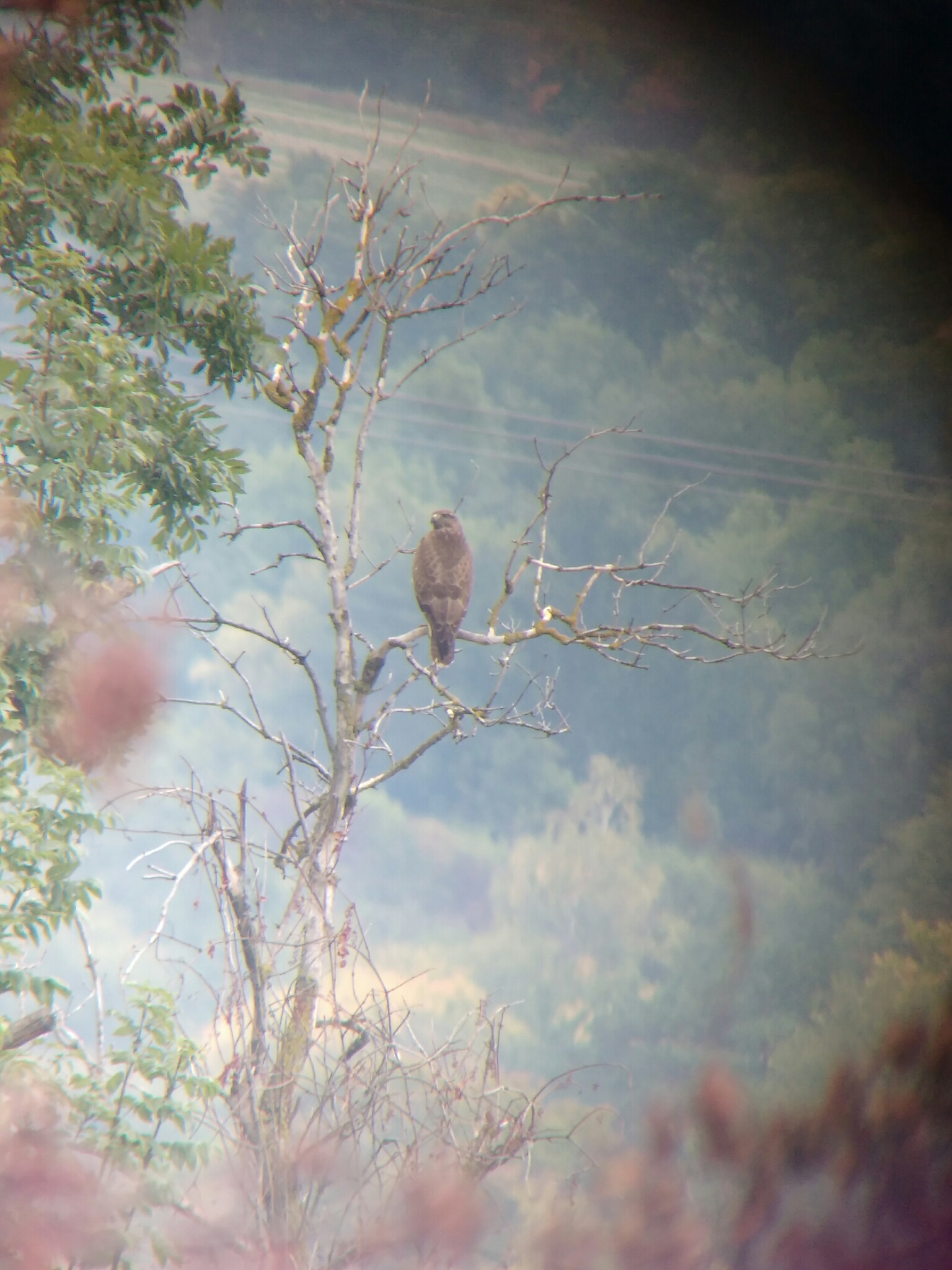
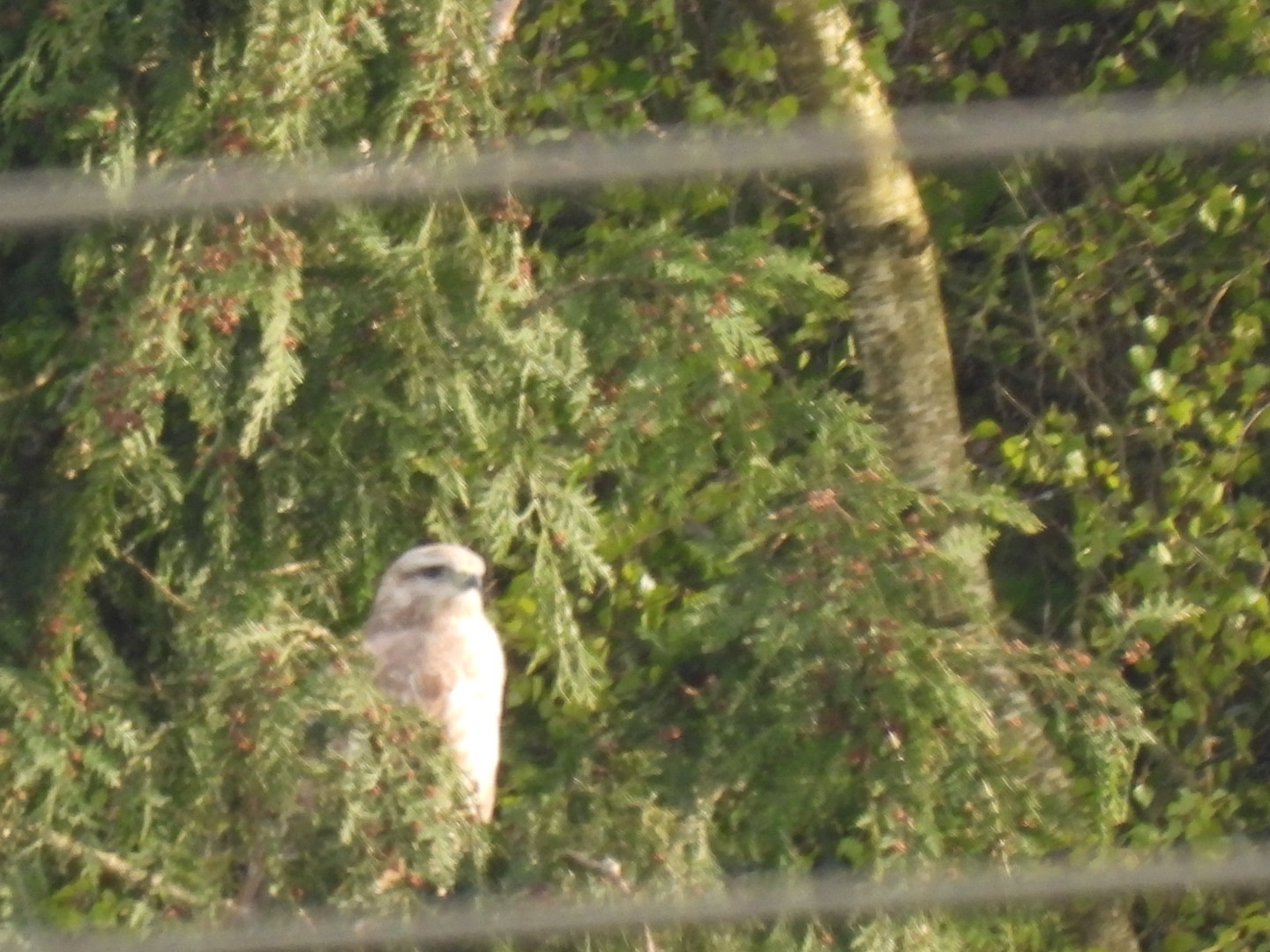
A medium-to-large raptor measuring 40-58 cm in length with a substantial 109-140 cm wingspan, this species presents a compact, rounded appearance with a relatively short tail and distinctly short, partially feathered tarsi. The head appears round and the bill is slender yet powerful. Plumage shows extraordinary individual variation across its range, from nearly uniform chocolate-brown to almost pure white, though most individuals are dark brown above with a characteristically narrow dark subterminal band on the tail. The underparts typically show a pale U-shaped breast marking with variable streaking or barring. Females average 2-7% larger than males and weigh about 15% more. The steppe buzzard subspecies is more distinctly polymorphic, exhibiting rufous, pale, and dark color morphs. Juveniles resemble adults but show a paler eye, less distinct tail banding, and streakier underpart markings.
Identification
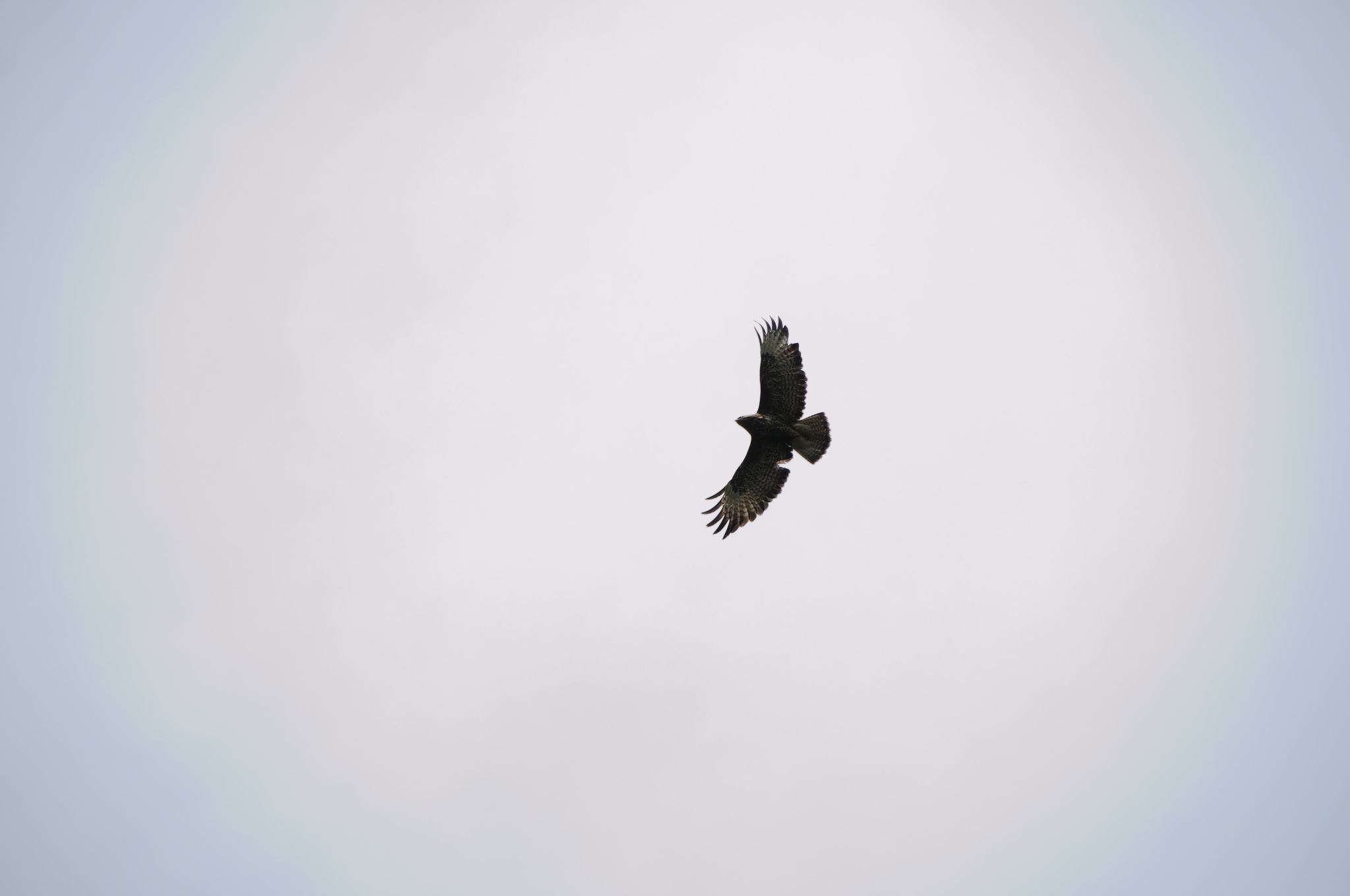
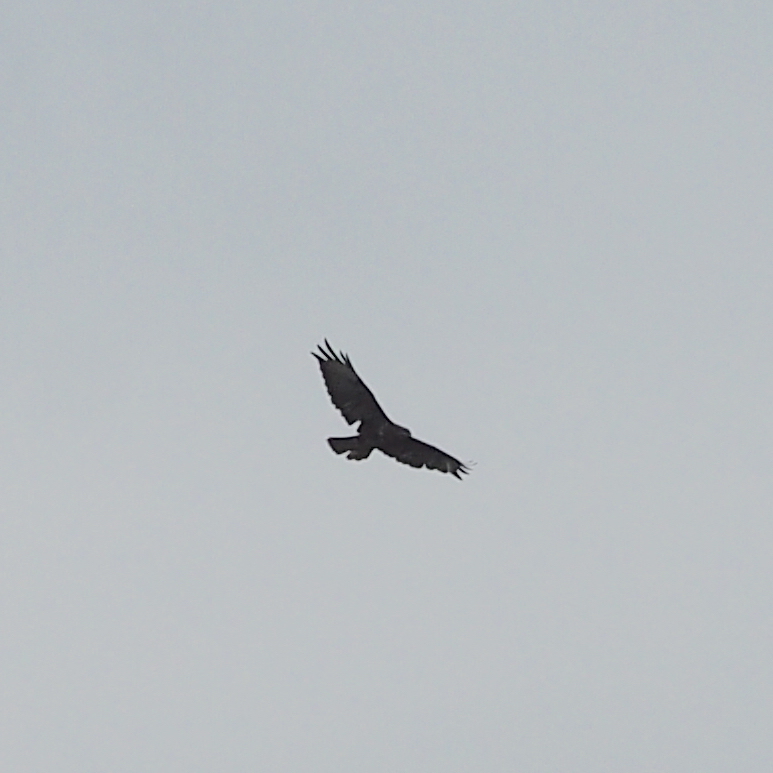
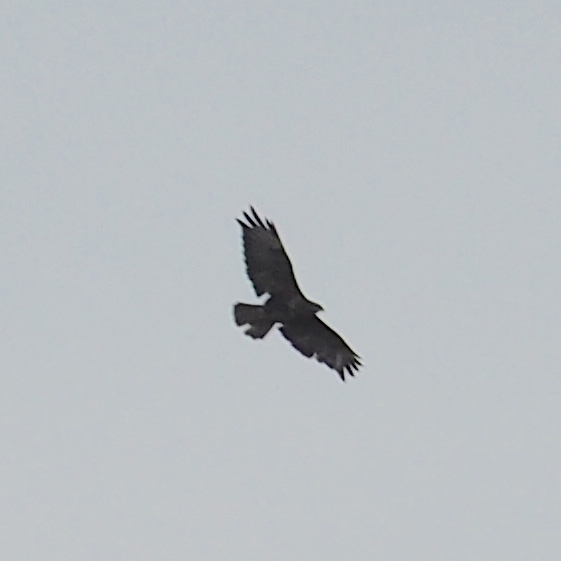
Birdwatchers frequently confuse this species with other raptors, especially in flight. Dark individuals may superficially resemble the larger golden eagle, while the steppe buzzard race is often mistaken for juvenile honey buzzards. The key distinguishing feature from the honey buzzard is the slower, heavier wingbeat and the presence of distinct carpal patches. Compared to the rough-legged buzzard, which winters in the same northern areas, this species is smaller, lacks feathered legs, and shows less bold wing markings. The long-legged buzzard, found in eastern Europe and Asia, is typically larger with an unbarred tail and more frequent hovering behavior. In flight, the broad dark subterminal tail band and dark trailing edge to the wings are reliable identification marks for the nominate race.
Distribution & Habitat
This species breeds across most of Europe and extends eastward across the Palearctic to northwestern China, western Siberia, and northwestern Mongolia. Over much of its range it is resident year-round, but populations from colder northern regions and eastern areas migrate south for winter, many traveling as far as South Africa. The breeding range encompasses the British Isles, Ireland, almost all of continental Europe, Scandinavia, and extends through Russia to the Altai Mountains. Wintering populations occur throughout southern Europe, the Middle East, sub-Saharan Africa, and occasionally southwestern India. It inhabits the interface of woodlands and open ground, including forest edges, small woods, shelterbelts, and farmland, and ranges from sea level to 2,000 m elevation, breeding mostly below 1,000 m.
Behavior & Ecology
This typical Buteo raptor spends considerable time either soaring or perched prominently on elevated viewpoints. It hunts primarily from perches, dropping down to capture prey on the ground, though it also forages by low flight and occasionally hovers. The diet is extraordinarily diverse, encompassing over 300 prey species including mammals (especially voles, rabbits, and other rodents), birds, reptiles, amphibians, and invertebrates. Breeding territories typically cover 0.5-2 km², with pairs maintaining territories through elaborate aerial displays including high circling, sky-dancing, and talon grappling. The bulky stick nest, often lined with greenery, is built in trees or occasionally on cliff ledges. Clutch size ranges from 2-6 eggs, with incubation lasting 33-35 days. The characteristic call is a plaintive, far-carrying pee-yow used throughout the year by resident populations.
Conservation
With an estimated European population of at least 700,000 pairs and a global population of 2.1-3.7 million birds, this is one of the most numerous birds of prey in the world. The IUCN Red List currently assesses it as Least Concern. Numbers have increased substantially in Britain and Germany following historical persecution, habitat alterations, and disease impacts on prey species like rabbits. Major threats include power-line collisions (particularly in Spain, where it accounts for a significant portion of electrocution fatalities), persecution in some areas, and agricultural intensification affecting prey populations. Egg-shell thinning from DDT has been recorded, though the species has proven relatively resilient to contaminants compared to other raptors due to its adaptable nature and terrestrial food chains.
Culture
Despite its abundance and familiarity across Europe, this raptor does not feature prominently in widespread folklore or cultural traditions compared to some other birds of prey. The term 'buzzard' has historical roots in European vernacular, though American usage differs and sometimes creates confusion with turkey vultures. In the British Isles, where the species has made a notable recovery since the mid-20th century following near-extinction in Ireland, it has become a symbol of successful raptor conservation. Its role as a bioindicator species has made it valuable to scientists studying environmental contamination and ecosystem health, though this scientific importance does not translate to significant cultural or mythological traditions.
Source: Wikipedia · CC BY-SA 3.0
Taxonomy
- Order
- Accipitriformes
- Family
- Accipitridae
- Genus
- Buteo
- eBird Code
- combuz1
Subspecies (7)
-
Buteo buteo bannermani
Cape Verde Islands
-
Buteo buteo buteo
breeds Western Palearctic including Madeira (except Italy and Mediterranean islands); winters to western Africa
-
Buteo buteo insularum
Canary Islands
-
Buteo buteo menetriesi
southern Crimea and Caucasus to northern Iran
-
Buteo buteo pojana
Corsica, Sardinia, Sicily and central, southern Italy
-
Buteo buteo rothschildi
Azores
-
Buteo buteo vulpinus
breeds northern Palearctic; winters to southern Asia and sub-Saharan Africa
Data Sources
Species description from Wikipedia, licensed under CC BY-SA 3.0.
Bird images and sounds sourced from GBIF, contributed by citizen scientists worldwide under Creative Commons licenses.
Taxonomy data from AviList 2025.