Accipitriformes / Accipitridae / Butastur
Grey-faced Buzzard
Butastur indicus · 灰脸鵟鹰
Introduction
A small-sized Asian bird of prey in the genus Butastur. It breeds in Manchuria, Korea, and Japan, and winters in South-east Asia. It inhabits open land, including agricultural areas and forest edges. The species utilizes rising air currents for soaring migration and employs a search-and-ambush hunting strategy.
Description
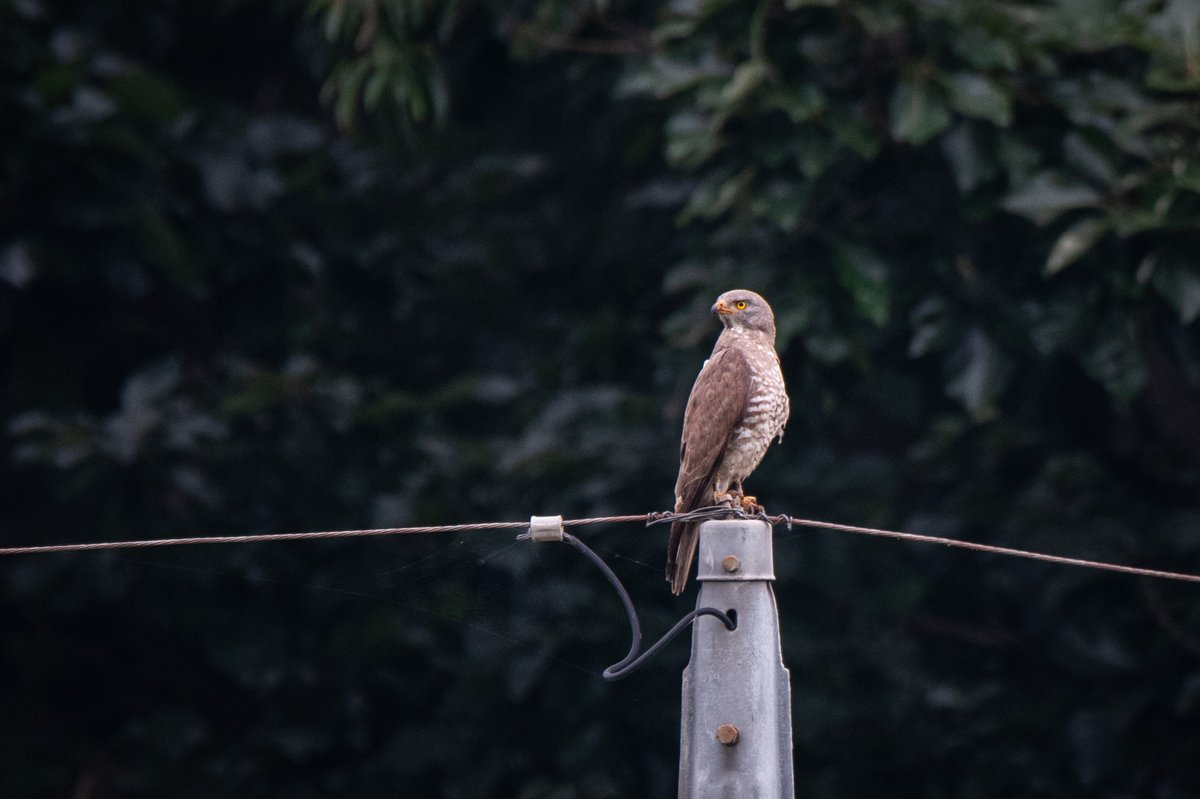
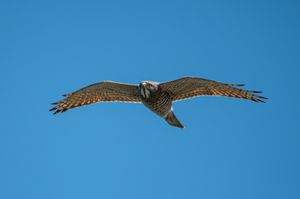
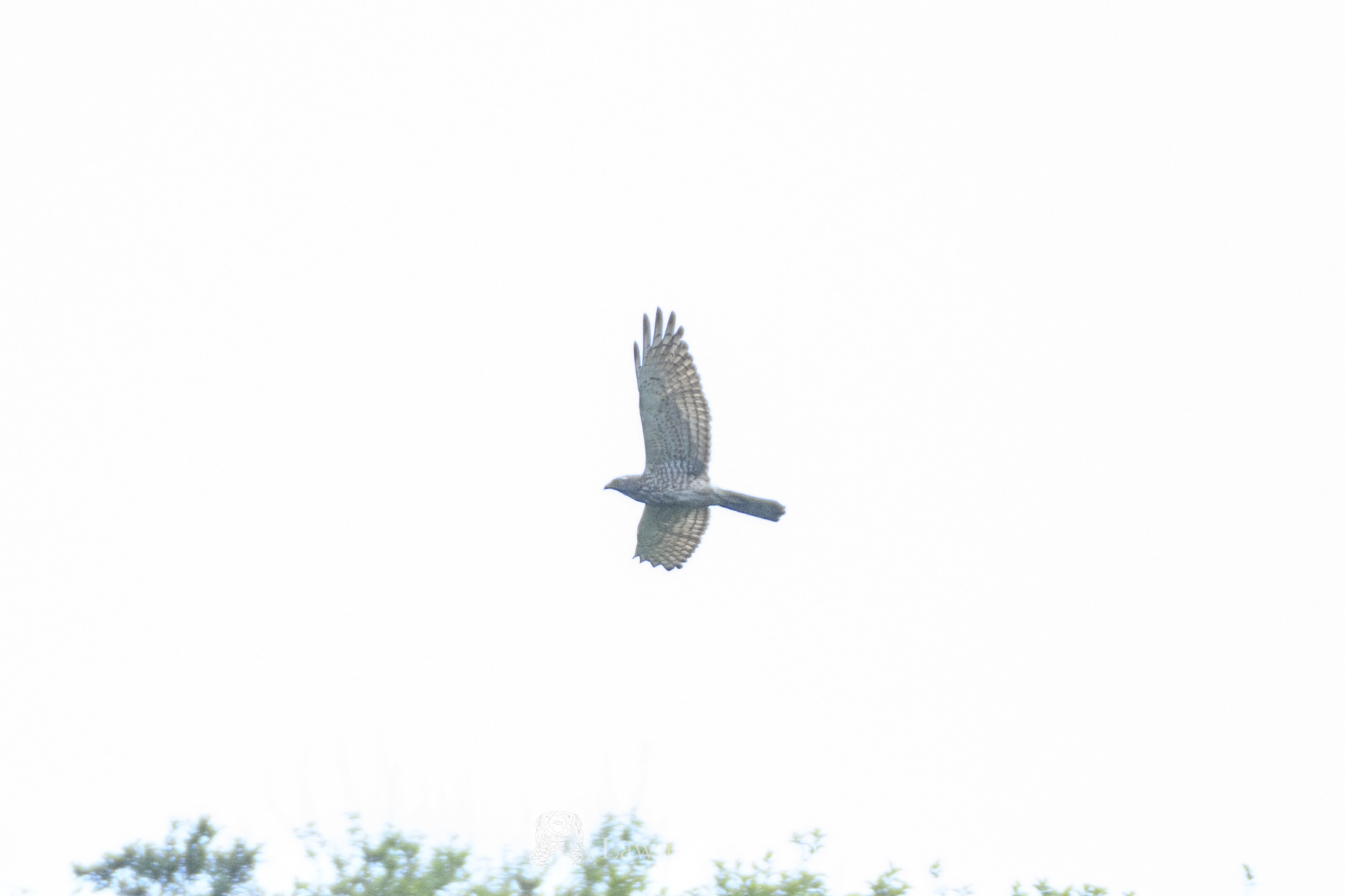
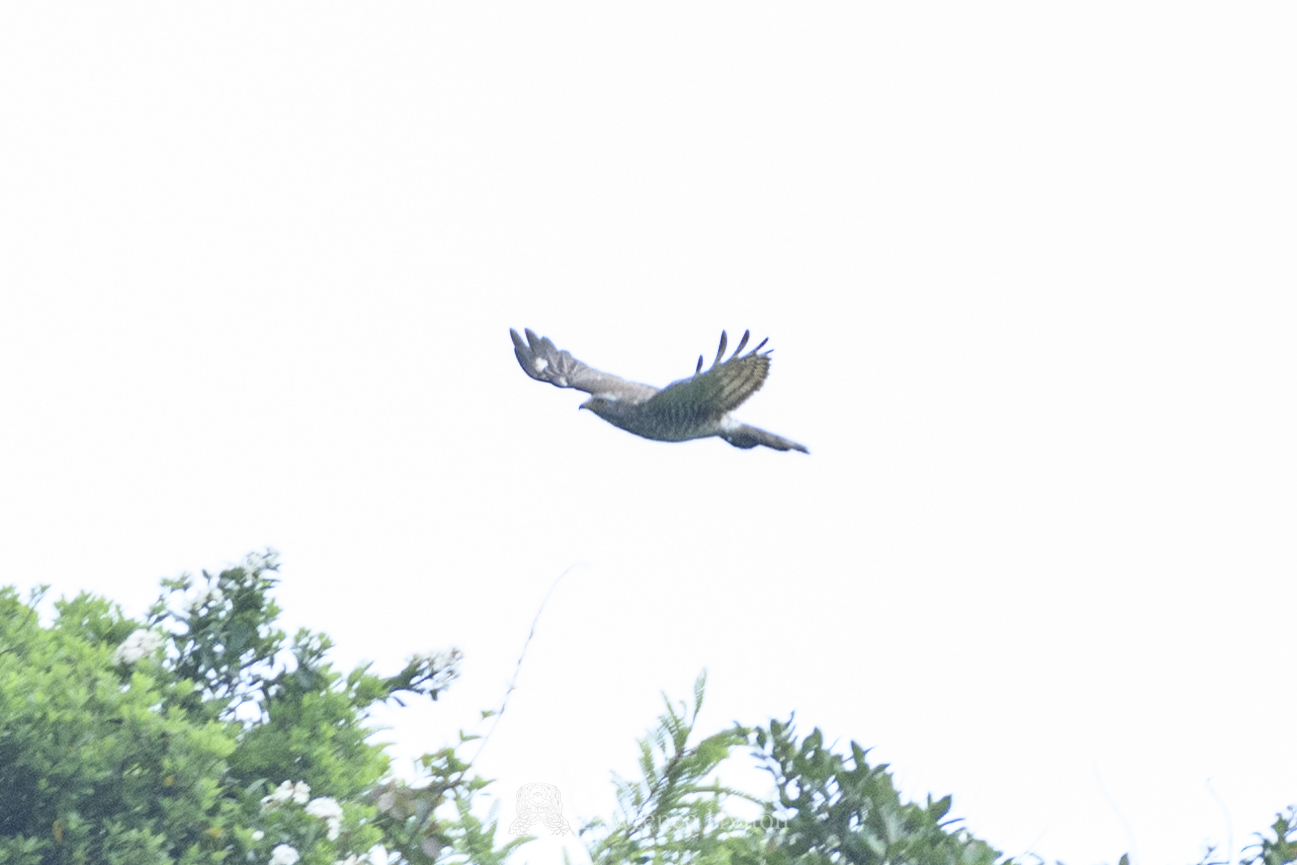
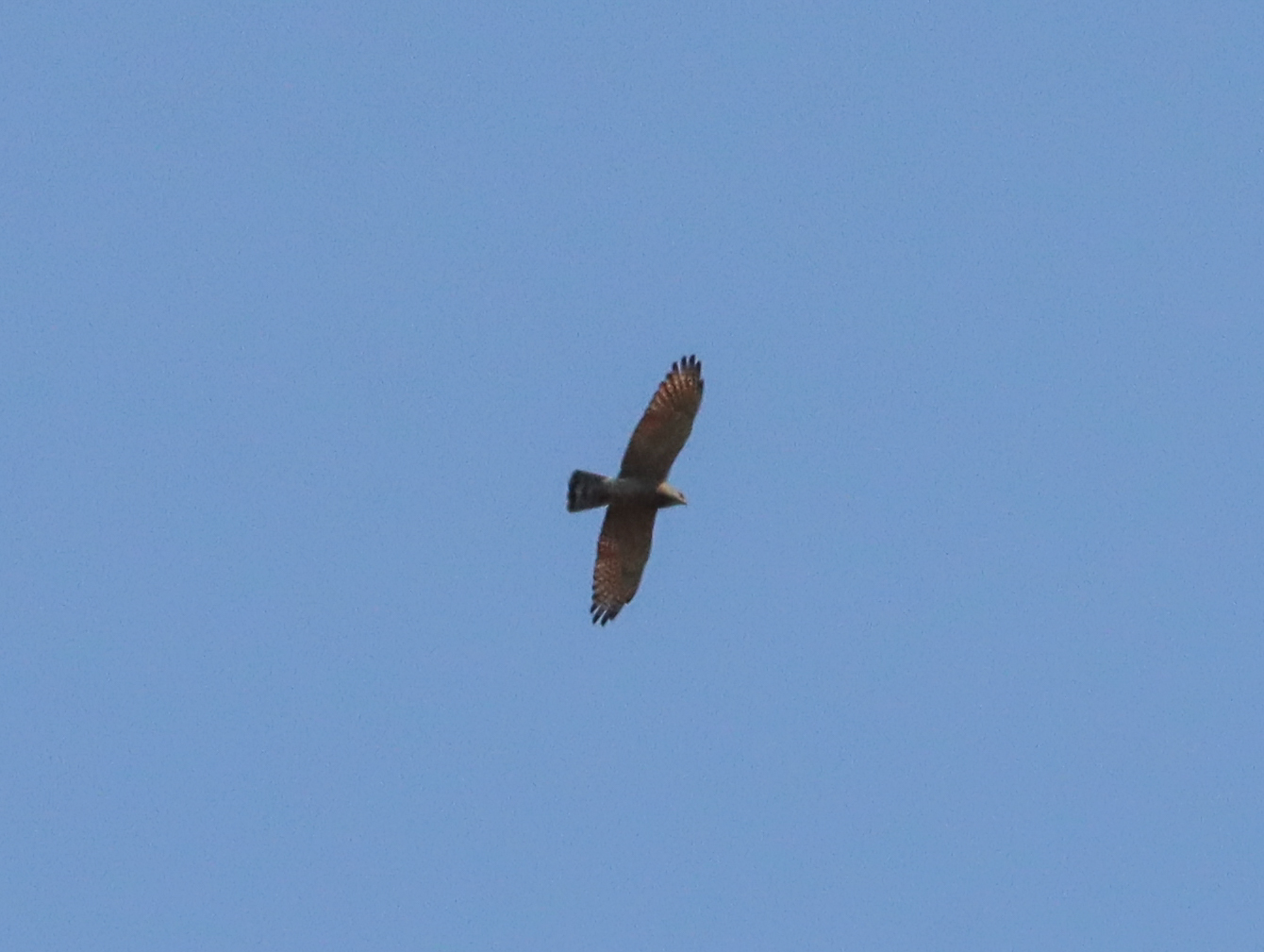
Typically 41–46 cm (16–18 in) in length. Adults have a grey head, breast, and neck, with a white throat, black moustaches, and mesial stripes. The back and upperwings are brown, while underparts and underwings feature brown bars on a white background. The chest may appear red-brown or dark brown with dark down bars across the abdomen; a rare dark morph is entirely brown. Wings are pointed and narrow with thin, transparent-looking feathers in flight. The tail is ashy brown with horizontal bars, and the iris is bright yellow. Males and females share similar coloration. Juveniles are brown and mottled above, pale below with brown streaks, and possess a broad white supercilium and brown face. They are often less reddish than adults, with dark brown abdominal bars and brown eyes with buff facial coloring.
Identification
Key field marks include the grey head and breast, white throat, and distinct black moustache stripes in adults. In flight, the pointed, narrow wings with thin, translucent feathers and barred underwings are distinctive. The bright yellow iris contrasts with the brown face of juveniles, which also show a prominent white supercilium.
Distribution & Habitat
Breeds in Manchuria, Korea, Japan, eastern China, and eastern Russia. Winters mainly in Indochina, Malaysia, the Philippines, and South-east Asia. In Japan, it is frequently found in Satoyama landscapes comprising woodlands, paddy-fields, streams, and grasslands. Breeding habitats include coniferous and mixed evergreen forests, forest edges, fields, meadows, marshes, and agricultural lands. It utilizes an oceanic flyway for migration, moving south from late September to mid-October and north from late March to early April. Taiwan is a major migration route, particularly along the Hengchun Peninsula and terraced mountains of Taichung and Changhua.
Behavior & Ecology
Hunts by perching on trees or utility poles near open habitats like rice fields and swooping to capture prey with its feet. Diet includes frogs, crustaceans, lizards, insects, small rodents, and occasionally other birds. Foraging sites and prey shift seasonally: frogs and small mammals in paddy fields; diverse prey in levees and grass-arable fields; insects and frogs in woodlands. Males spend up to 90% of the day perched during breeding. Nests are small stick structures lined with grass and leaves, built in trees, often in dense forest patches with thick shrubs. Clutch size is 3-4 white eggs with rusty spots. Females primarily incubate; males relieve them briefly. Eggs hatch after about one month (late May to early June), and nestlings fledge after about 35 days (late June to early July). Fledglings remain near the nest for two weeks before becoming independent.
Conservation
Designated as "Vulnerable" in Japan in December 2006. Approximately 90% of breeding grounds are privately owned, and 75% lack legal wildlife protection. Historical threats included uncontrolled hunting and trapping for skins in Taiwan, particularly in Baguashan and Hengchun Peninsula, though legislation in Japan helped reduce demand. Conservation efforts include habitat maintenance in Toyota City, Aichi Prefecture, involving weeding and water management of private fallow rice fields to support prey populations.
Source: Wikipedia · CC BY-SA 3.0
Taxonomy
- Order
- Accipitriformes
- Family
- Accipitridae
- Genus
- Butastur
Distribution
breeds northeastern Asia; winters southeastern Asia to Philippines and Indonesia
Data Sources
Species description from Wikipedia, licensed under CC BY-SA 3.0.
Bird images and sounds sourced from GBIF, contributed by citizen scientists worldwide under Creative Commons licenses.
Taxonomy data from AviList 2025.