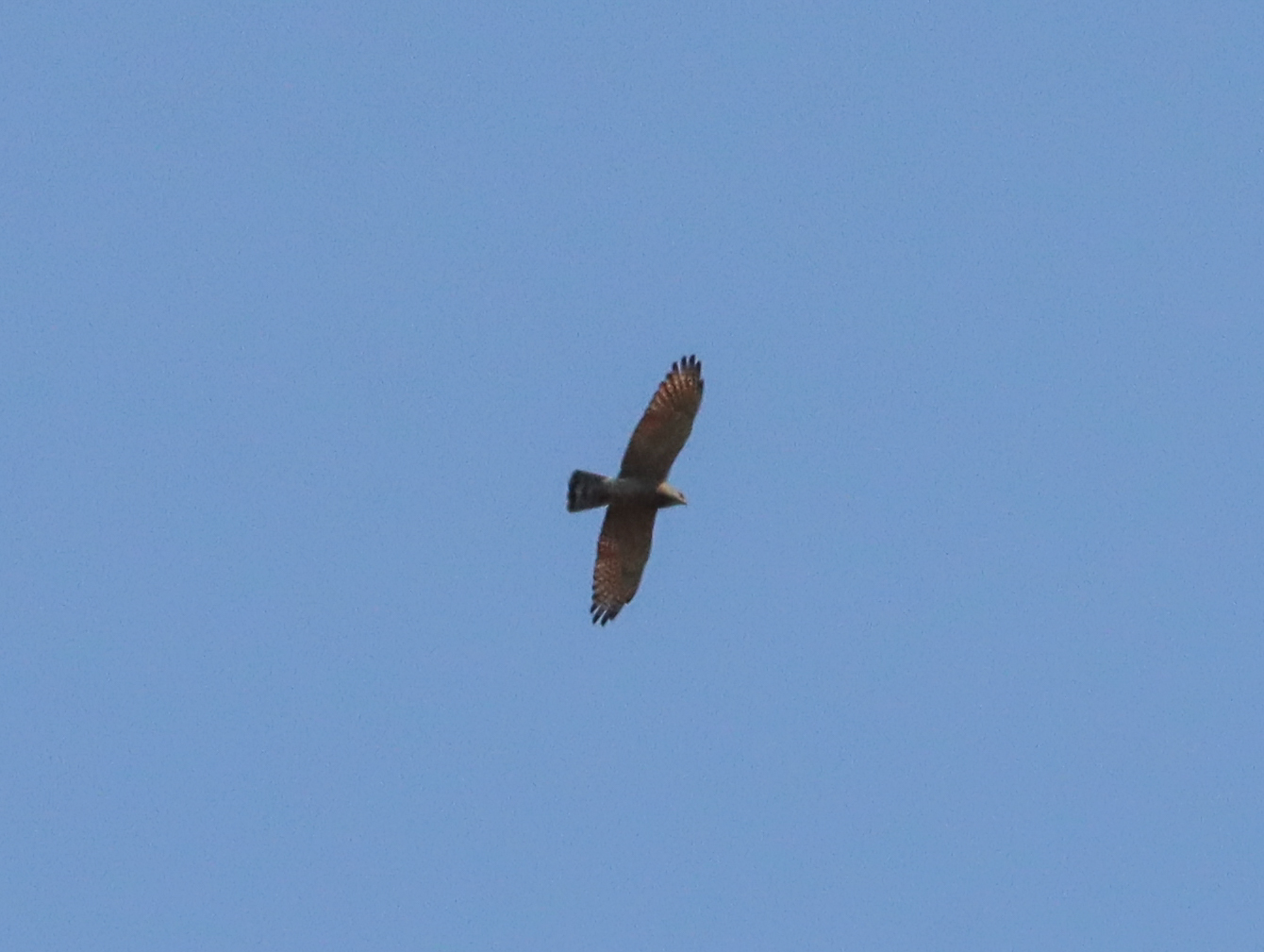
Grey-faced Buzzard
Butastur indicus
灰脸鵟鹰
Introduction
Small Asian raptor (eastern buzzard Buteo buteo japonicus) breeding in East Asia and wintering in Southeast Asia. Length 41-46 cm. Inhabits satoyama landscapes comprising woodlands, rice fields, and grasslands, as well as mountainous forest edges, meadows, and agricultural areas. Migrates along an oceanic flyway. Spring arrival in Japan occurs from late March to early April; males arrive first to establish territories. Autumn migration takes place from late September to mid-October, with birds gathering in flocks. Exhibits seasonal dietary shifts based on prey availability across different foraging habitats throughout the breeding season.
Description
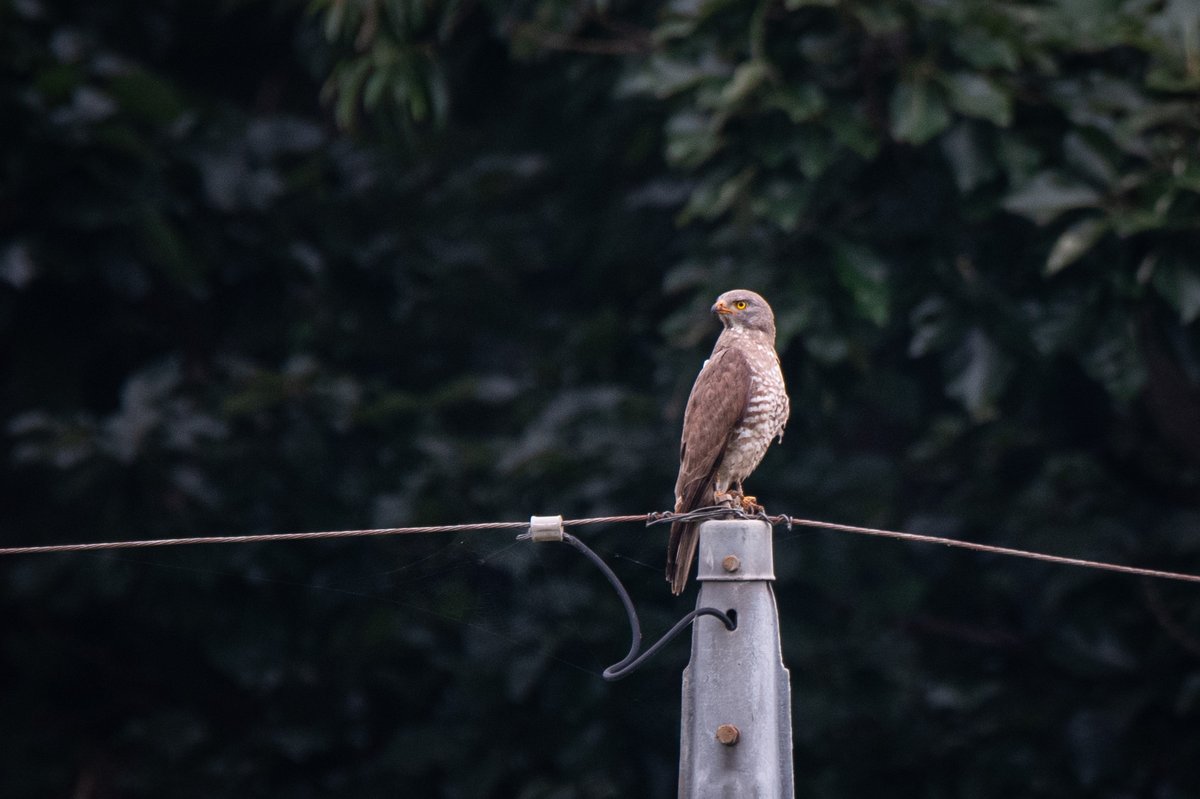
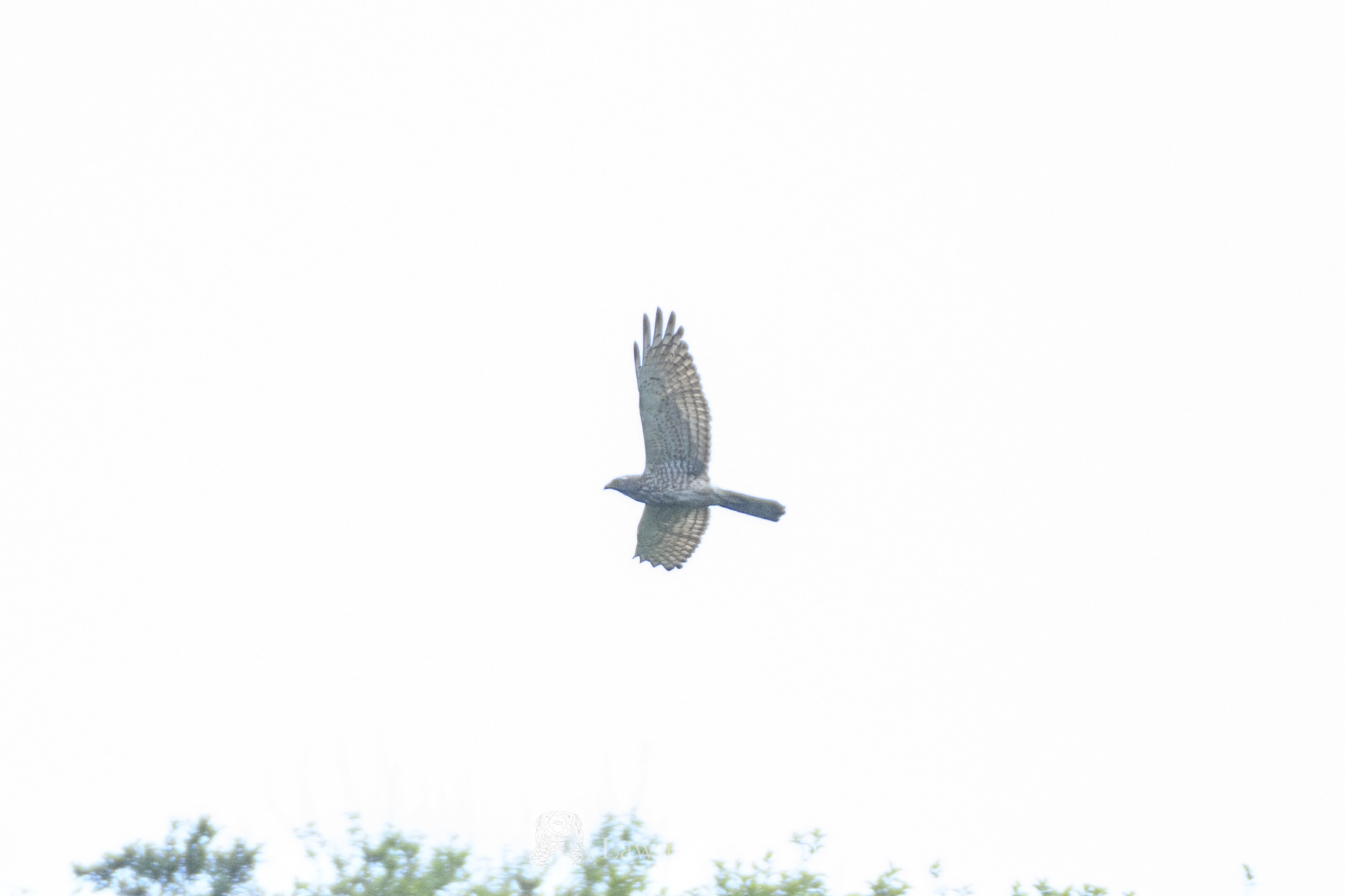
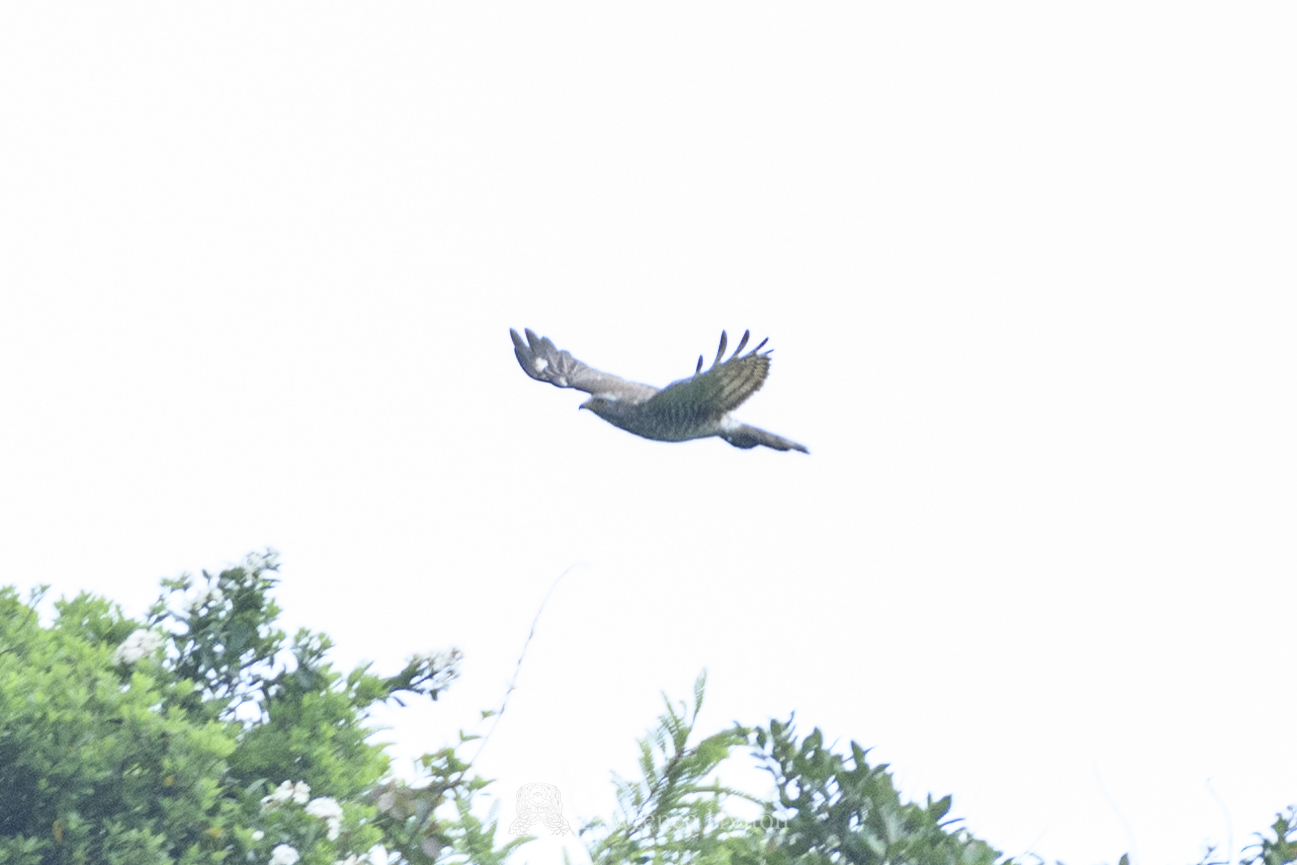
This small raptor reaches 41-46 cm in length with a compact build. Adults display a grey head, breast, and neck, contrasting with a white throat and distinctive black moustache and mesial stripes. The upperparts are brown, including the back and upperwings, while the underparts and underwings feature brown bars on white ground color. The wings are pointed and narrow, with thin feathers that appear somewhat transparent in flight. The tail is ashy brown with horizontal barring, and the iris is bright yellow. Both sexes share identical plumage, with adults showing red and brown coloration on the upper chest and dark down bars across the abdomen. A dark morph exists with entirely brown plumage. Juveniles are less reddish overall, with brown and mottled upperparts, pale underparts streaked with brown, and a prominent broad white supercilium with a brown face.
Identification
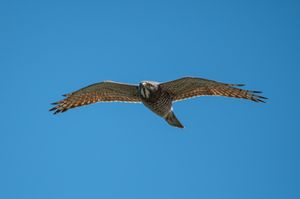
The grey face with contrasting white throat and black moustache markings provides the most reliable field mark for identifying adults. The brown barred underparts distinguish it from similar-sized raptors in its range. The combination of grey head and breast against brown upperparts creates a two-toned appearance distinctive among Asian buzzards. Juveniles can be recognized by their broad white eyebrow stripe, brown face, and pale underparts with brown streaking. In flight, the narrow pointed wings and barred tail become visible. The species lacks the broader, more rounded wings typical of Buteo buzzards. The dark morph, while less common, may cause confusion but can be identified by the remaining grey on the head and the characteristic facial pattern.
Distribution & Habitat
This species breeds across Manchuria, Korea, Japan, eastern China, and eastern Russia. In Japan, it occupies Satoyama landscapes comprising woodlands, rice fields, streams, and grasslands, while in other parts of its range it inhabits coniferous and mixed evergreen forests in mountainous areas, along forest edges, meadows, marshes, and agricultural lands. Wintering grounds extend through Indochina, Malaysia, and the Philippines. The species migrates along a unique oceanic flyway, using wind support and island chains to traverse open ocean. In Taiwan, large numbers are observed moving southward along the Hengchun Peninsula in October and northward along the terraced mountains of Taichung and Changhua in late March and early April. A few individuals winter on Lanyu Island off Taiwan's coast.
Behavior & Ecology
During breeding season, males spend up to 90% of their day perched while hunting, typically remaining about 500 meters from the nest. They employ a search and ambush strategy from elevated perches near open habitats such as rice fields. The diet shifts seasonally: frogs and small mammals dominate in paddy fields, while levees and grass-arable fields yield frogs, small mammals, lizards, snakes, and insects. Woodland areas produce mainly insects and frogs. Nests are constructed from sticks and lined with grass and leaves, typically placed in trees. Clutches contain 3-4 white eggs with rusty or reddish-brown spots, laid in late May to early June. Both parents share incubation and feeding duties, with fledglings becoming independent approximately two weeks after leaving the nest. Vocalizations typical of buzzards include various calls during breeding and territorial disputes.
Conservation
While the species maintains a global status of Least Concern, regional populations face significant pressures. In Japan, it was designated as Vulnerable in December 2006 due to habitat concerns. Approximately 90% of breeding grounds exist on privately owned land, with 75% lacking legal wildlife protection. Historical threats included uncontrolled hunting in Taiwan's Baguashan and Hengchun Peninsula areas, where trapping occurred for generations. Conservation efforts by the Wild Bird Society of Japan and partner organizations successfully ended raptor skin importation through legislation. Notable initiatives include Toyota City's habitat creation plan, which maintains frog populations as prey and preserves foraging grounds through private fallow field management. Long-term conservation requires active local government involvement in maintaining entire ecosystems across private lands.
Culture
Historical records indicate that hunting and trapping of this species in Taiwan's southern regions continued for generations, primarily driven by demand for raptor skins. This practice brought the species into human cultural awareness, though no significant folklore or mythology appears connected to the bird. The efforts to end hunting through legislative action by Japanese conservation organizations represent a more recent cultural dimension, highlighting the species' role in modern environmental advocacy and international conservation cooperation between Japan and Taiwan.
Source: Wikipedia · CC BY-SA 3.0
Taxonomy
- Order
- Accipitriformes
- Family
- Accipitridae
- Genus
- Butastur
- eBird Code
- gyfbuz1
Distribution
breeds northeastern Asia; winters southeastern Asia to Philippines and Indonesia
Data Sources
Species description from Wikipedia, licensed under CC BY-SA 3.0.
Bird images and sounds sourced from GBIF, contributed by citizen scientists worldwide under Creative Commons licenses.
Taxonomy data from AviList 2025.