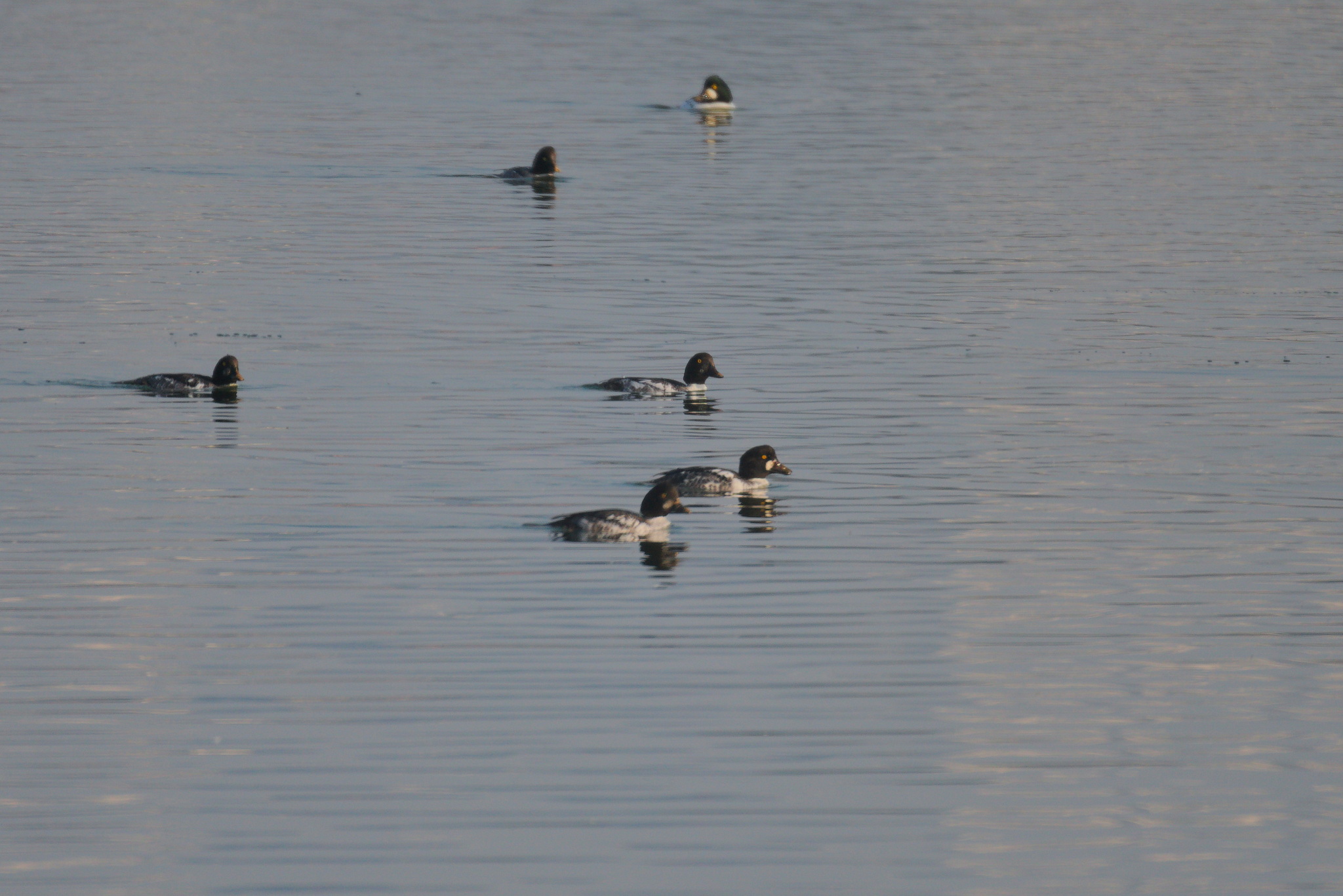
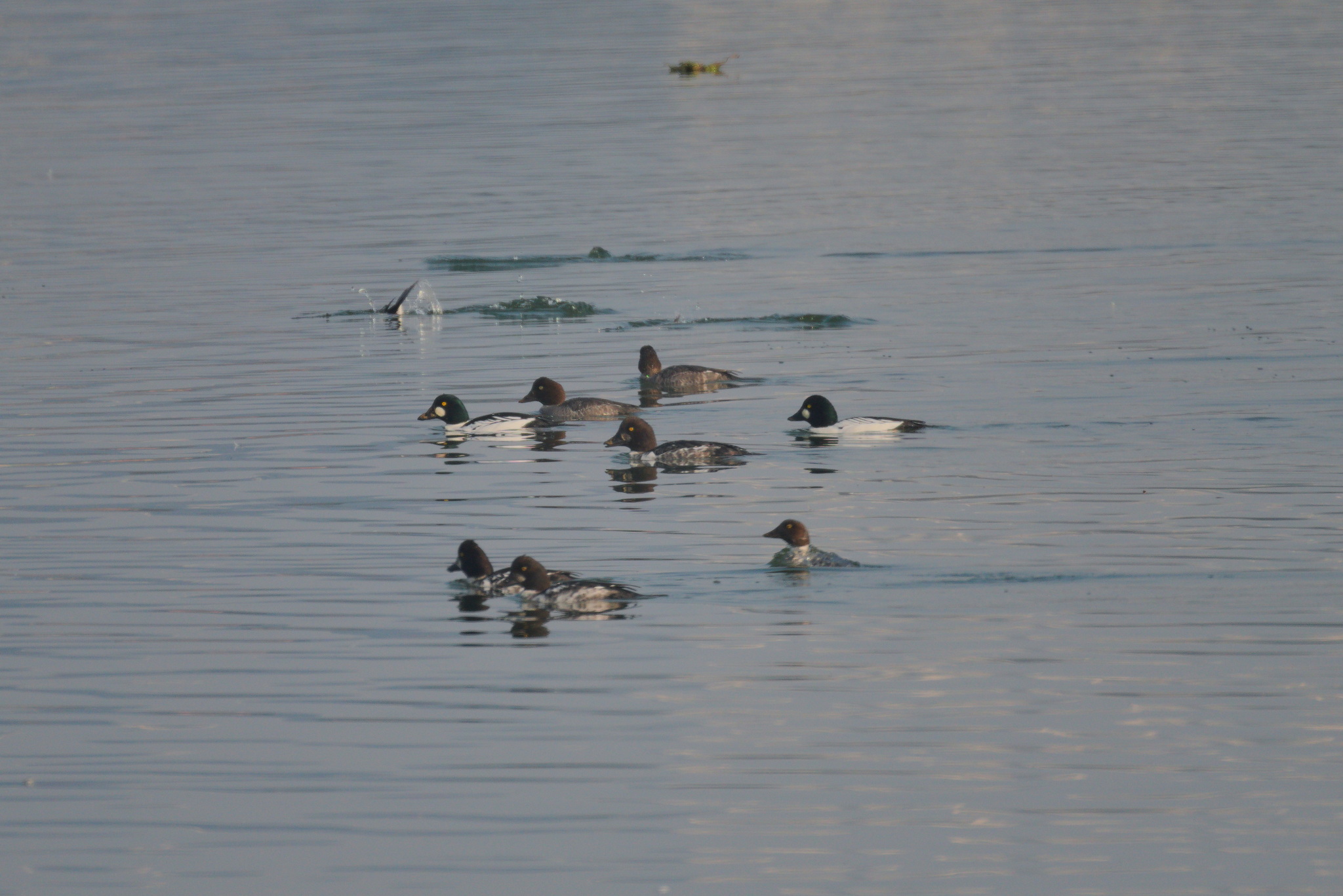
Common Goldeneye
Bucephala clangula
鹊鸭
Introduction
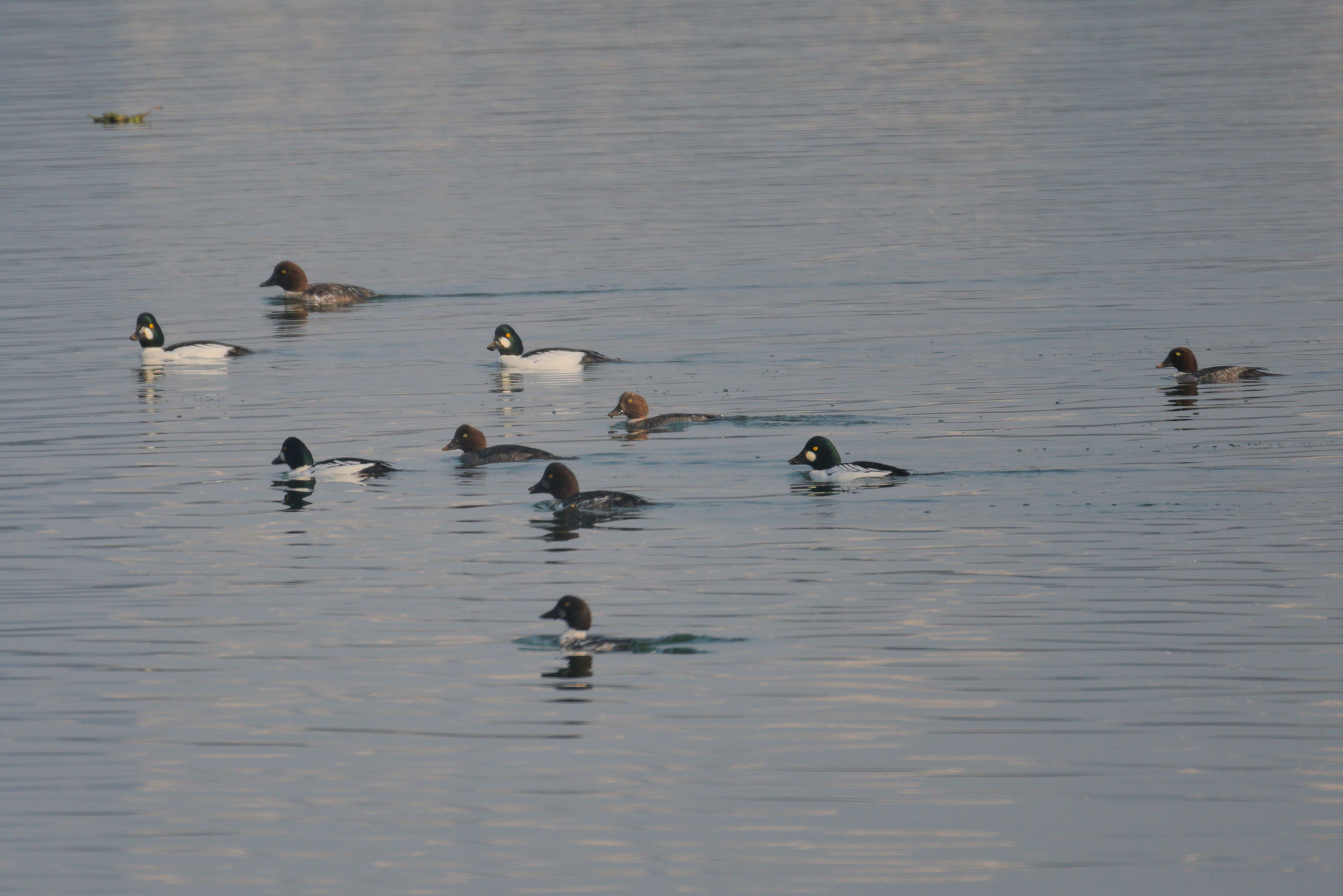
This diving duck inhabits boreal forests across the Northern Hemisphere. It is aggressive and territorial, performing elaborate courtship displays. The species pursues prey underwater, submerging for 30-45 seconds at a time. In winter, it occupies protected coastal waters and open inland waters, forming loose flocks that scan for predators cooperatively. Its rapid wingbeats produce a distinctive whirring sound in flight.
Description
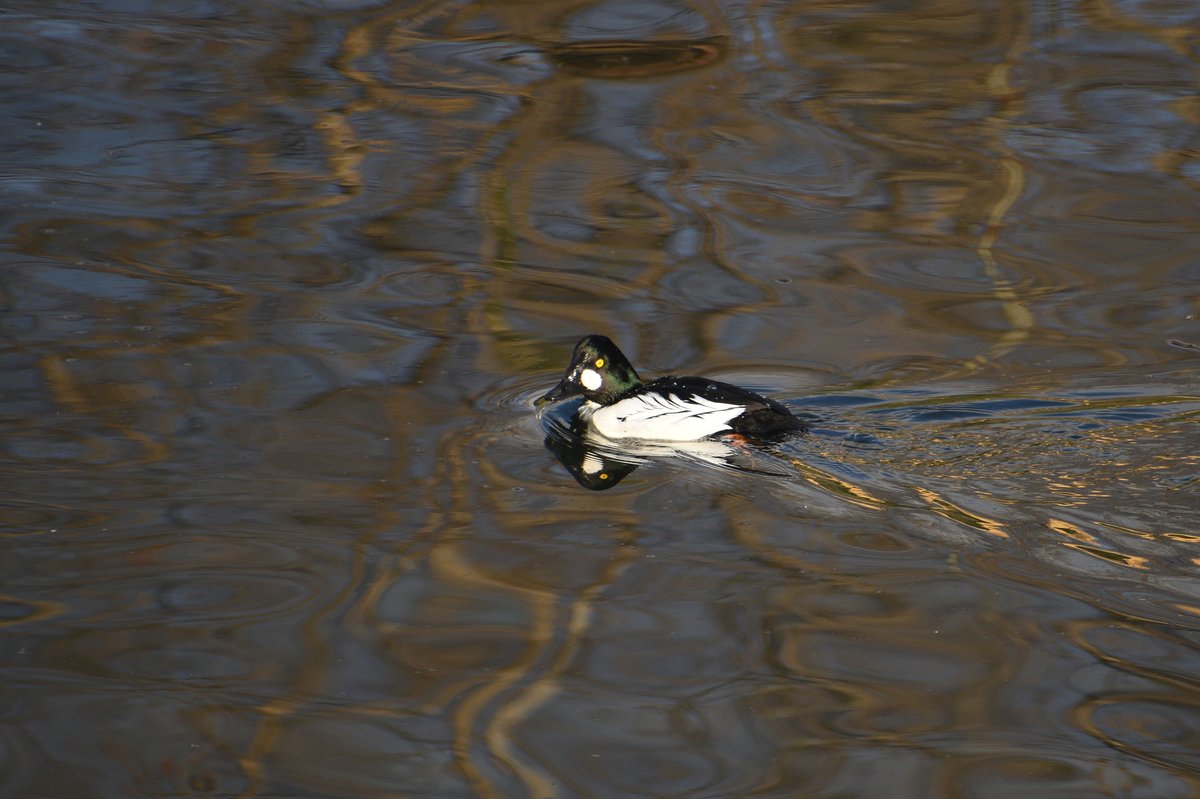
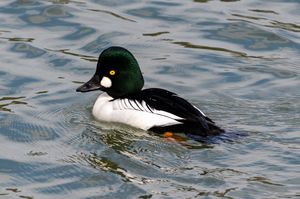
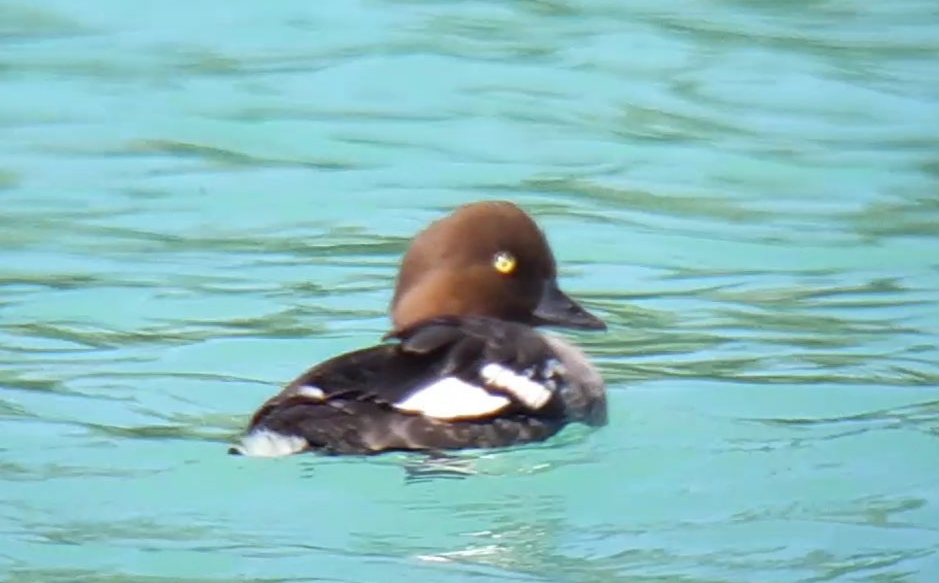
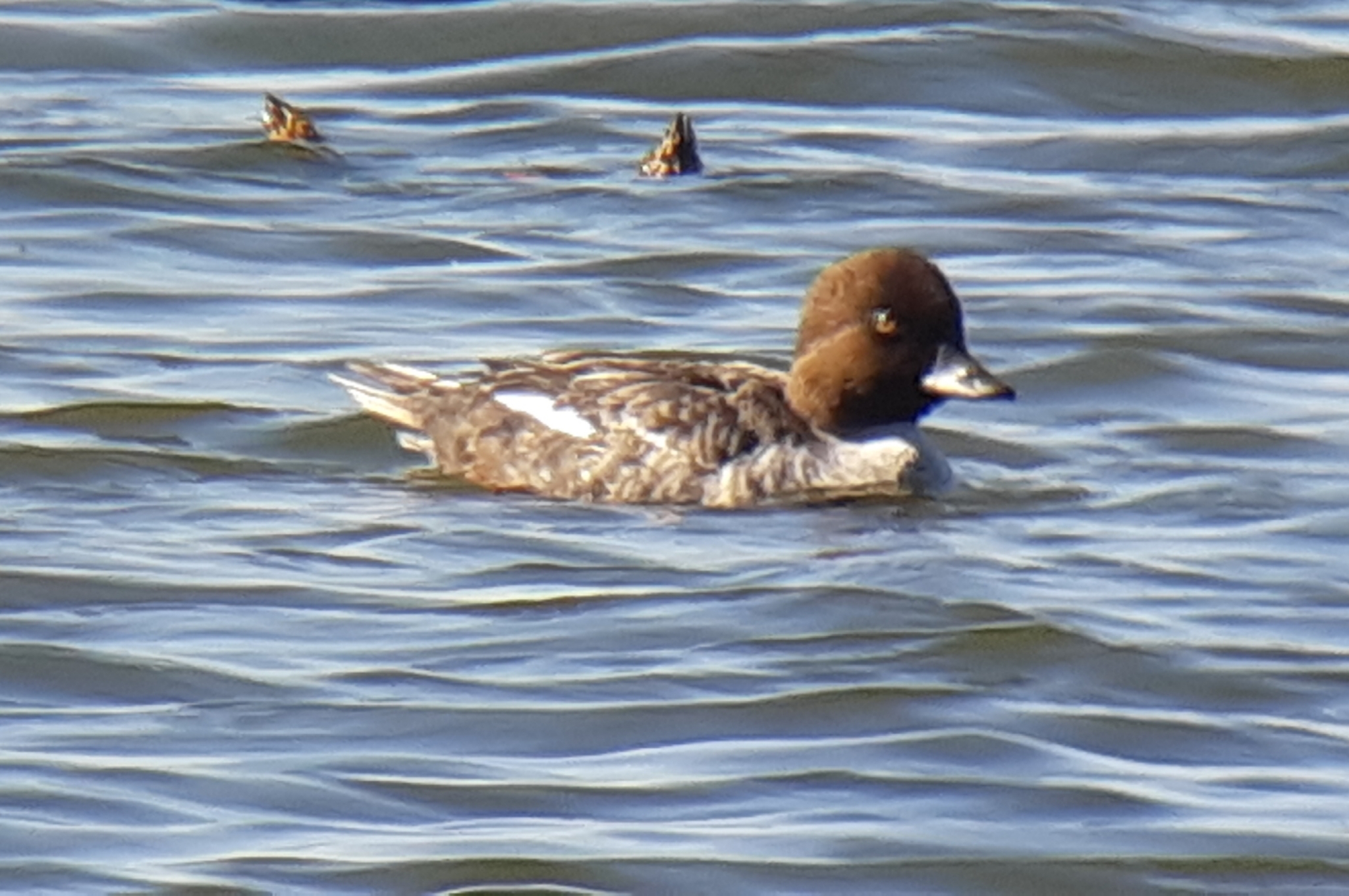
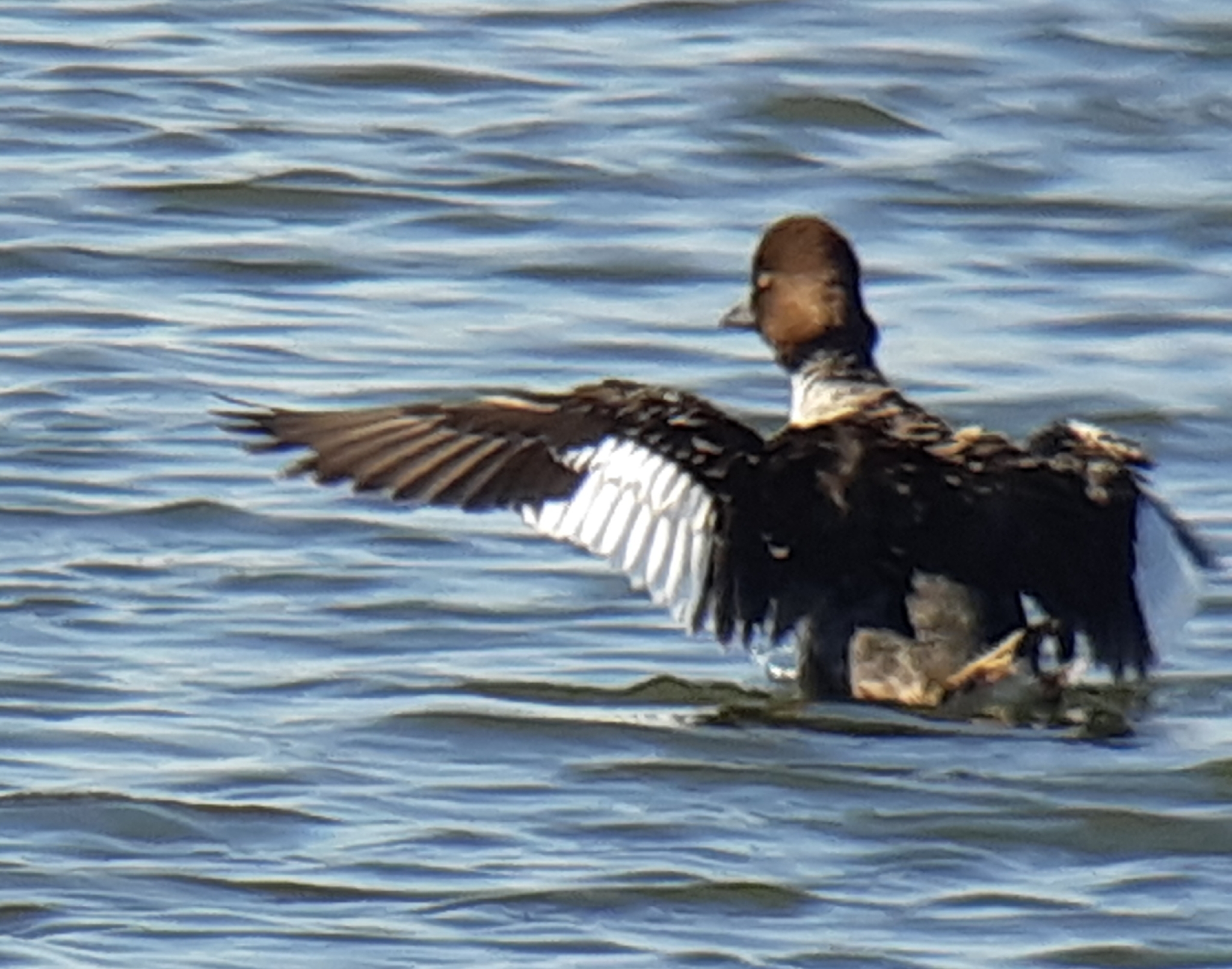
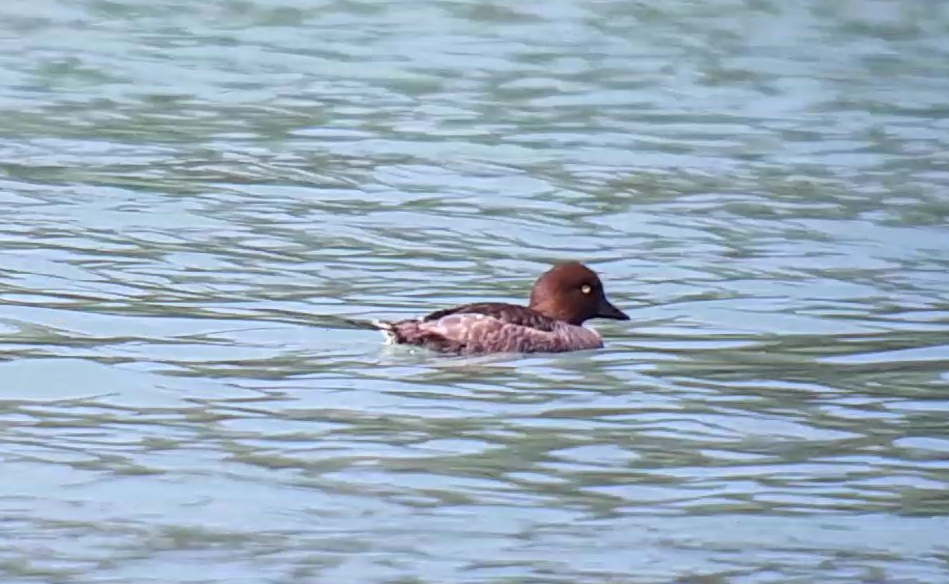
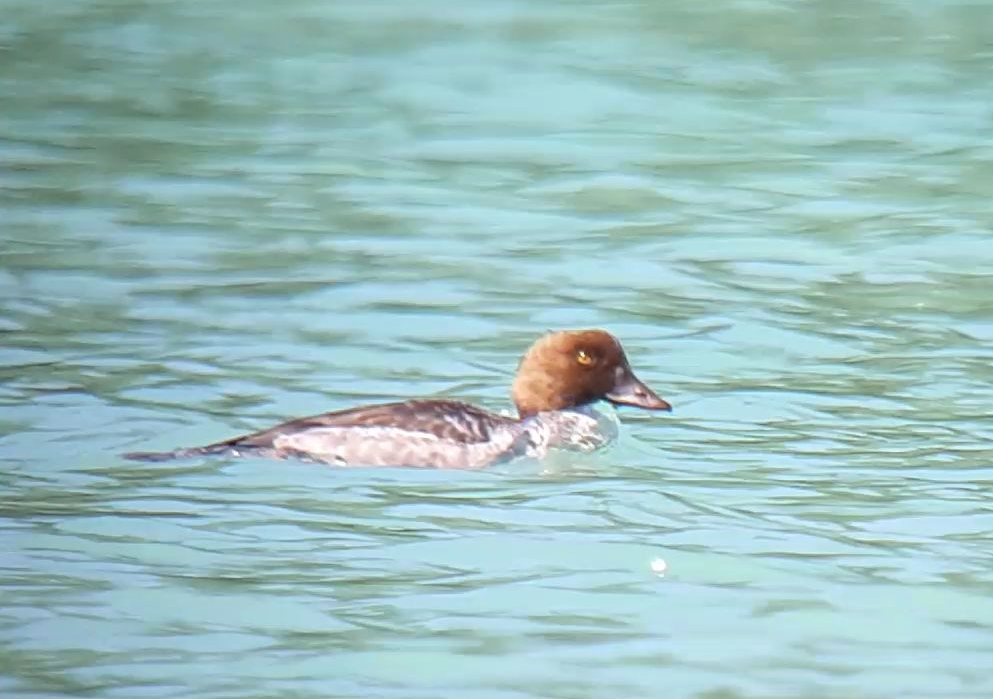
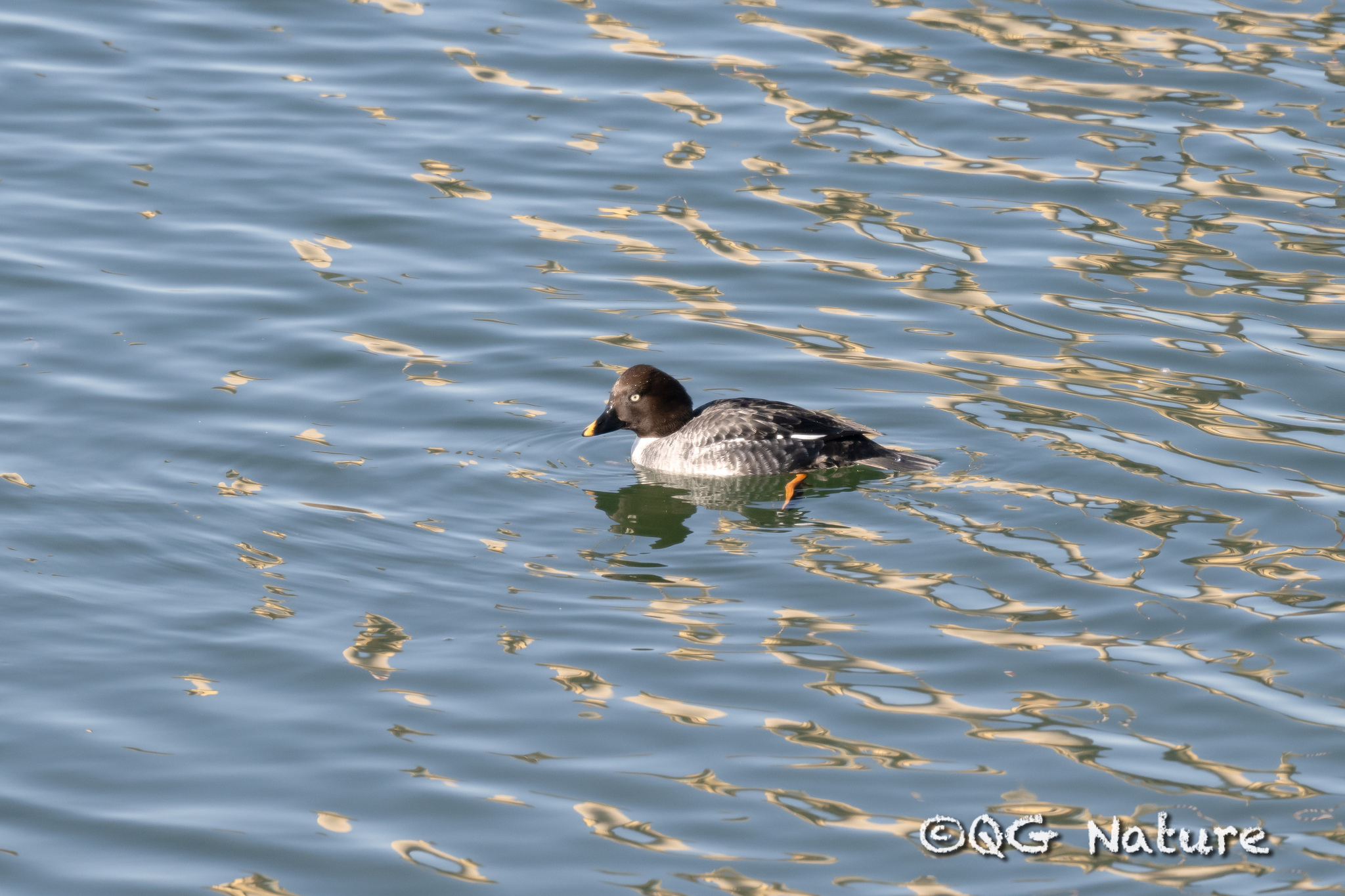
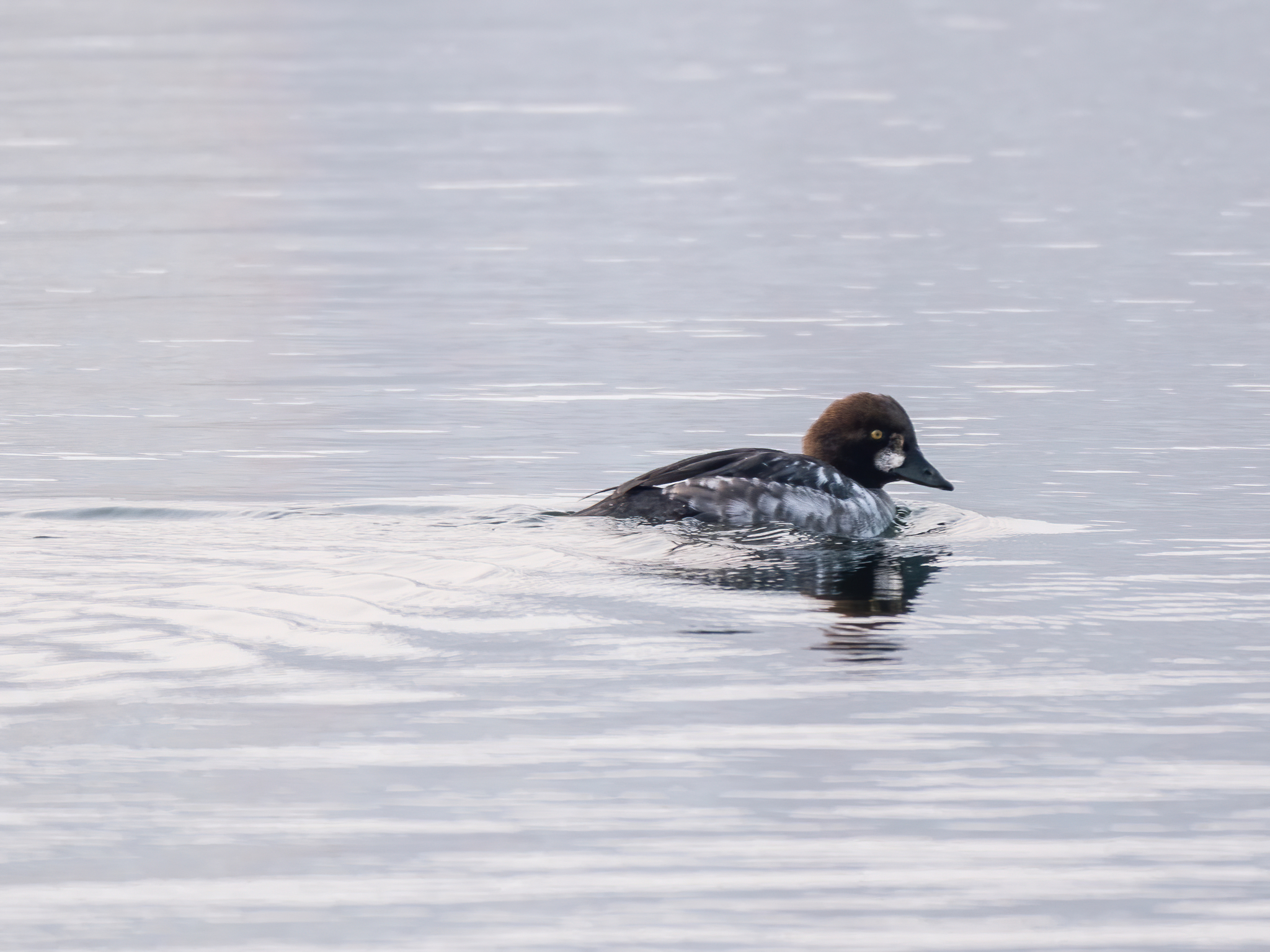
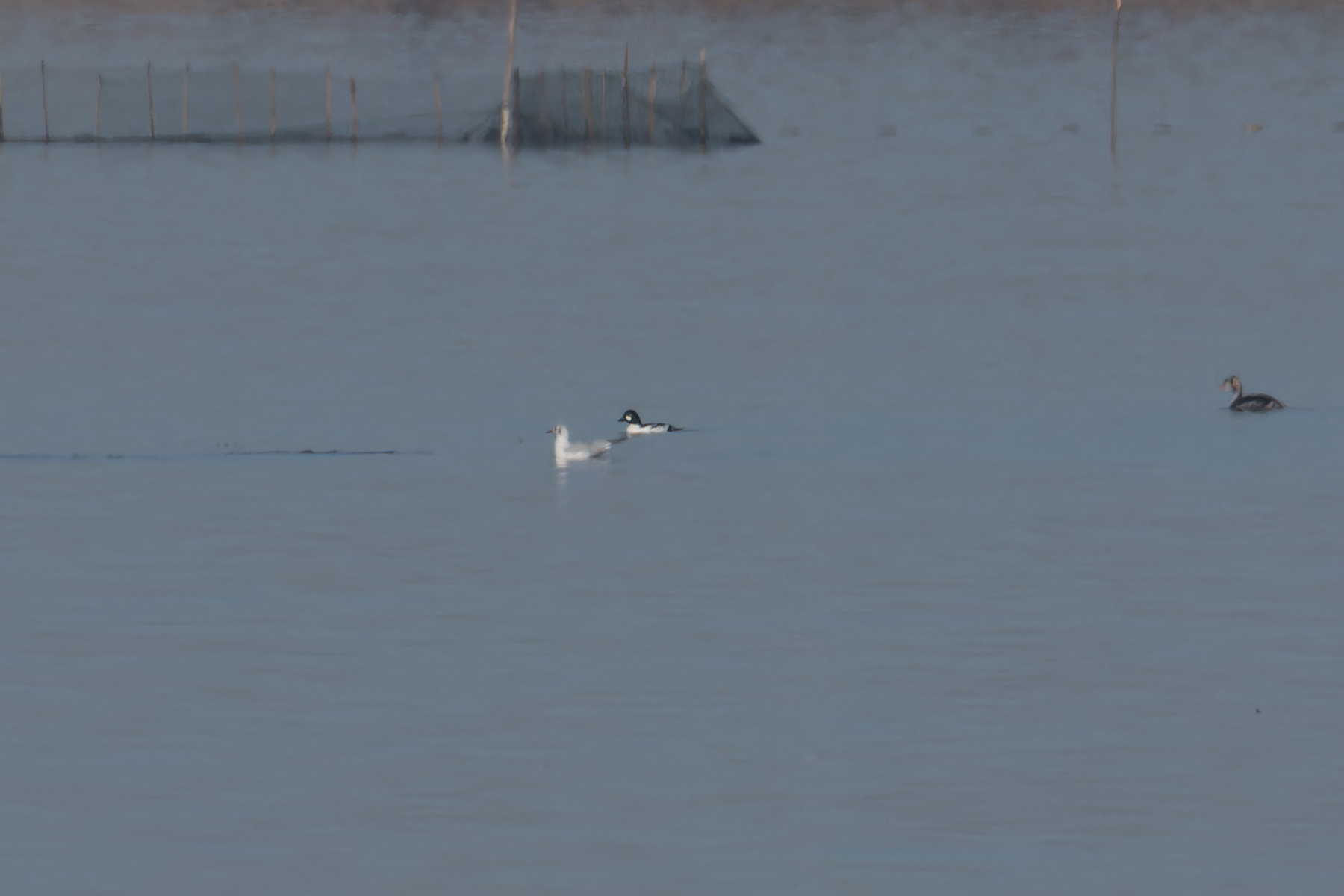
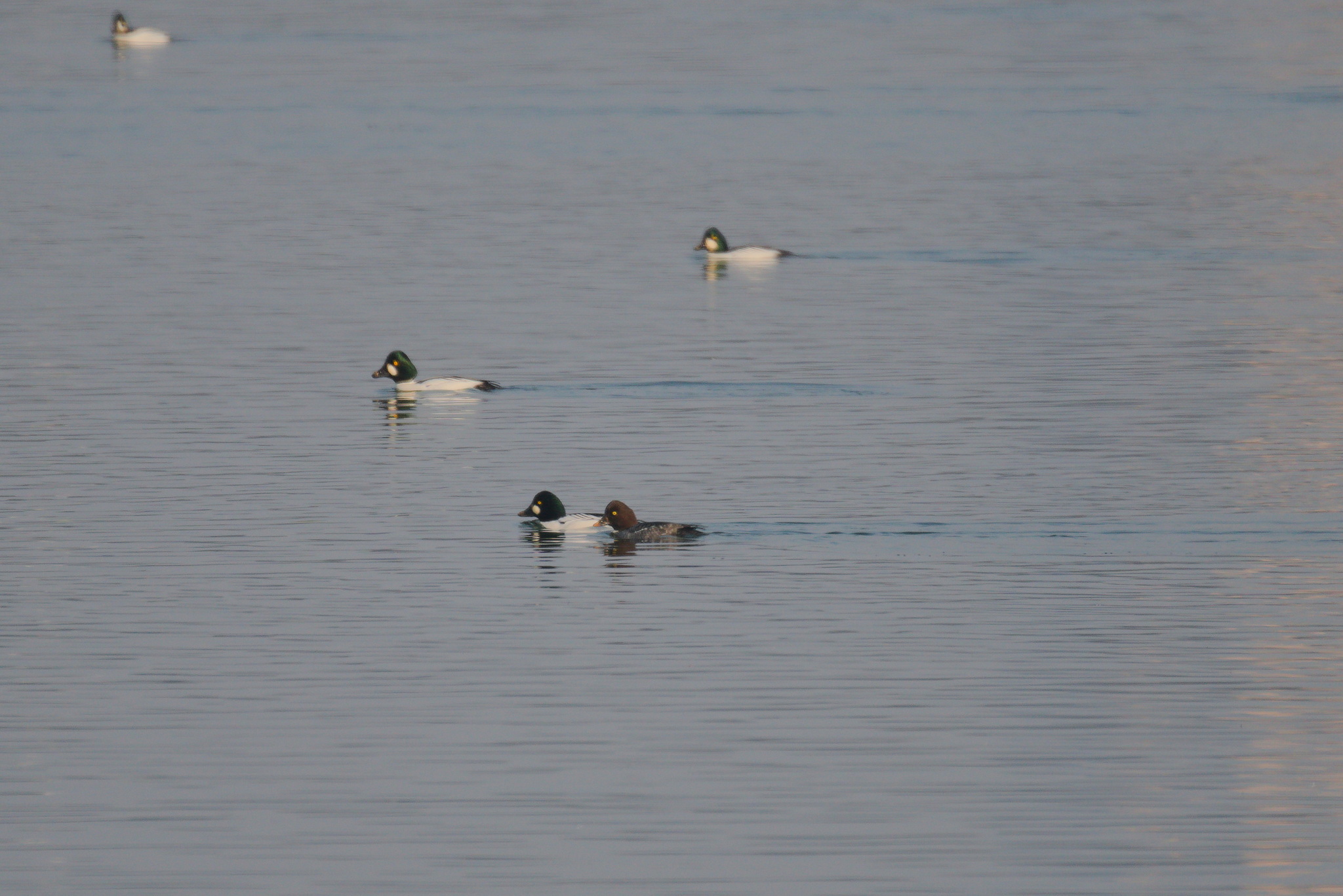
This is a compact, medium-sized diving duck with a relatively large, rounded head and a short, stubby bill. Adults show striking sexual dimorphism. Males measure 45-51 cm in length and weigh approximately 1000 g, while females are slightly smaller at 40-50 cm and 800 g. Both sexes display the namesake golden-yellow eyes. Adult males have a dark head with greenish gloss, a distinctive circular white patch below the eye, a dark back, and white neck and belly. Adult females have a brown head contrasting with a mostly grey body. The legs and feet are orange-yellow. The North American subspecies (B.c. americana) has a longer and thicker bill than the nominate European form. Wingspan ranges from 77-83 cm.
Identification
The golden-yellow eyes are the most diagnostic feature, visible at considerable distance. Males are unmistakable with their dark heads, white face patch, and contrasting black-and-white plumage. Females can be confused with Barrow's goldeneye, their closest relative, but the European subspecies has a proportionally shorter, more slender bill than its North American counterpart. In flight, both sexes show a distinctive white patch on the inner wing. The rapid, whistling wingbeats and relatively high body position in the water help distinguish them from mergansers and other diving ducks.
Distribution & Habitat
This species breeds across the boreal forest zone, inhabiting lakes and rivers throughout Canada, the northern United States, Scotland, Scandinavia, the Baltic States, and northern Russia. Their preferred breeding habitat is the taiga, where they rely on large trees with suitable cavities for nesting. They readily use nest boxes where natural cavities are scarce. The species is migratory, spending winters in protected coastal waters and open inland waters at more temperate latitudes. They return faithfully to traditional nesting sites year after year, with some individuals showing strong natal philopatry.
Behavior & Ecology
These are diving birds that forage underwater, submerging for 30-45 seconds while searching for prey. Their diet varies seasonally: insects predominate during the breeding season, while crustaceans become more important during migration and winter. Year-round, roughly 32% of their diet consists of crustaceans, 28% aquatic insects, and 10% molluscs. Fish eggs and aquatic plants can be locally important food sources. Breeding begins in cavities in large trees, including those made by pileated woodpeckers, black woodpeckers, or broken limbs. The female incubates alone for 28-32 days while the male abandons her early in incubation. Eggs average 42.6-44.0 mm in breadth and 58.1-60.6 mm in length. Brood parasitism is common, and young can fly at 55-65 days of age.
Conservation
This species is protected under the Agreement on the Conservation of African-Eurasian Migratory Waterbirds (AEWA). Hunting pressure in North America during the 1970s averaged approximately 188,300 birds annually, representing about 4% of waterfowl harvested in Canada and less than 1% in the United States. Both breeding and wintering habitats have been degraded by forest clearance and pollution. Interestingly, populations in North America derive short-term benefits from lake acidification, which may increase food availability. The species is not currently considered threatened, though local populations face ongoing habitat pressures.
Culture
The species name derives from the Latin clangere, meaning 'to resound', referring to the distinctive whistling sound produced by its wings in flight. The genus name comes from the Ancient Greek boukephalos, meaning 'bullheaded', describing the bulbous head shape characteristic of this group of diving ducks. No significant folklore or cultural traditions are specifically associated with this species.
Source: Wikipedia · CC BY-SA 3.0
Taxonomy
- Order
- Anseriformes
- Family
- Anatidae
- Genus
- Bucephala
- eBird Code
- comgol
Subspecies (2)
-
Bucephala clangula americana
breeds northern North America; winters to California and Florida (southern USA)
-
Bucephala clangula clangula
northern Eurasia; winters to Mediterranean, Persian Gulf, and southern China
Data Sources
Species description from Wikipedia, licensed under CC BY-SA 3.0.
Bird images and sounds sourced from GBIF, contributed by citizen scientists worldwide under Creative Commons licenses.
Taxonomy data from AviList 2025.