Strigiformes / Strigidae / Bubo
Eurasian Eagle-Owl
Bubo bubo · 雕鸮
Introduction
A large species of eagle-owl residing in much of Eurasia. It is one of the largest owl species, with females reaching a total length of 75 cm and a wingspan of 188 cm. Distinctive traits include prominent ear tufts, orange eyes, and a nocturnal predatory lifestyle. The IUCN lists its conservation status as Least Concern, with a global population estimated between 100,000 and 500,000 individuals, although the trend is decreasing.
Description
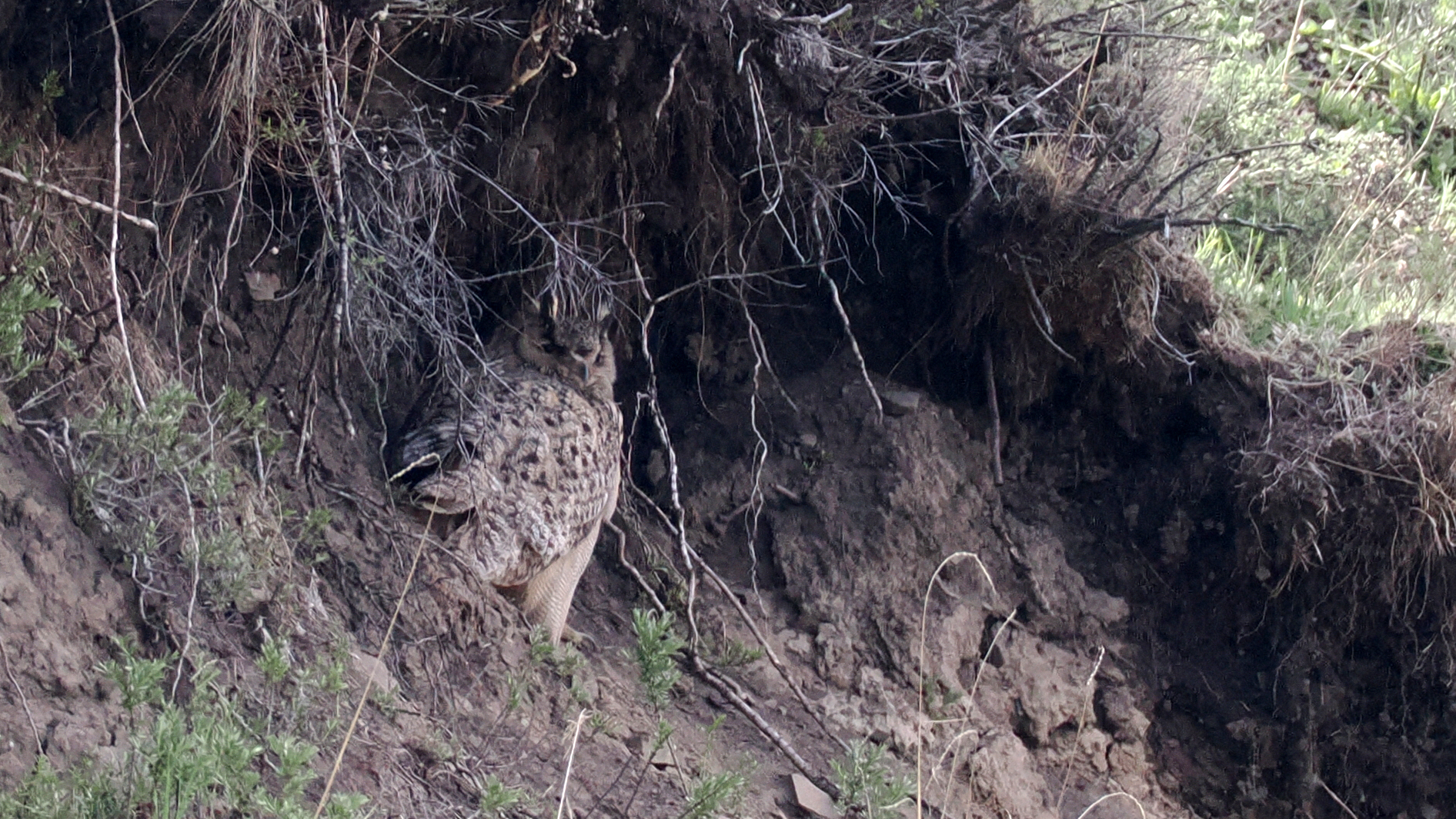
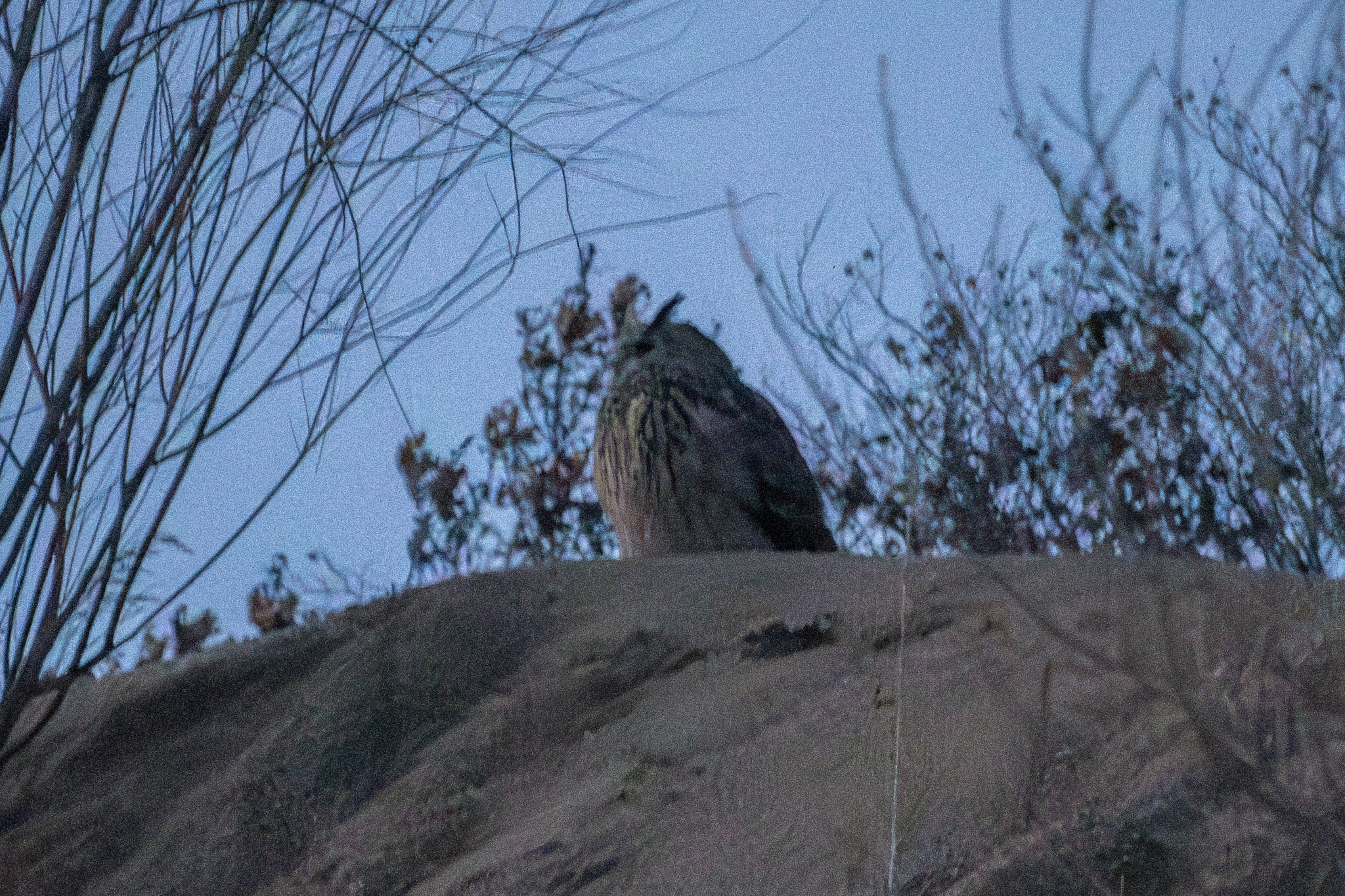
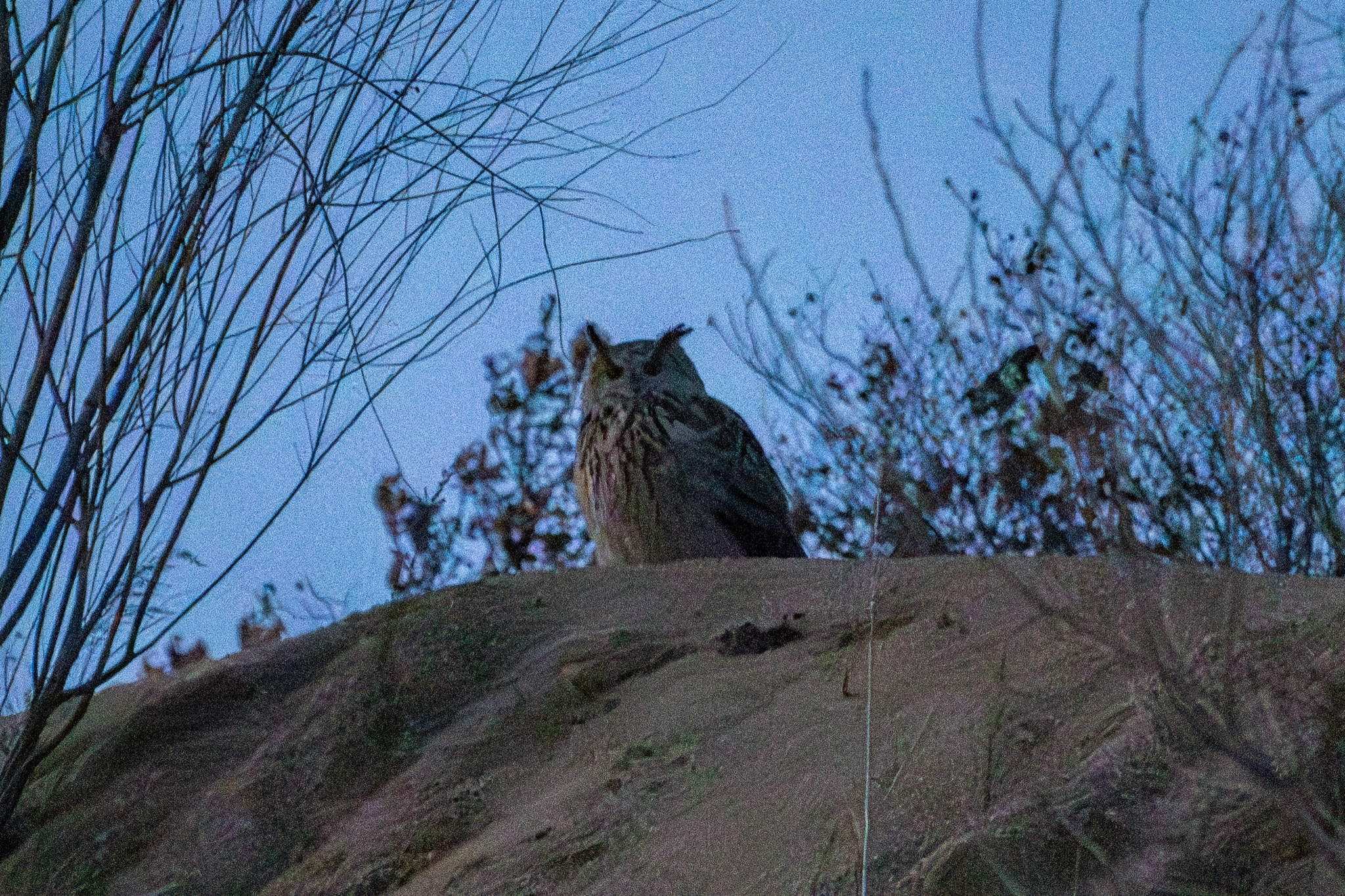
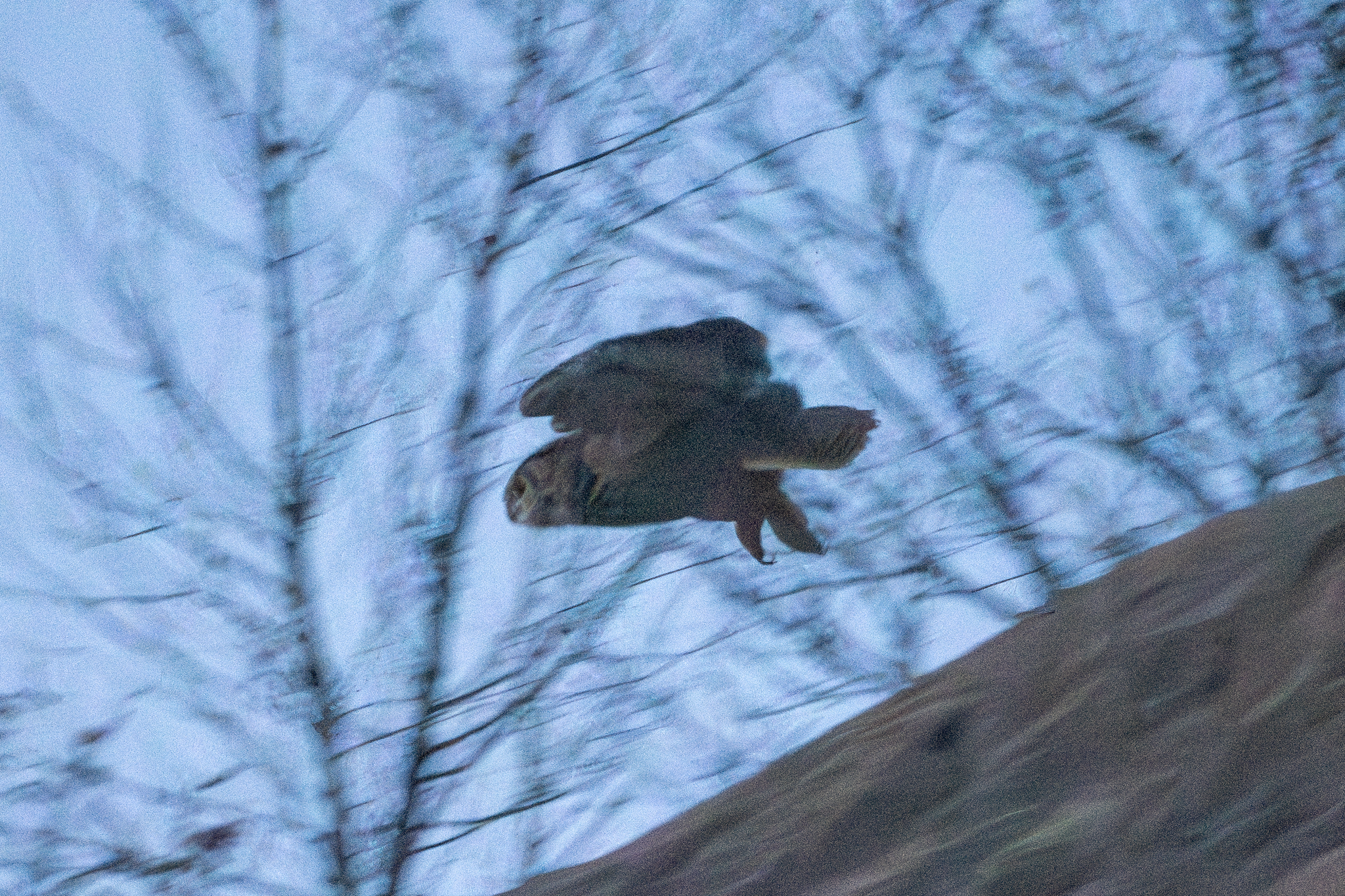
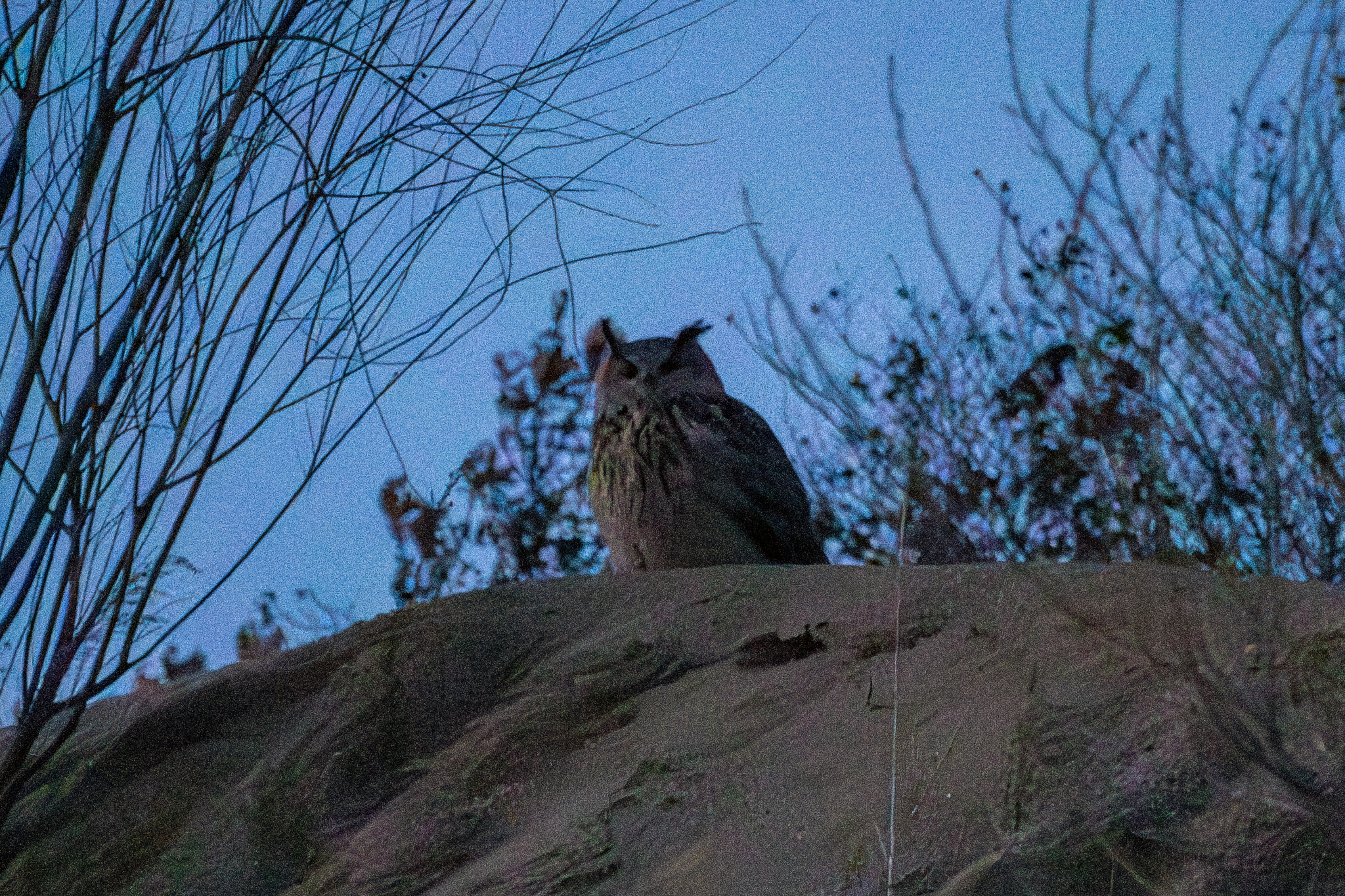
Females grow to a total length of 75 cm (30 in) and weigh 1.75–4.6 kg; males are slightly smaller, weighing 1.2–3.2 kg. Wingspan ranges from 131–188 cm, with large specimens attaining 2 m. The bird has distinctive ear tufts, which are more upright in males. Upper parts are mottled with darker blackish coloring and tawny, while wings and tail are barred. Underparts are variably hued buff, streaked with darker coloring. The facial disc is tawny-buff, speckled with black-brown, forming a frame around the face. The iris is most often orange, ranging to reddish or orange-yellow in some subspecies. Bill and feet are black. Legs and feet are feathered almost to the talons.
Identification
Distinguished by great size, bulky barrel-shaped build, erect ear tufts, and orange eyes. Unlike the great grey owl and Ural owl, it has ear tufts and a blocky head shape rather than a rounded one. Differs from the snowy owl by lacking pure white background color and having prominent ear tufts. Smaller than the golden eagle but larger than the snowy owl. Flight is strong and direct with shallow wing beats and long glides; rarely soars. Vocalizations include a deep resonant 'ooh-hu' for males and a higher-pitched 'uh-hu' for females.
Distribution & Habitat
Found across much of Eurasia, with a range of about 51.4 million km². Populations exist in Continental Europe, Scandinavia, Russia, Central Asia, Anatolia, the northern Middle East, South Asia, China, Korea, and Japan. A small non-native population resides in the United Kingdom. Habitats include mountainous and rocky areas, woodland edges, shrubby areas, wetlands, coniferous forests, steppes, and occasionally farmland or urban parks. Absent from humid rainforests in Southeast Asia and high Arctic tundra.
Behavior & Ecology
Mostly a nocturnal predator, hunting small mammals such as rodents and rabbits, as well as birds, larger mammals, reptiles, amphibians, fish, and insects. Breeds on cliff ledges, in gullies, among rocks, or on the ground in forested areas. The nest is a scrape containing a clutch of 2–4 eggs. The female incubates and broods the young, while the male provides food. Parental care continues for about five months. Highly sedentary and territorial, maintaining single territories throughout adult lives. Vocal activity peaks from late fall through winter for territorial and courtship purposes.
Conservation
Listed as Least Concern by the IUCN, though the population trend is decreasing. Major threats include electrocution from power lines (accounting for an average of 38.2% of reported deaths), traffic accidents, and persecution. Listed in Appendix II of CITES. Reintroduction programs have been implemented in Germany and Sweden. Conservation measures include insulating electric pylons and transformers to reduce mortality.
Culture
Tame individuals have been used in pest control to deter large birds like gulls. In Finland, the national football team is nicknamed 'Huuhkajat' (Eurasian eagle-owls) after an owl interrupted a match in 2007. The bird was named 'Helsinki Citizen of the Year' in 2007.
Source: Wikipedia · CC BY-SA 3.0
Taxonomy
- Order
- Strigiformes
- Family
- Strigidae
- Genus
- Bubo
Subspecies (16)
-
Bubo bubo borissowi
Sakhalin and the southern Kuril Islands (south from Urup), and northern Japan (northern Hokkaido)
Data Sources
Species description from Wikipedia, licensed under CC BY-SA 3.0.
Bird images and sounds sourced from GBIF, contributed by citizen scientists worldwide under Creative Commons licenses.
Taxonomy data from AviList 2025.