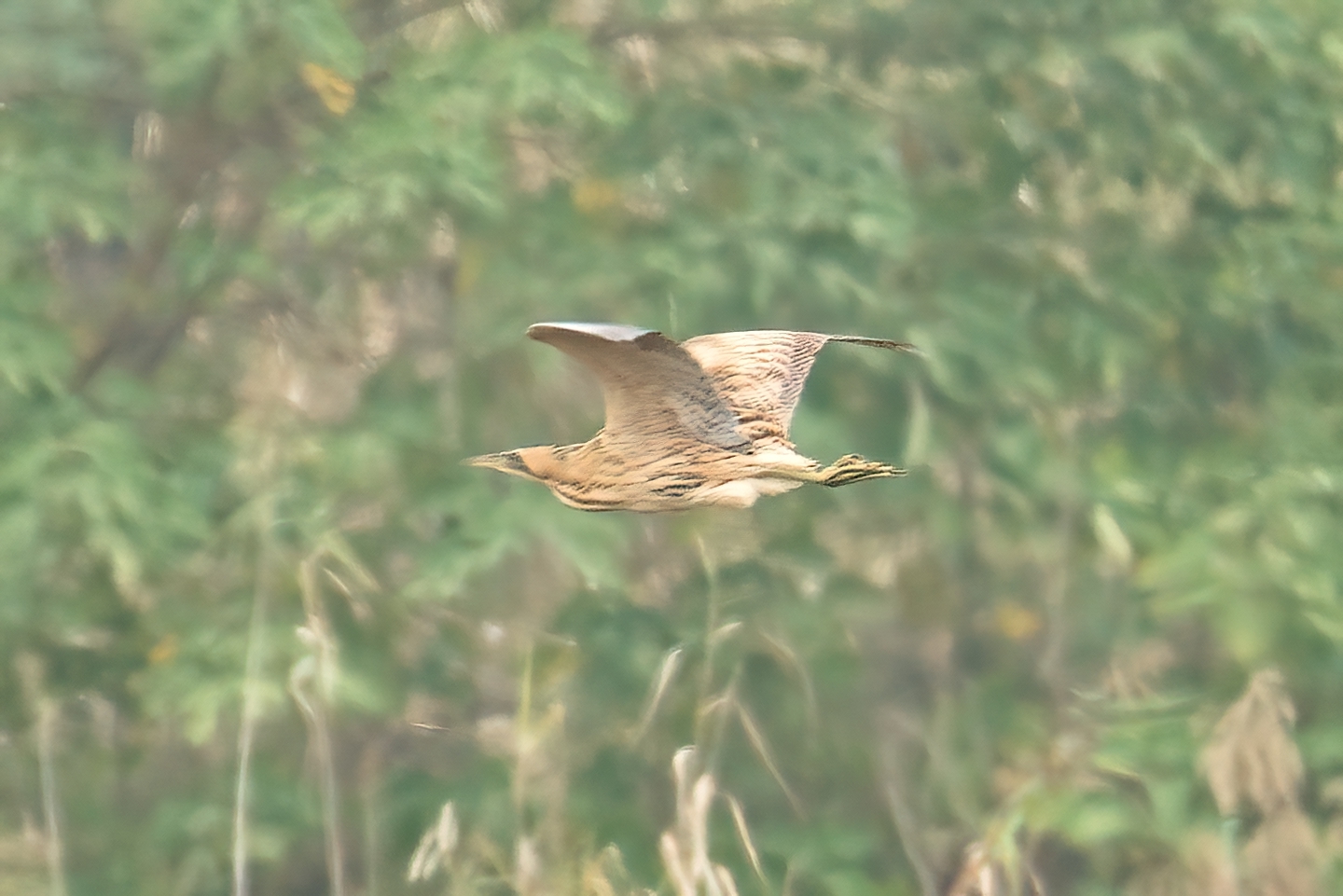
Eurasian Bittern
Botaurus stellaris
大麻鳽
Introduction
A wading bird in the bittern subfamily (Botaurinae) of the heron family (Ardeidae). Two subspecies are recognized: the northern race (B. s. stellaris) breeds across Europe, the Palearctic, and the northern coast of Africa, while the southern race (B. s. capensis) is endemic to southern Africa. Inhabits reed beds and thick vegetation near water bodies. Highly secretive and seldom seen in the open; its presence is most apparent in spring when the male's booming call carries up to 5 kilometers. Overall conservation status assessed as 'least concern' due to large range and population, though the southern race faces high conservation concern and some local populations are at risk, particularly in the United Kingdom.
Description
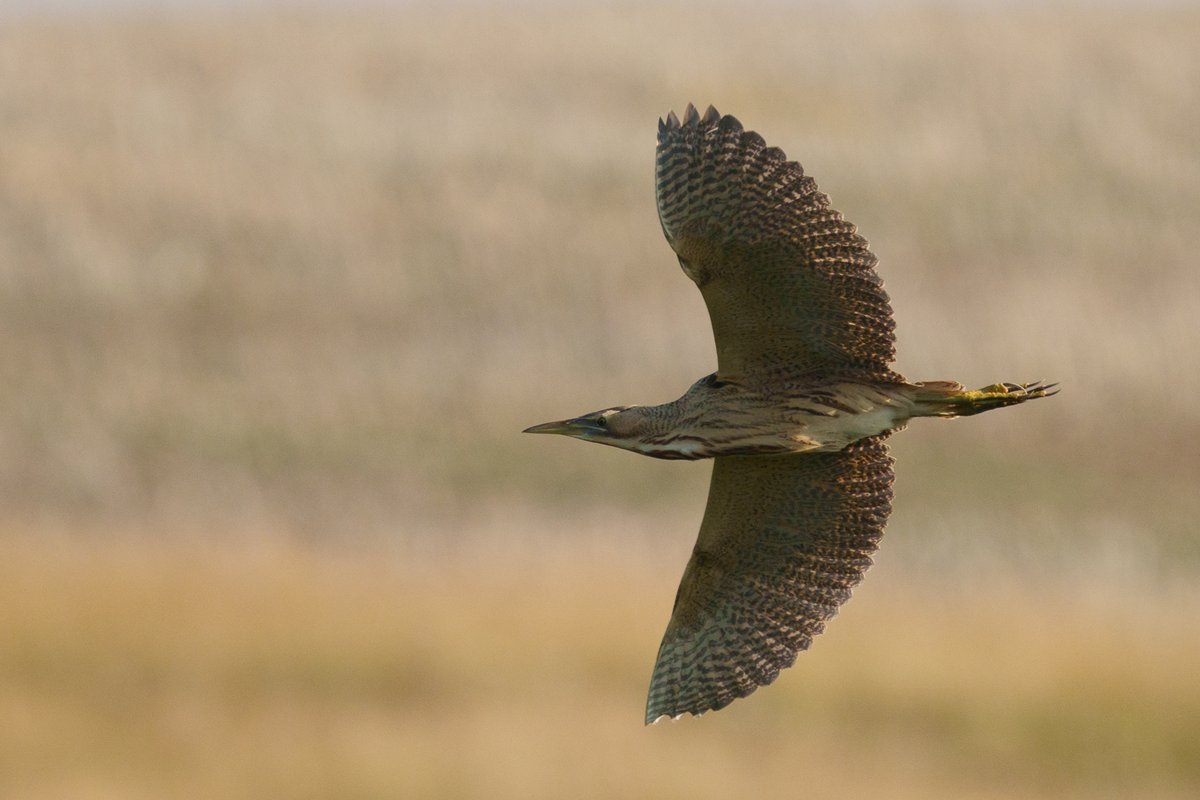
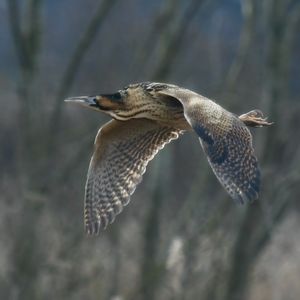
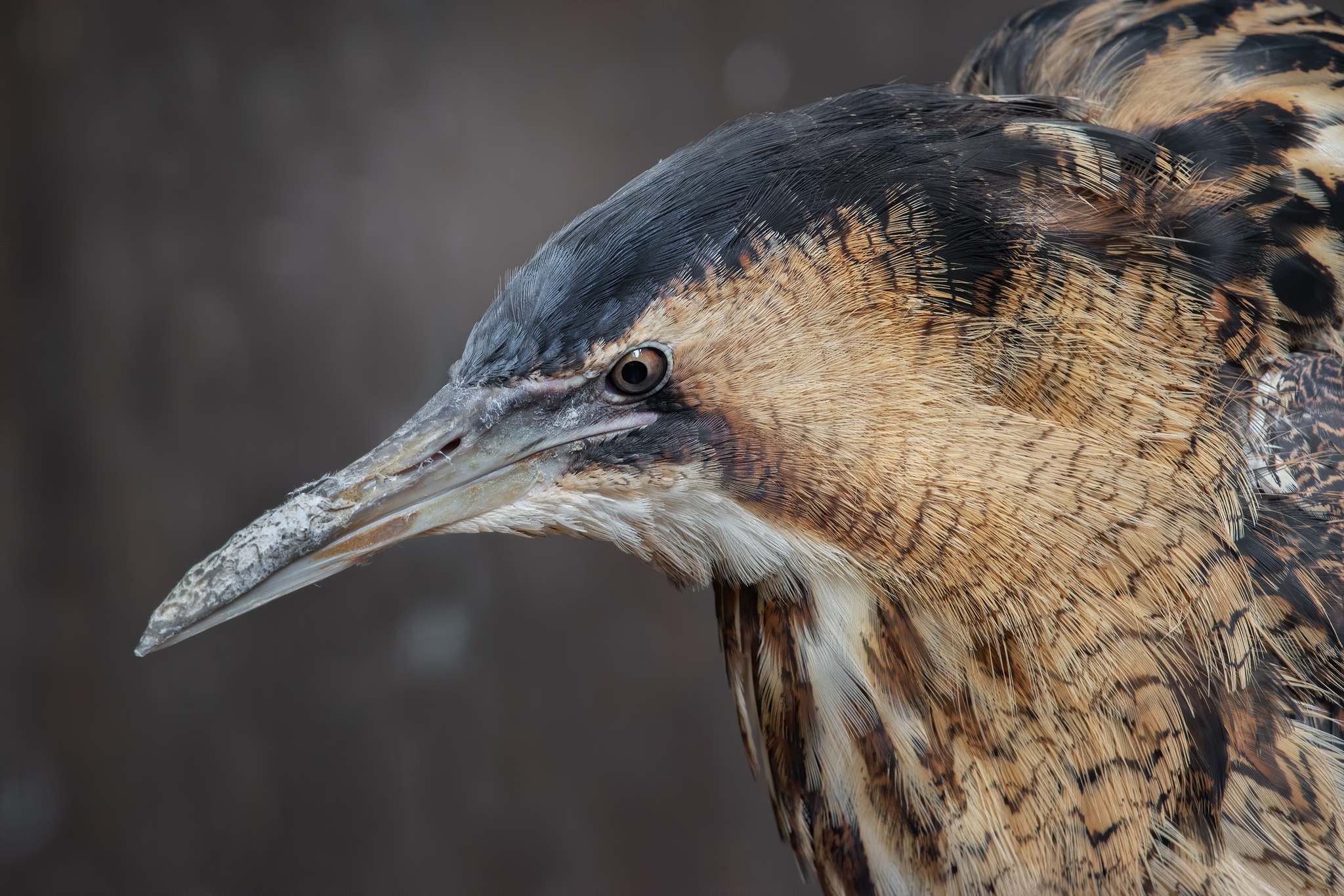
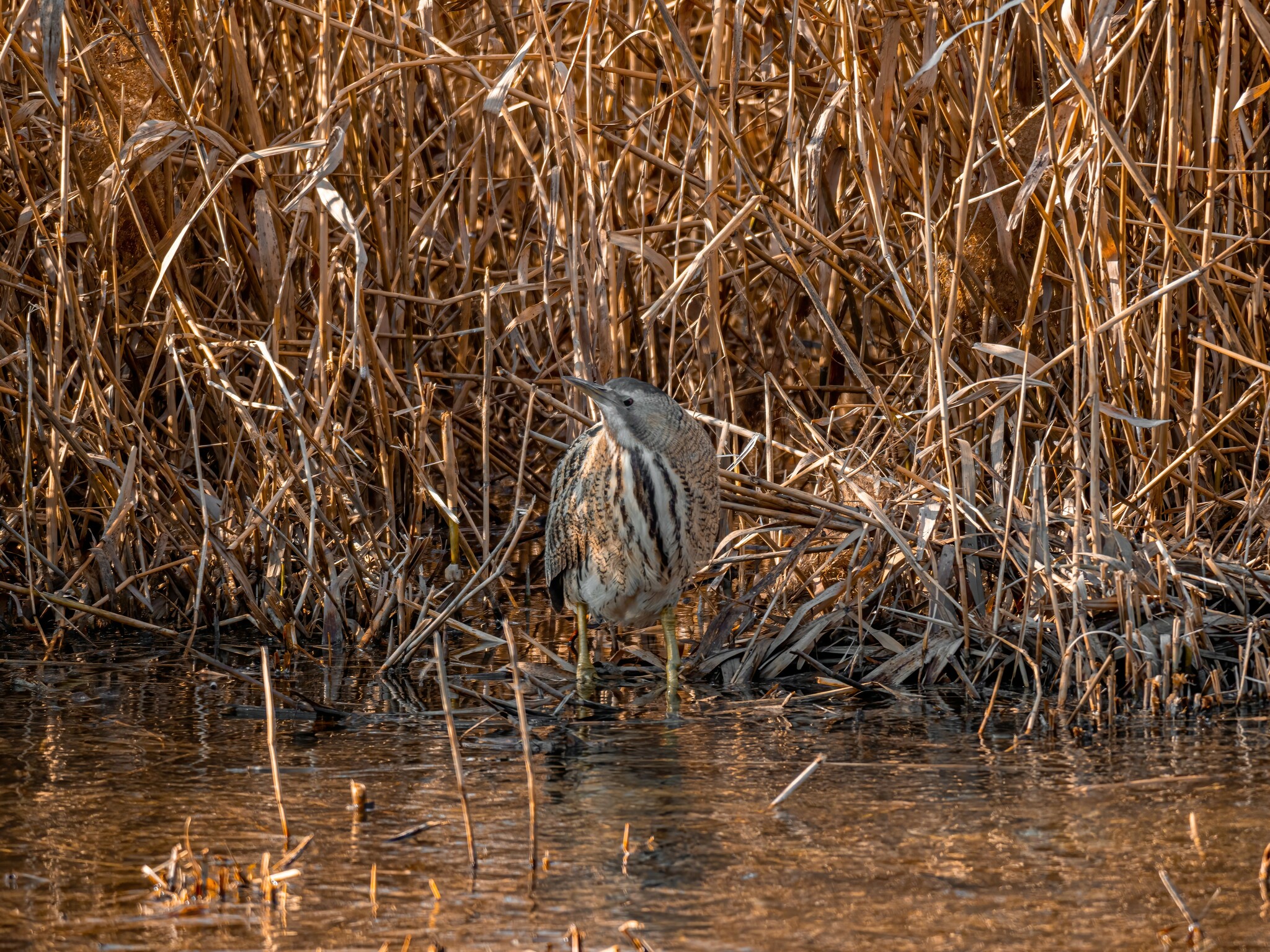
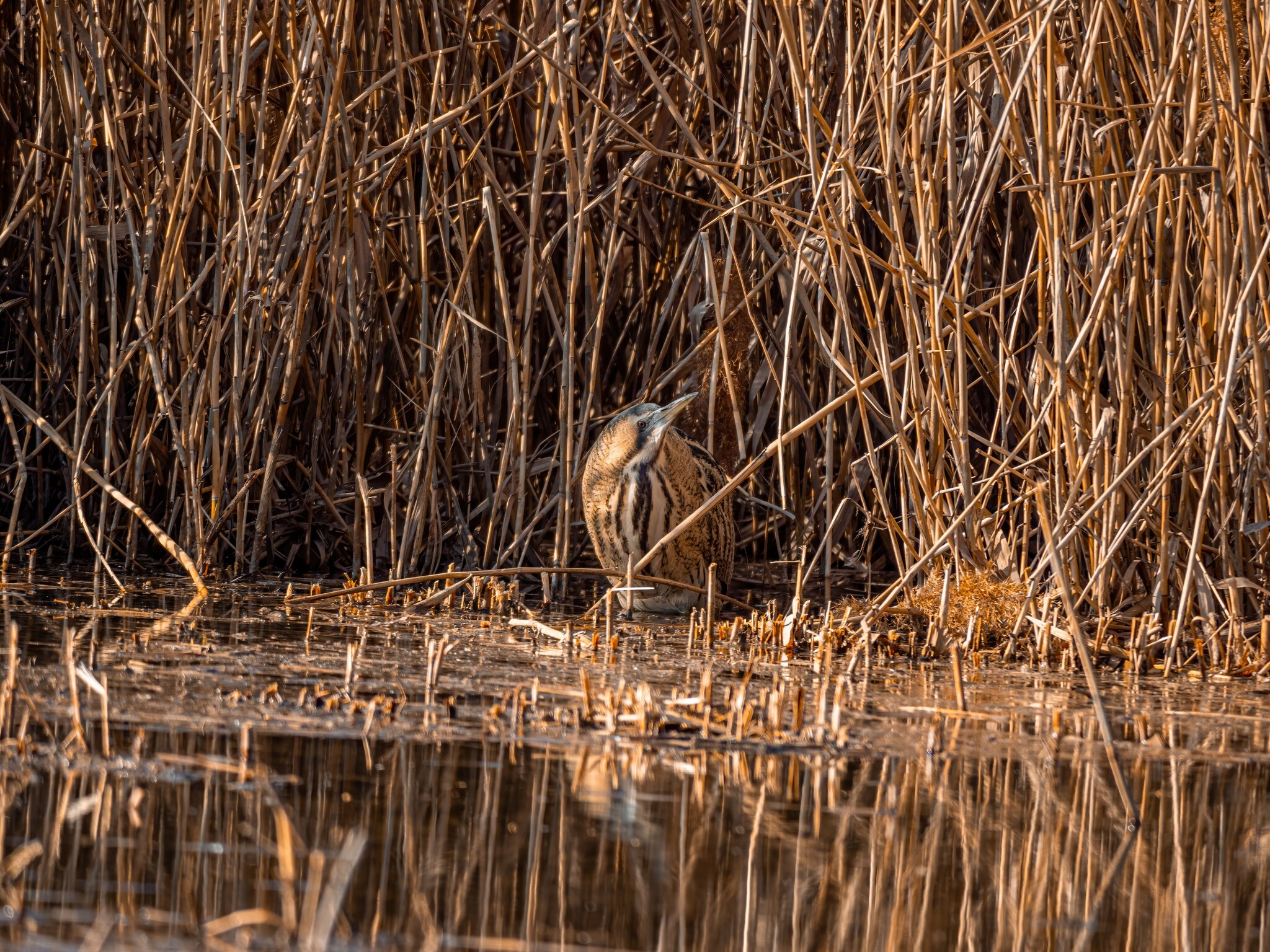
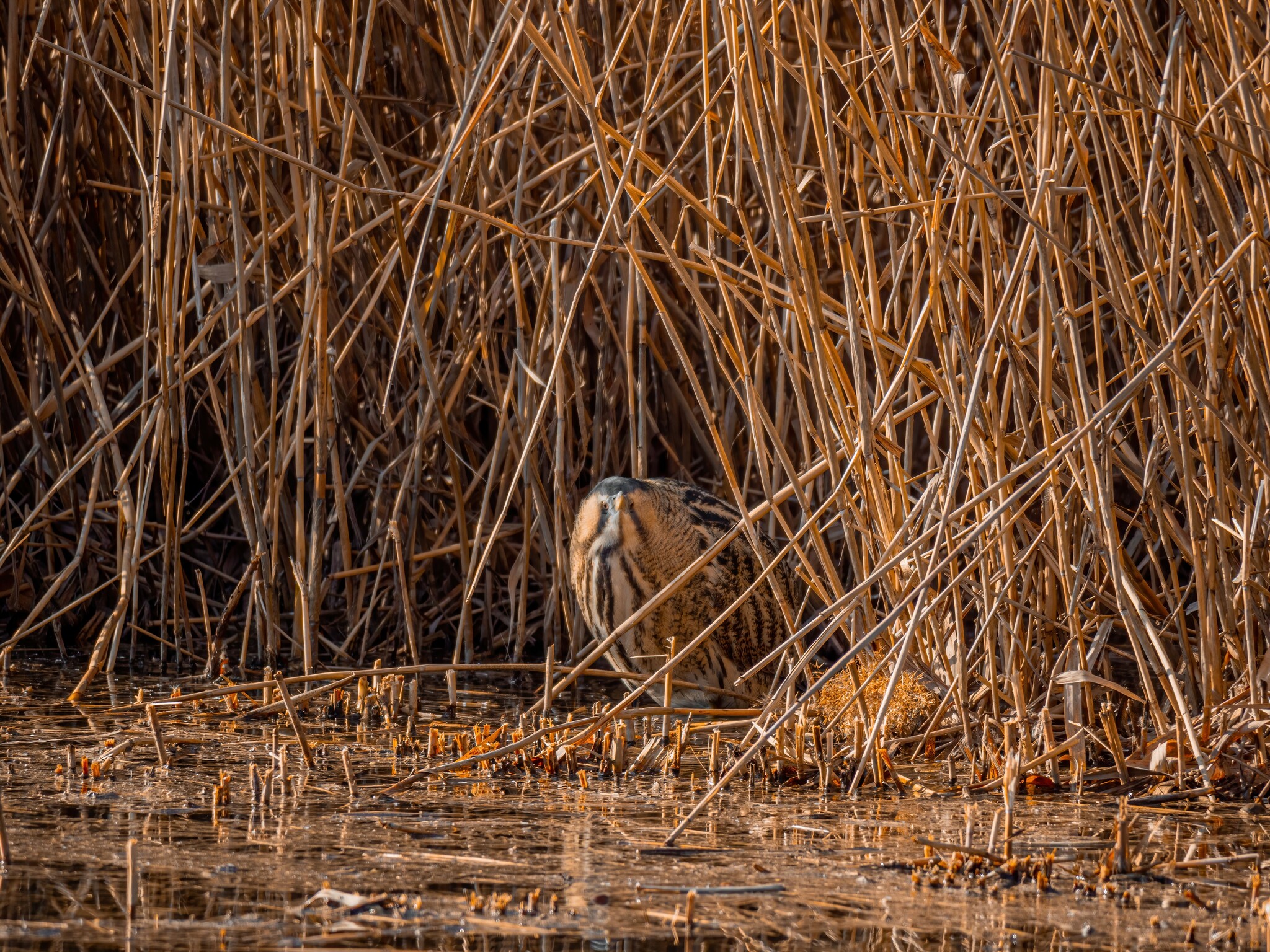
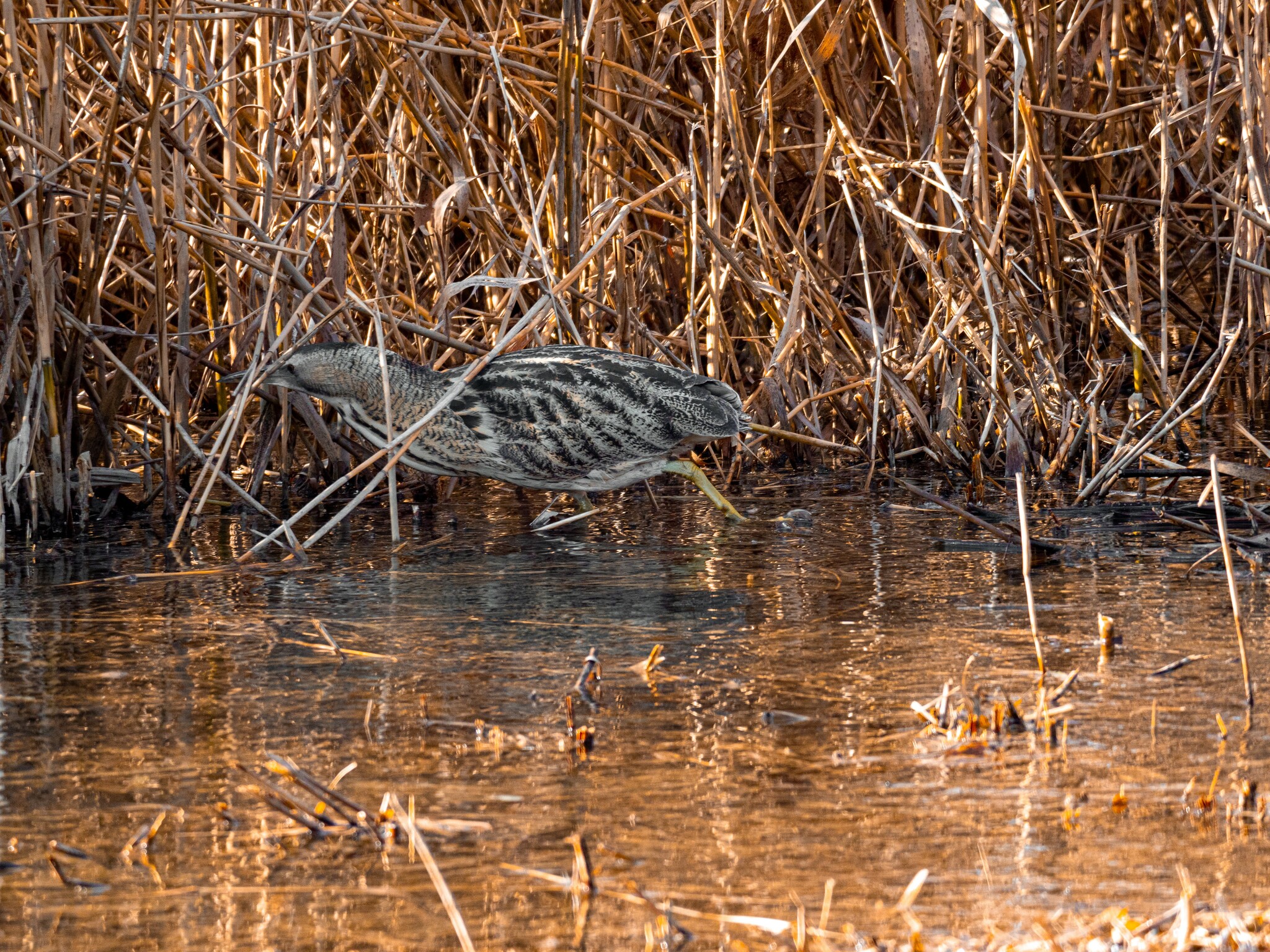
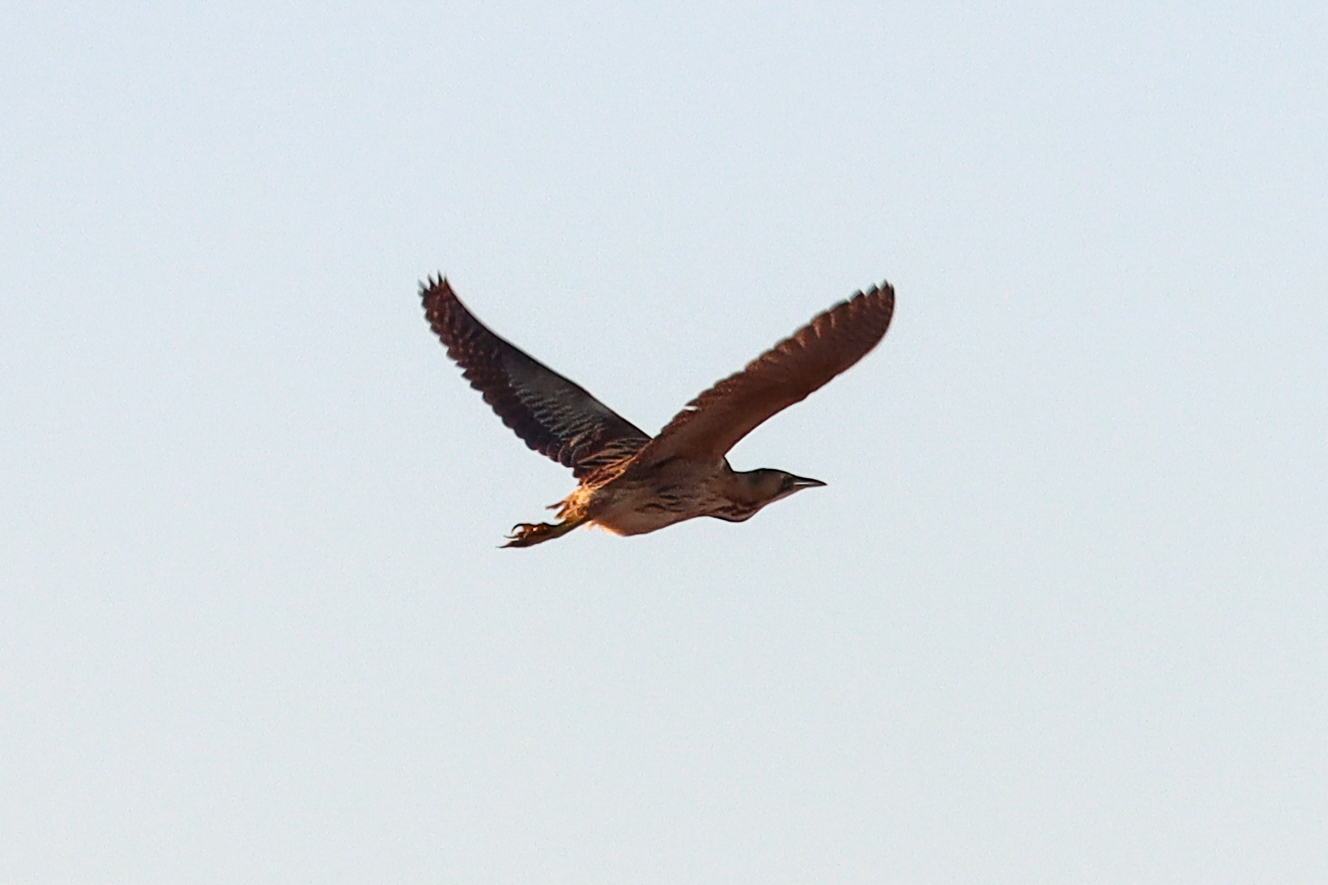
The largest of the bitterns, a thickset heron with bright, pale, buffy-brown plumage covered with dark streaks and bars. Body length ranges from 69–81 cm with a 100–130 cm wingspan and body mass of 0.87–1.94 kg. Crown and nape are black with long, loosely arranged feathers tipped with buff narrowly barred with black. Head features a yellowish-buff superciliary stripe and brownish-black moustachial stripe. Sides of head and neck are tawny-buff irregularly barred with black. Mantle, scapulars, and back are similarly colored but more heavily barred. Chin and throat are buff with rusty-brown longitudinal stripes. Breast and belly are yellowish-buff with broad brown stripes at the sides and narrow stripes in the center. Wings are pale rusty-brown irregularly barred, streaked, and mottled with black. Bill is greenish-yellow with a darker tip; legs and feet are greenish with yellow on the tarsal joint and yellow soles. Plumage has a loose texture with elongated feathers on crown, neck, and breast that can be erected.
Identification
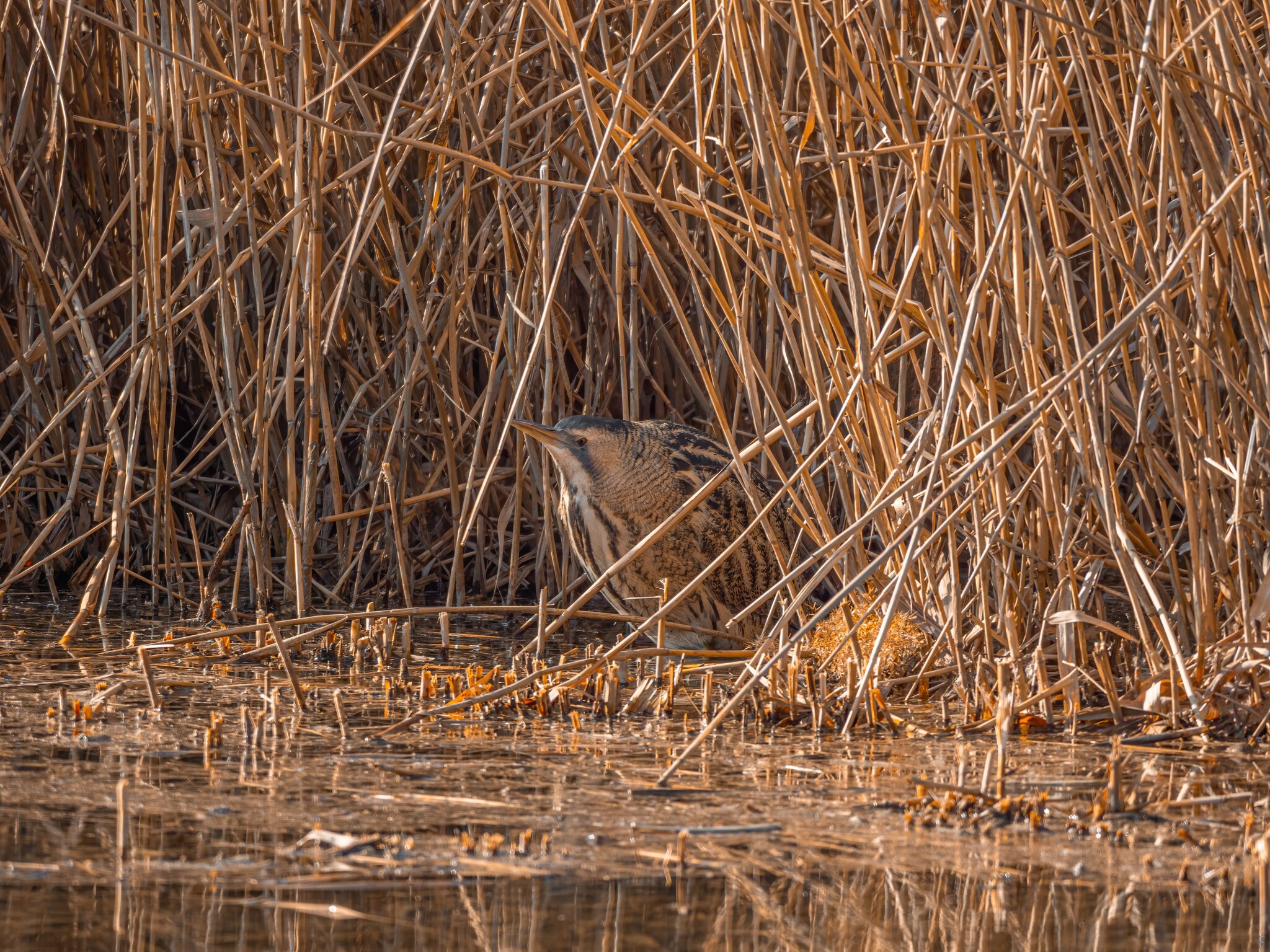
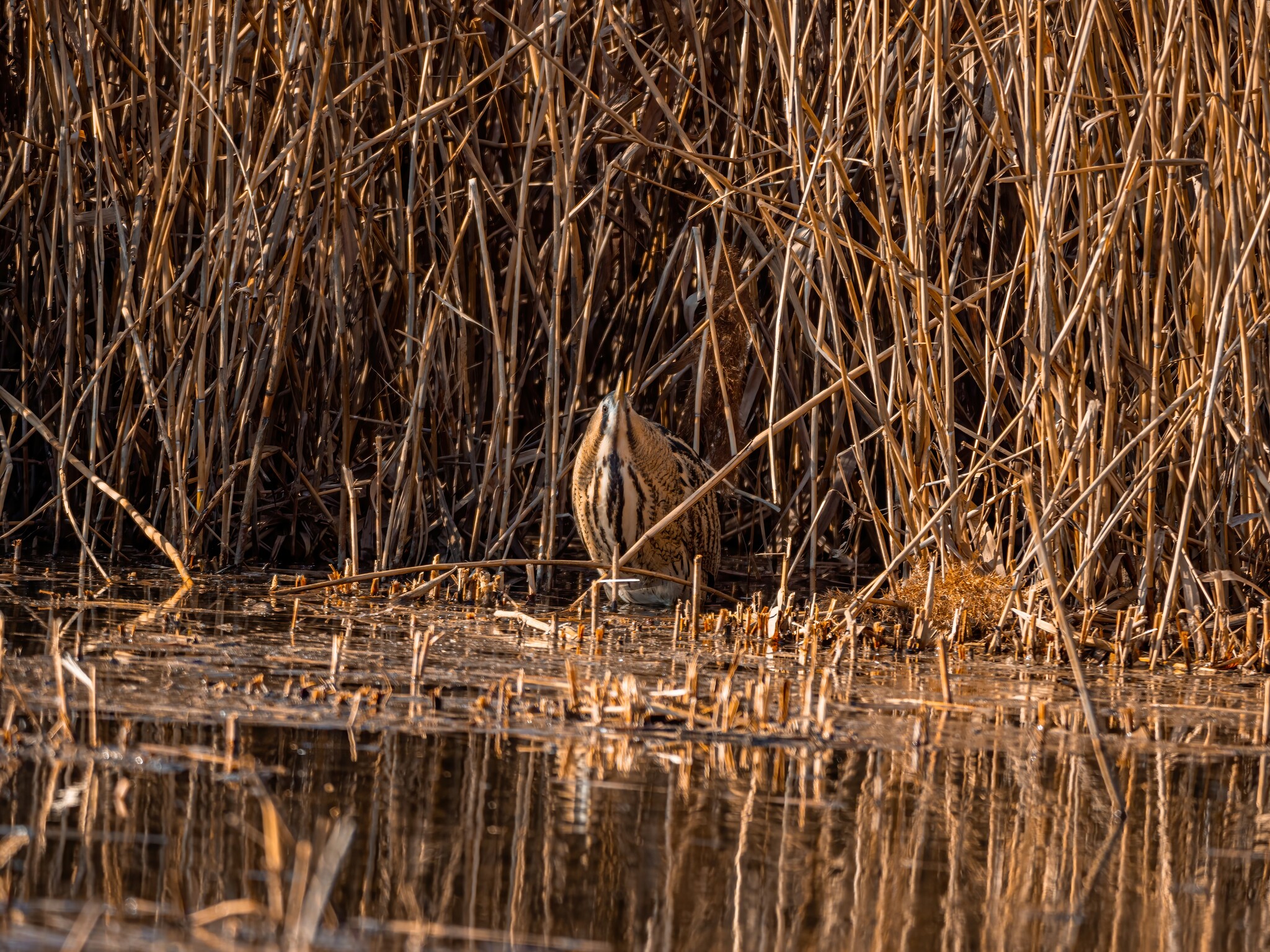
Largest of the bittern species. The combination of large size, buffy-brown plumage heavily marked with dark streaks and bars, and the erect, cryptic posture when disturbed are key field marks. When alarmed, it points its bill skyward and freezes, causing its elongated throat and breast feathers to droop and obscure its body outline. This 'bitterning' posture, combined with its highly cryptic plumage, makes it extremely difficult to detect in reed beds. The booming call of the male in spring is diagnostic.
Distribution & Habitat
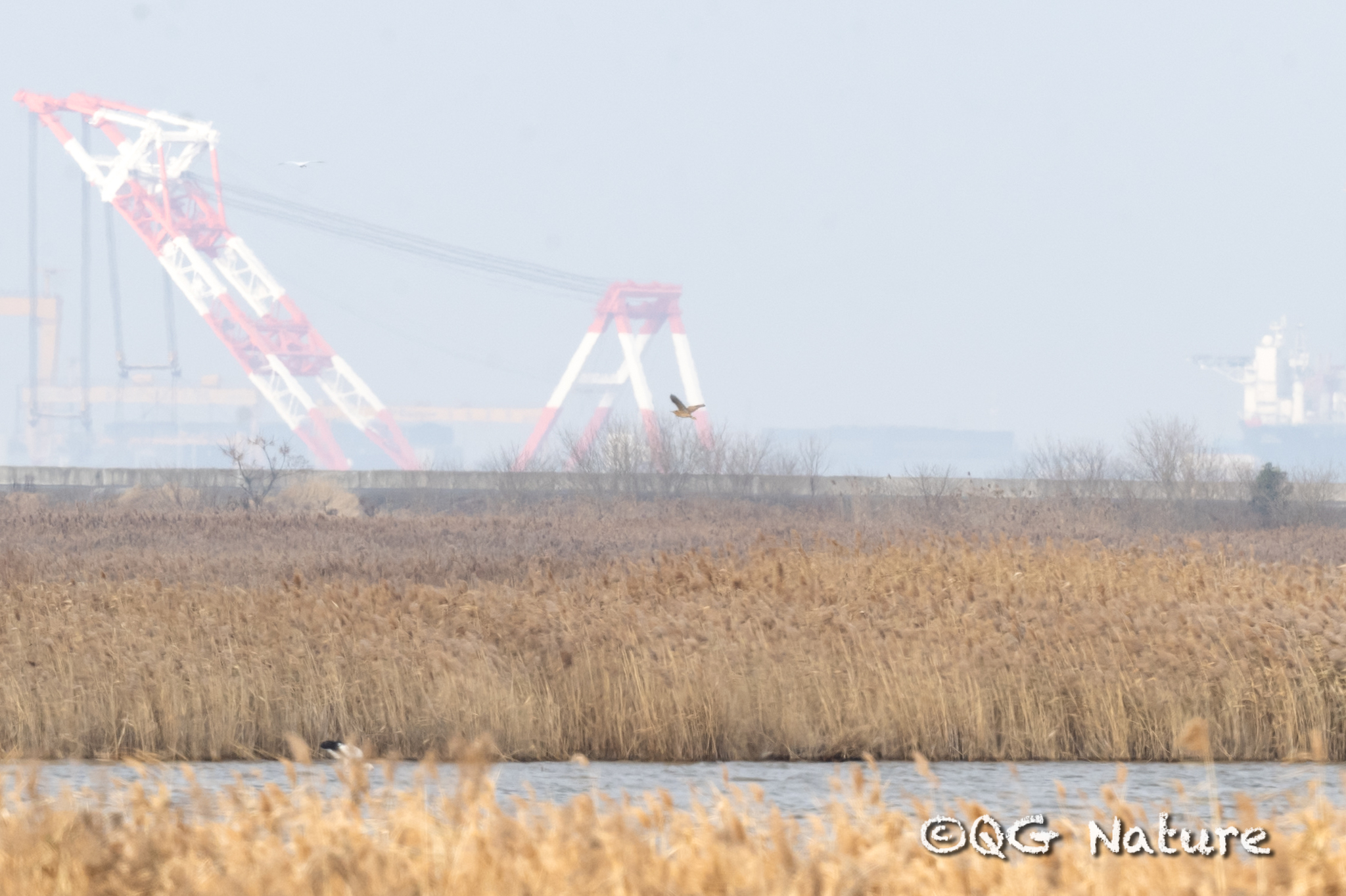
The nominate subspecies breeds across temperate Europe and Asia from the British Isles, Sweden, and Finland east to Sakhalin Island, Korea, and Hokkaido, with northern limits around 57°N in the Urals and 64°N in eastern Siberia. Southern limits extend to the Mediterranean, Black Sea, Iran, Afghanistan, Mongolia, and northern China. Small resident populations also breed in Morocco, Algeria, and Tunisia. Inhabits reed beds, swamps, lakes, lagoons, and sluggish rivers fringed by vegetation, preferring large reed beds of at least 20 hectares for breeding. Northern populations are largely migratory, moving to southern Europe, northern and central Africa, the Arabian Peninsula, Indian subcontinent, and eastern China. The southern subspecies is endemic to southern Africa, found sparingly in marshes near the east coast, the Okavango Delta, and Drakensberg foothills.
Behavior & Ecology
Solitary for most of the year, foraging in reed beds by walking stealthily or remaining still above water. Feeds on fish, small mammals, amphibians, and invertebrates including eels up to 35 cm, mice, voles, small birds, frogs, newts, crabs, shrimps, molluscs, spiders, and insects, plus some aquatic plants. When disturbed, freezes with bill pointing skyward in a cryptic posture. Produces powder down from specialized breast feathers to remove slime after feeding on eels. Most active at dawn and dusk. Flight is infrequent; prefers to move through vegetation on foot with slow, deliberate gait. Males are polygamous, mating with up to five females. Nest is an untidy platform about 30 cm across built among standing reeds by the female using reeds, sedges, and grasses with a finer lining. Four to six non-glossy olive-brown eggs are laid in late March and April, incubated by the female for about 26 days. Chicks leave the nest at about two weeks and fledge at eight weeks. The male's deep, fog-horn-like booming call is given mainly between January and April during mating season and is produced by expelling air from the esophagus.
Conservation
IUCN assessed as 'least concern' with a very wide range and large total population estimated at 110,000 to 340,000 individuals. Population trend is downward but decline rate does not warrant a more threatened category. Chief threats are destruction and drainage of wetland habitats and disturbance of reed beds. The southern race has suffered catastrophic decline during the 20th century due to wetland degradation and is of high conservation concern. In the UK, the species became extinct in the late 1800s but reintroduced by 1911; peaked at about 70 pairs in the 1950s, declined to fewer than 20 pairs in the late 1990s, then recovered to 228 breeding males by 2021. Covered by the Agreement on the Conservation of African-Eurasian Migratory Waterbirds (AEWA).
Culture
Proposed as one rational explanations for the drekavac, a creature of graveyard and darkness in south Slavic mythology. Featured in literature including Thomas Bewick's history of British birds, James Thomson's poem 'Spring' (1728), George Crabbe's 'The Borough' (1810), and Arthur Conan Doyle's 'The Hound of the Baskervilles' where the booming call is offered as an explanation for a mysterious howl. Medieval theory held that the bittern thrust its beak into marsh mud to amplify its call; this appears in Chaucer's 'The Wife of Bath's Tale' (1476). Sir Thomas Browne disputed this theory and kept a captive bittern to discover how the boom was produced. Abbott Handerson Thayer used the bittern as an example of camouflage in his work on concealing coloration.
Source: Wikipedia · CC BY-SA 3.0
Taxonomy
- Order
- Pelecaniformes
- Family
- Ardeidae
- Genus
- Botaurus
- eBird Code
- grebit1
Subspecies (2)
-
Botaurus stellaris capensis
southern Africa
-
Botaurus stellaris stellaris
breeds Palearctic and northern Afrotropical region; winters to Philippines
Data Sources
Species description from Wikipedia, licensed under CC BY-SA 3.0.
Bird images and sounds sourced from GBIF, contributed by citizen scientists worldwide under Creative Commons licenses.
Taxonomy data from AviList 2025.