Passeriformes / Bombycillidae / Bombycilla
Bohemian Waxwing
Bombycilla garrulus · 太平鸟
Introduction
A starling-sized passerine in the family Bombycillidae, breeding in northern forests of the Palearctic and North America. It features buff-grey plumage, black face markings, a pointed crest, and wing feathers with red tips resembling sealing wax. The species is migratory, often irrupting south in winter in search of fruit. Classified as Least Concern by the IUCN due to its large population and extensive breeding range.
Description
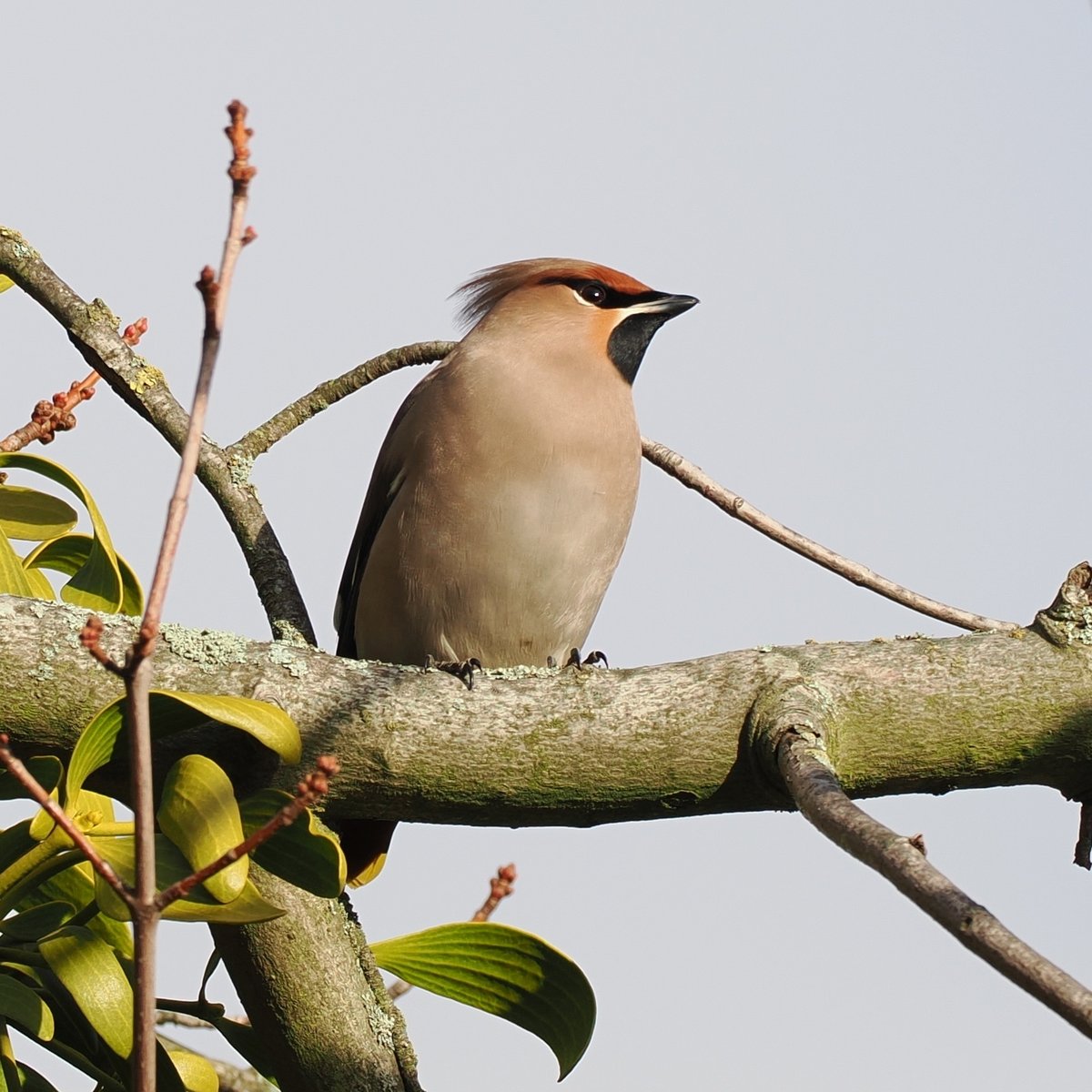
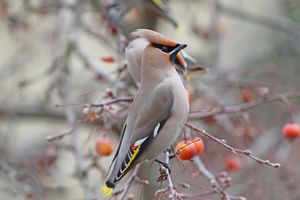
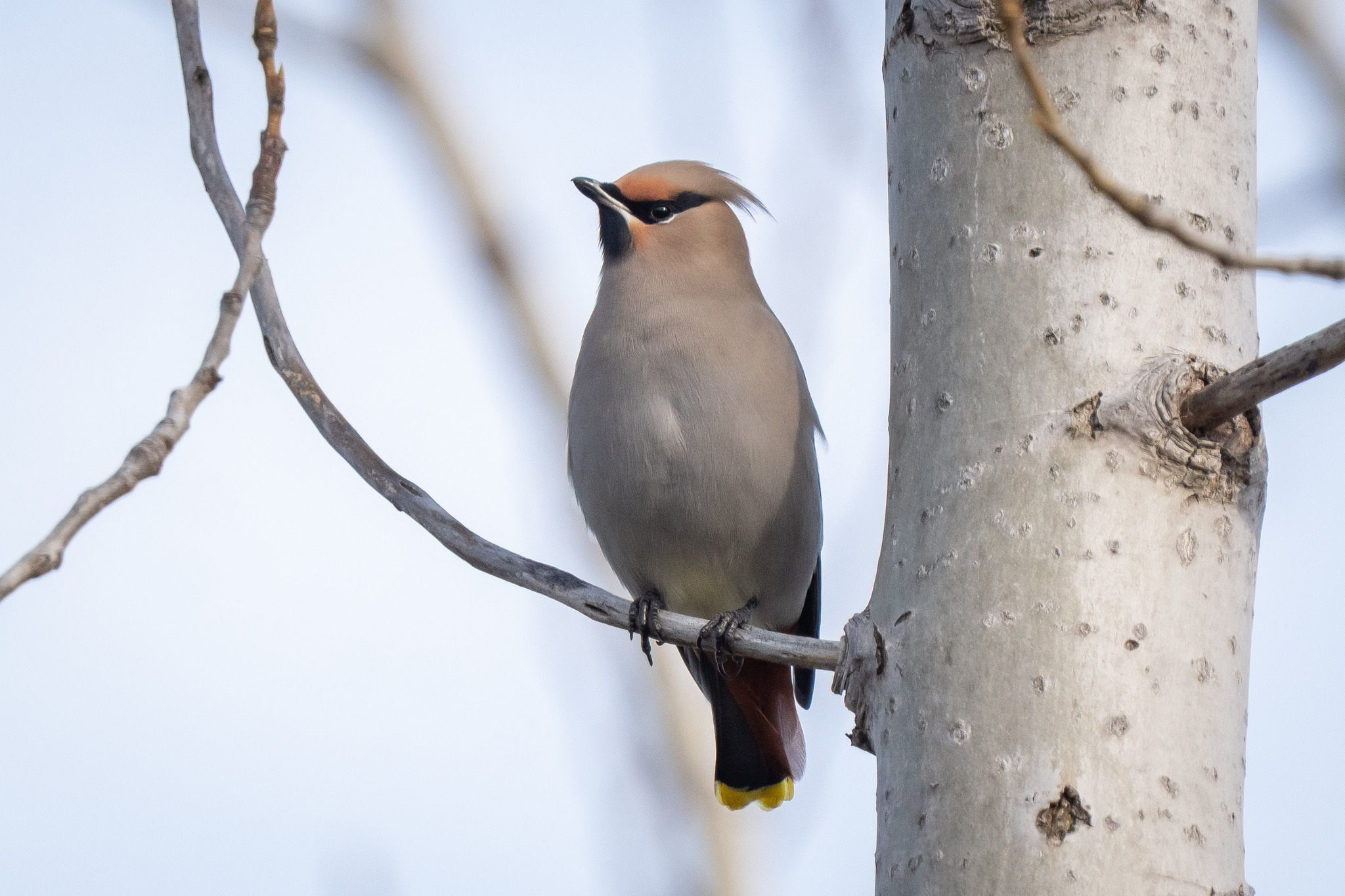
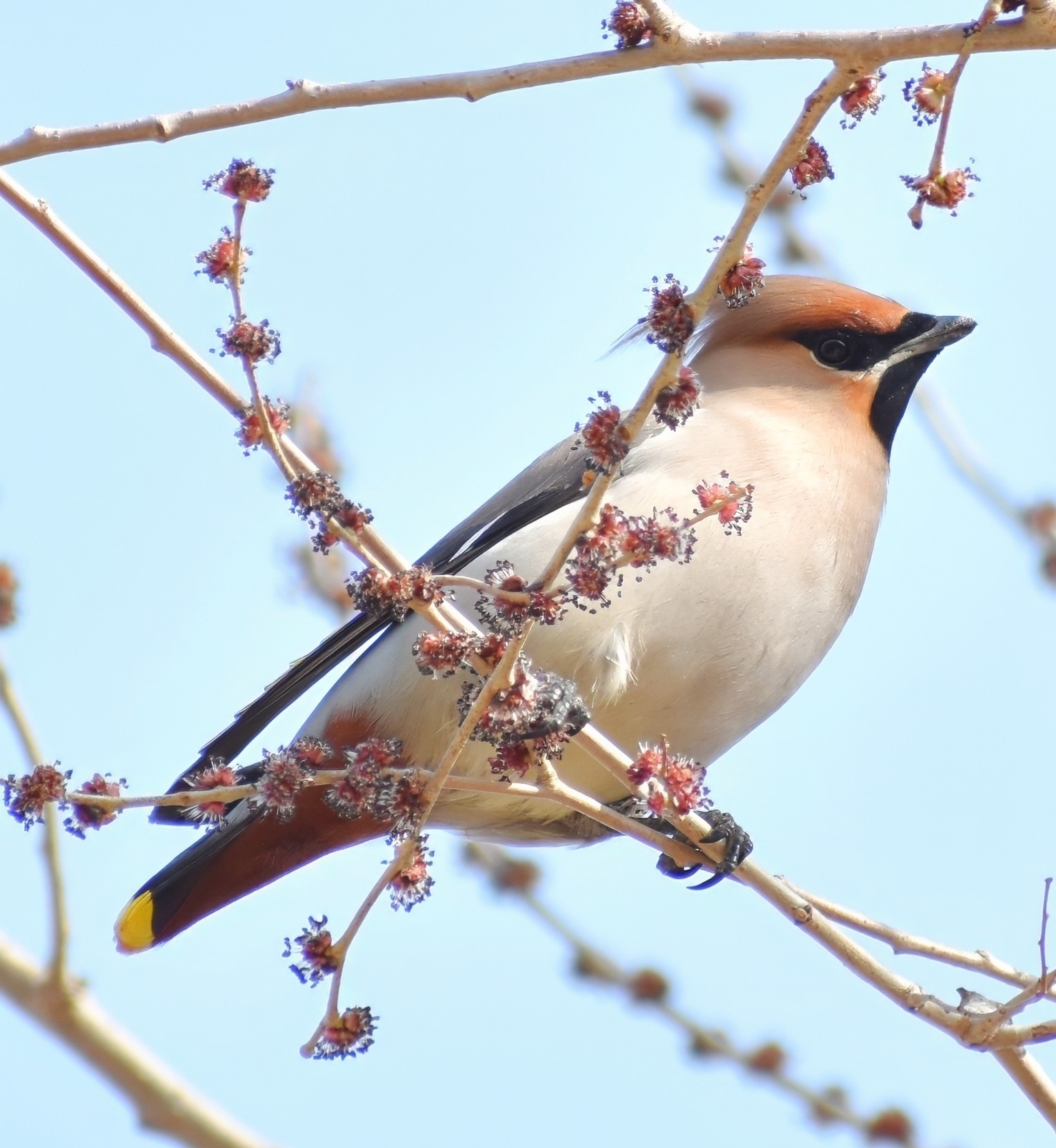
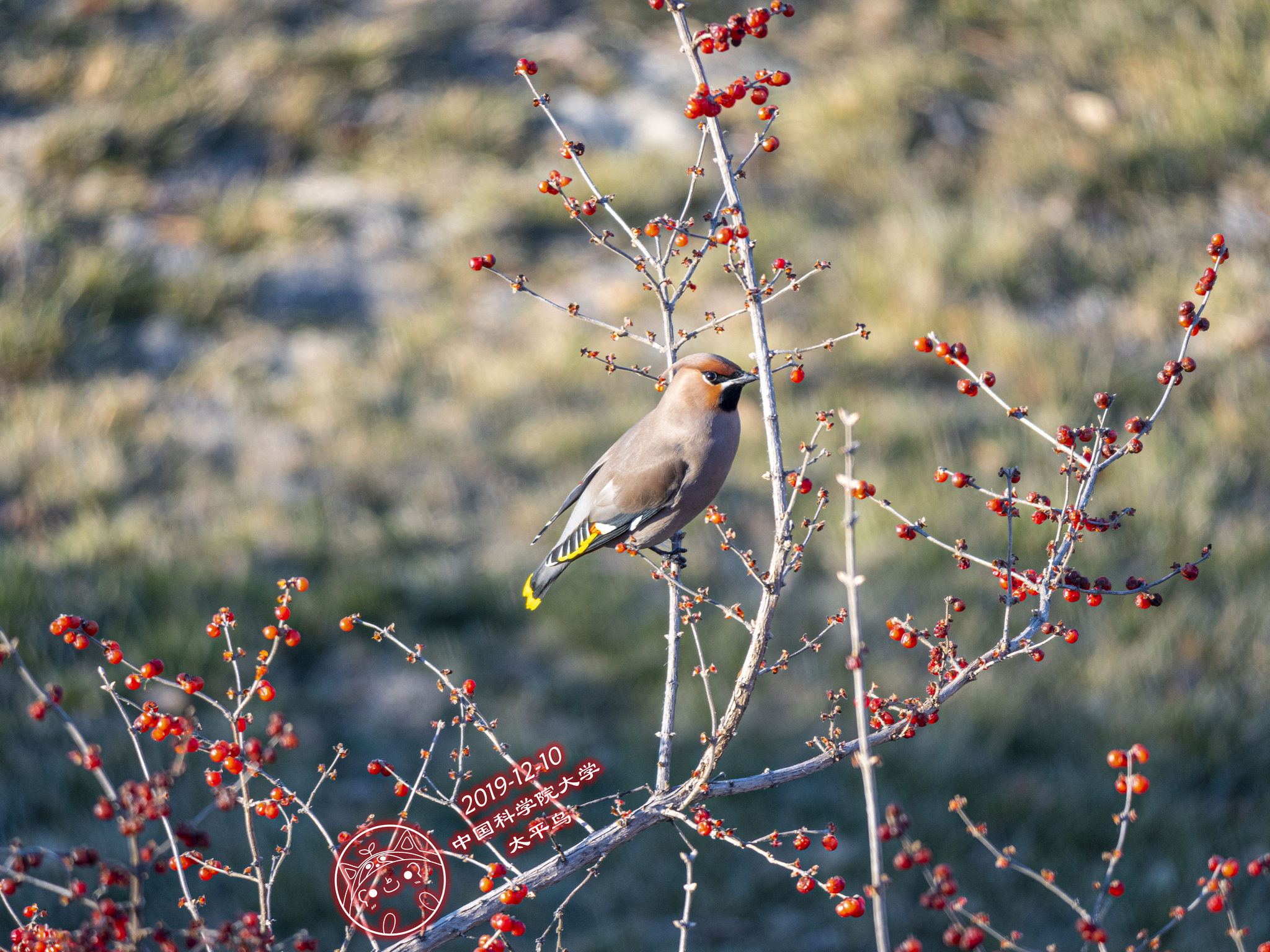
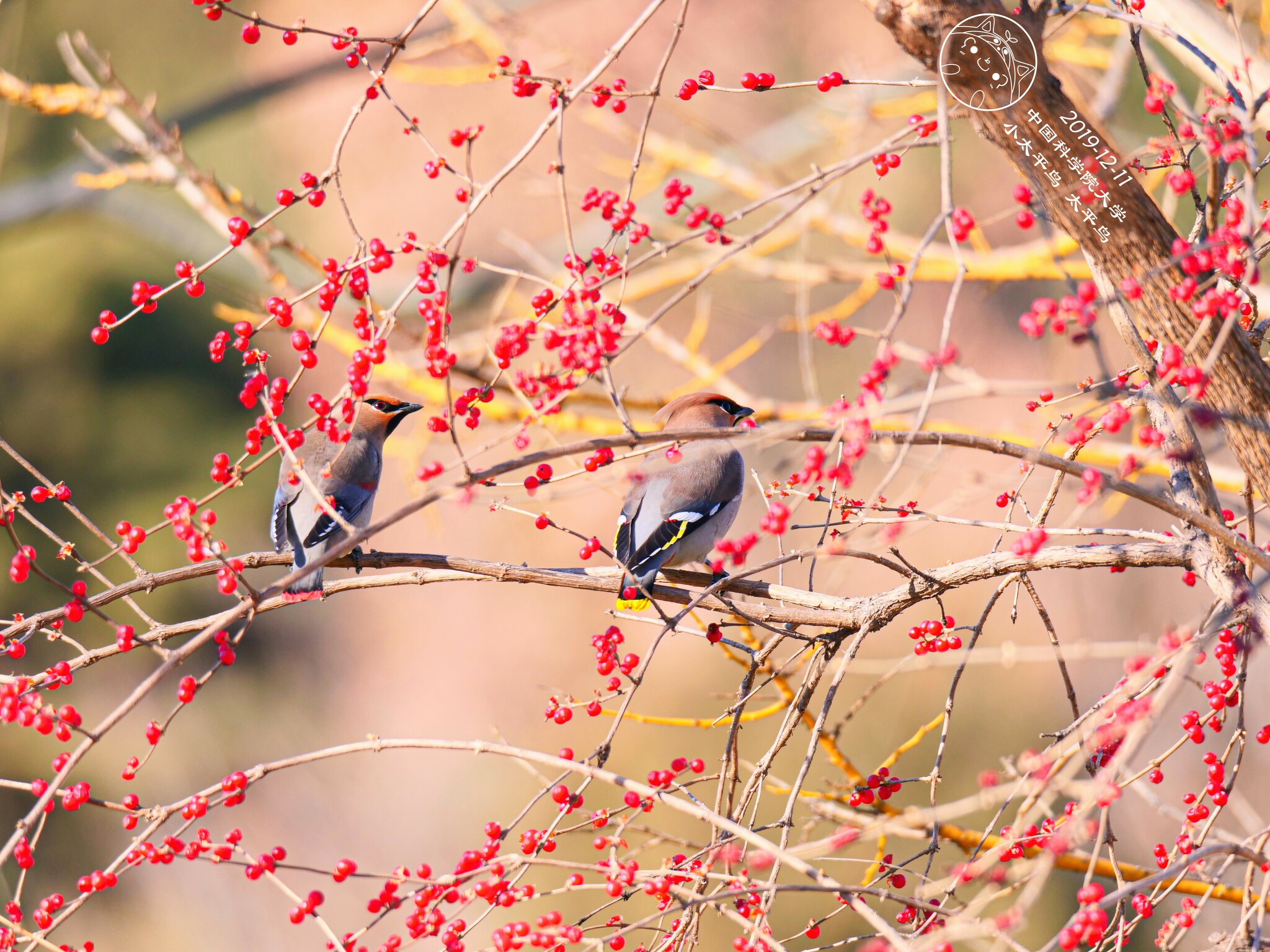
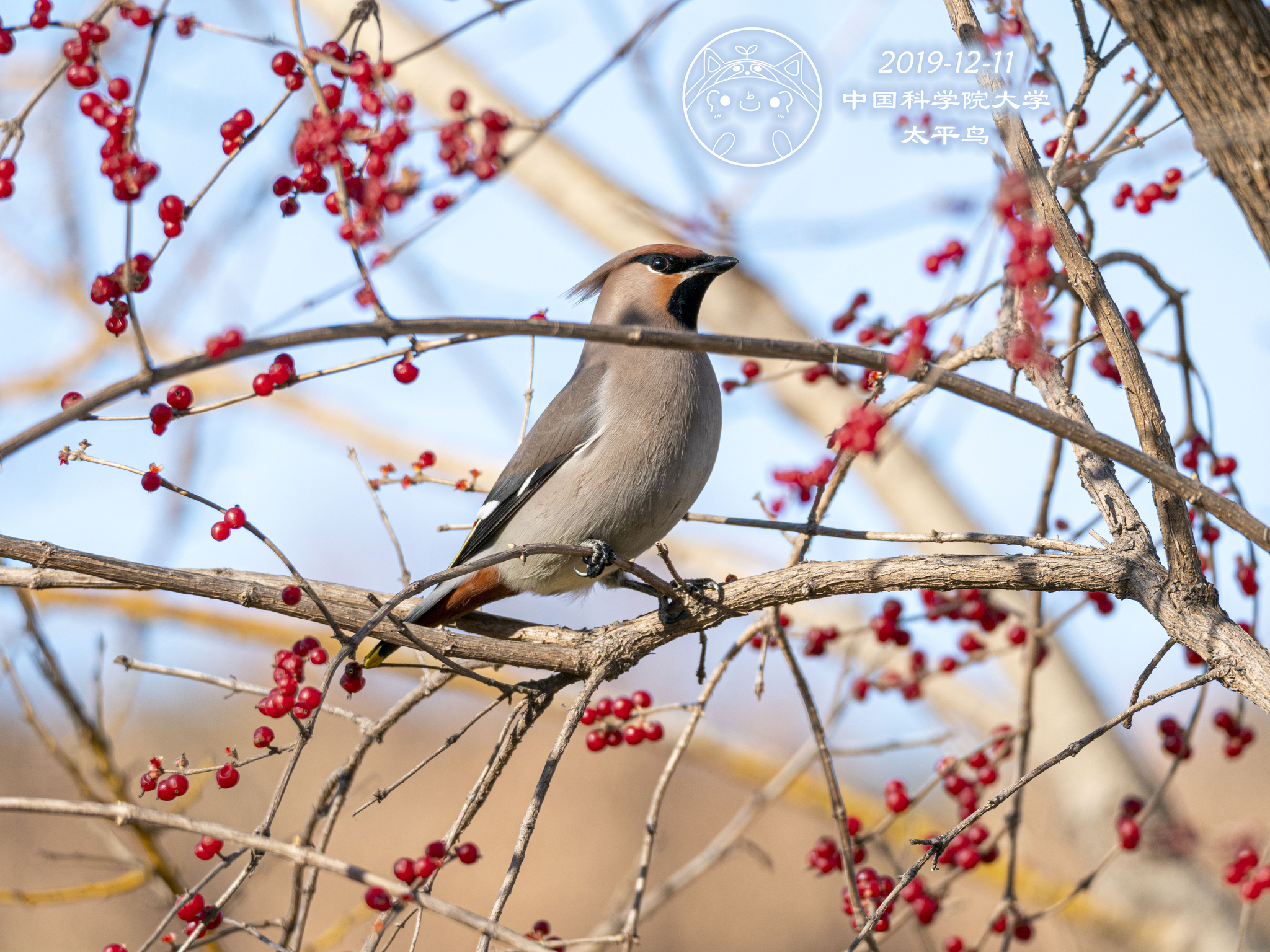
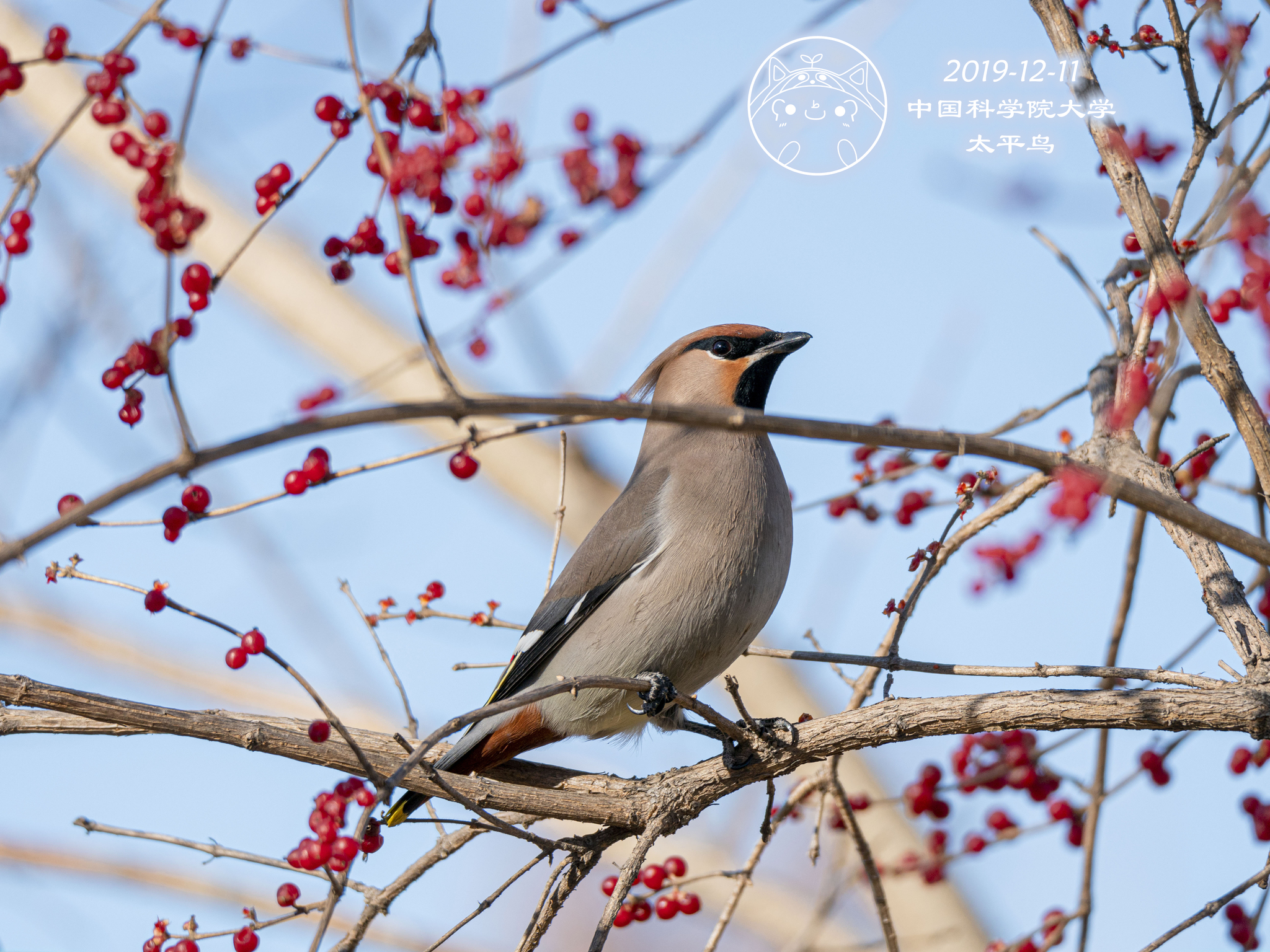
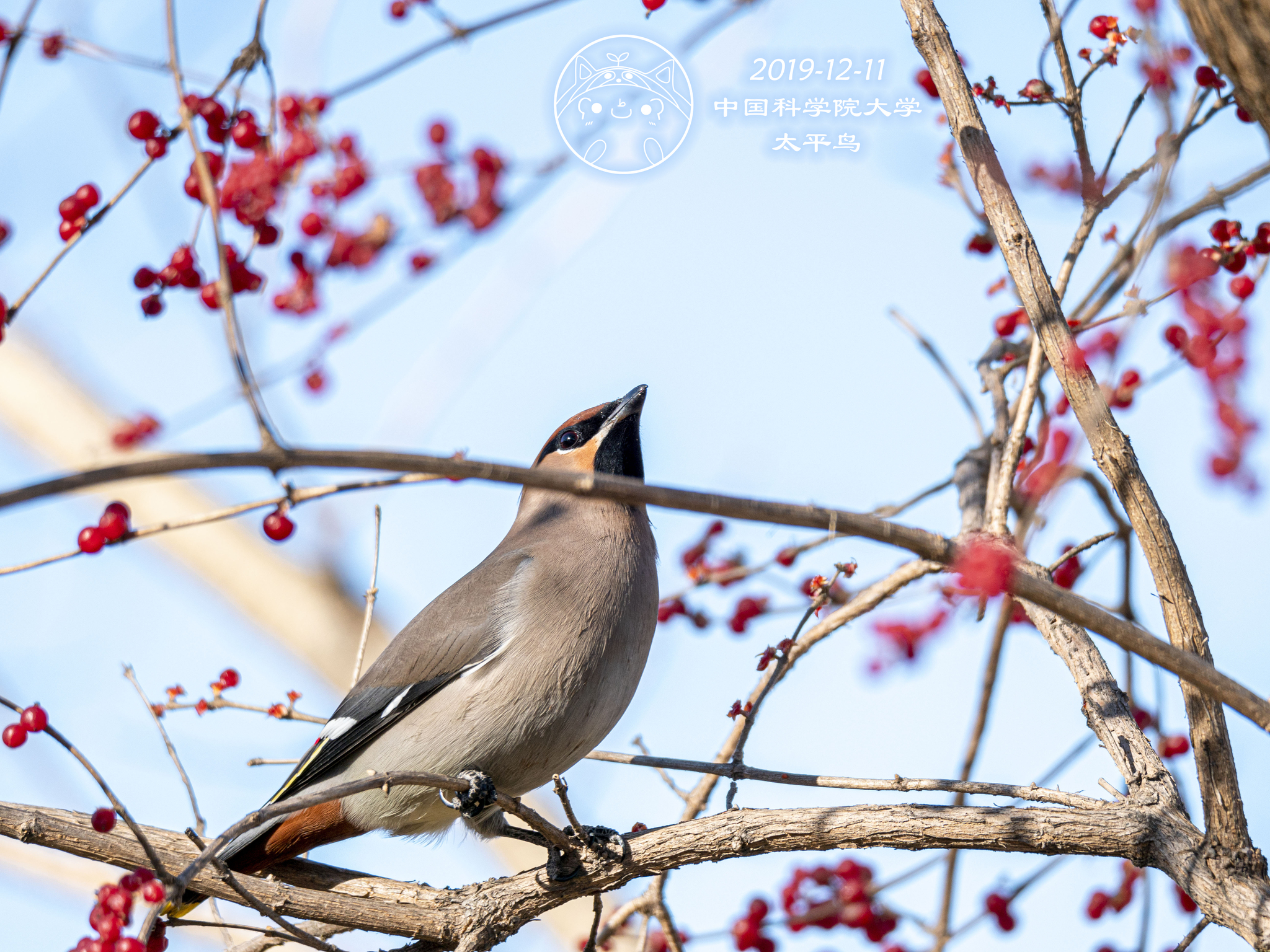
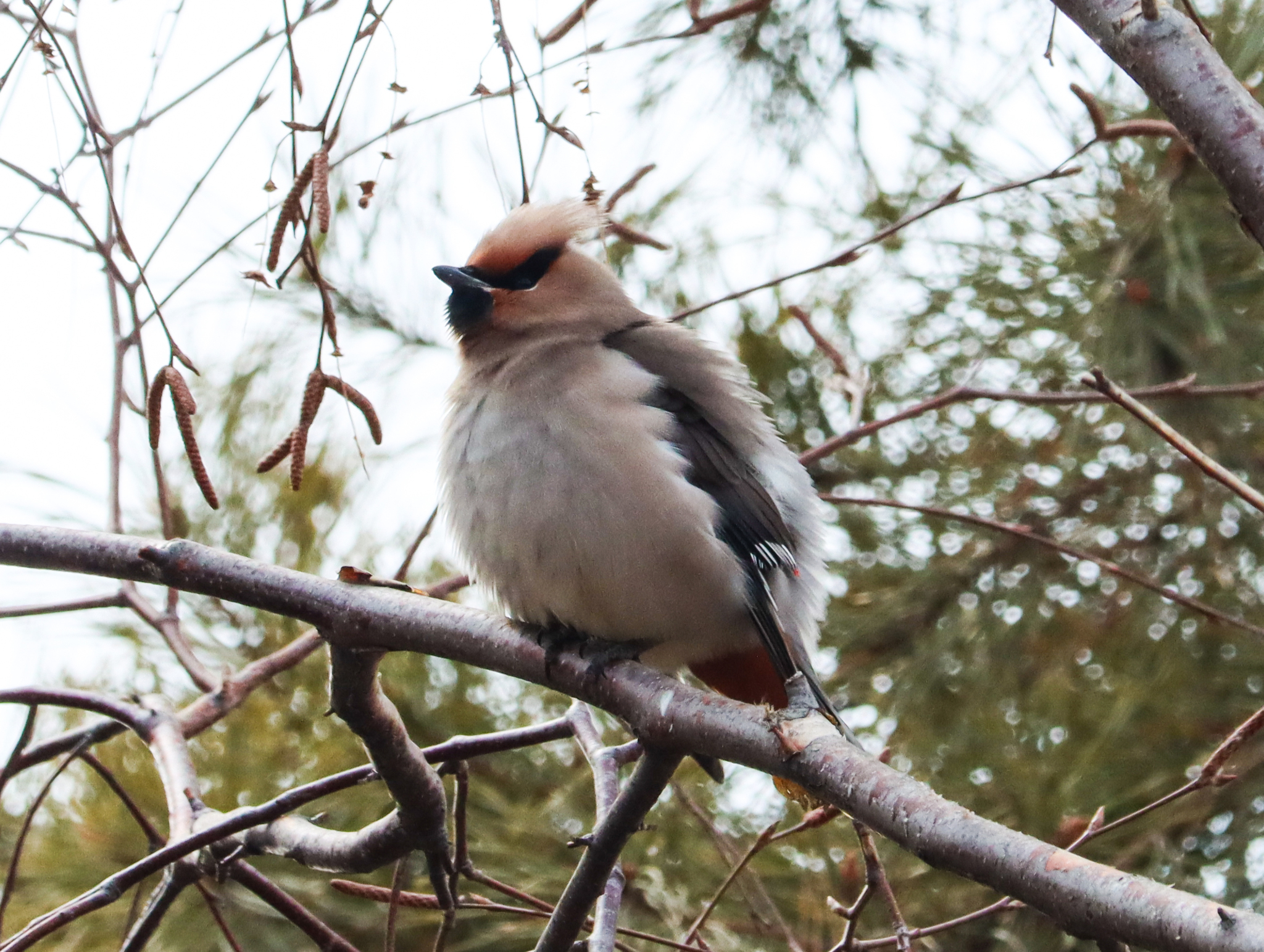
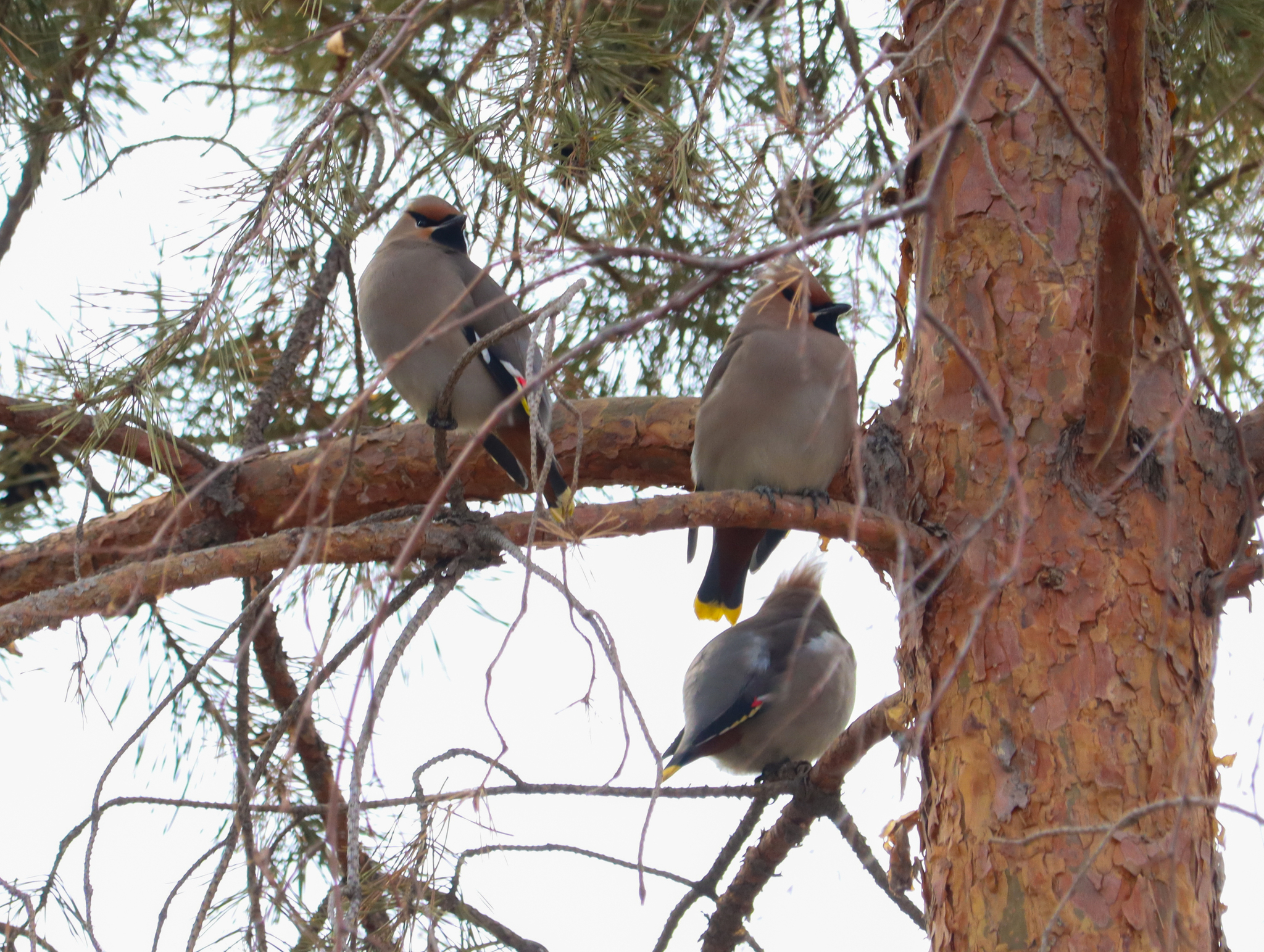
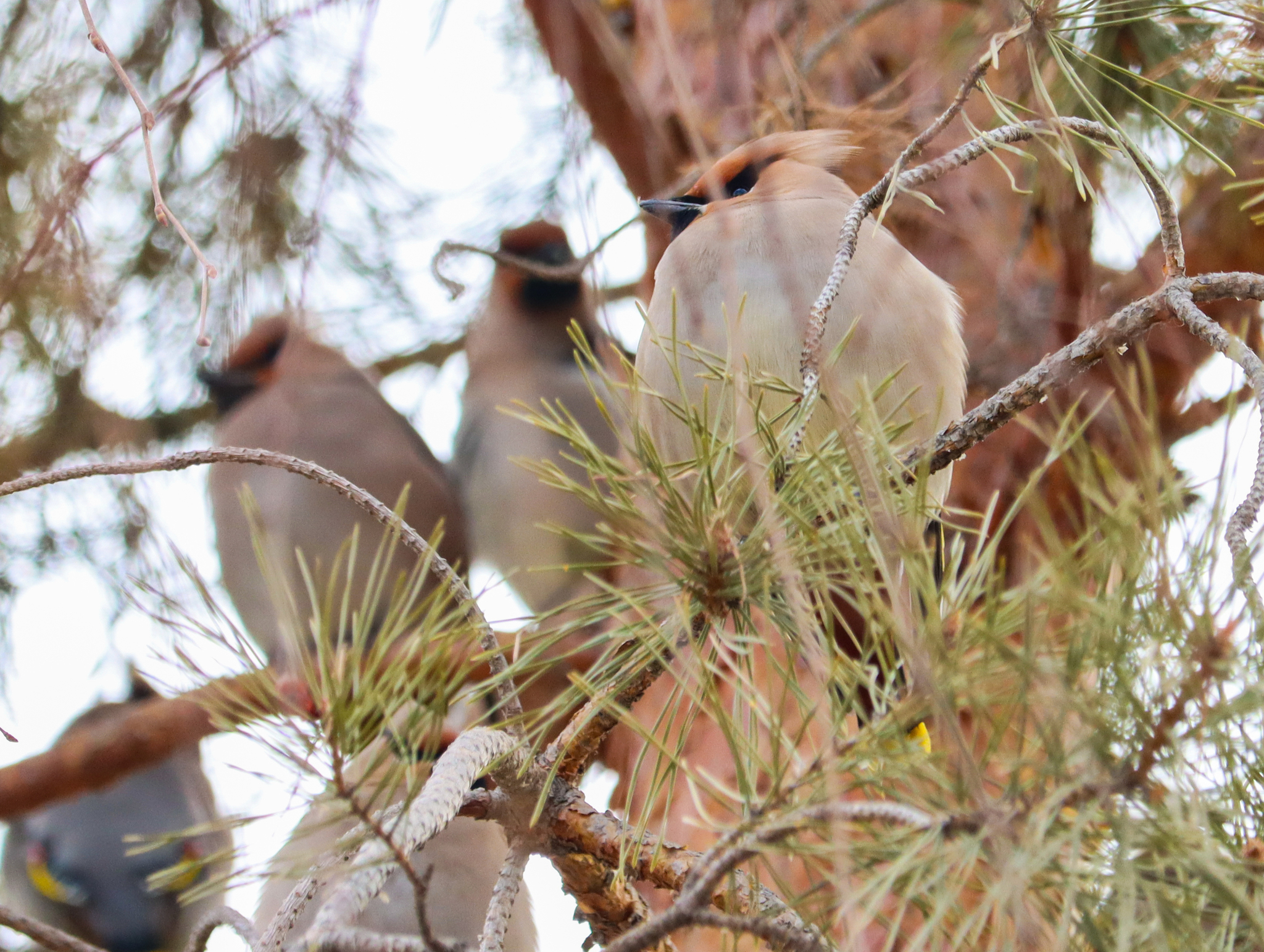
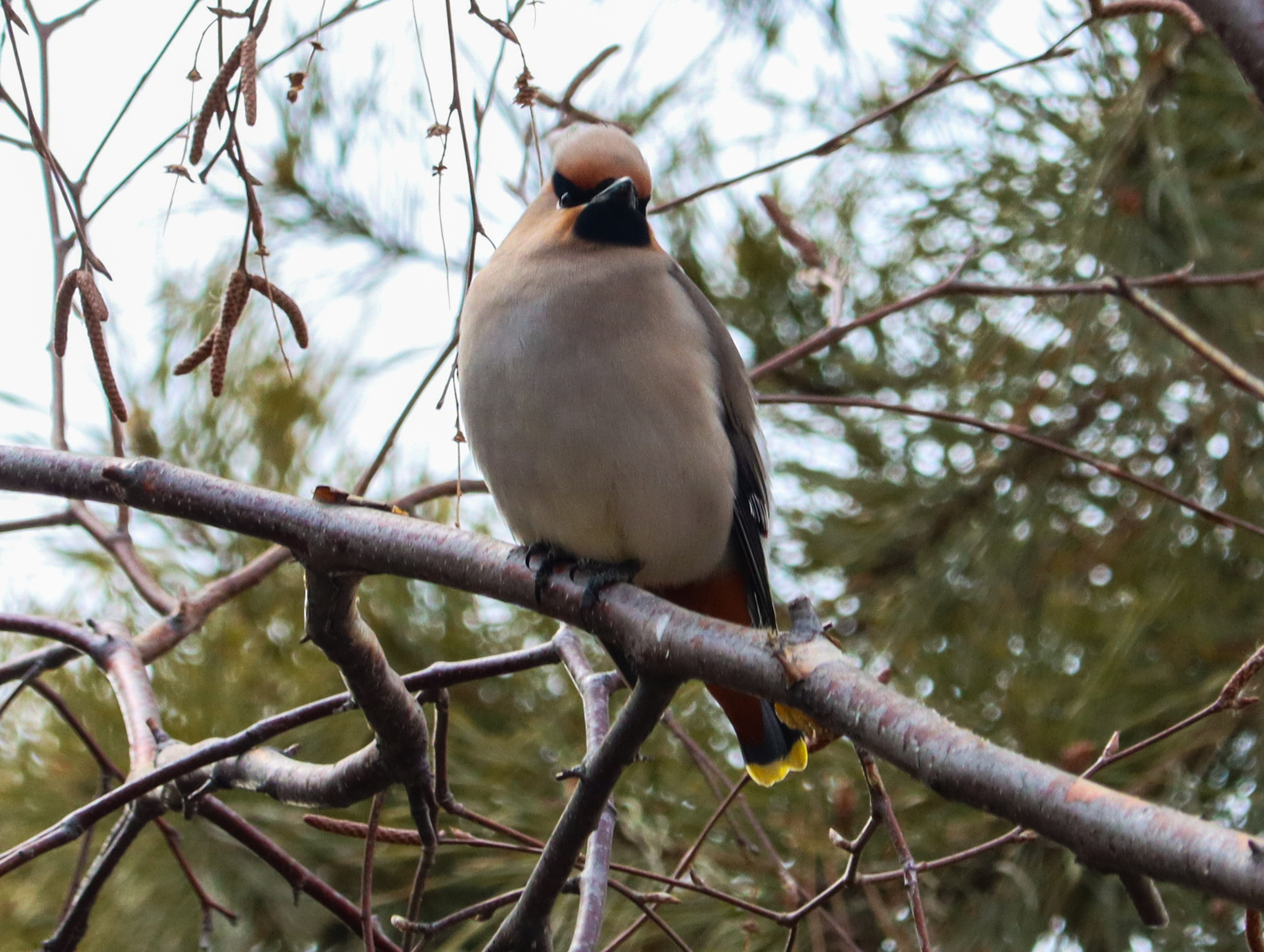
Length 19–23 cm (7.5–9.1 in), wingspan 32–35.5 cm (12.6–14.0 in), average weight 55 g (1.9 oz). Plumage is mainly brownish-grey with a conspicuous head crest. Adults have a black mask through the eye, black throat, white streak behind the bill, and rich chestnut lower belly. The rump is grey; the tail ends in a bright yellow band with a broad black border. Wings feature black flight feathers with yellow stripes and white 'fishhooks' on closed wings. Adult secondaries end in red, waxy tips. Males have a sharply defined black throat, 6–8 red waxy tips, and a 6–11 mm broad yellow tail tip. Females have a less defined throat edge, 5–7 red tips, and a 4–8 mm yellow tail band. First-winter birds lack white tick marks on primary trailing edges, have paler primary leading edges, narrower yellow tail tips, and fewer or no red waxy tips. Juveniles are duller with streaky underparts and no black on the throat.
Identification
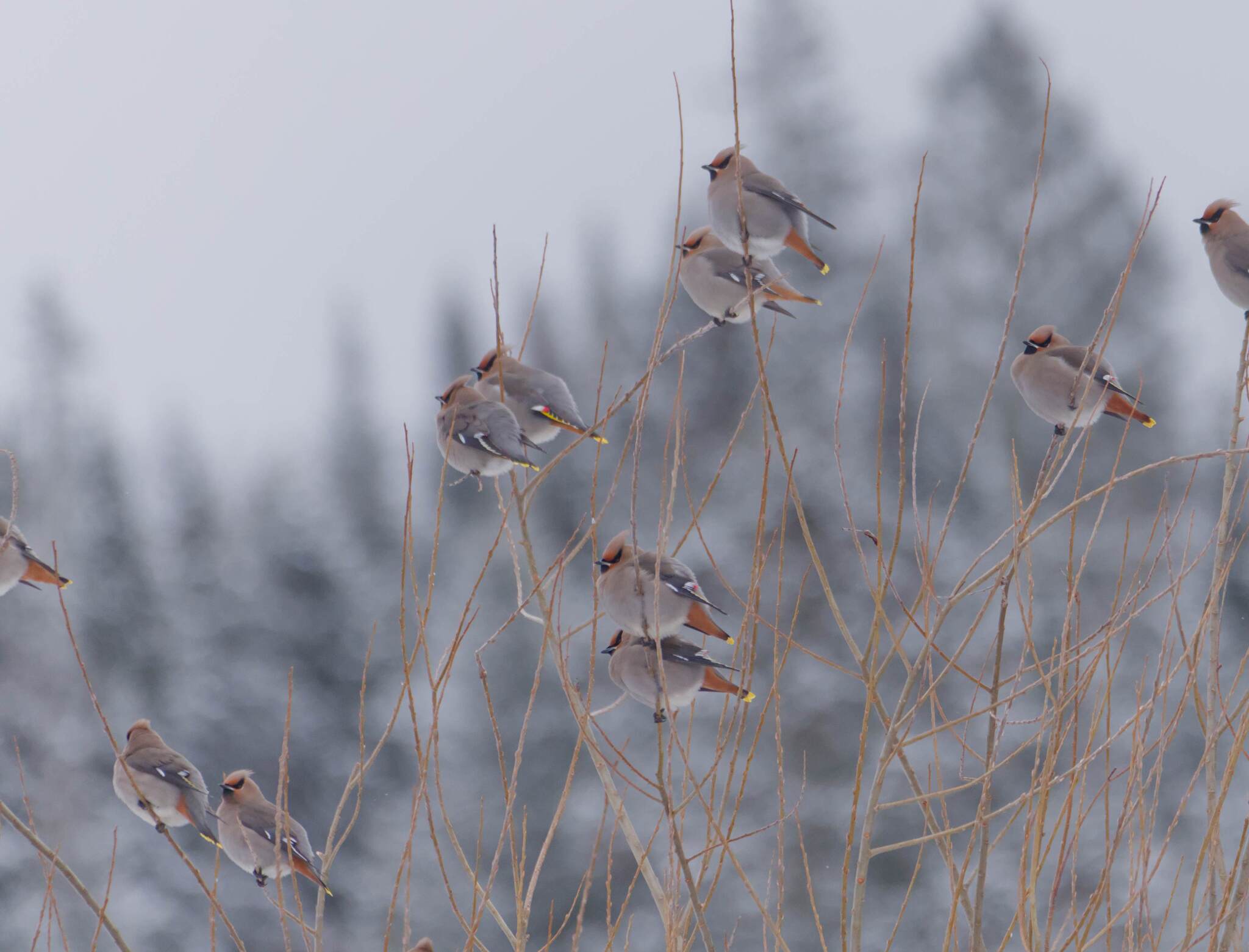
Distinguished from the smaller cedar waxwing by larger size, greyer upperparts, lack of white undertail, and distinct white and yellow wing markings. Differs from the Japanese waxwing, which has a red terminal tail band, black mask extending up the crest rear, and lacks yellow wing stripes. In flight, large flocks with long wings and short tails resemble common starlings but fly fast and directly. Vocalizations include a high trill 'sirrrr', lower-pitched and less wavering than the cedar waxwing's call. Flocks produce a distinctive rattling wing sound audible up to 30 m (98 ft) away during takeoff or landing.
Distribution & Habitat
Circumpolar distribution breeding in northern Eurasia and North America. Northern nesting limit near the treeline (10°C July isotherm), mostly between 60–67°N, reaching 70°N in Scandinavia. North American subspecies breeds in northwestern and north-central areas, extending south in the Rocky Mountains. Migratory; Eurasian birds winter from eastern Britain through Europe, Ukraine, Kazakhstan, northern China, and Japan. North American breeders winter in southeast Canada and northeastern US. Irrupts south in huge numbers during poor fruit years. Breeding habitat includes mature coniferous forests, often spruce, near water, peat swamps, or lakes. Winter habitats include parks, gardens, and woodlands where fruit like rowan is available.
Behavior & Ecology
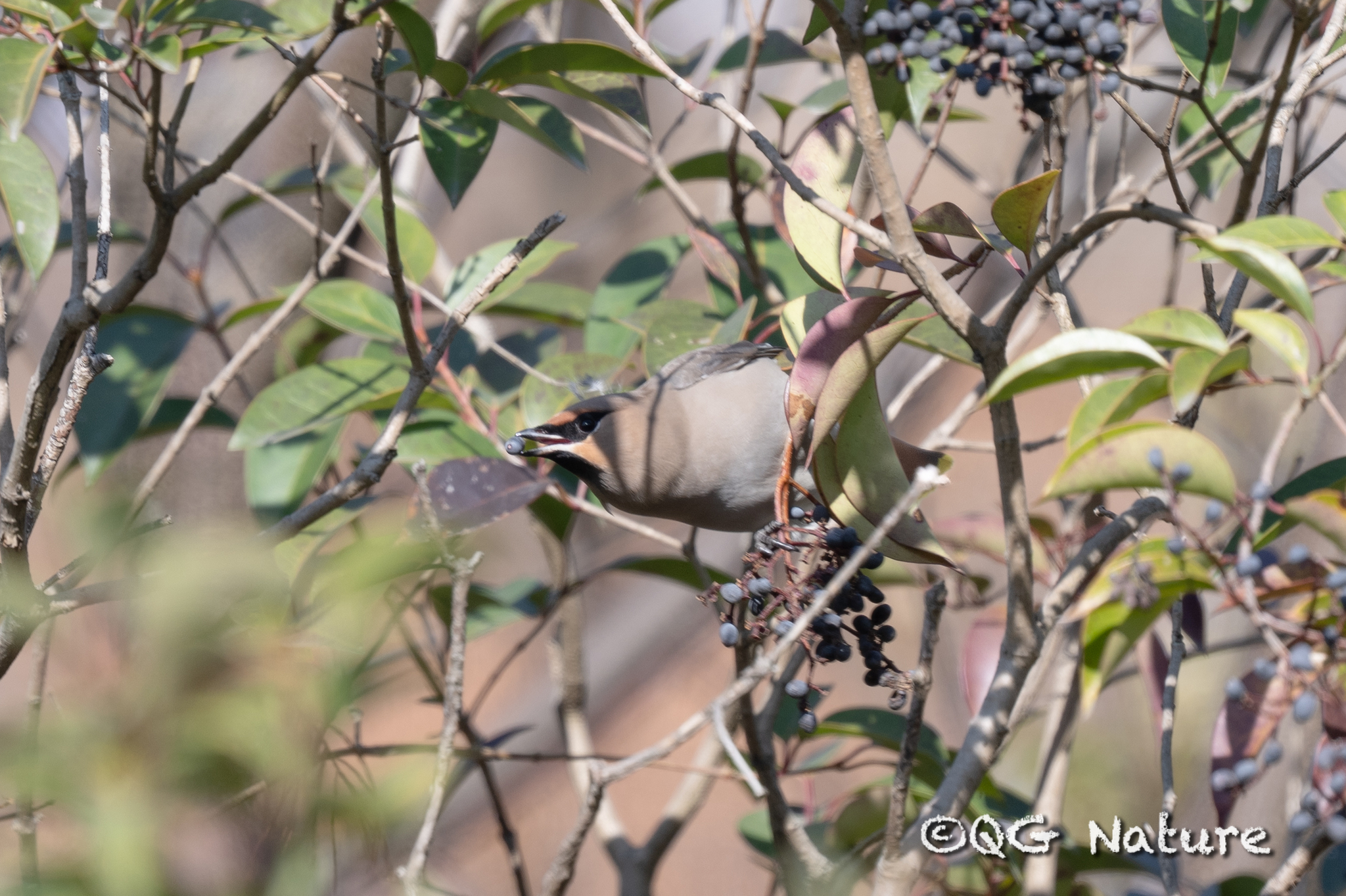
Monogamous breeder nesting mid-June to July. Nests are cup-shaped structures of twigs lined with grass, moss, or lichen, built 1.3–15 m above ground. Clutch size is 3–7 eggs (usually 5–6), incubated by the female for 13–14 days. Chicks are altricial, fed initially on insects by both parents, then mainly fruit. Fledging occurs 14–16 days after hatching. Primarily frugivorous in winter, consuming hundreds of berries daily; eats insects like mosquitoes and midges during breeding. Forages in large flocks, sometimes overwhelming other species. Can metabolize ethanol from fermenting fruit but may become intoxicated. Roosts communally in dense trees. Predators include birds of prey and shrikes. Rejects brood parasitic eggs.
Conservation
Classified as Least Concern by the International Union for Conservation of Nature. Global population estimated at more than three million birds, with a breeding range covering approximately 12.8 million km² (4.9 million mi²). Population appears to be declining as of 2013, but not rapidly enough to trigger vulnerability criteria. No serious long-term threats identified due to northern breeding locations and ability to use disturbed habitats.
Source: Wikipedia · CC BY-SA 3.0
Taxonomy
- Order
- Passeriformes
- Family
- Bombycillidae
- Genus
- Bombycilla
Subspecies (2)
-
Bombycilla garrulus garrulus
breeds northern Europe and northern Asia; winters to western Europe and central, eastern Asia
Data Sources
Species description from Wikipedia, licensed under CC BY-SA 3.0.
Bird images and sounds sourced from GBIF, contributed by citizen scientists worldwide under Creative Commons licenses.
Taxonomy data from AviList 2025.