Anseriformes / Anatidae / Aythya
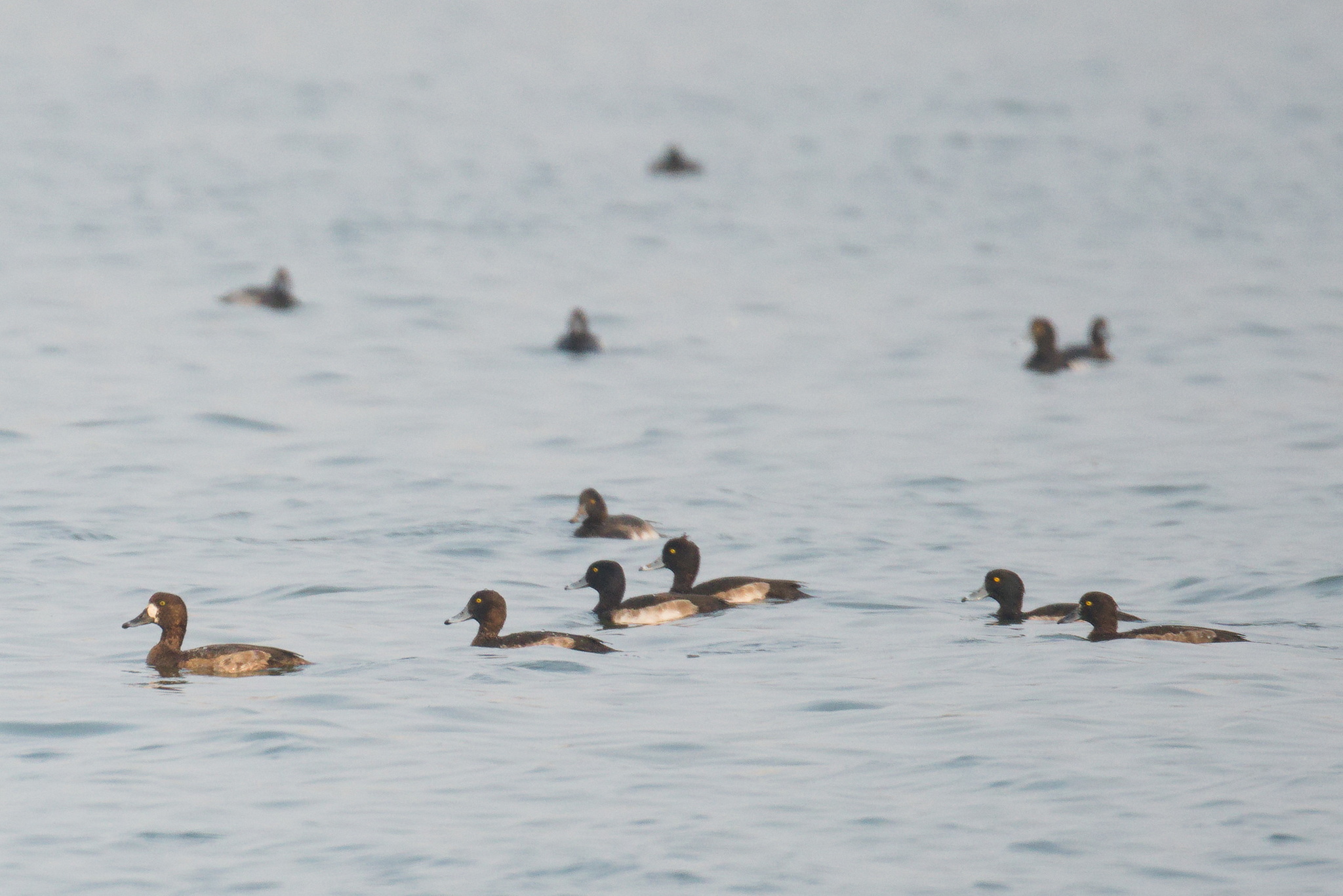
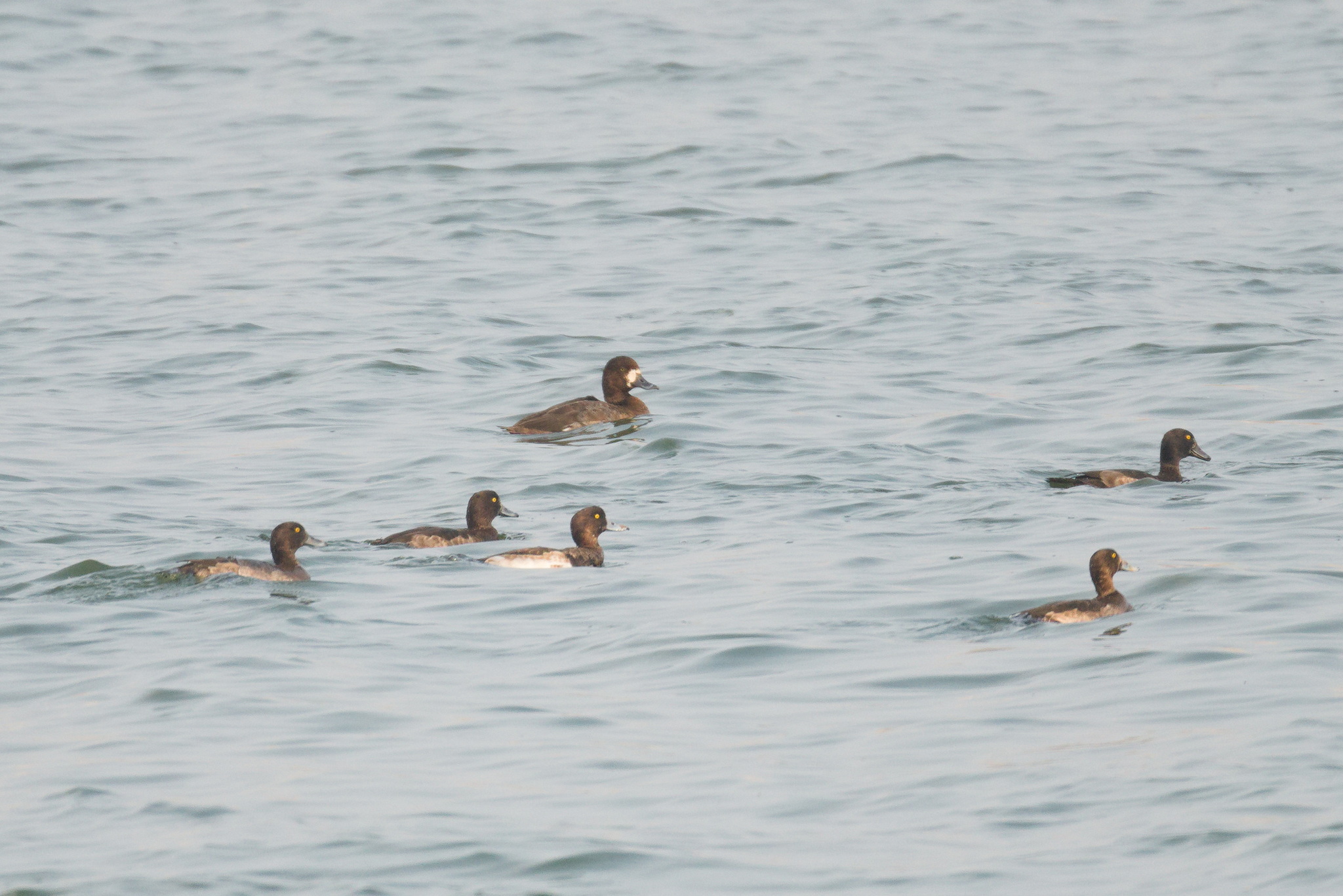
Greater Scaup
Aythya marila · 斑背潜鸭
Introduction
A mid-sized diving duck in the genus Aythya, larger than the closely related lesser scaup and tufted duck. It has a circumpolar distribution, breeding within the Arctic Circle in Iceland, Scandinavia, northern Russia, Siberia, Alaska, and northern Canada. During winter, it migrates south to coastal regions of Europe, eastern Asia, and North America. Distinctive traits include forming large groups called rafts and diving to depths of up to 10 meters for food. Listed as Least Concern on the IUCN Red List, though populations have been declining since the 1980s.
Description
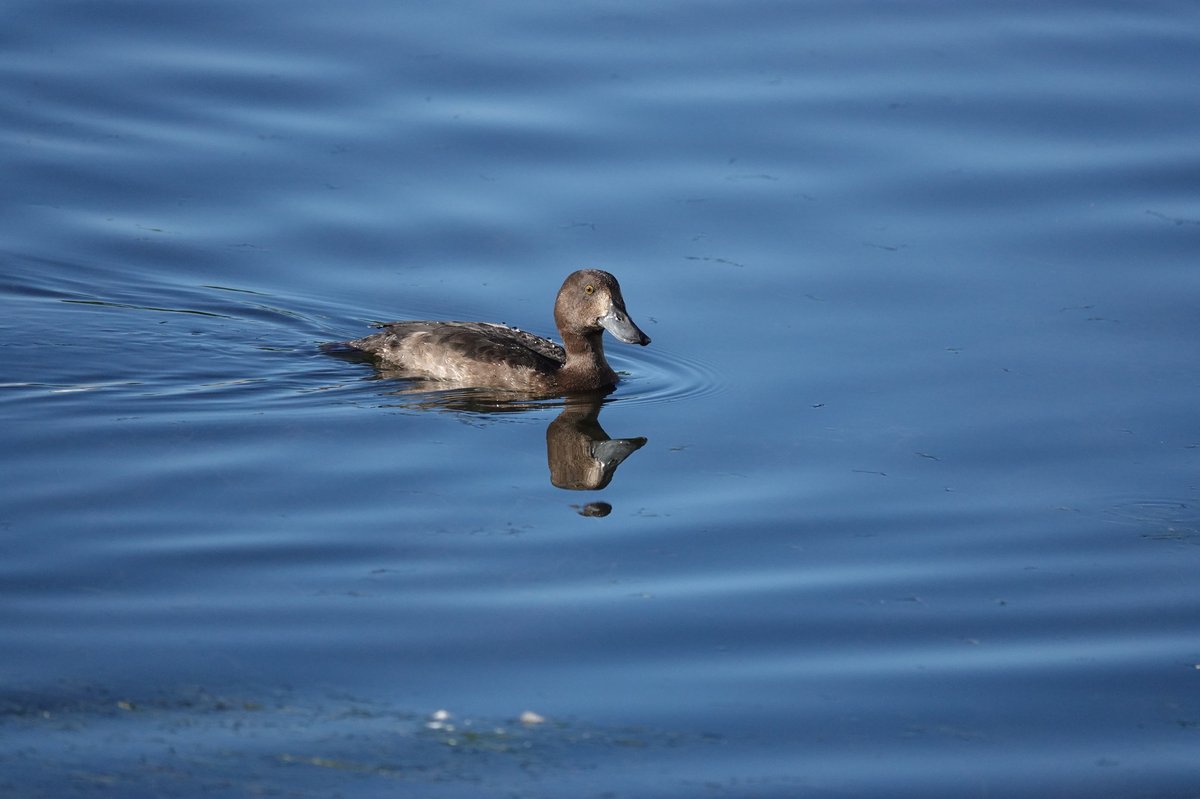
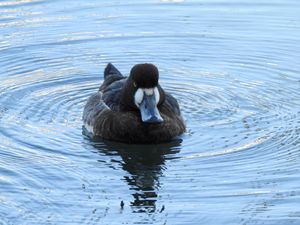
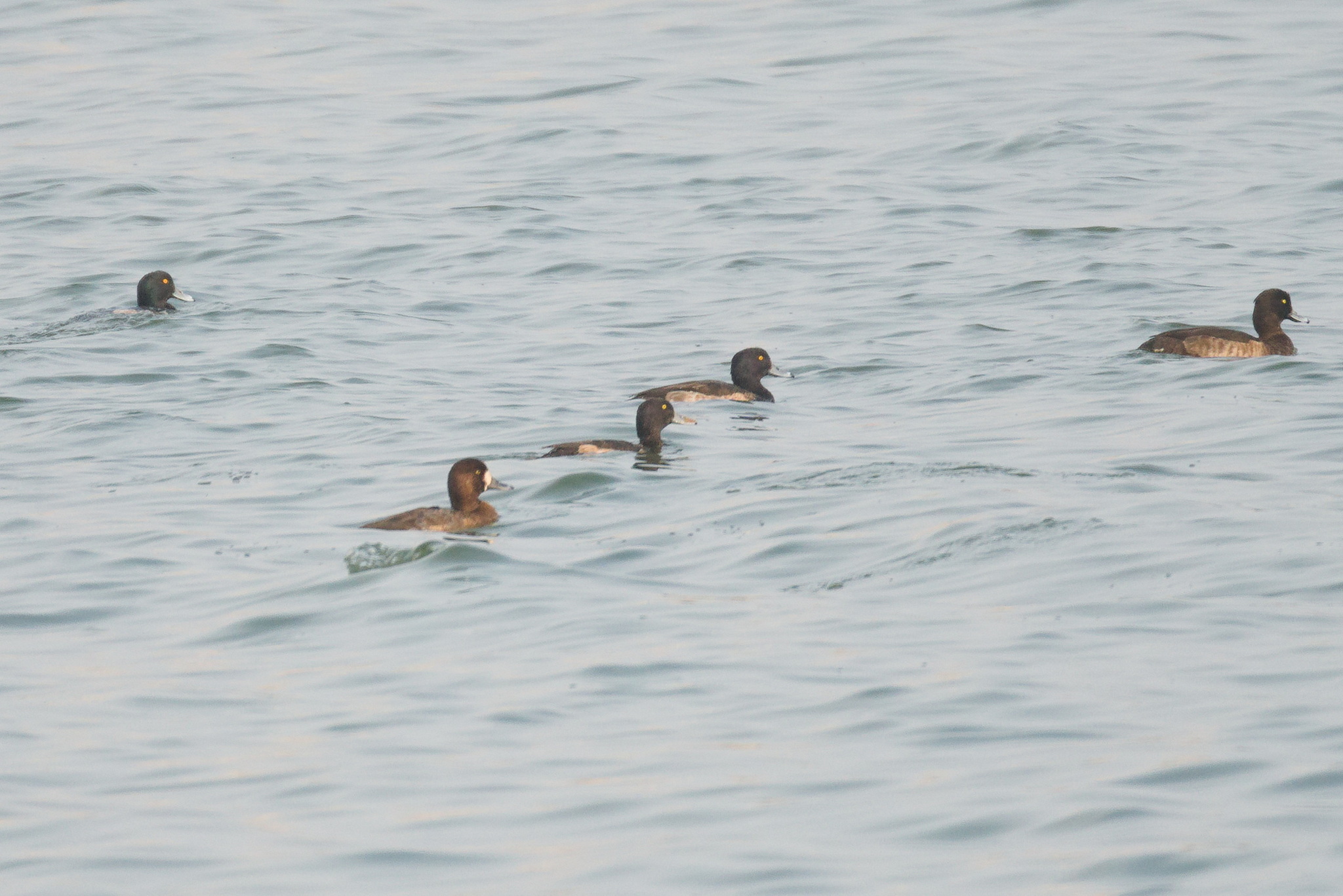
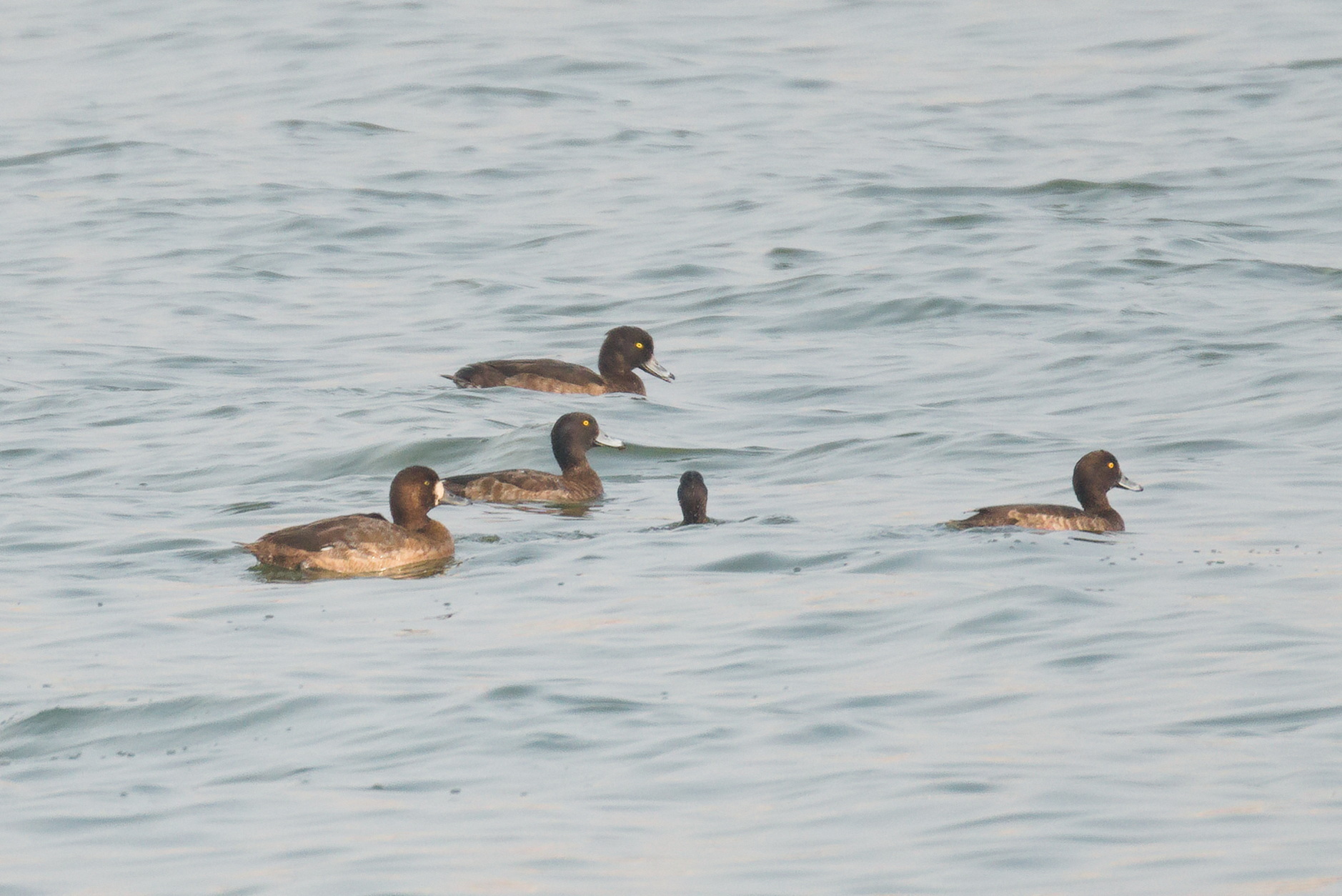
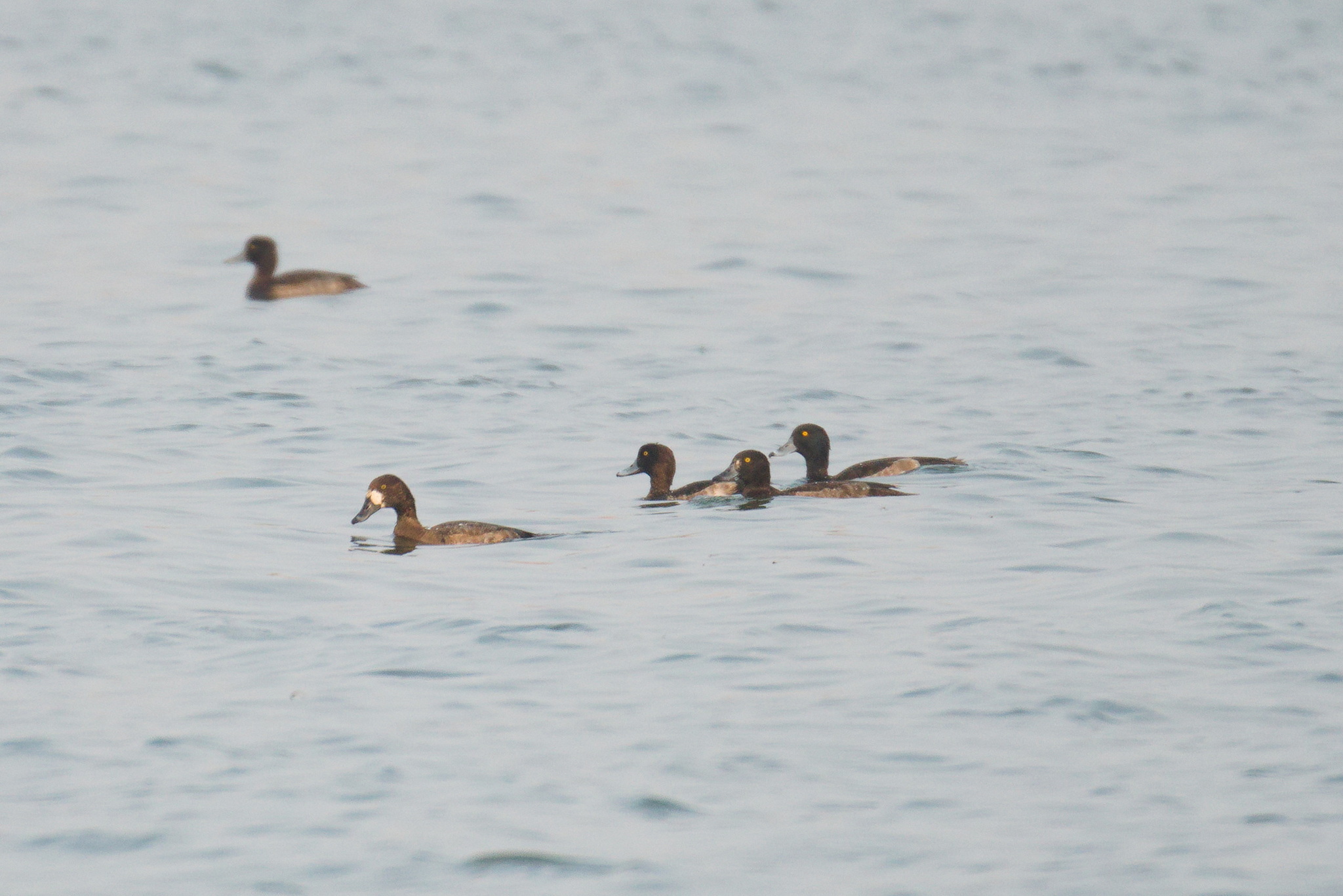
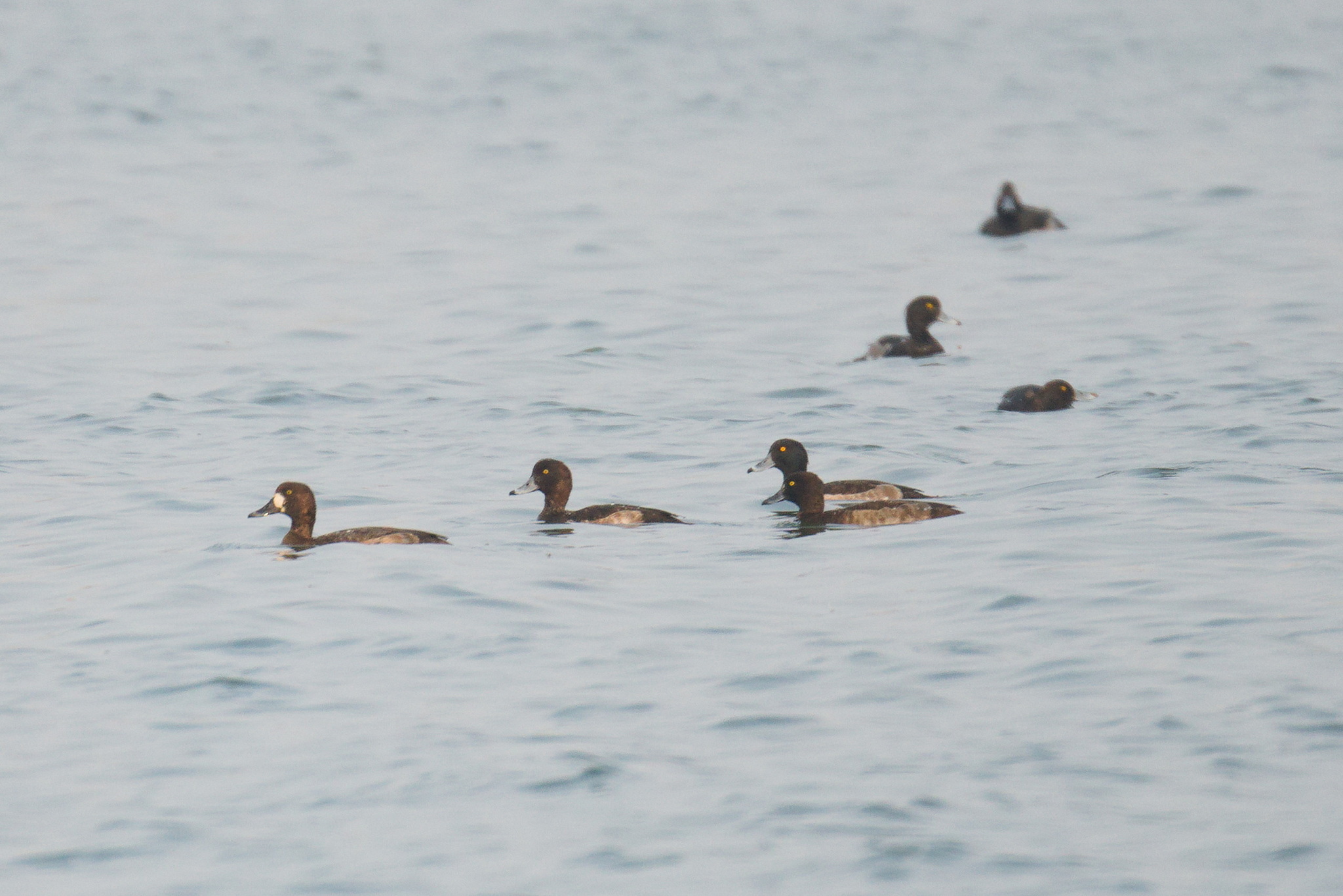
Adults are 39–56 cm long with a 71–84 cm wingspan and weigh 726–1,360 g. Males have a dark head with a green to purple gloss, yellow eyes, a black breast, pale grey upperparts, and a white belly and flanks. A strong white stripe extends from the speculum along the wing. The bill is light blue-grey with a small black nail at the tip. Females are mostly brown with a white patch at the base of the duller blue bill and white wing markings. Juveniles resemble adult females. The male's eclipse plumage is similar to breeding plumage but with buffy grey pale parts.
Identification
Distinguished from the lesser scaup by a more rounded head, larger and wider bill with a larger black nail, and a more extensive white wing stripe. Males show stronger vermiculations on the mantle and scapulars compared to the North American subspecies of lesser scaup. In flight, the white stripe on the wing is a key mark. Vocalizations include a soft, quick whistle from drakes during courtship and a raspy 'arrr-arrr-arrr' call from females.
Distribution & Habitat
Breeds in marshy lowland tundra and islands in fresh water lakes across the Palearctic and Nearctic, including Iceland, Scandinavia, northern Russia, Siberia, Alaska, and northern Canada. Small numbers remain year-round in Iceland and the Aleutian Islands. Winters along the Pacific and Atlantic coasts of North America (from British Columbia to Baja Peninsula and Nova Scotia to Florida), northwest Europe, the Caspian Sea, Black Sea, and coasts of Japan, Yellow Sea, and East China Sea. Also found in inland lakes such as the Great Lakes and those in Central Europe during winter.
Behavior & Ecology
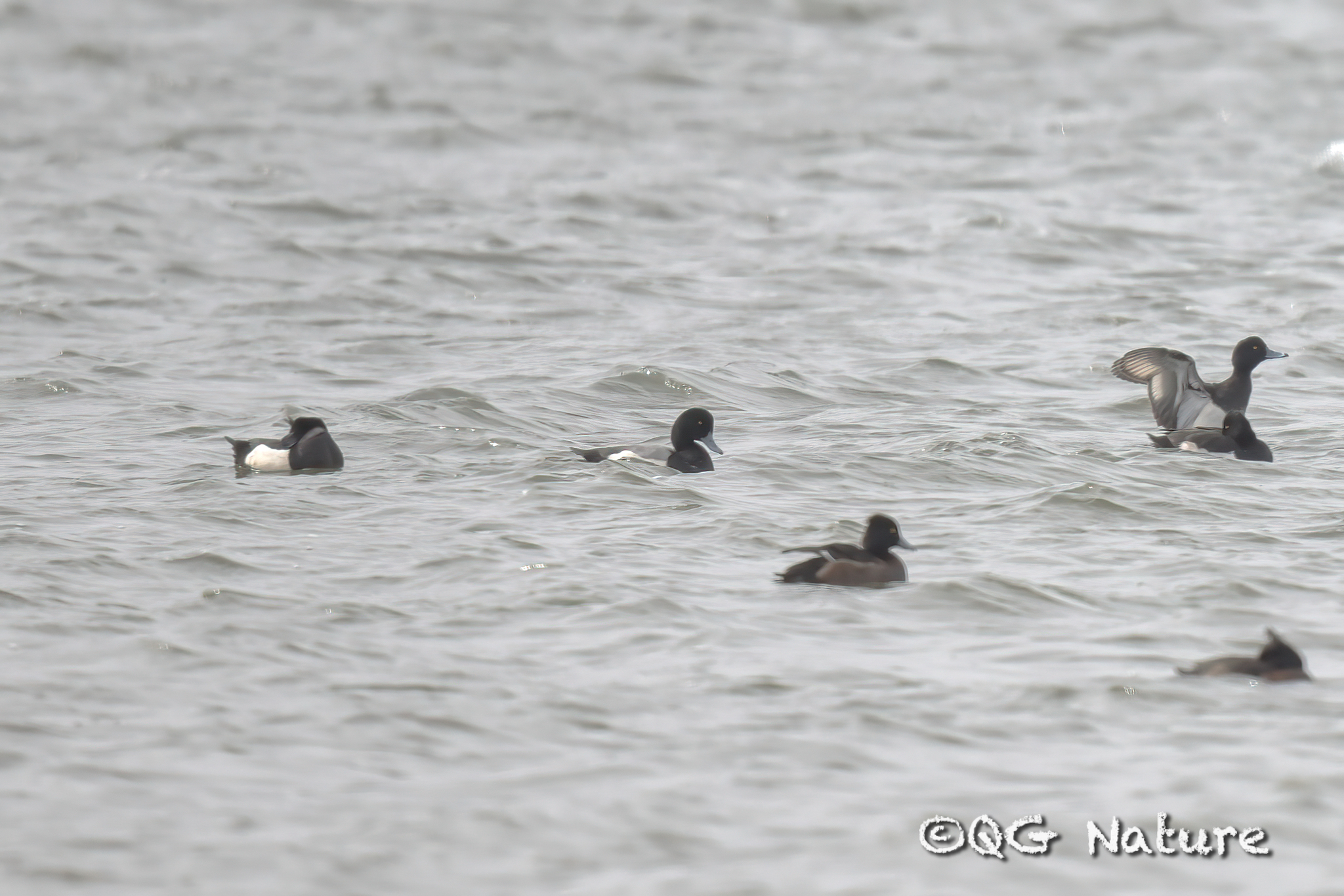
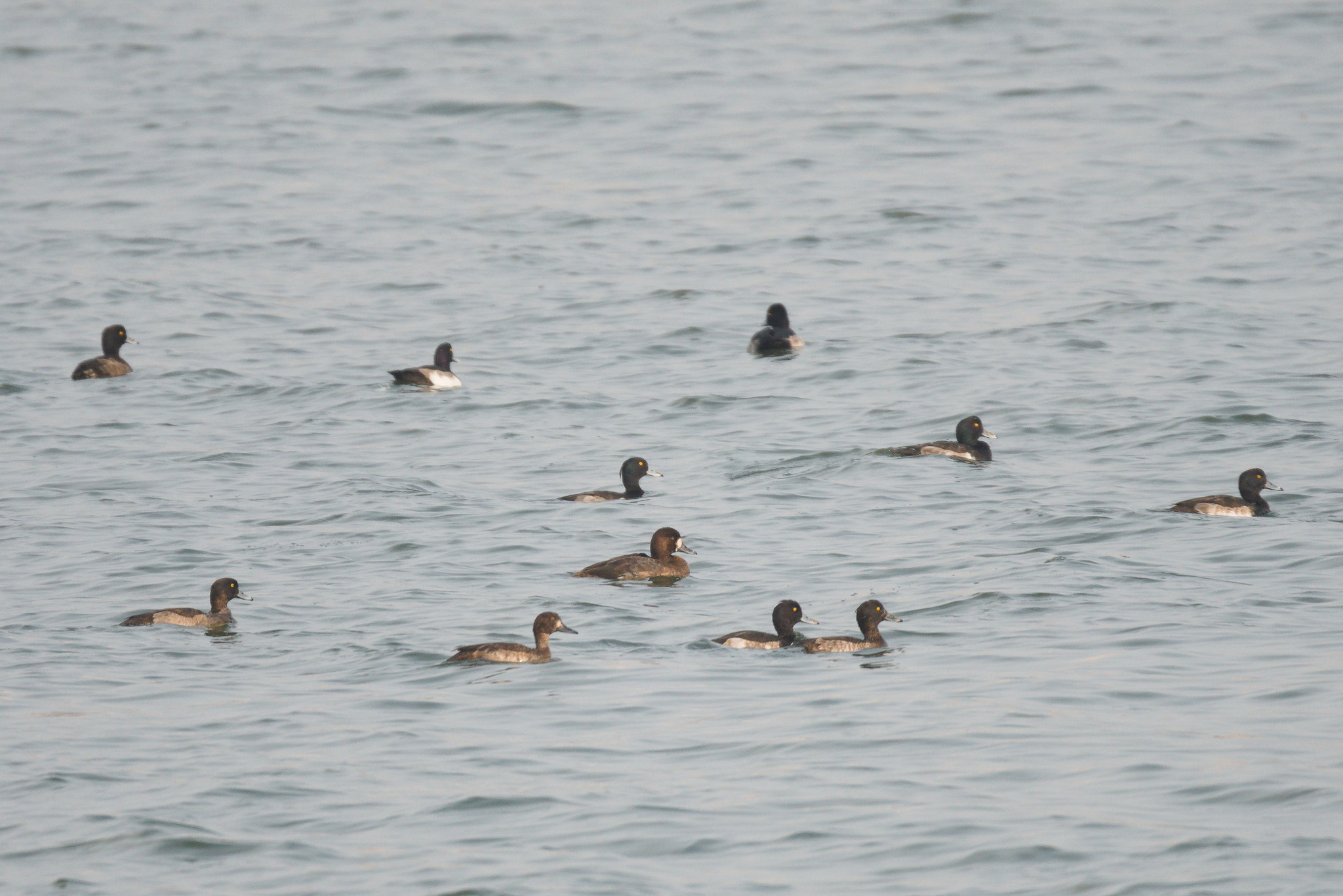
Feeds by diving underwater to depths of 0.5–6 m, exceptionally 10 m, staying submerged for up to a minute. Diet consists mainly of aquatic molluscs, plants, insects, and small crustaceans; occasionally consumes leopard frogs. Forms large rafts numbering in the thousands. Breeding begins at age two, with monogamous pairs forming during spring migration. Nests are shallow depressions lined with down, located on islands or floating vegetation. Clutches contain six to nine olive-buff eggs, incubated for 24–28 days. Ducklings follow the mother immediately after hatching and fledge in 40–45 days. Drakes abandon females after egg-laying to moult in isolated lakes.
Conservation
Listed as Least Concern on the IUCN Red List, but populations have declined since the 1980s due to habitat degradation, contaminants, and lower female survival rates. Worldwide mature population is estimated at 1,200,000 to 1,400,000. Major threats include entanglement in fishing nets, avian influenza, oil and sewage pollution, and organochloride contaminants. High levels of selenium ingested via invasive zebra mussels in the Great Lakes region cause reproductive harm and infertility in females. Tissue samples show presence of heavy metals including cadmium, copper, manganese, zinc, iron, lead, cobalt, and nickel.
Culture
Popular game bird in North America and Europe, hunted in countries including Denmark, Germany, Greece, France, the UK, Ireland, and Iran. Hunters use shotguns to shoot them on the fly, as they can reach speeds of 121 km/h (75 mph). Hunting methods include using decoys arranged to simulate rafts, often from shorelines, hunting blinds, or layout boats.
Source: Wikipedia · CC BY-SA 3.0
Taxonomy
- Order
- Anseriformes
- Family
- Anatidae
- Genus
- Aythya
Vocalizations
Subspecies (2)
-
Aythya marila marila
breeds subarctic from Iceland and Scandinavia eastward to Lena River (north-central Siberia); winters to coasts of northwestern and east-central Europe (eastern North Atlantic), and Black and Caspian seas
Data Sources
Species description from Wikipedia, licensed under CC BY-SA 3.0.
Bird images and sounds sourced from GBIF, contributed by citizen scientists worldwide under Creative Commons licenses.
Taxonomy data from AviList 2025.