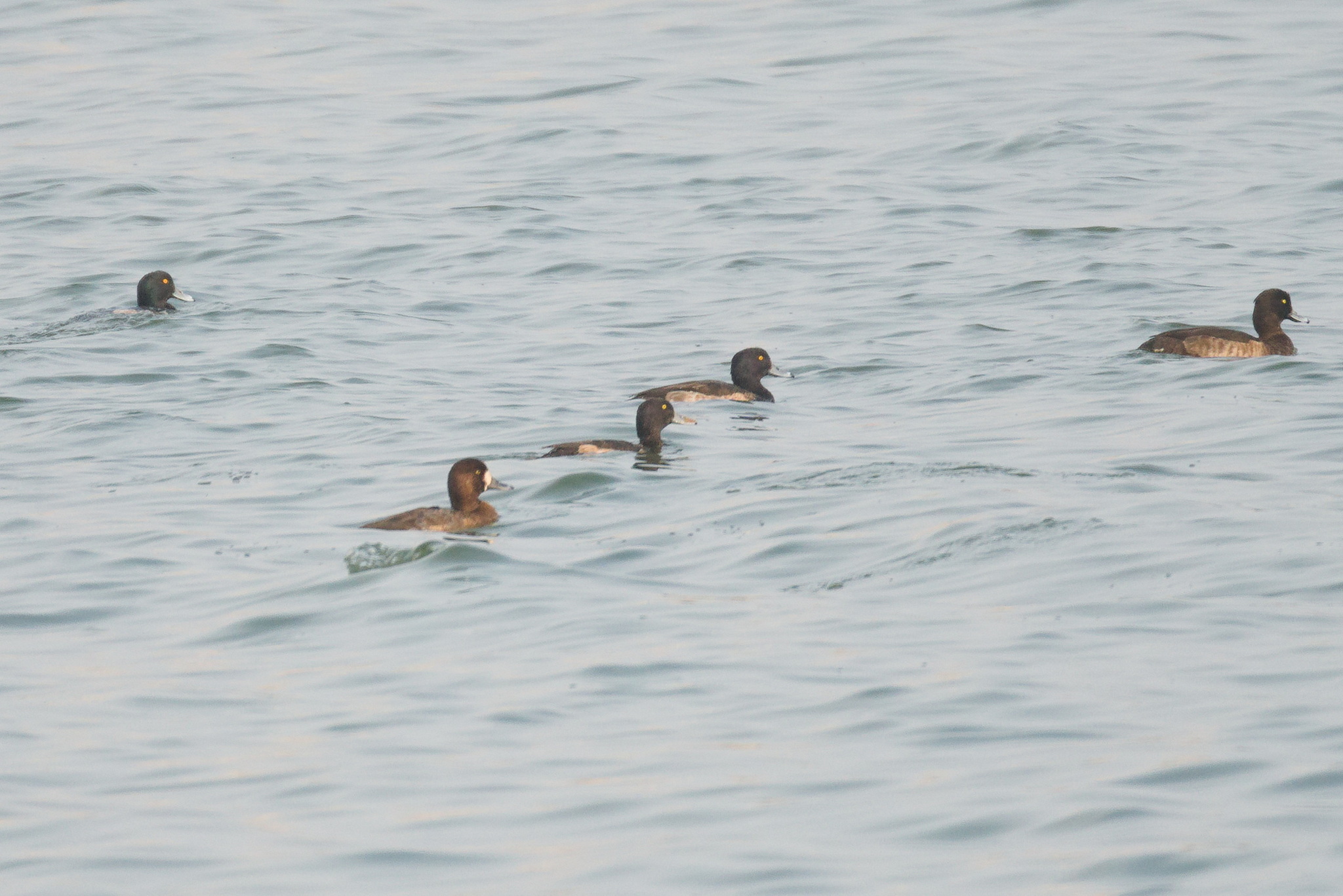
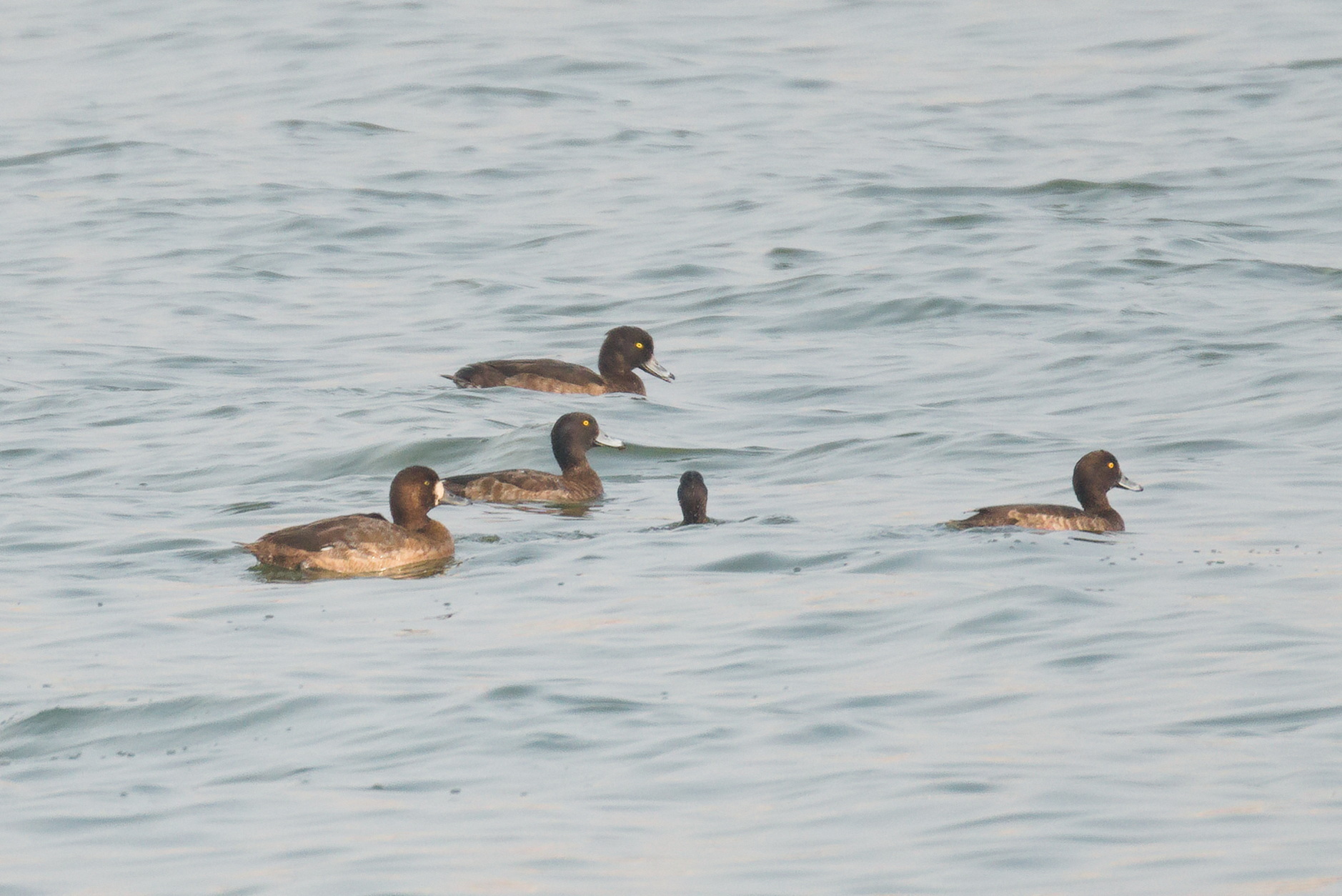
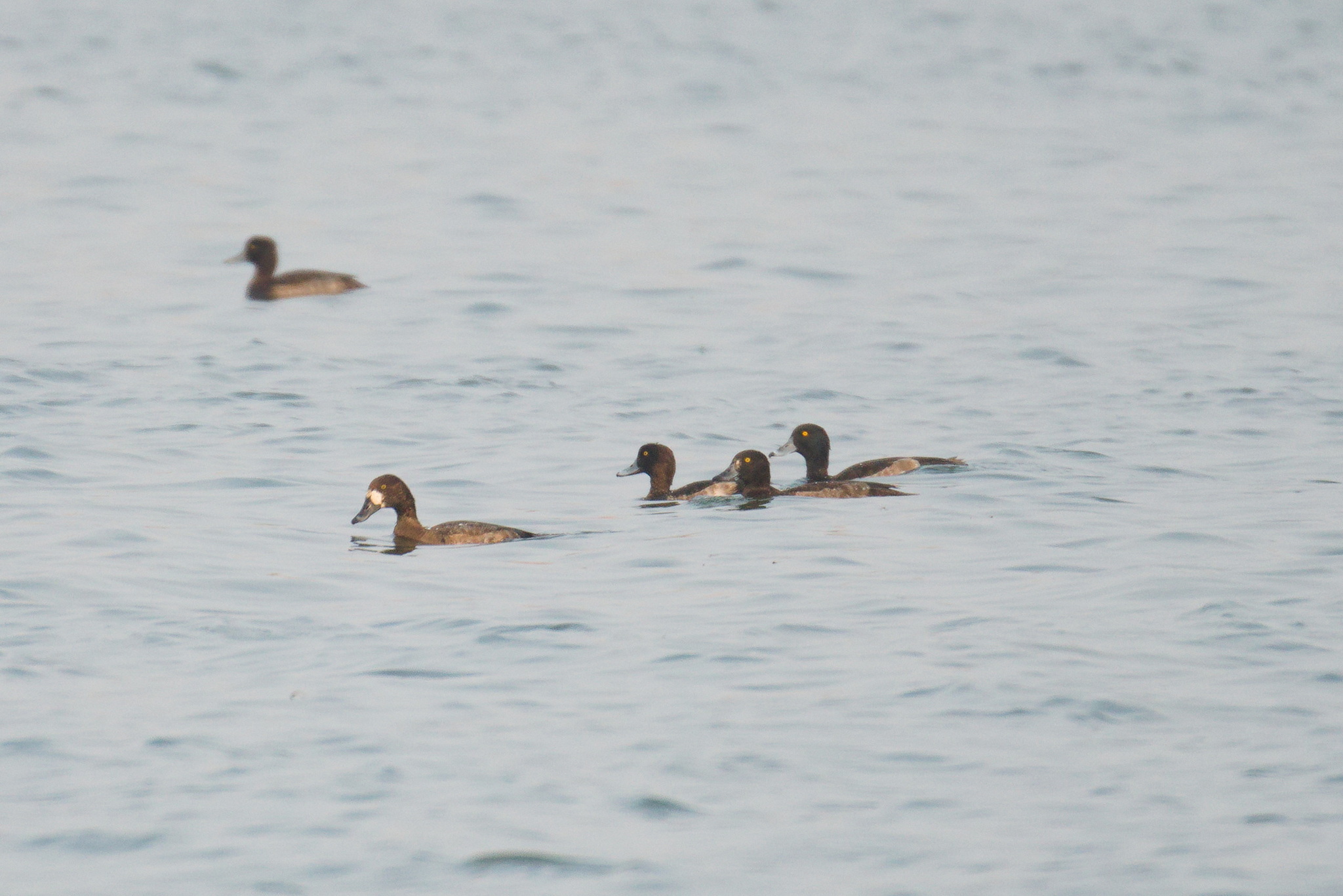
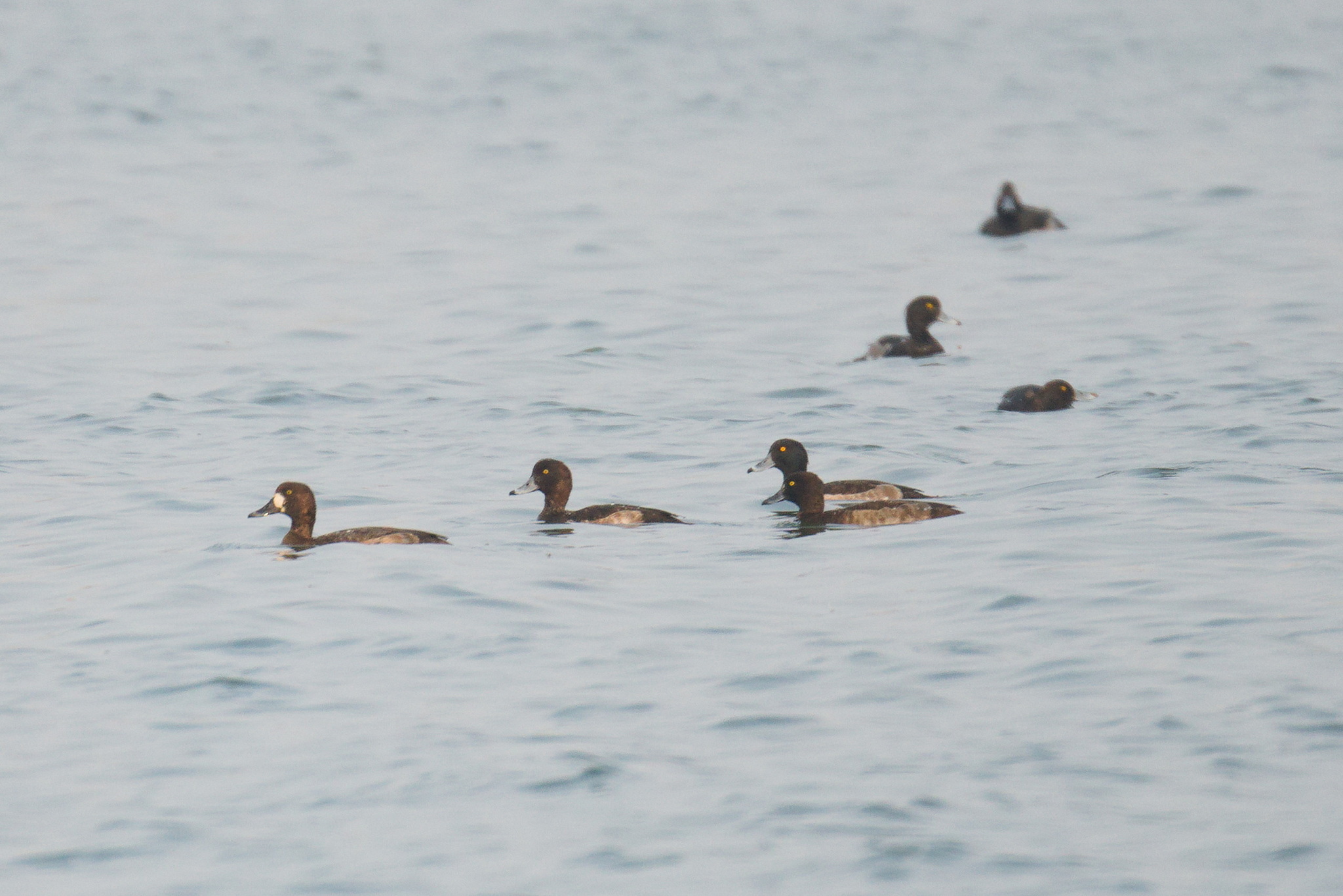
Greater Scaup
Aythya marila
斑背潜鸭
Introduction
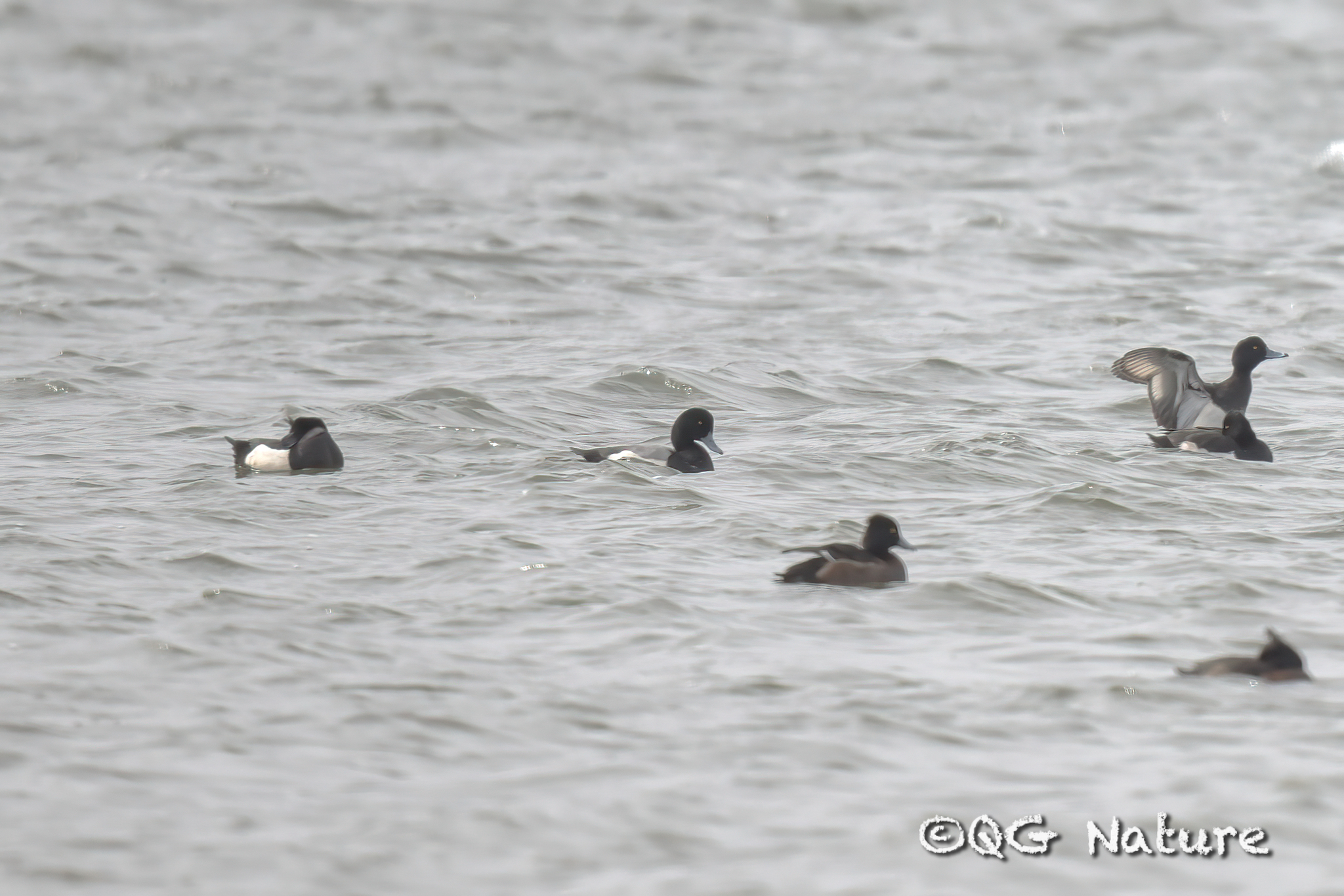
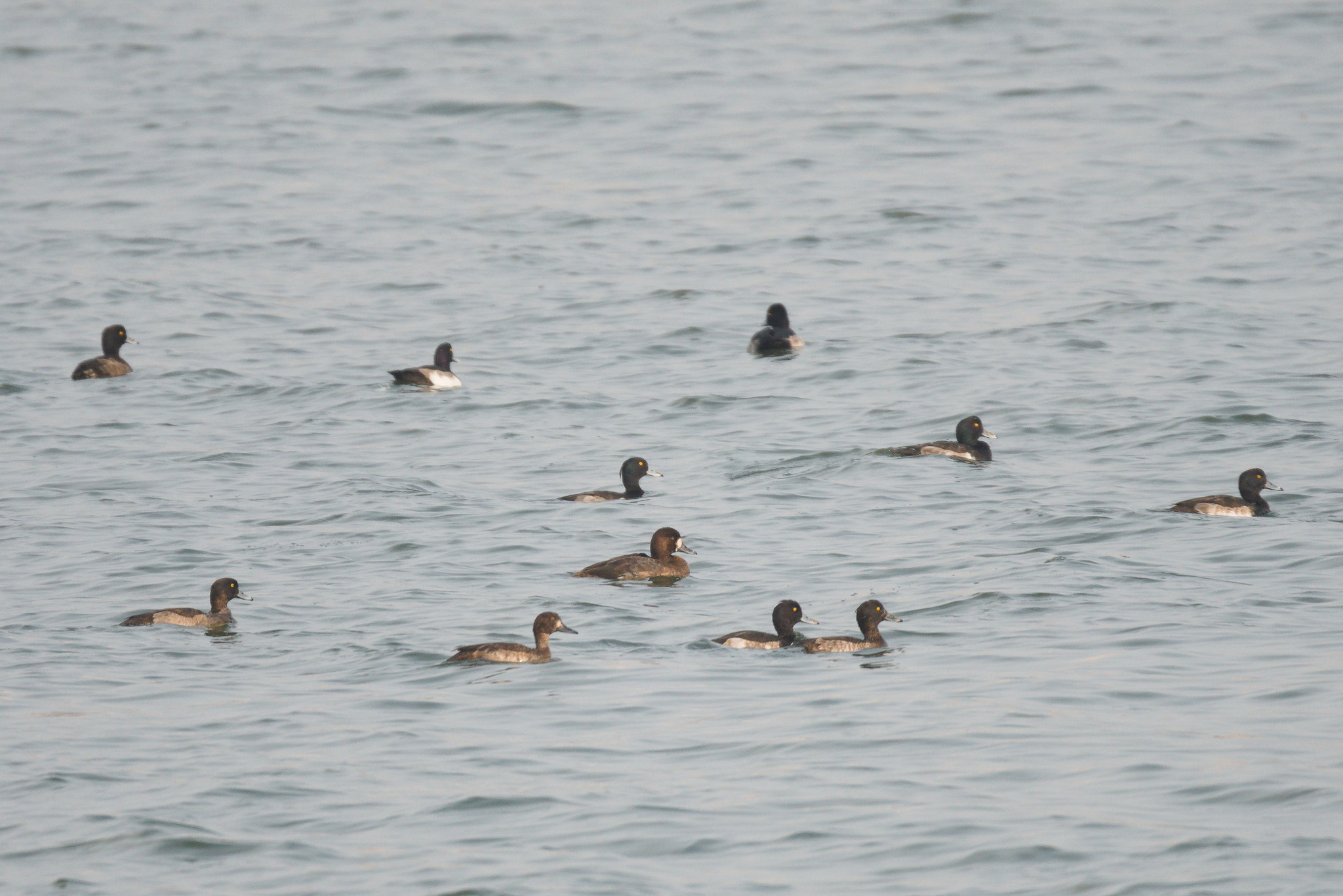
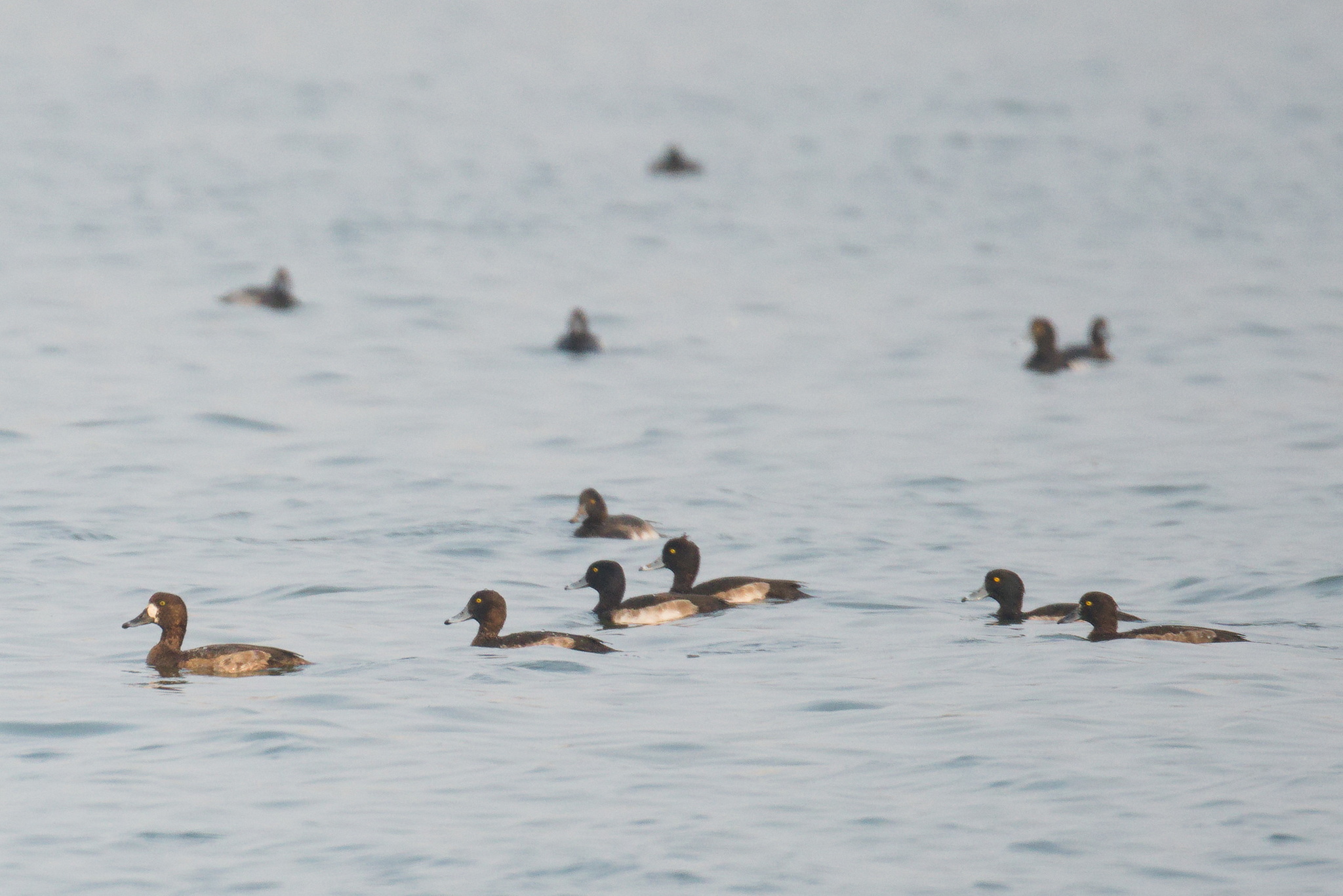
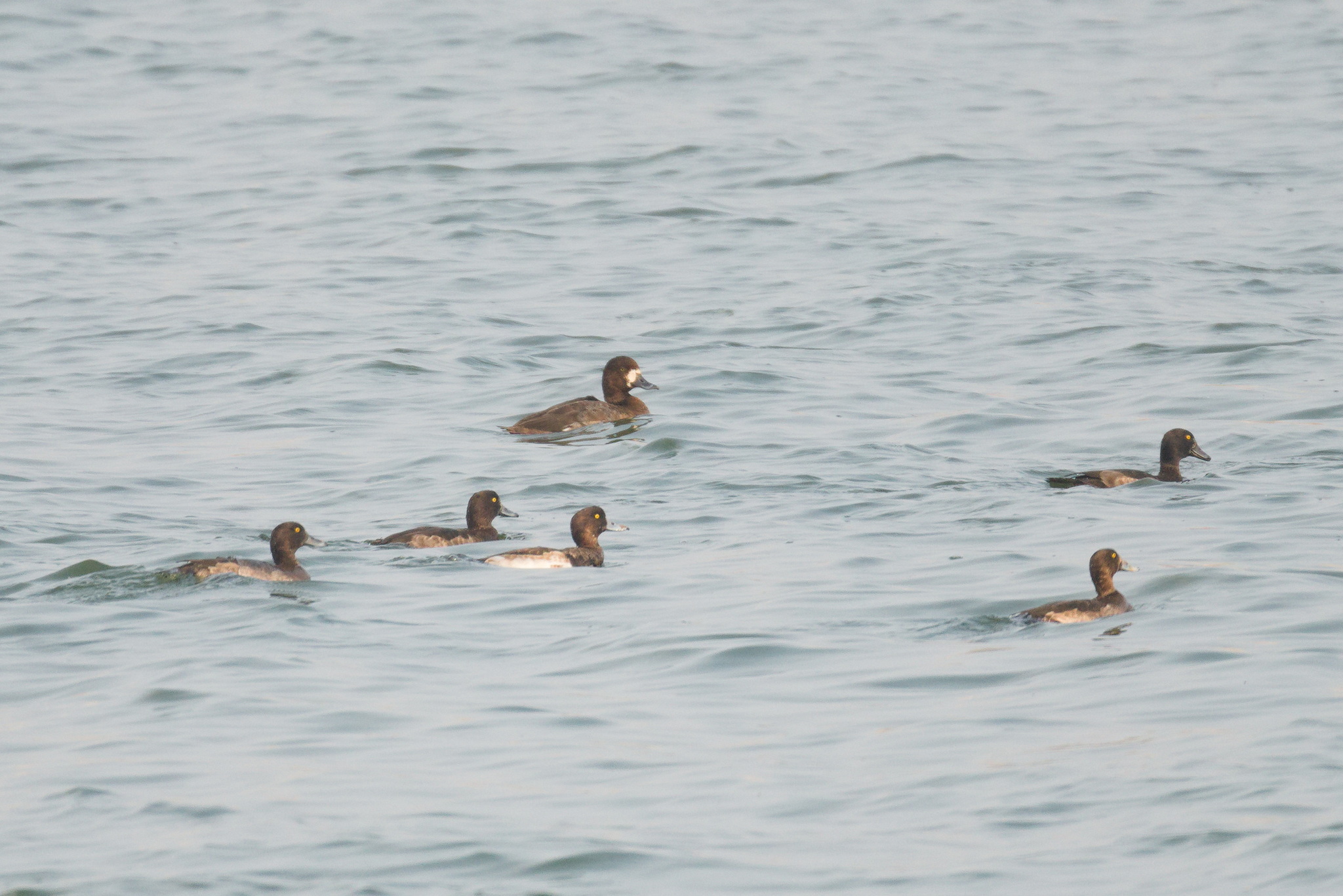
This diving duck occurs on coastal waters across the Northern Hemisphere during winter months. It is larger than the lesser scaup and tufted duck, with a rounded head and streamlined body. It forms large flocks called rafts, sometimes numbering in the thousands, on sheltered bays and estuaries. During the breeding season, it occurs across Arctic and subarctic landscapes from Iceland through Siberia to Alaska and northern Canada, nesting on islands in northern lakes and tundra pools. The species exhibits strong sexual dimorphism: drakes have a dark glossy head, black breast, pale grey upperparts, and a white wing stripe, while hens are brown with white facial markings. A notable behavioral trait is simultaneous diving, with flocks submerging and resurfacing together. Populations have declined since the 1980s.
Description
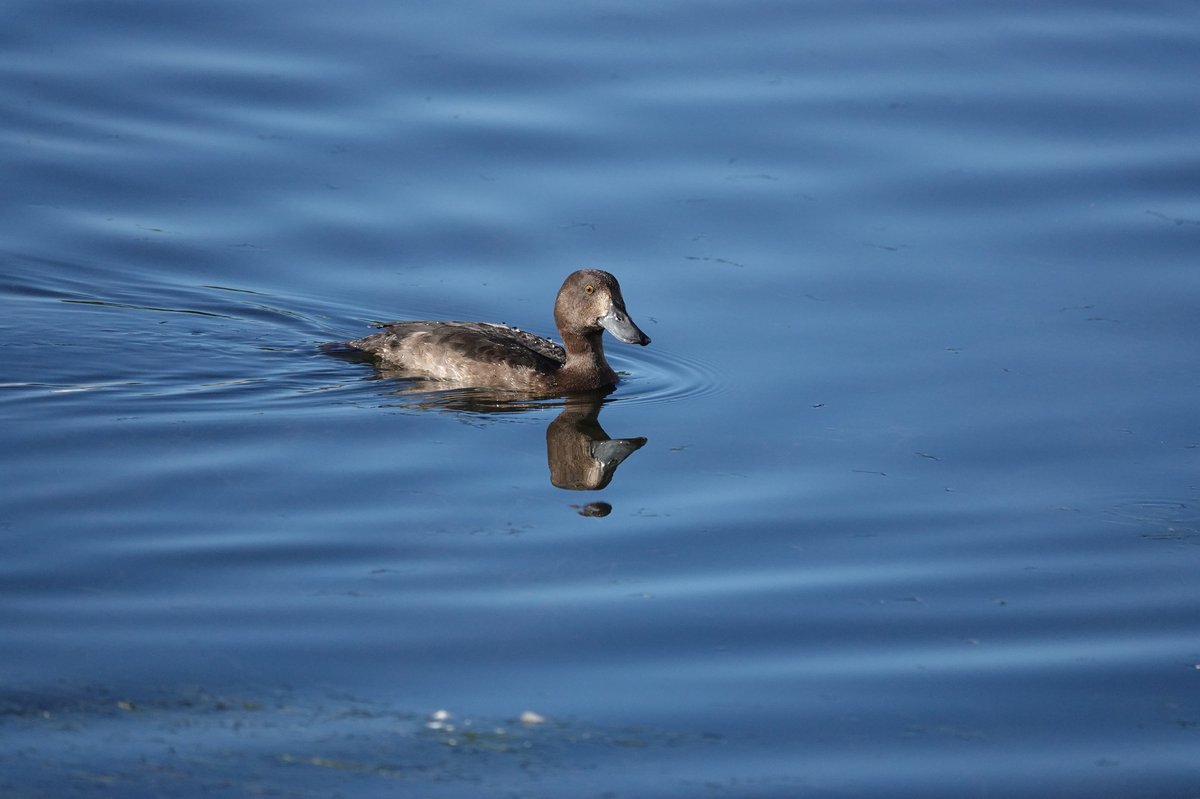
A medium-sized diving duck measuring 39-56 cm in length with a wingspan of 71-84 cm and weighing 726-1,360 g. The bill is light blue with a small black nail at the tip, and both sexes have yellow eyes. The male displays a dark head with an iridescent green to purple sheen depending on light angle, a black breast, pale grey upperparts, black tail, and bright white belly and flanks. The wing shows a prominent white stripe extending from the speculum along the flight feathers to the wingtip. The female is uniformly brown with similar white wing markings, a duller blue bill, and a distinctive white band bordering the base of the bill with brown oval patches. The drake is larger with a more rounded head than the female. Legs and feet are grey in both sexes.
Identification
Distinguishing this species from the very similar lesser scaup requires careful attention to several features. The head appears more rounded and the bill is larger and wider with a more substantial black nail at the tip. The white wing stripe is more extensive and reaches further along the primaries. In flight, the larger size becomes apparent, and the head shape is often the most reliable field mark. The North American subspecies nearctica typically shows a higher forehead and reduced white on the wing feathers compared to the European nominate form. When seen alongside lesser scaup, the larger size and different head shape become more obvious. Juveniles resemble adult females, making identification particularly challenging.
Distribution & Habitat
This species has a circumpolar distribution breeding across the Arctic Circle in both Palearctic and Nearctic regions. Breeding grounds include Iceland, Scandinavia, northern Russia, Siberia, Alaska, and northern Canada. It is predominantly migratory, though small numbers remain year-round in Iceland and the Aleutian Islands. Summer habitat consists of marshy lowland tundra and islands in freshwater lakes. Winter distribution covers the Pacific and Atlantic coasts of North America, European coasts from Britain to the Baltic, the Caspian and Black Seas, and the coasts of Japan, the Yellow Sea, and East China Sea. During winter, they favor coastal bays, estuaries, and inland lakes including the Great Lakes and Central European lakes.
Behavior & Ecology
These ducks form enormous social groups known as rafts, which can contain thousands of individuals. Breeding begins at age two, with pairs forming during courtship displays on the return migration to breeding grounds. Drakes use a soft, quick whistle to attract females during this complex courtship. Nests are situated near water on islands, shorelines, or floating vegetation mats, with females constructing shallow depressions lined with down. Clutches contain six to nine olive-buff eggs incubated for 24-28 days. After laying, drakes abandon the females and migrate to isolated lakes for molt. Ducklings are precocial, able to walk, swim, and feed themselves immediately, though they cannot fly until 40-45 days old. Females give a raspy call note, while drakes are largely silent except during courtship. Food consists of molluscs, aquatic plants, and insects obtained by diving to depths of 0.5-6 meters, exceptionally to 10 meters.
Conservation
Rated as a species of least concern on the IUCN Red List, though populations have been declining steadily since the 1980s. The worldwide population is estimated at 1.2-1.4 million mature individuals. Primary threats include habitat degradation from human development and agricultural runoff, pollution including oil and sewage, and fishing net entanglement. During molt and winter, elevated levels of organochloride contaminants pose particular risks. The Atlantic Flyway population faces high contaminant loads due to urbanization, with 100% of females showing elevated selenium levels from consuming invasive zebra mussels, causing fertility issues. Other concerns include heavy metal accumulation in tissues and avian influenza outbreaks. A ringing program provides data on migration patterns, harvest rates, and survival.
Culture
This duck holds significance as a popular game bird across North America and Europe. In North America, it is colloquially known as the "bluebill" due to its distinctive bill coloration. European birders simply call it "scaup," derived from Scottish and Northern English words for a shellfish bed, referring to its winter feeding grounds. Historically, large flocks gathered in winter to feed on spent grain pumped offshore from Scottish distilleries, particularly in the Firth of Forth, though this food source disappeared with modern pollution control. Hunters pursue them with shotguns, requiring skill as these fast-flying ducks can reach speeds of 121 km/h. They are hunted from shorelines, blinds, and specialized layout boats using decoy spreads to attract flocks.
Source: Wikipedia · CC BY-SA 3.0
Taxonomy
- Order
- Anseriformes
- Family
- Anatidae
- Genus
- Aythya
- eBird Code
- gresca
Vocalizations
Subspecies (2)
-
Aythya marila marila
breeds subarctic from Iceland and Scandinavia eastward to Lena River (north-central Siberia); winters to coasts of northwestern and east-central Europe (eastern North Atlantic), and Black and Caspian seas
-
Aythya marila nearctica
breeds from Lena River (north-central Siberia) eastward to Kamchatka and the Commander Islands; Alaska eastward to northern Quebec; winters Japan and Korean Peninsula to eastern China and Taiwan, central California, Great Lakes, and Atlantic coast south to North Carolina
Data Sources
Species description from Wikipedia, licensed under CC BY-SA 3.0.
Bird images and sounds sourced from GBIF, contributed by citizen scientists worldwide under Creative Commons licenses.
Taxonomy data from AviList 2025.